-market.png&w=256&q=75)
Genital Warts (Condyloma Acuminatum) Market
Genital Warts (Condyloma Acuminatum) Insights and Trends
- According to DelveInsight estimates, in 2025, the United States accounted for the genital warts market size, i.e. approximately USD 900 million, with recent analyses suggest potential upside driven by increasing adoption of novel and targeted therapies.
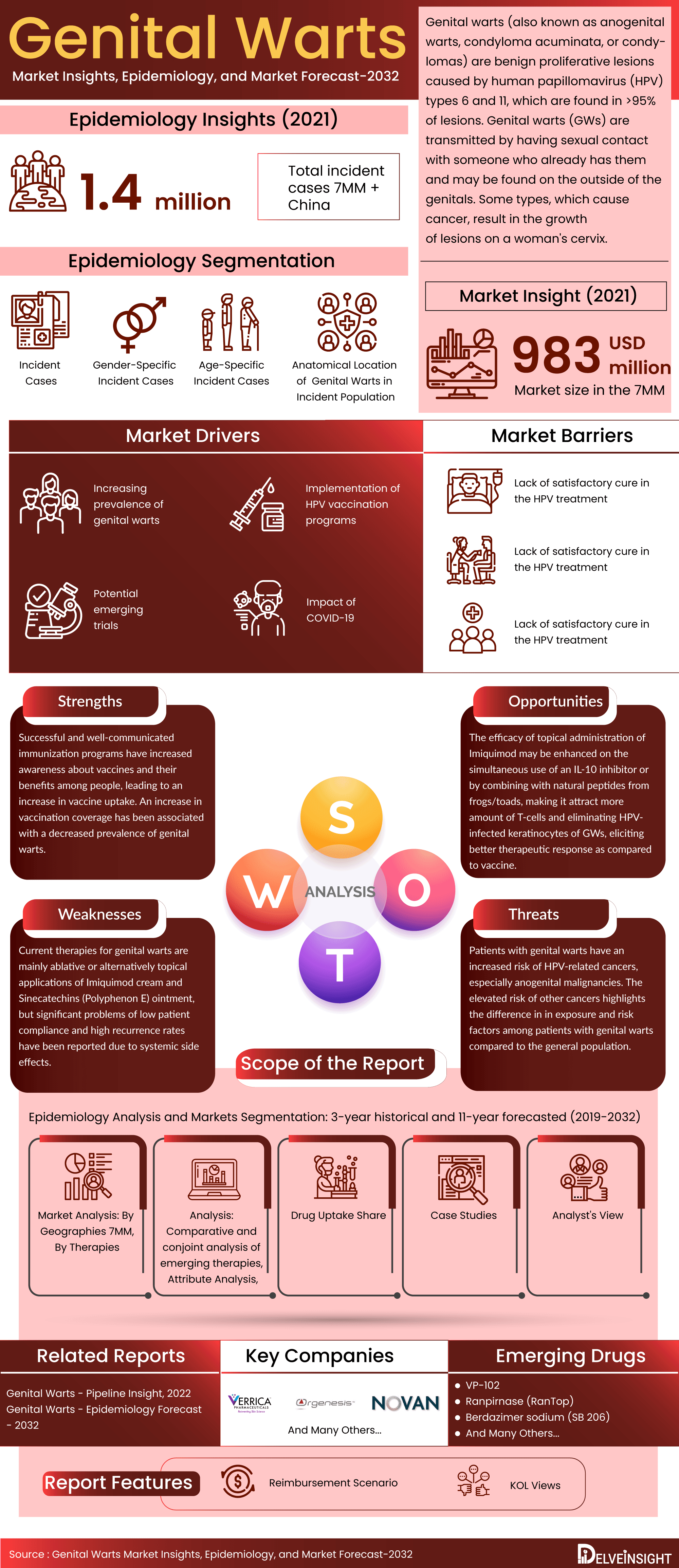
- The 7MM accounted for about 900,000 incident cases of Genital Warts, in 2025. Factors contributing to the rise in incident cases of genital warts in the 7MM includes improved detection and reporting, decreased immunity, and changes in sexual behavior.
- Genital warts (also known as anogenital warts, condyloma acuminata, condylomas) are benign proliferative lesions caused by human papillomavirus (HPV) types 6 and 11, which are found in >95% of lesions. Genital warts are transmitted by having sexual contact with someone who already has them and may be found on the outside of genitals.
- Co-infection with high-risk HPV strains, particularly HPV 16, is strongly associated with an elevated risk of cancers in the genital and oropharyngeal regions, reflecting their high oncogenic potential and established role in driving malignant transformation at these sites.
- The current options available for the treatment of Genital Warts are primarily centered upon removal of the warty growth rather than elimination of the underlying viral infection. Common treatments include topical therapeutic agents; physical removal of warts with cryotherapy, electro cautery or lasers; or photodynamic therapy along with vaccines.
- The US Centers for Disease Control and Prevention (CDC) recommends that the diagnosis of genital warts be based primarily on clinical examination, with tissue evaluation reserved for lesions that are atypical, suspicious, or persistent. Routine HPV testing in men is not recommended, reflecting the lack of approved screening tests and the largely subclinical course of most infections. Noncancerous genital warts and precancerous lesions of the cervix, vagina, vulva, anus, or penis can be treated or removed using ablation (freezing or heat-based methods) or surgery.
Genital Warts (condyloma acuminatum) and Forecast in the 7MM
- 2025 Genital Warts (condyloma acuminatum) Market Size: ~USD XXX
- 2036 Genital Warts (condyloma acuminatum) Market Size: ~USD XXX
- Genital Warts (condyloma acuminatum) Growth Rate (2025–2036): XX% CAGR
-Market-Key-Insights.png)
DelveInsight's ‘Genital Warts (condyloma acuminatum) Market Insights, Epidemiology and Market Forecast – 2036’ report delivers an in-depth understanding of the genital warts (condyloma acuminatum), historical and forecasted epidemiology, as well as genital warts (condyloma acuminatum) market trends in the United States, EU4 (Germany, Spain, Italy, and France) and the United Kingdom, and Japan.
The Genital Warts (Condyloma Acuminatum) market report delivers a comprehensive analysis of the current treatment landscape, including standards of care, clinical practices, and evolving therapeutic algorithms. It evaluates genital warts (condyloma acuminatum) patient burden trends, revenue & market share dynamics, peak patient share & therapy uptake analysis, and provides an in-depth market size assessment and growth rate projections (Historical & Forecast 2022–2036) across global regions. The report highlights key unmet medical needs in genital warts (condyloma acuminatum) and maps the competitive and clinical landscape to uncover high‑value opportunities, providing a clear outlook on future market growth potential.
|
Study Period |
2022–2036 |
|
Historical Year |
2022–2025 |
|
Forecast Period |
2026–2036 |
|
Base Year |
2026 |
|
Geographies Covered |
|
|
Genital Warts (condyloma acuminatum) Market CAGR (Study period/Forecast period) |
XX% (2026 ̶ 2036) |
|
Genital Warts (condyloma acuminatum) Epidemiology Segmentation Analysis |
Patient Burden Assessment
|
|
Genital Warts (condyloma acuminatum) Companies |
|
|
Genital Warts (condyloma acuminatum)Therapies |
|
|
Genital Warts (condyloma acuminatum) Market |
Segmented by
|
|
Analysis |
|
Key Factors Driving the Genital Warts (Condyloma Acuminatum) Market
Rising Prevalence of HPV Infections
Genital warts are primarily caused by HPV, one of the most common sexually transmitted infections globally. The increasing incidence of HPV infections, driven by unsafe sexual practices and low vaccination coverage in certain regions, is a major factor expanding the patient pool and driving demand for treatment options.
Growing Awareness and Screening Initiatives
Improved awareness regarding sexually transmitted infections (STIs), along with enhanced screening and diagnostic practices, is leading to earlier detection and higher treatment rates. Public health campaigns and sexual health education programs are encouraging more individuals to seek medical care, thereby supporting market growth.
Advancements in Treatment Modalities
The market is benefiting from the availability of diverse treatment options, including topical therapies (e.g., imiquimod), ablative procedures (cryotherapy, laser therapy), and surgical interventions. Continuous innovation in more effective and less invasive therapies is improving patient outcomes and boosting adoption.
Emergence of Novel and Targeted Therapies
Ongoing research into immunomodulatory agents, antiviral therapies, and targeted treatments is expanding the therapeutic landscape. The development of next-generation therapies with improved efficacy and safety profiles is expected to further accelerate market growth.
High Recurrence Rates Driving Repeat Treatment Demand
Genital warts are associated with frequent recurrence, as treatments remove visible lesions but do not eradicate the underlying HPV infection. This leads to repeated treatment cycles, increasing long-term healthcare utilization and market demand.
Genital Warts (Condyloma Acuminatum) Understanding and Treatment Algorithm
Genital Warts (Condyloma Acuminatum) Overview and Diagnosis
Human papillomavirus (HPV) is a small, nonenveloped, double-stranded DNA virus. Most of the HPV-related diseases and research are focused on HPV types within the alpha group. Individual types are further classified as high-risk (e.g., HPV16 and 18) and low-risk HPV (e.g., HPV6 and 11) based on oncogenic potential. E6 and E7 are the main oncoproteins, with E6 binding to p53.
Genital warts (also known as anogenital warts, condylomata acuminata, condylomas) are benign proliferative lesions caused by human papillomavirus (HPV) types 6 and 11, which are found in >95% of lesions. Genital warts are transmitted by having sexual contact with someone who already has them and may be found on the outside of genitals. Some types, which cause cancer, result in the growth of lesions on a woman's cervix. It is possible to get genital warts, HPV infection, even if they are not visible. Besides, they look like flesh-colored bumps that have a cauliflower-like appearance, and are usually flat, papular, or pedunculated growths on the genital mucosa, occurring in clusters. Genital Warts can appear on the penis, vulva, vagina, cervix, groin, or thigh within weeks or months after sexual contact with an infected person. Potentially cancer-causing HPV strains are spread by sexual intercourse, anal sex, and oral sex.
Genital Warts (Condyloma Acuminatum) Diagnosis
Clinical diagnosis of Genital Warts is based on the appearance of warts, whereas histopathological diagnosis is not routinely indicated. Nucleic Acid Amplification Test for HPV DNA is also recommended. Accurate diagnosis is an essential first step in the treatment of Genital Warts. Also, Pap test, HPV tests and newer technologies like dermatoscopy are being used.
The current options available for the treatment of Genital Warts are primarily centered upon removal of the warty growth rather than elimination of the underlying viral infection. Common treatments include topical therapeutic agents; physical removal of warts with cryotherapy, electrocautery or lasers; or photodynamic therapy along with vaccines. The criteria for warts treatment, developed by the American Academy of Dermatology include: the patient’s desire for therapy, symptoms of pain, bleeding, itching or burning; (3) disabling or disfiguring lesions; (4) large numbers or large sizes of lesions; (5) the patient’s desire to prevent the spread of warts to unblemished skin of self or others; and (6) an immunocompromised condition.
Further details are provided in the report…
Genital Warts (Condyloma Acuminatum) Treatment
The treatment of genital warts involves a multimodal and patient-centered approach, primarily aimed at removing visible lesions, reducing symptom burden, and improving quality of life. However, current therapies do not eradicate the underlying human papillomavirus (HPV) infection, and therefore recurrence remains a significant challenge. Treatment selection depends on factors such as lesion size, number, anatomical location, patient preference, cost, and tolerability, resulting in a wide variability in clinical practice.
Pharmacologic therapies play a central role in disease management and are broadly categorized into topical and systemic treatments. Among topical therapies, immunomodulators and cytotoxic agents are widely used. Imiquimod (ALDARA, ZYCLARA) is a patient-applied immune response modifier that stimulates local cytokine production to enhance viral clearance and is commonly used as a first-line therapy. Another important topical option is Sinecatechins (VEREGEN), a green tea extract-based formulation applied multiple times daily, offering a non-invasive treatment alternative. Additionally, Podofilox (CONDYLOX), a purified form of podophyllotoxin, acts as a cytotoxic agent causing wart tissue necrosis and is also suitable for self-administration in selected patients.
Systemic therapies have a more limited role but may be considered in refractory or recurrent cases. Interferon alfa-n3 (ALFERON N) is an immunotherapy that enhances the body’s antiviral response and may contribute to clearance of infected cells and reduction in recurrence rates, particularly when used in combination with other modalities. However, its use is often restricted due to variable efficacy, higher cost, and systemic side effects.
In addition to pharmacologic options, a range of procedural interventions such as cryotherapy, electrosurgery, laser therapy, and surgical excision are commonly used for rapid lesion removal, although these are not included in pharmacotherapy-focused market analyses. Importantly, no single therapy has demonstrated clear superiority over others, and treatment outcomes are often influenced by patient adherence and recurrence risk.
Further details related to country-based variations are provided in the report.
Genital Warts (Condyloma Acuminatum) Unmet Needs
The section “unmet needs of Genital Warts (Condyloma Acuminatum)” outlines the critical gaps between the current state of patient care, diagnosis, and the ideal & effective management of the disease. It highlights the obstacles experienced by patients, clinicians, and researchers and identifies potential solutions for future progress.
- High recurrence rates due to persistence of underlying HPV infection
- Limited long-term efficacy of available therapies
- Lack of a standardized and universally effective treatment approach
- Treatment burden due to prolonged and frequent topical application and others…
Comprehensive unmet needs insights in Genital Warts and their strategic implications are provided in the full report...
Genital Warts (Condyloma Acuminatum) Epidemiology
Key Findings from Genital Warts (Condyloma Acuminatum) Epidemiological Analysis and Forecast
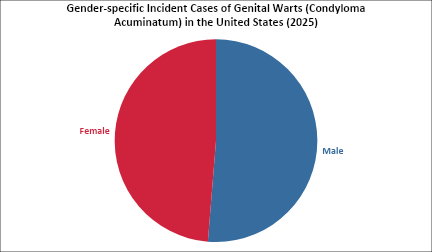
- The total Incident Cases of Genital Warts in the United States were around 600,000 in 2025.
- In 2025, approximately 300,000 males and around 285,000 females in the United States were affected by Genital Warts.
- Among the EU4 countries, Germany reported the highest number of incident cases of Genital Warts in 2025, with approximately 80,000 cases. France followed with a significant number of cases, totaling around 60,000. Spain had the lowest incidence among these countries, with about 45,000 cases recorded.
Genital Warts (Condyloma Acuminatum) Drug Chapters & Competitive Analysis
The Genital Warts (Condyloma Acuminatum) drug chapter provides a detailed, market-focused review of approved therapies and the emerging pipeline across Phase I–III clinical trials. It covers the mechanism of action, clinical trial data, regulatory approvals, patents, collaborations, and strategic partnerships for each therapy, along with their advantages, limitations, and recent developments. This section offers critical insights into the Genital Warts treatment landscape, supporting market assessment, competitive analysis, and growth forecasting for the Genital Warts therapeutics market.
Approved Therapies for Genital Warts
Imiquimod (ZYCLARA/ALDARA): Graceway Pharmaceuticals
ZYCLARA Cream is a skin-use only (topical) prescription medicine used to treat external genital and perianal warts in people 12 years and older. It was approved by the US FDA in March 2011.
VEREGEN (Polyphenon E): Aresus Pharma
VEREGEN, first drug in its class for the local treatment of genital warts is based on a defined extract of green tea leaves produced in a complex and specifically developed process. VEREGEN was the first and is one of the few innovative herbal medicines which were approved by the US FDA.
Genital Warts (Condyloma Acuminatum) Pipeline Analysis
RanTop (Ranpirnase topical gel): Orgenesis
RanTop developed by TamirBio, has shown significant potential in the treatment of HPV-related conditions. In April 2020, Orgenesis acquired Ranpirnase from Tamir Biotechnology, along with substantially all of Tamir’s assets, marking a pivotal moment in advancing this innovative therapy.
The company is well-positioned to initiate Phase II clinical trials, pending the completion of FDA pre-IND requests, although current trial listings are not yet updated on clinical trial registries. Previous studies on RanTop have already demonstrated promising results, showing both tolerability and early signs of clinical efficacy in treating anogenital warts, setting the stage for further exploration of this promising therapeutic option.
Note: A detailed emerging therapies assessment will be provided in the final report
Genital Warts (Condyloma Acuminatum) Key Players, Market Leaders and Emerging Companies
- Orgenesis
- Medicis Pharmaceuticals
- Aresus Pharma
- Abbvie, and others
Genital Warts (Condyloma Acuminatum) Key Players Drug Updates
- In March 2025, new clinical findings highlighted that Imiquimod (ALDARA/ZYCLARA) in combination with HPV vaccination demonstrated enhanced clearance of difficult-to-treat genital warts, suggesting a potential synergistic approach for improved outcomes and reduced need for invasive procedures.
- In 2025, ongoing research and clinical practice updates reaffirmed the continued use of podofilox (CONDYLOX) and imiquimod as first-line, patient-applied therapies, driven by their convenience and effectiveness in home-based management of genital warts.
- In 2025, clinical guidance and treatment updates emphasized the role of sinecatechins (VEREGEN) as a botanical, non-invasive therapy, with continued adoption due to its favorable tolerability profile and suitability for long-term topical use.
Drug Class Insights
Genital Warts (Condyloma Acuminatum) Market Outlook
The current therapeutic options available for the treatment of Genital Warts (Condyloma Acuminatum) are largely centered upon removal of visible lesions rather than eradication of the underlying HPV infection. There is limited evidence to suggest that existing pharmacological treatments provide long-term cure or significantly reduce recurrence rates, resulting in repeated treatment cycles and sustained disease burden. A wide range of therapies are currently used in clinical practice, which vary considerably in terms of cost, dosing frequency, treatment duration, side-effect profiles, and overall effectiveness, contributing to a fragmented treatment landscape.
From a market perspective, the focus remains on pharmacological therapies, including both topical and systemic treatments, while excluding revenues generated from procedural interventions such as cryotherapy, electrosurgery, laser therapy, or preventive vaccines. The market is broadly segmented based on the mode of administration into topical and systemic therapies, with topical treatments accounting for a significant share due to ease of use and patient preference.
Genital warts treatment is primarily categorized into topical therapies, such as Imiquimod (ALDARA, ZYCLARA), Podofilox (CONDYLOX), and Sinecatechins (VEREGEN), and systemic therapies, such as Interferon alfa-n3 (Alferon N). Among these, topical therapies dominate the market owing to self-administration, non-invasive nature, and favorable safety profiles, although they require prolonged use and are associated with adherence challenges.
Among topical agents, Imiquimod 5% cream remains a widely used immune response modifier that enhances local immune activity to clear lesions, while its 3.75% formulation offers improved tolerability and convenience despite slightly lower efficacy. Sinecatechins 15% ointment, a botanical green tea extract, is another important option, valued for its non-invasive mechanism and inclusion in clinical guidelines. Podofilox, a cytotoxic agent, is also commonly prescribed due to its effectiveness and suitability for patient-applied treatment, particularly in external lesions.
Systemic therapy plays a more limited role in the market, with interferon-based treatments such as Interferon alfa-n3 being reserved for refractory or recurrent cases. Although these therapies may enhance immune-mediated viral clearance and reduce recurrence when used in combination, their adoption remains constrained due to variable efficacy, higher costs, and safety concerns.
Further details will be provided in the report….
Drug Class/Insights into Leading Emerging and Marketed Therapies in Genital Warts (Condyloma Acuminatum) (2022–2036 Forecast)
The Genital Warts (Condyloma Acuminatum) treatment market comprises immune response modifiers, cytotoxic and antimitotic agents, topical keratolytic and tissue-destructive therapies, surgical and ablative interventions, and prophylactic HPV vaccines, with multiple therapeutic approaches targeting wart clearance, viral suppression, recurrence prevention, and long-term disease control.
Immune response modifiers: These therapies stimulate local immune responses to enhance clearance of HPV-infected cells and reduce wart recurrence. Representative therapies include imiquimod (ALDARA, ZYCLARA) and investigational immunomodulatory approaches.
Cytotoxic and antimitotic agents: These therapies inhibit cellular proliferation and induce destruction of wart tissue. Key treatments include podofilox (CONDYLOX) and podophyllotoxin-based formulations, which are commonly used as patient-applied therapies.
Topical keratolytic and tissue-destructive therapies: These therapies promote chemical destruction of wart tissue and facilitate lesion removal. Representative agents include trichloroacetic acid (TCA) and bichloroacetic acid (BCA) administered by healthcare professionals.
Surgical and ablative interventions: These procedures provide rapid removal of visible lesions and are often used for extensive, refractory, or recurrent disease. Common approaches include cryotherapy, electrosurgery, laser therapy, and surgical excision.
Prophylactic HPV vaccines: Although not used to treat existing genital warts, HPV vaccines play a critical role in preventing infection with HPV types associated with genital warts and reducing disease burden. Key vaccines include GARDASIL 9.
Topical therapies and ablative procedures dominate the genital warts treatment landscape due to their established efficacy in lesion clearance. However, increasing emphasis on HPV prevention, improved immunomodulatory therapies, and recurrence-reducing treatment strategies is expected to shape future innovation in the management of Condyloma Acuminatum.
Further details will be provided in the report…
Genital Warts (Condyloma Acuminatum) Drug Uptake
This section focuses on the uptake rate of potential drugs expected to be launched in the market during the forecast period (2026–2036). The analysis covers the Genital Warts (Condyloma Acuminatum) market's uptake by drugs, patient uptake by therapy, and sales of each drug.
The uptake of therapies in Genital warts (Condyloma Acuminatum) is expected to vary across topical therapies, physician-administered destructive agents, systemic immunotherapies, and emerging antiviral/immunotherapeutic approaches. Established topical treatments such as Imiquimod (ALDARA, ZYCLARA) continue to dominate frontline management due to their self-administration convenience, strong physician familiarity, and widespread use for external genital warts. Similarly, Podofilox (CONDYLOX) maintains significant uptake because of its cost-effectiveness and ability to directly destroy wart tissue. Sinecatechins (VEREGEN) is also witnessing steady adoption, particularly among patients seeking non-invasive treatment options with favorable tolerability profiles.
Physician-administered therapies, including podophyllin formulations, trichloroacetic acid, cryotherapy, and laser ablation, will continue to be used for extensive, recurrent, or treatment-resistant lesions, although uptake is expected to remain limited by higher costs, multiple clinic visits, and patient discomfort. Similarly, Interferon alfa-n3 (ALFERON N) is likely to maintain low utilization due to inconsistent efficacy, safety concerns, and higher costs, restricting its use to refractory cases. In contrast, emerging therapies such as therapeutic HPV vaccines, novel antiviral agents, intralesional immunotherapies, and combination approaches are expected to gain gradual uptake over the forecast period, supported by favorable clinical outcomes, regulatory approvals, and their potential to improve viral suppression and reduce recurrence rates.
Further detailed analysis of emerging therapies' drug uptake in the report…
Market Access and Reimbursement of Genital Warts (Condyloma Acuminatum)
-
The United States
The US Reimbursement for Genital Warts (Condyloma Acuminatum) Therapies | |
|
Drug |
Access Program |
|
Podofilox (CONDYLOX) |
|
Reimbursement is a crucial factor that affects the drug’s access to the market. Often, the decision to reimburse comes down to the price of the drug relative to the benefit it produces in treated patients. To reduce the healthcare burden of these high-cost therapies, many payment models are being considered by payers and other industry insiders.
Further details are provided in the final report….
Genital Warts (Condyloma Acuminatum) Therapies Price Scenario & Trends
Pricing and analogue assessment of Genital Warts (Condyloma Acuminatum) therapies highlights evolving price dynamics structures. This section summarizes the cost of approved treatments, closest and most appropriate analogue selection for emerging therapies, and understanding of how pricing influences market access, adherence, and long-term uptake.
Further details are provided in the final report….
Industry Experts and Physician Views for Genital Warts (Condyloma Acuminatum)
To keep up with Genital Warts (Condyloma Acuminatum) market trends, we take Key Opinion Leaders (KOLs) and Subject Matter Experts (SMEs) opinions working in the domain through primary research to fill the data gaps and validate our secondary research. Industry experts were contacted for insights on the Genital Warts (Condyloma Acuminatum) emerging therapies, evolving treatment landscape, patient adherence to conventional therapies, therapy switching trends, drug adoption and uptake, accessibility challenges, and epidemiology and real-world prescription patterns in Genital Warts (Condyloma Acuminatum), including MD, PhD, Instructor, Postdoctoral Researcher, Professor, Researcher, and others.
DelveInsight’s analysts connected with 10+ KOLs to gather insights; however, interviews were conducted with 6+ KOLs in the 7MM. Centers such as the Department of Epidemiology and Population Health, University Medical Center Hamburg-Eppendorf, and Osaka University Graduate School of Medicine etc. were contacted. Their opinion helps understand and validate current and emerging Genital Warts therapies, highlight unmet medical needs, provide epidemiological context, and support strategic decisions for market access, therapy adoption, and pipeline prioritization in Genital Warts.
|
Region |
Key Opinion Leaders (KOLs) and Subject Matter Experts (SMEs) |
|
United States |
“Genital Warts affected male erections more than other areas of sexual function. SD (Sexual Dysfunction) in men in genital warts has a significant impact on their lives and is associated with impaired sexual function and quality of life (SQOL). Therefore, it is advisable to pay more attention to SD screening in parallel with the SQOL assessment of men with genital warts.” |
|
Germany |
“Treatment with IFN-α offers a highly promising alternative to conventional therapies, presenting significant benefits for patients by not only helping to maintain or even enhance vision but also by preventing the onset of anopsia and markedly improving overall prognosis. This innovative approach harnesses the potent antiviral and immune-modulating properties of IFN-α to address underlying conditions with greater efficacy.” |
Qualitative Analysis: SWOT and Conjoint Analysis
We perform qualitative and market Intelligence analysis using various approaches, such as SWOT analysis and conjoint analysis.
In the SWOT analysis of Genital Warts, strengths, weaknesses, opportunities, and threats in terms of disease diagnosis, patient awareness, patient burden, competitive landscape, cost-effectiveness, and geographical accessibility of therapies are provided.
Conjoint analysis analyzes emerging therapies based on relevant attributes such as safety, efficacy, frequency of administration, route of administration, and order of entry. Scoring is given based on these parameters to analyze the effectiveness of therapy.
The team of analysts analyzes promising emerging therapies based on relevant attributes such as safety, efficacy, frequency of administration, route of administration, and order of entry. In efficacy, the trial’s primary and secondary outcome measures are evaluated, whereas the therapies’ safety is evaluated, wherein the acceptability, tolerability, and adverse events are majorly observed. In addition, the scoring is also based on the route of administration, order of entry, probability of success, and the addressable patient pool for each therapy. According to these parameters, the final weightage score and the ranking of the emerging therapies are decided.
Scope of the Report
- The report covers a segment of key events, an executive summary, a descriptive overview of Genital Warts (Condyloma Acuminatum), explaining its causes, signs and symptoms, pathogenesis, and currently available treatments.
- Comprehensive insight has been provided into the epidemiology segments and forecasts, the future growth potential of the diagnosis rate, and disease progression along treatment guidelines.
- Additionally, an all-inclusive account of both the current and emerging treatments, along with the elaborative profiles of late-stage and prominent therapies, will have an impact on the current treatment landscape.
- A detailed review of the Genital Warts (Condyloma Acuminatum) market, historical and forecasted market size, market share by therapies, detailed assumptions, and rationale behind our approach is included in the report, covering the 7MM drug outreach.
- The report provides an edge while developing business strategies by understanding trends through SWOT analysis and expert insights/KOL views, patient journey, and treatment preferences that help in shaping and driving the 7MM Genital Warts (Condyloma Acuminatum) market.
Report Insights
- Genital Warts (Condyloma Acuminatum) Patient Population Forecast
- Genital Warts (Condyloma Acuminatum) Therapeutics Market Size
- Genital Warts (Condyloma Acuminatum) Pipeline Analysis
- Genital Warts (Condyloma Acuminatum) Market Size and Trends
- Genital Warts (Condyloma Acuminatum) Market Opportunity (Current and Forecasted)
Report Key Strengths
- Epidemiology‑based (Epi‑based) Bottom‑up Forecasting
- Artificial Intelligence (AI)-enabled Market Research Report
- 11-year forecast
- Genital Warts (Condyloma Acuminatum) Market Outlook (North America, Europe, Asia-Pacific)
- Patient Burden Trends (by geography)
- Genital Warts (Condyloma Acuminatum) Treatment Addressable Market (TAM)
- Genital Warts (Condyloma Acuminatum) Competitive Landscape
- Genital Warts (Condyloma Acuminatum) Major Companies Insights
- Genital Warts (Condyloma Acuminatum) Price Trends and Analogue Assessment
- Genital Warts (Condyloma Acuminatum) Therapies Drug Adoption/Uptake
- Genital Warts (Condyloma Acuminatum) Therapies Peak Patient Share Analysis
Report Assessment
- Genital Warts (Condyloma Acuminatum) Current Treatment Practices
- Genital Warts (Condyloma Acuminatum) Unmet Needs
- Genital Warts (Condyloma Acuminatum) Clinical Development Analysis
- Genital Warts (Condyloma Acuminatum) Emerging Drugs Product Profiles
- Genital Warts (Condyloma Acuminatum) Market Attractiveness
- Genital Warts (Condyloma Acuminatum) Qualitative Analysis (SWOT and Conjoint Analysis)
FAQs
Market Insights
- What was the Genital Warts (Condyloma Acuminatum) market size, the market size by therapies, market share (%) distribution in 2025, and what would it look like by 2036? What are the contributing factors for this growth?
- What are the anticipated pricing variations among different geographies for the emerging therapies in the future?
- What can be the future treatment paradigm of Genital Warts (Condyloma Acuminatum)?
- What are the disease risks, burdens, and unmet needs of Genital Warts (Condyloma Acuminatum)? What will be the growth opportunities across the 7MM concerning the patient population with Genital Warts (Condyloma Acuminatum)?
- Who is the major future competitor in the market, and how will the competitors affect their market share?
- What are the current options for the treatment of Genital Warts (Condyloma Acuminatum)? What are the current guidelines for treating Genital Warts (Condyloma Acuminatum) in the US, Europe, and Japan?
Reasons to Buy
- The report will help in developing business strategies by understanding the latest trends and changing treatment dynamics driving the Genital Warts (Condyloma Acuminatum) market.
- Bottom-up forecasting builds from the affected population to product forecasts, delivering a robust, data-driven approach ideal for new therapies and novel classes.
- Insights on patient burden/disease incidence, evolution in diagnosis, and factors contributing to the change in the epidemiology of the disease during the forecast years.
- Understand the existing market opportunities in varying geographies and the growth potential over the coming years.
- Identifying strong upcoming players in the market will help devise strategies to help get ahead of competitors.
- Detailed analysis and ranking of class-wise potential current and emerging therapies under the conjoint analysis section to provide visibility around leading classes.
- To understand KOLs’ perspectives on the accessibility, acceptability, and compliance-related challenges of existing treatment to overcome barriers in the future.
- Detailed insights on the unmet needs of the existing market so that the upcoming players can strengthen their development and launch strategy.
- This Artificial Intelligence (AI)-enabled report summarize and simplify complex datasets within the report into clear, actionable insights for stakeholders, investors, and healthcare providers, enabling faster, data-driven decisions.