
GLP-1 Therapies Market Summary
- The GLP-1 Therapies market size is estimated at USD 62.83 billion in 2025 and is projected to reach USD 254.19 billion by 2034. Growth is anchored in the rapid expansion of obesity and chronic weight-management use, the commercial success of tirzepatide- and semaglutide-based therapies, and the arrival of oral GLP-1 formulations.
- The global GLP-1 Therapies market is growing at a CAGR of 16.8% during the forecast period from 2026 to 2034.
- By molecule type, the biologics segment dominated the GLP-1 Therapies market with a 74% share in 2025.
- By drug class, the GLP-1 receptor agonists segment dominated the GLP-1 Therapies market with a 57% share in 2025.
- By active ingredient, the semaglutide segment dominated the GLP-1 Therapies market with a 43% share in 2025.
- By route of administration, the subcutaneous injections segment dominated the GLP-1 Therapies market with an 82% share in 2025.
- By therapeutic application, the Type 2 Diabetes segment dominated the GLP-1 Therapies market with a 51% share in 2025.
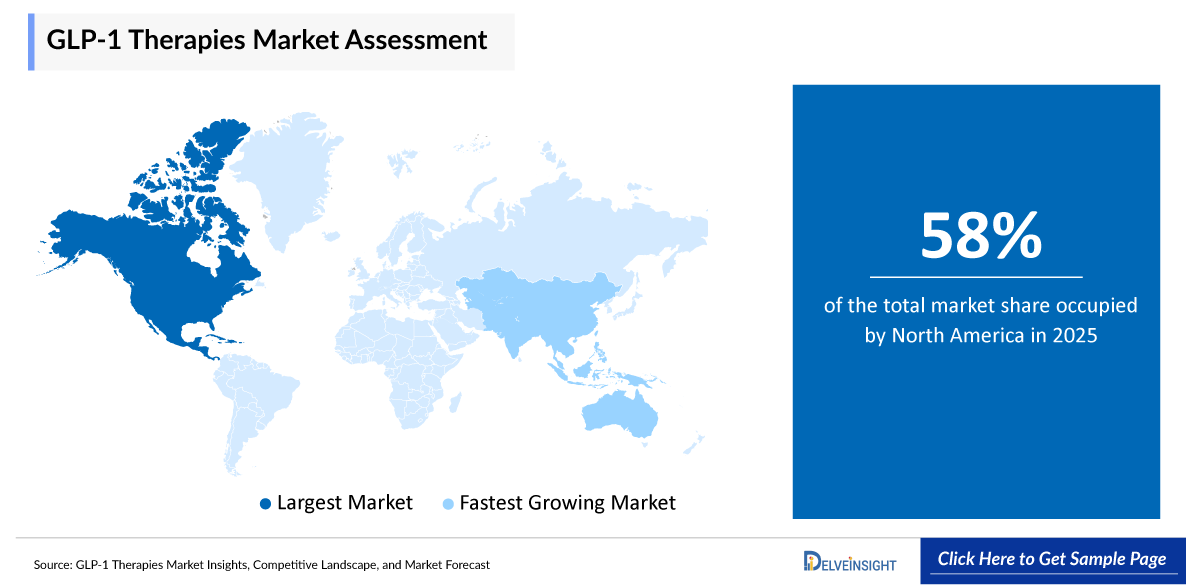
- North America dominated the global GLP-1 Therapies market revenue with a 58% share in 2025, representing the highest regional market share globally.
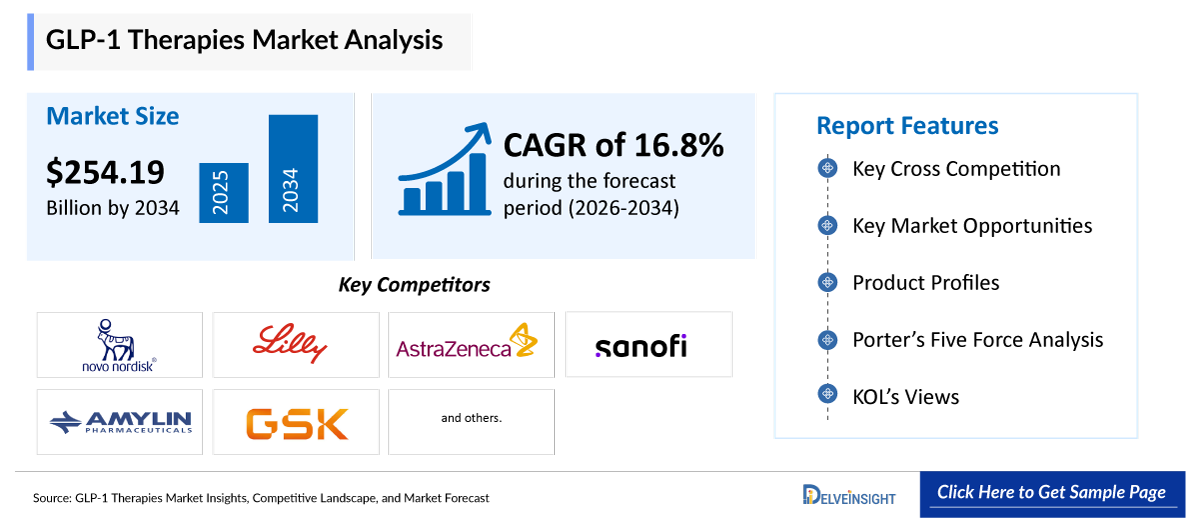
GLP-1 therapies are a class of incretin-based medicines that mimic the action of the naturally occurring glucagon-like peptide-1 hormone, stimulating glucose-dependent insulin secretion, suppressing glucagon release, slowing gastric emptying, and reducing appetite. Originally developed for type 2 diabetes, GLP-1 receptor agonists and dual GIP/GLP-1 receptor agonists have become the standard of care in chronic weight management and are advancing rapidly into cardiovascular risk reduction, obstructive sleep apnea, metabolic dysfunction-associated steatohepatitis, and other cardiometabolic and neurodegenerative indications.
The market is organized by molecule type across biologics and small molecules; by drug class across GLP-1 receptor agonists and dual GIP/GLP-1 receptor agonists; by active ingredient, including semaglutide, liraglutide, dulaglutide, exenatide, lixisenatide, tirzepatide, and orforglipron; by route of administration across subcutaneous injections and oral formulations; and by therapeutic application, led by type 2 diabetes and obesity/chronic weight management, with cardiovascular risk reduction and obstructive sleep apnea emerging as fast-growing labeled indications. Driven by blockbuster commercial performance, an expanding late-stage pipeline of next-generation single, dual, and triple agonists, accelerating regulatory approvals, and the recent arrival of once-daily oral pills, GLP-1 therapies have become one of the fastest-growing and most closely watched categories in global pharmaceuticals.
GLP-1 Therapies Market Key Growth Drivers
- The rising global burden of obesity and type 2 diabetes is expanding demand for incretin-based therapy, with the World Health Organization and World Obesity Federation both reporting continued increases in adult obesity prevalence across developed and emerging markets.
- The arrival of once-daily oral GLP-1 pills is broadening access, with Novo Nordisk launching the Wegovy pill in the United States in January 2026 as the first oral GLP-1 approved for weight management, followed by Eli Lilly's FDA approval of Foundayo (orforglipron) in April 2026 as the first small-molecule GLP-1 pill for obesity.
- A deep late-stage pipeline of next-generation single, dual, and triple agonists, including retatrutide and survodutide, is expanding the addressable market, with industry trackers estimating roughly 190 obesity-focused drug candidates in active development as of 2026.
- Accelerating regulatory approvals and label expansions, including Wegovy's cardiovascular risk reduction and MASH indications and Zepbound's obstructive sleep apnea indication, are broadening the addressable patient population and reinforcing recurring demand.
- Heavy investment in manufacturing capacity is easing supply constraints, including Eli Lilly's build-up of a roughly USD 1.5 billion pre-launch inventory of orforglipron and Novo Nordisk's expanded fill-finish capacity in North Carolina supporting the Wegovy pill launch.
- Surging dealmaking and licensing activity is accelerating pipeline breadth, including AstraZeneca's up-to-USD-18.5-billion obesity and diabetes alliance with China's CSPC Pharmaceutical in January 2026 and Regeneron's up-to-USD-2-billion licensing agreement for Hansoh Pharma's dual GIP/GLP-1 candidate HS-20094.
- The convergence of blockbuster commercial momentum, oral-formulation access expansion, pipeline depth, and label broadening is expected to sustain strong double-digit growth in the GLP-1 Therapies market through 2034.
Key Companies in GLP-1 Therapies Market
The competitive landscape is led by the following active manufacturers:
- Novo Nordisk
- Eli Lilly and Company
- AstraZeneca
- Sanofi
- Amylin Pharmaceuticals
- GlaxoSmithKline (GSK)
- Alvogen
- Jiangsu Hansoh Pharmaceutical Group
- Shanghai Benemae Pharmaceutical
- Hangzhou Jiuyuan Gene Engineering, and others
For illustrative purposes, only the top 10 companies are listed in the Table of Contents. The report may include analysis and references to additional companies relevant to the market assessment.
GLP-1 Therapies Market Size
The following snapshot summarizes the principal report metrics for the GLP-1 Therapies market.
|
Report Metrics |
Details |
|
2025 Market Size |
USD 62.83 billion |
|
2034 Projected Market Size |
USD 254.19 billion |
|
Growth Rate (2026-2034) |
16.8% CAGR |
|
Largest Market |
North America |
|
Fastest Growing Market |
Asia-Pacific |
|
Market Structure |
Concentrated |
All market values are expressed in USD and represent DelveInsight estimates synthesized from primary and secondary research.
Factors Contributing to the Growth of the GLP-1 Therapies Market
GLP-1 Therapies Market Drivers
- Blockbuster Commercial Performance of Incretin-Based Therapies: Blockbuster commercial performance of incretin-based therapies is significantly boosting the GLP-1-based therapies market by demonstrating strong patient demand, expanding physician adoption, and encouraging pharmaceutical companies to invest in new GLP-1 and next-generation incretin therapies. In 2025, Novo Nordisk reported DKK 152.2 billion in total GLP-1 sales, while Eli Lilly's Mounjaro and Zepbound generated $36.5 billion combined, with sales growing 99% and 175%, respectively. These blockbuster revenues are increasing commercial confidence, accelerating geographic expansion, supporting investment in oral and next-generation formulations, and attracting competitors into the market, thereby expanding the overall GLP-1-based therapies market.
- Rising Global Burden of Obesity and Type 2 Diabetes: The escalating global prevalence of obesity and type 2 diabetes is expanding the addressable patient population for GLP-1 therapies. The World Health Organization and World Obesity Federation continue to report rising adult obesity prevalence across North America, Europe, and increasingly in Asia-Pacific and Latin America, while the global type 2 diabetes population continues to grow in parallel with aging populations and changing lifestyles. GLP-1 receptor agonists and dual GIP/GLP-1 receptor agonists deliver substantial, durable weight reduction alongside glycemic control and cardiometabolic benefit, positioning them as first-line and increasingly preferred therapy. As disease prevalence rises and clinical guidelines increasingly recommend early GLP-1 use, demand for these therapies expands directly across the forecast period.
- Arrival of Oral GLP-1 Formulations Expanding Access: The commercial arrival of once-daily oral GLP-1 pills is a transformative access driver for the market. Novo Nordisk launched the Wegovy pill (oral semaglutide 25 mg) in the United States in January 2026 as the first oral GLP-1 approved for chronic weight management and cardiovascular risk reduction, delivering weight loss comparable to the injectable formulation. Eli Lilly followed with FDA approval of Foundayo (orforglipron) in April 2026, the first small-molecule GLP-1 pill for obesity, offering needle-free, food-and-water-unrestricted dosing. Because oral formulations remove cold-chain and injection barriers and can be manufactured at substantially lower cost than injectable peptides, they are expected to unlock adoption among needle-averse patients and expand the market into broader primary-care and retail-pharmacy channels through the forecast period.
- Deep Late-Stage Pipeline of Next-Generation Agonists: A deep and rapidly maturing pipeline of next-generation single, dual, and triple incretin agonists is expanding the long-term addressable market. Industry trackers estimate approximately 190 obesity-focused drug candidates in active development as of 2026, including Eli Lilly's triple GIP/GLP-1/glucagon agonist retatrutide, which has demonstrated the highest Phase 3 weight loss reported in the class, and Boehringer Ingelheim's survodutide. As these next-generation candidates progress toward regulatory filing and approval in the 2027-2029 window, they are expected to intensify competition, expand efficacy ceilings, and broaden the therapeutic options available across diabetes, obesity, and adjacent cardiometabolic indications.
- Accelerating Regulatory Approvals and Label Expansions: A growing wave of regulatory approvals and label expansions is increasing the addressable patient population and reinforcing recurring demand. Wegovy has secured labels spanning chronic weight management, major adverse cardiovascular event risk reduction, and metabolic dysfunction-associated steatohepatitis with liver fibrosis, while Zepbound has added an obstructive sleep apnea indication and Mounjaro's glycemic-control label was expanded in December 2025 to include pediatric patients as young as 10 years of age. Each label expansion broadens the eligible patient population and creates durable, recurring prescription demand, reinforcing market growth across the forecast period.
- Investment in Manufacturing Capacity Easing Supply Constraints: Heavy capital investment in manufacturing capacity is easing the supply constraints that have periodically limited GLP-1 access since 2022. Eli Lilly built a pre-launch inventory of orforglipron worth an estimated USD 1.5 billion ahead of its FDA decision, up from USD 550 million a year earlier, while Novo Nordisk expanded fill-finish capacity at its North Carolina facilities to support the Wegovy pill launch. This expanding manufacturing base improves supply reliability, reduces the risk of shortages and compounded-drug substitution, and supports the scale-up of both injectable and oral GLP-1 therapies through the forecast period.
- Surging Dealmaking, Licensing, and Big-Pharma Interest: Surging investor and big-pharma interest is accelerating the build-out of the global GLP-1 pipeline. AstraZeneca signed an alliance worth up to USD 18.5 billion with China's CSPC Pharmaceutical Group in January 2026 to develop next-generation weight-loss medicines, building on its earlier licensing deal for Eccogene's oral GLP-1 candidate elecoglipron. Regeneron agreed to pay Hansoh Pharma up to USD 2 billion for ex-China rights to the dual GIP/GLP-1 candidate HS-20094, while Merck licensed Hansoh's oral GLP-1 candidate HS-10535 for up to USD 2 billion. This wave of capital and licensing activity validates the sector's long-term growth and channels sustained investment toward next-generation incretin therapies across the forecast period.
GLP-1 Therapies Market Restraints
Despite exceptional momentum, the GLP-1 Therapies market faces material constraints. High treatment cost and uneven insurance and government reimbursement, particularly outside the United States and Europe, restrict broad-based access and concentrate use among higher-income patients and geographies. Persistence and adherence remain limiting factors, with industry data indicating that roughly 28% of GLP-1 users discontinue treatment within one year, driven by gastrointestinal tolerability issues, injection burden, and cost. Manufacturing and supply-chain constraints associated with complex peptide synthesis have caused periodic shortages since 2022, prompting regulatory scrutiny of compounded and counterfeit GLP-1 products that pose safety risks and complicate branded-market forecasting. Looming patent expiries on early-generation active ingredients, including exenatide and liraglutide, and the approaching 2026 patent cliff for semaglutide in certain markets, are opening the door to biosimilar and generic competition, particularly from China and India, which could pressure branded pricing. Reimbursement policy uncertainty, the logistical complexity of cold-chain distribution for injectable formulations, and a still-developing long-term safety and cardiometabolic outcomes evidence base for newer dual and triple agonists further temper the pace of adoption, even as the underlying drivers of obesity prevalence, pipeline depth, and oral-formulation access expansion remain firmly intact.
GLP-1 Therapies Market Segment Analysis
The GLP-1 therapies market by molecule type (biologics, small molecules), drug class (GLP-1 receptor agonists, dual GIP/GLP-1 receptor agonists), active ingredients (semaglutide, liraglutide, dulaglutide, exenatide, lixisenatide, tirzepatide, orforglipron), route of administration (subcutaneous injections, oral), therapeutic application (type 2 diabetes, obesity/chronic weight management, cardiovascular risk reduction, obstructive sleep apnea), and geography (North America, Europe, Asia-Pacific, and Rest of World).
By Molecule Type
Dominant Subsegment: Biologics.
The biologics segment accounted for 74% of the GLP-1 Therapies market in 2025. Biologics dominate because nearly every currently marketed GLP-1 active ingredient, including semaglutide, liraglutide, dulaglutide, exenatide, lixisenatide, and tirzepatide, is a synthetic peptide manufactured through complex biologic production processes, and these agents account for the overwhelming majority of prescription volume and revenue across diabetes and obesity indications. The scale, injection-based delivery, and manufacturing complexity of these peptide therapies have long defined the category. However, small molecules are the fastest-growing molecule type following Eli Lilly's April 2026 approval of Foundayo (orforglipron), the first small-molecule GLP-1 receptor agonist, which offers simpler chemical synthesis, potentially lower manufacturing cost, and easier oral formulation than peptide-based biologics. As additional oral small-molecule candidates progress through late-stage development, this segment is expected to narrow the gap with biologics, though the depth of the approved biologics portfolio secures its leadership across the forecast period.
By Drug Class
Dominant Subsegment: GLP-1 Receptor Agonists.
The GLP-1 receptor agonists segment accounted for 57% of the GLP-1 Therapies market in 2025. GLP-1 receptor agonists lead the market because they encompass the broadest and most established portfolio of approved active ingredients, including semaglutide, liraglutide, dulaglutide, exenatide, lixisenatide, and orforglipron, spanning the longest history of clinical use, the widest set of approved indications, and the deepest global regulatory footprint across diabetes, obesity, and cardiovascular risk reduction. Dual GIP/GLP-1 receptor agonists, represented commercially by tirzepatide, are the fastest-growing drug class, propelled by superior average weight-loss outcomes relative to single-agonist therapies and the outsized commercial performance of Mounjaro and Zepbound, which together generated more than USD 60 billion in 2025 sales. As additional dual and triple agonists such as retatrutide advance toward approval, this segment is expected to continue gaining share, even as the breadth of the approved GLP-1 receptor agonist portfolio secures its leadership across the forecast period.
By Active Ingredient
Dominant Subsegment: Semaglutide.
The semaglutide segment accounted for 43% of the GLP-1 Therapies market in 2025. Semaglutide is the leading active ingredient because it is approved and commercialized across the widest range of formulations and indications of any GLP-1 therapy, spanning injectable and oral formulations under the Ozempic, Wegovy, and Rybelsus brands, and label claims covering type 2 diabetes, chronic weight management, cardiovascular risk reduction, and metabolic dysfunction-associated steatohepatitis. The January 2026 US launch of the Wegovy pill further extended semaglutide's reach into needle-averse patient populations. Tirzepatide is the fastest-growing active ingredient, with combined Mounjaro and Zepbound sales rising sharply in 2025 on the strength of superior average weight-loss outcomes, while orforglipron, approved in April 2026, is the newest entrant and is expected to post rapid growth as the first small-molecule oral GLP-1 for obesity. Nonetheless, the breadth of approved indications and formulations secures semaglutide's leadership across the forecast period.
By Route of Administration
Dominant Subsegment: Subcutaneous Injections.
The subcutaneous injections segment accounted for 82% of the GLP-1 Therapies market in 2025. Subcutaneous injection remains the leading route of administration because it underpins nearly all of the class's best-selling products, including Ozempic, Wegovy injection, Mounjaro, Zepbound, and Trulicity, and because injectable peptide formulations continue to deliver the highest reported average weight loss and glycemic control within the class. Weekly dosing convenience and an established base of prescribers and patients reinforce the segment's scale. Oral formulations are the fastest-growing route of administration following the January 2026 launch of the Wegovy pill and the April 2026 approval of Foundayo (orforglipron), both of which remove injection and cold-chain barriers and are expected to draw meaningfully needle-averse patients into treatment. While oral GLP-1s are expected to post the fastest growth through 2034, the clinical performance and installed base of subcutaneous therapies secure the segment's leadership across the forecast period.
By Therapeutic Application
Dominant Subsegment: Type 2 Diabetes.
The Type 2 Diabetes segment accounted for 51% of the GLP-1 Therapies market in 2025. Type 2 diabetes remains the leading therapeutic application because GLP-1 receptor agonists were first developed and approved for glycemic control, and diabetes-labeled products such as Ozempic, Mounjaro, and Trulicity continue to generate the largest base of chronic, recurring prescriptions worldwide, reinforced by broad clinical guideline endorsement and established reimbursement pathways. Obesity/Chronic Weight Management is the fastest-growing therapeutic application, propelled by the commercial success of Wegovy and Zepbound, the arrival of oral formulations, and rapidly expanding public and private payer coverage for weight-loss indications. Cardiovascular Risk Reduction and Obstructive Sleep Apnea are newer, fast-growing labeled indications following Wegovy's and Zepbound's respective label expansions, broadening the eligible patient population beyond diabetes and obesity. While obesity/chronic weight management is closing the gap rapidly, the depth and maturity of the type 2 diabetes prescription base secure its leadership across the forecast period.
GLP-1 Therapies Market Region Analysis
Dominant Region: North America
North America accounted for 58% of the global GLP-1 Therapies market revenue in 2025, representing the highest regional market share globally. The region's dominance reflects the presence of the two market-leading innovators, Novo Nordisk and Eli Lilly, both of which maintain their largest commercial infrastructure and highest list prices in the United States, alongside broad direct-to-consumer marketing, expanding employer and Medicare coverage, and the highest per-capita obesity and type 2 diabetes prevalence among developed markets. The United States hosts the earliest and broadest launches of new GLP-1 products, including the January 2026 Wegovy pill launch and the April 2026 Foundayo approval, and benefits from expanding Medicare Part D coverage for obesity medications beginning in April 2026. Heavy manufacturing investment, including expanded North Carolina fill-finish capacity and multibillion-dollar pre-launch inventory build-up, reinforces the region's supply leadership. Strong clinical-trial infrastructure, FDA regulatory clarity including the Commissioner's National Priority Voucher program, and deep payer familiarity with the drug class anchor North America's continued leadership across the forecast period.
Fastest Growing Region: Asia-Pacific
Asia-Pacific is the fastest-growing region in the GLP-1 Therapies market. The region's elevated CAGR is driven by rising obesity and type 2 diabetes prevalence, rapid healthcare-infrastructure investment, and an accelerating wave of domestic drug development across China, Japan, India, South Korea, and Australia. China is emerging as both a major consumption market and a global GLP-1 innovation hub, with companies including Jiangsu Hansoh Pharmaceutical Group licensing dual GIP/GLP-1 and oral GLP-1 candidates to Regeneron and Merck, and Shanghai Benemae Pharmaceutical and Hangzhou Jiuyuan Gene Engineering advancing beinaglutide and biosimilar semaglutide products ahead of anticipated 2026 patent expiries. India is scaling low-cost generic and biosimilar production capacity to widen affordable access across South Asia. Government healthcare investment, an expanding diagnosed patient population, and growing domestic manufacturing capability are accelerating regional adoption and positioning Asia-Pacific as the principal source of incremental growth over the forecast period.
GLP-1 Therapies Market Regional Commentary
North America
North America accounted for 58% of the global GLP-1 Therapies market revenue in 2025. The United States dominates on the strength of Novo Nordisk's and Eli Lilly's commercial leadership, broad and expanding payer coverage, the earliest global launches of new oral and injectable formulations, and heavy investment in domestic manufacturing capacity, while Canada and Mexico contribute a smaller but growing share supported by expanding regulatory approvals and rising diagnosed obesity and diabetes prevalence.
Europe
Europe is a large and advanced regional market, supported by established European Medicines Agency regulatory pathways, strong clinical-research infrastructure across Germany, the United Kingdom, France, Italy, and Spain, and growing but uneven national reimbursement policies for obesity indications. Germany and the United Kingdom lead regional adoption, while broader European access to weight-management indications continues to expand as national health systems evaluate long-term cost-effectiveness evidence.
Asia-Pacific
Asia-Pacific is the fastest-growing region, propelled by rising obesity and diabetes prevalence, rapid healthcare-infrastructure investment, and an accelerating wave of domestic drug development across China, Japan, India, South Korea, and Australia. China's growing base of GLP-1 licensing deals and biosimilar development, Japan's steady adoption of innovator therapies, and India's low-cost generic manufacturing capacity are accelerating regional volume growth and clinical-trial activity.
Rest of World
The Rest of World region, spanning Latin America, the Middle East, and Africa, is an emerging growth frontier. Rising obesity prevalence, including in markets such as Brazil, expanding private-pay and telehealth access channels, and gradual efforts to broaden public reimbursement for metabolic disease are widening access, while international licensing partnerships and growing local manufacturing interest support the build-out of regional supply.
GLP-1 Therapies Market Competitive Landscape
The GLP-1 Therapies market is classified as Concentrated. Two integrated innovators with global commercial scale, Novo Nordisk and Eli Lilly and Company, together account for the substantial majority of branded revenue and anchor the top tier, while established pharmaceutical companies including AstraZeneca, Sanofi, and GlaxoSmithKline (GSK) compete through licensed pipeline assets and legacy incretin franchises, and specialized generic, biosimilar, and Chinese domestic manufacturers, including Amylin Pharmaceuticals, Alvogen, Jiangsu Hansoh Pharmaceutical Group, Shanghai Benemae Pharmaceutical, and Hangzhou Jiuyuan Gene Engineering, compete on cost, regional access, and next-generation licensing partnerships, increasing competition as early-generation active ingredients approach patent expiry.
The competitive landscape can be evaluated across the following dimensions:
- Market concentration: Concentrated, with Novo Nordisk and Eli Lilly leading and a fast-growing field of licensed-pipeline and generic/biosimilar challengers.
- Leading players: Novo Nordisk and Eli Lilly and Company anchor the top tier through blockbuster commercial franchises spanning injectable and oral GLP-1 products.
- Geographic reach: Leaders operate global commercial networks spanning North America, Europe, and Asia-Pacific; Novo Nordisk and Eli Lilly both maintain manufacturing and launch infrastructure across multiple continents.
- Pipeline breadth: Top players and licensing partners span single, dual, and triple agonist mechanisms, oral small-molecule programs, and combination therapies targeting obesity, diabetes, and adjacent cardiometabolic conditions.
- Formulation innovation: Ownership of both injectable and oral GLP-1 platforms, including the first-to-market oral pills launched in 2026, is a decisive commercial advantage.
- Strategic partnerships: Licensing tie-ups with Chinese biotechs, such as AstraZeneca's alliance with CSPC Pharmaceutical, Regeneron's agreement with Hansoh Pharma, and Merck's license for Hansoh's oral GLP-1 candidate, extend pipeline reach.
- M&A and licensing activity: Active dealmaking, including AstraZeneca's up-to-USD-18.5-billion CSPC alliance and multibillion-dollar licensing agreements for Chinese-originated GLP-1 candidates.
- Manufacturing capabilities: Large-scale peptide synthesis, fill-finish capacity, and multibillion-dollar pre-launch inventory build-up are key competitive moats for the leading innovators.
- Innovation focus: Dual and triple agonist scale-up, oral small-molecule development, and next-generation combination therapies targeting superior efficacy and dosing convenience.
GLP-1 Therapies Market Recent Developmental Activities
- In Aug 2026, the U.S. FDA approved Eli Lilly's Mounjaro (tirzepatide) for an expanded indication to lower major adverse cardiovascular events (MACE) in adults with type 2 diabetes and established cardiovascular disease. Beyond glycemic control, clinical data demonstrated tirzepatide's efficacy in reducing heart attack and stroke risks, solidifying the dual GIP/GLP-1 receptor agonist's role in comprehensive cardiometabolic health management.
- In April 2026, Eli Lilly and Company received FDA approval for Foundayo (orforglipron), the first small-molecule GLP-1 pill for chronic weight management, offering once-daily dosing without food or water restrictions. Strategic significance: Establishes Lilly's second blockbuster obesity franchise and the first approved oral small-molecule GLP-1 therapy.
- In January 2026, Novo Nordisk launched the Wegovy pill (oral semaglutide 25 mg) in the United States, the first oral GLP-1 approved for chronic weight management and cardiovascular risk reduction, supported by expanded North Carolina manufacturing capacity. Strategic significance: Extends the Wegovy franchise into needle-averse patient populations and defends Novo Nordisk's oral GLP-1 leadership.
- In January 2026, AstraZeneca signed an alliance worth up to USD 18.5 billion with China-based CSPC Pharmaceutical Group to develop next-generation once-monthly injectable and oral weight-management therapies. Strategic significance: Materially deepens AstraZeneca's obesity and diabetes pipeline and secures access to CSPC's AI-driven peptide discovery platform.
- In June 2025, Regeneron agreed to pay Jiangsu Hansoh Pharmaceutical Group up to USD 2 billion for ex-China rights to HS-20094, a Phase 3 dual GIP/GLP-1 receptor agonist positioned as a potential rival to tirzepatide. Strategic significance: Adds a late-stage dual-agonist asset to Regeneron's metabolic disease pipeline and validates Hansoh's GLP-1 development platform.
- In December 2025, Eli Lilly and Company secured an expanded pediatric label for Mounjaro, extending glycemic-control use to patients as young as 10 years of age with type 2 diabetes. Strategic significance: Broadens the eligible patient population and reinforces Mounjaro's position across the full diabetes care continuum.
- In December 2024, Merck & Co. entered an exclusive global license agreement with Jiangsu Hansoh Pharmaceutical Group for HS-10535, an investigational oral small-molecule GLP-1 receptor agonist, in a deal worth up to approximately USD 2 billion. Strategic significance: Marks Merck's entry into the GLP-1 obesity and cardiometabolic space through a China-originated pipeline asset.
- In 2025 and 2026, Shanghai Benemae Pharmaceutical advanced beinaglutide (Feisumei), one of the first China-approved GLP-1 receptor agonists for weight management, and continued late-stage development of additional GLP-1 candidates for the Chinese market. Strategic significance: Strengthens Benemae's position as an early domestic entrant in China's weight-management GLP-1 market.
- In 2025 and 2026, Hangzhou Jiuyuan Gene Engineering advanced late-stage clinical trials for a semaglutide biosimilar for type 2 diabetes and initiated late-stage trials for a semaglutide weight-management biosimilar ahead of anticipated 2026 patent expiries in China. Strategic significance: Positions Jiuyuan among the first companies expected to bring biosimilar semaglutide to the Chinese market.
- In 2025, AstraZeneca reported positive Phase 2b results for elecoglipron (AZD5004), an oral small-molecule GLP-1 receptor agonist licensed from China-based Eccogene, in both obesity (VISTA) and type 2 diabetes (SOLSTICE) trials, supporting advancement to Phase 3. Strategic significance: Strengthens AstraZeneca's internal oral GLP-1 pipeline ahead of Phase 3 development.
- In 2024 and 2025, Alvogen continued to expand its portfolio of generic and specialty GLP-1-adjacent metabolic therapies across its core European and North American markets, supporting broader, lower-cost access as early-generation active ingredients approach patent expiry. Strategic significance: Reinforces the role of specialty generic manufacturers in widening affordable access to GLP-1-class therapies.
GLP-1 Therapies Market Segmentation
- GLP-1 Therapies Market by Molecule Type
- Biologics
- Small Molecules
- GLP-1 Therapies Market by Drug Class
- GLP-1 Receptor Agonists
- Dual GIP/GLP-1 Receptor Agonists
- GLP-1 Therapies Market by Active Ingredients
- Semaglutide
- Liraglutide
- Dulaglutide
- Exenatide
- Lixisenatide
- Tirzepatide
- Orforglipron
- GLP-1 Therapies Market by Route of Administration
- Subcutaneous Injections
- Oral
- GLP-1 Therapies Market by Therapeutic Application
- Type 2 Diabetes
- Obesity/Chronic Weight Management
- Cardiovascular Risk Reduction
- Obstructive Sleep Apnea
GLP-1 Therapies Market Assessment by Geography
- North America GLP-1 Therapies Market Assessment
- United States GLP-1 Therapies Market Size in USD million (2023-2034)
- Canada GLP-1 Therapies Market Size in USD million (2023-2034)
- Mexico GLP-1 Therapies Market Size in USD million (2023-2034)
- Europe GLP-1 Therapies Market Assessment
- Germany GLP-1 Therapies Market Size in USD million (2023-2034)
- United Kingdom GLP-1 Therapies Market Size in USD million (2023-2034)
- France GLP-1 Therapies Market Size in USD million (2023-2034)
- Italy GLP-1 Therapies Market Size in USD million (2023-2034)
- Spain GLP-1 Therapies Market Size in USD million (2023-2034)
- Rest of Europe GLP-1 Therapies Market Size in USD million (2023-2034)
- Asia-Pacific GLP-1 Therapies Market Assessment
- China GLP-1 Therapies Market Size in USD million (2023-2034)
- Japan GLP-1 Therapies Market Size in USD million (2023-2034)
- India GLP-1 Therapies Market Size in USD million (2023-2034)
- Australia GLP-1 Therapies Market Size in USD million (2023-2034)
- South Korea GLP-1 Therapies Market Size in USD million (2023-2034)
- Rest of Asia-Pacific GLP-1 Therapies Market Size in USD million (2023-2034)
- Rest of the World (RoW) GLP-1 Therapies Market Assessment
- Middle East GLP-1 Therapies Market Size in USD million (2023-2034)
- Africa GLP-1 Therapies Market Size in USD million (2023-2034)
- South America GLP-1 Therapies Market Size in USD million (2023-2034)
GLP-1 Therapies Market Recent Industry Trends and Milestones (2023-2026):
|
Category |
Key Developments |
|
GLP-1 Therapies Market Product Approval |
Regulatory momentum is expanding the addressable market. The FDA approved Novo Nordisk's oral Wegovy pill in December 2025 for launch in January 2026, and approved Eli Lilly's Foundayo (orforglipron) in April 2026, marking the first two oral GLP-1 approvals for weight management. Zepbound's obstructive sleep apnea indication and Mounjaro's expanded pediatric label further broaden eligible patient populations, while each approval and label expansion creates durable demand across the GLP-1 therapy value chain. |
|
GLP-1 Therapies Market Expansion |
Manufacturers broadened production capacity to meet surging demand and avoid recurring shortages. Eli Lilly expanded pre-launch orforglipron inventory to an estimated USD 1.5 billion, and Novo Nordisk scaled fill-finish capacity in North Carolina ahead of the Wegovy pill launch. Chinese manufacturers, including Shanghai Benemae Pharmaceutical and Hangzhou Jiuyuan Gene Engineering, advanced domestic production of beinaglutide and biosimilar semaglutide ahead of anticipated 2026 patent expiries. |
|
GLP-1 Therapies Market Investment |
Capital and licensing activity accelerated sharply. AstraZeneca signed an up-to-USD-18.5-billion alliance with CSPC Pharmaceutical (January 2026), Regeneron agreed to pay Hansoh Pharma up to USD 2 billion for HS-20094 (June 2025), and Merck licensed Hansoh's HS-10535 for up to approximately USD 2 billion (December 2024). Total global GLP-1 therapy sales reached an estimated USD 132 billion in 2025, up 33.5% year-over-year. |
|
Company Strategy |
Novo Nordisk: Defends its oral and injectable semaglutide franchise while expanding manufacturing capacity. Eli Lilly and Company: Leads with tirzepatide (Mounjaro, Zepbound) and extends leadership with the Foundayo oral small-molecule launch. AstraZeneca: Rebuilding its GLP-1 pipeline through the Eccogene and CSPC licensing deals. Sanofi and GlaxoSmithKline (GSK): Leverage legacy incretin experience while evaluating external business development. Amylin Pharmaceuticals, Alvogen, Jiangsu Hansoh Pharmaceutical Group, Shanghai Benemae Pharmaceutical, and Hangzhou Jiuyuan Gene Engineering: Compete through legacy active ingredients, generic and biosimilar manufacturing, and outbound licensing of next-generation candidates. |
|
Emerging Technologies |
Dual and triple agonist mechanisms are the leading edge of innovation, with tirzepatide's dual GIP/GLP-1 mechanism scaling commercially and triple agonists such as retatrutide reporting the highest Phase 3 weight loss yet observed in the class. Oral small-molecule GLP-1 platforms, exemplified by orforglipron and elecoglipron, are emerging as a lower-cost, needle-free alternative to peptide-based injectables. Biosimilar and generic development in China and India is accelerating ahead of the 2026 semaglutide patent cliff, and combination approaches pairing GLP-1 mechanisms with amylin, glucagon, and other targets are advancing through clinical development. |
GLP-1 Therapies Market Startup Funding and Investment Trends
Investment in the GLP-1 Therapies ecosystem has concentrated on next-generation dual and triple agonist mechanisms, oral small-molecule formulations, and China-originated licensing assets. The following activity illustrates recent funding and investment trends and technology focus.
|
Company |
Total Funding |
Funding Stage |
Main Offering |
Core Technology |
|
Jiangsu Hansoh Pharmaceutical Group |
Up to ~USD 2 billion (Regeneron licensing) |
Licensed / Phase 3 |
Dual GIP/GLP-1 receptor agonist (HS-20094) |
Jiangsu Hansoh Pharmaceutical Group |
|
Request for unlocking the report of the @ GLP-1 Therapies Market Insights | ||||
Capital is flowing toward providers that hold late-stage dual and triple agonist assets and manufacturers positioned to supply lower-cost biosimilar alternatives. Total global GLP-1 therapy sales reached an estimated USD 132 billion in 2025, and AstraZeneca's up-to-USD-18.5-billion alliance with CSPC Pharmaceutical underscores the strategic value placed on next-generation weight-management pipelines. Emerging providers such as Jiangsu Hansoh Pharmaceutical Group are licensing late-stage assets to global partners including Regeneron and Merck, while Chinese biosimilar developers including Shanghai Benemae Pharmaceutical and Hangzhou Jiuyuan Gene Engineering are scaling domestic manufacturing ahead of the 2026 semaglutide patent cliff. Collectively, these investments signal conviction that dual/triple agonist mechanisms, oral small-molecule formulations, and biosimilar-ready manufacturing will define the next phase of competitive advantage in the global GLP-1 Therapies market.
Key Takeaways from the GLP-1 Therapies Market Report Study
- Market size analysis for the current GLP-1 Therapies market size (2025), and market forecast for 9 years (2026 to 2034).
- Top key product/technology developments, mergers, acquisitions, partnerships, and joint ventures that happened over the last 3 years.
- Key companies dominating the global GLP-1 Therapies market.
- Various opportunities available for competitors in the GLP-1 Therapies market space.
- What are the top-performing segments in 2025? How will these segments perform in 2034?
- Which are the top-performing regions and countries in the current GLP-1 Therapies market scenario?
- Which are the regions and countries where companies should concentrate their opportunities for GLP-1 Therapies market growth in the future?
Target audience who can benefit from this GLP-1 Therapies market report study
- GLP-1 Therapies product providers
- Research organizations and consulting companies
- Neurodegenerative disease therapeutics-related organizations, associations, forums, and other alliances
- Government and corporate offices
- Start-up companies, venture capitalists, and private equity firms
- Distributors and traders dealing in GLP-1 Therapies
- Various end-users who want to know more about the GLP-1 Therapies market and the latest technological developments in the GLP-1 Therapies market.

