Granulomatosis with Polyangiitis Market Summary
- The Granulomatosis with Polyangiitis market size is anticipated to grow with a significant CAGR during the study period (2022-2036).
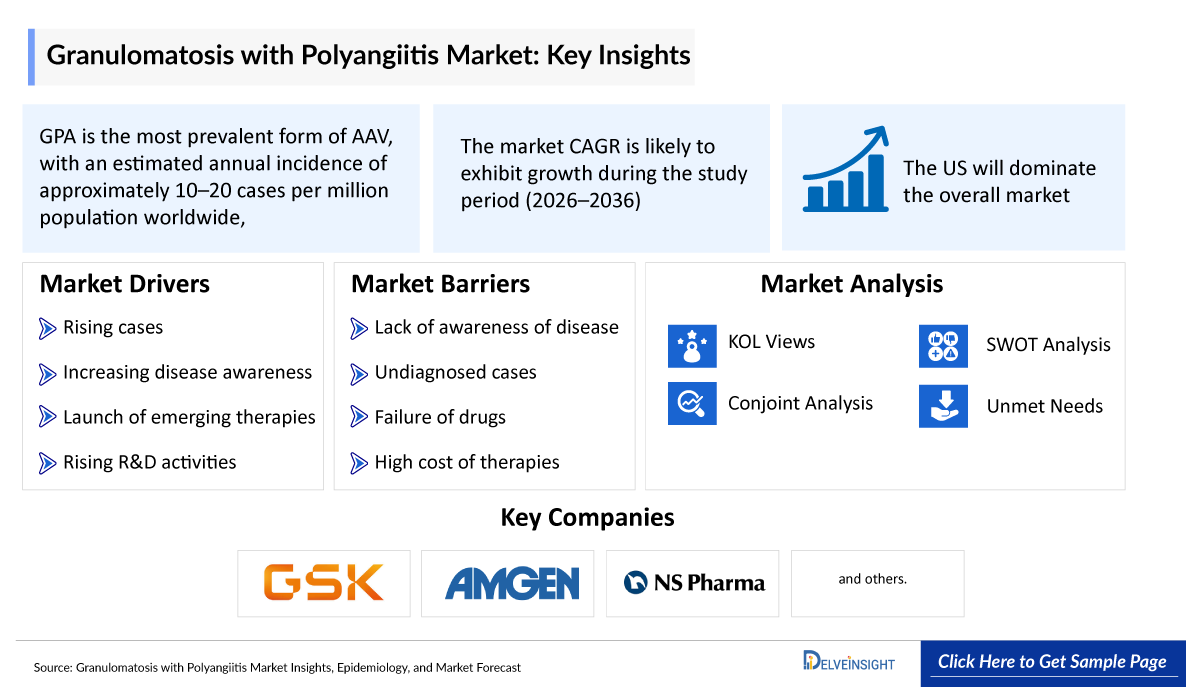
- The leading Granulomatosis with Polyangiitis companies developing therapies in the treatment market include - GSK, Amgen, NS Pharma, and others.
Granulomatosis with Polyangiitis Market & Epdidemiology Insights
- GPA is a rare ANCA-associated vasculitis (AAV) characterized by necrotizing inflammation of small- to medium-sized blood vessels, often involving the upper and lower respiratory tracts and kidneys. It is associated with anti-neutrophil cytoplasmic antibodies (ANCA) and presents with a wide range of systemic manifestations.
- AAVs are rare autoimmune disorders characterized by necrotizing inflammation of small- to medium-sized blood vessels. They are classified into three main types: GPA, microscopic polyangiitis (MPA), and eosinophilic granulomatosis with polyangiitis (EGPA). Renal involvement occurs in over 75% of patients. AAV is associated with PR3-ANCA (c-ANCA) and MPO-ANCA (p-ANCA). GPA affects approximately 3 per 100,000 people, according to the Vasculitis Foundation.
- Routine laboratory tests in GPA are nonspecific. Findings may include abnormal renal function tests and urinalysis in patients with kidney involvement, low-titer positive rheumatoid factor in approximately two-thirds of patients, and elevated inflammatory markers such as ESR and CRP.
- The primary goal of treatment in GPA is to achieve rapid remission, prevent relapse, minimize irreversible organ damage, and reduce long-term treatment toxicity. This is typically accomplished using immunosuppressive and targeted anti-inflammatory therapies to control vascular inflammation, suppress aberrant immune activity, and maintain long-term disease control.
- Despite advances in targeted and steroid-sparing therapies, a significant unmet need remains in GPA for safer long-term options that achieve sustained remission, reduce relapse rates, and minimize cumulative immunosuppression-related toxicity and irreversible organ damage.
- Market growth in GPA is expected to be driven by increasing use of targeted therapies such as rituximab (RITUXAN) and avacopan (TAVNEOS), along with emerging pipeline agents like SHR-1703 and depemokimab. These therapies aim to improve remission rates, reduce relapses, and minimize long-term glucocorticoid exposure in ANCA-associated vasculitis.
Granulomatosis with Polyangiitis Market Size and Forecast in the 7MM
- 2025 GPA Market Size: ~USD XX million
- 2036 Projected GPA Market Size: ~USD XX million
- GPA Growth Rate (2026–2036): ~XX% CAGR
Request for unlocking the sample page of the "Granulomatosis with Polyangiitis Market Forecast"
Key Factors Driving the Granulomatosis with Polyangiitis Market
- Expansion of Targeted and Steroid-Sparing Therapies: The treatment landscape for GPA is shifting from conventional immunosuppression toward targeted therapies such as RITUXAN and TAVNEOS. Emerging treatments aim to improve disease control, reduce relapse rates, and limit long-term corticosteroid exposure, supporting more personalized and durable management strategies.
- Increasing Recognition and Diagnosis of GPA: Growing awareness of ANCA-associated vasculitis among healthcare professionals, coupled with improved access to ANCA testing and advanced imaging techniques, is supporting earlier and more accurate diagnosis of GPA. This trend is contributing to a larger identified patient population and enabling earlier intervention to prevent irreversible organ damage.
- Advancements in Precision Diagnostics and Disease Monitoring: The increasing use of ANCA serology, improved disease classification criteria, and enhanced monitoring of disease activity are facilitating better patient stratification and management. These developments are helping clinicians identify relapses earlier, optimize treatment decisions, and improve long-term clinical outcomes.
Scope of the Granulomatosis with Polyangiitis Market Report | |
|
Study Period |
2022–2036 |
|
Historical Year |
2022–2025 |
|
Forecast Period |
2026–2036 |
|
Base Year |
2026 |
|
Geographies Covered |
· North America: The US; · Europe: Germany, France, Italy, Spain, and the UK; · Asia-Pacific: Japan |
|
GPA Market CAGR (Forecast period) |
~XX% (2026–2036) |
|
GPA Epidemiology Segmentation Analysis |
Patient Burden Assessment · Total Diagnosed Prevalent Cases of Granulomatosis with Polyangiitis · Diagnosed Prevalent Cases of Granulomatosis with Polyangiitis by Organ Involvement · Diagnosed Prevalent Cases of Granulomatosis with Polyangiitis by Antibody Type · Diagnosed Prevalent Cases of Granulomatosis with Polyangiitis by Severity · Total Treated Cases of Granulomatosis with Polyangiitis |
|
GPA Companies |
· GSK · Amgen · NS Pharma, and others |
|
GPA Therapies |
· Depemokimab · SHR-1703 · Avacopan (TAVNEOS) · NS-229 · Rituximab (RITUXAN), and others |
|
GPA Market |
Segmented by · Region/Geographies · Drugs/Therapies |
|
Analysis |
• Addressable Patient Population • Market Drivers And Market Barriers • Cost Assumptions And Pricing Analogues • KOL Views • SWOT Analysis • Reimbursement • Conjoint Analysis • Unmet Needs |
DelveInsight's "Granulomatosis with Polyangiitis Market Insights, Epidemiology and Market Forecast – 2036" report delivers an in-depth understanding of the GPA, historical and forecasted epidemiology, as well as the Granulomatosis with Polyangiitis therapeutics market trends in the United States, EU4 (Germany, Spain, Italy, and France) and the United Kingdom, and Japan.
The Granulomatosis with Polyangiitis market report delivers a comprehensive analysis of the current treatment landscape, including standards of care, clinical practices, and evolving therapeutic algorithms. It evaluates GPA patient burden trends, revenue & market share dynamics, peak patient share & therapy uptake analysis, and provides an in-depth market size assessment, and growth rate projections (historical & forecast 2022–2036) across global regions. The report highlights key unmet medical needs in GPA and maps the competitive and clinical landscape to uncover high value opportunities, providing a clear outlook on future market growth potential.
Granulomatosis with Polyangiitis Disease Understanding
Granulomatosis with Polyangiitis Overview and Diagnosis
GPA, formerly known as Wegener's granulomatosis, is a rare, systemic autoimmune disorder characterized by necrotizing inflammation of small- to medium-sized blood vessels and granuloma formation, primarily affecting the upper respiratory tract, lungs, and kidneys. GPA belongs to the group of AAV, with the majority of patients testing positive for proteinase 3 (PR3)-ANCA. The disease can present with a wide range of manifestations, including chronic sinusitis, nasal crusting or ulcers, cough, hemoptysis, pulmonary nodules, and rapidly progressive glomerulonephritis, potentially leading to irreversible organ damage if left untreated.
Granulomatosis with Polyangiitis Diagnosis
Diagnosis is based on a combination of clinical presentation, ANCA serology, imaging studies, and histopathological confirmation through tissue biopsy when feasible. Early and accurate diagnosis is critical to initiating timely treatment, preventing disease progression, and reducing the risk of long-term organ impairment.
Further details are provided in the report...
Current Granulomatosis with Polyangiitis Treatment Landscape
The treatment landscape for GPA has evolved from broad immunosuppression toward more targeted approaches aimed at achieving durable remission while minimizing toxicity. Management is typically divided into induction and maintenance phases, with goals of rapidly controlling inflammation, preventing irreversible organ damage, and reducing relapse risk. For severe disease, induction therapy commonly includes RITUXAN or cyclophosphamide in combination with glucocorticoids, while methotrexate may be used in less severe cases. Maintenance therapy often involves rituximab, azathioprine, or methotrexate to sustain remission.
More recently, TAVNEOS has emerged as a steroid-sparing option, representing a significant advancement in GPA management. Despite these improvements, relapse, cumulative organ damage, and long-term corticosteroid toxicity remain key challenges, underscoring the need for safer and more durable treatment strategies.
Further details related to country-based variations are provided in the report...
Granulomatosis with Polyangiitis Unmet Needs
The section “unmet needs of Granulomatosis with Polyangiitis” outlines the critical gaps between the current state of patient care, diagnosis, and the ideal & effective management of the disease. It highlights the obstacles experienced by patients, clinicians, and researchers and identifies potential solutions for future progress.
- High Relapse Rates Despite Available Therapies
- Need for Safer Long-Term Treatment Options
- Limited Biomarkers for Disease Activity and Relapse Prediction
- Persistent Risk of Irreversible Organ Damage, and others…..
Note: Comprehensive unmet needs insights in Granulomatosis with Polyangiitis and their strategic implications are provided in the full report...
Granulomatosis with Polyangiitis Epidemiology
The Granulomatosis with Polyangiitis epidemiology section provides insights about the historical and current Granulomatosis with Polyangiitis patient pool and forecasted trends for individual seven major countries. It helps to recognize the causes of current and forecasted trends by exploring numerous studies and views of key opinion leaders. This part of the Granulomatosis with Polyangiitis market report also provides the diagnosed patient pool and their trends along with assumptions undertaken.
Key Findings from Granulomatosis with Polyangiitis Epidemiological Analysis and Forecast
- GPA is the most prevalent form of AAV, with an estimated annual incidence of approximately 10–20 cases per million population worldwide, although rates vary by geographic region.
- Among patients with GPA, upper respiratory tract involvement is the most common manifestation, affecting approximately 92% of patients, followed by lower respiratory tract involvement (~85%), renal involvement (~80%), musculoskeletal symptoms (~67%), ocular involvement (~52%), skin involvement (~46%), and peripheral nervous system involvement (~20%) over the disease course.
- PR3-ANCA-positive disease constitutes the largest serological subgroup of GPA, representing approximately three-quarters of diagnosed cases, whereas MPO-ANCA-positive and ANCA-negative disease account for considerably smaller patient populations.
Granulomatosis with Polyangiitis Epidemiology Segmentation
- Total Diagnosed Prevalent Cases of Granulomatosis with Polyangiitis
- Diagnosed Prevalent Cases of Granulomatosis with Polyangiitis by Organ Involvement
- Diagnosed Prevalent Cases of Granulomatosis with Polyangiitis by Antibody Type
- Diagnosed Prevalent Cases of Granulomatosis with Polyangiitis by Severity
- Total Treated Cases of Granulomatosis with Polyangiitis
Recent Developments in the Granulomatosis with Polyangiitis Treatment Landscape:
- In June 2026, the EMA’s CHMP recommended revoking the European Union marketing authorization for Tavneos (avacopan). The decision follows an extensive review revealing that the pivotal ADVOCATE trial was conducted in breach of good clinical practice (GCP) guidelines. Consequently, the submitted efficacy data were deemed incorrect and unreliable. Because Tavneos is linked to severe safety risks, including fatal drug-induced liver injury and vanishing bile duct syndrome, regulators concluded its benefits no longer outweigh its potential dangers.
- In June 2026, Amgen announced new data presentations at EULAR 2026 across rare autoimmune and inflammatory diseases, including real-world evidence showing that avacopan continues to demonstrate established efficacy and safety with reduced steroid use in patients with ANCA-associated vasculitis.
- In October 2025, according to its Q3 presentation, GlaxoSmithKline outlined planned regulatory milestones for Depemokimab in EGPA during H2 2026, supporting its broader expansion into eosinophil-driven inflammatory diseases.
Granulomatosis with Polyangiitis Drug Analysis & Competitive Landscape
The GPA drug chapter provides a detailed, market-focused review of approved therapies and the emerging pipeline across Phase I–III Granulomatosis with Polyangiitis clinical trials. It covers the mechanism of action, clinical trial data, patents, collaborations, and strategic partnerships, upcoming key catalysts for each therapy, along with their advantages, limitations, and recent developments. This section offers critical insights into the GPA treatment landscape, supporting market assessment, competitive analysis, and growth forecasting for the GPA therapeutics market.
Approved Therapies for Granulomatosis with Polyangiitis
Avacopan (TAVNEOS): Amgen
TAVNEOS is an oral C5a receptor (C5aR) antagonist approved for the treatment of severe active GPA and MPA, in combination with standard therapy. By selectively blocking C5a-mediated neutrophil activation—a key driver of vascular inflammation in ANCA-associated vasculitis it helps control disease activity while reducing dependence on high-dose glucocorticoids. Its introduction represents a major advancement in GPA management, offering a steroid-sparing approach with improved long-term safety and outcomes.
- In October 2022, Amgen Inc. completed its approximately USD 3.7 billion acquisition of ChemoCentryx Inc., strengthening its inflammation and nephrology portfolio with TAVNEOS, the first-in-class oral therapy for severe active ANCA-associated vasculitis.
Granulomatosis with Polyangiitis Pipeline Analysis
Depemokimab: GSK
Depemokimab is an ultra-long-acting anti–interleukin-5 (IL-5) monoclonal antibody developed by GlaxoSmithKline for eosinophil-driven inflammatory diseases, including eosinophilic granulomatosis with polyangiitis (EGPA). By selectively inhibiting IL-5—a key cytokine involved in eosinophil growth and survival it aims to provide sustained suppression of eosinophilic inflammation with less frequent dosing compared to existing IL-5–targeted therapies. The therapy is being evaluated for its potential to reduce disease relapses, decrease corticosteroid dependence, and improve long-term disease control in EGPA and other severe eosinophilic disorders. It is currently in Phase III clinical development.
NS-229: NS Pharma
NS-229 is an investigational selective Janus kinase 1 (JAK1) inhibitor developed by NS Pharma Inc. for the treatment of EGPA. By modulating multiple cytokine signaling pathways involved in eosinophilic inflammation and immune activation, it aims to reduce vascular inflammation, control disease activity, and decrease corticosteroid dependence. The therapy is currently being evaluated in a global Phase II clinical trial, reflecting growing interest in targeted oral immunomodulatory approaches for EGPA and other autoimmune diseases.
Comparison of Granulomatosis with Polyangiitis Emerging Drugs Under Development | ||||||
|
Drug Name |
Company |
Highest Phase |
Indication |
RoA |
Molecule Type |
Anticipated Launch in the US |
|
Depemokimab |
GSK |
III |
EGPA |
Subcutaneous |
Monoclonal antibody |
2030 |
|
NS-229 |
NS Pharma |
II |
EGPA |
Oral |
Small molecule |
Information is available in the full report |
|
Note: Launch insights are provisional and may change with future report updates or the occurrence of major key catalysts. | ||||||
Note: A detailed emerging therapies assessment will be provided in the final report...
Granulomatosis with Polyangiitis Key Players, Market Leaders, and Emerging Companies
- GSK
- Amgen
- NS Pharma, and others
Granulomatosis with Polyangiitis Market Outlook
The treatment landscape for GPA and broader AAV has evolved from conventional broad immunosuppression toward targeted and steroid-sparing therapies. Historically, glucocorticoids formed the backbone of AAV management due to their rapid anti-inflammatory effects, while cyclophosphamide significantly improved remission rates in severe disease through potent immunosuppressive activity. However, long-term toxicities, relapse risk, infection burden, infertility concerns, and cumulative organ damage associated with these therapies highlighted the need for safer alternatives. Conventional agents such as methotrexate, azathioprine, and leflunomide continue to be used in selected non-severe cases and for maintenance therapy.
The current treatment paradigm is increasingly driven by targeted biologics aimed at improving remission durability, reducing relapse rates, and minimizing glucocorticoid dependence. RITUXAN is now a standard-of-care biologic for moderate-to-severe disease, while TAVNEOS has introduced an effective steroid-sparing strategy by targeting C5a receptor signaling. The pipeline is evolving toward precision-based therapies targeting key inflammatory pathways, including eosinophilic and cytokine-driven mechanisms. Emerging agents such as Depemokimab and NS-229 are being investigated for their potential to further improve disease control and reduce corticosteroid dependence.
Increasing biologic adoption, improved disease awareness, earlier diagnosis, and continued clinical innovation are expected to support market growth, although high treatment costs and long-term immunosuppression-related safety concerns remain key challenges.
- According to estimates, the United States accounted for the largest GPA market size among the 7MM in 2025 and is expected to maintain its dominance, growing at a significant CAGR during the forecast period.
Further details will be provided in the report...
Drug Class/Insights into Leading Emerging and Marketed Therapies in Granulomatosis with Polyangiitis (2022-2036)
The GPA pipeline comprises therapies targeting diverse inflammatory and immune-mediated pathogenic pathways, including B-cell depletion, complement pathway inhibition, suppression of eosinophilic inflammation, modulation of neutrophil activation, and reduction of vascular injury and tissue inflammation, to improve disease remission, reduce relapse frequency, minimize glucocorticoid exposure, and prevent long-term organ damage associated with ANCA-associated vasculitis.
C5aR antagonists: C5aR antagonists are targeted therapies that block the interaction between complement component C5a and the C5a receptor (C5aR) on neutrophils and other inflammatory cells. By inhibiting C5a-mediated signaling, they reduce neutrophil activation, vascular inflammation, and tissue injury in ANCA-associated vasculitis. In GPA, C5aR antagonism offers a steroid-sparing approach that may improve disease control while minimizing glucocorticoid-related toxicity.
Anti-CD20 monoclonal antibodies: Anti-CD20 mAbs are targeted biologic therapies that bind to the CD20 antigen on B lymphocytes, leading to B-cell depletion via immune-mediated cytotoxic mechanisms. By reducing pathogenic B-cell activity and autoantibody production, they help suppress immune dysregulation and inflammation in ANCA-associated vasculitis. In GPA and related disorders, these agents are used for both induction and maintenance therapy to achieve and sustain remission while reducing relapse risk.
Granulomatosis with Polyangiitis Drug Uptake
This section focuses on the uptake rate of potential Granulomatosis with Polyangiitis drugs expected to be launched in the market during the forecast period (2026–2036). The analysis covers the GPA drug’s uptake, performance at peak, factors affecting performance during prime years of growth, patient uptake by therapy, and anticipated sales generated by each drug.
Overall, therapy uptake in the GPA market is expected to increase steadily, driven by a growing shift toward targeted and steroid-sparing treatment approaches. RITUXAN is expected to maintain strong adoption due to its established efficacy in both induction and maintenance therapy, extensive clinical experience, and guideline-supported use in moderate-to-severe disease. In contrast, TAVNEOS is anticipated to gain uptake owing to its steroid-sparing benefits and ability to maintain disease control with improved tolerability. However, its adoption may be moderated initially by higher costs, reimbursement constraints, and limited long-term real-world evidence, while rituximab is likely to continue dominating due to broad physician familiarity and a well-established safety and efficacy profile. Emerging therapies targeting novel inflammatory and immune pathways are expected to further reshape the treatment landscape and address remaining unmet needs in GPA management.
Detailed insights into emerging therapies' drug uptake are included in the report...
Granulomatosis with Polyangiitis Market Access and Reimbursement of Approved Therapies
Reimbursement is a crucial factor that affects the drug’s access to the market. Often, the decision to reimburse comes down to the price of the drug relative to the benefit it produces in treated patients. To reduce the healthcare burden of these high-cost therapies, many payment models are being considered by payers and other industry insiders.
NOTE: Further Details are provided in the final report...
Granulomatosis with Polyangiitis Therapies Price Scenario & Trends
Pricing and analogue assessment of GPA therapies highlights evolving price dynamics structures. This section summarizes the cost of approved treatments, the closest and most appropriate analogue selection for emerging therapies, and the understanding of how pricing influences market access, adherence, and long-term uptake.
Industry Experts and Physician Views for Granulomatosis with Polyangiitis
To keep up with GPA market trends, we take Key Opinion Leaders (KOLs) and Subject Matter Experts (SMEs) opinions working in the domain through primary research to fill the data gaps and validate our secondary research. Industry Experts were contacted for insights on GPA emerging therapies, evolving treatment landscape, patient adherence to conventional therapies, therapy switching trends, drug adoption and uptake, accessibility challenges, and epidemiology and real-world prescription patterns in GPA, including MD, PhD, Instructor, Postdoctoral Researcher, Professor, Researcher, and others.
DelveInsight’s analysts connected with 10+ KOLs to gather insights; however, interviews were conducted with 6+ KOLs in the 7MM. Centers such as the University of Minnesota Medical School, Bambino Gesù Children's Hospital, the University of Nottingham, etc., were contacted. Their opinion helps understand and validate current and emerging GPA therapies, highlight unmet medical needs, provide epidemiological context, and support strategic decisions for market access, therapy adoption, and pipeline prioritization in GPA.
|
Region |
Key Opinion Leaders (KOLs) and Subject Matter Experts (SMEs) |
|
United States |
“As achieving and maintaining remission is a primary goal in treating MPA and GPA, it is critical to identify factors that prevent remission. Additionally, measuring the levels of activin A can help clinicians identify patients with renal problems caused by AAV.” |
|
Spain |
“GPA remains a highly heterogeneous and relapsing autoimmune vasculitic disorder, making long-term prognosis difficult to predict across individual patients. Early diagnosis, prompt initiation of targeted therapy, careful monitoring of organ involvement, and personalized treatment selection are critical for improving outcomes and reducing irreversible tissue damage. Although current biologic and steroid-sparing therapies have significantly improved disease control and survival, relapse risk, treatment-related toxicities, and variability in patient response continue to represent major clinical challenges requiring ongoing multidisciplinary management.” |
Granulomatosis with Polyangiitis Report Qualitative Analysis: SWOT and Conjoint Analysis
We perform qualitative and market Intelligence analysis using various approaches, such as SWOT analysis and conjoint analysis.
In the SWOT analysis of GPA, strengths, weaknesses, opportunities, and threats in terms of disease diagnosis, patient awareness, patient burden, competitive landscape, cost-effectiveness, and geographical accessibility of therapies are provided.
Conjoint analysis analyzes emerging therapies based on relevant attributes such as safety, efficacy, frequency of administration, route of administration, and order of entry. Scoring is given based on these parameters to analyze the effectiveness of therapy.
The team of analysts analyzes promising emerging therapies based on relevant attributes such as safety, efficacy, frequency of administration, route of administration, and order of entry. In efficacy, the trial’s primary and secondary outcome measures are evaluated, whereas the therapies’ safety is evaluated, wherein the acceptability, tolerability, and adverse events are mainly observed. In addition, the scoring is also based on the route of administration, order of entry, probability of success, and the addressable patient pool for each therapy. According to these parameters, the final weightage score and the ranking of the emerging therapies are decided.
Scope of the Granulomatosis with Polyangiitis Market Report
- The report covers a segment of key events, an executive summary, a descriptive overview of GPA, explaining its causes, signs and symptoms, pathogenesis, and currently available treatments.
- Comprehensive insight has been provided into the epidemiology segments and forecasts, the future growth potential of the diagnosis rate, and disease progression along treatment guidelines.
- Additionally, an all-inclusive account of both the current and emerging treatments, along with the elaborative profiles of prominent therapies, will have an impact on the current treatment landscape.
- A detailed review of the GPA market, historical and forecasted market size, market share by therapies, detailed assumptions, and rationale behind our approach is included in the report, covering the 7MM drug outreach.
- The report provides an edge while developing business strategies by understanding trends through SWOT analysis and expert insights/KOL views, patient journey, and treatment preferences that help in shaping and driving the 7MM GPA market.
Granulomatosis with Polyangiitis Market Report Insights
- Granulomatosis with Polyangiitis Patient Population Forecast
- Granulomatosis with Polyangiitis Therapeutics Market Size
- Granulomatosis with Polyangiitis Pipeline Analysis
- Granulomatosis with Polyangiitis Market Size and Trends
- Granulomatosis with Polyangiitis Market Opportunity (Current and forecasted)
Granulomatosis with Polyangiitis Market Report Key Strengths
- Granulomatosis with Polyangiitis Epidemiology based (Epi based) Bottom up Forecasting
- Artificial Intelligence (AI)-Enabled Market Research Report
- 11-Year Forecast
- Granulomatosis with Polyangiitis Market Outlook (North America, Europe, Asia-Pacific)
- Granulomatosis with Polyangiitis Patient Burden Trends (By Geography)
- Granulomatosis with Polyangiitis Treatment Addressable Market (TAM)
- Granulomatosis with Polyangiitis Competitive Landscape
- Granulomatosis with Polyangiitis Major Companies Insights
- Granulomatosis with Polyangiitis Price Trends and Analogue Assessment
- Granulomatosis with Polyangiitis Therapies Drug Adoption/Uptake
- Granulomatosis with Polyangiitis Therapies Peak Patient Share Analysis
Granulomatosis with Polyangiitis Market Report Assessment
- Granulomatosis with Polyangiitis Current Treatment Practices
- Granulomatosis with Polyangiitis Unmet Needs
- Granulomatosis with Polyangiitis Clinical Development Analysis
- Granulomatosis with Polyangiitis Emerging Drugs Product Profiles
- Granulomatosis with Polyangiitis Market attractiveness
- Granulomatosis with Polyangiitis Qualitative Analysis (SWOT and Conjoint analysis)
- Granulomatosis with Polyangiitis Market Drivers
- Granulomatosis with Polyangiitis Market Barriers
FAQs Related to the Granulomatosis with Polyangiitis Market Report:
Granulomatosis with Polyangiitis Market Insights
- What was the GPA market size, the market size by therapies, the market share (%) distribution in 2025, and what would it look like by 2036? What are the contributing factors for this growth?
- What are the anticipated pricing variations among different geographies for the emerging therapies in the future?
- What can be the future treatment paradigm of GPA?
- What are the disease risks, burdens, and unmet needs of GPA? What will be the growth opportunities across the 7MM concerning the Granulomatosis with Polyangiitis patient population?
- Who is the major future competitor in the market, and how will the competitors affect their market share?
- What are the current options for the treatment of GPA? What are the current guidelines for treating GPA in the US, Europe, and Japan?
Reasons to Buy Granulomatosis with Polyangiitis Market Forecast Report
- The report will help in developing business strategies by understanding the latest trends and changing treatment dynamics driving the GPA market.
- Bottom-up forecasting builds from the affected population to product forecasts, delivering a robust, data-driven approach ideal for new therapies and novel classes.
- Insights on patient burden/disease incidence, evolution in diagnosis, and factors contributing to the change in the epidemiology of the disease during the forecast years.
- Understand the existing market opportunities in varying geographies and the growth potential over the coming years.
- Identifying strong upcoming players in the market will help devise strategies to help get ahead of competitors.
- Detailed analysis and ranking of class-wise potential emerging therapies under the conjoint analysis section to provide visibility around leading classes.
- To understand KOLs’ perspectives on the accessibility, acceptability, and compliance-related challenges of existing treatment to overcome barriers in the future.
- Detailed insights into the unmet needs of the existing market so that the upcoming players can strengthen their development and launch strategy.
- This Artificial Intelligence (AI)-enabled report summarizes and simplifies complex datasets within the report into clear, actionable insights for stakeholders, investors, and healthcare providers, enabling faster, data-driven decisions.