
Healthcare IT Market Summary
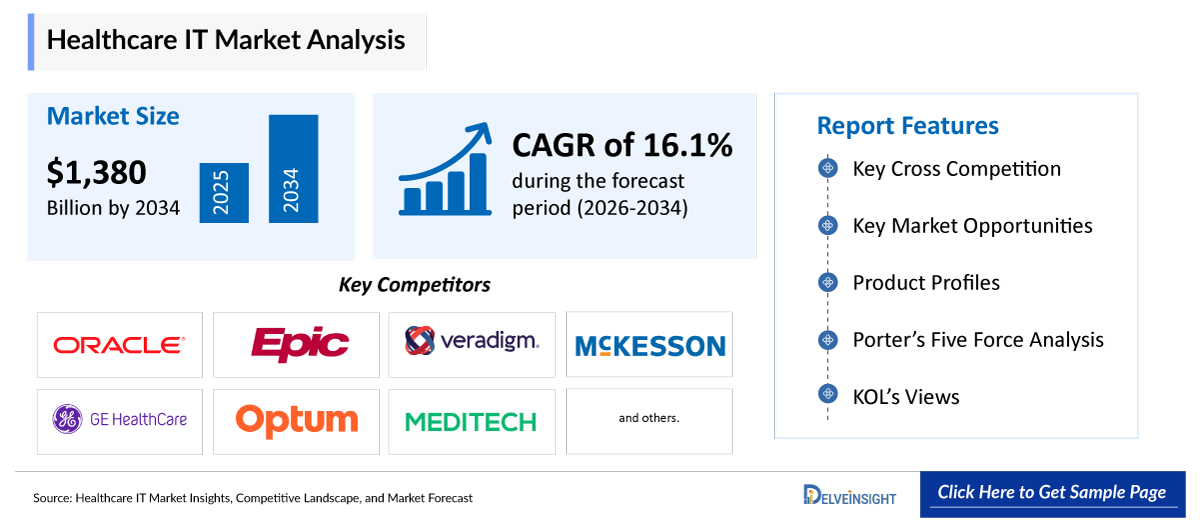
- The global healthcare IT market size was valued at USD 360 billion in 2025 and is projected to reach USD 1,380 billion by 2034.
- The market is expected to expand at a CAGR of 16.1% during the forecast period 2026-2034, supported by government interoperability mandates, cloud migration, and the integration of artificial intelligence into clinical and administrative workflows.
- By product and service, the healthcare provider solutions segment dominated the healthcare IT market with a 51% share in 2025.
- By component, the services segment dominated the healthcare IT market with a 45% share in 2025.
- By deployment mode, the on-premises segment dominated the healthcare IT market with a 54% share in 2025.
- By end user, the healthcare providers segment dominated the healthcare IT market with a 68% share in 2025.
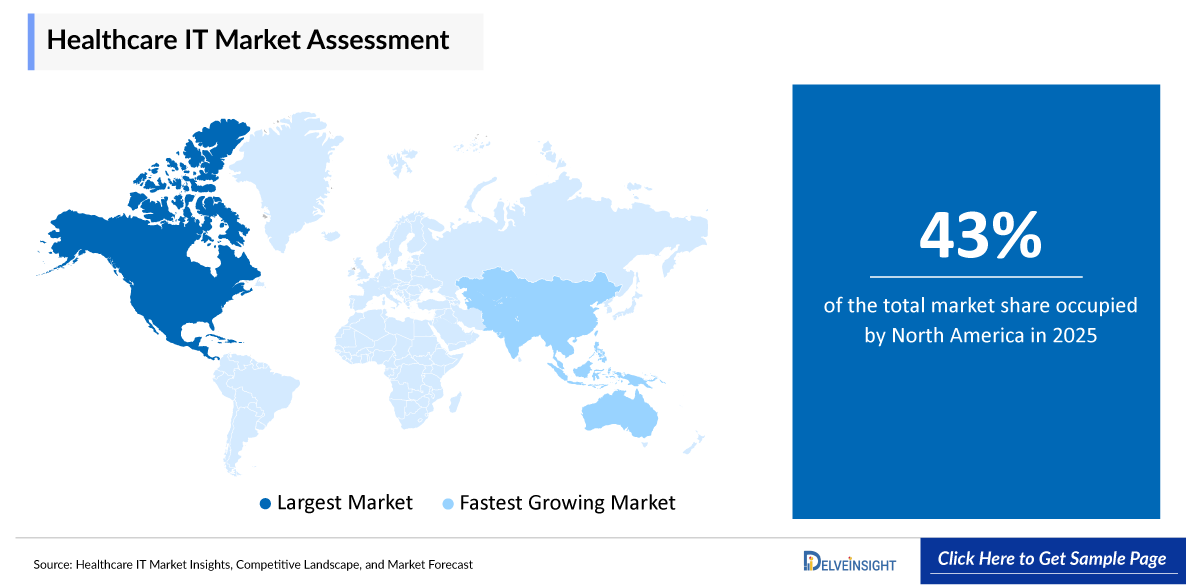
- North America accounted for the largest share of the healthcare IT market at 43% in 2025, while Asia-Pacific is anticipated to register the fastest growth through 2034.
Healthcare IT refers to the hardware, software, and services that healthcare organizations use to create, store, exchange, and analyze health information across the continuum of care. The category spans clinical systems such as electronic health record and electronic medical record platforms, computerized physician order entry, picture archiving and communication systems, radiology and laboratory information systems, and clinical decision support; administrative and financial systems such as revenue cycle management, practice management, and claims processing; consumer-facing tools such as telehealth platforms, patient portals, and remote patient monitoring; and payer systems such as care management, fraud detection, and member engagement. Underpinning these applications is a services layer that includes implementation, integration, consulting, managed services, and outsourcing, together with the infrastructure required to secure and exchange protected health information.
Demand is shaped by a distinctive combination of regulatory obligation and operational necessity: national frameworks mandate the electronic capture and exchange of health data, while providers and payers adopt information technology to reduce administrative cost, improve clinical outcomes, and support the transition from fee-for-service to value-based reimbursement. The contemporary market is defined by three structural shifts, namely the migration of systems from on-premises data centers to cloud and software-as-a-service delivery, the embedding of artificial intelligence and ambient documentation into the clinical workflow, and the emergence of nationwide interoperability networks that connect previously siloed systems.
Healthcare IT Market Key Growth Drivers
- Rising global burden of chronic disease, with the World Health Organization attributing 43 million deaths annually, equivalent to 75% of non-pandemic deaths, to noncommunicable diseases that require longitudinal data management.
- Government interoperability mandates, including the United States Trusted Exchange Framework and Common Agreement, the ONC certification program, and the European Health Data Space regulation.
- Accelerating migration of clinical and administrative systems from on-premises data centers to cloud and software-as-a-service delivery models.
- Integration of artificial intelligence and ambient clinical documentation into electronic health record workflows to reduce administrative burden and clinician burnout.
- Rapid expansion of telehealth, virtual care, and remote patient monitoring following pandemic-era regulatory and reimbursement changes.
- The transition to value-based care, which requires population health analytics, risk stratification, and longitudinal patient data aggregation.
- Escalating cybersecurity investment driven by the rising frequency and cost of healthcare data breaches and tightening regulatory requirements.
Key Companies in Healthcare IT Market
The competitive field combines enterprise electronic health record vendors, diversified technology and cloud providers, medical technology companies with health informatics divisions, and large information technology services firms. The leading participants in the healthcare IT market include the following:
- Oracle Corporation
- Epic Systems Corporation
- Veradigm Inc.
- McKesson Corporation
- Koninklijke Philips N.V.
- GE HealthCare Technologies Inc.
- Optum Inc.
- Medical Information Technology Inc.
- athenahealth Inc.
- IBM Corporation, and others
For illustrative purposes, only the top 10 companies are listed in the Table of Contents. The report may include analysis and references to additional companies relevant to the market assessment.
Healthcare IT Market Size
The following table summarizes the headline market metrics for the global healthcare IT market across the base year and the forecast horizon.
|
Report Metrics |
Details |
|
2025 Market Size |
USD 360.00 billion |
|
2034 Projected Market Size |
USD 1,380.00 billion |
|
Growth Rate (2026-2034) |
16.1% CAGR |
|
Largest Market |
North America (43% share in 2025) |
|
Fastest Growing Market |
Asia-Pacific |
|
Market Structure |
Fragmented |
All market values are expressed in USD and represent DelveInsight estimates synthesized from primary and secondary research.
Factors Contributing to the Growth of the Healthcare IT Market
Healthcare IT Market Drivers
- Rising Chronic Disease Burden and Data Complexity: The structural foundation of demand for healthcare IT is the expanding volume and complexity of clinical data generated by an aging population and a rising burden of chronic disease. The World Health Organization attributes 43 million deaths each year to noncommunicable diseases, equivalent to 75% of all non-pandemic deaths, and these conditions, including cardiovascular disease, cancer, diabetes, and chronic respiratory illness, require continuous rather than episodic management. Longitudinal care of this kind generates a stream of laboratory results, imaging studies, medication records, and encounter documentation that cannot be managed on paper and that must be accessible across multiple care settings and providers. Population aging compounds the effect: as the share of the population above sixty-five rises across high-income and upper-middle-income countries, so does the prevalence of multimorbidity, which multiplies the number of systems, specialists, and data sources involved in a single patient episode. Healthcare organizations respond by investing in electronic health records, clinical decision support, interoperability infrastructure, and analytics platforms capable of aggregating and reconciling data across the care continuum. The complexity of coordinating care for chronically ill patients also drives adoption of care management, patient engagement, and remote monitoring tools that extend the reach of the health system beyond the clinic walls. Because this demand is rooted in demographic and epidemiological trends rather than in discretionary spending, it provides a durable and largely non-cyclical foundation for market growth.
- Government Interoperability Mandates and Digital Health Policy: Public policy is an unusually direct driver of healthcare IT demand because governments in major markets mandate the electronic capture and exchange of health information rather than leaving adoption to market forces. In the United States, the Trusted Exchange Framework and Common Agreement went live at the end of 2023 and established a nationwide floor for health data exchange through Qualified Health Information Networks, with major electronic health record vendors and networks securing designation through 2025 and into 2026. The Office of the National Coordinator, now operating as the Assistant Secretary for Technology Policy, administers a certification program and information-blocking rules that require certified systems to support standardized application programming interfaces. The Centers for Medicare and Medicaid Services has advanced a digital health ecosystem and interoperability framework and initiatives to reduce administrative friction at the point of care. In Europe, the European Health Data Space regulation creates a legal framework for the primary and secondary use of electronic health data across member states. National programs reinforce these supranational mandates: Germany enacted a Digital Act providing for the automatic issuance of an electronic patient record to the 73 million people covered by statutory health insurance from January 2025, and France allocated substantial public funding to accelerate healthcare IT adoption. Each mandate obliges providers, payers, and vendors to invest in compliant systems, interoperability connectors, and data governance, converting regulatory obligation directly into recurring technology expenditure.
- Cloud Migration and Software-as-a-Service Delivery: The migration of healthcare systems from on-premises data centers to cloud and software-as-a-service delivery is reshaping both the cost structure and the growth trajectory of the market. Historically, clinical systems were deployed on hardware owned and operated by the health system, which required substantial capital expenditure, dedicated technical staff, and lengthy upgrade cycles. Cloud delivery converts this model to a subscription in which the vendor assumes responsibility for infrastructure, security patching, and continuous feature deployment, lowering the barrier to adoption for community hospitals, ambulatory clinics, and physician practices that lack enterprise IT resources. The shift also enables capabilities that are impractical on-premises, including elastic compute for analytics and artificial intelligence workloads, automated disaster recovery, and rapid connection to nationwide interoperability networks. Leading electronic health record vendors have re-architected their platforms for cloud-native deployment, and hyperscale cloud providers have built healthcare-specific data and compliance services to support them. The transition is gradual because clinical systems are mission-critical, migration carries operational risk, and installed on-premises systems represent significant sunk investment, which is why on-premises deployment retains the majority of the installed base even as cloud captures the majority of new adoption. Over the forecast period, cloud and software-as-a-service delivery is expected to be the fastest-growing deployment model and the principal vehicle through which artificial intelligence reaches the clinical workflow.
- Artificial Intelligence and Ambient Clinical Documentation: Artificial intelligence has become the defining technology theme of the healthcare IT market, shifting the value proposition of core systems from record-keeping toward active clinical and administrative support. The most immediate application is ambient documentation, in which natural language processing captures the clinician-patient conversation and generates structured notes, addressing the administrative burden that is a leading contributor to clinician burnout. Adjacent applications include automated medical coding, prior authorization processing, clinical decision support, predictive risk stratification, and agentic workflows that retrieve records and move claims toward adjudication. A significant inflection point occurred when an artificial-intelligence-native electronic health record secured certification from the Assistant Secretary for Technology Policy, signaling regulatory acceptance of a fundamentally redesigned clinical system rather than an incremental feature addition. The commercial importance of artificial intelligence is twofold. It differentiates competing platforms at a time when core electronic health record functionality has largely commoditized, and it depends on complete, real-time data, which reinforces demand for interoperability and cloud infrastructure. Realizing the benefit requires high-quality underlying data, robust governance to manage bias and interpretability, and clinical oversight of automated recommendations, so investment flows not only to the artificial intelligence tools themselves but also to the data engineering and integration work that makes them reliable.
- Telehealth, Virtual Care, and Remote Patient Monitoring: The rapid normalization of telehealth and virtual care has created a durable new category of healthcare IT demand that persists well beyond the acute phase of the pandemic. Regulatory and reimbursement changes that enabled remote consultation at scale have been extended and, in many jurisdictions, made permanent, and patient expectations have shifted decisively toward digital access. This has driven sustained investment in telehealth platforms, secure video infrastructure, patient portals, and scheduling and intake tools that connect virtual encounters to the electronic health record. Remote patient monitoring extends the model further, using connected devices to capture physiological data between visits for patients with chronic conditions, generating continuous data streams that must be integrated, analyzed, and surfaced to care teams. The category is reinforced by the same chronic disease and aging dynamics that drive core system demand, because remote monitoring is most valuable precisely for the multimorbid patients who account for the majority of healthcare utilization. Health systems adopt these tools to extend capacity, improve access in underserved and rural areas, and support value-based contracts that reward keeping patients healthy outside the hospital. Consumer-facing applications that combine appointment booking, results interpretation, medication reminders, and device integration are expanding the addressable market beyond traditional provider settings.
- Transition to Value-Based Care and Analytics: The structural shift in healthcare financing from fee-for-service toward value-based reimbursement is a powerful and specific driver of healthcare IT investment. Under value-based contracts, providers assume financial accountability for the cost and quality of care across a population rather than being paid for individual services, which requires analytical capabilities that traditional transactional systems were never designed to deliver. Success under these arrangements depends on aggregating longitudinal data across disparate systems, stratifying populations by clinical and financial risk, identifying gaps in care, and measuring outcomes against defined quality metrics. This creates demand for population health management platforms, healthcare data integration and interoperability infrastructure, quality reporting tools, and advanced analytics. The transition also elevates the strategic importance of data that originates outside the clinical encounter, including claims data, pharmacy data, and social determinants of health, all of which must be integrated to construct a complete picture of the patient. Payers invest correspondingly in care management, utilization analytics, and provider collaboration tools. Because value-based models are actively promoted by public payers and are expanding in commercial insurance, the associated technology demand is policy-reinforced and long-term in nature. The complexity of the required data aggregation is itself a driver of the interoperability and cloud investments discussed above, illustrating how the market drivers compound one another.
- Cybersecurity Imperatives and Regulatory Compliance: Cybersecurity has evolved from a background concern into a primary and non-discretionary driver of healthcare IT expenditure. Healthcare organizations hold exceptionally sensitive and valuable data, and the sector has become a leading target for ransomware and data-exfiltration attacks, with large breaches affecting tens of millions of patient records and causing operational disruption that in some cases has halted clinical services and claims processing across entire regions. The financial and reputational consequences of a breach, combined with statutory obligations under health privacy frameworks, compel sustained investment in identity and access management, encryption, network segmentation, threat detection, and incident response. Regulatory requirements reinforce this spending: privacy and security rules mandate specific safeguards, and the interoperability frameworks that expand data exchange simultaneously raise the assurance standards required to participate, with identity verification and authentication now foundational to trusted data exchange. Paradoxically, the same forces that drive market growth, namely cloud migration, artificial intelligence, and nationwide data exchange, also expand the attack surface and thereby amplify security demand. Cybersecurity investment is therefore both a distinct segment of the market and a tax on every other segment, and it is among the most resilient categories of technology spending because it cannot be deferred without accepting unacceptable operational and legal risk.
Healthcare IT Market Restraints
Despite powerful structural tailwinds, the healthcare IT market faces material constraints that temper the pace and evenness of adoption. The most significant is the cost and complexity of implementation. Enterprise electronic health record deployments routinely require multi-year timelines and substantial capital, with a single-hospital installation typically taking twelve to twenty-four months and a multi-hospital health system rollout planned over three to five years, and total costs that strain the budgets of community and rural providers. These economics create a persistent divide between large, well-capitalized health systems that can adopt advanced platforms and smaller organizations that operate legacy systems and struggle to fund modernization. The second constraint is interoperability friction. Although national frameworks are establishing a technical floor for data exchange, real-time data flows between organizations remain inconsistent, historical information-blocking practices have left a legacy of fragmented data, and mid-size and community hospitals operating older systems face disproportionately complex integration challenges. The third constraint is cybersecurity risk itself, which functions simultaneously as a driver of spending and as a deterrent to data sharing and cloud adoption, because every expansion of connectivity enlarges the attack surface and raises the stakes of a breach. The fourth constraint is the human dimension: clinician burnout associated with documentation burden, resistance to workflow change, and a shortage of skilled health IT professionals capable of implementing and maintaining complex systems all slow adoption and can undermine the return on technology investment. Finally, the market is exposed to policy and reimbursement uncertainty, as changes to interoperability mandates, certification requirements, and value-based care programs can rapidly alter the investment priorities of providers and payers. Together, these factors ensure that adoption, while structurally assured, proceeds unevenly across organization size, geography, and care setting.
Healthcare IT Market Segment Analysis
The global healthcare IT market is segmented by product and service into healthcare provider solutions, healthcare payer solutions, and HCIT outsourcing services; by component into services, software, and hardware; by deployment mode into on-premises, cloud-based, and web-based; by end user into healthcare providers, healthcare payers, patients, and others; and by geography into North America, Europe, Asia-Pacific, and the Rest of the World.
By Product and Service
Dominant Subsegment: Healthcare Provider Solutions.
The healthcare provider solutions category is expected to dominate the market.
Dominant: Healthcare Provider Solutions ~ 51%
The healthcare provider solutions segment accounted for a 51% share of the healthcare IT market in 2025. Healthcare provider solutions dominate because the provider setting is where the largest volume of clinical data originates and where the most mission-critical systems reside. The segment encompasses clinical solutions such as electronic health record and electronic medical record platforms, computerized physician order entry, picture archiving and communication systems, radiology and laboratory information systems, and clinical decision support, together with non-clinical solutions such as revenue cycle management, practice management, and workforce and supply chain systems. Electronic health record platforms anchor the segment, because they function as the system of record on which every other provider application is organized and because national certification and interoperability mandates apply most directly to them. The two largest enterprise vendors together power the electronic health record systems of the majority of acute-care hospitals in the United States, and comparable concentration exists in other developed markets. Demand within the segment is reinforced by the continuous expansion of adjacent capabilities, as providers layer analytics, patient engagement, telehealth, and artificial intelligence onto the core record. The segment also carries the heaviest services burden, because provider systems require extensive implementation, integration, and ongoing optimization. Over the forecast period the segment is expected to retain its leading position, although healthcare payer solutions are projected to grow faster as payers invest in analytics, claims automation, and member engagement, and as value-based contracting increases the technology intensity of the payer function.
By Component
Dominant Subsegment: Services.
The services category is expected to dominate the market.
Dominant: Services ~ 45%
The services segment accounted for a 45% share of the healthcare IT market in 2025. Services dominate the component structure of the market because healthcare IT systems are complex, mission-critical, and deeply embedded in clinical and administrative workflows, which makes implementation, integration, and ongoing support at least as costly as the software itself. The services layer includes consulting and advisory work to plan digital transformation, implementation and deployment of clinical and administrative systems, data migration from legacy platforms, integration across disparate applications and interoperability networks, training and change management, and managed services and outsourcing that assume operational responsibility for systems on a continuing basis. The scale of this activity reflects the reality that a hospital electronic health record deployment can take one to two years and a health system rollout three to five years, and that each deployment generates a long tail of optimization, upgrade, and support work thereafter. Merger and acquisition activity among health systems amplifies services demand, because combining organizations frequently inherit multiple incompatible systems that must be bridged or migrated. Large information technology services firms, specialized health IT consultancies, and vendor professional services organizations all compete in this segment. Software represents the second-largest component and is growing as cloud subscription models convert one-time license revenue into recurring streams, while hardware remains the smallest component and is increasingly displaced by cloud infrastructure. The services segment is expected to remain dominant throughout the forecast period, sustained by cloud migration, artificial intelligence integration, and the persistent complexity of health system technology environments.
By Deployment Mode
Dominant Subsegment: On-Premises.
The on-premises category is expected to dominate the market.
Dominant: On-Premises ~ 54%
The on-premises segment accounted for a 54% share of the healthcare IT market in 2025. On-premises deployment retains the majority of the installed base because clinical systems are mission-critical, because large health systems made substantial capital investments in owned infrastructure over the preceding two decades, and because concerns about data control, latency, and regulatory compliance historically favored local hosting. Under the on-premises model, the health system owns and operates the servers, storage, and networking that run its clinical and administrative applications, retains direct control over data residency and security configuration, and manages upgrades on its own schedule. This model remains prevalent among the largest hospitals and academic medical centers, which have the technical resources to operate enterprise data centers and the sunk investment that makes migration costly and operationally risky. The cloud-based segment, by contrast, is the fastest-growing deployment mode and is capturing the majority of new adoption, because subscription delivery lowers the barrier to entry for smaller providers, shifts responsibility for security and maintenance to the vendor, and enables analytics and artificial intelligence workloads that are impractical on local hardware. Leading vendors have re-architected their platforms for cloud-native deployment, and hyperscale providers offer healthcare-specific compliance services. The web-based segment occupies an intermediate position, delivering applications through a browser without full cloud-native architecture. Over the forecast period, cloud deployment is expected to erode the on-premises majority steadily, and the crossover point at which cloud surpasses on-premises in installed base is anticipated within the horizon, although the transition is gated by the operational caution appropriate to mission-critical clinical systems.
By End User
Dominant Subsegment: Healthcare Providers.
The healthcare providers category is expected to dominate the market.
Dominant: Healthcare Providers ~ 68%
The healthcare providers segment accounted for a 68% share of the healthcare IT market in 2025. Healthcare providers, comprising hospitals, health systems, ambulatory clinics, physician practices, and diagnostic centers, dominate end-user demand because they operate the largest number of clinical systems, generate the majority of health data, and bear the most direct regulatory obligation to adopt certified electronic systems. Hospitals and integrated health systems account for the largest share within the segment, reflecting the scale and complexity of their technology environments and the breadth of clinical, financial, and operational systems they must integrate. Ambulatory clinics and physician practices represent the fastest-growing subsegment, driven by cloud and software-as-a-service platforms that make enterprise-grade capabilities accessible without enterprise IT resources, and by the shift of care into outpatient and community settings. The provider segment also carries the heaviest implementation and services burden and is the primary locus of artificial intelligence adoption, because the clinical documentation and decision support use cases that define current innovation occur at the point of care. Healthcare payers, comprising insurers and managed care organizations, form the second-largest end-user segment and are projected to grow rapidly as they invest in claims automation, care management, analytics, and member engagement, and as value-based contracting increases the data exchange between payers and providers. Patients constitute an emerging end-user category served by portals, consumer health applications, and remote monitoring tools, while other users include government agencies, pharmacies, and research organizations. The provider segment is expected to retain its leading position throughout the forecast period.
Healthcare IT Market Region Analysis
Dominant Region: North America
Dominant: North America ~ 43% (Largest)
North America accounted for a 43% share of the global healthcare IT market in 2025. The region combines the highest healthcare expenditure in the world with the most mature regulatory framework for health information technology, and it is the market in which the enterprise electronic health record vendors, the largest health IT services firms, and the diversified technology providers that shape the global industry are predominantly headquartered. The United States contributes the overwhelming majority of regional value, reflecting a two-decade history of federal incentive programs, beginning with the meaningful use provisions of the HITECH Act, that drove near-universal electronic health record adoption among hospitals and physician practices and created a dense installed base that now requires interconnection, modernization, and analytics. The nationwide Trusted Exchange Framework and Common Agreement, administered through the Assistant Secretary for Technology Policy and supported by the Centers for Medicare and Medicaid Services, has established a floor for health data exchange and driven a wave of investment in interoperability infrastructure, with major vendors and networks securing Qualified Health Information Network designation through 2025 and 2026. The region also leads in the adoption of artificial intelligence in clinical workflows, in the transition to value-based reimbursement, and in cybersecurity investment following high-profile breaches. Canada contributes through provincial digital health agencies advancing pan-Canadian interoperability and through substantial public investment in clinical AI and imaging infrastructure, while Mexico represents an expanding but less mature market. Regional dominance is reinforced by the concentration of research, capital, and vendor operations, and North America is expected to retain leadership throughout the forecast period even as Asia-Pacific grows more rapidly.
Fastest Growing Region: Asia-Pacific
Asia-Pacific is projected to register the fastest compound annual growth rate in the healthcare IT market through 2034. The region combines very large and rapidly aging populations, a rising burden of chronic disease, and sustained government investment in the digitization of healthcare systems, producing growth rates that exceed the global average across every major segment. China, India, Singapore, Indonesia, and Australia are actively investing in digital health infrastructure, electronic health records, and generative artificial intelligence applications to improve access and efficiency in health systems that must serve enormous populations with constrained clinical workforces. National digital health missions and universal health coverage initiatives are creating foundational infrastructure at scale, while the relative immaturity of the existing installed base allows many organizations to adopt cloud-native and artificial-intelligence-enabled platforms without the burden of legacy migration that constrains developed markets. The region is also a major center of information technology services delivery, with several of the largest global health IT services firms headquartered in India, which supports both domestic adoption and export of implementation and managed services. Rising healthcare expenditure, expanding private hospital networks, and consumer adoption of digital health applications reinforce the trajectory. The principal constraints are uneven infrastructure, workforce and skills gaps, and affordability in lower-income markets, but the combination of demographic scale, policy support, and leapfrog adoption ensures that Asia-Pacific will be the fastest-growing region throughout the forecast period.
Healthcare IT Market Regional Commentary
North America
North America leads on installed base, regulatory maturity, and vendor concentration. The United States is the reference market for interoperability policy, artificial intelligence adoption, and value-based care, and it hosts the enterprise electronic health record vendors and largest health IT services firms. The Trusted Exchange Framework and Common Agreement, ONC certification, and CMS interoperability initiatives convert regulatory obligation into recurring technology demand. Canada advances pan-Canadian interoperability through provincial digital health agencies and invests substantially in clinical AI and imaging, while Mexico is an expanding but less mature market. Near-term dynamics are shaped by cloud migration, AI integration, and cybersecurity investment following major breaches.
Europe
Europe represents the second-largest regional market, with Germany, the United Kingdom, France, Italy, and Spain accounting for the majority of regional value. The European Health Data Space regulation creates a supranational legal framework for the primary and secondary use of electronic health data, while national programs drive adoption at the member-state level. Germany enacted a Digital Act providing for automatic issuance of an electronic patient record to the population covered by statutory health insurance, and France allocated substantial public funding to accelerate healthcare IT. The region combines strong data protection requirements with ambitious digitization targets, producing steady demand for interoperability, cloud migration, and analytics, tempered by the heterogeneity of national health systems and procurement processes.
Asia-Pacific
Asia-Pacific is the fastest-growing region, propelled by demographic scale, rising chronic disease burden, and government digital health investment across China, India, Singapore, Indonesia, and Australia. The relative immaturity of the installed base enables leapfrog adoption of cloud-native and artificial-intelligence-enabled platforms, while national digital health missions and universal coverage initiatives build foundational infrastructure at scale. The region is also a global center of IT services delivery, with major health IT services firms headquartered in India. Growth is constrained by uneven infrastructure, workforce gaps, and affordability in lower-income markets, but exceeds the global average across every segment.
Rest of World
The Rest of the World comprises the Middle East, Africa, and South America. Access and maturity are highly stratified. The Gulf Cooperation Council states, particularly Saudi Arabia and the United Arab Emirates, are deploying ambitious smart hospital and national interoperability programs funded through national transformation agendas, while Brazil operates the most advanced national health data network in Latin America. Elsewhere, adoption is constrained by infrastructure, financing, and workforce limitations. Regional growth will be driven by government digitization initiatives, expanding private hospital investment, and the availability of cloud-based platforms that reduce the infrastructure barrier to adoption in resource-constrained health systems.
Healthcare IT Market Competitive Landscape
The global healthcare IT market is classified as Fragmented. Although a small number of enterprise electronic health record vendors dominate the acute-care provider segment, the market as a whole spans clinical software, administrative and financial systems, payer solutions, consumer applications, cybersecurity, cloud infrastructure, and information technology services, each populated by distinct sets of competitors ranging from founder-led specialists to diversified global technology firms. No single company holds a controlling share of the overall market, and competition varies markedly by segment, care setting, and geography.
The competitive landscape is evaluated across the following dimensions:
- Market concentration: Highly concentrated within the acute-care electronic health record segment, where two vendors power the majority of United States hospital systems, but fragmented across the broader market spanning payer, consumer, cybersecurity, and services segments.
- Leading players: Oracle Corporation and Epic Systems Corporation lead the enterprise electronic health record segment, with McKesson Corporation, Veradigm Inc., athenahealth Inc., and Medical Information Technology Inc. strong in adjacent provider segments, and Optum Inc. prominent in payer and services.
- Geographic reach: Diversified technology and services firms such as Oracle, IBM, Cognizant, Wipro, and Tata Consultancy Services operate globally, while enterprise electronic health record vendors have concentrated but expanding international footprints.
- Product portfolio strength: Leading vendors combine core electronic health record platforms with revenue cycle, analytics, patient engagement, telehealth, and interoperability modules, competing increasingly on the breadth and integration of the suite rather than on individual applications.
- Pipeline strength: Innovation is concentrated in artificial-intelligence-native electronic health records, ambient clinical documentation, agentic administrative workflows, cloud-native re-architecture, and nationwide interoperability services.
- Strategic partnerships: Collaboration with hyperscale cloud providers, identity and cybersecurity firms, and interoperability networks has become central to competitive positioning, exemplified by identity-verification and data-exchange integrations at the point of care.
- M&A activity: Consolidation is active across the services and specialized software segments, while the largest strategic move of the era was the acquisition that brought a leading enterprise electronic health record vendor under a diversified cloud provider.
- Regulatory and interoperability standing: Qualified Health Information Network designation under the Trusted Exchange Framework and Common Agreement and certification under the Assistant Secretary for Technology Policy program have become decisive competitive credentials.
- Innovation focus: Competitive differentiation is shifting from core record-keeping, which has largely commoditized, toward artificial intelligence, interoperability, cloud delivery, and the reduction of clinician administrative burden.
Healthcare IT Market Recent Developmental Activities
- In July 2026, Healthcare Triangle, Inc. signed a non-binding Letter of Intent to acquire a 51% equity stake in Melbourne-based CosmoAesthetics Pty Ltd, operating as CosmoInnovations, for US $23.5 million over three years. The proposed deal marks Healthcare Triangle’s transition from an IT services firm into a product-led healthcare innovation platform. CosmoInnovations brings over 25 proprietary MedTech and consumer-health technologies, including 27 granted international patents, spanning areas such as skincare, photobiomodulation, respiratory wellness, oral care, and transdermal drug delivery.
- In April 2026, Oracle Corporation announced that Oracle Health had achieved Centers for Medicare and Medicaid Services Aligned Network status and had delivered a solution enabling patients to digitally verify their identity and share health records at check-in, integrating the CLEAR1 identity platform in support of the agency Kill the Clipboard initiative. The verified data flows directly into electronic health record workflows. Strategic significance: the development positioned Oracle Health at the forefront of the administrative-simplification agenda and reinforced its interoperability leadership by connecting patient identity, records exchange, and clinical workflow in a single flow.
- In January 2026, Epic Systems Corporation announced that over 1,000 hospital customers and 22,000 clinics using its electronic health record were live on the government-backed Trusted Exchange Framework and Common Agreement data exchange, extending a commitment the company had made the prior year. Strategic significance: the milestone demonstrated the momentum of nationwide interoperability at scale, consolidated Epic leadership in health information exchange through its Care Everywhere network, and signaled that the transition to a national interoperability floor was moving from policy to operational reality.
- In November 2025, Oracle Corporation secured designation of the Oracle Health Information Network as a Qualified Health Information Network under the Trusted Exchange Framework and Common Agreement, enabling standardized exchange of health information between providers, payers, and government agencies. The designation was paired with the Oracle Health Seamless Exchange capability, which aggregates, cleanses, and deduplicates data before integrating it into the electronic health record. Strategic significance: Qualified Health Information Network status is a decisive competitive credential, and securing it advanced Oracle strategy of positioning open interoperability and cloud infrastructure as the foundation for its artificial intelligence roadmap.
- In December 2025, Oracle Corporation confirmed that its artificial-intelligence-native electronic health record had secured certification from the Assistant Secretary for Technology Policy and Office of the National Coordinator for Health Information Technology, which the company characterized as its most significant accomplishment of the year and compared to the transition from early smartphones to the first modern smartphone. Strategic significance: certification of a ground-up artificial-intelligence-native clinical system rather than an incremental update signaled regulatory acceptance of a new product category and intensified competitive pressure on incumbent electronic health record vendors.
- In January 2026, athenahealth Inc. reported that over 3,000 athenaOne providers were connected to the Trusted Exchange Framework and Common Agreement and stated that it anticipated full integration across its practices, positioning itself among the first electronic health record vendors to operationalize the framework at scale. Strategic significance: the development reinforced athenahealth leadership in the cloud-based ambulatory segment and demonstrated that nationwide interoperability was advancing rapidly among physician practices as well as large hospital systems.
- In April 2025, Surescripts received Qualified Health Information Network designation under the Trusted Exchange Framework and Common Agreement, expanding the set of designated networks capable of nationwide standardized health data exchange. Strategic significance: the addition of an established health information network as a designated exchange broadened the interoperability ecosystem and increased the number of pathways through which providers, payers, and patients could access longitudinal records under the national framework.
- In January 2025, eClinicalWorks announced that it had become a designated Qualified Health Information Network under the Trusted Exchange Framework and Common Agreement, extending nationwide exchange capability into the ambulatory electronic health record segment. Strategic significance: the designation demonstrated that interoperability leadership was not confined to the largest enterprise vendors and that cloud-based ambulatory platforms were positioning interoperability as a core competitive feature for physician-practice customers.
- In January 2025, the German Federal Government implemented provisions of its Digital Act under which individuals covered by statutory health insurance, numbering 73 million people, began receiving an electronic patient record automatically. Strategic significance: the automatic nationwide rollout of a shared electronic record represented one of the largest single expansions of digital health infrastructure in Europe and created substantial demand for interoperability, integration, and data governance across the German health system.
- In March 2025, the Government of Alberta announced an investment of 800 million Canadian dollars through a partnership with the Alberta Cancer Foundation and Siemens Healthineers to reduce waiting times and support early disease detection, establishing two centers of excellence for artificial intelligence and training, with an additional 175 million Canadian dollars committed by Siemens Healthineers. Strategic significance: the partnership illustrated the growing role of public-private investment in clinical artificial intelligence and imaging informatics and reinforced Canada as a secondary growth engine within North America.
- In November 2025, TruDoc Healthcare introduced its Super Health App across the Gulf Cooperation Council and India, integrating facial-scan vital signs, wearable device connectivity, a multilingual artificial intelligence chatbot, laboratory report summaries with trend analysis, real-time order tracking, and medication reminders. Strategic significance: the launch exemplified the rapid emergence of consumer-facing, artificial-intelligence-enabled digital health platforms in the Middle East and Asia-Pacific and the convergence of clinical, wellness, and commerce functions in a single application.
- In October 2024, Koninklijke Philips N.V. signed a memorandum of understanding with the Siloam Hospitals Group to strengthen artificial intelligence capabilities in Indonesia, focusing on improving clinical care, training local professionals, and supporting national healthcare objectives. Strategic significance: the collaboration reflected the strategy of medical technology companies to embed health informatics and artificial intelligence in the fast-growing Asia-Pacific private hospital sector and to align with government digitization agendas.
- In June 2024, Optum Inc. introduced DME Navigator, a tool designed to streamline and accelerate patient access to durable medical equipment. Strategic significance: the launch illustrated the continued expansion of administrative-simplification and workflow-automation tools within the payer and health services segment, where reducing friction in benefits, authorization, and fulfillment processes is a primary source of value creation.
Healthcare IT Market Segmentation
- Healthcare IT Market Assessment by Product and Service
- Healthcare Provider Solutions
- Healthcare Payer Solutions
- HCIT Outsourcing Services
- Clinical Solutions (EHR/EMR, PACS/RIS, CPOE, Telehealth)
- Non-Clinical Solutions (Revenue Cycle Management, Population Health Management)
- Healthcare IT Market Assessment by Component
- Services
- Software
- Hardware
- Healthcare IT Market Assessment by Deployment Mode
- On-Premises
- Cloud-Based
- Web-Based
- Healthcare IT Market Assessment by End User
- Healthcare Providers
- Healthcare Payers
- Patients
- Others
Healthcare IT Market Assessment by Geography
- North America Healthcare IT Market Assessment
- United States Healthcare IT Market Size in USD million (2023-2034)
- Canada Healthcare IT Market Size in USD million (2023-2034)
- Mexico Healthcare IT Market Size in USD million (2023-2034)
- Europe Healthcare IT Market Assessment
- Germany Healthcare IT Market Size in USD million (2023-2034)
- United Kingdom Healthcare IT Market Size in USD million (2023-2034)
- France Healthcare IT Market Size in USD million (2023-2034)
- Italy Healthcare IT Market Size in USD million (2023-2034)
- Spain Healthcare IT Market Size in USD million (2023-2034)
- Rest of Europe Healthcare IT Market Size in USD million (2023-2034)
- Asia-Pacific Healthcare IT Market Assessment
- China Healthcare IT Market Size in USD million (2023-2034)
- Japan Healthcare IT Market Size in USD million (2023-2034)
- India Healthcare IT Market Size in USD million (2023-2034)
- Australia Healthcare IT Market Size in USD million (2023-2034)
- South Korea Healthcare IT Market Size in USD million (2023-2034)
- Rest of Asia-Pacific Healthcare IT Market Size in USD million (2023-2034)
- Rest of the World Healthcare IT Market Assessment
- Middle East Healthcare IT Market Size in USD million (2023-2034)
- Africa Healthcare IT Market Size in USD million (2023-2034)
- South America Healthcare IT Market Size in USD million (2023-2034)
Healthcare IT Market Recent Industry Trends and Milestones (2023-2026):
|
Category |
Key Developments |
|
Healthcare IT Market Product Approval and Certification |
The 2024 to 2026 period was defined by a wave of interoperability designations and system certifications rather than by traditional product approvals. The Trusted Exchange Framework and Common Agreement went live at the end of 2023, and the number of Qualified Health Information Networks grew to over double thereafter, with eClinicalWorks designated in January 2025, Surescripts in April 2025, and Oracle Health Information Network in November 2025. In December 2025, Oracle secured certification of an artificial-intelligence-native electronic health record from the Assistant Secretary for Technology Policy, the first ground-up redesign of a certified clinical system in the artificial intelligence era. Epic reported over 1,000 hospital customers live on the framework by January 2026, and athenahealth operationalized the framework across thousands of ambulatory providers. Oracle Health achieved Centers for Medicare and Medicaid Services Aligned Network status in April 2026. |
|
Healthcare IT Market Product Expansion |
Product expansion advanced along three axes. The first is artificial intelligence, as vendors embedded ambient documentation, automated coding, clinical decision support, and agentic administrative workflows into core platforms, moving the electronic health record from a system of record toward an active clinical assistant. The second is interoperability, as vendors added Qualified Health Information Network connectivity, data aggregation and normalization services, and identity-verification capabilities that connect records exchange to the point-of-care workflow. The third is consumer engagement, as portals evolved toward interactive, personalized tools and as consumer health applications integrated wearable data, facial-scan vitals, and multilingual artificial intelligence assistants, expanding the addressable market beyond traditional provider settings, particularly in the Middle East and Asia-Pacific. |
|
Healthcare IT Market Investment |
Investment concentrated on cloud infrastructure, artificial intelligence, and interoperability. Diversified technology providers invested heavily in cloud-native re-architecture of clinical platforms and in healthcare-specific data and compliance services. Public-private partnerships channeled substantial capital into clinical artificial intelligence and imaging, exemplified by the 800 million Canadian dollar Alberta partnership with Siemens Healthineers. National governments made large-scale infrastructure investments, including the automatic electronic patient record rollout to 73 million statutory-insurance members in Germany and substantial public funding for healthcare IT in France. Venture and strategic investment flowed into ambient documentation, agentic workflow automation, cybersecurity, and consumer digital health platforms across the Gulf Cooperation Council, India, and Southeast Asia. |
|
Company Strategy |
Oracle is pursuing an integrated strategy that couples open interoperability, cloud infrastructure, and an artificial-intelligence-native electronic health record, using Qualified Health Information Network status and Centers for Medicare and Medicaid Services alignment to position data exchange as the foundation for artificial intelligence. Epic is defending its leadership through its Care Everywhere network, deep clinical usability, and rapid Trusted Exchange Framework adoption. athenahealth and eClinicalWorks are competing on cloud-based ambulatory delivery and early interoperability. McKesson, Optum, and diversified services firms are expanding administrative-simplification and analytics offerings. Medical technology companies including Philips and GE HealthCare are embedding informatics and artificial intelligence in imaging and monitoring, aligning with Asia-Pacific government digitization agendas. Information technology services firms headquartered in India are scaling implementation, integration, and managed services globally. |
|
Emerging Technologies |
The defining emerging technology is the artificial-intelligence-native electronic health record, in which ambient documentation, natural language processing, and agentic workflows are built into the clinical system rather than added as features, with the first such platform certified in late 2025. Adjacent innovation includes agentic administrative automation for prior authorization, coding, and claims adjudication; nationwide interoperability services built on cloud infrastructure and standardized application programming interfaces; high-assurance digital identity verification integrated into the point-of-care workflow; predictive analytics for population health and risk stratification; and consumer health platforms that combine wearable integration, facial-scan vital signs, and multilingual conversational artificial intelligence. Cloud-native architecture underpins all of these, providing the elastic compute required for artificial intelligence and the connectivity required for real-time data exchange, while cybersecurity and data governance advance in parallel to secure an expanding attack surface. |
Healthcare IT Market Startup Funding and Investment Trends
Investment in the healthcare IT field has concentrated on companies that apply artificial intelligence to the two largest sources of cost and friction in the health system, namely clinical documentation and administrative processing. The dominant funding thesis is the reduction of clinician burden through ambient documentation and the automation of revenue cycle, prior authorization, and coding workflows, where measurable time savings translate directly into a return on investment for provider customers. Secondary theses include interoperability and data infrastructure, cybersecurity, and consumer digital health. The table below summarizes representative companies advancing the next generation of healthcare IT capabilities.
|
Company |
Total Funding |
Funding Stage |
Main Product/Offering |
Core Technology |
|
Abridge |
USD 300 million and above |
Late-stage venture |
Ambient AI documentation |
Generative clinical documentation |
|
Innovaccer Inc. |
USD 600 million and above |
Late-stage venture |
Health data platform |
Population health and analytics |
|
Request for unlocking the report of the @ Healthcare IT Market Insights | ||||
Capital formation in this field is concentrated at the growth and late-venture stages, where companies with demonstrated enterprise adoption and recurring revenue command substantial valuations. Ambient artificial intelligence documentation has attracted the most intense investor interest, reflecting the acute pain of clinician burnout and the direct, quantifiable value of returning time to physicians. Health data platforms and population health companies have raised large rounds on the strength of the value-based care transition, which requires the data aggregation and analytics they provide. Incumbent vendors and diversified technology firms increasingly partner with or acquire these companies rather than build competing capabilities internally, providing a well-defined exit pathway that sustains venture investment. The principal risk to the funding environment is the ability of the largest electronic health record vendors to embed comparable artificial intelligence capabilities natively, which could compress the independent addressable market for point solutions over the forecast period.
Key Takeaways from the Healthcare IT Market Report Study
- Market size analysis for the current healthcare IT market size (2025), and market forecast for 9 years (2026 to 2034).
- Top key product/technology developments, mergers, acquisitions, partnerships, and joint ventures that happened over the last 3 years.
- Key companies dominating the global healthcare IT market.
- Various opportunities available for competitors in the healthcare IT market space.
- What are the top-performing segments in 2025? How will these segments perform in 2034?
- Which are the top-performing regions and countries in the current healthcare IT market scenario?
- Which are the regions and countries where companies should concentrate their opportunities for healthcare IT market growth in the future?
Target audience who can benefit from this healthcare IT market report study
- Healthcare IT product providers
- Research organizations and consulting companies
- Healthcare IT-related organizations, associations, forums, and other alliances
- Government and corporate offices
- Start-up companies, venture capitalists, and private equity firms
- Distributors and traders dealing in healthcare IT
- Various end-users who want to know more about the healthcare IT market and the latest technological developments in the healthcare IT market.
Frequently Asked Questions
Q1. At what rate is the healthcare IT market expected to grow?
The global healthcare IT market is projected to grow at a compound annual growth rate of 16.1% during the forecast period from 2026 to 2034.
Q2. What is the current and projected size of the healthcare IT market?
The global healthcare IT market size was valued at USD 360 billion in 2025 and is projected to reach USD 1,380 billion by 2034.
Q3. Which region dominates the healthcare IT market?
North America dominated the healthcare IT market with a 43% share in 2025, driven by the highest healthcare expenditure globally, a two-decade history of federal electronic health record incentive programs, the nationwide Trusted Exchange Framework and Common Agreement, and the concentration of leading vendors and services firms. Asia-Pacific is projected to record the fastest compound annual growth rate through 2034, propelled by demographic scale, rising chronic disease burden, and government investment in digital health.
Q4. What are the key factors driving growth in the healthcare IT market?
The principal drivers are the rising global burden of chronic disease, with the World Health Organization attributing 43 million deaths annually to noncommunicable diseases; government interoperability mandates including the Trusted Exchange Framework and Common Agreement and the European Health Data Space; cloud migration and software-as-a-service delivery; the integration of artificial intelligence and ambient clinical documentation; the expansion of telehealth and remote patient monitoring; the transition to value-based care; and escalating cybersecurity investment.
Q5. Who are the major players in the healthcare IT market?
The market is fragmented across many segments and Healthcare IT companies includes - Oracle Corporation, Epic Systems Corporation, Veradigm Inc., McKesson Corporation, Koninklijke Philips N.V., GE HealthCare Technologies Inc., Optum Inc., Medical Information Technology Inc., athenahealth Inc., and IBM Corporation. Additional participants including Cognizant Technology Solutions Corporation, Wipro Limited, Tata Consultancy Services Limited, Health Catalyst Inc., and NextGen Healthcare Inc. are active across the software and services segments.