Hemorrhagic Cystitis Market
Hemorrhagic Cystitis Insights and Trends
- Hemorrhagic cystitis is characterized by diffuse bladder mucosal bleeding causing gross hematuria, most commonly occurring as a complication of oxazaphosphorine-based chemotherapy (particularly cyclophosphamide and ifosfamide) or pelvic radiation therapy.
- According to DelveInsight estimates, the burden of hemorrhagic cystitis across the 7MM is primarily driven by the growing number of HSCT procedures, increasing use of high-dose cyclophosphamide-based therapies, and improved detection of BK virus reactivation. The United States is expected to account for the largest proportion of diagnosed cases owing to higher transplant volumes and greater utilization of advanced diagnostic monitoring.
- According to DelveInsight estimates, the Hemorrhagic Cystitis market across the 7MM is expected to expand steadily through the forecast period, driven by increasing utilization of hematopoietic stem cell transplantation (HSCT), rising use of cyclophosphamide-based conditioning regimens, and improved recognition and diagnosis of BK virus-associated hemorrhagic cystitis.
- The United States is expected to account for the largest share of the market owing to higher transplant volumes and greater adoption of advanced supportive care therapies.
- Current management remains largely supportive and includes hydration, bladder irrigation, pain management, antiviral therapies, reduction of immunosuppression, and surgical interventions in severe cases. Despite these approaches, treatment outcomes remain variable, particularly in patients with severe BK virus-associated hemorrhagic cystitis, underscoring a significant unmet medical need.
- The market is witnessing increasing interest in targeted therapies and cellular approaches aimed at improving outcomes in refractory or severe disease. Emerging therapies such as BK virus-specific T-cell therapies, virus-targeted immunotherapies, and other investigational agents are being evaluated for their potential to reduce viral burden, accelerate symptom resolution, and decrease recurrence rates in transplant-associated hemorrhagic cystitis.
- Recent advances in transplant medicine, viral monitoring technologies, and personalized immunotherapeutic approaches are expected to improve early detection and management of hemorrhagic cystitis, potentially expanding the addressable patient population and supporting future market growth.
- Although challenges remain, including heterogeneous disease presentation, limited clinical guidelines, and the relatively specialized patient population, the Hemorrhagic Cystitis market is expected to evolve considerably over the forecast period as innovative antiviral, immunotherapeutic, and cell-based therapies advance through clinical development.
Hemorrhagic Cystitis and Forecast in the 7MM
- 2025 Hemorrhagic Cystitis Market Size: ~USD XXXX million
- 2036 Hemorrhagic Cystitis Market Size: ~USD XXXX million
- Hemorrhagic Cystitis Growth Rate (2026–2036): XX% CAGR
DelveInsight's ‘Hemorrhagic Cystitis Market Insights, Epidemiology and Market Forecast – 2036’ report delivers an in-depth understanding of the Hemorrhagic Cystitis, historical and forecasted epidemiology, as well as Hemorrhagic Cystitis market trends in the United States, EU4 (Germany, Spain, Italy, and France) and the United Kingdom, and Japan.
The Hemorrhagic Cystitis market report delivers a comprehensive analysis of the current treatment landscape, including standards of care, clinical practices, and evolving therapeutic algorithms. It evaluates Hemorrhagic Cystitis patient burden trends, revenue & market share dynamics, peak patient share & therapy uptake analysis, and provides an in-depth market size assessment and growth rate projections (Historical & Forecast 2022–2036) across global regions. The report highlights key unmet medical needs in Hemorrhagic Cystitis and maps the competitive and clinical landscape to uncover high‑value opportunities, providing a clear outlook on future market growth potential.
|
Study Period |
2022–2036 |
|
Historical Year |
2022–2025 |
|
Forecast Period |
2026–2036 |
|
Base Year |
2026 |
|
Geographies Covered |
|
|
Hemorrhagic Cystitis CAGR (Study period/Forecast period) |
XX% (2026 ̶ 2036) |
|
Hemorrhagic Cystitis Epidemiology Segmentation Analysis |
Patient Burden Assessment
|
|
Hemorrhagic Cystitis Companies |
|
|
Hemorrhagic Cystitis Therapies |
|
|
Hemorrhagic Cystitis Market |
Segmented by
|
|
Analysis |
|
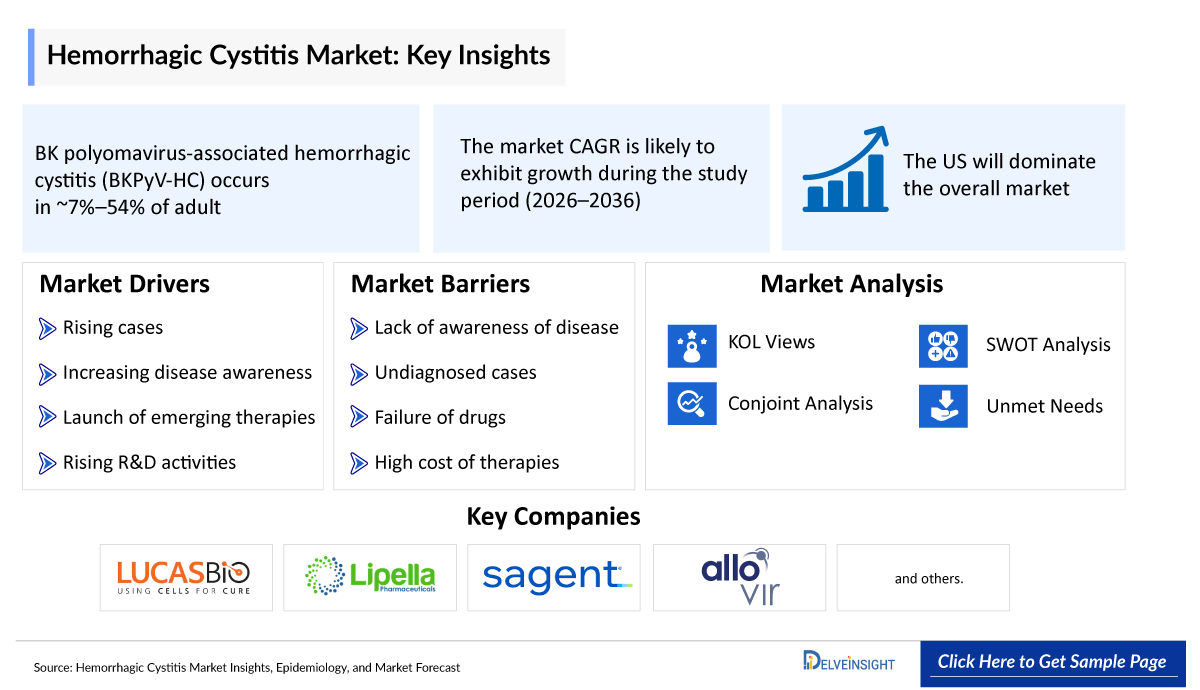
Key Factors Driving the Hemorrhagic Cystitis Market
- Increasing Utilization of Hematopoietic Stem Cell Transplantation (HSCT) and Intensive Cancer Therapies
The growing use of allogeneic HSCT, high-dose chemotherapy, and immunosuppressive conditioning regimens is a major driver of the Hemorrhagic Cystitis market. Hemorrhagic cystitis remains a significant complication following transplantation and cancer treatment, particularly among patients receiving cyclophosphamide-based regimens. Rising transplant volumes, improving cancer survival rates, and expanding use of advanced hematologic therapies are expected to increase the at-risk patient population across major markets.
- Significant Unmet Need for Effective Disease-Specific Therapies
Current management of hemorrhagic cystitis relies largely on supportive measures, including hydration, bladder irrigation, analgesics, antiviral agents, and reduction of immunosuppression. However, treatment outcomes remain inconsistent, especially in severe BK virus-associated hemorrhagic cystitis, which can lead to prolonged hospitalization, substantial morbidity, and increased healthcare costs. The lack of approved disease-specific therapies creates a significant opportunity for innovative treatments capable of addressing the underlying viral and inflammatory mechanisms driving disease progression.
- Emerging Hemorrhagic Cystitis Competitive Landscape
The competitive landscape is evolving with increasing focus on targeted antiviral an immunotherapeutic approaches. Current management includes supportive therapies such as Mesna (MESNEX/Uromitexan) for prevention of chemotherapy-induced hemorrhagic cystitis and off-label antiviral interventions for BK virus-associated disease. Emerging therapies such as Posoleucel (Viralym-M, AlloVir), LP-10 (Lipella Pharmaceuticals) and LB-DTK-BKV (LucasBio) are being developed to restore BK virus-specific immunity and improve outcomes in transplant-associated hemorrhagic cystitis. Advances in virus-specific T-cell therapies, immune-based approaches, and personalized transplant supportive care strategies are expected to expand treatment options and potentially transform the future management paradigm of hemorrhagic cystitis.
Hemorrhagic Cystitis Understanding and Treatment Algorithm
Hemorrhagic Cystitis Overview and Diagnosis
Hemorrhagic Cystitis is an inflammatory bladder condition characterized by bladder mucosal injury and hematuria, ranging from microscopic bleeding to severe gross hematuria with clot formation. It most commonly occurs as a complication of chemotherapy, radiation therapy, or viral infections, particularly in immunocompromised patients undergoing hematopoietic stem cell transplantation (HSCT). Chemotherapy-induced cases are frequently linked to cyclophosphamide and ifosfamide, while BK virus reactivation is a leading cause of late-onset hemorrhagic cystitis in transplant recipients. Common symptoms include hematuria, dysuria, urinary frequency, urgency, suprapubic pain, and, in severe cases, urinary obstruction and renal impairment. As the use of HSCT and intensive cancer therapies continues to increase, the clinical burden of hemorrhagic cystitis is expected to rise, highlighting a significant unmet need for effective treatment options.
Diagnosis is primarily based on clinical presentation, patient history, and laboratory investigations to determine the underlying cause and severity of disease. Evaluation typically includes urinalysis, urine culture, blood tests, renal function assessment, and viral testing for BK virus or adenovirus in transplant recipients. Imaging studies may be used to assess clot retention or urinary tract obstruction, while cystoscopy can help evaluate bladder mucosal injury and exclude alternative causes of hematuria. Advances in molecular diagnostics, viral monitoring, and risk stratification are expected to improve disease detection and support more personalized management approaches.
Further details are provided in the report.
Hemorrhagic Cystitis Treatment
The treatment of Hemorrhagic Cystitis is primarily focused on controlling hematuria, reducing bladder inflammation, relieving urinary symptoms, preventing complications such as clot retention and urinary obstruction, and addressing the underlying cause. Treatment selection is guided by disease severity, etiology, transplant status, degree of immunosuppression, and overall patient condition. Early diagnosis and timely intervention are critical to minimizing morbidity and improving clinical outcomes.
Current management is largely supportive and includes aggressive hydration, continuous bladder irrigation, pain control, blood transfusions when necessary, and catheterization for clot evacuation. In patients receiving cyclophosphamide or ifosfamide, Mesna (MESNEX/Uromitexan) is routinely used prophylactically to prevent chemotherapy-induced bladder toxicity. For BK virus-associated hemorrhagic cystitis, treatment typically involves supportive care, reduction of immunosuppression when feasible, and antiviral agents such as cidofovir, although clinical outcomes remain variable. Severe or refractory cases may require intravesical therapies, hyperbaric oxygen therapy, cystoscopic intervention, embolization, or surgical management. Despite these approaches, treatment remains largely symptomatic, and no universally accepted disease-specific therapy is currently available for BK virus-associated hemorrhagic cystitis.
Further details related to country-based variations are provided in the report.
Hemorrhagic Cystitis Unmet Needs
The section “unmet needs of Hemorrhagic Cystitis” outlines the critical gaps between the current state of patient care, diagnosis, and the ideal & effective management of the disease. It highlights the obstacles experienced by patients, clinicians, and researchers and identifies potential solutions for future progress.
- Lack of Approved Disease-Specific Therapies for BK Virus-Associated Hemorrhagic Cystitis
- Limited Efficacy and Significant Toxicity Associated with Current Antiviral Treatments
- Limited Treatment Options for Severe and Refractory Disease
- Limited Clinical Data in Severe and High-Risk Patient Populations
- Need for Innovative Localized and Tissue-Restorative Therapies
- Lack of Predictive Biomarkers for Treatment Response and others…
Comprehensive unmet needs insights in Hemorrhagic Cystitis and their strategic implications are provided in the full report.
Hemorrhagic Cystitis Epidemiology
Key Findings from Hemorrhagic Cystitis Epidemiological Analysis and Forecast
- According to the secondary research, BK polyomavirus-associated hemorrhagic cystitis (BKPyV-HC) occurs in approximately 7%–54% of adult and 8%–25% of pediatric patients undergoing allogeneic hematopoietic stem cell transplantation (allo-HSCT), making it one of the most common infectious complications in the transplant setting.
- According to various studies, BK virus-associated hemorrhagic cystitis predominantly affects allogeneic HSCT recipients and is associated with increased morbidity, prolonged hospitalization, and higher healthcare costs. The authors reported that the incidence of post-transplant BK virus-associated hemorrhagic cystitis varies considerably across studies, ranging from 7% to 54% in adult transplant recipients.
- According to Delveinsight estimates, hemorrhagic cystitis develops in approximately 9%–31% of stem cell transplant recipients, with severe cases associated with urinary tract obstruction, renal dysfunction, longer hospital stays, and increased treatment costs. BK virus reactivation represents one of the leading causes of late-onset disease.
- According to secondary research, approximately 80% of adults are seropositive for BK virus, and viral reactivation occurs primarily in immunocompromised individuals. Hemorrhagic cystitis represents the principal clinical manifestation of BK virus reactivation in HSCT recipients.
- According to secondary research, BK virus-associated hemorrhagic cystitis developed in approximately 13% of adult patients undergoing allogeneic HSCT in a large single-center analysis, with higher BK viremia levels correlating with greater disease severity.
Hemorrhagic Cystitis Drug Chapters & Competitive Analysis
The Hemorrhagic Cystitis drug chapter provides a detailed, market-focused review of approved therapies and the emerging pipeline across Phase I–III clinical trials. It covers the mechanism of action, clinical trial data, regulatory approvals, patents, collaborations, and strategic partnerships for each therapy, along with their advantages, limitations, and recent developments. This section offers critical insights into the Hemorrhagic Cystitis treatment landscape, supporting market assessment, competitive analysis, and growth forecasting for the Hemorrhagic Cystitis therapeutics market.
Approved Therapies for Hemorrhagic Cystitis
Mesna (MESNEX): Sagent Pharmaceuticals
Mesna (MESNEX) is an uroprotective agent indicated for the prevention of ifosfamide-induced hemorrhagic cystitis. Mesna acts by binding to and detoxifying acrolein and other urotoxic metabolites generated during oxazaphosphorine chemotherapy, thereby protecting the bladder urothelium from chemical injury. Sagent Pharmaceuticals markets Mesna Injection in the United States as a generic formulation for use alongside ifosfamide-containing chemotherapy regimens.
The US Food and Drug Administration approved mesna (MESNEX) for the prevention of ifosfamide-induced hemorrhagic cystitis, establishing it as the standard prophylactic therapy for patients receiving urotoxic oxazaphosphorine chemotherapy.
Competitive Landscape of Marketed Therapies | ||||||
|
Drug/Therapy |
Company |
Indication |
Molecule Type |
RoA |
MoA |
Marketed Region |
|
Mesna (MESNEX) |
Sagent Pharmaceuticals |
Prevention of ifosfamide-induced hemorrhagic cystitis |
Small Molecule |
IV, Oral |
Binds and neutralizes the urotoxic metabolite acrolein in the urinary tract, preventing chemotherapy-induced bladder damage |
1988 |
Hemorrhagic Cystitis Pipeline Analysis
LP-10: Lipella Pharmaceuticals
LP-10 is an intravesical formulation intended for the treatment of moderate to severe hemorrhagic cystitis, a serious disease with no adequate existing therapy. LP-10 has been granted Orphan Disease Designation (ODD) by the US FDA, and has generated positive top line results demonstrating preliminary safety and efficacy in a multicenter Phase IIa dose escalation trial; topline results published in the Journal of Urology, and full results published in the International Urology and Nephrology. Lipella has successfully completed a Phase IIa, dose-escalation clinical trial evaluating LP-10 (liposomal tacrolimus) for the treatment of hemorrhagic cystitis.
Posoleucel (Viralym-M): AlloVir
Posoleucel (Viralym-M) is an allogeneic, off-the-shelf, multi-virus-specific T-cell therapy being developed by AlloVir for the treatment of virus-associated complications in immunocompromised patients, including BK virus-associated hemorrhagic cystitis (BKV-HC) following allogenic HSCT. Posoleucel has received Regenerative Medicine Advanced Therapy (RMAT) designation from the US FDA for BK virus-associated hemorrhagic cystitis and has demonstrated encouraging clinical activity in reducing BK viral load, improving hematuria, and accelerating symptom resolution in transplant recipients.
In 2024, AlloVir reported positive data from the Phase III RESOLVE trial evaluating posoleucel for the treatment of BK virus-associated hemorrhagic cystitis, supporting its potential as the first disease-specific therapy for this serious transplant complication
In October 2021, the FDA has granted ODD to AlloVir’s posoleucel, an investigational T-cell therapy for the potential treatment of virus-associated hemorrhagic cystitis.
Competitive Landscape of Emerging Therapies | |||||||
|
Drug Name |
Company |
Highest Phase |
Indication |
RoA |
MoA |
Molecule Type |
Anticipated Launch in the US |
|
Posoleucel (Viralym-M) |
AlloVir |
III |
BK Virus-Associated Hemorrhagic Cystitis following HSCT |
Intravenous Infusion |
multi-virus-specific T-cell therapy |
Allogeneic Cell Therapy |
Information is available in the full report |
|
LP-10 |
Lipella Pharmaceuticals |
II |
Hemorrhagic Cystitis |
Intravesical Administration |
Intravesical Therapy |
Small Molecule |
Information is available in the full report |
|
LB-DTK-BKV |
LucasBio |
I/II |
BK Virus-Associated Hemorrhagic Cystitis |
Intravenous Infusion |
Donor-derived BK virus-specific T-cell therapy designed to provide targeted immune control of BK virus infection in immunocompromised patients |
Cell Therapy |
Information is available in the full report |
|
Note: Launch insights are provisional and may change with future report updates or the occurrence of major key catalysts. | |||||||
Note: A detailed emerging therapies assessment will be provided in the final report
Hemorrhagic Cystitis Key Players, Market Leaders and Emerging Companies
- LucasBio
- Lipella Pharmaceuticals
- Sagent Pharmaceuticals
- AlloVir and others…
Hemorrhagic Cystitis Key Players Drug Updates
- In 2025, Lipella Pharmaceuticals continued advancing LP-10 for hemorrhagic cystitis, with the company reaffirming its plans to progress the program through later-stage clinical development. LP-10 remains one of the few actively developed drug candidates targeting hemorrhagic cystitis, an indication for which no FDA-approved drug therapy currently exists.
- In 2024, AlloVir continued evaluating Posoleucel (Viralym-M), its off-the-shelf multi-virus-specific T-cell therapy, for the treatment of BK virus-associated hemorrhagic cystitis following hematopoietic stem cell transplantation. Posoleucel remains one of the most advanced cell therapy programs in this indication and has previously received RMAT designation from the US FDA for BK virus-associated hemorrhagic cystitis.
- In May 2024, Lipella Pharmaceuticals announced that following a Type C meeting with the US FDA, the company received guidance to advance LP-10 (liposomal tacrolimus) into a Phase IIb clinical trial for moderate-to-severe hemorrhagic cystitis. The FDA provided preliminary agreement on the proposed study design, supporting continued clinical development of LP-10 as a potential first-in-class therapy for hemorrhagic cystitis.
Hemorrhagic Cystitis Insights
Hemorrhagic Cystitis Market Outlook
The Hemorrhagic Cystitis market is expected to witness gradual growth during the forecast period, driven by the increasing utilization of HSCT, expanding use of intensive chemotherapy regimens, and growing survival of patients with hematologic malignancies and solid tumors. Hemorrhagic cystitis is a serious urological complication characterized by diffuse bladder inflammation and hematuria, most commonly associated with cyclophosphamide- or ifosfamide-based chemotherapy, pelvic radiation therapy, and BK virus reactivation following allogeneic HSCT. The disease can result in significant morbidity, prolonged hospitalization, increased healthcare resource utilization, and reduced quality of life. Rising transplant volumes and improved recognition of BK virus-associated hemorrhagic cystitis (BKV-HC) are expected to contribute to a growing identifiable patient population across the 7MM.
The current treatment landscape remains largely dependent on supportive care measures, including bladder irrigation, pain management, blood transfusions, antiviral therapy, reduction of immunosuppression, and uroprotective agents such as Mesna for chemotherapy-induced disease. Despite these interventions, no therapy is currently approved specifically for BK virus-associated hemorrhagic cystitis, and treatment outcomes remain inconsistent, particularly in severe and refractory cases. The lack of disease-specific therapies represents one of the most significant unmet needs in the post-transplant setting and creates substantial opportunities for innovation.
The competitive landscape is evolving with the development of targeted therapies designed to address the underlying viral and immunological drivers of disease. Emerging candidates such as Posoleucel (Viralym-M; AlloVir), LB-DTK-BKV (LucasBio), and LP-10 (Lipella Pharmaceuticals) are being investigated to improve viral control, accelerate symptom resolution, and reduce treatment-related morbidity. In particular, virus-specific T-cell therapies have generated considerable interest due to their potential to restore antiviral immunity and provide a disease-modifying approach for BK virus-associated hemorrhagic cystitis. Continued advances in cellular immunotherapy, antiviral strategies, and localized bladder therapies are expected to diversify the treatment landscape and create new commercial opportunities.
Despite favorable market drivers, several challenges persist, including heterogeneous treatment practices, limited clinical evidence supporting current interventions, absence of standardized treatment guidelines, and difficulties in managing highly immunocompromised patients. Nevertheless, increasing transplant activity, growing awareness of BK virus-associated complications, and the advancement of innovative therapeutic platforms are expected to support market expansion. Companies capable of developing safe, effective, and disease-specific therapies for hemorrhagic cystitis are likely to gain a significant competitive advantage in this evolving market.
Further details will be provided in the report….
Drug Class/Insights into Leading Emerging and Marketed Therapies in Hemorrhagic Cystitis (2022–2036 Forecast)
The Hemorrhagic Cystitis market remains largely dependent on supportive care and preventive interventions, reflecting the absence of approved disease-specific therapies, particularly for BK virus-associated hemorrhagic cystitis (BKV-HC). The emerging pipeline is increasingly focused on targeted antiviral and immune-restorative approaches designed to address the underlying pathophysiology of disease rather than symptom management alone.
- Uroprotective Agents: These therapies prevent chemotherapy-induced bladder injury by neutralizing toxic metabolites generated from oxazaphosphorine chemotherapy. Mesna (MESNEX) remains the standard uroprotective agent and acts by binding acrolein, thereby protecting the bladder urothelium from chemical damage and reducing the risk of hemorrhagic cystitis.
- Supportive and Symptom-Control Therapies: Current management relies heavily on bladder irrigation, hydration, pain control, blood transfusions, and reduction of immunosuppression. While these interventions help manage symptoms and complications, they do not directly address viral replication or disease progression.
- Virus-Specific T-Cell Therapies: This emerging class aims to restore antiviral immunity in immunocompromised patients. Posoleucel (Viralym-M) and LB-DTK-BKV utilize donor-derived or allogeneic BK virus-specific T cells that recognize and eliminate BK virus-infected cells, offering a targeted approach to treating BK virus-associated hemorrhagic cystitis.
- Localized Intravesical Therapies: These therapies are designed to deliver treatment directly to the bladder mucosa, minimizing systemic exposure while promoting local tissue repair. LP-10 (Lipella Pharmaceuticals) is being developed as an intravesical therapy intended to reduce bladder inflammation, improve urothelial healing, and alleviate symptoms in patients with moderate-to-severe hemorrhagic cystitis.
- Future Immune-Modulating and Precision Therapies: Ongoing research is increasingly focused on immune reconstitution strategies, adoptive cellular therapies, viral load-guided treatment approaches, and biomarker-driven interventions. These next-generation therapies aim to improve clinical outcomes, reduce recurrence, and address the substantial unmet need in BK virus-associated hemorrhagic cystitis following HSCT.
Further details will be provided in the report….
Hemorrhagic Cystitis Drug Uptake
This section focuses on the uptake rate of potential drugs expected to be launched in the market during the forecast period (2026–2036). The analysis covers the Hemorrhagic Cystitis market's uptake by drugs, patient uptake by therapy, and sales of each drug.
Further detailed analysis of emerging therapies' drug uptake in the report…
Market Access and Reimbursement of Hemorrhagic Cystitis
Reimbursement is a crucial factor that affects the drug’s access to the market. Often, the decision to reimburse comes down to the price of the drug relative to the benefit it produces in treated patients. To reduce the healthcare burden of these high-cost therapies, many payment models are being considered by payers and other industry insiders.
The US Reimbursement for Hemorrhagic Cystitis Therapies | |
|
Drug |
Access Program |
|
Mesna (MESNEX) |
|
The report further provides detailed insights on the country-wise accessibility and reimbursement scenarios, cost-effectiveness scenario of approved therapies, programs making accessibility easier and out-of-pocket costs more affordable, insights on patients insured under federal or state government prescription drug programs, etc.
Further details are provided in the final report….
Hemorrhagic Cystitis Therapies Price Scenario & Trends
Pricing and analogue assessment of Hemorrhagic Cystitis therapies highlights evolving price dynamics structures. This section summarizes the cost of approved treatments, closest and most appropriate analogue selection for emerging therapies, and understanding of how pricing influences market access, adherence, and long-term uptake.
Further details are provided in the final report….
Industry Experts and Physician Views for Hemorrhagic Cystitis
To keep up with Hemorrhagic Cystitis market trends, we take Key Opinion Leaders (KOLs) and Subject Matter Experts (SMEs) opinions working in the domain through primary research to fill the data gaps and validate our secondary research. Industry experts were contacted for insights on the Hemorrhagic Cystitis emerging therapies, evolving treatment landscape, patient adherence to conventional therapies, therapy switching trends, drug adoption and uptake, accessibility challenges, and epidemiology and real-world prescription patterns in Hemorrhagic Cystitis, including MD, PhD, Instructor, Postdoctoral Researcher, Professor, Researcher, and others.
DelveInsight’s analysts connected with 10+ KOLs to gather insights; however, interviews were conducted with 6+ KOLs in the 7MM. Centers such as the Stanford University School of Medicine, University of California San Diego School of Medicine, Columbia University Irving Medical Center, Harvard Medical School, King's College London, etc. were contacted. Their opinion helps understand and validate current and emerging Hemorrhagic Cystitis therapies, highlight unmet medical needs, provide epidemiological context, and support strategic decisions for market access, therapy adoption, and pipeline prioritization in Hemorrhagic Cystitis.
Region |
Key Opinion Leaders (KOLs) and Subject Matter Experts (SMEs) |
|
United States |
“Hemorrhagic cystitis remains a significant complication following hematopoietic stem cell transplantation, particularly in patients with BK virus reactivation. Current management is largely supportive, and the lack of approved disease-specific therapies continues to represent a major unmet need in transplant medicine.” |
|
Germany |
“Despite advances in supportive care and transplant protocols, severe hemorrhagic cystitis can result in prolonged hospitalization, increased healthcare costs, and substantial patient morbidity. Effective therapies capable of targeting the underlying viral and inflammatory mechanisms would represent a meaningful advancement in clinical practice.” |
Qualitative Analysis: SWOT and Conjoint Analysis
We perform qualitative and market Intelligence analysis using various approaches, such as SWOT analysis and conjoint analysis. In the SWOT analysis of Hemorrhagic Cystitis, strengths, weaknesses, opportunities, and threats in terms of disease diagnosis, patient awareness, patient burden, competitive landscape, cost-effectiveness, and geographical accessibility of therapies are provided.
Conjoint analysis analyzes emerging therapies based on relevant attributes such as safety, efficacy, frequency of administration, route of administration, and order of entry. Scoring is given based on these parameters to analyze the effectiveness of therapy.
The team of analysts analyzes promising emerging therapies based on relevant attributes such as safety, efficacy, frequency of administration, route of administration, and order of entry. In efficacy, the trial’s primary and secondary outcome measures are evaluated, whereas the therapies’ safety is evaluated, wherein the acceptability, tolerability, and adverse events are majorly observed. In addition, the scoring is also based on the route of administration, order of entry, probability of success, and the addressable patient pool for each therapy. According to these parameters, the final weightage score and the ranking of the emerging therapies are decided.
Scope of the Report
- The report covers a segment of key events, an executive summary, a descriptive overview of Hemorrhagic Cystitis, explaining its causes, signs and symptoms, pathogenesis, and currently available treatments.
- Comprehensive insight has been provided into the epidemiology segments and forecasts, the future growth potential of the diagnosis rate, and disease progression along treatment guidelines.
- Additionally, an all-inclusive account of both the current and emerging treatments, along with the elaborative profiles of late-stage and prominent therapies, will have an impact on the current treatment landscape.
- A detailed review of the Hemorrhagic Cystitis market, historical and forecasted market size, market share by therapies, detailed assumptions, and rationale behind our approach is included in the report, covering the 7MM drug outreach.
- The report provides an edge while developing business strategies by understanding trends through SWOT analysis and expert insights/KOL views, patient journey, and treatment preferences that help in shaping and driving the 7MM Hemorrhagic Cystitis market.
Report Insights
- Hemorrhagic Cystitis Patient Population Forecast
- Hemorrhagic Cystitis Therapeutics Market Size
- Hemorrhagic Cystitis Pipeline Analysis
- Hemorrhagic Cystitis Market Size and Trends
- Hemorrhagic Cystitis Market Opportunity (Current and forecasted)
Report Key Strengths
- Epidemiology‑based (Epi‑based) Bottom‑up Forecasting
- Artificial Intelligence (AI)-enabled Market Research Report
- 11-year forecast
- Hemorrhagic Cystitis Market Outlook (North America, Europe, Asia-Pacific)
- Patient Burden Trends (by geography)
- Hemorrhagic Cystitis Treatment Addressable Market (TAM)
- Hemorrhagic Cystitis Competitive Landscape
- Hemorrhagic Cystitis Major Companies Insights
- Hemorrhagic Cystitis Price Trends and Analogue Assessment
- Hemorrhagic Cystitis Therapies Drug Adoption/Uptake
- Hemorrhagic Cystitis Therapies Peak Patient Share analysis
Report Assessment
- Hemorrhagic Cystitis Current Treatment Practices
- Hemorrhagic Cystitis Unmet Needs
- Hemorrhagic Cystitis Clinical Development Analysis
- Hemorrhagic Cystitis Emerging Drugs Product Profiles
- Hemorrhagic Cystitis Market Attractiveness
- Hemorrhagic Cystitis Qualitative Analysis (SWOT and Conjoint Analysis)
FAQs
Market Insights
- What was the Hemorrhagic Cystitis market size, the market size by therapies, market share (%) distribution in 2025, and what would it look like by 2036? What are the contributing factors for this growth?
- What are the anticipated pricing variations among different geographies for the emerging therapies in the future?
- What can be the future treatment paradigm of Hemorrhagic Cystitis?
- What are the disease risks, burdens, and unmet needs of Hemorrhagic Cystitis? What will be the growth opportunities across the 7MM concerning the patient population with Hemorrhagic Cystitis?
- Who is the major future competitor in the market, and how will the competitors affect their market share?
- What are the current options for the treatment of Hemorrhagic Cystitis? What are the current guidelines for treating Hemorrhagic Cystitis in the US, Europe, and Japan?
Reasons to Buy
- The report will help in developing business strategies by understanding the latest trends and changing treatment dynamics driving the Hemorrhagic Cystitis market.
- Bottom-up forecasting builds from the affected population to product forecasts, delivering a robust, data-driven approach ideal for new therapies and novel classes.
- Insights on patient burden/disease incidence, evolution in diagnosis, and factors contributing to the change in the epidemiology of the disease during the forecast years.
- Understand the existing market opportunities in varying geographies and the growth potential over the coming years.
- Identifying strong upcoming players in the market will help devise strategies to help get ahead of competitors.
- Detailed analysis and ranking of class-wise potential current and emerging therapies under the conjoint analysis section to provide visibility around leading classes.
- To understand KOLs’ perspectives on the accessibility, acceptability, and compliance-related challenges of existing treatment to overcome barriers in the future.
- Detailed insights on the unmet needs of the existing market so that the upcoming players can strengthen their development and launch strategy.
- This Artificial Intelligence (AI)-enabled report summarize and simplify complex datasets within the report into clear, actionable insights for stakeholders, investors, and healthcare providers, enabling faster, data-driven decisions.