
Hemorrhoids Market Summary
Hemorrhoids Insights and Trends
- Hemorrhoids, commonly known as piles, are enlarged and swollen veins located in the anus and lower rectum, similar to varicose veins. Those that form inside the rectum are referred to as internal hemorrhoids, while those developing beneath the skin surrounding the anus are known as external hemorrhoids.
- Factors such as constipation, straining during bowel movements, and prolonged sitting on the toilet can impair blood flow, causing veins to swell and enlarge. This is also why hemorrhoids are common during pregnancy, as the growing uterus puts pressure on nearby veins. Increased anal canal muscle tension, along with age-related weakening of supporting tissues, can further lead to bulging and prolapse of hemorrhoids.
- Hemorrhoids are very common, especially in older people. About 1 in every 20 people in the United States has them. They affect over half of people over 50.
- In the United States, hemorrhoids affect nearly 5% of the population, with approximately 10 million patients annually reporting symptoms.
- To reduce hemorrhoid discomfort, sit on a soft cushion, use over-the-counter pain relievers such as aspirin or acetaminophen, and avoid harsh wiping by using damp, unscented toilet paper to minimize irritation and swelling.
- There are currently no FDA-approved prescription products specifically indicated for hemorrhoids. Hemorrhoid management primarily involves conservative approaches such as a high-fiber diet, sitz baths, topical creams, suppositories, and pain relievers, while persistent or severe cases may require minimally invasive procedures or surgery.
- The hemorrhoid emerging pipeline remains limited, with Halo-Lido (CITI-002) from Citius Pharmaceuticals being one of the few emerging therapies in development, highlighting the lack of innovation and continued reliance on existing treatment approaches.
Hemorrhoids Market Size and Forecast in the US
- 2025 Hemorrhoids Market Size: XX million
- 2036 Projected Hemorrhoids Market Size: XX million
- Hemorrhoids Growth Rate (2026–2036): XX% CAGR
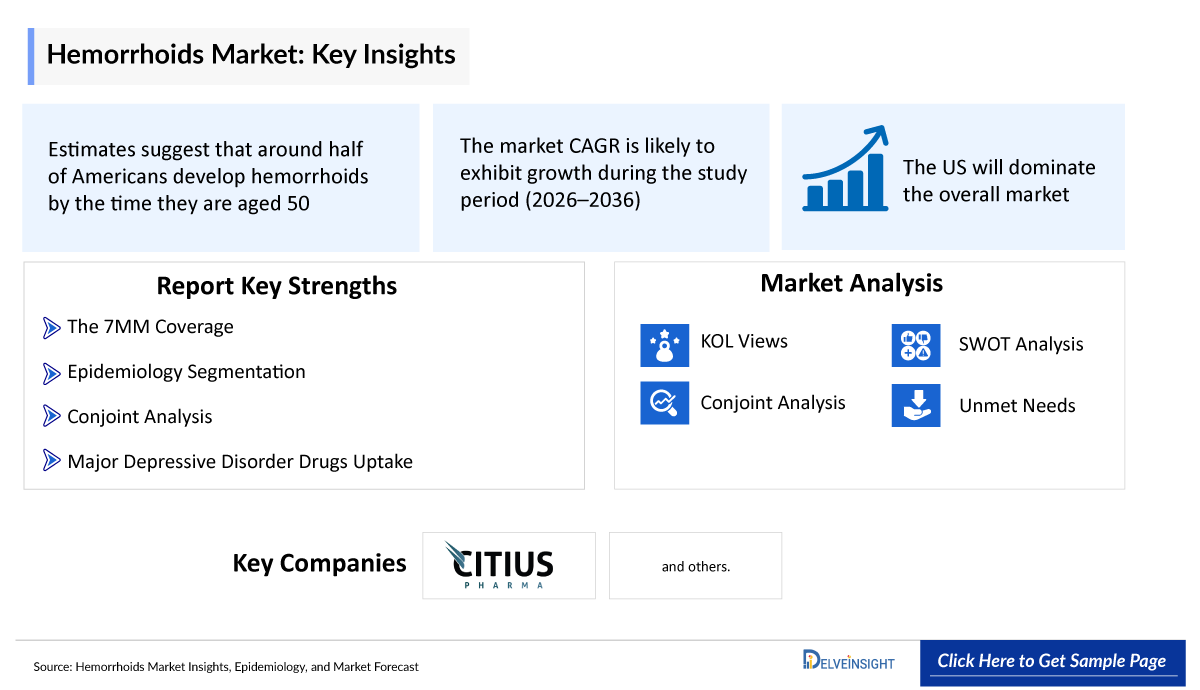
DelveInsight's ‘Hemorrhoids – Market Insights, Epidemiology and Market Forecast – 2036’ report delivers an in-depth understanding of the hemorrhoids, historical and forecasted epidemiology, as well as the hemorrhoids market trends in the United States, EU4 (Germany, Spain, Italy, and France) and the United Kingdom, and Japan.
The hemorrhoids market report delivers a comprehensive analysis of the current treatment landscape, including standards of care, clinical practices, and evolving therapeutic algorithms. It evaluates hemorrhoids patient burden trends, revenue & market share dynamics, peak patient share & therapy uptake analysis, and provides an in-depth market size assessment, and growth rate projections (Historical & Forecast 2022–2036) across global regions. The report highlights key unmet medical needs in hemorrhoids and maps the competitive and clinical landscape to uncover high‑value opportunities, providing a clear outlook on future market growth potential.
|
Study Period |
2022–2036 |
|
Historical Year |
2022–2025 |
|
Forecast Period |
2026–2036 |
|
Base Year |
2026 |
|
Geographies Covered |
|
|
Hemorrhoids Market CAGR (Forecast period) |
XX% (2026–2036) |
|
Hemorrhoids Epidemiology Segmentation Analysis |
Patient Burden Assessment
|
|
Hemorrhoids Companies |
|
|
Hemorrhoids Therapies |
|
|
Hemorrhoids Market |
Segmented by
|
|
Analysis |
|
Key Factors Driving the Hemorrhoids Market
Increasing Prevalence of Risk Factors and Aging Population
The growing prevalence of chronic constipation, obesity, sedentary lifestyles, and an aging population is contributing to a higher burden of hemorrhoidal disease, increasing demand for effective treatment and management options.
Growing Awareness and Demand for Minimally Invasive Treatments
Rising patient awareness, improved diagnosis rates, and increasing adoption of minimally invasive procedures such as rubber band ligation and sclerotherapy are driving the hemorrhoid treatment market by offering effective alternatives to surgery.
Hemorrhoids Understanding and Treatment Algorithm
Hemorrhoids Overview and Diagnosis
Hemorrhoids are a common anorectal condition characterized by the enlargement and inflammation of vascular cushions in the lower rectum and anus. They are classified as internal hemorrhoids, which develop inside the rectum, and external hemorrhoids, which form beneath the skin around the anus. Common symptoms include rectal bleeding, pain, itching, swelling, discomfort, and prolapse. Hemorrhoids are associated with factors such as chronic constipation, prolonged straining during bowel movements, obesity, pregnancy, aging, and sedentary lifestyles. Disease severity can range from mild, self-limiting symptoms to recurrent or severe cases requiring procedural or surgical intervention.
Diagnosis of hemorrhoids is primarily based on clinical evaluation, including medical history and physical examination. Visual inspection, digital rectal examination, and anoscopy are commonly used to confirm the diagnosis and assess disease severity. Additional procedures such as sigmoidoscopy or colonoscopy may be performed to exclude other causes of rectal bleeding, particularly in older patients or those with atypical symptoms. Early diagnosis and appropriate assessment help guide treatment decisions and improve symptom management.
Further details are provided in the report.
Current Hemorrhoids Treatment Landscape
The treatment landscape for hemorrhoids primarily relies on conservative management and procedural interventions aimed at relieving symptoms and preventing recurrence. First-line treatment includes dietary fiber supplementation, increased fluid intake, sitz baths, topical creams, suppositories, and oral pain relievers to reduce pain, itching, and inflammation. For patients with persistent or severe symptoms, minimally invasive procedures such as rubber band ligation, sclerotherapy, infrared coagulation, and thrombectomy may be used, while advanced or recurrent cases may require surgical interventions such as hemorrhoidectomy or stapled hemorrhoidopexy. Despite the high prevalence of the disease, there are currently no FDA-approved prescription therapies specifically indicated for hemorrhoids. The pipeline remains limited, with Halo-Lido (CITI-002) from Citius Pharmaceuticals being one of the few emerging candidates under development, highlighting the significant unmet need for novel pharmacological treatment options.
Further details related to country-based variations are provided in the report.
Hemorrhoids Unmet Needs
The section “unmet needs of hemorrhoids” outlines the critical gaps between the current state of patient care, diagnosis, and the ideal & effective management of the disease. It highlights the obstacles experienced by patients, clinicians, and researchers and identifies potential solutions for future progress.
- Lack of FDA-Approved Prescription Therapies
- Limited Innovation and Sparse Clinical Pipeline
- Need for Effective, Durable, and Non-Invasive Treatment Options, and others…..
Note: Comprehensive unmet needs insights in Hemorrhoids and their strategic implications are provided in the full report.
Hemorrhoids Epidemiology
Key Findings from Hemorrhoids Epidemiological Analysis and Forecast
- Estimates suggest that around half of Americans develop hemorrhoids by the time they are aged 50, and only a small proportion of those people seek therapy.
- The number of people in the US suffering from hemorrhoids is estimated to be around 10.4 million, and 1 million new cases occur each year. 10 to 20% of those new cases require surgery.
- In the United States, up to one-third of the 10 million people with hemorrhoids seek medical treatment, resulting in 1.5 million related prescriptions per year.
- External hemorrhoids occur more commonly in young and middle-aged adults than in older adults. The prevalence of hemorrhoids increases with age, with a peak in persons aged 45-65 years.
- There is no known sex predilection, although men are more likely to seek treatment. However, pregnancy causes physiologic changes that predispose women to developing symptomatic hemorrhoids.
Hemorrhoids Drug Analysis & Competitive Landscape
The hemorrhoids drug chapter provides a detailed, market-focused review of the emerging pipeline across Phase III clinical trials and preclinical trials. It covers the mechanism of action, clinical trial data, regulatory approvals, patents, collaborations, and strategic partnerships for each therapy, along with their advantages, limitations, and recent developments. This section offers critical insights into the hemorrhoids treatment landscape, supporting market assessment, competitive analysis, and growth forecasting for the hemorrhoids therapeutics market.
Hemorrhoids Pipeline Analysis
Halo-Lido (CITI-002): Citius Pharmaceuticals
Halo-Lido (CITI-002) is a proprietary topical formulation of halobetasol and lidocaine that is intended to provide anti-inflammatory and anesthetic relief to individuals suffering from hemorrhoids. Citius’ halobetasol and lidocaine formulation could become the first FDA-approved prescription product to treat hemorrhoids in the United States.
Note: Detailed emerging therapies assessment will be provided in the final report.
Hemorrhoids Key Players and Emerging Companies
- Citius Pharmaceuticals, and others
Hemorrhoids Drug Updates
- A Phase IIb trial of Halo-Lido (CITI-002) for the treatment of hemorrhoids was completed in 2023, with positive results supporting its further clinical development.
Hemorrhoids Market Outlook
The treatment landscape for hemorrhoids continues to rely primarily on conservative measures, including dietary modification, fiber supplementation, sitz baths, topical agents, and pain relievers, alongside minimally invasive procedures and surgery for more severe cases. Despite the high prevalence of the disease, there are currently no FDA-approved prescription therapies specifically indicated for hemorrhoids, highlighting a notable unmet need. The development pipeline remains limited, with Halo-Lido (CITI-002) emerging as one of the few investigational therapies under development. As awareness of hemorrhoidal disease increases and demand grows for effective, durable, and non-invasive treatment options, the introduction of novel pharmacological therapies could expand the treatment landscape and create future market opportunities.
Further details will be provided in the report….
Drug Class/Insights into Leading Emerging Therapies in Hemorrhoids (2022–2036 Forecast)
The hemorrhoids market (2022–2036 forecast) is increasingly shifting toward targeted immunologic therapies designed to address the underlying autoimmune mechanisms driving disease progression, rather than relying solely on broad immunosuppressive regimens and supportive care.
- Targeted Topical Therapies: The emerging hemorrhoid pipeline is focused on localized therapies designed to address the underlying inflammation, pain, and irritation associated with the disease. Unlike current treatments that primarily provide symptomatic relief, investigational candidates such as Halo-Lido aim to deliver targeted anti-inflammatory and anesthetic effects directly to affected tissues, potentially improving symptom control, patient convenience, and treatment outcomes. However, the pipeline remains extremely limited, highlighting a significant opportunity for innovation in hemorrhoid therapeutics.
Hemorrhoids Drug Uptake
This section focuses on the uptake rate of potential drugs expected to be launched in the market during the forecast period (2026–2036). The analysis covers the uptake of hemorrhoid drugs, performance at peak, factors affecting performance during the prime years of growth, patient uptake by therapy, and anticipated sales generated by each drug.
Detailed insights into emerging therapies' drug uptake are included in the report.
Market Access and Reimbursement of Approved Therapies in Hemorrhoids
Reimbursement is a crucial factor that affects the drug’s access to the market. Often, the decision to reimburse comes down to the price of the drug relative to the benefit it produces in treated patients. To reduce the healthcare burden of these high-cost therapies, many payment models are being considered by payers and other industry insiders.
NOTE: Further Details are provided in the final report….
Hemorrhoids Therapies Price Scenario & Trends
Pricing and analogue assessment of hemorrhoid therapies highlights evolving price dynamics structures. This section summarizes the cost of approved treatments, the closest and most appropriate analogue selection for emerging therapies, and the understanding of how pricing influences market access, adherence, and long-term uptake.
Industry Experts and Physician Views for Hemorrhoids
To keep up with the hemorrhoids market trends, we take Key Opinion Leaders (KOLs) and Subject Matter Experts (SMEs) opinions working in the domain through primary research to fill the data gaps and validate our secondary research. Industry experts were contacted for insights on the hemorrhoids emerging therapies, evolving treatment landscape, patient adherence to conventional therapies, therapy switching trends, drug adoption and uptake, accessibility challenges, and epidemiology and real-world prescription patterns in hemorrhoids, including MD, PhD, Instructor, Postdoctoral Researcher, Professor, Researcher, and others.
DelveInsight’s analysts connected with 15+ KOLs to gather insights at the country level. Centers such as the University of Minnesota, UCL Centre for Nephrology, and University Hospital Erlangen, etc. were contacted. Their opinion helps understand and validate current and emerging hemorrhoids therapies, highlight unmet medical needs, provide epidemiological context, and support strategic decisions for market access, therapy adoption, and pipeline prioritization in hemorrhoids.
|
Region |
Key Opinion Leaders (KOLs) and Subject Matter Experts (SMEs) |
|
United States |
“Conservative management remains the cornerstone of treatment, with most patients achieving symptom relief through dietary fiber supplementation, lifestyle modifications, sitz baths, and topical therapies.” |
|
Germany |
“Minimally invasive procedures are increasingly preferred for patients with persistent symptoms, as techniques such as rubber band ligation and sclerotherapy offer effective symptom control with lower morbidity than surgery.” |
Qualitative Analysis: SWOT and Conjoint Analysis
We perform qualitative and market Intelligence analysis using various approaches, such as SWOT analysis and conjoint analysis.
In the SWOT analysis of hemorrhoids, strengths, weaknesses, opportunities, and threats in terms of disease diagnosis, patient awareness, patient burden, competitive landscape, cost-effectiveness, and geographical accessibility of therapies are provided.
Conjoint analysis analyzes emerging therapies based on relevant attributes such as safety, efficacy, frequency of administration, route of administration, and order of entry. Scoring is given based on these parameters to analyze the effectiveness of therapy.
The team of analysts analyzes promising emerging therapies based on relevant attributes such as safety, efficacy, frequency of administration, route of administration, and order of entry. In efficacy, the trial’s primary and secondary outcome measures are evaluated, whereas the therapies’ safety is evaluated, wherein the acceptability, tolerability, and adverse events are mainly observed. In addition, the scoring is also based on the route of administration, order of entry, probability of success, and the addressable patient pool for each therapy. According to these parameters, the final weightage score and the ranking of the emerging therapies are decided.
Scope of the Report
- The report covers a segment of key events, an executive summary, a descriptive overview of hemorrhoids, explaining their causes, signs and symptoms, pathogenesis, and currently available treatments.
- Comprehensive insight has been provided into the epidemiology segments and forecasts, the future growth potential of the diagnosis rate, and disease progression along treatment guidelines.
- Additionally, an all-inclusive account of both the current and emerging treatments, along with the elaborative profiles of late-stage and prominent therapies, will have an impact on the current treatment landscape.
- A detailed review of the hemorrhoids market, historical and forecasted market size, market share by therapies, detailed assumptions, and rationale behind our approach is included in the report, covering the 7MM drug outreach.
- The report provides an edge while developing business strategies by understanding trends through SWOT analysis and expert insights/KOL views, patient journey, and treatment preferences that help in shaping and driving the 7MM hemorrhoids market.
Report Insights
- Hemorrhoids Patient Population Forecast
- Hemorrhoids Therapeutics Market Size
- Hemorrhoids Pipeline Analysis
- Hemorrhoids Market Size and Trends
- Hemorrhoids Market Opportunity (Current and forecasted)
Report Key Strengths
- Epidemiology‑based (Epi‑based) Bottom‑up Forecasting
- Artificial Intelligence (AI)-Enabled Market Research Report
- 11-Year Forecast
- Hemorrhoids Market Outlook (North America, Europe, Asia-Pacific)
- Patient Burden Trends (By Geography)
- Hemorrhoids Treatment Addressable Market (TAM)
- Hemorrhoids Competitive Landscape
- Hemorrhoids Major Companies Insights
- Hemorrhoids Price Trends and Analogue Assessment
- Hemorrhoids Therapies Drug Adoption/Uptake
- Hemorrhoids Therapies Peak Patient Share Analysis
Report Assessment
- Hemorrhoids Current Treatment Practices
- Hemorrhoids Unmet Needs
- Hemorrhoids Clinical Development Analysis
- Hemorrhoids Emerging Drugs Product Profiles
- Hemorrhoids Market attractiveness
- Hemorrhoids Qualitative Analysis (SWOT and conjoint analysis)
FAQs
Market Insights
- What was the hemorrhoids market size, the market size by therapies, market share (%) distribution in 2025, and what would it look like by 2036? What are the contributing factors for this growth?
- What are the anticipated pricing variations among different geographies for the emerging therapies in the future?
- What can be the future treatment paradigm of hemorrhoids?
- What are the disease risks, burdens, and unmet needs of hemorrhoids? What will be the growth opportunities across the 7MM concerning the patient population with hemorrhoids?
- Who is the major future competitor in the market, and how will the competitors affect their market share?
- What are the current options for the treatment of hemorrhoids? What are the current guidelines for treating hemorrhoids in the US, Europe, and Japan?
Reasons to Buy
- The report will help in developing business strategies by understanding the latest trends and changing treatment dynamics driving the hemorrhoids market.
- Bottom-up forecasting builds from the affected population to product forecasts, delivering a robust, data-driven approach ideal for new therapies and novel classes.
- Insights on patient burden/disease incidence, evolution in diagnosis, and factors contributing to the change in the epidemiology of the disease during the forecast years.
- Understand the existing market opportunities in varying geographies and the growth potential over the coming years.
- Identifying strong upcoming players in the market will help devise strategies to help get ahead of competitors.
- Detailed analysis and ranking of class-wise potential emerging therapies under the conjoint analysis section to provide visibility around leading classes.
- To understand KOLs’ perspectives on the accessibility, acceptability, and compliance-related challenges of existing treatment to overcome barriers in the future.
- Detailed insights into the unmet needs of the existing market so that the upcoming players can strengthen their development and launch strategy.
- This Artificial Intelligence (AI)-enabled report summarizes and simplifies complex datasets within the report into clear, actionable insights for stakeholders, investors, and healthcare providers, enabling faster, data-driven decisions.