Hepatic Encephalopathy Market Summary
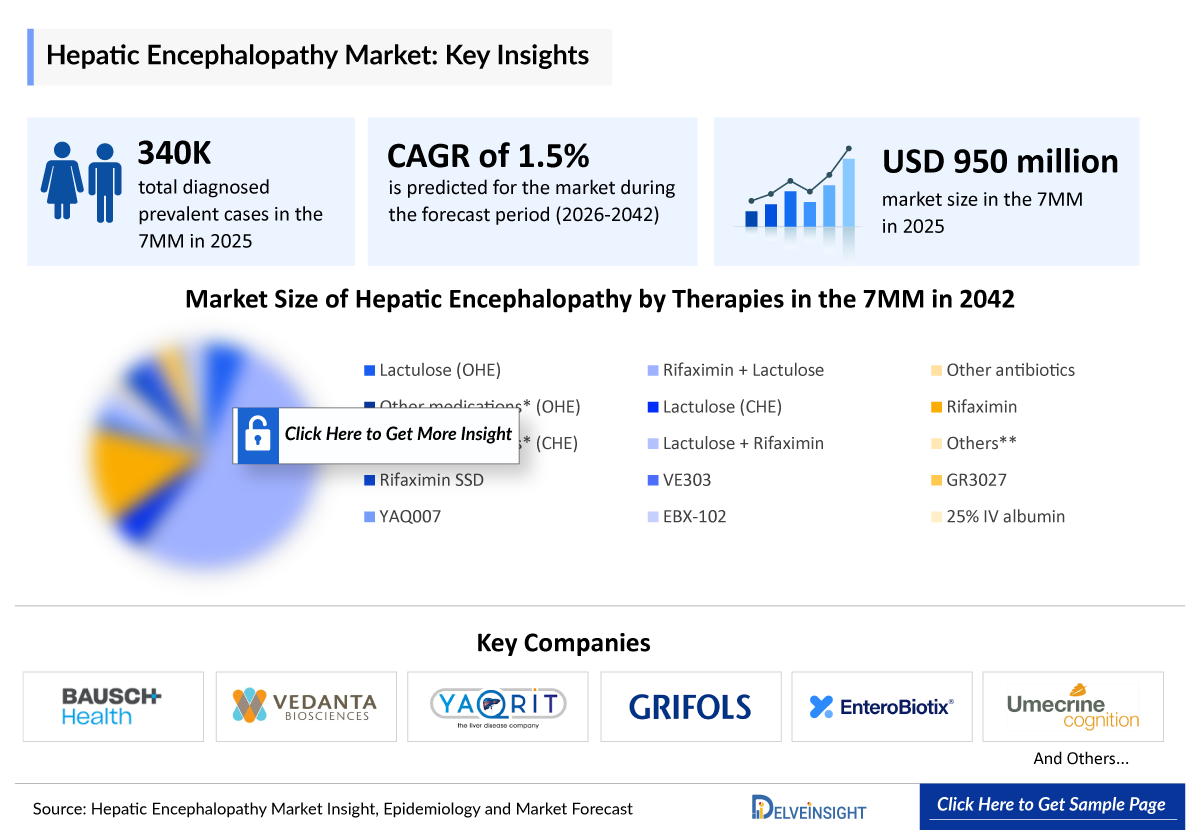
- According to DelveInsight’s analysis, the Hepatic Encephalopathy Treatment Market Size was found to be ~USD 950 million in the leading markets (the United States, the EU4 (Germany, France, Italy, and Spain), the United Kingdom, and Japan) in 2025.
- The current Hepatic Encephalopathy Therapeutics Market Size includes one approved drug, Xifaxan (Rifaximin), to reduce the risk of recurrence of OHE and for the improvement of hyperammonemia in hepatic encephalopathy, as well as several other therapies. The 7MM Hepatic Encephalopathy Treatment Market Size was valued at USD ~850 million in 2022.
Hepatic Encephalopathy Market and Epidemiology Insights
- Currently, Xifaxan (rifaximin) is the only approved drug. In 2022, Xifaxan captured a Hepatic Encephalopathy market size of USD ~111 million (revenue from monotherapy use of rifaximin in CHE) in the 7MM.
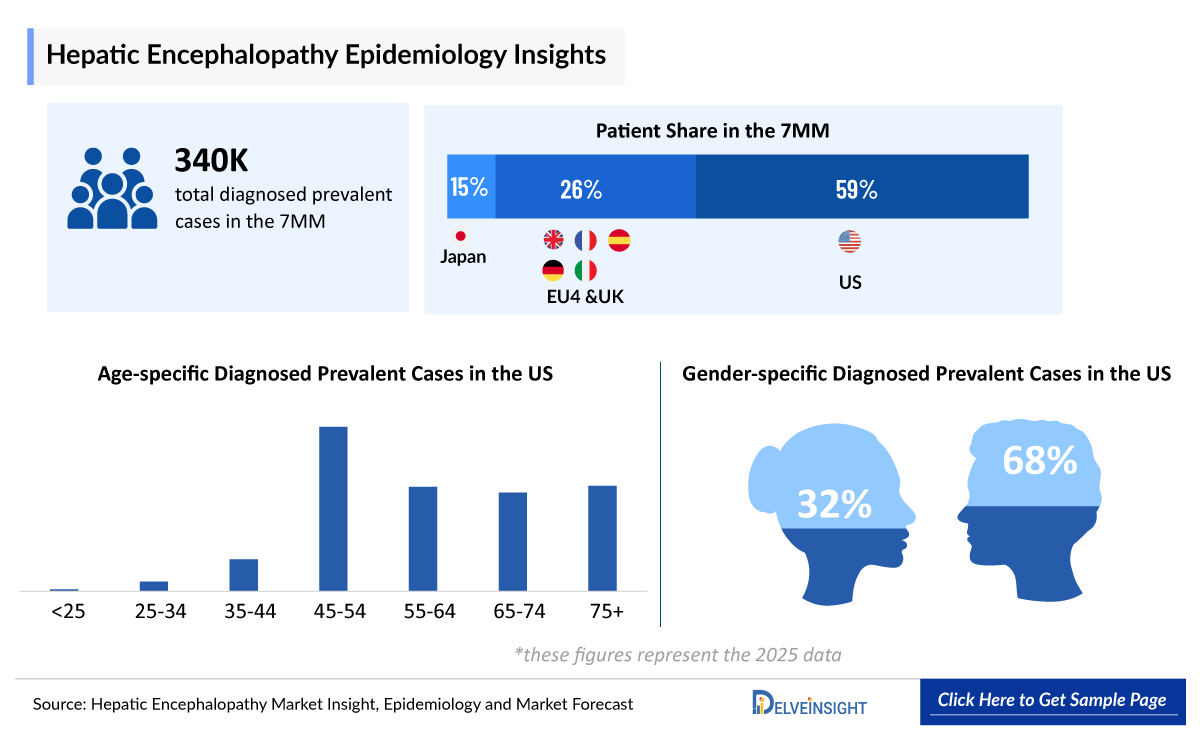
- Assessments as per DelveInsight’s analysis showed that the majority of cases of HE were found in males as compared to females. In 2022, there were ~1,40,000 males and ~65,000 females affected by HE in the United States.
- In EU4 and the UK, the Germany has the highest number of cases of Hepatic Encephalopathy with ~20,000 cases, followed by the UK with ~16,100 cases and France with ~16,000 cases. While Spain consistently occupied the least number of cases i.e. ~11,000 in 2022.
- Based on severity, HE is classified as CHE and OHE. There was a total of ~1,20,000 CHE and ~80,000 OHE cases in 2022 in the United States.
- The United States contributed to the largest diagnosed prevalent cases of Hepatic encephalopathy, accounting for ~60% in 2025.
- As per DelveInsight’s analysis, in the 7MM, the total patients of Hepatic Encephalopathy with ascites were ~225,000 in the year 2025, which are expected to increase by 2042.
Hepatic Encephalopathy Market Size and Forecast in the 7MM
| 2025 Hepatic Encephalopathy Market Size | ~USD 950 Million |
| 2042 Projected Hepatic Encephalopathy Market Size | ~USD 1200 Million |
| Hepatic Encephalopathy Market Growth Rate (2026-2042) | ~1.5% CAGR |
Key Factors Driving the Growth of Hepatic Encephalopathy Market
-
High Unmet Need for Effective and Approved Therapies
Current HE management largely depends on off-label therapies and demonstrates variable efficacy with safety concerns during long-term use. The absence of multiple approved disease-specific therapies creates significant opportunities for novel agents capable of delivering durable skin HE clearance with improved tolerability.
-
Expanding Clinical Development Pipeline
The HE pipeline has expanded considerably, with multiple investigational therapies progressing through clinical development. Novel monoclonal antibodies, immune modulators, kinase inhibitors, and other targeted therapies are being evaluated to address patients who remain refractory to conventional treatments. Positive clinical trial outcomes and potential regulatory approvals are anticipated to accelerate market growth.
DelveInsight's ‘Hepatic Encephalopathy Market Insights, Epidemiology and Market Forecast – 2042’ report delivers an in-depth understanding of the HE, historical and forecasted epidemiology, as well as the HE market trends in the United States, EU4 (Germany, Spain, Italy, and France) and the United Kingdom, and Japan.
The Hepatic Encephalopathy Treatment Market Report delivers a comprehensive analysis of the current treatment landscape, including standards of care, clinical practices, and evolving therapeutic algorithms. It evaluates Hepatic Encephalopathy patient burden trends, revenue & market share dynamics, peak patient share & therapy uptake analysis, and provides an in-depth market size assessment, and growth rate projections (Historical & Forecast 2022–2042) across global regions. The report highlights key unmet medical needs in Hepatic Encephalopathy and maps the competitive and clinical landscape to uncover high-value opportunities, providing a Hepatic Encephalopathy market outlook on future market growth potential.
Scope of the Hepatic Encephalopathy Market Report | |
|
Study Period |
2022–2042 |
|
Historical Year |
2022–2025 |
|
Forecast Period |
2026–2042 |
|
Base Year |
2026 |
|
Geographies Covered |
|
|
Hepatic Encephalopathy Market CAGR (Forecast period) | |
|
Hepatic Encephalopathy Epidemiology Segmentation Analysis |
Patient Burden Assessment
|
|
Hepatic Encephalopathy Companies |
|
|
Hepatic Encephalopathy Therapies |
|
|
Hepatic Encephalopathy Market |
Segmented by
|
|
Analysis |
|
Hepatic Encephalopathy Understanding
Hepatic Encephalopathy Overview
Hepatic Encephalopathy is a diagnosis of exclusion characterized by a spectrum of neuropsychiatric disturbances resulting from the accumulation of neurotoxins in patients with liver dysfunction or portosystemic shunting. It differs in presentation and pathophysiology between chronic liver disease, acute liver failure, and acute-on-chronic liver failure, with mechanisms extending beyond hyperammonemia to include systemic inflammation, gut dysbiosis, altered neurotransmission, oxidative stress, manganese deposition, and other toxins.
HE is broadly classified into covert (minimal HE and West Haven grade 1) and overt (grades 2–4) forms, representing a continuum of severity; overt HE is defined by disorientation or asterixis, while minimal HE, affecting up to 80% of patients with cirrhosis, requires specialized testing for detection.
Hepatic Encephalopathy Diagnosis
Hepatic Encephalopathy is a diagnosis of exclusion requiring initial assessment of airway and vital signs, followed by detailed history and examination to identify triggers and rule out mimics such as alcohol withdrawal. Laboratory evaluation includes arterial blood gas, blood glucose, liver function tests, coagulation profile, renal function, and electrolytes, with attention to infection markers when indicated. Although ammonia levels are often elevated, they are not diagnostic and correlate poorly with severity, though normal levels have high negative predictive value.
Psychometric tests such as the Number Connection Test and Critical Flicker Frequency are sensitive for minimal HE, while EEG may show nonspecific changes and help exclude seizures. CT or MRI is used to rule out structural causes; imaging findings like cerebral edema or basal ganglia changes may occur but are not specific for HE.
Further details are provided in the report.
Current Hepatic Encephalopathy Treatment Landscape
Management of Hepatic Encephalopathy involves supportive care, correction of precipitating factors, and ammonia-lowering therapy. Patients require adequate nutrition without protein restriction (35–40 kcal/kg/day; 1.2–1.5 g/kg/day protein), proper hydration, electrolyte correction, and a safe environment while avoiding sedatives. Triggers such as constipation, infections, electrolyte imbalance, hypovolemia, renal dysfunction, and sedative use must be promptly treated. Ammonia levels guide neither diagnosis nor therapy alone; treatment is symptom-driven.
First-line therapy is lactulose (titrated to 2–3 soft stools daily), with rifaximin added for recurrence or inadequate response; lactitol and L-ornithine-L-aspartate are alternatives. Refractory cases due to portosystemic shunts may require shunt occlusion procedures, while liver transplantation is indicated in advanced cirrhosis and can reverse cognitive impairment. Long-term prevention includes maintenance lactulose ± rifaximin and management of sarcopenia with nutrition and exercise.
Further details related to country-based variations are provided in the report.
Hepatic Encephalopathy Unmet Needs
The section “unmet needs of Hepatic Encephalopathy” outlines the critical gaps between the current state of patient care, diagnosis, and the ideal & effective management of the disease. It highlights the obstaHEs experienced by patients, clinicians, and researchers and identifies potential solutions for future progress.
- Lack of Approved therapy
- Economic burden of disease
- Shortcomings associated with current treatment
- Patient progression to advanced liver disease, and others…..
Note: Comprehensive unmet needs insights in HE and their strategic implications are provided in the full report.
Hepatic Encephalopathy Epidemiology
Key Findings from Hepatic Encephalopathy Epidemiological Analysis and Forecast
- According to DelveInsight’s estimates, the total number of prevalent cases of Hepatic Encephalopathy in the 7MM was nearly 356,500 cases in 2025 and is projected to increase during the forecasted period.
- Hepatic Encephalopathy predominantly affected males, with approximately 144,000 males diagnosed compared to 67,000 females in 2025 in the US.
- In the EU4 and the UK, individuals between the age of 45-54 were the most affected by Hepatic Encephalopathy, with approximately 24,000 cases reported in 2025.
- As per DelveInsight’s analysis, in the US, the total patients of Hepatic Encephalopathy with ascites were approximately ~100,000 in the year 2022.
Hepatic Encephalopathy Epidemiology Segmentation in the 7MM
- Total Hepatic Encephalopathy Diagnosed Prevalent Cases
- Hepatic Encephalopathy Gender-specific Cases
- Hepatic Encephalopathy Age-specific Cases
- Hepatic Encephalopathy Type-specific Cases
- Hepatic Encephalopathy Grade-Specific Cases
- Hepatic Encephalopathy Patients with Ascites
Hepatic Encephalopathy Market Recent Breakthroughs and Developments
- In February 2025, Yaqrit announced that its recently acquired ammonia scavenger, L-ornithine phenylacetate (OPA), is progressing to Phase III for treatment of acute hepatic encephalopathy, a life-threatening complication of decompensated cirrhosis.
- EnteroBiotix Limited announced positive results in May 2025 from its Phase Ib clinical trial evaluating EBX-102, the Company’s next-generation oral full-spectrum microbiome product, in patients with liver cirrhosis and Hepatic Encephalopathy. The data were presented during an oral session at the European Association for the Study of the Liver (EASL) Congress 2025, held in Amsterdam, the Netherlands from 7–10 May 2025.
Hepatic Encephalopathy Drug Analysis & Competitive Landscape
The Hepatic Encephalopathy drug chapter provides a detailed, market-focused review of approved therapies and the emerging Hepatic Encephalopathy pipeline across Phase I/II–II clinical trials. It covers mechanism of action, clinical trial data, regulatory approvals, patents, collaborations, strategic partnerships upcoming Key catalyst for each therapy, along with their advantages, limitations, and recent developments.
This section offers critical insights into the Hepatic Encephalopathy treatment landscape, supporting market assessment, competitive analysis, and growth forecasting for the Hepatic Encephalopathy therapeutics market.
Hepatic Encephalopathy Approved Therapies
-
Xifaxan (Rifaximin): BAUSCH Health
Xifaxan® (rifaximin) 550 mg tablets, developed and marketed by Salix Pharmaceuticals (a subsidiary of Valeant Pharmaceuticals whose company name changes to BAUSCH Health), are indicated to reduce the risk of recurrent overt hepatic encephalopathy in adults aged =18 years. Rifaximin is a non-absorbed, broad-spectrum, gastrointestinal-selective antibiotic derived from rifamycin that targets both Gram-positive and Gram-negative, aerobic and anaerobic ammonia-producing bacteria, thereby lowering systemic ammonia levels implicated in hepatic encephalopathy.
Unlike systemic antibiotics, rifaximin remains within the gastrointestinal tract without significant absorption and exerts its effect by binding to the ß-subunit of bacterial DNA-dependent RNA polymerase, inhibiting transcription by blocking the translocation step following the formation of the first phosphodiester bond.
Hepatic Encephalopathy Marketed/Approved Therapies | ||||||
|
Drug/Therapy |
Company |
Indication |
Molecule Type |
MoA |
RoA |
Marketed Region (First approval) |
|
Xifaxan (RIfaximin) |
BAUSCH Health |
18 years and older having prior HE episodes |
Small molecule |
DNA-directed RNA polymerase inhibitors; Transcription factor inhibitors |
Oral |
US: 2010 |
Hepatic Encephalopathy Pipeline Analysis
-
VE303: Vedanta Biosciences
VE303 is an orally administered, wholly owned defined bacterial consortium composed of eight live commensal strains developed to prevent recurrent Clostridioides difficile infection (rCDI). It is formulated as a standardized oral pharmaceutical product manufactured from pure clonal cell banks to ensure consistent quality.
The selected strains function synergistically to reduce recurrence by competing with C. difficile for growth substrates and producing secondary bile acids that suppress its proliferation, as well as short-chain fatty acids that enhance gut barrier integrity and mitigate intestinal inflammation. Currently, the drug is in Phase II stage of its development for the treatment of Hepatic Encephalopathy.
Competitive Landscape of Hepatic Encephalopathy Pipeline Drugs | ||||||
|
Drug Name |
Company |
Highest Phase |
Indication |
RoA |
MoA |
Anticipated Launch in the US |
|
VE303 |
Vedanta Bioscience, Inc. |
Phase II |
Hepatic Encephalopathy |
Oral |
Microbiome Modulators |
2028 |
|
YAQ007 |
Yaqrit Discovery Ltd. |
Phase II |
Hepatic Encephalopathy |
Oral |
Ammonia-scavenging agents |
Information is available in the full report |
|
Note: Launch insights are provisional and may change with future report updates or the occurrence of major key catalysts. | ||||||
Hepatic Encephalopathy Market Outlook
Hepatic encephalopathy is a diagnosis of exclusion marked by neuropsychiatric abnormalities from liver dysfunction. It arises from liver insufficiency or portosystemic shunting and involves a multifactorial etiology, including hyperammonemia, systemic inflammation, gut dysbiosis, neurotransmitter imbalances, and neurotoxins like manganese. Current management of Hepatic Encephalopathy centers on reducing intestinal ammonia production and absorption.
Non-absorbable disaccharides such as lactulose and lactitol remain the cornerstone of therapy, used for treating acute episodes as well as for primary and secondary prevention; lactitol demonstrates comparable efficacy to lactulose and may offer improved tolerability in some patients. Antibiotics aimed at colonic decontamination, including neomycin, metronidazole, and vancomycin, further decrease ammonia-producing gut bacteria and may also mitigate inflammation and endotoxemia.
Second-line and Hepatic Encephalopathy Emerging Therapies include polyethylene glycol 3350–electrolyte solution, ammonia scavengers, branched-chain amino acids fecal microbiota transplantation, and L-ornithine L-aspartate. Currently, only one drug is approved for Hepatic Encephalopathy treatment i.e. XIFAXAN (Rifaximin) which is an oral small molecule.
Xifaxan (rifaximin) 550 mg, marketed by Salix Pharmaceuticals, is approved for reducing the recurrence of overt hepatic encephalopathy in adults. It is an oral, small-molecule, DNA-directed RNA polymerase inhibitor and a non-absorbed, gut-selective, broad-spectrum antibiotic that targets ammonia-producing Gram-positive and Gram-negative bacteria. As a semi-synthetic rifamycin derivative, rifaximin acts locally in the intestine by binding to the ß-subunit of bacterial RNA polymerase, thereby suppressing bacterial RNA synthesis.
Hepatic Encephalopathy Companies, including Vedanta Biosciences, Yaqrit Discovery Ltd, and others, are investigating potential drug candidates that can significantly change the market landscape during the forecast period. Approaches include microbiome modulation (VE303), Ammonia scavenging agents (YAQ007), and and others.
Overall, the launch of Hepatic Encephalopathy Therapies, improved diagnosis, and rising disease awareness are expected to drive steady growth in the 7MM Hepatic Encephalopathy market from 2022–2042, with strong commercial implications for both marketed products and emerging pipelines.
Key findings from Hepatic Encephalopathy Market Forecast Report
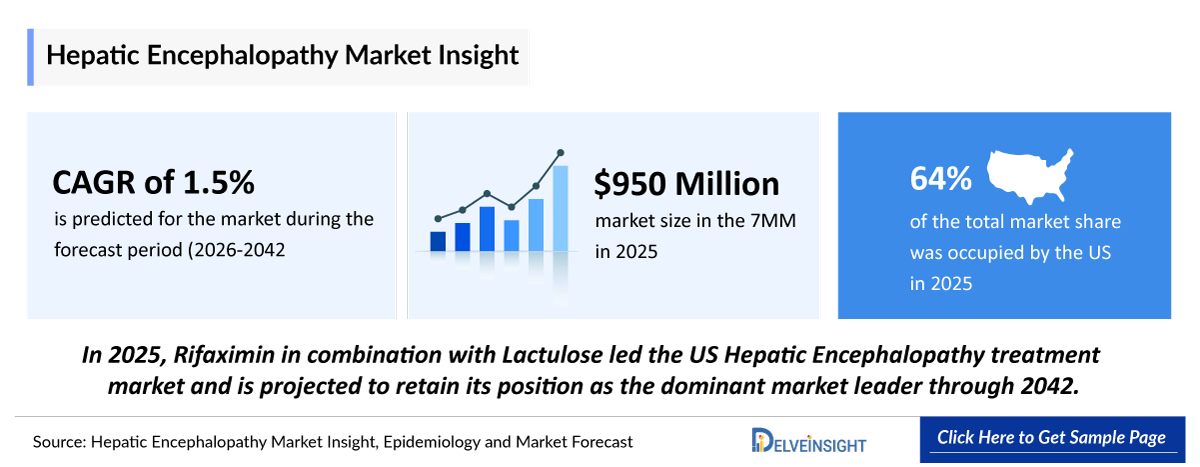
- In 2025, the United States held the largest Hepatic Encephalopathy Drugs Market Share among the 7MM, accounting for approximately 64% of the total market.
- In 2025, Rifaximin in combination with Lactulose led the US Hepatic Encephalopathy treatment market and is projected to retain its position as the dominant market leader through 2042.
Hepatic Encephalopathy Companies
- BAUSCH Health
- Vedanta Biosciences
- Yaqrit Discovery Ltd, and others
Hepatic Encephalopathy Drug Class/Insights into Leading Emerging and Marketed Therapies (2022–2042 Forecast)
The Hepatic Encephalopathy Therapeutics Market comprises different mechanism class, including microbiome modulators, ammonia-scavenging, and others, each designed to target distinct pathways underlying disease pathophysiology.
- Microbiome Modulator: Microbiome modulation involves deliberately altering the composition and activity of microbial communities to improve health and treat disease. It works by restoring microbial balance, suppressing harmful pathogens, producing beneficial metabolites (like short-chain fatty acids and secondary bile acids), enhancing gut barrier integrity, regulating immune responses, and influencing distant organs via the gut-brain and gut-liver axes. Approaches include dietary interventions, probiotics, prebiotics, fecal microbiota transplantation, and microbiome engineering, with applications in gastrointestinal disorders, metabolic syndrome, neurological conditions, and infectious diseases.
- Ammonia scavenging agents: In hepatic encephalopathy, impaired liver function and portosystemic shunting reduce ammonia detoxification, leading to neurotoxicity. Ammonia scavengers lower systemic ammonia by providing alternative pathways: compounds like sodium benzoate or phenylacetate conjugate with amino acids (glycine or glutamine) to form water-soluble derivatives (hippurate, phenylacetylglutamine) that are excreted in urine, while L-ornithine L-aspartate stimulates residual urea cycle and glutamine synthesis in liver and muscle, enhancing ammonia elimination. Examples include oral small molecule such as YAQ-007.
Hepatic Encephalopathy Drug Uptake
This section focuses on the uptake rate of potential Hepatic Encephalopathy drugs expected to be launched in the market during the forecast period (2026–2042). The analysis covers the HEPATIC ENCEPHALOPATHY drug’s uptake, performance at peak, factors affecting performance during prime years of growth, patient uptake by therapy, and anticipated sales generated by each drug.
The Hepatic Encephalopathy Therapeutics Market shows a clear uptake split between established therapies and newer targeted agents. Rifaximin and Lactulose remain dominant in first-line use due to guideline support and long-standing clinical experience, while other medications such as other antibiotics (neomycin, metronidazole, and vancomycin), L- ornithine L-aspartate etc. have seen rapid uptake in OHE and CHE patients driven by strong efficacy and disease-targeted mechanisms. Emerging pipeline agents are expected to experience more gradual adoption as clinical evidence matures and guideline integration evolves.
Detailed insights of emerging therapies' drug uptake is included in the report
Hepatic Encephalopathy Market Access and Reimbursement of Approved Therapies
The Hepatic Encephalopathy Therapeutics Market Report further provides detailed insights on the country-wise accessibility and reimbursement scenarios, cost-effectiveness scenario of approved therapies, programs making accessibility easier and out-of-pocket costs more affordable, insights on patients insured under federal or state government prescription drug programs, etc.
The United States
- Rifaximin (XIFAXAN)
Prior authorization (PA) for XIFAXAN requires submission of accurate clinical and insurance information to secure coverage. To prevent denials, clinicians should ensure correct ICD-10 coding and align prescriptions with approved dosing (550 mg three times daily for 14 days for IBS-D; 550 mg twice daily for OHE). If denied, the request should be reviewed, completed with any missing details, and resubmitted with appropriate clinical documentation; if coverage appears excluded, benefits should be reverified and reconsideration requested, as most commercially insured and Medicare patients have coverage.
The Copay Savings Card helps eligible commercially insured U.S. patients reduce out-of-pocket costs for XIFAXAN, with many paying USD 10 or less per prescription, and some as low as USD 0, subject to benefit limits. The program is available only to patients with commercial insurance coverage for XIFAXAN and excludes those insured through federal or state healthcare programs (e.g., Medicare, Medicaid, TRICARE, VA, or other government-funded plans), as well as cash-paying patients. The card is nontransferable, not insurance, cannot be combined with other offers, holds no cash value, and is redeemable only at participating U.S. retail pharmacies; by using it, patients confirm eligibility and agree to the program’s terms.
Reimbursement is a crucial factor that affects the drug’s access to the market. Often, the decision to reimburse comes down to the price of the drug relative to the benefit it produces in treated patients. To reduce the healthcare burden of these high-cost therapies, many payment models are being considered by payers and other industry insiders.
NOTE: Further Details are provided in the final report….
Hepatic Encephalopathy Therapies Price Scenario & Trends
Pricing and analogue assessment of Hepatic Encephalopathy Therapies highlights evolving price dynamics structures. This section summarizes the cost of approved treatments, closest and most appropriate analogue selection for emerging therapies, and understanding of how pricing influences market access, adherence, and long-term uptake.
Pricing of Hepatic Encephalopathy Approved Drugs
Approved therapies generally adopt premium WAC pricing, supported by high unmet need and limited competition. Annual treatment cost, dosing intensity, and administration setting shape payer coverage and patient affordability. In the first-line setting, treatment costs vary significantly, with Lactulose estimated between USD 1,000-2,000 and the estimated annual treatment cost of Xifaxan is approximately ranges between USD 24,000-30,000.
Industry Experts and Physician Views for Hepatic Encephalopathy
To keep up with Hepatic Encephalopathy Therapeutics Market Trends, we take Key Opinion Leaders (KOLs) and Subject Matter Experts (SMEs) opinions working in the domain through primary research to fill the data gaps and validate our secondary research. Industry experts were contacted for insights on the HE emerging therapies, evolving treatment landscape, patient adherence to conventional therapies, therapy switching trends, drug adoption and uptake, accessibility challenges, and epidemiology and real-world prescription patterns in HE, including MD, PhD, Instructor, Postdoctoral Researcher, Professor, Researcher, and others.
DelveInsight’s analysts connected with 15+ KOLs to gather insights at country level. Centers such as the Institutes of Health, NewYork-Presbyterian Hospital/Weill Cornell, and UCL Institute for Liver and Digestive Health, University of Padova, etc. were contacted. Their opinion helps understand and validate current and emerging Hepatic Encephalopathy Therapies, highlight unmet medical needs, provide epidemiological context, and support strategic decisions for market access, therapy adoption, and pipeline prioritization in HE.
Region |
Key Opinion Leaders (KOLs) and Subject Matter Experts (SMEs) |
|
United States |
“Hepatic encephalopathy is unique in some ways because as it gets worse, it’s more likely patients are not going to take their medications, which is too bad. They’re oftentimes patients who have the best of intentions. They can be very compliant and always take their medications, but once they’re altered, that’s one of the first things to go is remembering to take lactulose 3 times a day or taking their rifaximin [Xifaxan] twice a day, and then they all of a sudden can get worse.” |
|
United Kingdom |
“Last few years have shown good progress in the understanding of the pathophysiology of HE. This can result in a more precise diagnosis and classification based on types and grade.” |
Hepatic Encephalopathy Report Qualitative Analysis: SWOT and Conjoint Analysis
We perform qualitative and Hepatic Encephalopathy Therapeutics Market Intelligence analysis using various approaches, such as SWOT analysis and conjoint analysis. In the SWOT analysis of HE, strengths, weaknesses, opportunities, and threats in terms of disease diagnosis, patient awareness, patient burden, competitive landscape, cost-effectiveness, and geographical accessibility of therapies are provided.
Conjoint analysis analyzes Hepatic Encephalopathy Emerging Therapies based on relevant attributes such as safety, efficacy, frequency of administration, route of administration, and order of entry. Scoring is given based on these parameters to analyze the effectiveness of therapy.
The team of analysts analyzes promising Hepatic Encephalopathy Emerging Therapies based on relevant attributes such as safety, efficacy, frequency of administration, route of administration, and order of entry. In efficacy, the trial’s primary and secondary outcome measures are evaluated, whereas the therapies’ safety is evaluated, wherein the acceptability, tolerability, and adverse events are majorly observed.
In addition, the scoring is also based on the route of administration, order of entry, probability of success, and the addressable patient pool for each therapy. According to these parameters, the final weightage score and the ranking of the emerging therapies are decided.
Scope of the Hepatic Encephalopathy Market Report
- The Hepatic Encephalopathy Therapeutics Market Report covers a segment of key events, an executive summary, a descriptive overview explaining their causes, signs and symptoms, pathogenesis, and currently available treatments.
- Comprehensive insight has been provided into the epidemiology segments and forecasts, the future growth potential of the diagnosis rate, and disease progression along treatment guidelines.
- Additionally, an all-inclusive account of both the current and emerging treatments, along with the elaborative profiles of late-stage and prominent therapies, will have an impact on the current Hepatic Encephalopathy Treatment landscape.
- A detailed review of the Hepatic Encephalopathy Therapeutics Market, historical and forecasted Hepatic Encephalopathy Treatment Market Size, Hepatic Encephalopathy Drugs Market Share by therapies, detailed assumptions, and rationale behind our approach is included in the report, covering the 7MM drug outreach.
- The Hepatic Encephalopathy Therapeutics Market Report provides an edge while developing business strategies by understanding trends through SWOT analysis and expert insights/KOL views, patient journey, and treatment preferences that help in shaping and driving the 7MM Hepatic Encephalopathy Drugs Market.
Hepatic Encephalopathy Market Report Insights
- Hepatic Encephalopathy Patient Population Forecast
- Hepatic Encephalopathy Therapeutics Market Size
- Hepatic Encephalopathy Pipeline Drugs Analysis
- Hepatic Encephalopathy Market Size and Trends
- Hepatic Encephalopathy Therapeutics Market Opportunity (Current and Forecasted)
Hepatic Encephalopathy Market Report Key Strengths
- Epidemiology-based (Epi-based) Bottom-up Forecasting
- Artificial Intelligence (AI)-Enabled Market Research Report
- 16-Year Forecast
- Hepatic Encephalopathy Market Outlook (North America, Europe, Asia-Pacific)
- Patient Burden Trends (By Geography)
- Hepatic Encephalopathy Treatment Addressable Market (TAM)
- Hepatic Encephalopathy Competitive Landscape
- Hepatic Encephalopathy) Major Companies Insights
- Hepatic Encephalopathy Price Trends and Analogue Assessment
- Hepatic Encephalopathy Therapies Drug Adoption/Uptake
- Hepatic Encephalopathy Therapies Peak Patient Share Analysis
Hepatic Encephalopathy Market Report Assessment
- Current Hepatic Encephalopathy Treatment Practices
- Hepatic Encephalopathy Unmet Needs
- Hepatic Encephalopathy Clinical Development Analysis
- Hepatic Encephalopathy Emerging Drugs Product Profiles
- Hepatic Encephalopathy Therapeutics Market Attractiveness
- Hepatic Encephalopathy Qualitative Analysis (SWOT and Conjoint Analysis)
Key Questions Answered in the Hepatic Encephalopathy Therapeutics Market Report
Hepatic Encephalopathy Treatment Market Insights
- What was the Hepatic Encephalopathy Treatment Market Size, the Hepatic Encephalopathy Market Size by therapies, Hepatic Encephalopathy Drugs Market Share (%) distribution in 2025, and what would it look like by 2042? What are the contributing factors for this growth?
- What are the anticipated pricing variations among different geographies for the emerging therapies in the future?
- What can be the future treatment paradigm of Hepatic Encephalopathy?
- What are the disease risks, burdens, and unmet needs of Hepatic Encephalopathy?
- What will be the growth opportunities across the 7MM concerning the patient population with Hepatic Encephalopathy?
- Who is the major future competitor in the market, and how will the competitors affect their market share?
- What are the current options for the treatment of Hepatic Encephalopathy?
- What are the current guidelines for treating HE in the US, Europe, and Japan?
Reasons to Buy the Hepatic Encephalopathy Therapeutics Market Report
- The Hepatic Encephalopathy Therapeutics Market Report will help in developing business strategies by understanding the latest trends and changing treatment dynamics driving the Hepatic Encephalopathy Drugs Market.
- Bottom up forecasting builds from the affected population to product forecasts, delivering a robust, data driven approach ideal for new therapies and novel classes.
- Insights on patient burden/disease Hepatic Encephalopathy Incidence, evolution in diagnosis, and factors contributing to the change in the epidemiology of the disease during the forecast years.
- Understand the existing Hepatic Encephalopathy Drugs Market opportunities in varying geographies and the growth potential over the coming years.
- Identifying strong upcoming players in the Hepatic Encephalopathy Drugs Market will help devise strategies to help get ahead of competitors.
- Detailed analysis and ranking of class-wise potential emerging therapies under the conjoint analysis section to provide visibility around leading classes.
- To understand KOLs’ perspectives on the accessibility, acceptability, and compliance-related challenges of existing treatment to overcome barriers in the future.
- Detailed insights on the unmet needs of the existing Hepatic Encephalopathy Drugs Market so that the upcoming players can strengthen their development and launch strategy.
- This Artificial Intelligence (AI) enabled report summarize and simplify complex datasets with in the report into HEar, actionable insights for stakeholders, investors, and healthcare providers, enabling faster, data driven decisions.
Stay updated with us for Recent Articles