
Herpes Zoster Market
- The Herpes Zoster Market is expected to strengthen as awareness of the disease increases and more effective interventions are being developed.
- Epidemiology of shingles is expected to grow due to aging populations and increasing incidence of immunocompromised individuals. This trend is fueled by factors like stress, which weakens the immune system, and varicella zoster virus reactivation. Thus, the burden of shingles is likely to rise.
- As per analysis, nearly all adults in the US, about 98%, have had chickenpox, making them susceptible to shingles. As people age, the risk of shingles increases, highlighting the importance of vaccination, especially for those aged 50 and older. Additionally, individuals with weakened immune systems should also receive the shingles vaccine. Although rare in children, shingles can still occur, albeit uncommonly.
- Shingles is less common in children compared to adults primarily because it is a reactivation of the varicella-zoster virus (VZV), which causes chickenpox. Most cases of chickenpox occur during childhood, usually before the age of 10. After a person has had chickenpox, the virus remains dormant in the body's nerve cells.
- Future market growth hinges on the development and adoption of emerging therapies for shingles. Ongoing research into novel treatments, including immunotherapies and next-generation antiviral agents, holds promise. Some of the key players in the emerging pipeline includes Curevo Inc., EyeGene Inc., Wintermute Biomedical, and others.
Request for unlocking the CAGR of the Herpes Zoster Drugs Market
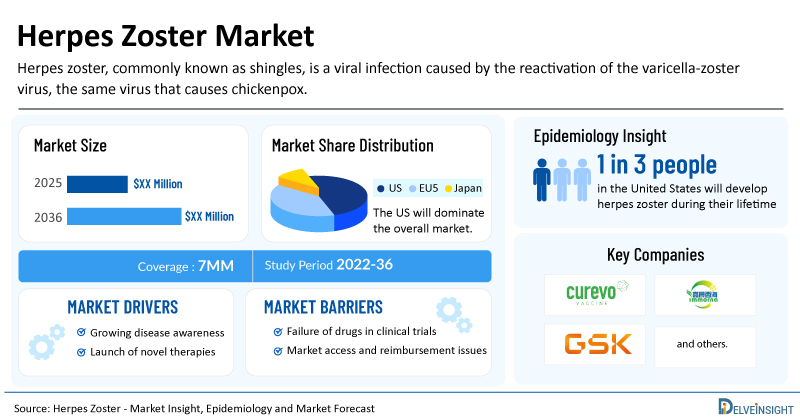
DelveInsight’s comprehensive report titled “Herpes Zoster Market Insights, Epidemiology, and Market Forecast – 2036” offers a detailed analysis of Herpes Zoster. The report presents historical and projected epidemiological data covering Total Healthy Patient Population at-risk for Herpes Zoster and Eligible Patient Population for Herpes Zoster Vaccination. In addition to epidemiology, the market report encompasses various aspects related to the patient population. These aspects include the diagnosis process, prescription patterns, physician perspectives, market accessibility, treatment options, and prospective developments in the market across seven major markets: the United States, EU4 (Germany, France, Italy, and Spain), the United Kingdom, and Japan, spanning from 2022 to 2036.
The Herpes Zoster Drugs Market Report examines current treatment methodologies and gaps in addressing Herpes Zoster, assessing market opportunities and identifying avenues for improving therapies. This insightful analysis equips stakeholders with valuable insights to guide product development and strategic initiatives effectively, fostering informed decision-making within the Herpes Zoster Drugs Market.
|
Study Period |
2022 to 2036 |
|
Forecast Period |
2025-2036 |
|
Geographies Covered |
|
|
Herpes Zoster Drugs Market |
|
|
Herpes Zoster Market Size | |
|
Herpes Zoster Companies |
|
Key Factors Driving the Growth of the Herpes Zoster Market
- Rising Incidence and Disease Awareness: Greater recognition of shingles incidence and its complications, such as postherpetic neuralgia (PHN), is driving demand. As awareness campaigns grow, diagnosis and preventive measures are adopted more widely.
- Aging Global Population: The risk of herpes zoster increases significantly with age, particularly among adults aged 50 and above, creating a growing target population for vaccination and treatment. Rising global life expectancy is rapidly expanding this age group.
- SHINGRIX Sets a New Standard in Shingles Protection: SHINGRIX, the licensed vaccine for herpes zoster, marks a major step forward in preventing the disease, providing more than 90% effectiveness even among older adults, who are at the highest risk for varicella-zoster virus reactivation.
- Launch of Emerging Herpes Zoster Vaccines: The dynamics of the herpes zoster market are expected to change in the coming years with the launch of vaccines such as Amezosvatein (CRV-101) by Curevo, JCXH-105 by Immorna Biotherapeutics, and others.
Herpes Zoster Treatment Market
Shingles, also known as Herpes Zoster (HZ), is a viral infection caused by the varicella-zoster virus (VZV), the same virus responsible for chickenpox. While not considered a rare disorder, its incidence varies across populations. Herpes Zoster typically affects older adults and immunocompromised individuals, with advancing age and weakened immune systems being primary risk factors. Though not contagious, individuals with Herpes Zoster can transmit VZV to individuals who have not had chickenpox, potentially leading to chickenpox infection.
Herpes Zoster is usually less severe in children than younger adults. It is common in people with diminished cell-mediated immunity which includes older people, patients with lymphoma, those receiving chemotherapy or steroids, and people with HIV. People who earlier had chickenpox are at a higher risk for herpes zoster. VZV-induced neuronal destruction, and inflammation causes pain, interferes with day-to-day activities, and diminish the quality of life. The hallmark symptom of Herpes Zoster is a painful rash that usually appears as a single stripe of blisters on one side of the body, often wrapping around the torso. This rash is accompanied by itching, burning, and tingling sensations.
Herpes Zoster Diagnosis and Treatment Algorithm
Diagnosing Herpes Zoster typically relies on clinical evaluation based on symptoms and physical examination findings. Characteristic features include unilateral rash with clusters of fluid-filled blisters, often accompanied by pain, itching, or burning sensations. In some cases, diagnostic tests such as viral culture, polymerase chain reaction (PCR), or serological assays may be employed to confirm the presence of the varicella-zoster virus (VZV). However, these tests are not routinely necessary for diagnosis and are primarily reserved for atypical cases or immunocompromised individuals.
The treatment algorithm for Herpes Zoster involves antiviral medications, pain management, and supportive care. Antiviral drugs such as acyclovir, valacyclovir, and famciclovir are the mainstay of treatment, aimed at reducing the severity and duration of symptoms by inhibiting viral replication. Pain management strategies may include over-the-counter analgesics, topical creams, or prescription medications such as gabapentin or opioids for severe pain. Additionally, supportive measures such as keeping the affected area clean and dry and applying cool compresses can help alleviate discomfort and promote healing. Early initiation of treatment, ideally within 72 hours of rash onset, is crucial for optimal therapeutic outcomes.
Will be continued in the report….
Herpes Zoster Epidemiology
The epidemiology section on the Herpes Zoster Drugs Market report offers information on the patient populations, including historical and projected trends for each of the seven major markets. Examining key opinion leader views from physicians or clinical experts can assist in identifying the reasons behind historical and projected trends. The diagnosed patient pool, their trends, and the underlying assumptions are all included in this section of the report.
This section also presents the data with relevant tables and graphs, offering a clear and concise view of the Herpes Zoster Prevalence. Additionally, the report discloses the assumptions made during the analysis, ensuring data interpretation and presentation transparency. This epidemiological data is valuable for understanding the disease burden and its impact on the patient population across various regions.
Key Findings
- According to analysis, approximately one in every three individuals residing in the United States will experience an episode of shingles, medically referred to as herpes zoster, during their lifetime. It is estimated that around one million individuals are affected by shingles annually within the country.
- Based on our secondary analysis, in Japan the herpes zoster prevalence among individuals in the general population aged 50 years and above is approximately 10 per 1000 person-years (PY), with a higher prevalence observed among those aged 60 years and above. Moreover, the incidence escalates to more than 12 per 1000 PY in individuals aged 80 years and older.
- Among the 7MM, the lowest number of healthy patient population at-risk for herpes zoster was found to be in Spain.
- Assessments showed that among the European countries, Germany had the highest eligible patient population for herpes zoster vaccination and and are expected to increase by 2036.
- Elderly individuals and those with weakened immune systems, considered high-risk groups, may encounter cumulative incidences of up to 50%.
Unlock comprehensive insights! Click Here to Purchase the Full Epidemiology Report @ Herpes Zoster Incidence
Herpes Zoster Market Outlook
The primary objective in treating Herpes Zoster is to alleviate symptoms, shorten the duration of illness, and prevent complications, particularly postherpetic neuralgia. Although there is no definitive cure, supportive care, complication management, and ongoing research aim to improve the overall quality of life for individuals affected by Herpes Zoster. Existing medications employ various mechanisms to target the varicella-zoster virus (VZV). Antiviral drugs like acyclovir, valacyclovir, and famciclovir hinder viral DNA replication by acting as nucleoside analogs, thereby limiting viral spread and reducing symptom severity. Pain management is also crucial, often involving the use of analgesics and anticonvulsants to alleviate neuralgia.
According to the National Foundation for Infectious Diseases, antiviral medication and vaccines are among the most effective treatments for Herpes Zoster. Shingrix is currently available for Herpes Zoster, while Zostavax, previously introduced in 2006, is no longer used in the US. Famciclovir and valacyclovir are commonly prescribed antiviral medications for Herpes Zoster, while acyclovir (Sitavig, Zovirax) is also utilized. Although these drugs do not provide a cure, they can help alleviate Herpes Zoster symptoms and shorten their duration.
Other treatment options include the use of wet compresses, calamine lotion, and colloidal oatmeal baths to alleviate itching.In the evolving landscape of Herpes Zoster treatment, emerging therapies offer promise in enhancing efficacy and addressing existing limitations. Novel antiviral agents in development target specific viral proteins or pathways, potentially yielding improved outcomes with fewer side effects. Immunotherapies aim to bolster the immune response against VZV, enhancing viral clearance and reducing disease severity. Furthermore, advancements in vaccines targeting wider age groups and immunocompromised individuals seek to prevent Herpes Zoster outbreaks altogether, marking a significant advancement in disease management strategies.
With ongoing research and continued dedication, the future holds hope for even more effective treatments and, ultimately, a cure for this challenging condition. According to DelveInsight, the Herpes Zoster market in the 7MM is expected to change significantly during the study period 2022–2036.
Herpes Zoster Drug Chapters
Marketed Herpes Zoster Therapies
- Shingrix : GlaxoSmithKline (GSK)
Shingrix (herpes zoster vaccine recombinant, adjuvant), also known as GSK1437173A is a non-live, recombinant subunit vaccine that help prevent Herpes Zoster (herpes zoster) in adults 50 years of age and older. The vaccine combines an antigen, glycoprotein E, and an adjuvant system, AS01B, intended to generate a strong and long-lasting immune response that can help overcome the decline in immunity that occurs as people age. Shingrix is given intramuscularly in two doses. Shingrix is currently licensed for use in the EU, US, Canada, Japan, China, and Australia.
Since its approval, Shingrix has become the preferred vaccine for Herpes Zoster prevention, offering improved protection compared to the previously available vaccine, Zostavax.
Get More Insights @ Shingrix Market
Emerging Herpes Zoster Therapies
The Herpes Zoster market is expected to experience gradual changes, mainly due to the advancements in healthcare and immunization programs aimed at preventing chickenpox, the primary precursor to Herpes Zoster, may impact the prevalence of the disease over time. Key market players, including Curevo Inc., EyeGene Inc., and others, have demonstrated a keen interest in this rare condition and are actively pursuing the development of potential treatments.
- CRV-101: Curevo Inc.
CRV-101 is an investigational adjuvanted subunit vaccine under investigation for the prevention of Herpes Zoster in older adults. CRV-101 was specifically designed to produce an optimal immune response while using a smaller amount of adjuvant with the intention of achieving similar efficacy but with fewer side effects than the currently-approved Herpes Zoster vaccine. On September 2022, Curevo announced completion of enrollment in a Phase IIb trial of their CRV-101 subunit vaccine to prevent the reactivation of the varicella zoster virus (shingles) in older adults.
Herpes Zoster Market Segmentation
DelveInsight’s ‘Herpes Zoster Market Insights, Epidemiology, and Market Forecast – 2036’ report provides a detailed outlook of the current and future Herpes Zoster Drugs market, segmented within countries, by therapies, and by classes. Further, the Herpes Zoster Drugs Market of each region is then segmented by each therapy to provide a detailed view of the current and future Herpes Zoster Market Share of all therapies.
Herpes Zoster Market Size by Countries
The Herpes Zoster market size is assessed separately for various countries, including the United States, EU4 (Germany, France, Italy, and Spain), the UK, and Japan. In 2023, the United States held a significant share of the overall 7MM (Seven Major Markets) Herpes Zoster market, primarily attributed to the country's higher prevalence of the condition and the elevated cost of the available treatments. This dominance is projected to persist, especially with the potential early introduction of new products.
Herpes Zoster Market Size by Therapies
Herpes Zoster Market Size by Therapies is categorized into current and emerging markets for the study period 2022–2036. One of the emerging drugs anticipated to launch during the forecast period is CRV-101 under the developmental pipeline of Curevo Inc. in Phase II.
Note: Detailed market segment assessment will be provided in the final report.
Herpes Zoster Drugs Uptake
This section focuses on the sales uptake of potential Herpes Zoster drugs that have recently been launched or are anticipated to be launched in the Herpes Zoster Drugs Market between 2020 and 2034. It estimates the market penetration of Herpes Zoster drugs for a given country, examining their impact within and across classes and segments. It also touches upon the financial and regulatory decisions contributing to the probability of success (PoS) of the drugs in the Herpes Zoster Drugs Market
Note: Detailed assessment of drug uptake will be provided in the full report on Herpes Zoster.
Herpes Zoster Market Access and Reimbursement
DelveInsight’s ‘Herpes Zoster Market Insights, Epidemiology, and Market Forecast – 2036’ report provides a descriptive overview of the market access and reimbursement scenario of Herpes Zoster. This section includes a detailed analysis of the country-wise healthcare system for each therapy, enlightening the market access, reimbursement policies, and health technology assessments.
KOL Views
To keep up with current Herpes Zoster market trends and fill gaps in secondary findings, we interview KOLs and SMEs’ working in the Herpes Zoster domain. Their opinion helps understand and validate current and emerging therapies and treatment patterns or Herpes Zoster market trends. This will support the clients in potential upcoming novel treatments by identifying the overall scenario of the Herpes Zoster Therapeutics Market and the Herpes Zoster unmet needs.
Herpes Zoster KOL Insights
DelveInsight’s analysts connected with 50+ KOLs to gather insights; however, interviews were conducted with 15+ KOLs in the 7MM. These KOLs were from organizations, institutes, and hospitals, such as the Department of Health Economic Statistics, Blue Bell, Pa, USA, Department of Epidemiology, Merck Research Laboratories, Blue Bell, Pa, USA, School of Medicine, Department of Dermatology and Allergy, Technical University of Munich, Biedersteiner Str. 29, Munich, Germany, Department of Dermatology, School of Medicine, Fukuoka University, Fukuoka, Japan, Rey Juan Carlos University, Madrid, Spain,among others.
“The vaccine has shown over 90% efficacy across all age groups in the prevention of herpes zoster, a painful and potentially serious disease that affects one in three people in the US.”
Note: Detailed assessment of KOL Views will be provided in the full report on Herpes Zoster.
Competitive Intelligence Analysis
We conduct a Competitive and Herpes Zoster Market Intelligence analysis of the Herpes Zoster Therapeutics Market, utilizing various Competitive Intelligence tools such as SWOT analysis, Conjoint Analysis, and Market entry strategies. The inclusion of these analyses is contingent upon data availability, ensuring a comprehensive and well-informed assessment of the market landscape and competitive dynamics.
The emerging Herpes Zoster therapies are analyzed based on various attributes such as safety and efficacy in randomized clinical trials, order of entry and other market dynamics, and the unmet need they fulfill in the Herpes Zoster Therapeutics Market.
Note: Detailed assessment of SWOT Analysis and Conjoint Analysis will be provided in the full report on Herpes Zoster.
Herpes Zoster Pipeline Development Activities
The Herpes Zoster pipeline segment report offers an analysis of therapeutic candidates in Phase II and III stages and examines Herpes Zoster Companies involved in developing targeted therapeutics for Herpes Zoster. It provides valuable insights into the advancements and progress of potential treatments in clinical development for this condition.
Pipeline Development Activities
The Herpes Zoster pipeline segment report covers information on collaborations, acquisition and merger, licensing, patent details, and other information for emerging Herpes Zoster therapies.
Take Your Research to the Next Level! Click Here to Get Access to the Full Pipeline Report @ Drugs for Herpes Zoster Infection
Herpes Zoster Therapeutics Market Report Insights
- Patient-based Herpes Zoster Market Forecasting
- Therapeutic Approaches
- Herpes Zoster Pipeline Analysis
- Herpes Zoster Market Size and Trends
- Herpes Zoster Therapeutics Market Opportunities
- Impact of Upcoming Herpes Zoster Therapies
Herpes Zoster Therapeutis Market Report Key Strengths
- 11 Years Herpes Zoster Market Forecast
- The 7MM Coverage
- Herpes Zoster Epidemiology Segmentation
- Key Cross Competition
- Highly Analyzed Herpes Zoster Therapeutics Market
- Herpes Zoster Drugs Uptake
Herpes Zoster Therapeutics Market Report Assessment
- Current Herpes Zoster Treatment Market Practices
- Herpes Zoster Unmet Needs
- Herpes Zoster Pipeline Product Profiles
- Herpes Zoster Therapeutics Market Attractiveness
Key Questions
- How common is Herpes Zoster?
- What are the key findings of Herpes Zoster epidemiology across the 7MM, and which country will have the highest number of patients during the study period (2022–2036)?
- What are the currently available treatments for Herpes Zoster?
- What is the disease risk, burden, and Herpes Zoster Unmet Needs?
- At what CAGR is the Herpes Zoster Therapeutics Market and its epidemiology expected to grow in the 7MM during the forecast period (2026–2036)?
- How would the unmet needs impact the Herpes Zoster market dynamics and subsequently influence the analysis of the related trends?
- What would be the forecasted Herpes Zoster patient pool in the 7MM covering the United States, EU4 (Germany, France, Italy, and Spain), the UK, and Japan?
- Among EU4 and the UK, which country will have the highest number of patients during the forecast period (2026–2036)?
- How many companies are currently developing therapies for the Herpes Zoster treatment?
Stay Updated with New Articles