Homozygous Familial Hypercholesterolemia Market Summary
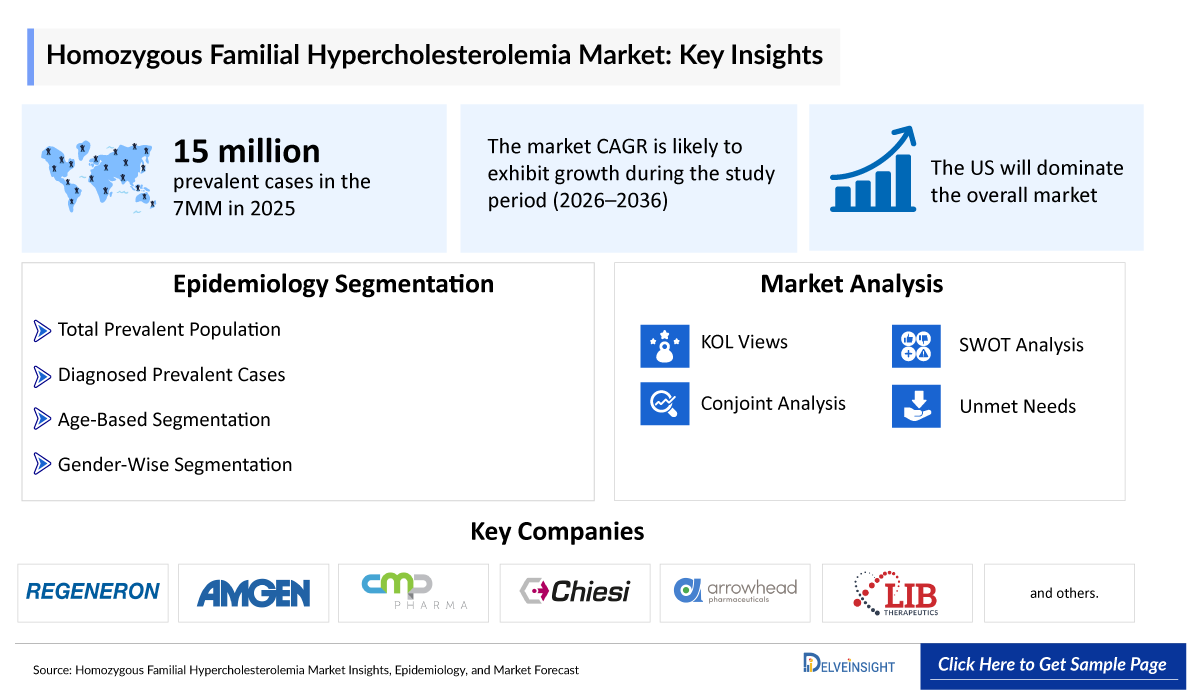
- The Homozygous Familial Hypercholesterolemia Maket Size is anticipated to grow with a significant CAGR during the study period (2022-2036).
- The leading Homozygous Familial Hypercholesterolemia companies developing therapies in the market include - Regeneron Pharmaceuticals, Amgen, CMP Pharma, Chiesi Pharmaceuticals, Arrowhead Pharmaceuticals, LIB therapeutics, and others.
Homozygous Familial Hypercholesterolemia Market & Epidemiology Insights
- According to DelveInsight estimates, the United States accounted for a significant share of the Homozygous Familial Hypercholesterolemia (HoFH) market; however, recent analyses indicate potential upside driven by the increasing adoption of novel and targeted therapies.
- HoFH is a rare and severe genetic disorder that affects cholesterol metabolism. It is an inherited condition caused by mutations in both copies of the (low-density lipoprotein receptor) LDLR gene or other genes related to cholesterol metabolism, such as the APOB or PCSK9 genes. The LDLR gene encodes a receptor responsible for removing low-density lipoprotein (LDL) cholesterol from the bloodstream.
- Mutations in both copies of LDLR severely impair the function of these receptors, resulting in extremely high levels of LDL cholesterol in the blood. Individuals have high cholesterol levels despite following a low-cholesterol diet and other lifestyle modifications.
- The disease is characterized by plasma cholesterol levels higher than 13 mmol/L (>500mg/dL), corneal arcus, xanthomas, xanthelasmas, and marked premature and progressive atherosclerotic cardiovascular disease. It is typically diagnosed early in life, and high LDL cholesterol levels increase the risk of cardiovascular complications such as heart attacks and strokes at a young age.
- The diagnosis involves a combination of clinical evaluation, lipid profile testing, and genetic testing. Due to its extreme rarity and potentially severe consequences, early and accurate diagnosis is crucial for timely intervention and management.
- Despite the recent approvals of new therapies, decreasing LDL-C in HoFH patients remains difficult. Newer, more potent, and better tolerated LDL lowering therapies are needed to prevent atherosclerotic cardiovascular disease in these genetically challenged patients.
- Various therapies are being investigated to cater to the unmet needs of those suffering from HoFH. These include Arrowhead Pharmaceuticals’ ZODASIRAN (ARO-ANG3), LIB Therapeutics’ Lerodalcibep (LIB003), and others.
- PCSK9 inhibitors are the new class of cholesterol-lowering drugs currently used as a third-line treatment for HoFH or statin-intolerant or very-high-ASCVD-risk patients. These are marketed as evolocumab (REPATHA) by Amgen and alirocumab (PRALUENT) by Regeneron/Sanofi, which got approved by the US FDA in 2015 and 2021, respectively.
Homozygous Familial Hypercholesterolemia (HoFH) and Forecast in the 7MM
- 2025 Homozygous Familial Hypercholesterolemia (HoFH) Market Size: ~USD XXX million
- 2036 Projected Homozygous Familial Hypercholesterolemia (HoFH) Market Size: ~USD XXX million
- Homozygous Familial Hypercholesterolemia (HoFH) Growth Rate (2025–2036): XX% CAGR
Request a sample to unlock the CAGR for "Homozygous Familial Hypercholesterolemia Market Forecast"
Key Factors Driving the Homozygous Familial Hypercholesterolemia (HoFH) Market
- Rising Burden and Genetic Risk in Homozygous Familial Hypercholesterolemia (HoFH): HoFH is a rare but severe inherited disorder characterized by extremely elevated LDL cholesterol levels from birth, leading to premature and aggressive cardiovascular disease. The disease is caused by mutations in genes such as LDLR, APOB, or PCSK9, resulting in impaired LDL clearance. Although rare, improved genetic screening and increased awareness are expanding the diagnosed patient pool, thereby driving demand for effective therapies.
- Advancements in Multimodal Treatment Approaches: The management of HoFH has evolved with the use of combination treatment strategies, including lipid-lowering drugs, lifestyle modifications, and procedures such as LDL apheresis. Conventional therapies such as statins and ezetimibe are often insufficient, necessitating the use of advanced therapies and combination regimens. The integration of pharmacological and interventional approaches is improving disease management and supporting market growth.
- Emerging Homozygous Familial Hypercholesterolemia Competitive Landscape: The HoFH pipeline is expanding with innovative therapies targeting novel pathways and genetic mechanisms. Emerging agents include next-generation PCSK9 inhibitors, ANGPTL3 inhibitors, RNA-based therapies, and gene-editing technologies, which aim to address limitations of existing treatments. These advancements are expected to improve efficacy, reduce treatment burden, and enhance long-term outcomes, thereby driving significant market growth during the forecast period.
DelveInsight's "Homozygous Familial Hypercholesterolemia (HoFH) Market Insights, Epidemiology and Market Forecast – 2036" report delivers an in-depth understanding of the diabetic macular edema, historical and forecasted epidemiology, as well as the HoFH therapeutics market trends in the United States, EU4 (Germany, Spain, Italy, and France) and the United Kingdom, and Japan.
The Homozygous Familial Hypercholesterolemia (HoFH) market report delivers a comprehensive analysis of the current treatment landscape, including standards of care, clinical practices, and evolving therapeutic algorithms. It evaluates HoFH patient burden trends, revenue & market share dynamics, peak patient share & therapy uptake analysis, and provides an in-depth market size assessment and growth rate projections (Historical & Forecast 2022–2036) across global regions. The report highlights key unmet medical needs in HoFH and maps the competitive and clinical landscape to uncover high value opportunities, providing a clear outlook on future market growth potential.
Scope of the Homozygous Familial Hypercholesterolemia Market Report | |
|
Study Period |
2022–2036 |
|
Historical Year |
2022–2025 |
|
Forecast Period |
2026–2036 |
|
Base Year |
2026 |
|
Geographies Covered |
ü North America: The US; ü Europe: Germany, France, Italy, Spain and the UK; ü Asia-Pacific: Japan |
|
Homozygous Familial Hypercholesterolemia (HoFH) Market CAGR (Study period/Forecast period) |
XX% (2026 ̶ 2036) |
|
Homozygous Familial Hypercholesterolemia (HoFH) Epidemiology Segmentation Analysis |
Patient Burden Assessment · Total Diagnosed Prevalent Cases of HoFH · Mutation-specific Diagnosed Prevalent Cases of HoFH |
|
Homozygous Familial Hypercholesterolemia (HoFH) Companies |
· Regeneron Pharmaceuticals · Amgen · CMP Pharma · Chiesi · Arrowhead Pharmaceuticals · LIB therapeutics, and others |
|
Homozygous Familial Hypercholesterolemia Therapies |
· Evinacumab (EVKEEZA) · Alirocumab (PRALUENT) · Evolocumab (REPATHA) · Atorvastatin (ATORVALIQ) · Lomitapide (JUXTAPID/LOJUXTA) · ARO-ANG3 · Lerodalcibep (LIB003) (LEROCHOL), and others |
|
Homozygous Familial Hypercholesterolemia Market |
Segmented by · Region/Geographies · Drugs/Therapies |
|
Analysis |
· KOL Views · SWOT Analysis · Reimbursement · Conjoint Analysis · Unmet Need · Market Drivers and Barriers · Epidem Patient Burden |
Homozygous Familial Hypercholesterolemia Disease Understanding
Homozygous Familial Hypercholesterolemia (HoFH) Overview and Diagnosis
HoFH is a rare, inherited genetic disorder characterized by extremely high levels of low-density lipoprotein cholesterol (LDL-C) from birth, leading to early-onset and aggressive atherosclerotic cardiovascular disease. It is caused by mutations in genes involved in LDL metabolism, most commonly the LDL receptor (LDLR), apolipoprotein B (APOB), or PCSK9, resulting in severely impaired clearance of LDL cholesterol from the bloodstream. Unlike heterozygous familial hypercholesterolemia, HoFH occurs when defective genes are inherited from both parents, making the condition significantly more severe. Clinically, patients often present with cutaneous or tendon xanthomas in childhood, corneal arcus, and premature cardiovascular complications, sometimes developing as early as adolescence. Despite its rarity, HoFH carries a significant burden due to high morbidity, early mortality, and the need for lifelong intensive treatment, emphasizing the importance of early identification and management.
Homozygous Familial Hypercholesterolemia (HoFH) Diagnosis
The diagnosis of HoFH involves a combination of clinical assessment, lipid profiling, and genetic testing. Patients typically exhibit markedly elevated LDL-C levels (often >500 mg/dL if untreated), which is a key diagnostic feature. A family history of hypercholesterolemia or premature cardiovascular disease further supports the diagnosis. Physical signs such as xanthomas can provide early clinical clues. Genetic testing is considered the gold standard for confirming mutations in LDLR, APOB, or PCSK9 genes and helps differentiate HoFH from other lipid disorders. Additionally, imaging techniques such as coronary artery calcium scoring or carotid ultrasound may be used to evaluate the extent of cardiovascular involvement. Early and accurate diagnosis is critical for initiating aggressive lipid-lowering therapy and reducing the risk of severe cardiovascular events.
Further details are provided in the report...
Homozygous Familial Hypercholesterolemia (HoFH) Treatment
The treatment of HoFH involves an intensive, combination-based approach aimed at significantly reducing LDL-C levels and preventing early cardiovascular complications. The current standard of care is centered on high-intensity statins and ezetimibe, which form the backbone of therapy, although their effectiveness may be limited due to impaired LDL receptor function in many patients.
To achieve further LDL-C reduction, additional therapies such as Evolocumab and Alirocumab are used to enhance LDL receptor recycling, while Evinacumab offers a receptor-independent mechanism, making it particularly effective in severe cases. Other agents such as Lomitapide and, in certain regions, Mipomersen are also utilized to further lower lipid levels.
In patients who do not achieve adequate control with pharmacotherapy, lipoprotein apheresis is employed as an adjunctive treatment to mechanically remove LDL cholesterol from the bloodstream at regular intervals. Overall, current HoFH management relies on multidrug regimens and adjunctive procedures to achieve optimal lipid control and improve long-term outcomes.
Further details related to country-based variations are provided in the report...
Homozygous Familial Hypercholesterolemia Unmet Needs
The section “unmet needs of homozygous familial hypercholesterolemia (HoFH)” outlines the critical gaps between the current state of patient care, diagnosis, and the ideal & effective management of the disease. It highlights the obstacles experienced by patients, clinicians, and researchers and identifies potential solutions for future progress.
- Limited Efficacy in Patients with Minimal or No LDL Receptor Function
- High Treatment Burden Due to Lifelong Therapy and Frequent Apheresis
- High Cost of Novel Lipid-Lowering Agents and Reimbursement Challenges
- Lack of Curative or One-Time Treatment Options
- Delayed or Missed Diagnosis Due to Low Awareness and Limited Screening
- Limited Use of Genetic Testing and Personalized Treatment Approaches, and others….
Comprehensive unmet needs insights in HoFH and their strategic implications are provided in the full report...
Homozygous Familial Hypercholesterolemia Epidemiology
The Homozygous Familial Hypercholesterolemia epidemiology section provides insights about the historical and current Homozygous Familial Hypercholesterolemia patient pool and forecasted trends for individual seven major countries. It helps to recognize the causes of current and forecasted trends by exploring numerous studies and views of key opinion leaders. This part of the Homozygous Familial Hypercholesterolemia market report also provides the diagnosed patient pool and their trends along with assumptions undertaken.
Key Findings from Homozygous Familial Hypercholesterolemia Epidemiological Analysis and Forecast
- According to DelveInsight’s estimates, the total diagnosed prevalent cases of HoFH in the 7MM were approximately 1,840 in 2025.
- According to estimates based on DelveInsight’s epidemiology model, the total diagnosed prevalent cases of HoFH in the US were estimated to be approximately ~870 in 2025.
- Among the 7MM, the EU4 and the UK accounted for approximately 40% of the total diagnosed prevalent cases of HoFH in 2025, which is expected to increase further during the study period.
- According to DelveInsight’s analysis in the US, nearly 80% of cases were reported due to mutation in the LDLR gene.
- Assessments as per DelveInsight’s analysts showed that Germany accounted for the highest total diagnosed prevalent cases of HoFH in 2025 among EU4 and the UK.
Homozygous Familial Hypercholesterolemia Epidemiology Segmentation
- Total Diagnosed Prevalent Cases of HoFH
- Mutation-specific Diagnosed Prevalent Cases of HoFH
Recent Developments in the Homozygous Familial Hypercholesterolemia Treatment Landscape
- In March 2026, Chiesi Global Rare Diseases announced that the US FDA approved Lomitapide (JUXTAPID) for pediatric patients with HoFH, expanding its indication to younger populations and addressing a significant unmet need in early disease management.
- In August 2025, Amgen reported that the US FDA expanded the label of Evolocumab (REPATHA) to include patients at increased cardiovascular risk and reinforced its use in genetic conditions such as HoFH, supporting broader clinical adoption.
- In September 2025, the US FDA expanded approval of Evinacumab (EVKEEZA) to include pediatric patients aged ≥1 year with HoFH, highlighting its growing role as a key LDL-C lowering therapy independent of LDL receptor function.
Homozygous Familial Hypercholesterolemia (HoFH) Drug Chapters & Competitive Analysis
The HoFH drug chapter provides a detailed, market-focused review of approved therapies and the emerging pipeline across Phase I–III Homozygous Familial Hypercholesterolemia clinical trials. It covers the mechanism of action, clinical trial data, regulatory approvals, patents, collaborations, and strategic partnerships for each therapy, along with their advantages, limitations, and recent developments. This section offers critical insights into the homozygous familial hypercholesterolemia treatment landscape, supporting market assessment, competitive analysis, and growth forecasting for the HoFH therapeutics market.
Approved Therapies for Homozygous Familial Hypercholesterolemia
Lomitapide (JUXTAPID/LOJUXTA): Chiesi Farmaceutici/Recordati’s
Lomitapide which belongs to an MTP inhibitor, is a cellular protein responsible for the transport of neutral lipids between membrane vesicles, acting as a chaperone for the synthesis of ApoB-containing triglyceride-rich lipoproteins. MTP is critical in the assembly and secretion of ApoB-containing lipoproteins in the liver and intestines. Thus, lomitapide, besides triglycerides, effectively reduces LDL-C levels in patients lacking or with defective LDL receptors. ). It was approved by the US FDA in December 2012, by EMA in July 2013, and also received approval in Japan in September 2016.
Evolocumab (REPATHA): Amgen
Evolocumab (REPATHA), developed by Amgen, is a fully human monoclonal antibody that targets proprotein convertase subtilisin/kexin type 9 (PCSK9), a key regulator of LDL receptor degradation. By inhibiting PCSK9, evolocumab increases the number of LDL receptors available on hepatocytes, thereby enhancing the clearance of circulating LDL cholesterol from the bloodstream. It received regulatory approval in the United States and Europe in 2015 and was subsequently approved in Japan in 2016. Evolocumab is administered via subcutaneous injection, typically every two weeks or once monthly, depending on the dosing regimen. In patients with Homozygous Familial Hypercholesterolemia (HoFH), it has demonstrated significant LDL-C reductions when used as an adjunct to maximally tolerated lipid-lowering therapy, although the magnitude of response may vary depending on residual LDL receptor activity.
Homozygous Familial Hypercholesterolemia (HoFH) Marketed/Approved Therapies | |||||
|
Company |
Indication |
Molecule Type |
RoA |
MoA |
|
|
Sanofi/Regeneron |
HoFH |
Monoclonal antibody |
SC |
Blocks PCSK9 to increase LDL receptor availability and reduce LDL-C levels |
|
|
Regeneron |
HoFH |
Monoclonal antibody |
IV infusion |
Inhibits ANGPTL3, reducing LDL-C levels independent of LDL receptor function |
|
|
Amgen |
HoFH |
Monoclonal Antibody |
Subcutaneous |
Inhibits PCSK9, increasing LDL receptor recycling and enhancing LDL-C clearance |
|
|
Chiesi Farmaceutici / Recordati |
|
Small Molecule |
Oral |
Inhibits microsomal triglyceride transfer protein (MTP), reducing production of ApoB-containing lipoproteins and lowering LDL-C levels |
|
Note: Detailed marketed therapies assessment will be provided in the final report...
Homozygous Familial Hypercholesterolemia (HoFH) Pipeline Analysis
Zodasiran (ARO-ANG3): Arrowhead Pharmaceuticals
Zodasiran (ARO-ANG3) is an investigational, SC administered RNA interference (RNAi) therapeutic designed to silence ANGPTL3 mRNA in hepatocytes, thereby mimicking ANGPTL3 deficiency and reducing atherogenic lipoproteins. It is being developed for the treatment of dyslipidemias, including HoFH and mixed hyperlipidemia.
As of the latest updates, Zodasiran has demonstrated robust and durable reductions in triglycerides, LDL-C, and other atherogenic lipoproteins in clinical studies.
Lerodalcibep (LIB003) (LEROCHOL): LIB Therapeutics
Lerodalcibep (LIB003) is a Chinese hamster ovary-cell line-derived recombinant fusion protein therapeutic agent with a PCSK9-binding domain and human serum albumin (HSA), designed to inhibit PCSK9 and enhance LDL receptor recycling, thereby reducing LDL-C levels. The company is developing the drug as an adjunct therapy for patients who require additional LDL-C reduction despite being on a diet and maximally tolerated statin therapy.
In December 2024, the company announced the submission of a Biologics License Application (BLA) to the US FDA for approval of Lerodalcibep. The drug is currently active and under regulatory review, supported by Phase III data demonstrating significant LDL-C reduction and a favorable safety profile.
Comparison of Emerging HoFH Drugs Under Development | |||||||
|
Drug Name |
Company |
Highest Phase |
Indication |
RoA |
MoA |
Molecule Type |
Anticipated Launch in the US |
|
Lerodalcibep (LIB003 / LEROCHOL) |
LIB Therapeutics |
III |
HoFH |
SC |
Binds PCSK9 to enhance LDL receptor recycling and lower LDL-C levels Recombinant Fusion Protein |
PCSK9 inhibitor |
Information is available in the full report |
|
Zodasiran (ARO-ANG3) |
Arrowhead Pharmaceuticals |
II |
HoFH |
SC |
ANGPTL3 mRNA to reduce triglycerides and LDL-C levels RNA Interference |
siRNA (small interfering RNA) |
Information is available in the full report |
|
Note: Launch insights are provisional and may change with future report updates or the occurrence of major key catalysts. | |||||||
Note: A detailed emerging therapies assessment will be provided in the final report...
Homozygous Familial Hypercholesterolemia (HoFH) Key Players, Market Leaders and Emerging Companies
- Regeneron Pharmaceuticals
- Amgen
- CMP Pharma
- Chiesi Pharmaceuticals
- Arrowhead Pharmaceuticals
- LIB therapeutics, and others
Homozygous Familial Hypercholesterolemia (HoFH) Market Outlook
HoFH is a rare, genetically driven and highly severe lipid disorder, characterized by extremely elevated LDL-C levels and early-onset cardiovascular complications. From a market perspective, the disease burden remains disproportionately high despite a small patient population, driven by lifelong treatment needs, high morbidity, and the requirement for intensive lipid-lowering strategies. The HoFH market is primarily driven by the increasing adoption of combination therapy approaches, starting with statins such as atorvastatin (ATORVALIQ), rosuvastatin (CRESTOR), and simvastatin (ZOCOR), along with ezetimibe. However, as these therapies are LDL receptor-dependent and often insufficient in HoFH, the market increasingly relies on advanced and adjunctive therapies.
Targeted biologics and novel lipid-lowering agents are significantly transforming the treatment landscape. PCSK9 inhibitors such as evolocumab (REPATHA) and alirocumab (PRALUENT) are widely used, although their efficacy may be limited in patients with minimal LDL receptor function. In contrast, ANGPTL3 inhibitor evinacumab (EVKEEZA) has emerged as a key therapy due to its LDL receptor-independent mechanism, offering significant LDL-C reduction in severe HoFH patients. Other specialized therapies such as lomitapide (JUXTAPID/LOJUXTA) and antisense therapy mipomersen (KYNAMRO) provide additional treatment options, particularly in refractory cases, although their use may be limited by safety concerns and tolerability issues. Non-pharmacological interventions such as LDL apheresis and, in extreme cases, liver transplantation continue to play a role in disease management.
Despite these advancements, the HoFH market faces several challenges, including high treatment costs, limited patient identification, and suboptimal response to existing therapies. Many patients require lifelong combination therapy and frequent interventions, contributing to a significant economic burden and unmet clinical need.
Overall, the HoFH market is anticipated to witness steady growth during the forecast period, driven by innovation in lipid-lowering therapies, increasing awareness and diagnosis, and the shift toward precision medicine and long-acting treatment strategies.
Further details will be provided in the report...
Drug Class/Insights into Leading Emerging and Marketed Therapies in Homozygous Familial Hypercholesterolemia (2022–2036 Forecast)
The existing HoFH treatment landscape is primarily dominated by statins, cholesterol absorption inhibitors, PCSK9 inhibitors, anti-ApoB therapies, and ANGPTL3 inhibitors, each targeting different pathways involved in lipid metabolism. Among first-line therapies, statins and ezetimibe remain foundational; however, their efficacy is often limited in HoFH due to impaired or absent LDL receptor (LDLR) function, which is central to disease pathology.
Moving to PCSK9 inhibitors, agents such as evolocumab and alirocumab play a key role by inhibiting PCSK9-mediated degradation of LDL receptors, thereby enhancing LDL clearance. However, their effectiveness in HoFH is variable and depends on residual LDLR activity, with some patients showing limited response.
Anti-ApoB therapies, particularly lomitapide, represent a critical advancement due to their LDLR-independent mechanism. Lomitapide inhibits microsomal triglyceride transfer protein (MTP), reducing the assembly and secretion of ApoB-containing lipoproteins such as VLDL, ultimately lowering LDL-C levels even in patients lacking functional LDL receptors. This class has demonstrated LDL-C reductions of up to ~50%, making it highly valuable in refractory HoFH cases.
Another major breakthrough is the emergence of ANGPTL3 inhibitors, such as evinacumab, which act independently of LDL receptors. By inhibiting ANGPTL3, these therapies enhance lipoprotein lipase activity and reduce the production of LDL particles, resulting in substantial LDL-C reduction irrespective of genetic mutations affecting LDLR. This has positioned ANGPTL3 inhibition as a transformative approach in severe HoFH management.
Looking ahead, the HoFH treatment landscape is expected to evolve significantly with the development of gene therapies, novel RNAi-based agents, and combination strategies targeting multiple lipid pathways simultaneously. Over the forecast period, these advancements are anticipated to address residual cardiovascular risk, reduce treatment burden, and improve long-term outcomes, ultimately transforming HoFH from a highly treatment-resistant disorder to a more manageable condition.
Further details will be provided in the report...
Homozygous Familial Hypercholesterolemia (HoFH) Drug Uptake
This section focuses on the uptake rate of potential Homozygous Familial Hypercholesterolemia drugs expected to be launched in the market during the forecast period (2026–2036). The analysis covers the homozygous familial hypercholesterolemia market's uptake by drugs, patient uptake by therapy, and sales of each drug.
The uptake of therapies in HoFH varies across statins, ezetimibe, PCSK9 inhibitors, ANGPTL3 inhibitors, and adjunctive treatments, reflecting the need for aggressive lipid lowering. Established therapies such as Atorvastatin (ATORVALIQ), Rosuvastatin (CRESTOR), and ezetimibe remain the first-line backbone, supported by guideline recommendations; however, their effectiveness is often limited in HoFH, leading to early adoption of combination regimens. Targeted therapies are witnessing increasing uptake, particularly Evolocumab (REPATHA) and Alirocumab (PRALUENT), although their response depends on residual LDL receptor activity and reimbursement access. In contrast, Evinacumab (EVKEEZA) is gaining strong traction due to its LDL receptor–independent mechanism, making it highly effective in severe HoFH patients.
Specialized therapies such as Lomitapide (JUXTAPID/LOJUXTA) continue to see selective but important uptake in refractory patients, though their use is moderated by safety monitoring requirements and high cost. Additionally, LDL apheresis remains a critical option for patients with extremely elevated LDL-C levels or inadequate pharmacologic response, particularly in advanced disease.
Meanwhile, newer agents such as Inclisiran (LEQVIO) are expected to gain gradual uptake due to their twice-yearly dosing and sustained LDL-C reduction, improving patient adherence and long-term disease management. Overall, the HoFH treatment landscape is shifting toward combination-based, long-acting, and mechanism-diverse therapies, particularly for patients with treatment-resistant disease.
Further detailed analysis of emerging therapies' drug uptake in the report...
Market Access and Reimbursement of Homozygous Familial Hypercholesterolemia (HoFH)
The United States
The US Reimbursement for Homozygous Familial Hypercholesterolemia (HoFH) Therapies | |
|
Drug |
Access Program |
|
Evolocumab (REPATHA) |
· Amgen Safety Net Foundation (Patient Assistance Program) · Amgen Co-pay Card Program · Commercial Insurance Coverage · Medicare Part B / Part D |
|
Alirocumab (PRALUENT) |
· Sanofi/Regeneron Patient Assistance Program · Co-pay Assistance Programs · Commercial Insurance Plans · Medicare Part D |
Further details are provided in the final report...
Homozygous Familial Hypercholesterolemia (HoFH) Therapies Price Scenario & Trends
Pricing and analogue assessment of HoFH therapies highlights evolving price dynamics structures. This section summarizes the cost of approved treatments, closest and most appropriate analogue selection for emerging therapies, and understanding of how pricing influences market access, adherence, and long-term uptake.
Further details are provided in the final report...
Industry Experts and Physician Views for Homozygous Familial Hypercholesterolemia
To keep up with HoFH market trends, we take Key Opinion Leaders (KOLs) and Subject Matter Experts (SMEs) opinions working in the domain through primary research to fill the data gaps and validate our secondary research. Industry experts were contacted for insights on the HoFH emerging therapies, evolving treatment landscape, patient adherence to conventional therapies, therapy switching trends, drug adoption and uptake, accessibility challenges, and epidemiology and real-world prescription patterns in HoFH, including MD, PhD, Instructor, Postdoctoral Researcher, Professor, Researcher, and others.
DelveInsight’s analysts connected with 10+ KOLs to gather insights; however, interviews were conducted with 6+ KOLs in the 7MM. Centers such as the Utah Lipid Center, Eberhard-Karls-University Tubingen, and National Center for Child Health and Development etc. were contacted. Their opinion helps understand and validate current and emerging Homozygous Familial Hypercholesterolemia (HoFH) therapies, highlight unmet medical needs, provide epidemiological context, and support strategic decisions for market access, therapy adoption, and pipeline prioritization in HoFH.
|
Region |
Key Opinion Leaders (KOLs) and Subject Matter Experts (SMEs) |
|
United States |
“Familial hypercholesterolemia is a rare hereditary illness that, if ignored, increases the chance of developing coronary heart disease. Although changing lifestyle choices and regular exercise may be beneficial, they cannot reduce bad cholesterol, i.e., elevated LDL-C to a healthy level.” |
|
Japan |
“HoFH is associated with a lower quality of life, premature ASCVD, ischemic strokes, and invasive, expensive medical care. Thus, understanding the impact of therapies on patients is essential for optimizing the patient experience and facilitating adherence.” |
Homozygous Familial Hypercholesterolemia Report Qualitative Analysis: SWOT and Conjoint Analysis
We perform qualitative and market Intelligence analysis using various approaches, such as SWOT analysis and conjoint analysis.
In the SWOT analysis of Homozygous Familial Hypercholesterolemia (HoFH), strengths, weaknesses, opportunities, and threats in terms of disease diagnosis, patient awareness, patient burden, competitive landscape, cost-effectiveness, and geographical accessibility of therapies are provided.
Conjoint analysis analyzes emerging therapies based on relevant attributes such as safety, efficacy, frequency of administration, route of administration, and order of entry. Scoring is given based on these parameters to analyze the effectiveness of therapy.
The team of analysts analyzes promising emerging therapies based on relevant attributes such as safety, efficacy, frequency of administration, route of administration, and order of entry. In efficacy, the trial’s primary and secondary outcome measures are evaluated, whereas the therapies’ safety is evaluated, wherein the acceptability, tolerability, and adverse events are majorly observed. In addition, the scoring is also based on the route of administration, order of entry, probability of success, and the addressable patient pool for each therapy. According to these parameters, the final weightage score and the ranking of the emerging therapies are decided.
Scope of the Homozygous Familial Hypercholesterolemia Market Report
- The report covers a segment of key events, an executive summary, a descriptive overview of Homozygous familial hypercholesterolemia (HoFH), explaining its causes, signs and symptoms, pathogenesis, and currently available treatments.
- Comprehensive insight has been provided into the epidemiology segments and forecasts, the future growth potential of the diagnosis rate, and disease progression along treatment guidelines.
- Additionally, an all-inclusive account of both the current and emerging treatments, along with the elaborative profiles of late-stage and prominent therapies, will have an impact on the current treatment landscape.
- A detailed review of the Homozygous Familial Hypercholesterolemia (HoFH) market, historical and forecasted market size, market share by therapies, detailed assumptions, and rationale behind our approach is included in the report, covering the 7MM drug outreach.
- The report provides an edge while developing business strategies by understanding trends through SWOT analysis and expert insights/KOL views, patient journey, and treatment preferences that help in shaping and driving the 7MM Homozygous Familial Hypercholesterolemia (HoFH) market.
Homozygous Familial Hypercholesterolemia Market Report Insights
- Homozygous Familial Hypercholesterolemia (HoFH) Patient Population Forecast
- Homozygous Familial Hypercholesterolemia (HoFH) Therapeutics Market Size
- Homozygous Familial Hypercholesterolemia (HoFH) Pipeline Analysis
- Homozygous Familial Hypercholesterolemia (HoFH) Market Size and Trends
- Homozygous Familial Hypercholesterolemia (HoFH) Market Opportunity (Current and forecasted)
Homozygous Familial Hypercholesterolemia Market Report Key Strengths
- Homozygous Familial Hypercholesterolemia Epidemiology based (Epi based) Bottom up Forecasting
- Artificial Intelligence (AI)-enabled Market Research Report
- 11-year forecast
- Homozygous Familial Hypercholesterolemia (HoFH) Market Outlook (North America, Europe, Asia-Pacific)
- Homozygous Familial Hypercholesterolemia Patient Burden Trends (by geography)
- Homozygous Familial Hypercholesterolemia (HoFH) Treatment Addressable Market (TAM)
- Homozygous Familial Hypercholesterolemia (HoFH) Competitive Landscape
- Homozygous Familial Hypercholesterolemia (HoFH) Major Companies Insights
- Homozygous Familial Hypercholesterolemia (HoFH) Price Trends and Analogue Assessment
- Homozygous Familial Hypercholesterolemia (HoFH) Therapies Drug Adoption/Uptake
- Homozygous Familial Hypercholesterolemia (HoFH) Therapies Peak Patient Share analysis
Homozygous Familial Hypercholesterolemia Market Report Assessment
- Homozygous Familial Hypercholesterolemia (HoFH) Current Treatment Practices
- Homozygous Familial Hypercholesterolemia (HoFH) Unmet Needs
- Homozygous Familial Hypercholesterolemia (HoFH) Clinical Development Analysis
- Homozygous Familial Hypercholesterolemia (HoFH) Emerging Drugs Product Profiles
- Homozygous Familial Hypercholesterolemia (HoFH) Market Attractiveness
- Homozygous Familial Hypercholesterolemia (HoFH) Qualitative Analysis (SWOT and Conjoint Analysis)
- Homozygous Familial Hypercholesterolemia (HoFH) Market Drivers
- Homozygous Familial Hypercholesterolemia (HoFH) Market Barriers
FAQs Related to the Homozygous Familial Hypercholesterolemia Market Report:
Homozygous Familial Hypercholesterolemia Market Insights
- What was the Homozygous Familial Hypercholesterolemia (HoFH) market size, the market size by therapies, market share (%) distribution in 2025, and what would it look like by 2036? What are the contributing factors for this growth?
- What are the anticipated pricing variations among different geographies for the emerging therapies in the future?
- What can be the future treatment paradigm of Homozygous Familial Hypercholesterolemia (HoFH)?
- What are the disease risks, burdens, and unmet needs of Homozygous Familial Hypercholesterolemia (HoFH)? What will be the growth opportunities across the 7MM concerning the HoFH patient population?
- Who is the major future competitor in the market, and how will the competitors affect their market share?
- What are the current options for the treatment of Homozygous Familial Hypercholesterolemia (HoFH)? What are the current guidelines for treating Homozygous Familial Hypercholesterolemia (HoFH) in the US, Europe, and Japan?
Reasons to Buy Homozygous Familial Hypercholesterolemia Market Forecsst Report
- The report will help in developing business strategies by understanding the latest trends and changing treatment dynamics driving the Homozygous Familial Hypercholesterolemia (HoFH) market.
- Bottom up forecasting builds from the affected population to product forecasts, delivering a robust, data driven approach ideal for new therapies and novel classes.
- Insights on patient burden/disease incidence, evolution in diagnosis, and factors contributing to the change in the epidemiology of the disease during the forecast years.
- Understand the existing market opportunities in varying geographies and the growth potential over the coming years.
- Identifying strong upcoming players in the market will help devise strategies to help get ahead of competitors.
- Detailed analysis and ranking of class-wise potential current and emerging therapies under the conjoint analysis section to provide visibility around leading classes.
- To understand KOLs’ perspectives on the accessibility, acceptability, and compliance-related challenges of existing treatment to overcome barriers in the future.
- Detailed insights on the unmet needs of the existing market so that the upcoming players can strengthen their development and launch strategy.
- This Artificial Intelligence (AI) enabled report summarize and simplify complex datasets within the report into clear, actionable insights for stakeholders, investors, and healthcare providers, enabling faster, data driven decisions.