HPV16-Positive Head and Neck Squamous Cell Carcinoma (HNSCC) Market Summary
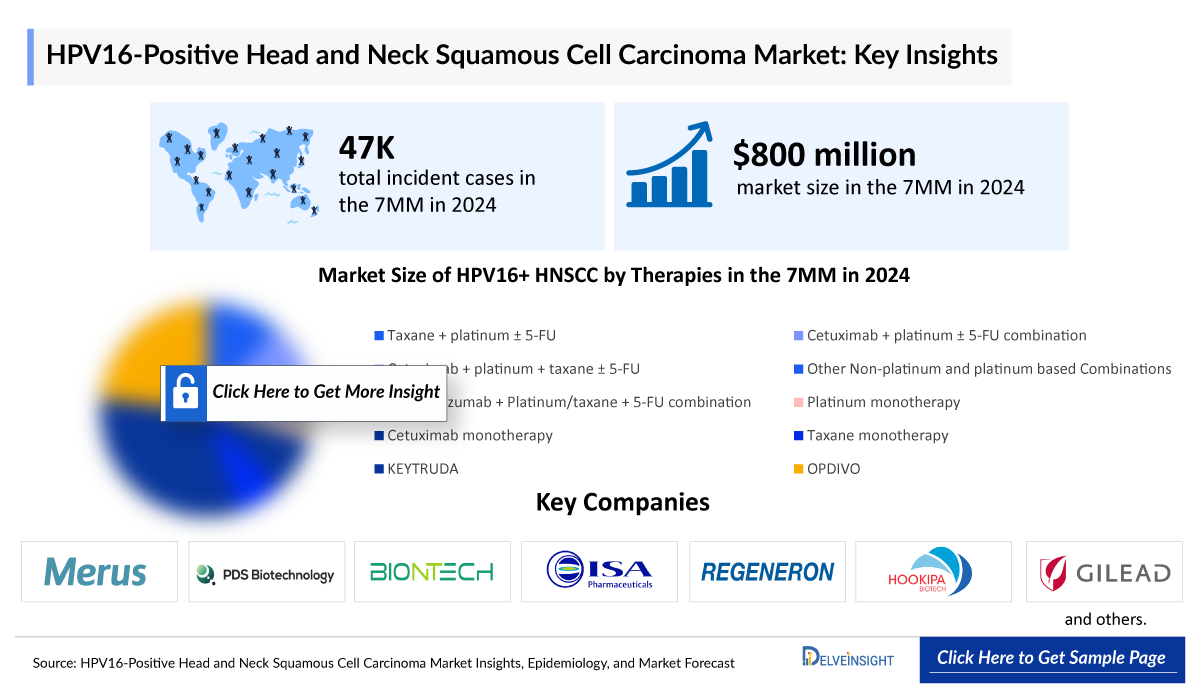
- The total market size of HPV16+ HNSCC in the 7MM was ~USD 810 million in 2024. Among all the therapies in the 7MM KEYTRUDA captured the largest market share in 2024. The market is expected to grow due to the introduction and uptake of high-cost targeted and combination therapies, the rising incidence of HPV16-related cases, and a notable shift in the treatment paradigm from conventional immune checkpoint inhibitors (ICIs) toward next-generation approaches such as LAG-3 inhibitors, bispecific antibodies, and therapeutic vaccines.
- The standard treatment for locoregionally advanced HPV16+ HNSCC generally includes chemoradiation (CRT) or surgery with subsequent adjuvant therapy. However, recurrence and metastasis rates remain high, particularly in advanced stages.
- HPV-positive HNSCC remains partly resistant to PD-1 blockade due to immune evasion and tumor microenvironment (TME) suppression. E6/E7-targeted vaccines and T-cell receptor therapies (TCR therapies) show modest benefit, with greater promise in combination, but are limited by Human Leukocyte Antigen (HLA) restriction and antigen-processing resistance.
HPV16+ HNSCC Market Insights
- The epidemic of HPV-positive HNSCC will not peak until the 2030s due to the delayed adoption of preventative immunization in pediatric populations. Furthermore, because older age groups are not vaccinated, immunization will not reduce the prevalence of HPV16-positive OPSCC until beyond 2045.
- KEYTRUDA and OPDIVO are the primary PD-1 inhibitors approved for treating recurrent or metastatic HNSCC. KEYTRUDA monotherapy is the preferred first-line treatment for recurrent or metastatic HNSCC with high PD-L1 expression. However, only about 20% of patients respond, and there is no significant difference based on HPV status. Currently, no treatments are specifically approved for HPV16+ cancers.
- PDS Biotechnology is the sole company evaluating a triplet combination, which has successfully achieved its primary endpoint of a confirmed objective response rate of at least 60%. Promising survival data from the triplet combination may support a pivotal study bolstered by strong results in resistant, difficult-to-treat patients from the triple study
- Currently, a number of HPV-targeted vaccines in HNSCC are being studied; the most encouraging findings have been seen when used in combination with checkpoint inhibitors as a first-line treatment for recurrent or metastatic disease. Although some studies are looking at these vaccines in treatment-refractory patients, the response rate in that population tends to be lower. Additionally, ongoing trials are investigating the use of therapeutic vaccines in the without immunotherapy.
- Up to 10%–25% of patients with early-stage HPV16+ tumors are likely to relapse within two years.
- The landscape is highly competitive, with key players like PDS Biotechnology, ISA Pharmaceuticals, Merus, BioNTech, Cue Pharma, and others driving innovative strategies to improve efficacy and broaden treatment options for HPV16+ HNSCC, offering new hope for patients with limited current alternatives.
Key Factors Driving HPV16+ HNSCC Market
- HPV16 Positive HNSCC Patient Pool
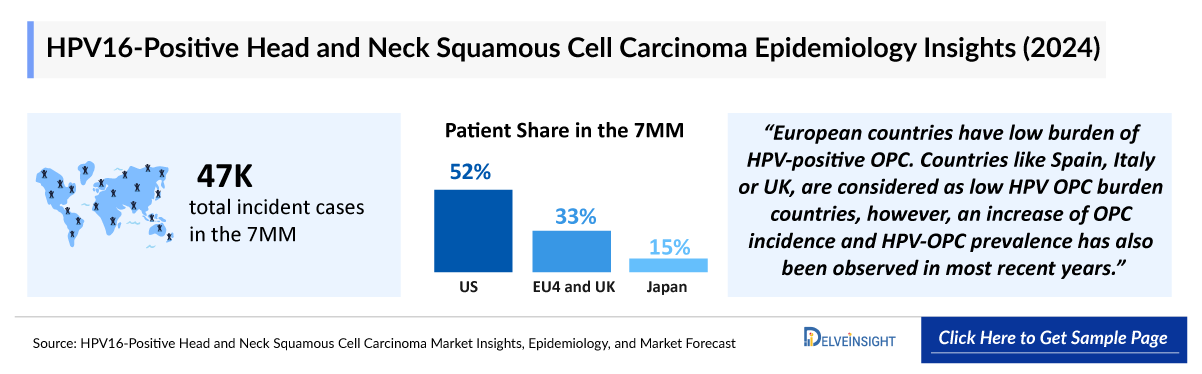
In 2024, the total market size of HPV16+ HNSCC in the 7MM was approximately USD 810 million. The US accounted for the largest share of the patient population, reflecting the high prevalence of HPV16-driven head and neck cancers. Rising HPV16 incidence and delayed uptake of pediatric immunization are expected to drive market growth over the coming decade.
- Current HPV16 Positive HNSCC Treatment Landscape
Standard treatment for locoregionally advanced HPV16+ HNSCC includes chemoradiation or surgery followed by adjuvant therapy. PD-1 inhibitors such as KEYTRUDA and OPDIVO are the primary approved therapies for recurrent or metastatic HNSCC, though response rates remain limited (~20%). Treatment paradigms are shifting toward next-generation approaches, including LAG-3 inhibitors, bispecific antibodies, and therapeutic vaccines, offering improved efficacy and potential survival benefits.
- Emerging HPV16 Positive HNSCC Therapies
The pipeline for HPV16+ HNSCC is expanding with therapeutic vaccines, TCR therapies, and combination strategies. Key emerging drugs include Petosemtamab (MCLA-158) by Merus, Versamune HPV (formerly PDS0101) by PDS Biotechnology, BNT113 by BioNTech, ISA101b by ISA Pharmaceuticals and Regeneron, CUE-101 by Cue Biopharma, Eftilagimod alpha (Efti/IMP321) by Immutep, Sacituzumab Govitecan + Cetuximab by Gilead Sciences, LN-145/LN-145-S1 by Iovance Biotherapeutics, NEXI-003 by NexImmune, TSC-200 by TScan Therapeutics, and delNS/E6E7 by BlueSky Immunotherapies. Early clinical data show strong potential when combined with checkpoint inhibitors, particularly in first-line treatment settings, positioning these therapies to redefine the HPV16+ HNSCC market.
- HPV16 Positive HNSCC Clinical Trials
Numerous ongoing trials are evaluating HPV-targeted vaccines and combination therapies for recurrent or metastatic disease. PDS Biotechnology’s triplet combination has achieved a confirmed objective response rate of ≥60%, supporting pivotal study plans. Other frontrunners, such as Versamune HPV, Petosemtamab, Eftilagimod alpha, INO-3112, and CUE-101, are advancing through early- to late-stage clinical development, reflecting a highly competitive landscape aimed at improving outcomes for HPV16+ HNSCC patients.
Request for unlocking the Sample Page of the "HPV16-Positive HNSCC Market Forecast"
DelveInsight’s "HPV16-Positive Head and Neck Squamous Cell Carcinoma (HNSCC) – Market Insight, Epidemiology, and Market Forecast – 2034" report delivers an in-depth understanding of HPV16-Positive HNSCC, historical and forecasted epidemiology as well as the HPV16-Positive HNSCC market trends in the United States, EU4 (Germany, France, Italy, and Spain) and the United Kingdom, and Japan.
The HPV16-Positive market report provides current treatment practices, emerging drugs, HPV16+ HNSCC market share of individual therapies, and current and forecasted HPV16-Positive HNSCC market size from 2020 to 2034, segmented by seven major markets. The report also covers current HPV16-Positive HNSCC treatment practices/algorithms and unmet medical needs to curate the best of the opportunities and assess the underlying potential of the market.
|
Study Period |
2020 to 2034 |
|
Forecast Period |
2025-2034 |
|
Geographies Covered |
|
|
HPV16-Positive HNSCC Market |
|
|
HPV16-Positive HNSCCs Market Size | |
|
HPV16-Positive HNSCC Companies |
|
|
HPV16-Positive HNSCC Epidemiology Segmentation |
|
HPV16-Positive HNSCC Disease Understanding
HPV16-Positive HNSCC Overview
HPV, particularly HPV-16, is an increasingly important risk factor for HNSCC, especially oropharyngeal cancers, now accounting for over 70% of such cases. While tobacco and alcohol remain traditional causes, the rise in HPV-driven HNSCC marks a major epidemiological shift. HNSCC is the sixth most common cancer globally and includes malignancies of the oral cavity, oropharynx, larynx, and related sites. HPV-positive tumors, driven by E6 and E7 oncoproteins that inactivate p53 and Rb, differ molecularly from HPV-negative ones and tend to show better differentiation, earlier presentation, improved treatment response, and superior prognosis. p16 immunohistochemistry is commonly used to identify HPV-related tumors. The increasing incidence of HPV-positive cases, particularly in non-smokers, highlights the importance of HPV vaccination for cancer prevention. This molecular distinction between HPV-positive and negative HNSCC has critical implications for treatment planning, prognosis, and future development of targeted therapies.
HPV16-Positive HNSCC Diagnosis
HNSCC, one of the most common cancers globally, develops from the mucosal lining of the oral cavity, pharynx, and larynx, with significant risk factors including tobacco use, alcohol consumption, and HPV type 16 infection. HPV-positive subtypes, especially in the oropharynx, are associated with better prognosis and greater responsiveness to treatment compared to the more aggressive HPV-negative variants linked to traditional risk factors. The molecular mechanisms of HPV, particularly through the viral proteins E6 and E7, drive malignant transformation by disrupting tumor suppressor pathways. This underscores the growing need for public health measures like HPV vaccination and advancements in targeted therapies to improve survival rates and reduce the increasing prevalence of these cancers.
Further details related to diagnosis will be provided in the report…
HPV16-Positive HNSCC Treatment
Head and neck cancers, especially when diagnosed early, are often curable, with treatment goals extending beyond tumor eradication to preserving vital functions like speech, swallowing, and appearance. Treatment depends on tumor type, stage, patient health, and preferences, and typically includes surgery, radiation therapy, chemotherapy, targeted therapy, and immunotherapy. Surgery may involve tumor excision, lymph node removal, or reconstructive procedures, while radiation therapy, primarily IMRT, can be curative or palliative but poses risks like dry mouth and swallowing issues. Systemic therapies include chemotherapy, EGFR-targeted agents like cetuximab, and tumor-agnostic drugs like larotrectinib. Immunotherapies, particularly checkpoint inhibitors (e.g., pembrolizumab, nivolumab), have transformed treatment for recurrent/metastatic HNC, with novel approaches like Immuno-STATs and B-cell targeting therapies showing promise. For HPV-related HNC, especially HPV16+, immunotherapies and therapeutic vaccines are emerging as key modalities. Prevention efforts include FDA-approved HPV vaccines for individuals aged 9–45, with strong efficacy but limited population impact due to low uptake, particularly among men. While primary prevention through vaccination and tobacco cessation could significantly reduce incidence, secondary prevention via screening and chemoprevention, though historically unsuccessful, remains an area of ongoing research. Agents like aspirin, metformin, and plant-derived compounds are being explored to prevent recurrence or secondary primary tumors, especially in HPV-negative HNSCC.
Further details related to treatment will be provided in the report…
HPV16-Positive HNSCC Epidemiology
The HPV16+ HNSCC epidemiology chapter in the report provides historical as well as forecasted epidemiology segmented by the total incident cases of HNSCC, site-specific cases of HNSCC, total incident cases of HPV+ HNSCC, total incident cases of HPV16-Positive HNSCC, stage-specific cases of HPV16+ OPSCC, stage-specific cases of HPV16+ Non-OPSCC in the 7MM covering the United States, EU4 (Germany, France, Italy, and Spain) and the United Kingdom, and Japan from 2020 to 2034.
- The total incident cases of HPV16-Positive HNSCC in the 7MM were approximately 47,000 in 2024, which is expected to increase in the upcoming years.
- Among the total site-specific cases of HNSCC in the US, the oropharynx was observed to have the highest cases of HNSCC, i.e. nearly 20,000, and the salivary gland was observed to have the lowest number of cases of HNSCC, i.e. nearly 1,100 in 2024.
- Among the total stage-specific cases of OPSCC in EU4 and the UK, Germany accounted for nearly 1,800 cases of regional (stages III-IVB) and nearly 120 unknown cases in 2024.
HPV16-Positive HNSCC Drug Analysis
HPV16-Positive HNSCC Marketed Drugs
OPDIVO (nivolumab): Bristol Myers Squibb
OPDIVO is a programmed death-1 (PD-1) immune checkpoint inhibitor that is designed to uniquely harness the body’s immune system to help restore anti-tumor immune response. By harnessing the body’s immune system to fight cancer, OPDIVO has become an important treatment option across multiple cancers. It is administered by intravenous infusion after dilution based on the recommended infusion rate for each indication. The recommended dosage is 240 mg every 2 weeks or 480 mg every 4 weeks.
- In April 2017, FDA approved OPDIVO as monotherapy for the treatment of SCCHN in adults progressing on or after platinum-based therapy by the European Commission.
- In March 2017, OPDIVO was approved in Japan for the treatment of relapse or distant HNC metastasis
KEYTRUDA (pembrolizumab): Merck
KEYTRUDA is an anti-PD-1 therapy that works by increasing the ability of the body’s immune system to help detect and fight tumor cells. KEYTRUDA is a humanized monoclonal antibody that blocks the interaction between PD-1 and its ligands, PD-L1 and PD-L2, thereby activating T lymphocytes, which may affect both tumor cells and healthy cells. Merck has the industry’s largest immuno-oncology clinical research program. The recommended dosage is 200 mg every 3 weeks or 400 mg every 6 weeks.
- In December 2019, Merck announced that the Japan Pharmaceuticals and Medical Devices Agency (PMDA) approved KEYTRUDA in combination with chemotherapy for the first-line treatment of patients with recurrent or distant metastatic HNC and as a monotherapy for the first-line treatment of patients with recurrent or distant metastatic HNC.
Comparison of Approved HPV16-Positive HNSCC Drugs | ||||||
|
Product |
Company |
Mechanism of Action |
Indication |
ROA |
Molecule Type |
Approval |
|
OPDIVO (nivolumab) |
Bristol Myers Squibb |
PD-1 inhibitors |
Recurrent or metastatic SCCHN (with HPV as well) with disease progression on or after platinum-based therapy |
IV |
Monoclonal antibody |
US: 2016 EU: 2017 JP: 2017 |
|
KEYTRUDA (pembrolizumab) |
Merck Sharp & Dohme |
PD-1 inhibitor |
Metastatic or unresectable recurrent HNSCC |
IV |
Monoclonal antibody |
US: 2016 EU: 2019 JP: 2019 |
HPV16-Positive HNSCC Emerging Drugs
Versamune HPV (PDS0101): PDS Biotechnology
PDS0101 is a novel investigational Human Papilloma Virus (HPV)-targeted immunotherapy that stimulates a potent targeted T-cell attack against HPV-positive cancers. PDS0101 is given by a simple subcutaneous injection in combination with other immunotherapies and cancer treatments. Interim data suggest PDS0101 generates clinically effective immune responses, and the combination of PDS0101 with other treatments demonstrates significant disease control by shrinking tumors, delaying disease progression, and/or prolonging survival. The combination of PDS0101 with other treatments does not appear to compound the toxicity of other agent’s pembrolizumab in patients with previously untreated PD-L1-positive recurrent or metastatic SCCHN.
- In August 2025, PDS Biotech announced final top-line survival data from its VERSATILE-002 Phase II clinical trial. VERSATILE-002 evaluated PDS0101 + KEYTRUDA in patients with HPV16-positive 1L R/M HNSCC.
- In June 2025, PDS Biotechnology announced hosting of a virtual KOL event to discuss the unmet need and current treatment landscape for r/m HPV16-positive HNSCC. The event reviews the changing landscape of HNSCC in context with Merck’s KEYNOTE-689 (KN-689) study and the rapidly increasing incidences of HPV16-positive HNSCC in the US and Europe, also including, review of Versamune HPV, which is currently being evaluated in a Phase III clinical trial in combination with pembrolizumab as a first-line treatment for r/m HPV16+ HNSCC, as well as in Phase II clinical trials for the treatment of various types of HPV16-positive cancers.
CUE-101: Cue Biopharma
CUE-101, Cue Biopharma’s lead drug product candidate, is being evaluated for the treatment of HPV16+-driven recurrent or metastatic head and neck cancer. It is currently in Phase I clinical trial as a monotherapy for second-line and beyond treatment in patients with HPV+ R/M HNSCC. Additionally, CUE-101 is undergoing a Phase I dose-escalation and expansion trial in combination with KEYTRUDA as a first-line treatment for the same patient population. It is also being studied in a Phase II investigator-sponsored trial as a neoadjuvant therapy, administered before surgery or chemo-radiation, for treatment-naïve, HLA-A-0201 positive patients with newly diagnosed, locally advanced HPV16+ OPSCC. The company is planning to pursue third-party support through partnerships and collaborations to develop this drug further. The company is aligned with the FDA on a registration path. In July 2025, Cue Biopharma announced the Phase I trial results.
Comparison of Emerging HPV16-Positive HNSCC Drugs Under Development | ||||||
|
Product |
Company |
Patient Segment |
Phase |
Molecule Type |
MOA |
ROA |
|
Petosemtamab (MCLA-158) |
Merus |
1L HNSCC with a PD1 inhibitor and 2/3L HNSCC |
III |
IgG1 bispecific antibody |
Targets EGFR X LGR5 |
IV injection |
|
Versamune HPV (formerly PDS0101) |
PDS Biotechnology |
HPV16- oropharyngeal cancers |
III |
Liposomal-based HPV-16 E6/E7 multipeptide vaccine |
Stimulates a potent targeted T cell attack against HPV-positive cancers; T cell activator |
SC |
|
BNT113 |
BioNTech |
First-line HPV16+ HNSCC; HPV16+ HNSCC adjuvant and advanced |
III |
mRNA vaccine |
E6 modulators (Protein E6 modulators), and E7 modulators (Protein E7 modulators) |
Intradermal and IV route |
|
ISA101b |
ISA Pharmaceuticals and Regeneron Pharmaceuticals |
R/M HPV16 positive oropharyngeal cancer (1L, 2L+) |
II |
Peptide vaccine |
Induces specific immune responses to the oncogenic E6 and E7 antigens |
SC or intradermal |
|
CUE-101 |
Cue Biopharma |
Neoadjuvant HPV16+ OPSCC, 1L+, and second-line and beyond treatment in patients with HPV+ R/M HNSCC |
II |
Fc fusion protein; HPV16 E7 peptide epitope (E711–20) +IL-2 |
IL-2 replacements |
IV infusion |
|
Eftilagimod alpha (Efti/IMP321) |
Immutep |
First-line metastatic or recurrent HNSCC with PD-L1 positive (CPS ≥1) tumors |
II |
Recombinant soluble LAG-3 protein |
Antigen-presenting cell activator |
SC |
|
Sacituzumab Govitecan + Cetuximab |
Gilead Sciences |
SCCHN |
II |
ADC + mAb |
TROP-2 and EGFR inhibitor |
IV infusion |
|
LN-145/LN-145-S1 |
Iovance Biotherapeutics |
Recurrent and/or metastatic SCCHN with at least 1 and no more than 3 lines of prior therapies |
II |
Autologous Tumour Infiltrating Lymphocytes (TIL) |
Lymphocyte replacements |
IV |
|
NEXI-003 |
NexImmune |
Recurrent or refractory HPV-related oropharyngeal cancers |
I |
Autologous CD3+ CD4- CD8+ T cells |
Cell therapy |
IV infusion |
|
TSC-200 |
TScan Therapeutics |
Solid tumors (HNSCC) |
I |
Cell Therapy |
TCR T-cells |
IV infusion |
|
delNS/E6E7 |
BlueSky Immunotherapies |
HPV16+ OPSCC |
I |
Viral vaccine |
Influenza based immunotherapy |
IT and IM |
HPV16-Positive HNSCC Drug Class Insight
Vaccines dominate the emerging therapeutic landscape, including liposomal-based multipeptide, mRNA, peptide, and DNA vaccines. Cell therapies are in early to mid-stage development, while viral vectors remain mostly in early stages.
Versamune HPV is a liposomal multipeptide vaccine that delivers HPV16-derived E6 and E7 antigens, leveraging the Versamune platform to enhance dendritic cell uptake and activation, leading to strong CD8+ cytotoxic T lymphocyte responses against HPV-positive tumor cells. BNT113, an mRNA vaccine developed by BioNTech, encodes the E6 and E7 oncoproteins of HPV16, which are translated intracellularly and presented via MHC molecules to activate both CD4+ and CD8+ T cells, generating a potent antitumor immune response. HB201 ± HB202 utilize engineered arenavirus vectors to deliver HPV16 antigens, mimicking viral infection to elicit a systemic and durable T-cell response specifically targeting tumor-associated viral proteins. Abipapogene Suvaplasmid is a DNA plasmid vaccine that encodes HPV antigens and includes a mechanism to enhance antigen presentation by directly targeting professional antigen-presenting cells, thus promoting effective activation of the adaptive immune system against HPV-driven malignancies. Collectively, these vaccines function by breaking immune tolerance to HPV oncoproteins and redirecting immune surveillance toward virally transformed cells within the tumor microenvironment.
Further detailed analysis will be provided in the report….
HPV16+ HNSCC Market Outlook
Despite treatment guidelines recommending similar approaches for HPV-positive and -negative HNSCC, determining HPV status, particularly in oropharyngeal cancers, is essential for accurate diagnosis and staging. Standard treatment for locally advanced HPV-positive HNSCC remains high-dose cisplatin with radiation, but due to its toxicity, alternatives such as cetuximab or surgery with adjuvant therapy are increasingly used, alongside emerging de-intensification strategies aimed at preserving quality of life. In the recurrent/metastatic setting, immune checkpoint inhibitors like pembrolizumab and nivolumab have replaced older regimens, offering durable responses in a subset of patients; however, options remain limited after progression. Therapeutic HPV16 vaccines (e.g., PDS0101, BNT113, ISA101b, INO-3112, VB10.16) are now reshaping the landscape by inducing targeted immune responses against viral antigens, with several in late-stage trials showing promising efficacy, especially when combined with checkpoint inhibitors. Meanwhile, novel immunotherapies such as CUE-101, eftilagimod alpha, and bispecific antibodies like petosemtamab aim to overcome resistance and expand benefit to harder-to-treat populations, including PD-L1–negative patients. Together, these developments mark a shift toward more personalized, less toxic, and potentially more effective therapies for HPV-driven HNSCC, with cancer vaccines and next-generation immunotherapies poised to redefine future standards of care.
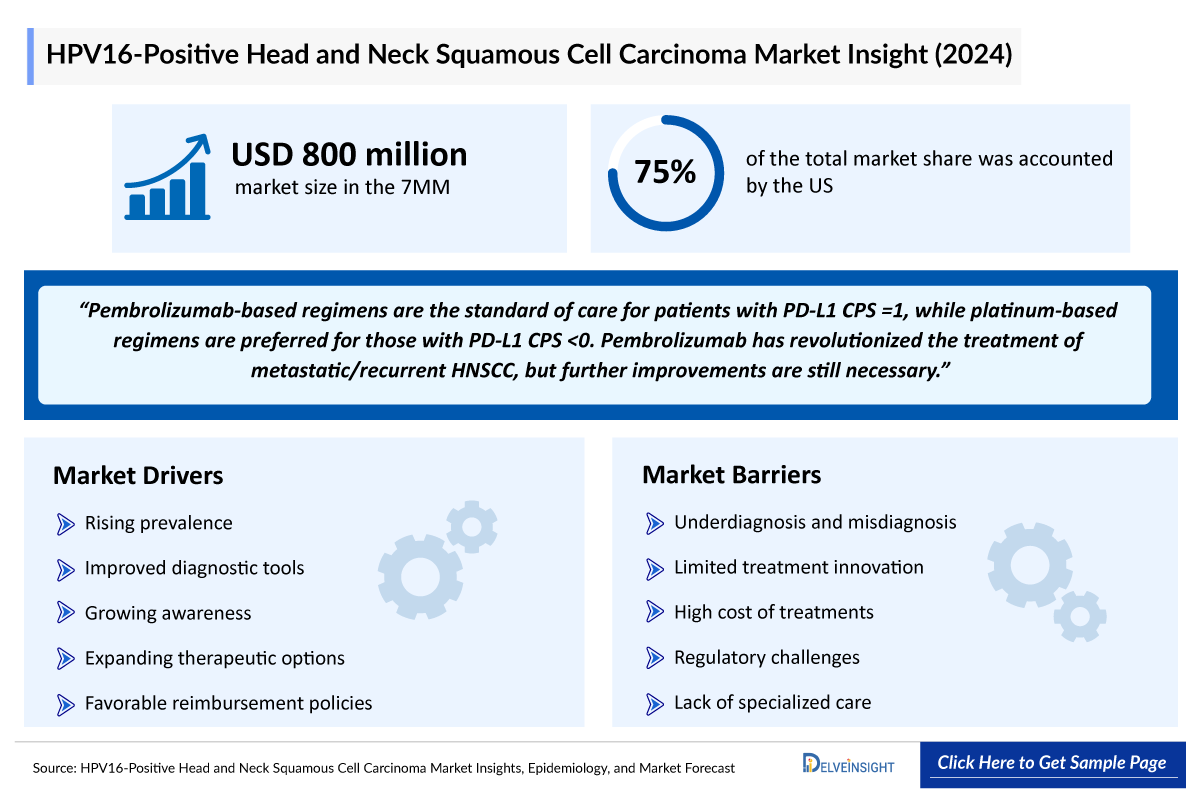
- In the 7MM, the US had the largest market size with nearly USD 600 million in 2024 which is expected to increase till 2034.
- Among EU4 and the UK, France will capture the maximum market share, followed by Germany and the UK in 2024.
- Pembrolizumab-based regimens are the standard of care for patients with PD-L1 CPS =1, while platinum-based regimens are preferred for those with PD-L1 CPS <0. Pembrolizumab has revolutionized the treatment of metastatic/recurrent HNSCC, but further improvements are still necessary.
- Growth of the HPV-associated HNSCC market is susceptible to decline if vaccination campaigns become more successful, particularly among men. Widespread HPV vaccination use may lower the incidence of HPV-positive HNSCC, which will in turn lower the total number of HPV-positive HNSCC cases. Immunization campaigns may reduce the demand and adoption of vaccines for emerging therapies, which would reduce their market size and impact sales revenue and future growth prospects.
- Versamune HPV doublet (Versamune HPV + KEYTRUDA) and triplet regimen (Versamune HPV + PDS01ADC + Bintrafusp alfa) continues to show efficacy. Both doublet and triplet are expected to change the landscape of HPV16+ HNSCC.
- The future of HNSCC treatment lies in immune-based strategies. Current standards of care deliver limited survival benefit and are often associated with significant toxicities. In contrast, therapeutic vaccines and novel immunotherapies promise to reshape the treatment paradigm by enhancing tumor-specific immune activation, improving durability of response, and potentially reducing treatment-related toxicity.
Further details will be provided in the report….
Recent Developments In The HPV16-Positive HNSCC Treatment Landscape
- In February 2026, the FDA granted Fast Track Designation to BNT113 for the treatment of patients with unresectable, recurrent, or metastatic HPV16-positive head and neck squamous cell carcinoma (HNSCC). Developed by BioNTech, BNT113 is an investigational mRNA-based cancer vaccine that targets the oncoproteins E6 and E7. This status is intended to expedite the development of the vaccine in combination with pembrolizumab as a first-line therapy.
- In August 2025, Merus announced that enrollment in the Phase III LiGeR-HN2 trial in HNSCC is expected to be completed by the end of 2025, and in May 2025, the company further announced that it anticipates sharing a topline interim readout in 2026.
- In the August 2025 corporate presentation, Regeneron Pharmaceuticals announced that it plans to initiate 1L HNSCC (PD-L1+; HPV+ and HPV-) in Q1 2026, and perioperative HNSCC trials in 2026.
- In August 2025, Nykode Therapeutics announced that WHO accepted the International Non-proprietary Name (INN) abipapogene suvaplasmid (abi-suva) for VB10.16 (previously called). The company also announced that they are planning to initiate a Phase II proof-of-concept trial combining abi-suva and pembrolizumab for 1L R/M HNSCC. Interim analyses for efficacy are planned throughout the trial, with the first expected during 2027.
- In August 2025, PDS Biotech announced final topline survival data from its VERSATILE-002 Phase II clinical trial. VERSATILE-002 evaluated PDS0101 + KEYTRUDA in patients with HPV16-positive 1L R/M HNSCC.
- In July 2025, Immutep has announced that three abstracts featuring its lead candidate, Efti, a first-in-class MHC Class II agonist, have been accepted for presentation at the ESMO Congress 2025, scheduled for October 17–21 in Berlin.
To be continued in the report….
HPV16+ HNSCC Drugs Uptake
This section focuses on the uptake rate of potential drugs expected to be launched in the market during 2025–2034. The landscape of HPV16+ HNSCC treatment has experienced a profound transformation with the uptake of novel drugs. These innovative therapies are redefining standards of care. Furthermore, the increased uptake of these transformative drugs is a testament to the unwavering dedication of physicians, oncology professionals, and the entire healthcare community in their tireless pursuit of advancing cancer care. This momentous shift in treatment paradigms is a testament to the power of research, collaboration, and human resilience.
Further detailed analysis of emerging therapies drug uptake in the report…
HPV16+ HNSCC Pipeline Development Activities
The HPV16+ HNSCC pipeline report provides insights into different HPV16+ HNSCC clinical trials within Phase III, Phase II/III, Phase II, Phase I/II, and Phase I. It also analyzes key players involved in developing targeted therapeutics.
HPV16+ HNSCC Pipeline Development Activities
The HPV16+ HNSCC clinical trials analysis report covers detailed information on collaborations, acquisitions and mergers, licensing, and patent details for HPV16+ HNSCC emerging therapies.
KOL-Views on HPV16+ HNSCC Market Report
To keep up with current market trends, we take KOLs and SMEs' opinions working in the domain through primary research to fill the data gaps and validate our secondary research. Some of the leaders like MD, PhD, Research Project Manager, Director, and others. Their opinion helps to understand and validate current and emerging therapies and treatment patterns or HPV16+ HNSCC market trends. This will support the clients in potential upcoming novel treatments by identifying the overall scenario of the market and the unmet needs.
Delveinsight’s analysts connected with 20+ KOLs to gather insights; however, interviews were conducted with 10+ KOLs in the 7MM. Centers such as the American Association for Cancer Research, Florida International University, Florida International University, Winship Cancer Institute of Emory University, Allina Health Cancer Institute, Department of Otolaryngology, Head and Neck Surgery, University of Tokyo, European Institute of Oncology, University of Birmingham, etc., were contacted. Their opinion helps understand and validate HPV16+ HNSCC epidemiology and market trends.
|
KOL Views |
|
“The idea is that many of our patients with HPV-associated cancer have a favorable outcome and that you might be able to decrease the intensity of therapy and improve their outcome is a very promising strategy. A group from Memorial Sloan Kettering Cancer Center has led an interesting pilot study in which they decrease the intensity of the radiation using a significantly lower dose but kept cisplatin in the treatment regimen. Those results are very promising. The subsequent study of this paradigm and a larger multicenter trial would potentially warrant a sea of change in the way we manage patients.” |
|
“HPV-induced carcinogenesis is mediated by the oncoviral proteins E6 and E7, which, respectively, promote the degradation of the cellular proteins p53 and Rb, leading to cell proliferation, evasion from apoptosis, immortalization, and an increase of genomic instability.” |
HPV16+ HNSCC Report Qualitative Analysis
We perform Qualitative and market Intelligence analysis using various approaches, such as SWOT and conjoint analysis. In the SWOT analysis, strengths, weaknesses, opportunities, and threats in terms of disease diagnosis, patient awareness, patient burden, competitive landscape, cost-effectiveness, and geographical accessibility of therapies are provided. These pointers are based on the analyst’s discretion and assessment of the patient burden, cost analysis, and existing and evolving treatment landscape.
The analyst analyzes multiple emerging therapies based on relevant attributes such as safety, efficacy, frequency of administration, route of administration, and order of entry.
In efficacy, the trial’s primary and secondary outcome measures are evaluated.
Further, the therapies’ safety is evaluated wherein the acceptability, tolerability, and adverse events are majorly observed, and it sets a clear understanding of the side effects posed by the drug in the trials.
HPV16+ HNSCC Market Access and Reimbursement
The Merck Co-pay Assistance Program offers assistance to eligible, privately insured patients who need help affording the out-of-pocket costs for KEYTRUDA. Once enrolled, eligible, privately insured patients pay the first USD 25 of their co-pay per infusion. Maximum Co-pay Assistance Program benefit per patient, per Eligibility Period is USD 25,000.
Co-pay assistance may be available for patient who:
- Are residents of the United States (including Puerto Rico).
- Have private health insurance that provides coverage for KEYTRUDA under a medical benefit plan or a pharmacy benefit plan.
- Have been prescribed KEYTRUDA for an FDA-approved indication.
- Meet all other Terms and Conditions of the program.
The Merck Patient Assistance Program is private and confidential program provides product free of charge to eligible individuals, primarily the uninsured who, without our assistance, could not afford needed Merck medicines. Individuals who do not meet the insurance criteria may still qualify for this program if they attest that they have special circumstances of financial and medical hardship, and their income meets the program criteria. A single application may provide for up to 1 year of product free of charge to eligible individuals and an individual may reapply as many times as needed.
Patient may qualify if meet all three of the following conditions:
- Must be a US resident and have a prescription for a Merck product from a health care provider licensed in the United States.
- Patient do not have insurance or other coverage for the prescription medicine. Some examples of other insurance coverage include private insurance, HMOs, Medicaid, Medicare, state pharmacy assistance programs, veteran’s assistance, or any other social service agency support.
- Patient cannot afford to pay for the medicine. Patient may qualify for the patient assistance program if have a household income of USD 75,300 or less for individuals, USD 102,200 or less for couples, or USD 156,000 or less for a family of four.
Further detailed analysis will be provided in the report…
Scope of the HPV16+ HNSCC Market Report
- The report covers a descriptive overview of HPV16+ HNSCC, explaining its causes, signs and symptoms, pathogenesis, and currently available therapies.
- Comprehensive insight has been provided into HPV16+ HNSCC epidemiology and treatment.
- Additionally, an all-inclusive account of both the current and emerging therapies for HPV16+ HNSCC is provided, along with the assessment of new therapies, which will have an impact on the current treatment landscape.
- A detailed review of the HPV16+ HNSCC market; historical and forecasted is included in the report, covering the 7MM drug outreach.
- The report provides an edge while developing business strategies, by understanding trends shaping and driving the 7MM HPV16+ HNSCC market.
HPV16+ HNSCC Market Report Insights
- HPV16+ HNSCC Patient Population
- HPV16+ HNSCC Therapeutic Approaches
- HPV16+ HNSCC Pipeline Analysis
- HPV16+ HNSCC Market Size and Trends
- HPV16+ HNSCC Market Opportunities
- Impact of Upcoming HPV16+ HNSCC Therapies
HPV16+ HNSCC Market Report Key Strengths
- Ten Years Forecast
- 7MM Coverage
- HPV16+ HNSCC Epidemiology Segmentation
- Key Cross Competition
- Highly Analyzed Market
- HPV16+ HNSCC Drugs Uptake
HPV16+ HNSCC Market Report Assessment
- Current HPV16+ HNSCC Treatment Practices
- HPV16+ HNSCC Unmet Needs
- HPV16+ HNSCC Pipeline Product Profiles
- HPV16+ HNSCC Market Attractiveness
- Qualitative Analysis (SWOT and Conjoint Analysis)
- HPV16+ HNSCC Market Drivers
- HPV16+ HNSCC Market Barriers
FAQs
- What was the HPV16+ HNSCC market share (%) distribution in 2020 and what it would look like in 2034?
- What would be the HPV16+ HNSCC total market size as well as market size by therapies across the 7MM during the study period (2020–2034)?
- Which country will have the largest HPV16+ HNSCC market size during the study period (2020–2034)?
- What are the disease risks, burdens, and unmet needs of HPV16+ HNSCC?
- What is the historical HPV16+ HNSCC patient pool in the United States, EU4 (Germany, France, Italy, and Spain), and the UK, and Japan?
- What will be the growth opportunities across the 7MM concerning the patient population of HPV16+ HNSCC?
- How many emerging therapies are in the mid-stage and late stage of development for the treatment of HPV16+ HNSCC?
- What are the key collaborations (Industry–Industry, Industry-Academia), Mergers and acquisitions, and licensing activities related to HPV16+ HNSCC therapies?
- What are the recent novel therapies, targets, mechanisms of action, and technologies developed to overcome the limitations of existing therapies?
- What are the clinical studies going on for HPV16+ HNSCC and their status?
- What are the key designations that have been granted for the emerging therapies for HPV16+ HNSCC?
Reasons to buy HPV16+ HNSCC Market Forecast Report:
- The report will help in developing business strategies by understanding trends shaping and driving HPV16+ HNSCC.
- To understand the future market competition in the HPV16+ HNSCC market and an Insightful review of the SWOT analysis of HPV16+ HNSCC.
- Organize sales and marketing efforts by identifying the best opportunities for HPV16+ HNSCC in the US, EU4 (Germany, France, Italy, and Spain), the United Kingdom, and Japan.
- Identification of strong upcoming players in the market will help in devising strategies that will help in getting ahead of competitors.
- Organize sales and marketing efforts by identifying the best opportunities for the HPV16+ HNSCC market.
- To understand the future market competition in the HPV16+ HNSCC market.