
Hypoxic Ischemic Encephalopathy Market Summary
- Hypoxic ischemic encephalopathy is one of the most common causes of neonatal mortality and long-term neurological disability worldwide, occurring primarily as a consequence of perinatal asphyxia and impaired cerebral oxygen delivery around the time of birth.
- The incidence of Hypoxic ischemic encephalopathy in high-income countries is estimated at approximately 1–3 cases per 1,000 live births, while substantially higher rates have been reported in low- and middle-income countries due to limited access to obstetric and neonatal care.
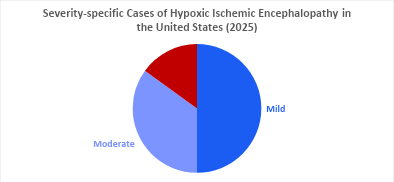
- Moderate-to-severe Hypoxic ischemic encephalopathy accounts for the majority of clinically significant cases, with these patients experiencing the highest risk of mortality, cerebral palsy, epilepsy, cognitive impairment, and developmental delays.
- Neonatal mortality remains substantial among infants with severe hypoxic ischemic encephalopathy, despite advances in neonatal intensive care and the widespread adoption of therapeutic hypothermia in developed healthcare settings.
- Male infants are reported to be slightly more susceptible to adverse neurological outcomes following hypoxic-ischemic injury, although the biological mechanisms underlying this sex-related difference remain incompletely understood.
- Prematurity, maternal complications, placental abnormalities, umbilical cord events, prolonged labor, and perinatal asphyxia represent major risk factors for hypoxic ischemic encephalopathy, contributing significantly to disease burden across both developed and emerging markets.
Hypoxic Ischemic Encephalopathy Epidemiology Forecast in the United States
- 2025 Prevalent Cases of Hypoxic Ischemic Encephalopathy: ~XXXX
- Hypoxic Ischemic Encephalopathy Growth Rate (2026–2036): XX% CAGR
DelveInsight's ‘Hypoxic Ischemic Encephalopathy Epidemiology Forecast 2036’ report delivers an in-depth understanding of the hypoxic ischemic encephalopathy, historical and forecasted epidemiology in the United States, EU4 (Germany, Spain, Italy, and France) and the United Kingdom, and Japan.
|
Study Period |
2022–2036 |
|
Historical Year |
2022–2025 |
|
Forecast Period |
2026–2036 |
|
Base Year |
2026 |
|
Geographies Covered |
|
|
Hypoxic Ischemic Encephalopathy CAGR (Study period/Forecast period) |
XX% (2026-2036) |
|
Hypoxic Ischemic Encephalopathy Epidemiology Segmentation Analysis |
Patient Burden Assesment
|
Hypoxic Ischemic Encephalopathy Understanding and Diagnosis Algorithm
Hypoxic Ischemic Encephalopathy Overview and Diagnosis
Hypoxic ischemic encephalopathy is a serious neonatal neurological disorder caused by a reduction in oxygen supply (hypoxia) and blood flow (ischemia) to the brain before, during, or shortly after birth. HIE primarily affects the central nervous system and represents one of the leading causes of neonatal mortality and long-term neurodevelopmental disability worldwide. The condition most commonly results from perinatal asphyxia associated with placental insufficiency, umbilical cord complications, uterine rupture, maternal hypotension, prolonged labor, or other obstetric emergencies that compromise fetal oxygen delivery. The initial hypoxic-ischemic insult triggers a cascade of metabolic failure, excitotoxicity, oxidative stress, inflammation, and secondary neuronal injury, which can continue for hours to days after the primary event. Clinical manifestations vary according to disease severity and may include altered consciousness, hypotonia, feeding difficulties, respiratory distress, seizures, abnormal reflexes, and multi-organ dysfunction. Long-term complications include cerebral palsy, epilepsy, cognitive impairment, developmental delay, hearing loss, and behavioral disorders. Therapeutic hypothermia remains the standard of care for moderate-to-severe Hypoxic Ischemic Encephalopathy; however, many infants continue to experience significant neurological impairment, highlighting the need for additional neuroprotective therapies.
Hypoxic Ischemic Encephalopathy Diagnosis
Diagnosis of hypoxic ischemic encephalopathy is based on a combination of clinical assessment, perinatal history, laboratory findings, neuroimaging, and neurophysiological evaluation. Key diagnostic indicators include evidence of perinatal asphyxia, low APGAR scores, metabolic acidosis, need for prolonged resuscitation, and neurological abnormalities observed shortly after birth. Clinical evaluation typically assesses the severity of encephalopathy using standardized neurological examinations such as the Sarnat staging system. Laboratory investigations may include arterial blood gas analysis, lactate levels, and markers of organ dysfunction. Brain magnetic resonance imaging (MRI) is considered the gold standard for evaluating the extent and pattern of hypoxic-ischemic brain injury, while cranial ultrasound may provide early bedside assessment in critically ill neonates. Electroencephalography (EEG) and amplitude-integrated EEG (aEEG) are widely used to detect seizures, assess cerebral function, and support prognostic evaluation. Increasing research into neuroimaging biomarkers, inflammatory markers, and molecular predictors of neurological outcomes is improving understanding of disease progression and may facilitate earlier diagnosis, risk stratification, and personalized therapeutic approaches for infants with Hypoxic Ischemic Encephalopathy.
Further details are provided in the report.
Hypoxic Ischemic Encephalopathy Epidemiology
Key Findings from Hypoxic Ischemic Encephalopathy Epidemiological Analysis and Forecast
- According to secondary research, in the United States, Hypoxic Ischemic Encephalopathy occurs at an estimated rate of approximately 1–3 cases per 1,000 live births, with incidence remaining relatively stable at around 1.7 cases per 1,000 live births between 2012 and 2019. While the incidence has declined compared with earlier decades due to improvements in obstetric care, fetal monitoring, and neonatal management, hospital diagnoses and the utilization of therapeutic hypothermia have increased over time, reflecting enhanced disease recognition and treatment adoption.
- According to secondary research, in Japan, the incidence of moderate to severe Hypoxic Ischemic Encephalopathy is estimated at approximately 0.37 per 1,000 term live births.
- According to secondary research, in the UK, the incidence of moderate to severe Hypoxic Ischemic Encephalopathy is estimated to range from approximately 2.4 to 2.8 cases per 1,000 live births.
- According to secondary research, in Spain, the incidence of Hypoxic Ischemic Encephalopathy is estimated at approximately 0.77 cases per 1,000 live newborns.
Scope of the Report
The report covers a segment of an executive summary, a descriptive overview of hypoxic ischemic encephalopathy, explaining its causes, signs and symptoms, and pathogenesis.
-
Comprehensive insight has been provided into the epidemiology segments and forecasts, the future growth potential of the diagnosis rate, and disease progression.
Report Insights
Hypoxic Ischemic Encephalopathy Patient Population Forecast
Report Key Strengths
- Epidemiology‑based (epi‑based) Bottom‑up Forecasting
- 11-year Forecast
- Patient Burden Trends (by geography)
FAQs
- What are the disease risks, burdens, and unmet needs of Hypoxic Ischemic Encephalopathy? What will be the growth opportunities across the 7MM concerning the patient population with Hypoxic Ischemic Encephalopathy?
- What is the historical and forecasted Hypoxic Ischemic Encephalopathy patient pool in the US, EU4 (Germany, France, Italy, and Spain), the UK, and Japan?
Reasons to Buy
- Insights on patient burden/disease prevalence, evolution in diagnosis, and factors contributing to the change in the epidemiology of the disease during the forecast years.
- To understand key opinion leaders’ perspectives around the diagnostic challenges to overcome barriers in the future.
- Detailed insights on various factors hampering disease diagnosis and other existing diagnostic challenges.
-pipeline.png&w=256&q=75)

