
idiopathic inflammatory myositis market
Idiopathic Inflammatory Myositis (IIM) Insights and Trends
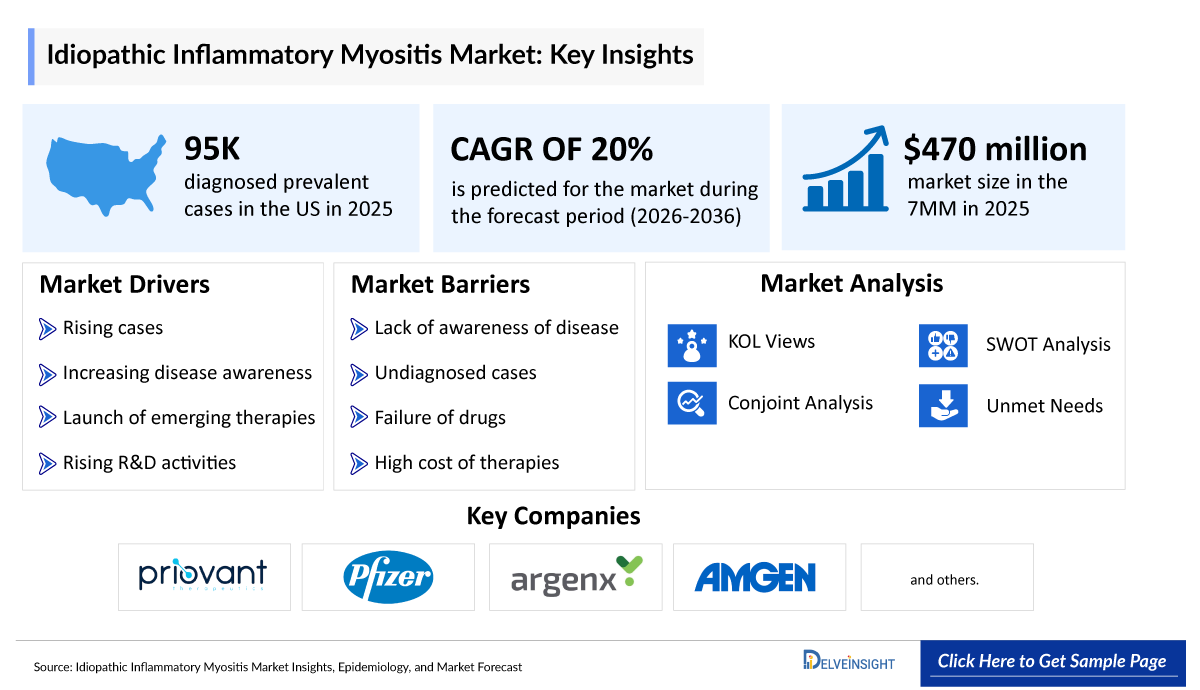
- According to DelveInsight’s analysis, the IIM market size was nearly USD 470 million in the leading markets (the United States, the EU4 (Germany, France, Italy, and Spain), the United Kingdom, and Japan) in 2025.
- Across the 7MM, the United States represents the largest IIM market with approximately USD 280 million, accounting for the majority of IIM cases in 2025 and expected to maintain its leading position through 2036.
- According to DelveInsight’s analysis, the total diagnosed prevalent cases of IIM in the 7MM were approximately 200,000 cases in 2025.
- Diagnosing IIM is challenging, particularly in the early stages when the symptoms are nonspecific. Diagnosis of IIM is complicated because, despite appropriate diagnostic investigation, no uniform diagnostic criteria are available. The existing diagnostic criteria for inflammatory myositis, such as the Bohan and Peter criteria for dermatomyositis, have limitations. These criteria rely on a combination of clinical, laboratory, and histopathological features, which can be subjective and lack sensitivity and specificity. Developing updated and more refined diagnostic criteria can improve diagnostic accuracy and reduce misdiagnosis.
- The current therapeutic landscape in IIM overall includes the use of corticosteroids, including corticosteroids, immunoglobulins, including intravenous immune globulin [Human] (OCTAGAM 10%), immunosuppressants like methotrexate, mycophenolate, azathioprine, and biologics, including rituximab, abatacept, and TNF inhibitors.
- There is a substantial need for new, effective, and convenient therapeutics addressing the underlying pathophysiology of IIM and its subtypes. Furthermore, it is critical to develop comprehensive strategies to manage disease recurrence, minimize treatment-related complications, and optimize the overall quality of life as part of long-term treatment.
- Potential candidates, including efgartigimod, brepocitinib, and daxdilimab among others, are expected to cater to the unmet needs filing the existing treatment gaps in the IIM therapeutic array.
Idiopathic Inflammatory Myositis (IIM) Market size and forecast
- 2025 IIM Market Size in the 7MM: ~USD 470 million
- IIM Growth Rate (2026–2036): ~20% CAGR
DelveInsight's ‘Idiopathic Inflammatory Myositis (IIM) – Market Insights, Epidemiology and Market Forecast – 2036’ report delivers an in-depth understanding of Idiopathic Inflammatory Myositis, historical and forecasted epidemiology, as well as the IIM market trends in the United States, EU4 (Germany, Spain, Italy, and France), the United Kingdom, and Japan.
The IIM market report delivers a comprehensive analysis of the current treatment landscape, including standards of care, clinical practices, and evolving therapeutic algorithms. It evaluates, IIM patient burden trends, revenue & market share dynamics, peak patient share & therapy uptake analysis, and provides an in-depth market size assessment and growth rate projections (Historical & Forecast 2022–2036) across the 7MM regions. The report highlights key unmet medical needs in IIM and maps the competitive and clinical landscape to uncover high‑value opportunities, providing a clear outlook on future market growth potential.
Geography Covered
- North America: The United States
- Europe: Germany, France, Italy, Spain, and the United Kingdom
- Asia-Pacific: Japan
|
Study Period |
2022–2036 |
|
Historical Year |
2022–2025 |
|
Forecast Period |
2026–2036 |
|
Base Year |
2025 |
|
Geographies Covered |
|
|
Idiopathic Inflammatory Myositis (IIM) Market CAGR (Forecast period) |
20% (2026-2036) |
|
Idiopathic Inflammatory Myositis (IIM) Epidemiology Segmentation Analysis |
Patient Burden Assessment
|
|
Idiopathic Inflammatory Myositis (IIM) Companies |
And more |
|
Idiopathic Inflammatory Myositis (IIM) Emerging Therapies |
And more |
|
Idiopathic Inflammatory Myositis (IIM) Market |
Segmented by
|
|
Analysis |
|
Idiopathic Inflammatory Myositis (IIM) Understanding and Treatment Algorithm
Idiopathic Inflammatory Myositis (IIM) Overview and Diagnosis
Myositis is a rare group of autoimmune inflammatory muscle diseases characterized by muscle inflammation that can also affect other organs, leading to significant impairment in quality of life. It is most commonly associated with the IIMs, which include polymyositis, dermatomyositis, juvenile dermatomyositis, cancer-associated myositis, overlap myositis, necrotizing autoimmune myopathy (NAM), and inclusion body myositis (IBM). In contrast, *myopathy* is a broader term encompassing any muscle disease, including inflammatory and non-inflammatory conditions. Among the inflammatory myopathies, dermatomyositis and polymyositis are the most common, although the classification of these disorders continues to evolve as new subtypes are identified.
Diagnosing myopathies involves a laboratory evaluation, imaging studies, multidisciplinary consultations, histologic examination, and potentially genetic studies. In the cases of immune-mediated necrotizing myopathy and Inclusion body myositis, the concept of inflammation must be rethought.
To properly diagnose the patient with muscle weakness, testing should include a thorough history and physical examination, routine laboratory tests (complete blood count, complete metabolic panel, muscle enzymes, thyroid-stimulating hormone, and other targeted studies as necessary), autoimmune serologies, imaging studies, neurologic evaluation, EMG, nerve conduction velocities, and muscle biopsy. The history and physical examination allow the patient to describe the onset of the disease.
Further details are provided in the report.
Current Idiopathic Inflammatory Myositis (IIM) Treatment Landscape
-
Pharmacological treatment: Management of IIM is centered on immunosuppressive therapy. Glucocorticoids remain the first-line treatment, with intravenous methylprednisolone used in severe cases. Steroid-sparing agents such as methotrexate and azathioprine are commonly employed for long-term disease control, while mycophenolate mofetil, calcineurin inhibitors (cyclosporine and tacrolimus), and cyclophosphamide are used in refractory disease or in patients with myositis-associated interstitial lung disease (ILD). Intravenous immunoglobulin (IVIG), rituximab, ACTH gel, and hydroxychloroquine (primarily for cutaneous dermatomyositis) provide additional therapeutic options depending on disease severity and clinical manifestations.
-
Non-pharmacological treatment: Supportive care plays a vital role in the management of IIM. Structured physical therapy and regular aerobic and resistance exercise are recommended to improve muscle strength, functional capacity, and quality of life without exacerbating disease activity. Nutritional optimization and healthy lifestyle measures are also important, with limited evidence suggesting that creatine supplementation may provide additional benefits in stable disease. Plasma exchange or leukapheresis is generally not recommended but may be considered in rare, life-threatening, treatment-refractory cases.
Further details related to country-based variations are provided in the report.
Idiopathic Inflammatory Myositis (IIM) Unmet Needs
The section “unmet needs of , IIM” outlines the critical gaps between the current state of patient care, diagnosis, and the ideal & effective management of the disease. It highlights the obstacles experienced by patients, clinicians, and researchers and identifies potential solutions for future progress.
- Challenges in epidemiological analysis
- The Complexities of Diagnosing IIM
- Comorbidity associated with IIM
- Poor prognosis with long term therapies
- and others…..
Note: Comprehensive unmet needs insights in IIM and their strategic implications are provided in the full report.
Idiopathic Inflammatory Myositis (IIM) Epidemiology
Key Findings from Idiopathic Inflammatory Myositis (IIM) Epidemiological Analysis and Forecast
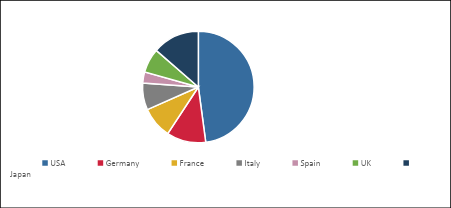
- The US had the highest number of diagnosed prevalent cases of IIM in 2025, with approximately 95,000 cases.
- Among EU4 and the UK, Germany had the highest number of diagnosed prevalent cases of IIM with more than 22,000 cases in 2025, followed by France with around 18,000 cases and Italy with more than 15,000 cases.
- Japan recorded approximately 27,000 diagnosed prevalent cases of IIM in 2025, with this number projected to rise by 2036.
- In 2025, among the type-specific diagnosed prevalent cases of IIM in the US, polymyositis accounted for approximately 32,000 cases, dermatomyositis for around 40,000 cases, and IBM for nearly 23,000 cases.
Patient Share (%) Distribution of Idiopathic Inflammatory Myositis (IIM) by Countries in the 7MM in 2025
Idiopathic Inflammatory Myositis (IIM) Drug Analysis & Competitive Landscape
The IIM drug chapter provides a detailed, market-focused review of the emerging pipeline across Phase I-II clinical trials. It covers the mechanism of action, clinical trial data, regulatory approvals, patents, collaborations, strategic partnerships, and upcoming key catalysts for each therapy, along with their advantages, limitations, and recent developments. This section offers critical insights into the IIM treatment landscape, supporting market assessment, competitive analysis, and growth forecasting for the IIM therapeutics market.
Approved Therapies for IIM
Intravenous Immune Globulin [Human] (OCTAGAM 10% ): Octapharma/Pfizer
OCTAGAM 10%, manufactured by Octapharma Pharmazeutika Produktionsges and distributed by Pfizer, is a liquid medication containing Immunoglobulin G (IgG) derived from human plasma donated by healthy individuals. It is approved for treating dermatomyositis in adults, administered intravenously in hospitals, infusion centers, or at home. For dermatomyositis patients, OCTAGAM 10% aids in improving muscle function and reducing skin rashes
- In July 2021, the US FDA approved OCTAGAM 10% for the treatment of adult dermatomyositis.
- In June 2021, the European Union (EU) approved OCTAGAM 10% as an immunomodulatory therapy for adults with dermatomyositis. Following the EU approval, OCTAGAM 10% received national approval in Germany in May 2021.
|
IIM Marketed/Approved Therapies | ||||||
|
Drug Name |
Company |
Indication |
Molecule Type |
RoA |
MoA |
Marketed Region |
|
Intravenous Immune Globulin [Human] (OCTAGAM 10% ) |
Octapharma/ Pfizer |
Dermatomyositis |
Immunoglobulin |
IV |
Immunomodulator | US: 2021 EU: 2021 |
|
VENOGLOBULIN-IH 5% IV |
Mitsubishi Tanabe Pharma |
Dermatomyositis; polymyositis |
Immunoglobulin |
IV |
Immunomodulator |
JP: 2010 |
Note: Detailed marketed therapies assessment will be provided in the final report.
Idiopathic Inflammatory Myositis (IIM) Pipeline Analysis
Efgartigimod: Argenx
Efgartigimod is designed as a first-in-class investigational antibody fragment to target the neonatal FcRn. Efgartigimod is being evaluated for the treatment of patients with severe autoimmune diseases with the confirmed presence of pathogenic immunoglobulin G and IgG autoantibodies where a severe unmet medical need exists.
|
Competitive Landscape of Pipeline Drugs | ||||||
|
Drug Name |
Company |
Highest Phase |
Indication |
RoA |
MoA |
Anticipated Launch in the US |
|
Brepocitinib |
Priovant Therapeutics/Pfizer |
III |
Dermatomyositis |
Oral |
TYK2/JAK1 inhibitor |
2026 |
|
Efgartigimod |
Argenx |
III |
IIM |
SC |
Neonatal FcRn blocker |
Information is available in the full report |
|
Note: Launch insights are provisional and may change with future report updates or the occurrence of major key catalysts. | ||||||
Note: Detailed emerging therapies assessment will be provided in the final report.
IIM Key Players, Market Leaders and Emerging Companies
- Priovant Therapeutics
- Pfizer
- Argenx
- Amgen
- and others
IIM Drug Updates
- In June 2026, Argenx presented new efgartigimod data showing long-term sustained patient benefit in myositis at EULAR 2026.
- Priovant announced that its New Drug Application (NDA) for brepocitinib in dermatomyositis had been accepted by the FDA for Priority Review and that it expected to launch the drug in the United States by the end of September 2026.
Idiopathic Inflammatory Myositis (IIM) Market Outlook
Treatment of IIM is centered on controlling immune-mediated inflammation, improving muscle strength and physical function, preventing irreversible organ damage, and minimizing disease flares. Management typically requires a multidisciplinary approach involving rheumatologists, neurologists, dermatologists, pulmonologists, physiotherapists, rehabilitation specialists, and other healthcare professionals, depending on the extent of multisystem involvement.
- According to DelveInsight’s analysis, the total market size of the United States accounted for a comprehensive market valuation of approximately USD 280 million in 2025.
- The initial treatment in IIM is corticosteroids, including glucocorticoids with or without immunosuppressants. They are administered in both first-line and refractory cases and have a significantly large patient pool. However, this does not translate into high revenue, with corticosteroids generating a revenue of approximately USD 20 million in 2025.
Further details will be provided in the report.
Drug Class/Insights into Leading Emerging Therapies in IIM (2022–2036 Forecast)
-
Immunoglobulin: Immunoglobulin therapy has become an important treatment option for patients with idiopathic inflammatory myositis, particularly those with dermatomyositis, immune-mediated necrotizing myopathy, and refractory polymyositis. Unlike conventional immunosuppressive therapies that broadly suppress immune activity, intravenous immunoglobulin exerts multiple immunomodulatory effects by neutralizing pathogenic autoantibodies, inhibiting complement activation, modulating Fc receptor function, and regulating inflammatory cytokines. These mechanisms help reduce muscle inflammation, improve muscle strength, alleviate cutaneous manifestations, and prevent disease progression while minimizing the risk of long-term immunosuppression. An example is human normal immunoglobulin (OCTAGAM 10%), the first IVIG therapy approved by the FDA for the treatment of adults with dermatomyositis. The pivotal ProDERM study, it demonstrated significant improvements in disease activity and muscle function compared with placebo, establishing IVIG as an effective therapeutic option for patients with active dermatomyositis, particularly those with an inadequate response or intolerance to corticosteroids and other immunosuppressive agents.
Further details will be provided in the report.
Idiopathic Inflammatory Myositis (IIM) Drug Uptake
This section focuses on the uptake rate of potential drugs expected to be launched in the market during the forecast period (2026–2036). The analysis covers the IIM drug’s uptake, performance at peak, factors affecting performance during prime years of growth, patient uptake by therapy, and anticipated sales generated by each drug.
Brepocitinib, an oral drug that selectively inhibits the tyrosine kinases TYK2 and JAK1, which play roles in immune response and inflammation. By blocking these enzymes, brepocitinib disrupts inflammatory cytokine signaling, potentially reducing inflammation and preventing damage in various immunological diseases. Brepocitinib is expected to launch by 2026 with a medium-fast uptake.
Detailed insights of emerging therapies' drug uptake is included in the report.
Market Access and Reimbursement of Therapies in IIM
The report further provides detailed insights on the country-wise accessibility and reimbursement scenarios, cost-effectiveness scenario of therapies, programs making accessibility easier and out-of-pocket costs more affordable, insights on patients insured under federal or state government prescription drug programs, etc.
EU4 and the UK
|
Italy Reimbursement of Therapies Approved for Idiopathic Inflammatory Myositis (IIM) | |
|
Reimbursement Body |
Assessment |
|
AIFA |
AIFA negotiates the price with MAH, and the drug is classified into two categories. Class A and H are for full reimbursement of essential medicines and drugs dispensed only in hospitals, respectively, and Class C is for drugs without reimbursement. |
Reimbursement is a crucial factor that affects the drug’s access to the market. Often, the decision to reimburse comes down to the price of the drug relative to the benefit it produces in treated patients. To reduce the healthcare burden of these high-cost therapies, many payment models are being considered by payers and other industry insiders.
NOTE: Further Details are provided in the final report……
Idiopathic Inflammatory Myositis (IIM) Therapies Price Scenario & Trends
Pricing and analogue assessment of IIM therapies highlight evolving price dynamics structures. This section summarizes the cost of approved treatments, the closest and most appropriate analogue selection for emerging therapies, and an understanding of how pricing influences market access, adherence, and long-term uptake.
Pricing of IIM-Approved Drugs
The treatment course cost of immunoglobulins in the US in 2025 was approximately USD 30,000.
Industry Experts and Physician Views for Idiopathic Inflammatory Myositis (IIM)
To keep up with IIM market trends, we take Key Opinion Leaders (KOLs) and Subject Matter Experts (SMEs) opinions working in the domain through primary research to fill the data gaps and validate our secondary research. Industry Experts were contacted for insights on the IIM emerging therapies, evolving treatment landscape, patient adherence to conventional therapies, therapy switching trends, drug adoption and uptake, accessibility challenges, and epidemiology and real-world prescription patterns in IIM, including MD, PhD, Instructor, Postdoctoral Researcher, Professor, Researcher, and others.
DelveInsight’s analysts connected with 10+ KOLs to gather insights at the country level. Centers such as the David Geffen School of Medicine, University Hospital Aachen, Rheumatology Department, National Institute of Allergy and Infectious Diseases, etc., were contacted.
Their opinion helps understand and validate current and emerging IIM therapies, highlight unmet medical needs, provide epidemiological context, and support strategic decisions for market access, therapy adoption, and pipeline prioritization in IIM.
|
Region |
Key Opinion Leaders (KOLs) and Subject Matter Experts (SMEs) |
|
United States |
“Assessing disease activity in inflammatory myositis is challenging due to the absence of validated biomarkers or objective measures. Reliable biomarkers, advanced imaging, and functional assessment tools would improve treatment decision-making and provide more accurate monitoring of treatment efficacy.” |
|
Germany |
“Dermatomyositis and polymyositis share lymphocytic inflammation, but differ in lymphocyte involvement and distribution. Polymyositis features CD8+ T-cells attacking muscle fibers, leading to diffuse endomysial inflammation, without vasculopathy. In dermatomyositis, B cells and complement target small blood vessels, causing perivascular inflammation, muscle microinfarction, and perifascicular atrophy.“ |
Qualitative Analysis: SWOT and Attribute Analysis
We perform qualitative and market Intelligence analysis using various approaches, such as SWOT analysis and attribute analysis.
In the SWOT analysis of IIM, strengths, weaknesses, opportunities, and threats in terms of disease diagnosis, patient awareness, patient burden, competitive landscape, cost-effectiveness, and geographical accessibility of therapies are provided. Attribute analysis analyzes emerging therapies based on relevant attributes such as safety, efficacy, frequency of administration, route of administration, and order of entry. Scoring is given based on these parameters to analyze the effectiveness of therapy.
The team of analysts analyzes promising emerging therapies based on relevant attributes such as safety, efficacy, frequency of administration, route of administration, and order of entry. In efficacy, the trial’s primary and secondary outcome measures are evaluated, whereas the therapies’ safety is evaluated, wherein the acceptability, tolerability, and adverse events are majorly observed. In addition, the scoring is also based on the route of administration, order of entry, probability of success, and the addressable patient pool for each therapy. According to these parameters, the final weightage score and the ranking of the emerging therapies are decided.
Scope of the Report
- The report covers a segment of key events, an executive summary, a descriptive overview of IIM, explaining their causes, signs and symptoms, pathogenesis, and currently available treatments.
- Comprehensive insight has been provided into the epidemiology segments and forecasts, the future growth potential of the diagnosis rate, and disease progression along treatment guidelines.
- Additionally, an all-inclusive account of both the current and emerging treatments, along with the elaborative profiles of late-stage and prominent therapies, will have an impact on the current treatment landscape.
- A detailed review of the IIM market, historical and forecasted market size, market share by therapies, detailed assumptions, and rationale behind our approach is included in the report, covering the 7MM drug outreach.
- The report provides an edge while developing business strategies by understanding trends through SWOT analysis and expert insights/KOL views, patient journey, and treatment preferences that help in shaping and driving the 7MM IIM market.
Report Insights
- Idiopathic Inflammatory Myositis (IIM) Patient Population Forecast
- Idiopathic Inflammatory Myositis (IIM) Therapeutics Market Size
- Idiopathic Inflammatory Myositis (IIM) Pipeline Analysis
- Idiopathic Inflammatory Myositis (IIM) Market Size and Trends
- Idiopathic Inflammatory Myositis (IIM) Market Opportunity (Current and Forecasted)
Report Key Strengths
- Epidemiology‑based (Epi‑based) Bottom‑up Forecasting
- Artificial Intelligence (AI)-enabled Market Research Report
- 11-year forecast
- Idiopathic Inflammatory Myositis (IIM) Market Outlook (North America, Europe, Asia-Pacific)
- Patient Burden Trends (by geography)
- Idiopathic Inflammatory Myositis (IIM) Treatment Addressable Market (TAM)
- Idiopathic Inflammatory Myositis (IIM) Competitive Landscape
- Idiopathic Inflammatory Myositis (IIM) Major Companies Insights
- Idiopathic Inflammatory Myositis (IIM) Price Trends and Analogue Assessment
- Idiopathic Inflammatory Myositis (IIM) Therapies Drug Adoption/Uptake
- Idiopathic Inflammatory Myositis (IIM) Therapies Peak Patient Share analysis
Report Assessment
- Idiopathic Inflammatory Myositis (IIM) Current Treatment Practices
- Idiopathic Inflammatory Myositis (IIM) Unmet Needs
- Idiopathic Inflammatory Myositis (IIM) Clinical Development Analysis
- Idiopathic Inflammatory Myositis (IIM) Emerging Drugs Product Profiles
- Idiopathic Inflammatory Myositis (IIM) Market Attractiveness
- Idiopathic Inflammatory Myositis (IIM) Qualitative Analysis (SWOT and Attribute analysis)
FAQs
Market Insights
- What was the IIM market size, the market size by therapies, market share (%) distribution in 2025, and what would it look like by 2036? What are the contributing factors for this growth?
- What are the anticipated pricing variations among different geographies for the emerging therapies in the future?
- What can be the future treatment paradigm of IIM?
- What are the disease risks, burdens, and unmet needs of IIM? What will be the growth opportunities across the 7MM concerning the patient population with IIM?
- Who is the major future competitor in the market, and how will the competitors affect their market share?
- What are the current options for the treatment of IIM? What are the current guidelines for treating IIM in the US, Europe, and Japan?
Reasons to Buy
- The report will help in developing business strategies by understanding the latest trends and changing treatment dynamics driving the IIM market.
- Bottom-up forecasting builds from the affected population to product forecasts, delivering a robust, data-driven approach ideal for new therapies and novel classes.
- Insights on patient burden/disease prevalence, evolution in diagnosis, and factors contributing to the change in the epidemiology of the disease during the forecast years.
- Understand the existing market opportunities in varying geographies and the growth potential over the coming years.
- Identifying strong upcoming players in the market will help devise strategies to help get ahead of competitors.
- Detailed analysis and ranking of class-wise potential current and emerging therapies under the attribute analysis section to provide visibility around leading classes.
- To understand KOLs’ perspectives on the accessibility, acceptability, and compliance-related challenges of existing treatments to overcome barriers in the future.
- Detailed insights on the unmet needs of the existing market so that the upcoming players can strengthen their development and launch strategy.
- This Artificial Intelligence (AI) -enabled report summarizes and simplifies complex datasets within the report into clear, actionable insights for stakeholders, investors, and healthcare providers, enabling faster, data-driven decisions.



