IgG4-Related Disease Market Summary
- The IgG4-Related Disease market in the 7MM is valued at approximately USD 182 million in 2025.
- The IgG4-Related Disease market is projected to grow at a CAGR of 34.60% by 2034 in leading countries like US, EU4, UK and Japan.
IgG4-Related Disease Market and Epidemiology Analysis
- According to DelveInsight’s estimates, in 2024, the total diagnosed prevalent cases of IgG4-RD in the United States were approximately 56,800 cases, projected to increase during the forecast period (2025–2034).
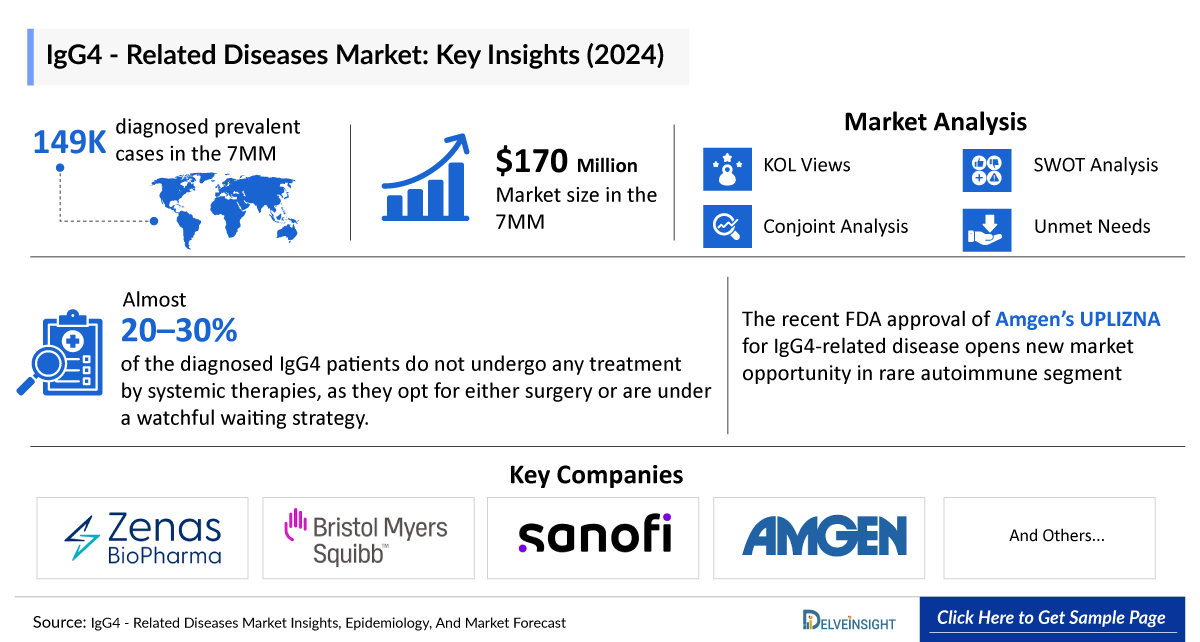
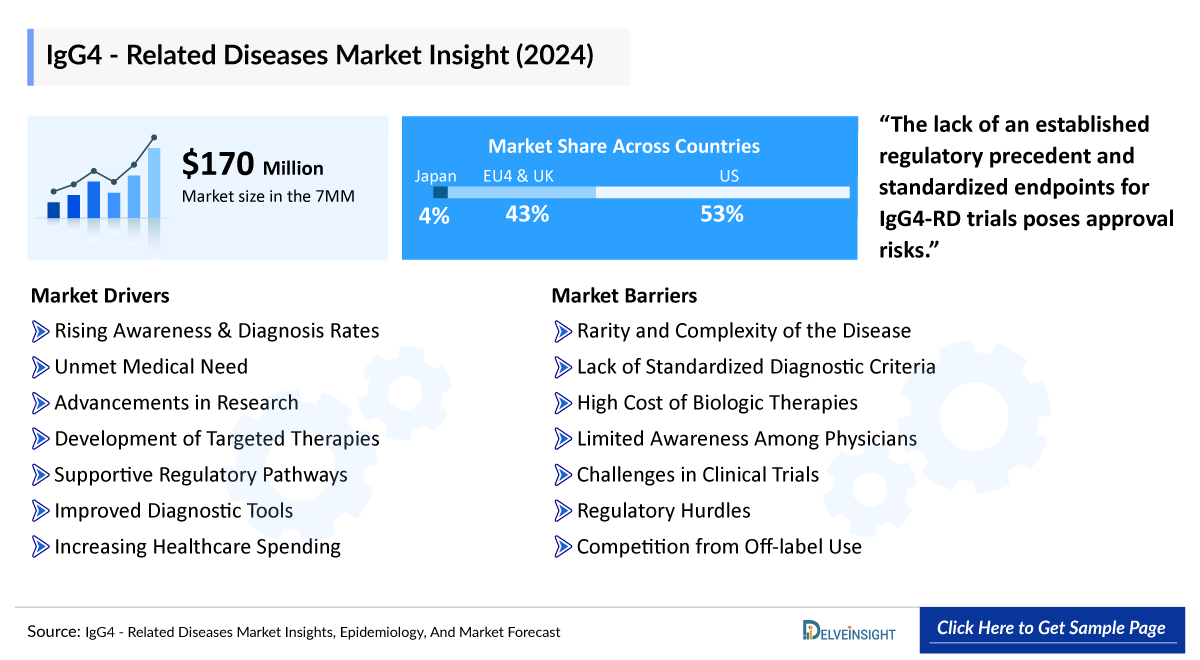
- The IgG4-Related Disease Market Size was valued ~USD 170 million in 2024 is anticipated to grow with a significant CAGR during the study period (2020-2034).
- In 2024, the US captured the highest market share, i.e., nearly USD 90 million out of all the 7MM countries.
- IgG4-RD can affect virtually any organ, with common presentations including the pancreas, bile ducts, salivary glands, lacrimal glands, orbits, kidneys, lungs, and retroperitoneum.
- In April 2025, IgG4-related disease (IgG4-RD), a systemic fibroinflammatory condition, was highlighted for its impact on various organs, including the pancreas, kidneys, lungs, and more. The disease is characterized by the accumulation of IgG4-positive plasma cells in tissues and elevated blood IgG4 levels.
- In April 2025, Amgen announced FDA approval of UPLIZNA, the first treatment for adults with Immunoglobulin G4-related disease (IgG4-RD), a chronic inflammatory condition affecting multiple organs. The drug received Breakthrough Therapy Designation for addressing this serious unmet needs
- The true prevalence of IgG4-RD is unknown. Given its relatively recent discovery, lack of widespread recognition, and frequently indolent presentation, it is likely that it is underrecognized and underreported. There is a male predominance, and the average age at diagnosis in large cohorts is in the thirties to fifties. However, classic cases have been observed in pediatric patients as well.
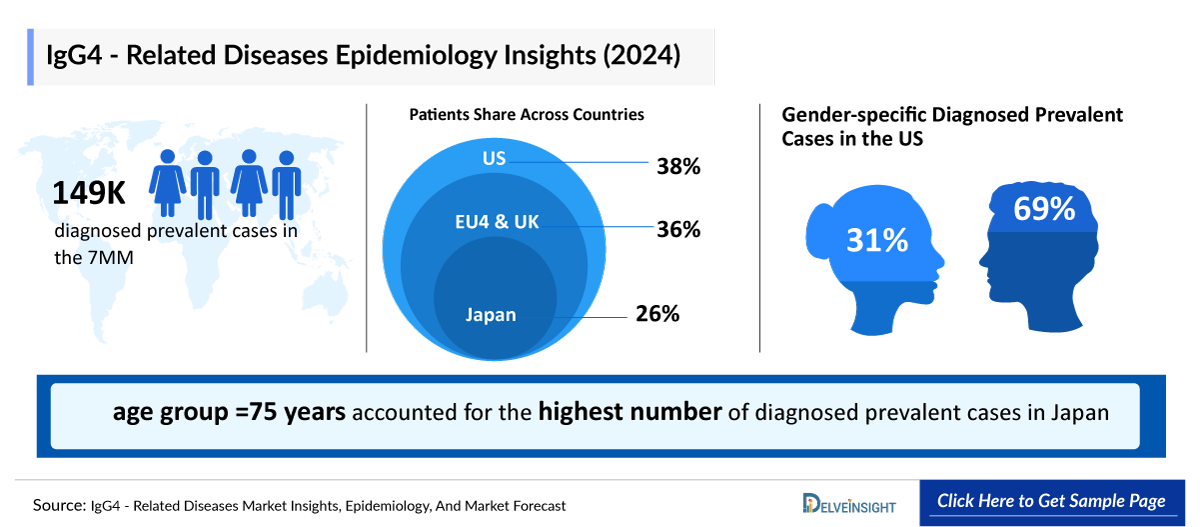
- There were nearly 148,970 diagnosed prevalent cases of IgG4-RD in 7MM in 2024. Among these, the US accounted for the highest number of diagnosed prevalent cases of IgG4-RD.
- IgG4-Related Disease companies are advancing innovative therapies to address this rare autoimmune condition. Notable IgG4-RD players include Zenas BioPharma, Bristol Myers Squibb, Amgen, Sanofi, and others.
- Contrary to the scenario in the US and EU4, and the UK, there have been multiple studies conducted in Japan stating the diagnosed prevalence; therefore, based on 10-year cumulative diagnosed prevalence estimates from the National Database in Japan, along with evidence around drastic increase in the diagnosis of IgG4 related disease from 2015-2018, there were ~38,690 diagnosed cases in 2024 in Japan.
- Almost 20–30% of the diagnosed IgG4 patients do not undergo any treatment by systemic therapies, as they opt for either surgery or are under a watchful waiting strategy.
- There are no specific drugs to cure IgG4-RD due to unclear pathophysiology completely, and no approved therapies are available. The main treatment is corticosteroids like prednisone to manage inflammation and symptoms. If the disease relapses or doesn’t respond, immunosuppressants like azathioprine or methotrexate may be used to reduce steroid dependence. Rituximab, an anti-CD20 monoclonal antibody, has also shown effectiveness in controlling inflammation and slowing disease progression. Glucocorticoids remain the first-line therapy.
- The current constrained pipeline features three emerging therapies: UPLIZNA (Amgen), obexelimab (Zenas BioPharma and Bristol Myers Squibb), and rilzabrutinib (Sanofi). Among these emerging therapies, UPLIZNA and obexelimab are expected to compete with each other strongly.
- The anticipated April 2025 approval of UPZILNA will transform the IgG4-RD market, marking the first-ever approved therapy for this underserved condition. It will redefine the treatment landscape, drive higher diagnosis rates, and shape commercial dynamics through pricing and physician adoption. However, market education, real-world validation, and future competition will influence its long-term impact.
- Rilzabrutinib, a Phase II therapy, represents a promising oral therapy targeting B-cell signaling pathways. If approved, it could disrupt the IV/SC biologic market by offering a more convenient, self-administered alternative.
IgG4-Related Disease Market size and forecast
- 2025 Market Size: USD 182 million in 2025
- 2024 Market Size: USD 170 million in 2024
- 2034 Projected Market Size: USD 1456 million in 2034
- Growth Rate (2025-2034): 34.60% CAGR
- Largest Market: United States
Key factors driving IgG4 - Related disease market
Rising IgG4-Related Disease Prevalence
In 2024, there were nearly 149K diagnosed prevalent cases of IgG4-RD across the 7MM, with the US accounting for the highest share. Improved recognition of this rare autoimmune condition and advancements in diagnostic capabilities are expected to drive steady growth in patient identification, supporting market expansion.
UPLIZNA – First Approved Therapy for IgG4-RD
In April 2025, Amgen’s UPLIZNA received FDA approval as the first-ever treatment for adults with IgG4-RD. Its Breakthrough Therapy Designation underscores its ability to address a serious unmet need. The approval is set to transform the IgG4-RD market by redefining the treatment landscape, accelerating diagnosis rates, and reshaping commercial dynamics through physician adoption and pricing strategies.
IgG4 - Related diseases Clinical Trials Assessment
The IgG4-RD pipeline remains constrained but promising, with key candidates including obexelimab (Zenas BioPharma/Bristol Myers Squibb) and rilzabrutinib (Sanofi). Among these, obexelimab is expected to be a strong competitor to UPLIZNA, with its bifunctional mechanism targeting CD19 and FcγRIIb to inhibit B-cell activity without depletion. Positive Phase II results published in The Lancet Rheumatology have led to ongoing Phase III development, positioning it as a potential market disruptor.
IgG4 - Related disease Future Market Outlook
The IgG4-RD market is projected to grow at a remarkable CAGR of 34.60% by 2034 across the US, EU4, UK, and Japan. With rising prevalence, the entry of UPLIZNA, and a focused pipeline led by Zenas BioPharma, Bristol Myers Squibb, Amgen, and Sanofi, the market is poised for rapid evolution. Long-term adoption, however, will depend on real-world validation, education among physicians, and competition from emerging therapies.
DelveInsight’s “IgG4-Related Disease (IgG4-RD) Market Insights, Epidemiology and Market Forecast – 2034” report delivers an in-depth understanding of historical and forecasted epidemiology as well as market trends in the United States, EU4 (Germany, France, Italy, Spain) and the United Kingdom, and Japan. IgG4-RD therapeutics market report provides current treatment practices, emerging drugs, market share of individual therapies, and current and forecasted 7MM market size from 2020 to 2034. The report also covers current treatment practices/algorithms and unmet medical needs to curate the best opportunities and assess the market’s potential.
|
Study Period |
2020 to 2034 |
|
Forecast Period |
2025-2034 |
|
Geographies Covered |
|
|
IgG4-Related Disease Market |
|
|
IgG4-Related Diseases Market Size | |
|
IgG4-Related Disease Companies |
Zenas BioPharma, Bristol Myers Squibb, Amgen, Sanofi, and others |
|
IgG4-Related Disease Epidemiology Segmentation |
|
IgG4-RD Understanding
IgG4-RD Overview
IgG4-RD is a systemic fibro inflammatory disease characterized by dense infiltration of IgG4-positive plasma cells in the affected tissue(s) with or without elevated plasma levels of IgG4. It is a chronic fibroinflammatory disorder affecting a wide range of organs. Elevation of serum IgG4 concentrations and abundant infiltration of IgG4-expressing plasma cells are key diagnostic features of this autoimmune disease. Although common organ involvement of IgG4-RD includes the salivary glands, pancreas, and bile duct, hepatic involvement is less well established.
IgG4-RD may be present in a certain proportion of patients with a wide variety of diseases, including Mikulicz’s disease, autoimmune pancreatitis, hypophysitis, Riedel thyroiditis, interstitial pneumonitis, interstitial nephritis, prostatitis, lymphadenopathy, retroperitoneal fibrosis, inflammatory aortic aneurysm, and inflammatory pseudotumor.
IgG4-RD Diagnosis
IgG4-RD is challenging to diagnose since it may simultaneously affect several organs. Clinical, endoscopic, radiographic, and serological testing are required to diagnose the illness to examine organ involvement and end-organ damage (such as hormonal imbalances). A biopsy of the afflicted organ tissues, including the skin, is necessary for tissue diagnosis. Blood testing may reveal elevated serum IgG4 levels and peripheral eosinophilia.
Serum IgG4 concentration is the most important biomarker, with elevated levels found in up to 90% of patients, though this can vary. While a drop in IgG4 levels often signals treatment response, it may never return to normal, even in remission, due to long-lived plasma cells. Elevated IgG4 can also occur in other conditions, so its value must be considered within the broader clinical context. Other biomarkers, such as IgG1, IgE, eosinophilia, and complement levels (C3 and C4), can also reflect disease activity, with hypocomplementemia notably seen in IgG4-related kidney disease.
Further details related to country-based variations are provided in the report…
IgG4-RD Treatment
In individuals with IgG4-RD, treatment is not always essential, and in some asymptomatic instances, attentive waiting is appropriate. IgG4-RD, on the other hand, can induce major organ malfunction and failure, necessitating prompt therapy when essential organs are implicated or individuals exhibit symptoms. Ongoing IgG4-Related Disease clinical trials are exploring innovative therapies, aiming to improve treatment outcomes, reduce organ damage, and offer better management strategies for patients suffering from this rare condition.
According to the International Consensus Statement on the treatment of IgG4-RD, glucocorticoids represent the first-line therapy because they lead to dramatic clinical responses in most cases with pancreatic and extra-pancreatic diseases. Thus, a variety of glucocorticoid-sparing agents have been employed in different anatomical districts as remission-maintenance drugs (e.g., azathioprine, mycophenolate mofetil, methotrexate, cyclophosphamide, and bortezomib), with alternate results.
The use of steroid-sparing medications such as azathioprine, mycophenolate mofetil, and methotrexate are used to alleviate the adverse effects of glucocorticoids and to sustain remission; however, there is insufficient proof of their efficacy. Rituximab therapy is a more recent, promising alternative; it depletes CD20-positive plasmablast precursors; as there are fewer plasmablasts, IgG4 synthesis declines.
Since the earliest description of AIP, when a quick response to glucocorticoid treatment was noted as a distinctive finding, glucocorticoids have been regarded as the first-line therapy in IgG4-RD. The majority of IgG4-RD experts continue to believe that glucocorticoid is the first-line therapy for an active, untreated illness, according to the published consensus statement on the management of IgG4-RD. Prednisone is frequently used as the first step in remission induction. Most patients have a response to glucocorticoid treatment within a few days or weeks, and the majority of them reach remission within a few months.
Further details related to treatment will be provided in the report…
IgG4-RD Epidemiology
As the market is derived using a patient-based model, the IgG4-RD epidemiology chapter in the report provides historical as well as forecasted epidemiology segmented by total diagnosed prevalent cases of IgG4-RD, gender-specific diagnosed prevalent cases of IgG4-RD, and age-specific diagnosed prevalent cases of IgG4-RD in the 7MM covering the United States, EU4 countries (Germany, France, Italy, Spain) and the United Kingdom, and Japan from 2020 to 2034.
IgG4-Related Disease Epidemiological Analyses and Forecast
- In 2024, the total diagnosed prevalent cases of IgG4-RD in the United States were approximately 56,800 cases, projected to increase during the forecast period (2025–2034).
- In 2024, gender-specific diagnosed prevalent cases accounted for approximately 39,100 and 17,700 cases for males and females, respectively, in the US.
- The total diagnosed prevalent cases of IgG4-RD in EU4 and the UK were approximately 53,550 in 2024. Males accounted for approximately 38,850 cases, and 14,750 cases in females.
- We have considered six age groups for the categorization of age groups, i.e., 0–17 years, 18–29 years, 30–44 years, 45–64 years, 65–74 years, and =75 years. As per our analysis, a higher percentage of diagnosed prevalent cases was observed in the age group =75 years in Japan. In 2024, the age-specific diagnosed prevalent cases of IgG4-RD in Japan were approximately 12,800 cases in the age group =75 years. The cases will increase during the forecast period (2025–2034).
IgG4-Related Disease Epidemiology Segmentation
- Total diagnosed prevalent cases of IgG4-RD
- Gender-specific diagnosed prevalent cases of IgG4-RD
- Age-specific diagnosed prevalent cases of IgG4-RD
IgG4-RD Market Recent Developments and Breakthroughs
- In April 2025, IgG4-related disease (IgG4-RD), a systemic fibroinflammatory condition, was highlighted for its impact on various organs, including the pancreas, kidneys, lungs, and more. The disease is characterized by the accumulation of IgG4-positive plasma cells in tissues and elevated blood IgG4 levels.
- In April 2025, Amgen announced FDA approval of UPLIZNA, the first treatment for adults with Immunoglobulin G4-related disease (IgG4-RD), a chronic inflammatory condition affecting multiple organs. The drug received Breakthrough Therapy Designation for addressing this serious unmet need.
Recent Development
- In May 2026, Hansa Biopharma, a pioneer in immunomodulatory enzyme technology for rare IgG-mediated diseases, announced that a late-breaking abstract detailing data from its CONFIDES Phase 3 trial has been selected for an oral presentation at the 2026 American Transplant Congress (ATC). The CONFIDES trial evaluates imlifidase as a desensitization treatment to enable kidney transplantation in highly sensitized patients who otherwise face exceptionally long wait times. The presentation will spotlight crucial topline efficacy and safety findings from the study, demonstrating how the treatment effectively reduces donor-specific antibodies to facilitate successful, life-altering transplants. Selection for a late-breaking oral session underscores the transplant community's strong interest in imlifidase’s clinical potential. Hansa intends to leverage these significant findings to advance its ongoing regulatory strategies and clinical programs, ultimately aiming to improve access and long-term outcomes for highly sensitized transplant candidates globally.
IgG4-Related Disease Drug Analysis
The drug chapter segment of the IgG4-RD report encloses a detailed analysis of IgG4-RD marketed drugs and late-stage (Phase III and Phase II) IgG4- Related Disease pipeline drugs. It also helps understand the IgG4-RD clinical trial details, expressive pharmacological action, agreements and collaborations, approval and patent details, advantages and disadvantages of each included drug and the latest news and press releases. The IgG4-Related Disease drugs market is evolving rapidly, driven by emerging therapies, increasing awareness, and ongoing research aiming to address unmet clinical needs and improve patient outcomes globally.
IgG4-Related Disease Marketed Drugs
UPLIZNA (inebilizumab): Amgen
UPLIZNA is a humanized monoclonal antibody that causes targeted and sustained depletion of key cells that contribute to the underlying disease process (autoantibody-producing CD19+ B cells, including plasmablasts and some plasma cells). After two initial infusions, patients need one dose of UPLIZNA every 6 months. UPLIZNA is also approved for the treatment of Neuromyelitis Optica.
IgG4-Related Disease Emerging Drugs
Obexelimab (XmAb5871): Zenas BioPharma and Bristol Myers Squibb
Obexelimab (XmAb5871) is a bifunctional monoclonal antibody designed to bind both CD19 and Fc?RIIb, which are broadly present across B-cell lineage, to inhibit the activity of cells that are implicated in many autoimmune diseases without depleting them. This unique mechanism of action and self-administered SC injection regimen may broadly and effectively address the pathogenic role of B-cell lineage in chronic autoimmune disease.
Currently, Zenas is conducting multiple Phase II and Phase III trials of obexelimab in several autoimmune diseases, including IgG4-RD, multiple sclerosis, systemic lupus erythematosus, and warm autoimmune hemolytic anemia. In August 2023, The Lancet Rheumatology published findings from a Phase II study evaluating obexelimab for the treatment of patients with IgG4-RD. Based on these results, a Phase III study in patients with IgG4-RD is ongoing to investigate further the efficacy and safety of obexelimab administered as an SC injection.
IgG4-Related Disease Drug Class Analysis
The current IgG4-RD emerging landscape has only three drugs. Among them, obexelimab (bifunctionally) and UPLIZNA target CD-19. Targeting CD19, a protein found in B cells, shows promise as a treatment for IgG4-RD by depleting B cells, which are thought to play a role in the disease's pathogenesis. Specifically, UPLIZNA, a CD19-targeted antibody, has demonstrated efficacy in reducing flares and achieving remission in IgG4-RD patients.
IgG4-Related Disease Market Outlook
As the etiology of IgG4-RD is unclear and still being studied, no particular medications can cure the disease. For people with IgG4-RD, there are no approved treatments on the market at this time. The criteria for identifying the disease caused by IgG4 levels and patient treatment recommendations were recently detailed in the guidelines released by the “International Consensus Guidance Statement on the Management and Treatment of IgG4-RD.”
Patients with IgG4-RD that are active or untreated typically get glucocorticoids as their first line of therapy. Depending on the severity of the condition and the urgency of the situation, remission induction is frequently started with 30–40 mg/day of prednisone or a weight-adjusted dosage of 0.6 mg/kg of body weight each day.
In certain instances, conventional “Disease-Modifying Anti-Rheumatic Drugs” (DMARDs) are utilized to treat IgG4-RD. Plasmablasts are the first cell in any rheumatologic disorder to serve as an effective biomarker, and tailored therapy in B-cell employs total plasmablast concentration to track disease activity.
As numerous potential therapies are being investigated to manage IgG4-RD, it is safe to predict that the treatment space will experience significant reconstitution during the forecast period. However, the challenges of pricing and reimbursement accompanied by will decide the fate of all these pipeline therapies and the impact they will have on overall revenue generation.
Key players such as Zenas Biopharma, Amgen, and Sanofi are evaluating their lead candidates in different stages of clinical development, respectively. They aim to investigate their products to treat IgG4-RD.
- In 2024, the US captured the highest market share, i.e., nearly USD 90 million out of all the 7MM countries.
- EU4 and the UK accounted for nearly USD 80 million of the market share, and Germany accounted for the highest share in Europe in 2024.
- In Japan, the IgG4-RD market size accounted for nearly USD 6 million and is expected to increase at a significant CAGR during the forecast period (2025–2034).
- The lack of an established regulatory precedent and standardized endpoints for IgG4-RD trials poses approval risks. Additionally, payer resistance to high-cost biologics may slow adoption, especially if off-label rituximab remains a cost-effective alternative. However this will not be an issue in Japan as rituximab is not yet permitted for use to treat IgG4-RD in Japan due to Japanese medical insurance reasons.
Key Updates In IgG4-Related Disease
- In November 2024, Zenas BioPharma announced the completion of its targeted enrollment for the Phase III INDIGO trial of its lead product candidate, obexelimab, for the treatment of patients with IgG4-RD.
- In November 2024, Zenas BioPharma announced that the company anticipates reporting topline results for the INDIGO trial by the end of 2025.
- In August 2024, Amgen announced that the US FDA had granted Breakthrough Therapy Designation (BTD) to UPLIZNA for the treatment of IgG4-RD based on data from the MITIGATE study.
- In February 2025, Amgen announced that the FDA had accepted the regulatory submission for the Phase III MITIGATE study under priority review, with a PDUFA action date of April 3, 2025.
To be continued in the report….
IgG4-RD Drugs Uptake
This section focuses on the uptake rate of potential drugs expected to be launched in the market during 2020–2034. The landscape of IgG4-RD treatment has experienced a profound transformation with the uptake of novel drugs. These innovative therapies are redefining standards of care. Furthermore, the increased uptake of these transformative drugs is a testament to the unwavering dedication of physicians, oncology professionals, and the entire healthcare community in their tireless pursuit of advancing cancer care. This momentous shift in treatment paradigms is a testament to the power of research, collaboration, and human resilience.
Further detailed analysis of emerging therapies drug uptake in the report…
IgG4-RD Pipeline Development Activities
The IgG4-Related Disease pipeline report provides insights into different IgG4-Related Disease clinical trials within Phase III, Phase II/III, Phase II, Phase I/II, and Phase I. It also analyzes key players involved in developing targeted therapeutics.
IgG4-Related Disease Pipeline Development Activities
The IgG4-Related Disease clinical trials analysis report covers detailed information on collaborations, acquisitions and mergers, licensing, and patent details for IgG4-RD emerging therapies.
Latest KOL Views on IgG4-Related Disease
To keep up with current market trends, we take KOLs and SMEs' opinions working in the domain through primary research to fill the data gaps and validate our secondary research. Some of the leaders like MD, PhD, Research Project Manager, Director, and others. Their opinion helps to understand and validate current and emerging therapies and treatment patterns or IgG4-RD market trends. This will support the clients in potential upcoming novel treatments by identifying the overall scenario of the market and the unmet needs.
Delveinsight’s analysts connected with 20+ KOLs to gather insights; however, interviews were conducted with 10+ KOLs in the 7MM. Centers such as the Massachusetts General Hospital, Hôpital La Timone, Harvard Medical School, Hospital Universitari Vall d’Hebron, Tokyo Metropolitan Cancer and Infectious Diseases Center Komagome Hospital, etc., were contacted. Their opinion helps understand and validate IgG4-RD epidemiology and market trends.
What KOLs are saying on IgG4-Related Disease Patient Trends?
IgG4-Related Disease Qualitative Analysis
We perform qualitative and market Intelligence analysis using various approaches, such as SWOT and conjoint analysis. In the SWOT analysis, strengths, weaknesses, opportunities, and threats in terms of disease diagnosis, patient awareness, patient burden, competitive landscape, cost-effectiveness, and geographical accessibility of therapies are provided. These pointers are based on the analyst’s discretion and assessment of the patient burden, cost analysis, and existing and evolving treatment landscape.
The analyst analyzes multiple emerging therapies based on relevant attributes such as safety, efficacy, frequency of administration, route of administration, and order of entry.
In efficacy, the trial’s primary and secondary outcome measures are evaluated.
Further, the therapies’ safety is evaluated wherein the acceptability, tolerability, and adverse events are majorly observed, and it sets a clear understanding of the side effects posed by the drug in the trials.
IgG4-Related Disease Market Access and Reimbursement
The cost of newly approved medications is usually high, and because of it, patients escape from proper treatment or opt for off-label and cheap medications. It affects market access to newly launched medications, and reimbursement is crucial. The decision to reimburse often comes down to the drug’s price relative to the benefit it produces in treated patients. Market access and reimbursement options can differ depending on regulatory status, target population size, the setting of care, unmet needs, the magnitude of incremental benefit claims, and costs.
The report further provides detailed insights on the country-wise accessibility and reimbursement scenarios, cost-effectiveness scenario of approved therapies, programs making accessibility easier and out-of-pocket costs more affordable, insights on patients insured under federal or state government prescription drug programs, etc.
Scope of the IgG4-Related Disease Market Report
- The report covers a descriptive overview of IgG4-RD, explaining its causes, signs and symptoms, pathogenesis, and currently available therapies.
- Comprehensive insight has been provided into IgG4-RD epidemiology and treatment.
- Additionally, an all-inclusive account of both the current and emerging therapies for IgG4-RD is provided, along with the assessment of new therapies which will have an impact on the current treatment landscape.
- A detailed review of the IgG4-RD market, historical and forecasted, is included in the report, covering the 7MM drug outreach.
- The report provides an edge while developing business strategies by understanding trends shaping and driving the 7MM IgG4-RD market.
IgG4-RD Market Report Insights
- IgG4-RD Patient population
- IgG4-RD Therapeutic approaches
- IgG4-RD pipeline analysis
- IgG4-RD market size and trends
- IgG4-RD Market opportunities
- Impact of Upcoming IgG4-RD therapies
IgG4-RD Market Report Key Strengths
- Ten years forecast
- 7MM coverage
- IgG4-RD epidemiology segmentation
- Key cross competition
- Highly analyzed market
- IgG4-RD Drugs uptake
IgG4-RD Market Report Assessment
- Current IgG4-RD treatment practices
- IgG4-RD Unmet needs
- Pipeline product profiles
- IgG4-RD Market attractiveness
- Qualitative analysis (SWOT and conjoint analysis)
- IgG4-RD Market Drivers
- IgG4-RD Market Barriers
FAQs
- What was the IgG4-RD market share (%) distribution in 2020, and what would it look like in 2034?
- What would be the IgG4-RD total market size as well as market size by therapies across the 7MM during the study period (2020–2034)?
- Which country will have the largest IgG4-RD market size during the study period (2020–2034)?
- What are the disease risks, burdens, and unmet needs of IgG4-RD?
- What is the historical IgG4-RD patient pool in the United States, EU4 (Germany, France, Italy, and Spain) and the UK and Japan?
- What will be the growth opportunities across the 7MM concerning the patient population of IgG4-RD?
- How many emerging therapies are in the mid-stage and late stage of development for the treatment of IgG4-RD?
- What are the key collaborations (Industry–Industry, Industry–Academia), Mergers and acquisitions, and licensing activities related to IgG4-RD therapies?
- What are the recent novel therapies, targets, mechanisms of action, and technologies developed to overcome the limitations of existing therapies?
- What are the clinical studies going on for IgG4-RD and their status?
- What are the key designations that have been granted for the emerging therapies for IgG4-RD?
Reasons to Buy IgG4-Related Disease Market Forecast Report
- The report will help in developing business strategies by understanding trends shaping and driving IgG4-RD.
- To understand the future market competition in the IgG4-RD market and an Insightful review of the SWOT analysis of IgG4-RD.
- Organize sales and marketing efforts by identifying the best opportunities for IgG4-RD in the US, EU4 (Germany, France, Italy, and Spain), the United Kingdom, and Japan.
- Identification of strong upcoming players in the market will help in devising strategies that will help in getting ahead of competitors.
- Organize sales and marketing efforts by identifying the best opportunities for the IgG4-RD market.
- To understand the future market competition in the IgG4-RD market.