
Immune Health Supplements Market Summary
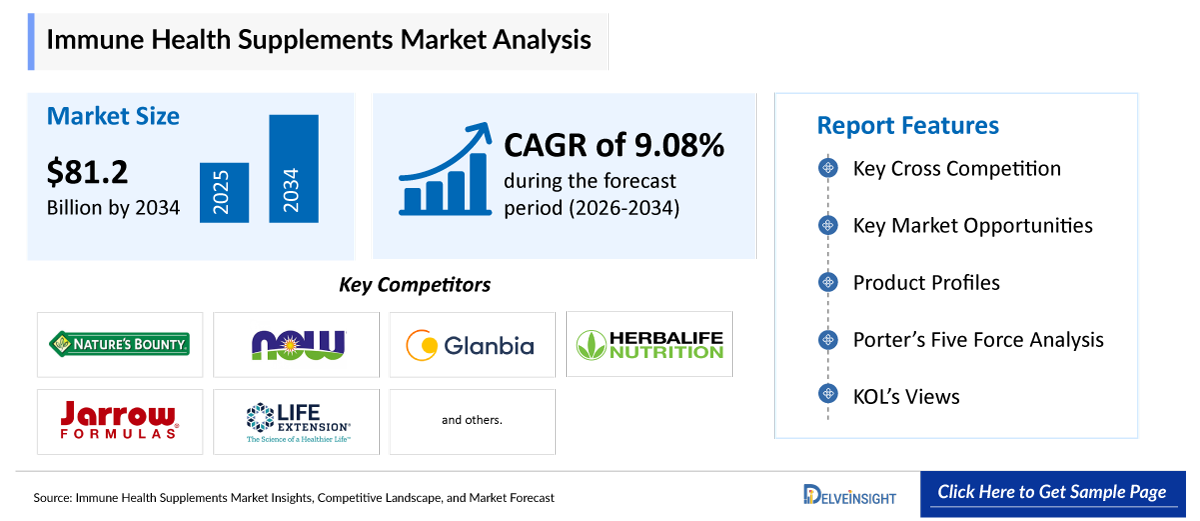
● The Immune Health Supplements market is estimated at USD 38.19 billion in 2025 and is projected to reach USD 81.02 billion by 2034. Growth is anchored in rising consumer focus on preventive healthcare, the growing global aging population, and the increasing incorporation of vitamins, probiotics, herbal extracts, and functional foods into everyday wellness routines.
● The global Immune Health Supplements market is growing at a CAGR of 9.08% during the forecast period from 2026 to 2034.
● By product type, the Vitamins & Minerals segment dominated the Immune Health Supplements market with a 39% share in 2025.
● By dosage form, the capsules segment dominated the Immune Health Supplements market with a 33% share in 2025.
● By ingredient type, the Vitamin C segment dominated the Immune Health Supplements market with a 29% share in 2025.
● By application, the Respiratory Health Support segment dominated the Immune Health Supplements market with a 34% share in 2025.
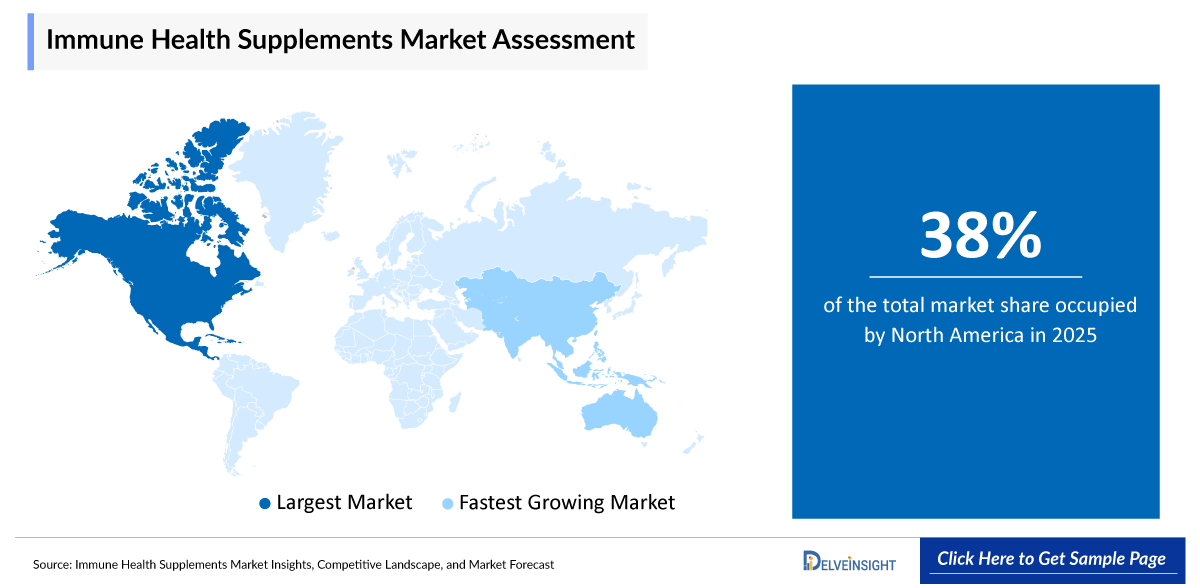
● North America dominated the global Immune Health Supplements market revenue with a 38% share in 2025, representing the highest regional market share globally.
Immune health supplements are dietary products, including vitamins, minerals, herbal and botanical extracts, probiotics and prebiotics, and functional foods and beverages, formulated to support, strengthen, or maintain the body's natural immune function. Because consumer demand spans everyday wellness maintenance, seasonal defense, and targeted respiratory or gut support, manufacturers develop broad product portfolios spanning multiple ingredient types, dosage formats, and sourcing methods to serve diverse consumer preferences and use occasions. The market is organized by product type across vitamins & minerals, herbal & botanical supplements, probiotics & prebiotics, functional foods & beverages, and others; by ingredient type, including vitamin C, vitamin D, vitamin A, vitamin E, and others; by dosage form across tablets, capsules, softgels, gummies, powders, and others; by source across plant-based, animal-based, microbial-based, synthetic, and fermentation-derived; and by application, led by general immune support, seasonal immune support, respiratory health support, and gut & immune health. Driven by rising health consciousness, an aging population, growing preference for natural and plant-based formulations, and the expanding role of e-commerce and direct-to-consumer channels, immune health supplements have become a central, resilient category within the global consumer wellness and preventive-healthcare industry.
Immune Health Supplements Market Key Growth Drivers
• Rising consumer health consciousness and the sustained post-pandemic focus on preventive wellness are driving structural demand, with vitamins, probiotics, and herbal extracts becoming a routine part of household health routines rather than an occasional purchase.
• The growing global aging population is expanding demand for immune-supportive nutrition, as older consumers face higher susceptibility to infections and seek supplementation to maintain immune resilience alongside overall health.
• Rising prevalence of chronic and lifestyle-related disorders, and the resulting nutrient gaps caused by processed diets and oxidative stress, is expanding consumer reliance on structured vitamin, mineral, and herbal immune-support routines.
• Growing consumer preference for natural, plant-based, and clean-label formulations is accelerating innovation across herbal extracts, whole-food vitamins, and fermentation-derived ingredients, exemplified by Amway's June 2025 launch of Nutrilite Triple Protect in India.
• Rapid growth of e-commerce and direct-to-consumer and subscription-based retail is broadening access and enabling ingredient-forward and clinically differentiated brands to reach consumers directly, outpacing traditional offline retail growth.
• Expanding scientific validation of probiotic strains and functional ingredients is driving product innovation and premiumization, as brands compete on clinically studied formulations rather than price alone.
• The convergence of preventive-health consumer behavior, an aging population, ingredient innovation, and e-commerce expansion is expected to sustain strong high-single-digit growth in the market through 2034.
Key Companies in Immune Health Supplements Market
The competitive landscape is led by the following active manufacturers:
• Nature's Bounty
• NOW Foods
• Glanbia plc
• Amway Corporation
• Herbalife Nutrition Ltd.
• Jarrow Formulas
• Life Extension
• Nature's Way
• Metagenics
• Garden of Life
Factors Contributing to the Growth of the Immune Health Supplements Market
Market Drivers
Rising Consumer Health Consciousness and Preventive Wellness
The most powerful driver of the Immune Health Supplements market is the sustained rise in consumer health consciousness and the shift toward preventive, self-directed wellness. Consumers emerged from the pandemic years markedly more attentive to immune function, and that attentiveness has not faded the way many other pandemic-era behaviors have. Vitamins, minerals, probiotics, and botanical extracts are now a routine part of many households' daily health regimens rather than an occasional, seasonal purchase. This behavioral shift spans age groups and is reinforced by growing access to health information online and through community wellness programs. As preventive-health habits become embedded in everyday routines, demand for immune health supplements across all product types and dosage formats expands directly, anchoring market growth through 2034.
Growing Global Aging Population
The expanding global aging population is a structural driver of immune health supplement demand. Older adults face naturally declining immune function and higher susceptibility to seasonal and respiratory infections, driving sustained reliance on vitamin, mineral, and herbal immune-support regimens. Rising life expectancy across North America, Europe, and Asia-Pacific is expanding the base of consumers seeking to maintain immune resilience as part of broader healthy-aging routines, alongside bone, joint, and cognitive health products. As the proportion of older consumers grows across major markets, the volume and frequency of immune supplement consumption rise in step, translating into durable, recurring demand across the forecast period.
Market Restraints
Despite strong momentum, the Immune Health Supplements market faces material constraints. Regulatory complexity is a significant barrier, as supplements are generally regulated as foods rather than drugs in most major markets, meaning pre-market efficacy approval is not required, which invites scrutiny, inconsistent quality standards, and periodic adverse-event concerns that can undermine consumer confidence. Extensive marketing of purported benefits, with comparatively less attention to potential risks or interactions, has drawn regulatory and medical-community concern, and a portion of emergency department visits are associated with adverse effects from dietary supplements. Differences in regulatory frameworks across countries complicate international expansion and compliance for manufacturers. Price sensitivity and the availability of low-cost private-label alternatives pressure margins for established brands, while a lack of consumer awareness and skepticism toward unsubstantiated immune-boosting claims in some markets can hamper adoption. Supply-chain dependence on specific botanical, vitamin, and probiotic raw-material sources creates exposure to sourcing disruption and price volatility. Together, these regulatory, competitive, and supply-chain barriers temper the pace of growth, even as the underlying drivers of health consciousness, an aging population, and ingredient innovation remain firmly intact.
Immune Health Supplements Market Segment Analysis
The immune health supplements market by product type (vitamins & minerals, herbal & botanical supplements, probiotics & prebiotics, functional foods & beverages, others), ingredient type (vitamin c, vitamin d, vitamin a, vitamin e, others), dosage form (tablets, capsules, softgels, gummies, powders, others), source (plant-based, animal-based, microbial-based, synthetic, fermentation-derived), application (general immune support, seasonal immune support, respiratory health support, gut & immune health, others), distribution channel (hospitals, specialty clinics, home care settings), and geography (North America, Europe, Asia-Pacific, and Rest of World).
By Product Type
Dominant Subsegment: Vitamins & Minerals.
The Vitamins & Minerals segment accounted for 39% of the Immune Health Supplements market in 2025. Vitamins & Minerals are the leading product type because they offer broad, well-established consumer acceptance across staples including vitamin C, vitamin D, zinc, and selenium, supported by decades of clinical recognition of their role in immune function. Their availability across virtually every retail and online channel, low price points relative to specialized formats, and suitability for daily multivitamin and single-nutrient regimens sustain very high, recurring purchase volumes across all age groups. The segment further benefits from steady product innovation, including combination formulas and enhanced-bioavailability delivery systems. While probiotics & prebiotics and functional foods & beverages are among the fastest-growing product types, propelled by rising interest in gut-immune science and convenient functional formats, the scale, affordability, and established clinical credibility of vitamins & minerals secure the segment's leadership across the forecast period.
By Ingredient Type
Dominant Subsegment: Vitamin C.
The Vitamin C segment accounted for 29% of the Immune Health Supplements market in 2025. Vitamin C is the leading ingredient type because it is one of the most widely recognized and extensively researched nutrients for immune support, valued as a potent antioxidant that protects against oxidative stress and supports multiple immune functions. Its inclusion across nearly every dosage format, from tablets and gummies to powders and functional beverages, and its established presence in combination formulas with zinc and elderberry, sustain broad and repeat consumer demand. Extensive scientific literature reinforcing its immune benefits continues to anchor consumer trust and purchase intent. While vitamin D is expanding quickly on the back of rising awareness of deficiency prevalence, and botanical actives such as elderberry are the fastest-growing ingredients, the depth of clinical recognition and formulation versatility of vitamin C secure its leadership across the forecast period.
Immune Health Supplements Market Region Analysis
Dominant Region: North America
North America accounted for 38% of the global Immune Health Supplements market revenue in 2025, representing the highest regional market share globally. The region's dominance reflects high consumer health awareness, a well-established nutraceuticals industry, high disposable income, and a dense network of retail, e-commerce, and direct-selling distribution. The United States leads the region on the strength of its mature dietary-supplement infrastructure, sizeable aging population, and a regulatory framework under the Dietary Supplement Health and Education Act that, while permitting rapid product innovation, also drives brands toward clinically supported formulations. Leading manufacturers including Nature's Bounty, NOW Foods, Nature's Way, Jarrow Formulas, Life Extension, Metagenics, and Garden of Life maintain deep domestic distribution, while direct-selling leaders Amway and Herbalife Nutrition sustain large distributor networks across the region. Continued growth in e-commerce, subscription-based reordering, and clean-label product innovation reinforces the region's continued leadership across the forecast period.
Fastest Growing Region: Asia-Pacific
Asia-Pacific is the fastest-growing region in the Immune Health Supplements market. The region's elevated CAGR is driven by rising health awareness, expanding middle-class disposable income, and rapid growth of e-commerce across China, Japan, India, South Korea, and Australia. China is expanding domestic nutraceutical manufacturing and e-commerce penetration, Japan continues to favor functional foods and beverages carrying immune-support claims, India is growing rapidly on the back of rising health consciousness and expanding direct-selling and online channels, exemplified by Amway India's 2025 launch of Nutrilite Triple Protect, and Australia benefits from a mature nutraceutical export industry. Government preventive-healthcare initiatives, growing urbanization, and rising consumer interest in traditional and botanical remedies are accelerating regional adoption, while local and multinational manufacturers scale production and align with international quality standards. The combination of population scale, rising incomes, and digital-retail expansion positions Asia-Pacific as the principal source of incremental growth over the forecast period.
Regional Commentary
North America
North America accounted for 36% of the global Immune Health Supplements market revenue in 2025. The United States dominates on the strength of its aging and chronically ill patient population, deep pharmaceutical R&D and manufacturing base, FDA regulatory leadership, and rapid uptake of newly approved oral biologic therapies, while robust reimbursement and well-developed retail and online pharmacy infrastructure reinforce its leadership.
Europe
Europe is a large and mature regional market, supported by established EMA regulatory frameworks, strong generic manufacturing capacity across Germany, France, the United Kingdom, Italy, and Spain, and universal healthcare systems that sustain high chronic-disease treatment rates. Continued expansion of oral biologic access and generics competition reinforce the region’s role as a major consumer and producer of oral pharmaceuticals.
Asia-Pacific
Asia-Pacific is the fastest-growing region, propelled by rising chronic-disease incidence, expanding healthcare infrastructure and insurance coverage, and rapid scale-up of domestic generic and branded manufacturing across China, Japan, India, South Korea, and Australia. China’s manufacturing expansion, Japan’s large aging population, and India’s low-cost generic production are accelerating regional market growth.
Rest of World
The Rest of World region, spanning Latin America, the Middle East, and Africa, is an emerging growth frontier. Expanding healthcare access, rising chronic-disease prevalence, growing local generic manufacturing, and efforts to align regulatory frameworks with international GMP standards are gradually broadening access to both branded and generic oral therapies across the region.
Immune Health Supplements Market Competitive Landscape
The Immune Health Supplements market is classified as Moderately Fragmented. A group of large, diversified pharmaceutical companies with global manufacturing scale and broad oral portfolios, including Pfizer, Merck, Johnson & Johnson, and Roche, anchor the branded top tier, while companies such as Novo Nordisk, Eli Lilly, and AbbVie compete intensely through next-generation oral biologic and peptide innovation, and thousands of generic manufacturers compete on cost and volume across off-patent categories, increasing competition throughout the value chain.
The competitive landscape can be evaluated across the following dimensions:
• Market concentration: Fragmented, with large multi-channel brand leaders competing alongside a broad field of specialized, clinically oriented, and practitioner-channel manufacturers.
• Leading players: Nature's Bounty, NOW Foods, Amway Corporation, and Herbalife Nutrition Ltd. anchor the top tier through brand equity, distribution scale, and direct-selling reach.
• Geographic reach: Leaders operate global, multi-channel distribution networks spanning retail, e-commerce, and direct selling; Amway and Herbalife Nutrition maintain distributor networks across more than 80 markets combined.
• Product portfolio strength: Top players offer broad portfolios spanning vitamins & minerals, herbal & botanical supplements, probiotics & prebiotics, and functional foods & beverages across multiple dosage formats.
• Ingredient sourcing: Access to plant-based, fermentation-derived, and clinically studied probiotic strains is a decisive advantage as clean-label and scientifically validated positioning gains importance.
• Strategic partnerships: Tie-ups with startups, academic institutions, and ingredient innovators, such as Nature's Way's Innovation Challenge and Herbalife Nutrition's formation of HBL Link Bioscience, extend innovation reach.
• M&A activity: Active portfolio expansion, including Herbalife Nutrition's 2025 acquisitions of Pruvit Ventures and Pro2col Health, and Glanbia's continued ingredient and category expansion.
• Manufacturing capabilities: Scale manufacturing across tablets, capsules, softgels, gummies, and powders, alongside quality certifications such as B Corp status, are key competitive moats.
• Innovation focus: Probiotic strain science, personalized nutrition, plant-based and fermentation-derived sourcing, and clean-label formulation are central areas of ongoing innovation.
Immune Health Supplements Market Recent Developmental Activities
In 2026, Metagenics reinforced its B Corp certification commitments and expanded its immune-support and practitioner-channel product lines to strengthen its position among clinically oriented supplement brands. Strategic significance: Reinforces Metagenics' practitioner-channel credibility and science-based positioning.
In 2026, Jarrow Formulas continued to broaden its probiotic and immune-support portfolio with clinically studied strain formulations to support growing consumer demand for gut-immune products. Strategic significance: Strengthens Jarrow's positioning in the fast-growing probiotics & prebiotics segment.
Immune Health Supplements Market Segmentation
Immune Health Supplements Market by Product Type
• Vitamins & Minerals
• Herbal & Botanical Supplements
• Probiotics & Prebiotics
• Functional Foods & Beverages
• Others
Immune Health Supplements Market by Ingredient Type
• Vitamin C
• Vitamin D
• Vitamin A
• Vitamin E
• Others
Immune Health Supplements Market by Dosage Form
• Tablets
• Capsules
• Softgels
• Gummies
• Powders
• Others
Immune Health Supplements Market by Source
• Plant-Based
• Animal-Based
• Microbial-Based
• Synthetic
• Fermentation-Derived
Immune Health Supplements Market by Application
• General Immune Support
• Seasonal Immune Support
• Respiratory Health Support
• Gut & Immune Health
• Others
Immune Health Supplements Market by Distribution Channel
• Hospitals
• Specialty Clinics
• Home Care Settings
Immune Health Supplements Market by Geography
• North America Immune Health Supplements Market
▪ United States Immune Health Supplements Market Size in USD million (2023-2034)
▪ Canada Immune Health Supplements Market Size in USD million (2023-2034)
▪ Mexico Immune Health Supplements Market Size in USD million (2023-2034)
• Europe Immune Health Supplements Market
▪ Germany Immune Health Supplements Market Size in USD million (2023-2034)
▪ United Kingdom Immune Health Supplements Market Size in USD million (2023-2034)
▪ France Immune Health Supplements Market Size in USD million (2023-2034)
▪ Italy Immune Health Supplements Market Size in USD million (2023-2034)
▪ Spain Immune Health Supplements Market Size in USD million (2023-2034)
▪ Rest of Europe Immune Health Supplements Market Size in USD million (2023-2034)
• Asia-Pacific Immune Health Supplements Market
▪ China Immune Health Supplements Market Size in USD million (2023-2034)
▪ Japan Immune Health Supplements Market Size in USD million (2023-2034)
▪ India Immune Health Supplements Market Size in USD million (2023-2034)
▪ Australia Immune Health Supplements Market Size in USD million (2023-2034)
▪ South Korea Immune Health Supplements Market Size in USD million (2023-2034)
▪ Rest of Asia-Pacific Immune Health Supplements Market Size in USD million (2023-2034)
• Rest of the World (RoW) Immune Health Supplements Market
▪ Middle East Immune Health Supplements Market Size in USD million (2023-2034)
▪ Africa Immune Health Supplements Market Size in USD million (2023-2034)
▪ South America Immune Health Supplements Market Size in USD million (2023-2034)
Key Takeaways from the Immune Health Supplements Market Report Study
• Market size analysis for the current Immune Health Supplements market size (2025), and market forecast for 9 years (2026 to 2034).
• Top key product/technology developments, mergers, acquisitions, partnerships, and joint ventures that happened over the last 3 years.
• Key companies dominating the global Immune Health Supplements market.
• Various opportunities available for competitors in the Immune Health Supplements market space.
• What are the top-performing segments in 2025? How will these segments perform in 2034?
• Which are the top-performing regions and countries in the current Immune Health Supplements market scenario?
• Which are the regions and countries where companies should concentrate their opportunities for Immune Health Supplements market growth in the future?
Target audience who can benefit from this Immune Health Supplements market report study
• Immune Health Supplements product providers
• Research organizations and consulting companies
• Immune Health Supplements -related organizations, associations, forums, and other alliances
• Government and corporate offices
• Start-up companies, venture capitalists, and private equity firms
• Distributors and traders dealing in Immune Health Supplements
• Various end-users who want to know more about the Immune Health Supplements market and the latest technological developments in the Immune Health Supplements market.