
Implantable Cardioverter Defibrillators Market Summary
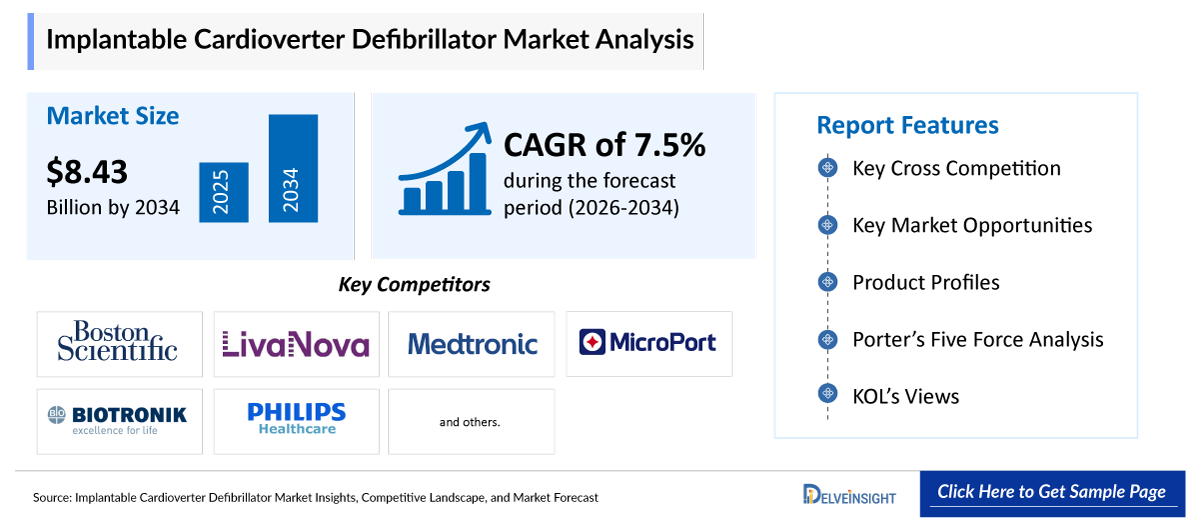
- The Implantable Cardioverter Defibrillator (ICD) market is estimated at USD 4.40 billion in 2025 and is projected to reach USD 8.43 billion by 2034. Growth is anchored in the rising global burden of sudden cardiac arrest and arrhythmias, the clinical shift toward subcutaneous and extravascular systems that avoid transvenous lead complications, and expanding remote monitoring and reimbursement support across developed healthcare systems.
- The global ICD market is growing at a CAGR of 7.5% during the forecast period from 2026 to 2034.
- By product type, the Transvenous Implantable Cardioverter Defibrillators (TV-ICDs) segment dominated the ICD market with an 88% share in 2025.
- By implantation approach, the Trans-Venous Implantable Cardioverter Defibrillators segment dominated the ICD market with an 87% share in 2025.
- By indication, the Tachycardia segment dominated the ICD market with a 52% share in 2025.
- By end-users, the Hospitals segment dominated the ICD market with a 78% share in 2025.
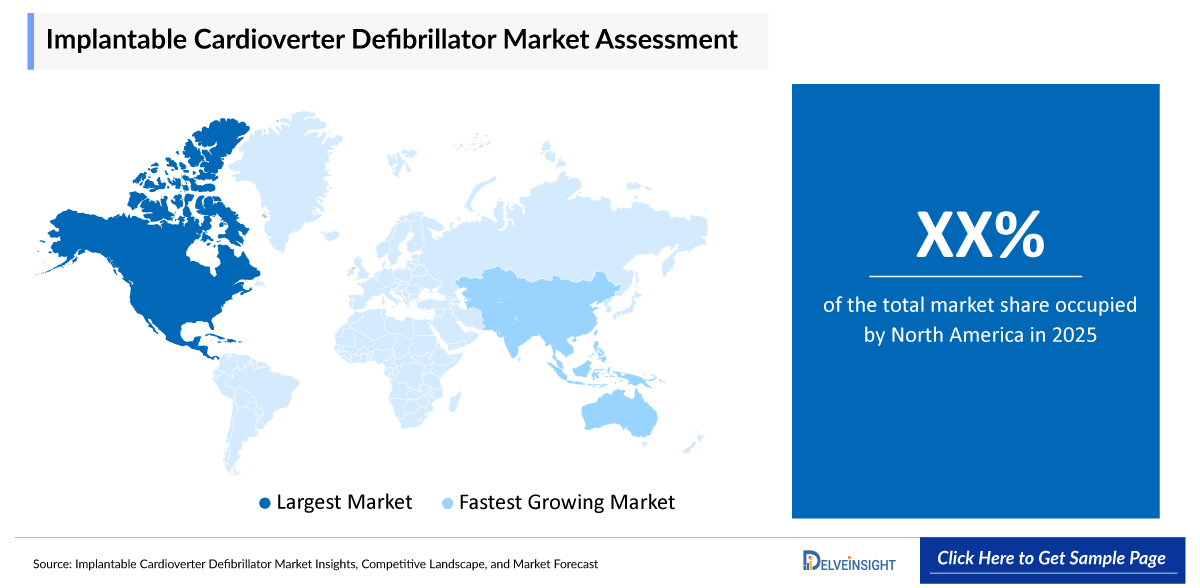
- Europe dominated the global ICD market revenue with a 50% share in 2025, representing the highest regional market share globally.
An implantable cardioverter defibrillator (ICD) is a battery-powered electronic device implanted in the chest that continuously monitors heart rhythm and delivers an electrical shock or anti-tachycardia pacing when it detects a life-threatening arrhythmia such as ventricular tachycardia or ventricular fibrillation. ICDs are indicated for both primary prevention in high-risk patients and secondary prevention in patients who have survived a prior cardiac arrest, and they are increasingly used to manage bradycardia, tachycardia, and heart failure. The market is organized by product type across transvenous ICDs (further split into single-chamber and dual-chamber systems), subcutaneous ICDs, and other emerging designs such as extravascular systems; by implantation approach across subcutaneous, transvenous, and other approaches; by indication across bradycardia, tachycardia, heart failure, and other arrhythmic conditions; and by end-user across hospitals, specialty clinics, ambulatory surgical centers, and others. Driven by the rising incidence of sudden cardiac death, an aging population with growing heart-failure prevalence, and continuous device innovation toward smaller, longer-lasting, MRI-conditional, and lead-free systems, ICDs have become a cornerstone therapy in the global cardiac rhythm management landscape.
Implantable Cardioverter Defibrillator Market Key Growth Drivers
- The rising global burden of sudden cardiac arrest and life-threatening arrhythmias is driving demand, with an estimated 450,000 sudden cardiac death cases reported annually in the United States and roughly 5 million cases occurring worldwide each year.
- The growing global geriatric population and the rising prevalence of heart failure and coronary artery disease are expanding the eligible patient pool for both primary and secondary prevention ICD implantation.
- A pronounced clinical shift toward subcutaneous and extravascular systems, exemplified by Medtronic's Aurora EV-ICD and Boston Scientific's EMBLEM MRI S-ICD, is reducing lead-related complications and broadening candidate eligibility.
- Expanding remote monitoring and diagnostic capability is improving patient management, with roughly a quarter of newly implanted ICDs now featuring remote monitoring functionality.
- Favorable reimbursement frameworks and steady regulatory approvals across the United States, Europe, and Japan are sustaining implantation volumes in mature healthcare systems.
- Rising investment and strategic consolidation, including MicroPort CardioFlow's approximately USD 680 million share-based acquisition of MicroPort CRM in December 2025, are strengthening manufacturing scale and pipeline depth.
- Growing screening initiatives, genetic-risk-informed patient selection, and expanding electrophysiology infrastructure in emerging markets are broadening access to ICD therapy.
- The convergence of demographic aging, arrhythmia burden, lead-free device innovation, and reimbursement support is expected to sustain steady mid-single-digit-to-high-single-digit growth in the market through 2034.
Key Companies in Implantable Cardioverter Defibrillator Market
The competitive landscape is led by the following active manufacturers:
- Boston Scientific Corporation
- LivaNova PLC
- Medtronic
- MicroPort Scientific Corporation
- Abbott
- BIOTRONIK
- Japan Lifeline Co., Ltd
- Koninklijke Philips N.V.
- NIHON KOHDEN CORPORATION
- FUKUDA DENSHI
For illustrative purposes, only the top 10 companies are listed in the Table of Contents. The report may include analysis and references to additional companies relevant to the market assessment.
Implantable Cardioverter Defibrillator Market Size
The following snapshot summarizes the principal report metrics for the Implantable Cardioverter Defibrillator market.
|
Report Metrics |
Details |
|
2025 Market Size |
USD 4.40 billion |
|
2034 Projected Market Size |
USD 8.43 billion |
|
Growth Rate (2026-2034) |
7.5% CAGR |
|
Largest Market |
Europe |
|
Fastest Growing Market |
Asia-Pacific |
|
Market Structure |
Highly Consolidated |
All market values are expressed in USD and represent DelveInsight estimates synthesized from primary and secondary research.
Factors Contributing to the Growth of the Implantable Cardioverter Defibrillator Market
Market Drivers
Rising Burden of Sudden Cardiac Arrest and Arrhythmias
The most fundamental driver of the ICD market is the persistently high global burden of sudden cardiac arrest and life-threatening ventricular arrhythmias. An estimated 450,000 sudden cardiac death events occur annually in the United States alone, and global estimates place total incidence at roughly 5 million cases per year. ICDs remain the gold-standard therapy for both primary prevention in high-risk patients with structural heart disease and secondary prevention in patients who have already survived a cardiac arrest. As cardiovascular disease prevalence continues to climb across both developed and emerging economies, the pool of patients eligible for guideline-directed ICD implantation expands correspondingly, anchoring durable demand for device manufacturers through 2034.
Aging Population and Growing Prevalence of Heart Failure
The global aging population is expanding the population at risk of arrhythmic sudden death and chronic heart failure, a leading indication for ICD and cardiac resynchronization therapy defibrillator implantation. Improved survival rates following myocardial infarction have paradoxically increased the number of patients living with reduced ejection fraction and elevated arrhythmic risk, a population that guidelines direct toward prophylactic ICD therapy. As life expectancy rises across North America, Europe, and increasingly Asia-Pacific, the structural demand base for ICD implantation continues to widen, supporting sustained procedural volumes across the forecast period.
Technological Shift Toward Extravascular and Subcutaneous Systems
A defining trend reshaping the ICD market is the shift away from conventional transvenous leads toward subcutaneous and extravascular architectures that avoid placing hardware inside the heart and vasculature. Medtronic's Aurora EV-ICD, approved by the FDA in 2023 and the subject of an expanded-indication approval in March 2026, and Boston Scientific's EMBLEM MRI S-ICD system, together with its investigational mCRM pairing with the EMPOWER leadless pacemaker, illustrate the pace of innovation. Abbott's January 2026 collaboration with AtaCor Medical to develop a parasternal extravascular ICD system, with a pivotal ALARION EV clinical trial planned for 2026, signals that a third major vendor is entering this space. These lead-free and extravascular designs reduce long-term complications such as lead fracture, venous occlusion, and infection, broadening the pool of eligible patients and reinforcing replacement-cycle demand.
Expanding Remote Monitoring and AI-Enabled Diagnostics
Remote monitoring and connected diagnostics are becoming standard features of modern ICD systems, improving early detection of arrhythmic events and device or lead malfunction while reducing unnecessary in-person follow-up visits. Roughly a quarter of newly implanted ICDs now incorporate remote monitoring capability, and heart-failure diagnostic algorithms embedded within ICD and CRT-D platforms are helping physicians intervene earlier in disease progression. As payors and health systems increasingly value the reduced hospitalization and readmission rates associated with connected cardiac devices, demand for remote-monitoring-enabled ICDs continues to grow across the forecast period.
Favorable Reimbursement and Regulatory Approvals in Developed Markets
Stable reimbursement frameworks and continued regulatory approvals across the United States, Europe, and Japan are sustaining ICD implantation volumes. Europe's well-established public and private reimbursement systems, combined with strong physician awareness of sudden cardiac arrest prevention, underpin the region's leading global revenue share. Regulatory approvals such as Boston Scientific's EMBLEM MRI S-ICD clearance and Medtronic's expanded extravascular ICD indication reinforce sustained commercial demand in these mature markets, while emerging economies are gradually improving reimbursement access for cardiac rhythm management devices.
Rising Investment, M&A, and Strategic Consolidation
Strategic consolidation is reshaping the competitive landscape and expanding manufacturing and R&D scale. In December 2025, MicroPort CardioFlow's shareholders approved a roughly USD 680 million share-based acquisition of MicroPort CRM, uniting structural-heart and cardiac-rhythm-management portfolios under a single global platform. Continued portfolio expansion by leading players, alongside collaborations such as Abbott's partnership with AtaCor Medical, reflects sustained capital commitment to next-generation ICD technology and is expected to accelerate innovation and market access through the forecast period.
Growing Awareness, Screening, and Early Diagnosis Initiatives
Expanding awareness campaigns, genetic-risk-informed patient selection, and growing electrophysiology infrastructure are improving early identification of patients who would benefit from ICD therapy. In Japan, professional societies have incorporated genetic-risk markers into ICD patient-selection guidance, and hospitals have expanded implantation programs for high-risk patients, contributing to double-digit year-over-year growth in S-ICD sales reported by Japan Lifeline in May 2025. Similar screening and awareness initiatives across other Asia-Pacific and emerging markets are expected to broaden the addressable patient population over the forecast period.
Market Restraints
Despite steady momentum, the ICD market faces material constraints. High device and procedure costs, particularly for dual-chamber, CRT-D, and next-generation extravascular systems, limit adoption in price-sensitive and reimbursement-constrained markets. Procedural risks associated with transvenous lead placement, including lead fracture, venous occlusion, and device-related infection, continue to weigh on long-term outcomes and drive scrutiny of implant technique. A shortage of trained electrophysiologists and cardiac rhythm management specialists constrains implantation capacity in many emerging economies, while stringent regulatory and post-market surveillance requirements, including device recalls such as the 2023 Class I recall affecting certain Medtronic ICDs and CRT-Ds, lengthen development timelines and raise compliance costs. Reimbursement policies for advanced and extravascular ICD systems remain uneven outside major developed markets, and competition from pharmacological and catheter-ablation alternatives for certain arrhythmia indications tempers incremental volume growth. Together, these cost, procedural, workforce, and regulatory barriers moderate the pace of expansion even as the underlying drivers of demographic aging, arrhythmia burden, and device innovation remain firmly intact.
Implantable Cardioverter Defibrillator Market Segment Analysis
The implantable cardioverter defibrillator market by product type (transvenous implantable cardioverter defibrillators (tv-icds) [single-chamber icds and dual-chamber icds], subcutaneous implantable cardioverter defibrillators (s-icds), and others), implantation approach (subcutaneous implantable cardioverter defibrillators, trans-venous implantable cardioverter defibrillators, and others), indication (bradycardia, tachycardia, heart failure, and other), end-users (hospitals, specialty clinics, ambulatory surgical centers, and others), and geography (North America, Europe, Asia-Pacific, and Rest of World).
By Product Type
Dominant Subsegment: Transvenous Implantable Cardioverter Defibrillators (TV-ICDs).
The Transvenous Implantable Cardioverter Defibrillators (TV-ICDs) segment, comprising single-chamber and dual-chamber systems, accounted for 88% of the ICD market in 2025. TV-ICDs are the leading product type because they offer well-established, decades-long clinical evidence, the ability to deliver anti-tachycardia pacing and bradycardia backup pacing in addition to defibrillation, and broad reimbursement coverage across developed and emerging markets. Dual-chamber TV-ICDs are increasingly preferred over single-chamber systems for their improved arrhythmia discrimination and synchronized atrioventricular pacing, particularly in patients with complex conduction disease. Physician familiarity, comprehensive lead and generator compatibility, and the ability to pair with cardiac resynchronization therapy for heart-failure patients reinforce transvenous systems' scale advantage. While Subcutaneous Implantable Cardioverter Defibrillators (S-ICDs) are the fastest-growing product type, propelled by their avoidance of intracardiac and intravascular leads, the breadth of clinical indications and pacing functionality unique to transvenous systems secure TV-ICDs' leadership across the forecast period.
By Implantation Approach
Dominant Subsegment: Trans-Venous Implantable Cardioverter Defibrillators.
The Trans-Venous Implantable Cardioverter Defibrillators segment accounted for 87% of the ICD market in 2025. The trans-venous approach remains the leading implantation method because it is the most extensively validated technique for delivering defibrillation, anti-tachycardia pacing, and bradycardia pacing through a single integrated system, and because the global installed base of trained implanting physicians and compatible infrastructure is overwhelmingly oriented toward transvenous procedures. This approach also supports pairing with cardiac resynchronization therapy in heart-failure patients, a capability that purely subcutaneous systems do not offer. The subcutaneous implantation approach is growing quickly as physicians increasingly favor extrathoracic lead placement for patients at elevated risk of vascular or infectious complications, and Medtronic's extravascular Aurora EV-ICD and the Abbott-AtaCor collaboration are expanding the 'Others' category of lead placement outside the heart and veins. Nonetheless, the clinical versatility and procedural familiarity of the trans-venous approach secure its leadership across the forecast period.
By Indication
Dominant Subsegment: Tachycardia.
The tachycardia segment accounted for 52% of the ICD market in 2025. Tachycardia, encompassing life-threatening ventricular tachycardia and ventricular fibrillation, is the leading indication because it represents the core clinical rationale for ICD implantation in both primary and secondary prevention of sudden cardiac death. Guideline-directed therapy for patients with reduced ejection fraction, prior myocardial infarction, or inherited arrhythmia syndromes centers on tachyarrhythmia detection and termination, making this the largest and most consistent driver of implantation volume. Heart failure is the fastest-growing indication, as the expanding population of patients with chronic systolic heart failure increasingly receives ICD or CRT-D therapy for prophylactic protection, while bradycardia and other conduction disorders continue to support steady demand for dual-chamber and pacing-capable systems. The clinical centrality and volume of tachyarrhythmia management secure this segment's leadership across the forecast period.
By End-Users
Dominant Subsegment: Hospitals.
The hospitals segment accounted for 78% of the ICD market in 2025. Hospitals are the leading end-user because ICD implantation is a specialized electrophysiology procedure requiring catheterization laboratories, advanced imaging, cardiac surgical backup, and postoperative monitoring capabilities that are concentrated in hospital settings. The higher volume and acuity of sudden cardiac arrest and heart-failure patients treated in hospitals, combined with the availability of on-site electrophysiologists and device specialists, sustain hospitals' central role in ICD implantation and follow-up. Ambulatory surgical centers are the fastest-growing end-user, benefiting from the increasing procedural simplicity of subcutaneous and extravascular systems that reduce the need for fluoroscopic lead placement, while specialty cardiology clinics continue to expand their role in device follow-up and remote monitoring. Nonetheless, the procedural complexity and acuity of ICD implantation keep hospitals the dominant end-user across the forecast period.
Implantable Cardioverter Defibrillator Market Region Analysis
Dominant Region: Europe
Europe accounted for 50% of the global ICD market revenue in 2025, representing the highest regional market share globally. The region's dominance reflects widespread ICD implant adoption, favorable and comprehensive reimbursement policies, and high physician and patient awareness of sudden cardiac arrest prevention across major Western European healthcare systems. Europe hosts a dense network of established electrophysiology centers and benefits from early and broad access to CE-marked subcutaneous and MRI-conditional ICD systems from leading manufacturers. Strong national reimbursement frameworks in Germany, the United Kingdom, France, Italy, and Spain, combined with structured cardiac screening programs, sustain high implantation rates relative to population. Continued device innovation, including expanding S-ICD and extravascular ICD adoption, and steady replacement-cycle demand from an aging implanted-device base anchor the region's continued leadership across the forecast period.
Fastest Growing Region: Asia-Pacific
Asia-Pacific is the fastest-growing region in the ICD market. The region's elevated CAGR is driven by rising cardiovascular disease incidence, rapid expansion of electrophysiology infrastructure, and growing healthcare investment across China, Japan, India, South Korea, and Australia. Japan Lifeline reported double-digit year-over-year growth in S-ICD sales in May 2025, reflecting broader physician uptake and expanded access through additional electrophysiology centers, while Japanese professional societies have incorporated genetic-risk markers into ICD patient-selection guidance. China is expanding cardiac catheterization and electrophysiology laboratory capacity, India is broadening access to advanced cardiac rhythm management devices through growing private healthcare investment, and multinational manufacturers including MicroPort CRM continue to expand regional post-market clinical study participation. The combination of rising disease burden, infrastructure build-out, and expanding physician training positions Asia-Pacific as the principal source of incremental growth over the forecast period.
Regional Commentary
North America
North America is a large and mature ICD market, supported by high awareness of sudden cardiac arrest prevention, well-established electrophysiology infrastructure, and continuous device innovation from Medtronic, Boston Scientific, and Abbott. Regulatory approvals such as Medtronic's expanded extravascular ICD indication in March 2026 and Abbott's January 2026 collaboration with AtaCor Medical reinforce the region's position at the forefront of next-generation ICD technology, while strong private and public reimbursement sustains steady implantation volumes.
Europe
Europe accounted for 50% of the global ICD market revenue in 2025. The region's leadership is supported by comprehensive reimbursement frameworks, high physician awareness, and early adoption of subcutaneous and MRI-conditional ICD systems across Germany, France, the United Kingdom, Italy, and Spain, with manufacturing and R&D presence from MicroPort CRM and LivaNova's legacy cardiac rhythm management operations reinforcing the region's central role in the global ICD supply chain.
Asia-Pacific
Asia-Pacific is the fastest-growing region, propelled by rising cardiovascular disease incidence, expanding electrophysiology infrastructure, and growing healthcare investment across China, Japan, India, South Korea, and Australia. Japan Lifeline's double-digit S-ICD sales growth, Japan's genetic-risk-informed patient-selection guidelines, and expanding hospital implantation programs for high-risk patients are accelerating regional adoption and clinical-trial activity.
Rest of World
The Rest of the World region, spanning Latin America, the Middle East, and Africa, is an emerging growth frontier. Expanding cardiovascular care and electrophysiology infrastructure, rising awareness of sudden cardiac arrest prevention, and gradual improvement in reimbursement access are broadening ICD adoption, while international partnerships and physician training programs support the build-out of regional implantation capacity.
Implantable Cardioverter Defibrillator Market Competitive Landscape
The ICD market is classified as Highly Consolidated. A small group of globally integrated players with deep electrophysiology portfolios and multi-decade clinical evidence, including Medtronic, Boston Scientific, Abbott, and BIOTRONIK, anchors the top tier and accounts for the large majority of global implant volume, while specialized and regionally strong providers such as MicroPort Scientific Corporation, LivaNova PLC, Japan Lifeline, Koninklijke Philips N.V., NIHON KOHDEN CORPORATION, FUKUDA DENSHI, and Defibtech, LLC compete through niche technology, regional distribution strength, and adjacent cardiac diagnostic and resuscitation portfolios.
The competitive landscape can be evaluated across the following dimensions:
- Market concentration: Highly consolidated, with four global leaders accounting for the large majority of implant volume and a fast-growing field of extravascular and subcutaneous ICD innovators.
- Leading players: Medtronic, Boston Scientific, Abbott, and BIOTRONIK anchor the top tier through decades of clinical evidence, broad device portfolios, and global distribution networks.
- Geographic reach: Leaders operate global, regionally distributed manufacturing and distribution networks; MicroPort CRM manufactures across Clamart (France), Saluggia (Italy), and Santo Domingo (Dominican Republic).
- Product portfolio strength: Top players offer end-to-end transvenous, subcutaneous, and extravascular ICD systems alongside cardiac resynchronization therapy defibrillators and remote monitoring platforms.
- Technology leadership: Ownership of differentiated lead-free and extravascular platforms, including Medtronic's Aurora EV-ICD and Boston Scientific's EMBLEM MRI S-ICD, is a decisive competitive advantage.
- Strategic partnerships: Collaborations such as Abbott's January 2026 partnership with AtaCor Medical on a parasternal extravascular ICD system extend technology reach into next-generation device categories.
- M&A activity: Active consolidation, including MicroPort CardioFlow's approximately USD 680 million share-based acquisition of MicroPort CRM approved by shareholders in December 2025.
- Manufacturing capabilities: Miniaturized generator design, MRI-conditional labeling, extended-longevity batteries, and automated lead-connector systems are key competitive moats.
- Innovation focus: Extravascular and leadless pacing integration, AI-enabled heart-failure diagnostics, remote monitoring connectivity, and genetic-risk-informed patient selection.
Implantable Cardioverter Defibrillator Market Recent Developmental Activities
In March 2026, Medtronic received FDA approval for an expanded indication for its extravascular implantable cardioverter defibrillator system, broadening the eligible patient population for lead-free defibrillation therapy. Strategic significance: Extends the addressable patient base for Medtronic's Aurora EV-ICD platform and reinforces its leadership in extravascular defibrillation.
In January 2026, Abbott announced a collaboration with AtaCor Medical to advance a next-generation investigational parasternal extravascular implantable cardioverter defibrillator system, with a pivotal ALARION EV clinical trial planned for 2026. Strategic significance: Positions Abbott to become a third major vendor offering an extravascular ICD system alongside Medtronic and Boston Scientific.
In December 2025, MicroPort CardioFlow Medtech Corporation received shareholder approval for its strategic merger with MicroPort CRM through a share-based transaction valued at approximately USD 680 million, integrating structural-heart and cardiac-rhythm-management portfolios. Strategic significance: Builds an integrated global platform spanning ICDs, CRT devices, pacemakers, and structural heart therapies.
In May 2025, MicroPort CRM announced the first implantation in Japan under its international post-market clinical study PIANO, assessing the safety and performance of its commercially available pacemakers, ICDs, and CRT-D devices in line with European MDR requirements. Strategic significance: Expands Japan-focused clinical evidence generation and post-market surveillance for MicroPort's cardiac rhythm management portfolio.
In May 2025, Japan Lifeline Co., Ltd, reported double-digit year-over-year growth in S-ICD sales, reflecting broader physician uptake and expanded access through additional electrophysiology centers across Japan. Strategic significance: Reinforces Japan Lifeline's distribution strength and Japan's accelerating adoption of subcutaneous ICD therapy.
In March 2025, the TRANSITION-JAPAN observational study launched across multiple centers in Japan to assess clinical outcomes for patients using wearable and implantable defibrillators, strengthening domestic evidence generation. Strategic significance: Builds regional clinical evidence supporting continued ICD adoption and guideline development in Japan.
In January 2025, Boston Scientific Corporation received FDA approval for its EMBLEM MRI S-ICD System, allowing patients with the fully subcutaneous defibrillator to safely undergo full-body magnetic resonance imaging. Strategic significance: Removes a key adoption barrier for subcutaneous ICD therapy and strengthens Boston Scientific's competitive position against transvenous systems.
In 2024, BIOTRONIK announced it would exclusively provide its proprietary DX single-chamber ICD models for future single-chamber implantations, leveraging floating atrial-sensing dipole technology to improve arrhythmia discrimination without an atrial lead. Strategic significance: Differentiates BIOTRONIK's single-chamber portfolio and reinforces its position in cost-sensitive single-chamber implantation settings.
In October 2023, MicroPort CRM launched its ULYS implantable cardioverter defibrillator and INVICTA defibrillation leads in Japan, expanding its transvenous ICD portfolio in the region. Strategic significance: Broadens MicroPort's transvenous ICD footprint in a key Asia-Pacific growth market.
In October 2023, Medtronic received FDA approval for its Aurora EV-ICD MRI SureScan system and Epsila EV MRI SureScan defibrillation lead, the first extravascular ICD system commercially available to U.S. patients with a lead placed outside the heart and veins. Strategic significance: Establishes a new lead-free ICD category and directly targets patients previously limited to subcutaneous-only alternatives.
Implantable Cardioverter Defibrillator Market Segmentation
Implantable Cardioverter Defibrillator Market by Product Type
- Transvenous Implantable Cardioverter Defibrillators (TV-ICDs)
- Single-Chamber ICDs
- Dual-Chamber ICDs
- Subcutaneous Implantable Cardioverter Defibrillators (S-ICDs)
- Others
Implantable Cardioverter Defibrillator (ICD) Market by Implantation Approach
- Subcutaneous Implantable Cardioverter Defibrillators
- Trans-Venous Implantable Cardioverter Defibrillators
- Others
Implantable Cardioverter Defibrillator (ICD) Market by Indication
- Bradycardia
- Tachycardia
- Heart Failure
- Other
Implantable Cardioverter Defibrillator (ICD) Market by End-Users
- Hospitals
- Specialty Clinics
- Ambulatory Surgical Centers
- Others
Implantable Cardioverter Defibrillator Market by Geography
- North America Implantable Cardioverter Defibrillator Market
- United States Implantable Cardioverter Defibrillator Market Size in USD million (2023-2034)
- Canada Implantable Cardioverter Defibrillator Market Size in USD million (2023-2034)
- Mexico Implantable Cardioverter Defibrillator Market Size in USD million (2023-2034)
- Europe Implantable Cardioverter Defibrillator Market
- Germany Implantable Cardioverter Defibrillator Market Size in USD million (2023-2034)
- United Kingdom Implantable Cardioverter Defibrillator Market Size in USD million (2023-2034)
- France Implantable Cardioverter Defibrillator Market Size in USD million (2023-2034)
- Italy Implantable Cardioverter Defibrillator Market Size in USD million (2023-2034)
- Spain Implantable Cardioverter Defibrillator Market Size in USD million (2023-2034)
- Rest of Europe Implantable Cardioverter Defibrillator Market Size in USD million (2023-2034)
- Asia-Pacific Implantable Cardioverter Defibrillator Market
- China Implantable Cardioverter Defibrillator Market Size in USD million (2023-2034)
- Japan Implantable Cardioverter Defibrillator Market Size in USD million (2023-2034)
- India Implantable Cardioverter Defibrillator Market Size in USD million (2023-2034)
- Australia Implantable Cardioverter Defibrillator Market Size in USD million (2023-2034)
- South Korea Implantable Cardioverter Defibrillator Market Size in USD million (2023-2034)
- Rest of Asia-Pacific Implantable Cardioverter Defibrillator Market Size in USD million (2023-2034)
- Rest of the World (RoW) Implantable Cardioverter Defibrillator Market
- Middle East Implantable Cardioverter Defibrillator Market Size in USD million (2023-2034)
- Africa Implantable Cardioverter Defibrillator Market Size in USD million (2023-2034)
- South America Implantable Cardioverter Defibrillator Market Size in USD million (2023-2034)
Implantable Cardioverter Defibrillator Market Recent Industry Trends and Milestones (2023-2026)
|
Category |
Key Developments |
|
Implantable Cardioverter Defibrillator Market Product Approval |
Regulatory momentum is expanding commercial demand. The FDA approved Boston Scientific's EMBLEM MRI S-ICD System in January 2025, enabling full-body MRI compatibility for subcutaneous defibrillator patients, and granted Medtronic an expanded extravascular ICD indication in March 2026. Abbott's January 2026 collaboration with AtaCor Medical targets a further extravascular ICD approval pathway. Each approval creates durable demand for compliant manufacturing, clinical training, and reliable device supply across leading vendors. |
|
Implantable Cardioverter Defibrillator Market Expansion |
Manufacturers broadened clinical and distribution capacity across the value chain. MicroPort CRM announced the first implantation in Japan under its PIANO post-market clinical study in May 2025, Japan Lifeline reported double-digit S-ICD sales growth the same month, and the TRANSITION-JAPAN observational study launched in March 2025 to strengthen regional clinical evidence for wearable and implantable defibrillators. |
|
Implantable Cardioverter Defibrillator Market Investment |
Capital and consolidation accelerated. MicroPort CardioFlow's shareholders approved a roughly USD 680 million share-based acquisition of MicroPort CRM in December 2025, uniting structural-heart and cardiac-rhythm-management portfolios. Abbott's collaboration with AtaCor Medical and continued R&D investment by Medtronic and Boston Scientific in extravascular platforms reflect sustained capital commitment to next-generation ICD technology. |
|
Company Strategy |
Medtronic: Extravascular ICD leadership through the Aurora EV-ICD platform and its March 2026 expanded indication. Boston Scientific: Subcutaneous ICD leadership through the EMBLEM MRI S-ICD System and investigational mCRM leadless pacing integration. Abbott: Entering extravascular ICD technology through its AtaCor Medical collaboration. BIOTRONIK: Differentiated single-chamber DX technology. MicroPort Scientific Corporation: Structural-heart and CRM platform integration through the MicroPort CardioFlow merger. LivaNova PLC, Japan Lifeline, Koninklijke Philips N.V., NIHON KOHDEN CORPORATION, FUKUDA DENSHI, and Defibtech, LLC: Regional distribution strength and adjacent cardiac diagnostic and resuscitation portfolios. |
|
Emerging Technologies |
Extravascular and lead-free defibrillation is the leading edge of innovation, with Medtronic, Boston Scientific, and Abbott all advancing platforms that place leads outside the heart and vasculature. AI-enabled heart-failure diagnostics embedded within ICD and CRT-D systems, expanding remote monitoring connectivity, genetic-risk-informed patient selection, and MRI-conditional labeling are improving patient management and device longevity, while collaborations between device manufacturers, academic centers, and electrophysiology societies are accelerating clinical translation of new ICD technologies. |
Key Takeaways from the Implantable Cardioverter Defibrillator Market Report Study
- Market size analysis for the current implantable cardioverter defibrillator market size (2025), and market forecast for 9 years (2026 to 2034).
- Top key product/technology developments, mergers, acquisitions, partnerships, and joint ventures that happened over the last 3 years.
- Key companies dominating the global implantable cardioverter defibrillator market.
- Various opportunities available for competitors in the implantable cardioverter defibrillator market space.
- What are the top-performing segments in 2025? How will these segments perform in 2034?
- Which are the top-performing regions and countries in the current implantable cardioverter defibrillator market scenario?
- Which are the regions and countries where companies should concentrate their opportunities for implantable cardioverter defibrillator market growth in the future?
Target audience who can benefit from this implantable cardioverter defibrillator market report study
- Implantable cardioverter defibrillator product providers
- Research organizations and consulting companies
- Neurodegenerative disease therapeutics-related organizations, associations, forums, and other alliances
- Government and corporate offices
- Start-up companies, venture capitalists, and private equity firms
- Distributors and traders dealing in implantable cardioverter defibrillator
- Various end-users who want to know more about the implantable cardioverter defibrillator market and the latest technological developments in the implantable cardioverter defibrillator market

