
Implantable Infusion Pumps Market Summary
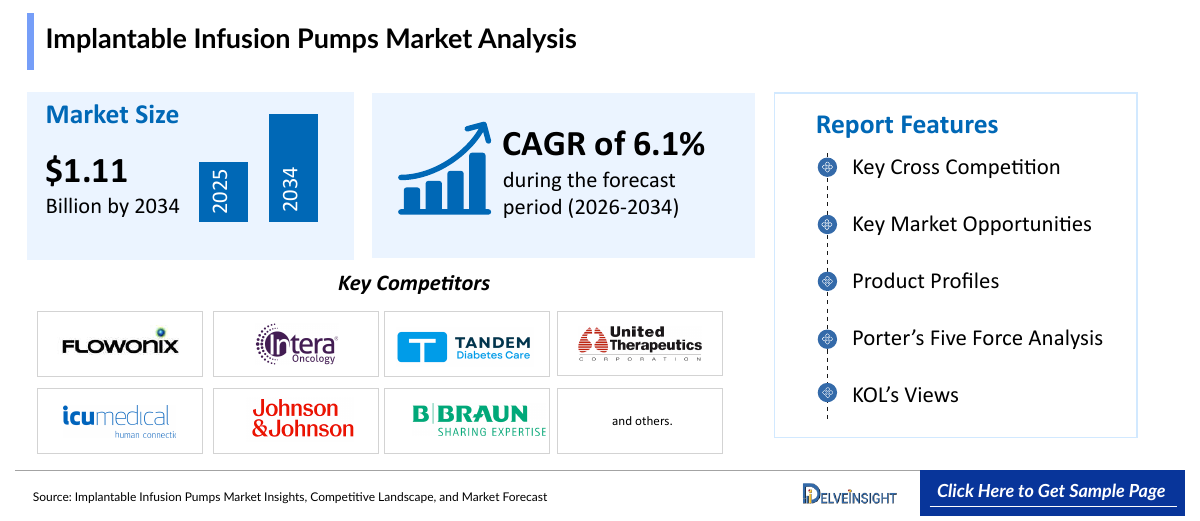
- The Implantable Infusion Pumps market is estimated at USD 650 million in 2025 and is projected to reach USD 1.11 billion by 2034. Growth is anchored in the rising burden of chronic pain, spasticity, and cancer, the clinical shift toward targeted and opioid-sparing intrathecal and regional drug delivery, and continuous advances in programmable and MRI-conditional pump technology.
- The global Implantable Infusion Pumps market is growing at a CAGR of 6.1% during the forecast period from 2026 to 2034.
- By pump technology, the programmable pumps segment dominated the Implantable Infusion Pumps market with a 67% share in 2025.
- By application, the chronic pain management segment dominated the Implantable Infusion Pumps market with a 46% share in 2025.
- By drug/fluid type, the opioids segment dominated the Implantable Infusion Pumps market with a 49% share in 2025.
- By end-user, the hospitals segment dominated the Implantable Infusion Pumps market with a 61% share in 2025.
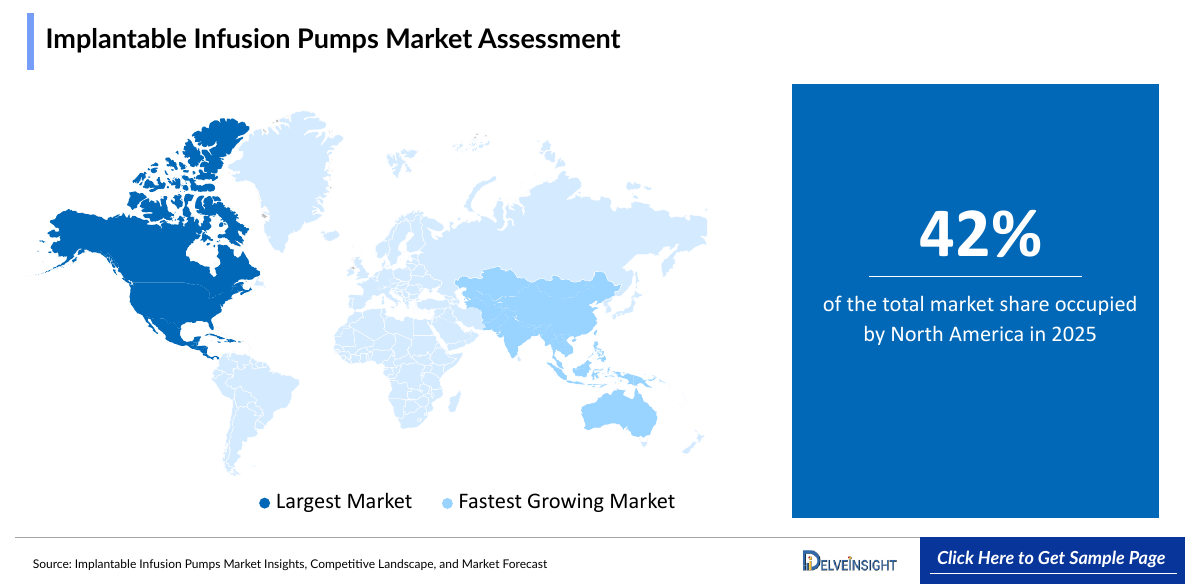
- North America dominated the global Implantable Infusion Pumps market revenue with a 42% share in 2025, representing the highest regional market share globally.
An implantable infusion pump is a battery-powered or gas-pressure-driven medical device that is surgically placed beneath the skin, typically in the abdomen, and connected to a catheter that delivers medication or fluid directly to a target site in the body, such as the intrathecal space around the spinal cord, the hepatic artery, or the bloodstream. Because the drug is delivered at the site of action, therapy can be achieved with a fraction of the systemic dose, reducing side effects and improving adherence in patients with severe, long-term conditions. The pump reservoir is refilled percutaneously by a trained clinician at intervals that depend on dose and reservoir size, and programmable models can be adjusted non-invasively through telemetry. The market is organized by pump technology across programmable, constant-flow, and variable-flow pumps; by application, including chronic pain management, cancer pain management, spasticity management, chemotherapy, and other applications; by drug/fluid type, including opioids, baclofen, chemotherapeutic agents, local anesthetics, and other drugs and fluids; and by end-user, spanning hospitals, specialty clinics, ambulatory surgical centers, and others. Driven by the growing burden of chronic disease, the need for targeted and opioid-sparing therapy, and steady innovation in pump accuracy, battery life, and MRI compatibility, implantable infusion pumps have become an established platform for long-term targeted drug delivery.
Implantable Infusion Pumps Market Key Growth Drivers
- The rising prevalence of chronic pain, severe spasticity, and cancer is expanding the pool of patients who are candidates for long-term targeted drug delivery, with the International Agency for Research on Cancer projecting cancer cases to rise from 20 million in 2022 to 35 million by 2050.
- Growing demand for targeted, opioid-sparing therapy is supporting intrathecal delivery, which places drug directly in the cerebrospinal fluid at a fraction of the oral dose and reduces systemic side effects.
- Advances in programmable, MRI-conditional, and connected pump technology are improving dosing accuracy, battery longevity, and patient and clinician convenience.
- Expanding drug-device applications, including hepatic artery infusion chemotherapy with the Intera 3000 pump and the Medtronic and United Therapeutics Implantable System for Remodulin for pulmonary arterial hypertension, are widening the addressable patient base.
- An aging global population with multiple comorbidities is increasing the need for reliable, adherence-independent drug delivery that reduces hospitalizations.
- Established clinical guidelines, consensus recommendations, and reimbursement pathways for intrathecal therapy in major markets are supporting adoption among pain and neurology specialists.
- The convergence of rising chronic disease burden, demand for targeted therapy, technology innovation, and industry consolidation is expected to sustain steady mid-single-digit growth in the market through 2034.
Key Companies in Implantable Infusion Pumps Market
The competitive landscape is led by the following active manufacturers:
- Medtronic
- Flowonix Medical Inc.
- Intera Oncology
- Tandem Diabetes Care, Inc.
- United Therapeutics
- ICU Medical
- Johnson & Johnson Services, Inc.
- Smiths Group plc
- MicroPort Scientific Corporation
- B. Braun SE
For illustrative purposes, only the top 10 companies are listed in the Table of Contents. The report may include analysis and references to additional companies relevant to the market assessment.
Implantable Infusion Pumps Market Size
The following snapshot summarizes the principal report metrics for the Implantable Infusion Pumps market.
|
Report Metrics |
Details |
|
2025 Market Size |
USD 650 million |
|
2034 Projected Market Size |
USD 1.11 billion |
|
Growth Rate (2026-2034) |
6.1% CAGR |
|
Largest Market |
North America |
|
Fastest Growing Market |
Asia-Pacific |
|
Market Structure |
Moderately Concentrated |
All market values are expressed in USD and represent DelveInsight estimates synthesized from primary and secondary research.
Factors Contributing to the Growth of the Implantable Infusion Pumps Market
Market Drivers
Rising Prevalence of Chronic Pain, Spasticity, and Cancer
The most fundamental driver of the Implantable Infusion Pumps market is the rising prevalence of the conditions these devices treat. Chronic pain affects roughly one in five adults in the United States according to national health survey data, while spasticity arising from multiple sclerosis, spinal cord injury, cerebral palsy, stroke, and traumatic brain injury affects millions of patients worldwide. At the same time, the International Agency for Research on Cancer recorded 20 million new cancer cases in 2022 and projects 35 million by 2050, increasing the number of patients with severe cancer pain and with liver-confined or regional disease suitable for targeted chemotherapy. Many of these patients do not obtain adequate relief or tolerable side-effect profiles from oral or systemic therapy, making them candidates for pump-based delivery once conservative options are exhausted. As diagnosis improves and survival lengthens, the population requiring durable, long-term drug delivery expands, anchoring demand growth through 2034.
Demand for Targeted, Opioid-Sparing Drug Delivery
Implantable pumps deliver drug directly to the intrathecal space or to a specific vascular territory, allowing effective therapy at a small fraction of the systemic dose. For severe pain, intrathecal delivery of opioids, ziconotide, local anesthetics, and combinations can provide analgesia with fewer systemic side effects such as sedation and constipation, and it is recognized in consensus guidance as an option for patients who fail conventional medical management. Intrathecal baclofen provides comparable benefits in severe spasticity, where oral dosing is often limited by drowsiness and weakness. Heightened clinical and policy attention to opioid safety is increasing interest in therapies that reduce reliance on high-dose oral opioids, and pump therapy fits this need. This shift toward targeted, lower-dose delivery directly supports procedure volumes, refill visits, and replacement cycles across the forecast period.
Advances in Programmable and Smart Pump Technology
Continuous technology improvement is making implantable pumps more accurate, durable, and convenient. Programmable pumps allow clinicians to adjust dosing non-invasively through telemetry, deliver complex flow patterns and patient-activated bolus doses, and store therapy history. Manufacturers have pursued longer battery life, larger reservoirs that extend refill intervals, and MRI-conditional designs; for example, Flowonix's Prometra platform uses a dual-gated valve mechanism and a flow-activated safety valve, and offers a 40 mL Prometra II reservoir along with a patient therapy controller, while Medtronic's SynchroMed II supports refill intervals of up to 16 weeks for some indications. Connected programmers, improved software, and emerging closed-loop concepts further enhance usability and safety. These advances raise clinician confidence, broaden eligible patient populations, and encourage replacement of older constant-flow devices with programmable systems.
Expanding Oncology and Specialty Drug-Device Applications
Implantable pumps are expanding beyond pain and spasticity into oncology and other specialty uses. Intera Oncology's Intera 3000 pump is the only FDA-approved pump for hepatic artery infusion therapy, continuously delivering floxuridine directly to the liver to treat colorectal cancer liver metastases and intrahepatic cholangiocarcinoma while limiting systemic toxicity. The Implantable System for Remodulin, developed by Medtronic and United Therapeutics and approved by the FDA in 2018, uses the SynchroMed II pump with an intravascular catheter to deliver treprostinil for pulmonary arterial hypertension, avoiding the infection risk and daily burden of external pumps. Early-stage research into delivery of drugs to the brain, such as in refractory epilepsy, also uses implantable infusion platforms. These pairings of approved drugs with implantable devices create new, durable demand and strengthen the case for pump-based delivery.
Aging Population and Chronic Disease Burden
Population aging is a structural growth factor. Older adults frequently live with several comorbid conditions, including degenerative spine disease, neurological disorders, and cancer, and often struggle with complex oral regimens. Implantable pumps remove daily dosing from the patient's responsibility, improve adherence, and can reduce hospitalizations, emergency visits, and the cumulative burden of oral medication side effects. As healthcare systems in North America, Europe, Japan, and China age and seek cost-effective management of long-term conditions, devices that deliver stable, supervised therapy for years from a single implant become increasingly attractive, supporting sustained demand through the forecast period.
Supportive Clinical Guidelines, Evidence, and Reimbursement
Intrathecal therapy has a decades-long clinical track record, and expert consensus guidance, such as that produced by the Polyanalgesic Consensus Conference, provides structured algorithms for patient selection, drug choice, and trialing before implantation. In established markets, pump implantation, refill, and programming are covered procedures, which supports predictable access for eligible patients. Specialty societies and device manufacturers continue to invest in physician training, registries, and real-world outcome data, improving patient selection and reducing complications. This maturing evidence base and procedural infrastructure increases referral confidence among pain specialists, neurologists, and oncologists, helping convert eligible patients into long-term pump users.
Industry Consolidation and Investment in Targeted Drug Delivery
Strategic transactions and financing demonstrate the perceived value of implantable drug delivery. Boston Scientific announced in November 2024 that it would acquire Intera Oncology, the maker of the Intera 3000 hepatic artery infusion pump, giving a large device company a foothold in regional oncology delivery. In January 2022, ICU Medical completed its acquisition of Smiths Medical from Smiths Group plc, consolidating infusion technology under a dedicated infusion company, and specialist developers such as Flowonix Medical have raised private debt and equity to support next-generation pumps. Large medical technology companies, including Medtronic, Johnson & Johnson, and B. Braun, continue to invest across infusion, neuromodulation, and drug delivery. This capital and consolidation strengthens commercial reach, supports clinical evidence generation, and sustains innovation through the forecast period.
Market Restraints
Despite steady momentum, the Implantable Infusion Pumps market faces material constraints. The high upfront cost of the device, the implantation procedure, and ongoing refills and programming limit adoption, particularly in lower-income regions and in cost-sensitive health systems. Surgical implantation carries risks including infection, catheter-related complications such as kinks, dislodgement, and inflammatory masses, and pump failure; in the pivotal trial of the Implantable System for Remodulin, 10% of patients experienced pump failures after four years of use. Product recalls, including the FDA Class I recall of SynchroMed II and EL pumps in 2017 for a priming bolus issue and a Class I recall of the Intera 3000 pump in 2022 for faster-than-expected flow, heighten clinician and regulatory scrutiny. Battery depletion requires replacement surgery, and reservoirs require regular refills by trained staff, creating a recurring burden for patients and clinics. The pre-market approval pathway and post-market surveillance requirements lengthen development timelines and raise costs, while limited availability of clinicians trained in intrathecal therapy constrains growth. Competing options, including oral and transdermal medications, spinal cord stimulation, peripheral nerve stimulation, and external ambulatory pumps, provide alternatives for some patients. Together, these cost, safety, workflow, regulatory, and competitive factors temper the pace of growth, even as the underlying drivers of disease burden and targeted-delivery demand remain firmly intact.
Implantable Infusion Pumps Market Segment Analysis
The Implantable Infusion Pumps Market is segmented by pump technology (programmable pumps, constant-flow pumps, variable-flow pumps), application (chronic pain management, cancer pain management, spasticity management, chemotherapy, other applications), drug/fluid type (opioids, baclofen, chemotherapeutic agents, local anesthetics, other drugs and fluids), end-user (hospitals, specialty clinics, ambulatory surgical centers, others), and geography (North America, Europe, Asia-Pacific, and Rest of World).
By Pump Technology
Dominant Subsegment: Programmable Pumps.
The programmable pumps segment accounted for 67% of the Implantable Infusion Pumps market in 2025. Programmable pumps are the leading technology because they let clinicians adjust dose, flow rate, and bolus patterns non-invasively through telemetry, which is essential for titrating intrathecal opioid, baclofen, and combination therapy to individual patient needs. They also record therapy history, provide alarms, and support complex dosing such as flex and bridge boluses, features that improve safety and outcomes in long-term therapy. Systems such as Medtronic's SynchroMed II and Flowonix's Prometra are widely used in pain and spasticity management, and manufacturers continue to improve battery life, reservoir size, and MRI compatibility. Constant-flow pumps remain relevant for applications with stable dosing needs and lower cost, such as hepatic artery infusion chemotherapy with the Intera 3000, and variable-flow designs address niche needs for patient-adjustable delivery. Nonetheless, the flexibility, precision, and clinical familiarity of programmable systems secure the segment's leadership across the forecast period.
By Application
Dominant Subsegment: Chronic Pain Management.
The chronic pain management segment accounted for 46% of the Implantable Infusion Pumps market in 2025. Chronic pain is the leading application because it affects a very large share of adults, and a meaningful subset of patients with failed back surgery syndrome, complex regional pain syndrome, and neuropathic or axial pain do not respond adequately to oral therapy or other interventions. Intrathecal drug delivery offers these patients effective analgesia at low doses with fewer systemic side effects, and consensus guidance supports its use after a successful trial. Growing attention to reducing high-dose oral opioid use further supports referrals for pump therapy. Spasticity management is a significant and stable application anchored by intrathecal baclofen, cancer pain management supports implantation in patients with refractory pain, and chemotherapy, particularly hepatic artery infusion, is among the fastest-growing applications as regional oncology delivery gains traction. The breadth of the chronic pain patient pool and the established clinical pathway secure the segment's leadership across the forecast period.
By Drug/Fluid Type
Dominant Subsegment: Opioids.
The opioids segment accounted for 49% of the Implantable Infusion Pumps market in 2025. Intrathecal opioids, led by preservative-free morphine and also including hydromorphone, are the cornerstone of pump-based therapy for severe chronic and cancer-related pain, because delivery directly into the cerebrospinal fluid achieves strong analgesia at a small fraction of oral doses. Their long clinical history, established dosing protocols, and role as first-line intrathecal agents sustain high utilization in both chronic non-malignant and cancer pain. Baclofen is the standard intrathecal drug for severe spasticity and forms the second major drug category, while local anesthetics such as bupivacaine, along with clonidine and ziconotide, are frequently used alone or in combination to improve pain control and reduce opioid requirements. Chemotherapeutic agents, notably floxuridine in hepatic artery infusion, are the fastest-growing category as oncology applications expand. The prevalence of opioid-based regimens in pain management secures the segment's leadership across the forecast period.
By End-User
Dominant Subsegment: Hospitals.
The hospitals segment accounted for 61% of the Implantable Infusion Pumps market in 2025. Hospitals lead because pump implantation is a surgical procedure that requires operating rooms, anesthesia, imaging guidance, and multidisciplinary teams including neurosurgeons, anesthesiologists, and pain specialists. Hospitals also manage the complex patient population, including oncology patients and those with severe spasticity, and they provide the infrastructure for pump refills, programming, complication management, and revision surgery. Tertiary and academic centers serve as referral hubs and training sites for intrathecal and regional therapy. Specialty clinics, particularly pain and neurology practices, support refills and ongoing management, while ambulatory surgical centers are the fastest-growing setting as lower-cost, outpatient implantation expands. Nonetheless, the clinical complexity and infrastructure requirements of pump therapy keep hospitals the dominant end-user across the forecast period.
Implantable Infusion Pumps Market Region Analysis
Dominant Region: North America
North America accounted for 42% of the global Implantable Infusion Pumps market revenue in 2025, representing the highest regional market share globally. The region's dominance reflects a mature intrathecal therapy ecosystem, a high prevalence of chronic pain and spasticity, a large base of trained pain and neurosurgical specialists, established reimbursement for pump implantation and refills, and a clear FDA premarket approval pathway, particularly in the United States. North America is home to leading manufacturers and developers, including Medtronic, Flowonix Medical, and Intera Oncology, and it hosts the largest concentration of clinical research and physician training in targeted drug delivery. Adoption is also supported by expanding drug-device applications such as hepatic artery infusion chemotherapy and the Implantable System for Remodulin, as well as a strong focus on opioid-sparing pain management. High healthcare spending, specialist access, and proximity to leading developers anchor the region's continued leadership across the forecast period.
Fastest Growing Region: Asia-Pacific
Asia-Pacific is the fastest-growing region in the Implantable Infusion Pumps market. The region's elevated CAGR is driven by a large and aging population, rising incidence of cancer and chronic pain, expanding access to advanced neurosurgical and pain care, and growing healthcare investment across China, Japan, India, South Korea, and Australia. Japan has one of the world's oldest populations and an established intrathecal therapy base; China is expanding hospital capacity, domestic medical device manufacturing, and clinician training, with local manufacturers such as MicroPort Scientific building implantable and interventional device portfolios; and India and South Korea are investing in tertiary care and specialty pain services. Rising incomes, improving insurance coverage, and growing awareness of targeted drug delivery are accelerating adoption, while regulatory harmonization and local manufacturing lower barriers to entry. The combination of disease burden, demographic aging, and healthcare build-out positions Asia-Pacific as the principal source of incremental growth over the forecast period.
Regional Commentary
North America
North America accounted for 42% of the global Implantable Infusion Pumps market revenue in 2025. The United States dominates on the strength of its intrathecal therapy infrastructure, specialist base, reimbursement, FDA premarket approval pathway, and the presence of leading manufacturers, while expanding oncology and specialty drug-device applications and a focus on opioid-sparing pain management reinforce its leadership.
Europe
Europe is a large and advanced regional market, supported by established CE-marked and MDR-regulated device frameworks, a long clinical history of intrathecal therapy, and strong neurosurgical and pain-care networks. Germany, France, the United Kingdom, Italy, and Spain account for the bulk of regional demand, and manufacturers such as B. Braun in Germany and Medtronic with its European operations support supply and clinical education, while reimbursement variation across countries shapes adoption rates.
Asia-Pacific
Asia-Pacific is the fastest-growing region, propelled by population aging, rising cancer and chronic pain incidence, expanding specialty care infrastructure, and growing healthcare investment across China, Japan, India, South Korea, and Australia. Domestic manufacturing, such as MicroPort Scientific in China, rising incomes, and improving clinician training are accelerating regional adoption of implantable drug delivery.
Rest of World
The Rest of World region, spanning Latin America, the Middle East, and Africa, is an emerging growth frontier. Expanding tertiary healthcare infrastructure, increasing awareness of advanced pain and spasticity management, and gradual improvements in reimbursement and regulatory alignment are broadening access, although high device costs and limited specialist availability continue to constrain adoption.
Implantable Infusion Pumps Market Competitive Landscape
The Implantable Infusion Pumps market is classified as Moderately Concentrated. Medtronic anchors the intrathecal pump segment through its SynchroMed platform and its drug-device collaboration with United Therapeutics, while specialist developers such as Flowonix Medical, with its Prometra programmable pump, and Intera Oncology, with the Intera 3000 hepatic artery infusion pump, compete through differentiated valve technology, MRI compatibility, and oncology-focused delivery. Large diversified infusion and medical technology companies, including ICU Medical, B. Braun, Johnson & Johnson, Smiths Group, Tandem Diabetes Care, and MicroPort Scientific, shape the broader infusion landscape through adjacent technology, manufacturing scale, and regional reach.
The competitive landscape can be evaluated across the following dimensions:
- Market concentration: Moderately concentrated, with a dominant programmable intrathecal pump leader, specialist developers in niche indications, and large diversified infusion companies shaping adjacent technology.
- Leading players: Medtronic anchors the top tier, supported by Flowonix Medical and Intera Oncology in programmable intrathecal and hepatic artery infusion delivery, respectively.
- Geographic reach: Leaders operate global sales, clinical education, and refill-support networks, with the United States as the largest commercial market and Europe and Asia-Pacific as key growth regions.
- Product portfolio strength: Top players offer pumps, catheters, programmers, refill kits, software, and clinical training that support the full therapy lifecycle.
- Clinical and regulatory evidence: Premarket approvals, long-term clinical data, and post-market surveillance records are decisive advantages in a heavily regulated device category.
- Strategic partnerships: Drug-device collaborations, such as Medtronic and United Therapeutics' Implantable System for Remodulin, and clinical research tie-ups extend therapy applications and reach.
- M&A activity: Active consolidation, including Boston Scientific's agreement to acquire Intera Oncology and ICU Medical's acquisition of Smiths Medical from Smiths Group plc.
- Manufacturing capabilities: Precision micro-fluidics, hermetic implant manufacturing, battery technology, and quality systems for Class III devices are key competitive moats.
- Innovation focus: MRI-conditional designs, longer battery life and larger reservoirs, connected programmers and software, and expansion into oncology and specialty drug delivery.
Implantable Infusion Pumps Market Recent Developmental Activities
In November 2024, Boston Scientific Corporation announced an agreement to acquire Intera Oncology, developer of the Intera 3000 hepatic artery infusion pump and floxuridine, with closing expected in the first half of 2025. Strategic significance: Adds the only FDA-approved implantable pump for hepatic artery infusion therapy to a large oncology and interventional portfolio, and validates regional chemotherapy delivery as a growth area.
Implantable Infusion Pumps Market Segmentation
Implantable Infusion Pumps Market by Pump Technology
- Programmable Pumps
- Constant-Flow Pumps
- Variable-Flow Pumps
Implantable Infusion Pumps Market by Application
- Chronic Pain Management
- Cancer Pain Management
- Spasticity Management
- Chemotherapy
- Other Applications
Implantable Infusion Pumps Market by Drug/Fluid Type
- Opioids
- Baclofen
- Chemotherapeutic Agents
- Local Anesthetics
- Other Drugs and Fluids
Implantable Infusion Pumps Market by End-User
- Hospitals
- Specialty Clinics
- Ambulatory Surgical Centers
- Others
Implantable Infusion Pumps Market by Geography
- North America Implantable Infusion Pumps Market
- United States Implantable Infusion Pumps Market Size in USD million (2023-2034)
- Canada Implantable Infusion Pumps Market Size in USD million (2023-2034)
- Mexico Implantable Infusion Pumps Market Size in USD million (2023-2034)
- Europe Implantable Infusion Pumps Market
- Germany Implantable Infusion Pumps Market Size in USD million (2023-2034)
- United Kingdom Implantable Infusion Pumps Market Size in USD million (2023-2034)
- France Implantable Infusion Pumps Market Size in USD million (2023-2034)
- Italy Implantable Infusion Pumps Market Size in USD million (2023-2034)
- Spain Implantable Infusion Pumps Market Size in USD million (2023-2034)
- Rest of Europe Implantable Infusion Pumps Market Size in USD million (2023-2034)
- Asia-Pacific Implantable Infusion Pumps Market
- China Implantable Infusion Pumps Market Size in USD million (2023-2034)
- Japan Implantable Infusion Pumps Market Size in USD million (2023-2034)
- India Implantable Infusion Pumps Market Size in USD million (2023-2034)
- Australia Implantable Infusion Pumps Market Size in USD million (2023-2034)
- South Korea Implantable Infusion Pumps Market Size in USD million (2023-2034)
- Rest of Asia-Pacific Implantable Infusion Pumps Market Size in USD million (2023-2034)
- Rest of the World (RoW) Implantable Infusion Pumps Market
- Middle East Implantable Infusion Pumps Market Size in USD million (2023-2034)
- Africa Implantable Infusion Pumps Market Size in USD million (2023-2034)
- South America Implantable Infusion Pumps Market Size in USD million (2023-2034)
Implantable Infusion Pumps Market Recent Industry Trends and Milestones (2023-2026)
|
Category |
Key Developments |
|
Implantable Infusion Pumps Market Product Approval |
Implantable infusion pumps are regulated as high-risk devices requiring FDA premarket approval, and each approval creates durable demand for the device, refills, and clinical support. Medtronic's Implantable System for Remodulin gained FDA approval in 2018, with the PMA approved in December 2017 and the drug application approved in July 2018, extending the SynchroMed II platform into pulmonary arterial hypertension. Flowonix received approval for its Prometra II 40 ml programmable pump and associated software for intrathecal infusion of preservative-free morphine, baclofen, and saline. Intera Oncology's Intera 3000 remains the only FDA-approved pump for hepatic artery infusion therapy in colorectal liver metastases and intrahepatic cholangiocarcinoma. These approvals reinforce clinical adoption across pain, spasticity, oncology, and cardiopulmonary indications. |
|
Implantable Infusion Pumps Market Expansion |
Manufacturers improved accuracy, longevity, and usability. Programmable systems provide telemetry-based dose adjustment, bolus options, alarms, and software upgrades; Flowonix introduced Maestro clinician programmer software, a patient therapy controller, a dual-gated valve mechanism, and a flow-activated safety valve designed to support MRI. Larger 40 ml reservoirs and claims of up to 10-year battery life at average flow rates extend refill intervals and replacement cycles, and Medtronic's system supports refill intervals of up to 16 weeks for some indications. Constant-flow designs remain in use for stable-dose oncology applications, while connected programmers and refined software are improving clinician workflow. |
|
Implantable Infusion Pumps Market Investment |
Capital and consolidation shaped the competitive landscape. Boston Scientific agreed to acquire Intera Oncology in November 2024, with closing expected in the first half of 2025. ICU Medical completed its acquisition of Smiths Medical from Smiths Group plc in January 2022, and Flowonix Medical raised USD 40 million in debt and equity financing led by Élevage Capital Management to support next-generation pump development and clinical trials. Large medical technology companies, including Medtronic, Johnson & Johnson, B. Braun, and MicroPort Scientific, continue to invest across infusion, neuromodulation, and drug delivery. |
|
Company Strategy |
Medtronic: Leadership in programmable intrathecal pumps with the SynchroMed platform and the Implantable System for Remodulin collaboration. Flowonix Medical Inc.: Differentiated Prometra programmable pump with dual-gated valve and MRI-oriented design. Intera Oncology: Hepatic artery infusion leadership with the Intera 3000, now part of Boston Scientific. United Therapeutics: Drug-device partnership for treprostinil delivery in pulmonary arterial hypertension. ICU Medical: Consolidated infusion portfolio following the Smiths Medical acquisition. Tandem Diabetes Care, Inc.: Wearable automated insulin delivery innovation. Johnson & Johnson Services, Inc., Smiths Group plc, MicroPort Scientific Corporation, and B. Braun SE: Diversified medical technology, infusion, and regional device capabilities. |
|
Emerging Technologies |
Programmable, MRI-conditional, and connected pumps are the leading edge of innovation, with larger reservoirs, longer battery life, and improved safety valves reducing refill and replacement burden. Closed-loop and sensor-linked concepts, remote monitoring and telemetry, and drug-pump pairings for new indications such as pulmonary arterial hypertension, regional oncology delivery, and neurological disorders are expanding the addressable market. Miniaturization and algorithm advances from wearable infusion systems, together with additive manufacturing, advanced materials, and AI-assisted dose optimization, are emerging, while collaborations between device makers, drug developers, and academic centers are accelerating clinical translation. |
Implantable Infusion Pumps Market Startup Funding and Investment Trends
|
Company |
Total Funding |
Funding Stage |
Main Offering |
Core Technology |
|
Flowonix Medical Inc. |
USD 40 million debt and equity |
Growth financing |
Programmable intrathecal pump |
Dual-gated valve, flow-activated safety valve |
|
Request to unlock the report on the @ Implantable Infusion Pumps Market | ||||
Investment in the Implantable Infusion Pumps ecosystem has concentrated on specialist developers, regional oncology delivery, and next-generation programmable and MRI-compatible pump platforms. The following companies illustrate recent funding and investment activity and technology focus.
Capital is flowing toward developers with differentiated, clinically validated pump technology. Boston Scientific's agreement to acquire Intera Oncology underscores the strategic value of regional oncology delivery, while Flowonix Medical raised USD 40 million in debt and equity financing to support next-generation Prometra development, MRI compatibility, and clinical trials. Larger players such as Medtronic, ICU Medical, B. Braun, and MicroPort Scientific continue to invest in infusion and drug delivery capacity and regional expansion. Collectively, these investments signal conviction that programmable and MRI-conditional pumps, oncology and specialty drug-device applications, and connected software will define the next phase of competitive advantage in the global implantable infusion pumps market.
Key Takeaways from the Implantable Infusion Pumps Market Report Study
- Market size analysis for the current Implantable Infusion Pumps market size (2025), and market forecast for 9 years (2026 to 2034).
- Top key product/technology developments, mergers, acquisitions, partnerships, and joint ventures that happened over the last 3 years.
- Key companies dominating the global Implantable Infusion Pumps market.
- Various opportunities available for competitors in the Implantable Infusion Pumps market space.
- What are the top-performing segments in 2025? How will these segments perform in 2034?
- Which are the top-performing regions and countries in the current Implantable Infusion Pumps market scenario?
- Which are the regions and countries where companies should concentrate their opportunities for Implantable Infusion Pumps market growth in the future?
Target audience who can benefit from this Implantable Infusion Pumps market report study
- Implantable Infusion Pumps product providers
- Research organizations and consulting companies
- Implantable Infusion Pumps-related organizations, associations, forums, and other alliances
- Government and corporate offices
- Start-up companies, venture capitalists, and private equity firms
- Distributors and traders dealing in Implantable Infusion Pumps
- Various end-users who want to know more about the Implantable Infusion Pumps market and the latest technological developments in the Implantable Infusion Pumps market.