
Influenza A Market Summary
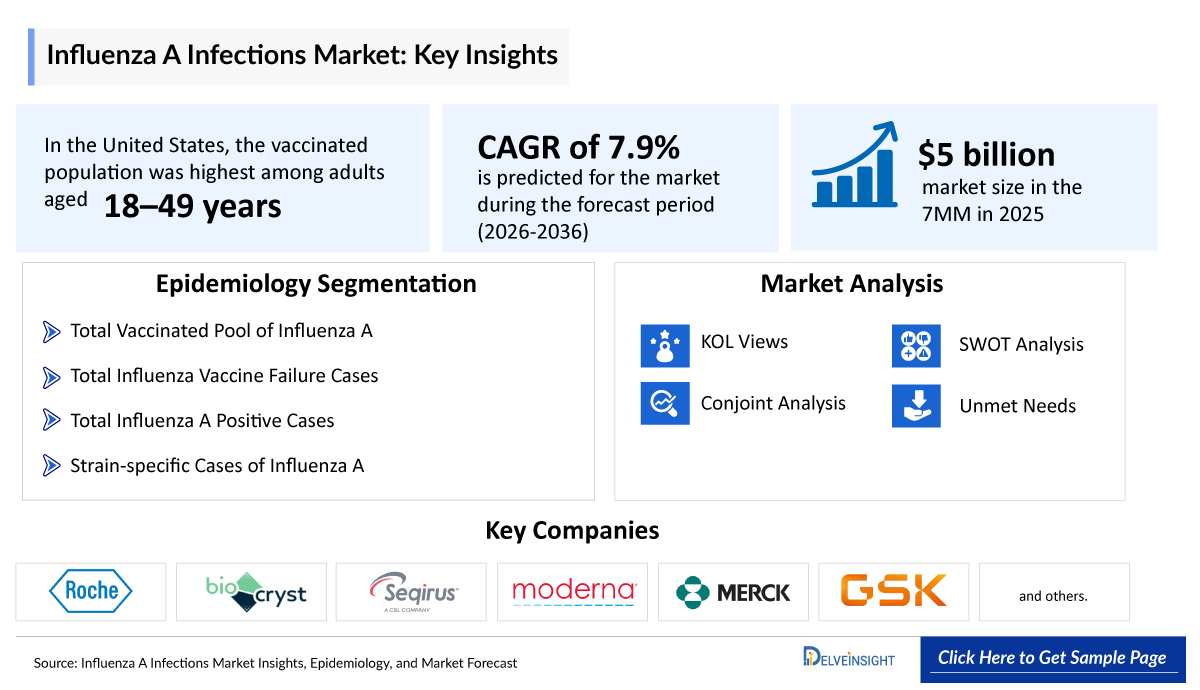
- The Influenza A market size was valued at approximately USD 5,000 million in 2025 and is projected to reach around USD 10,000 million by 2036, growing at a CAGR of 7.9% during 2026–2036.
- The Influenza A Infections companies developing therapies in the treatment market include - Roche, BioCryst Pharmaceuticals, Seqirus, Moderna, Merck, GlaxoSmithKline, Cocrystal Pharma, and others.
Key Influenza A Market & Epidemiology Insights
- Influenza A viruses are the only influenza viruses known to cause flu pandemics. Influenza A virus has the ability to spread efficiently among people, and against which people have little or no immunity.
- Influenza A viruses have different forms, which are identified by the specific proteins on their surface called hemagglutinin (H) and neuraminidase (N). Current subtypes of influenza A viruses that routinely circulate in people include A(H1N1) and A(H3N2).
- During the 2025 Southern Hemisphere influenza season in the Americas, transmission surpassed the seasonal threshold by mid-March and generally remained at low to moderate levels. Activity was predominantly driven by influenza A(H1N1)pdm09, with peak test positivity reaching 19%.
- According to the estimates, the highest market size of influenza A was found in the US and the least was in Spain across the 7MM in 2025. The upcoming therapies for influenza A are expected to combat the current unmet needs faced by the patients and add to the overall growth of the influenza A market size.
- Next-generation mRNA-based influenza vaccines, such as those being developed by Moderna, have advanced to late-stage development and regulatory review, offering the potential for faster strain adaptation and improved scalability.
- Vaccination is the most effective measure for protecting against more severe forms of viral respiratory diseases. Those eligible for vaccination, particularly those at higher risk of severe outcomes, are encouraged to get vaccinated in line with national recommendations.
- As per the 2026 clinical recommendations for seasonal influenza, the CDC advises that during the 2025–2026 flu season, children, pregnant women, and adults should receive seasonal influenza vaccines exclusively in single-dose formulations that do not contain thimerosal as a preservative.
- In March 13, 2025, the US Food and Drug Administration (FDA) made recommendations to update the composition of 2025─2026 the US influenza vaccines.
- Alongside pharmacological interventions, behavioral management strategies, such as encouraging adherence to hygiene practices and promoting vaccination, are vital for protecting high-risk groups from severe disease .
- The key players in the influenza A include Roche, BioCryst Pharmaceuticals, Seqirus, Moderna, Cidara Therapeutics, GlaxoSmithKline, Cocrystal Pharma, and others.
- The influenza A pipeline features promising late- and mid-stage therapies (drugs and vaccines) including CD388, Flu Pandemic mRNA (GSK4382276A), CC-42344, and others.
- Emerging pipeline offers effective management options for influenza A. Growing awareness and improved diagnostic techniques are crucial for early detection and better patient outcomes.
Influenza A Market Size and Forecast in the United States
- 2025 Influenza A Market Size: ~USD 5000 million
- 2036 Projected Influenza A Market Size: ~USD 10,000 million
- Influenza A Growth Rate (2026–2036): 7.9% CAGR
DelveInsight’s “Influenza A Market Insights, Epidemiology, and Market Forecast – 2036” report delivers an in-depth understanding of influenza A, historical and forecasted epidemiology as well as influenza A market trends in the United States, EU4 (Germany, France, Italy, and Spain) and the United Kingdom, and Japan.
The influenza A market report provides current treatment practices, emerging drugs, market share of individual therapies, and current and forecasted 7MM influenza A market size from 2022 to 2036. The report also covers current influenza A treatment practices/algorithms and unmet medical needs to curate the best opportunities and assess the market’s potential.
Key Factors Driving the Influenza A Market
- Rise Global Disease Burden: Influenza A contributes to a substantial global disease burden, with annual epidemics resulting in millions of cases and significant mortality worldwide. This high incidence and associated healthcare burden drive sustained demand for preventive vaccines and antiviral therapies.
- Rising opportunities in Influenza A: Driven by innovations in vaccines (e.g., mRNA and universal platforms), novel antivirals, and improved diagnostics, alongside expanded immunization efforts post-COVID-19. Additionally, increasing global focus from organizations like the World Health Organization and growing biotech investments are accelerating market growth and pandemic preparedness.
- Emerging Influenza A Competitive Landscape: Some of the Influenza A drugs in clinical trials include CD388 (Merck), GSK4382276A GlaxoSmithKline), CC-42344 (Cocrystal Pharma) and others.
Scope of Influenza A Market Report | |
|
Study Period |
2022–2036 |
|
Historical Year |
2022–2025 |
|
Forecast Period |
2026-2036 |
|
Geographies Covered |
ü North America : The US; ü Europe: Germany, France, Italy, and Spain and the UK; ü Asia-Pacific: Japan |
|
Influenza A Market CAGR (Forecast period) |
7.9% (2026–2036) |
|
Influenza A Epidemiology Segmentation Analysis |
Patient Burden Assessment · Total Vaccinated Pool of Influenza A · Total Influenza Vaccine Failure Cases · Total Influenza A Positive Cases · Strain-specific Cases of Influenza A |
|
Influenza A Key Companies |
· Roche · BioCryst Pharmaceuticals · Seqirus · Moderna · Merck (Cidara Therapeutics) · GlaxoSmithKline · Cocrystal Pharma, and others |
|
Influenza A Key Therapies |
· mRNA-1010 · CD388 · Flu Pandemic mRNA (GSK4382276A) · GSK5536522 · GSK5475152 · CC-42344, and others |
|
Influenza A Market |
Segmented by · Region/Geographies · Drugs/Therapies |
|
Analysis |
· KOL Views · SWOT Analysis · Reimbursement · Conjoint Analysis · Unmet needs |
|
|
|
Influenza A Disease Understanding
Influenza A Overview and Diagnosis
Influenza A viruses are divided into subtypes based on two proteins on the surface of the virus: hemagglutinin (H) and neuraminidase (N). There are 18 different hemagglutinin subtypes and 11 neuraminidase subtypes (H1 through H18 and N1 through N11, respectively). While more than 130 influenza A subtype combinations have been identified in nature, primarily from wild birds, there are potentially many more influenza A subtype combinations. Occasionally with influenza A, an antigenic shift occurs. This is a significant change in the virus surface antigens (HA and NA), which leads to the emergence of a new subtype, often resulting in a global pandemic with increased morbidity and mortality.
Diagnosis of influenza virus, including Influenza A, is typically based on clinical symptoms and can be confirmed with laboratory tests. Healthcare providers often use Rapid Influenza Diagnostic Tests (RIDTs), which detect viral antigens in respiratory samples and provide results within minutes. More accurate methods, such as Reverse Transcription-Polymerase Chain Reaction (RT-PCR), are used to confirm the virus type and subtype, especially during outbreaks or severe cases. In some situations, viral culture or immunofluorescence tests may also be performed, though these take longer. Early and accurate diagnosis is important for proper treatment and to help prevent the spread of the virus. Rapid molecular assays are a new kind of molecular influenza diagnostic test for upper respiratory tract specimens with high sensitivity and specificity. Two FDA-cleared rapid molecular assays are available in the United States. Rapid molecular assays can provide results in approximately 20 min.
Further details are provided in the report...
Influenza A Treatment Landscape
The treatment depends on the severity of diseases. For patients with uncomplicated seasonal influenza, symptomatic treatment is recommended, with advice to stay home to prevent spreading the virus. Treatment focuses on relieving symptoms of influenza, such as fever. Patients should monitor themselves to detect if their condition deteriorates and seek medical attention. High-risk patients should receive antiviral medications, such as oseltamivir, within 48 hours of symptom onset. Severe cases, including pneumonia or sepsis, require immediate antiviral treatment. Neuraminidase inhibitors should be prescribed for at least 5 days, and corticosteroids should only be used if necessary. Vaccination remains the most effective prevention method, with annual doses recommended to maintain immunity.
Further details related to country-based variations are provided in the report...
Influenza A Unmet Needs
The section “unmet needs of influenza A” outlines the critical gaps between the current state of patient care, diagnosis, and the ideal & effective management of the disease. It highlights the obstacles experienced by patients, clinicians, and researchers and identifies potential solutions for future progress.
1. Limited and Variable Vaccine Effectiveness
2. Need for Investment in Modernizing Vaccine Production Technology
3. High Disease Burden & Economic Impact
4. Antiviral Resistance, and others…..
Note: Comprehensive unmet needs insights in Influenza A and their strategic implications are provided in the full report...
Influenza A Epidemiology
The Influenza A epidemiology section provides insights about the historical and current Influenza A patient pool and forecasted trends for individual seven major countries. It helps to recognize the causes of current and forecasted trends by exploring numerous studies and views of key opinion leaders. This part of the Influenza A market report also provides the diagnosed patient pool and their trends along with assumptions undertaken.
Key Findings from Influenza A Epidemiological Analysis and Forecast
- In the United States, the vaccinated population was highest among adults aged 18–49 years, while the lowest vaccination uptake was observed in pregnant women in 2025; overall, the vaccinated pool was segmented across children (0–4, 5–12 years), adolescents (13–17 years), adults (18–49, 50–64, ≥65 years), and pregnant women.
- In 2025, the influenza vaccine failure rate in the United States was estimated to be approximately 70%, indicating a substantial proportion of vaccinated individuals remained susceptible to infection.
- By conducting secondary analysis of publicly available surveillance data In Japan, it was observed that in Japan according to the Ministry of Health, Labour and Welfare, the average approximately 196,895 weekly influenza cases were reported in November 2025, corresponding to an average of 51.12 cases per medical institution, indicating high epidemic intensity
- In Europe, influenza A (H1N1)pdm09 emerged as the predominant subtype in 2024, accounting for approximately 57–93% of all influenza A cases, as reported by the European Respiratory Virus Surveillance Summary (ERVISS) (2025).
- In the United States, the total number of influenza A positive cases is projected to increase over the study period from 2022 to 2036, reflecting a rising disease burden over time.
Influenza A Drug Analysis & Competitive Landscape
The influenza A drug chapter provides a detailed, market-focused review of approved therapies and the emerging pipeline across Phase I/II–II clinical trials. It covers mechanism of action, clinical trial data, regulatory approvals, patents, collaborations, strategic partnerships upcoming Key catalyst for each therapy, along with their advantages, limitations, and recent developments. This section offers critical insights into the Influenza A treatment landscape, supporting market assessment, competitive analysis, and growth forecasting for the Influenza A therapeutics market.
Approved Therapies for Influenza A
XOFLUZA (baloxavir marboxil): Roche and Shionogi
XOFLUZA is a first-in-class, single-dose oral medicine with an innovative proposed mechanism of action that has demonstrated efficacy in a wide range of influenza viruses, including in vitro activity against oseltamivir-resistant strains and avian strains (H7N9, H5N1) in non-clinical studies. XOFLUZA is the first in a class of antivirals designed to inhibit the cap-dependent endonuclease protein, which is essential for viral replication.
In October 2018, Roche announced that the US FDA had approved XOFLUZA for the treatment of acute, uncomplicated influenza, or flu, in people 12 years of age and older. In August 2022, Genentech announced that the US FDA approved a supplemental New Drug Application for XOFLUZA to treat acute, uncomplicated influenza in healthy children aged 5 to under 12, showing symptoms for no more than 48 hours. The FDA also approved its use for preventing influenza in the same age group after exposure to an infected person. XOFLUZA is approved in the EU for the treatment of uncomplicated influenza and for post-exposure prophylaxis of influenza in children aged one year and above, and in adolescents and adults.
Influenza A Marketed/Approved Therapies | ||||||
|
Drug/Therapy |
Company |
Indication |
Molecule Type |
MoA |
RoA |
Marketed Region |
|
XOFLUZA (baloxavir marboxil) |
Roche |
Influenza A |
Small molecule |
PCSK9 inhibitors Polymerase inhibitor |
Oral |
US: 2018 EU: 2021 Japan: 2018 |
|
RAPIVAB (peramivir) |
BioCryst Pharmaceuticals |
Influenza A |
Small molecule |
Inhibitor of influenza virus neuraminidase |
IV infusion |
US: 2014 EU: 2018 Japan: 2010 |
|
FLUAD QUADRIVALENT |
Seqirus |
Influenza A |
Biologic |
Immunostimulants |
IM |
US: 2022 EU: 2020 Japan: 2021 |
Note: Detailed marketed therapies assessment will be provided in the final report...
Influenza A Pipeline Analysis
CC-42344: Cocrystal Pharma
CC-42344, a novel PB2 inhibitor, was selected as a preclinical lead as an oral or inhaled treatment of pandemic and seasonal influenza A. This candidate binds to a highly conserved PB2 site of influenza polymerase complex (PB1: PB2: PA) and exhibits a novel mechanism of action. CC-42344 showed excellent in vitro antiviral activity against influenza A strains, including avian pandemic strains and TAMIFLU and XOFLUZA resistant strains, and has favorable pharmacokinetic and drug resistance profiles. The company had received authorization from the United Kingdom Medicines and Healthcare Products Regulatory Agency (MHRA) to conduct a Phase IIa human challenge study with CC-42344.
Competitive Landscape of Influenza A Pipeline Drugs | ||||||
|
Drug Name |
Company |
Highest Phase |
Indication |
RoA |
MoA |
Anticipated Launch in the US |
|
CC-42344 |
Cocrystal Pharma |
II |
Influenza A |
Oral |
PB2 Inhibitor |
Information is available in the full report |
|
CD388 |
Cidara Therapeutics |
III |
Influenza A |
SC |
Inhibitor of influenza virus neuraminidase |
Information is available in the full report |
|
mRNA-1010 |
Moderna |
III |
Influenza A & B |
IM |
mRNA vaccine |
Information is available in the full report |
|
Flu Pandemic mRNA (GSK4382276A) |
GlaxoSmithKline |
I/II |
Pandemic H5N1 Influenza Virus |
IM |
Immunostimulant |
Information is available in the full report |
| Note: Launch insights are provisional and may change with future report updates or the occurrence of major key catalysts. | ||||||
Note: Detailed emerging therapies assessment will be provided in the final report...
Influenza A Key Players, Market Leaders and Emerging Companies
- Roche
- BioCryst Pharmaceuticals
- Seqirus
- Moderna
- Merck
- GlaxoSmithKline
- Cocrystal Pharma, and others
Recent Developments In The Influenza A Drug Market
- In Aug 2026, Shanghai Ark Biopharmaceutical Co., Ltd. (ArkBio) received IND approval from China’s NMPA for AK0406, an antiviral drug-Fc conjugate (AFC) candidate designed for influenza prophylaxis. As the first influenza AFC to enter clinical development in China, AK0406 combines a potent small-molecule antiviral with an Fc fragment to deliver extended protection against influenza A and B strains. This approval complements an ongoing Phase I trial in Australia, advancing ArkBio’s global dual-track respiratory drug strategy.
- In May 2026, Lupin Limited has achieved a significant international regulatory milestone by securing approval from China’s National Medical Products Administration (NMPA) for its Oseltamivir Phosphate for Oral Suspension (6 mg/mL). Developed in strategic partnership with Yabao Pharmaceuticals, a prominent Chinese pediatric pharma company, the antiviral drug is approved for treating and preventing Influenza A and B in pediatric patients and adults. This approval marks Lupin's official commercial entry into the high-barrier Chinese pharmaceutical market, which stands as the world’s second-largest drug marketplace. Focusing on child-friendly liquid formulations, the partnership expands access to essential, affordable seasonal flu therapies in China. Strategically, this achievement allows India-based Lupin to diversify its geographic revenue base, mitigate the market risks of generic price erosion in the United States, and expand its global anti-infective and respiratory healthcare portfolio across rapid-growth Asian markets.
- In February 2026, Cidara Therapeutics announced MK-1406 (CD388) is currently being evaluated in the Phase 3 ANCHOR study (NCT07159763).
- In January 2026, Merck announced The company has successfully completed a cash tender offer, conducted via its subsidiary, for the acquisition of all outstanding common shares of Cidara Therapeutics.
- In March 2026, Cocrystalpharma announced The company plan to continue development of oral CC-42344 as a treatment for pandemic and seasonal influenza A with an additional Phase 2a study.
- In February 2026, The Committee for Medicinal Products for Human Use (CHMP) has adopted a positive opinion recommending the granting of a marketing authorisation for mCombriax, a vaccine developed by Moderna, for the prevention of influenza disease.
- In March 2025, Cidara Therapeutics announced two upcoming presentations on CD388 in Influenza at the 38th International Conference on Antiviral Research (ICAR).
- In April 2025, Roche announced that New England Journal of Medicine (NEJM) has published a detailed analysis of the phase III CENTERSTONE trial of Xofluza showing a reduction in the transmission of influenza viruses.
Influenza A Market Outlook
Influenza A vaccines remain essential in protecting against the most prevalent circulating strains, with annual updates guided by global surveillance data. Vaccines such as FLUZONE (inactivated influenza vaccine) and FluMist (live attenuated influenza vaccine) stimulate immune responses that help prevent infection or reduce disease severity. Recent advancements include the development of next-generation mRNA-based vaccines, such as those by Moderna (mRNA-1010), which are currently under regulatory review and offer the potential for faster strain adaptation compared to traditional platforms. These vaccines continue to play a critical role in mitigating seasonal outbreaks and protecting high-risk populations, including the elderly and individuals with comorbidities.
Antiviral therapies remain a key component of influenza management, particularly when administered early to reduce symptom severity and duration. Currently recommended antivirals include oseltamivir phosphate (TAMIFLU), zanamivir inhalation powder (RELENZA), peramivir injection (RAPIVAB), and baloxavir marboxil (XOFLUZA). Among these, XOFLUZA has gained increased attention due to its single-dose oral regimen and expanding use in post-exposure prophylaxis settings. Despite these options, no major new antiviral classes have been introduced in recent years, highlighting a continued unmet need in influenza treatment.
Although progress has been made in understanding and managing Influenza A, challenges such as antigenic drift and shift continue to impact vaccine effectiveness and increase the risk of seasonal outbreaks. The development pipeline includes investigational candidates such as CC-42344 by Cocrystal Pharma and mRNA-1010 by Moderna; however, most remain in early to mid-stage development, with limited near-term disruption expected in the antiviral treatment landscape.The US accounted for the largest market size of influenza A, in comparison to EU4 and the UK (Germany, France, Italy, the UK, and Spain) and Japan in 2024.
Among the EU4 and the UK, Germany had the highest market size, while Spain had the lowest market size for influenza A in 2024.The emerging landscape for influenza A is having many management options that are being evaluated in the pipeline. The expected launch of these therapies is expected to increase the market size of influenza A in the coming years.
Further details will be provided in the report...
Drug Class/Insights into Leading Emerging and Marketed Therapies in Influenza A (2026–2036 Forecast)
PB2 inhibitor: Inhibitors targeting the PB2 subunit of the influenza A virus RNA-dependent RNA polymerase have been developed to disrupt the viral replication cycle. The PB2 protein plays an essential role in the cap-snatching mechanism, wherein the virus cleaves 5′-capped primers from host pre-mRNA to initiate the synthesis of viral mRNA. PB2 inhibitors function by binding to the cap-binding domain of the subunit, thereby preventing the acquisition of host-derived RNA primers and effectively halting viral transcription.
Influenza A Drug Uptake
This section focuses on the uptake rate of potential Influenza A drugs expected to be launched in the market during 2022–2036. The landscape of influenza A treatment has experienced a profound transformation with the uptake of novel drugs. These innovative therapies are redefining standards of care. Furthermore, the increased uptake of these transformative drugs is a testament to the unwavering dedication of physicians, professionals, and the entire healthcare community in their tireless pursuit of advancing disease care. This momentous shift in treatment paradigms is a testament to the power of research, collaboration, and human resilience.
Detailed insights of emerging therapies' drug uptake is included in the report...
Market Access and Reimbursement of Approved therapies in Influenza A
Globally, influenza A patient families spend an essential proportion of their household income on influenza A care. Influenza A patients have to face economic burden alone without any healthcare coverage or proper reimbursement policies.
The report further provides detailed insights on the country-wise accessibility and reimbursement scenarios, cost-effectiveness scenario of currently used therapies, programs making accessibility easier and out-of-pocket costs more affordable, insights on patients insured under federal or state government prescription drug programs, etc.
The United States
US Reimbursement of Therapies Approved for Influenza A | |
|
Drug/Therapy |
Access Program |
|
XOFLUZA |
Direct-to-Patient (DTP) program |
Reimbursement is a crucial factor that affects the drug’s access to the market. Often, the decision to reimburse comes down to the price of the drug relative to the benefit it produces in treated patients. To reduce the healthcare burden of these high-cost therapies, many payment models are being considered by payers and other industry insiders.
NOTE: Further Details are provided in the final report...
Influenza A Therapies Price Scenario & Trends
Pricing and analogue assessment of Influenza A therapies highlights evolving price dynamics structures. This section summarizes the cost of approved treatments, closest and most appropriate analogue selection for emerging therapies, and understanding of how pricing influences market access, adherence, and long-term uptake.
Industry Experts and Physician Views for Influenza A
To keep up with Influenza A market trends, we take Key Opinion Leaders (KOLs) and Subject Matter Experts (SMEs) opinions working in the domain through primary research to fill the data gaps and validate our secondary research. Industry experts were contacted for insights on the Influenza A emerging therapies, evolving treatment landscape, patient adherence to conventional therapies, therapy switching trends, drug adoption and uptake, accessibility challenges, and epidemiology and real-world prescription patterns in Influenza and others.
DelveInsight’s analysts connected with 15+ KOLs to gather insights at country level. Centers such as the Medicine at Harvard Medical School in the US, Oxford University in the UK, University of California, San Francisco, and University of Heidelberg in Germany, etc. were contacted.Their opinion helps understand and validate current and emerging Influenza A therapies, highlight unmet medical needs, provide epidemiological context, and support strategic decisions for market access, therapy adoption, and pipeline prioritization in Influenza A.
| Region | Key Opinion Leaders (KOLs) and Subject Matter Experts (SMEs) |
|
United States
|
“Influenza A epidemics and pandemics impose a heavy socioeconomic burden on all societies. Hospital admission and treatment and ICU care are more often necessary in high-risk individuals such as the elderly and pregnant ladies. However, the impact of influenza cannot be neglected even in young adults, mainly because of the loss of productivity.” |
|
“Influenza A virus is a significant human pathogen. Although extensive efforts have been made to create fully effective antiviral treatments or vaccines, none have been entirely successful so far. This challenge is largely due to the virus's rapid mutation rate and the unique structure of its genome.” |
Qualitative Analysis: SWOT and Conjoint Analysis
We perform qualitative and market Intelligence analysis using various approaches, such as SWOT analysis and conjoint analysis.
In the SWOT analysis of Influenza A , strengths, weaknesses, opportunities, and threats in terms of disease diagnosis, patient awareness, patient burden, competitive landscape, cost-effectiveness, and geographical accessibility of therapies are provided.
Conjoint analysis analyzes emerging therapies based on relevant attributes such as safety, efficacy, frequency of administration, route of administration, and order of entry. Scoring is given based on these parameters to analyze the effectiveness of therapy.
The team of analysts analyzes promising emerging therapies based on relevant attributes such as safety, efficacy, frequency of administration, route of administration, and order of entry. In efficacy, the trial’s primary and secondary outcome measures are evaluated, whereas the therapies’ safety is evaluated, wherein the acceptability, tolerability, and adverse events are majorly observed. In addition, the scoring is also based on the route of administration, order of entry, probability of success, and the addressable patient pool for each therapy. According to these parameters, the final weightage score and the ranking of the emerging therapies are decided.
Scope of the Influenza A Infections Market Report
- The report covers a segment of key events, an executive summary, a descriptive overview of Influenza A, explaining their causes, signs and symptoms, pathogenesis, and currently available treatments.
- Comprehensive insight has been provided into the epidemiology segments and forecasts, the future growth potential of the diagnosis rate, and disease progression along treatment guidelines.
- Additionally, an all-inclusive account of both the current and emerging treatments, along with the elaborative profiles of late-stage and prominent therapies, will have an impact on the current treatment landscape.
- A detailed review of the Influenza A market, historical and forecasted market size, market share by therapies, detailed assumptions, and rationale behind our approach is included in the report, covering the 7MM drug outreach.
- The report provides an edge while developing business strategies by understanding trends through SWOT analysis and expert insights/KOL views, patient journey, and treatment preferences that help in shaping and driving the 7MM Influenza A market.
Influenza A Infections Market Report Insights
- Influenza A Patient Population Forecast
- Influenza A Therapeutics Market Size
- Influenza A Pipeline Analysis
- Influenza A Market Size and Trends
- Influenza A Market Opportunity (Current and forecasted)
Influenza A Infections Market Report Key Strengths
- Epidemiology‑based (Epi‑based) Bottom‑up Forecasting
- Artificial Intelligence (AI)-Enabled Market Research Report
- 11-Year Forecast
- Influenza A Market Outlook (North America, Europe, Asia-Pacific)
- Patient Burden Trends (By Geography)
- Influenza A Treatment Addressable Market (TAM)
- Influenza A Competitve Landscape
- Influenza A Major Companies Insights
- Influenza A Price Trends and Analogue Assessment
- Influenza ATherapies Drug Adoption/Uptake
- Influenza ATherapies Peak Patient Share Analysis
Influenza A Infections Market Report Assessment
- Influenza A Current Treatment Practices
- Influenza A Unmet Needs
- Influenza A Clinical Development Analysis
- Influenza A Emerging Drugs Product Profiles
- Influenza A Market attractiveness
- Influenza A Qualitative Analysis (SWOT and conjoint analysis)
- Influenza A Infections Market Drivers
- Influenza A Infections Market Barriers
FAQs Related to Influenza A Infections Market Report:
Influenza A Infections Market Insights
- What was the Influenza A market size, the market size by therapies, market share (%) distribution in 2025, and what would it look like by 2036? What are the contributing factors for this growth?
- What are the anticipated pricing variations among different geographies for the emerging therapies in the future?
- What can be the future treatment paradigm of Influenza A?
- What are the disease risks, burdens, and unmet needs of Influenza A ? What will be the growth opportunities across the 7MM concerning the patient population with Influenza A?
- Who is the major future competitor in the market, and how will the competitors affect their market share?
- What are the current options for the treatment of Influenza A? What are the current guidelines for treating influenza A in the US, Europe, and Japan?
Reasons to Buy Influenza A Infections Market Forecast Report
- The report will help in developing business strategies by understanding the latest trends and changing treatment dynamics driving the Influenza A market.
- Bottom up forecasting builds from the affected population to product forecasts, delivering a robust, data driven approach ideal for new therapies and novel classes.
- Insights on patient burden/disease incidence, evolution in diagnosis, and factors contributing to the change in the epidemiology of the disease during the forecast years.
- Understand the existing market opportunities in varying geographies and the growth potential over the coming years.
- Identifying strong upcoming players in the market will help devise strategies to help get ahead of competitors.
- Detailed analysis and ranking of class-wise potential current and emerging therapies under the conjoint analysis section to provide visibility around leading classes.
- To understand KOLs’ perspectives on the accessibility, acceptability, and compliance-related challenges of existing treatment to overcome barriers in the future.
- Detailed insights on the unmet needs of the existing market so that the upcoming players can strengthen their development and launch strategy.
- This Artificial Intelligence (AI) enabled report summarize and simplify complex datasets with in the report into clear, actionable insights for stakeholders, investors, and healthcare providers, enabling faster, data driven decisions.