
Intracranial Hypertension Market
DelveInsight’s “Intracranial Hypertension Market Insights, Epidemiology, and Market Forecast – 2032” report delivers an in-depth understanding of the Intracranial Hypertension, historical and forecasted epidemiology as well as the Intracranial Hypertension market trends in the United States, EU4 (Germany, France, Italy, Spain), and the United Kingdom, and Japan.
The Intracranial Hypertension market report provides current treatment practices, emerging drugs, Intracranial Hypertension market share of the individual therapies, and current and forecasted Intracranial Hypertension market size from 2019 to 2032, segmented by seven major markets. The report also covers current Intracranial Hypertension treatment practices/algorithms and unmet medical needs to curate the best of the opportunities and assess the underlying potential of the market.
Geography Covered
- The United States
- EU4 (Germany, France, Italy, Spain), and the United Kingdom
- Japan
Study period: 2019–2032

Intracranial Hypertension Treatment Algorithm and Disease Understanding
The DelveInsight’s Intracranial Hypertension market report gives a thorough understanding of Intracranial Hypertension by including details such as disease definition, symptoms, causes, pathophysiology, diagnosis, and treatment.
Intracranial Hypertension Overview
Intracranial Hypertension (IH) is characterized by increased pressure inside the skull. Intracranial means inside the skull, and hypertension means high fluid pressure. IH means that the pressure of the fluid that surrounds the brain (cerebrospinal fluid or CSF) is too high. Elevated CSF pressure can cause two problems, severe headache and visual loss. If the elevated CSF pressure remains untreated, permanent visual loss or blindness may result.
Intracranial Hypertension Diagnosis
An examination to check functions such as your muscle strength, reflexes and balance is performed. Any problems could be a sign of an issue with your brain or nerves. An assessment of eyes and vision. A CT scan or MRI scan of the brain.
Intracranial Hypertension Treatment
Medical treatment for IH consists of using drugs called carbonic anhydrase inhibitors to suppress CSF production. The most commonly used carbonic anhydrase inhibitor is acetazolamide. Carbonic anhydrase inhibitors inhibit the enzyme system needed to produce CSF and control the pressure (by controlling the volume) to some degree. These drugs do not work in all cases and can have potentially serious side effects.
Intracranial Hypertension Epidemiology
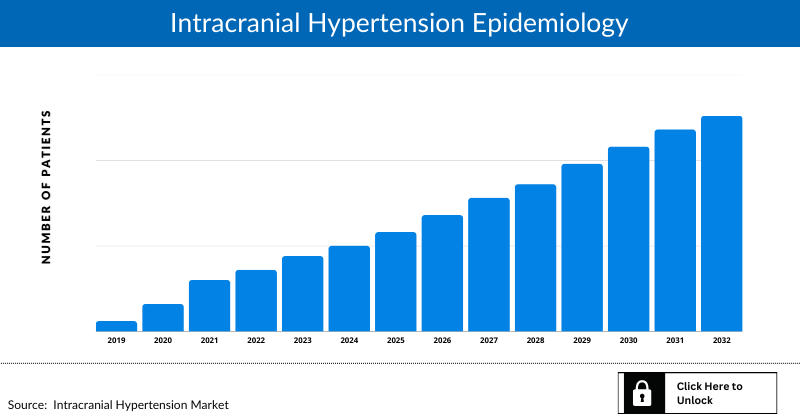
The Intracranial Hypertension epidemiology section provides insights into historical and current Intracranial Hypertension patient pool and forecasted trends for seven individual major countries. It helps recognize the causes of current and forecasted trends by exploring numerous studies and views of key opinion leaders. This part of the Intracranial Hypertension report also provides the diagnosed patient pool, their trends and assumptions undertaken.
Key findings
- According to a study by Latif et al. (2021), the prevalence and incidence of idiopathic intracranial hypertension (IIH) in 2017 was 76/100,000 and 7.8/100,000/year, respectively; the estimates showed a significant increase from 2003.
- As per a study by Ghaffari-Rafi et al. (2020), the annual national incidence (with 25th and 75th quartiles) for IIH in the United States was 1.15 (0.91, 1.44). The females had an incidence of 1.97 (1.48, 2.48), larger than males at 0.36.
- The Intracranial Hypertension epidemiology covered in the report provides historical as well as forecasted Intracranial Hypertension epidemiology [segmented as Total Number of Cases of Intracranial Hypertension, Gender-specific Cases of Intracranial Hypertension, and Diagnosed and Treatable Cases of Intracranial Hypertension] in the 7MM covering the United States, EU4 (Germany, France, Italy, Spain), and the United Kingdom, and Japan from 2019 to 2032.
Country-wise Intracranial Hypertension Epidemiology
The epidemiology segment also provides the Intracranial Hypertension epidemiology data and findings across the United States, EU4 (Germany, France, Italy, Spain), and the United Kingdom, and Japan.
Intracranial Hypertension Drug Chapters
The drug chapter segment of the Intracranial Hypertension report encloses the detailed analysis of Intracranial Hypertension marketed drugs and late-stage (Phase III and Phase II) Intracranial Hypertension pipeline drugs. It also helps understand the Intracranial Hypertension clinical trial details, expressive pharmacological action, agreements and collaborations, approval and patent details, advantages and disadvantages of each included drug, and the latest news and press releases.
Intracranial Hypertension Marketed Drugs
- Acetazolamide is a diuretic and carbonic anhydrase inhibitor that is used to treat various ailments. Glaucoma, idiopathic intracranial hypertension, congestive heart failure, altitude sickness, periodic paralysis, and epilepsy are among the indications for the treatment of which acetazolamide is used.
- Topiramate is an antiseizure medication that inhibits carbonic anhydrase activity. Its efficacy in treating migraine headaches and its association with weight loss are features that make it an attractive potential therapeutic option in IIH.
- For patients with persistent or worsening visual symptoms despite maximizing treatment with acetazolamide, the use of loop diuretics like furosemide is also suggested to lower the elevated ICP.
Note: Detailed Current therapies assessment will be provided in the full report...
Emerging Intracranial Hypertension drugs
Presendin: Invex Therapeutics
Presendin is a once-per-week, subcutaneous, sustained-release Exenatide microsphere formulation originally developed by Invex Therapeutics.
Note: Detailed emerging therapies assessment will be provided in the full report...
Intracranial Hypertension Market Outlook
The treatment of patients with IIH has two major goals: the alleviation of symptoms (usually headaches) and the preservation of vision. Some patients with normal vision and few symptoms only need to be monitored; however, most patients require risk factor reduction and medication. The initial treatment for most patients involves addressing the risk factors and comorbid conditions, carbonic anhydrase inhibitors, adjunctive treatments, and headache prophylaxis.
Patients with IIH can continue to have headaches despite improvement in papilledema and visual function. Medications used in the prophylactic treatment of migraine headaches are often used for headache management in IIH if other treatments prove to be ineffective.
According to DelveInsight, the Intracranial Hypertension market in 7MM is expected to witness a major change in the study period 2019–2032.

Key findings
This section includes a glimpse of the Intracranial Hypertension market in 7MM.
The United States: Intracranial Hypertension Market Outlook
This section provides the total Intracranial Hypertension market size and market size by therapies in the United States.
EU4 and the UK Countries: Intracranial Hypertension Market Outlook
The total Intracranial Hypertension market size and market size by therapies in Germany, France, Italy, Spain, and the United Kingdom are provided in this section.
Japan: Intracranial Hypertension Market Outlook
The total Intracranial Hypertension market size and market size by therapies in Japan are also mentioned.
Intracranial Hypertension Drug Uptake
This section focuses on the rate of uptake of the potential drugs recently launched in the Intracranial Hypertension market or expected to get launched in the market during the study period 2019–2032. The analysis covers Intracranial Hypertension market uptake by drugs, patient uptake by therapies, and sales of each drug.
This will help in understanding the Intracranial Hypertension drugs with the most rapid uptake and the reasons behind the maximal use of new drugs and allows the comparison of the drugs based on market share and size, which again will be useful in investigating factors important in the market uptake and in making financial and regulatory decisions.
Intracranial Hypertension Pipeline Development Activities
The Intracranial Hypertension report provides insights into Intracranial Hypertension Clinical Trails within Phase II, and Phase III stages. It also analyses Intracranial Hypertension’s key players involved in developing targeted therapeutics.
Intracranial Hypertension market clinical trial development activities
The report covers detailed information on collaborations, acquisitions, and mergers, licensing patent details, and other information for Intracranial Hypertension emerging therapies.
Intracranial Hypertension Reimbursement Scenario
Approaching reimbursement proactively can have a positive impact both during the late stages of product development and well after product launch. In a report, we consider reimbursement to identify economically attractive indications and market opportunities. When working with finite resources, the ability to select the markets with the fewest reimbursement barriers can be a critical business and price strategy.
KOL Views
To keep up with current epidemiology and market trends, we take KOLs and SMEs' opinions working in the Intracranial Hypertension domain through primary research to fill the data gaps and validate our secondary research. Their opinion helps to understand and validate current and emerging therapies and treatment patterns along with Intracranial Hypertension market trends. This will support the clients in potential upcoming novel treatments by identifying the overall scenario of the market and the unmet needs.
Competitive Intelligence Analysis
We perform competitive and market intelligence analysis of the Intracranial Hypertension market by using various competitive intelligence tools that include – SWOT analysis, PESTLE analysis, Porter's five forces, BCG Matrix, Market entry strategies, etc. The inclusion of the analysis entirely depends upon the data availability.
|
Report Metrics |
Details |
|
Study Period |
2019 to 2032 |
|
Forecast Period |
2023 to 2032 |
|
CAGR | |
|
Intracranial Hypertension Market Size |
USD XX Million by 2032 |
|
Key Intracranial Hypertension Companies |
Medtronic PLC., Orsan Medical Technologies., Integra LifeSciences Corporation., Spiegelberg GmbH & Co. KG., Codman & Shurtleff Inc., RAUMEDIC AG., Sophysa Ltd., Natus Medical Incorporated, and Many Others. |
Scope of the Intracranial Hypertension Market Report
- Descriptive overview of Intracranial Hypertension, disease overview, patient journeys, treatment algorithms, diagnosis, and currently available therapies
- Comprehensive insight into the Intracranial Hypertension epidemiology and market forecast in the 7MM
- An all-inclusive account of both the current and emerging therapies for Intracranial Hypertension, along with the assessment of new therapies, expected to have an impact on the current treatment landscape
- Exhaustive analysis of the Intracranial Hypertension market; historical and forecasted covering drug outreach in the 7MM
- Detailed patient-based market forecasting determines the trends shaping and driving the global Intracranial Hypertension market
Intracranial Hypertension Market Report Highlights
- In the coming years, the Intracranial Hypertension market is set to change due to the rising awareness of the disease and incremental healthcare spending across the world; which would expand the size of the market to enable the drug manufacturers to penetrate more into the market
- The companies and academics are working to assess challenges and seek opportunities that could influence Intracranial Hypertension R&D. The therapies under development are focused on novel approaches to treat/improve the disease condition
- Major players are involved in developing Intracranial Hypertension therapies. The launch of emerging therapies will significantly impact the Intracranial Hypertension market
- A better understanding of Intracranial Hypertension pathogenesis will also contribute to the development of novel therapeutics for Intracranial Hypertension.
- Our in-depth analysis of the Intracranial Hypertension pipeline assets across different stages of development (Phase III and Phase II), emerging trends, and comparative analysis of pipeline products with detailed clinical profiles, key cross-competition, launch date along with product development activities will support the clients in the decision-making process regarding their therapeutic portfolio by identifying the overall scenario of the research and development activities
Intracranial Hypertension Report Insights
- Patient-Based Market Forecasting
- Intracranial Hypertension Therapeutic approaches
- Intracranial Hypertension pipeline analysis
- Intracranial Hypertension market size and trends
- Intracranial Hypertension market opportunities
- Impact of Upcoming Intracranial Hypertension Therapies
Intracranial Hypertension Report Key Strengths
- 10 year forecast
- 7MM Coverage
- Intracranial Hypertension epidemiology segmentation
- Key cross competition
- KOL views
- Intracranial Hypertension Drugs uptake
Intracranial Hypertension Report Assessment
- Current Intracranial Hypertension treatment practices
- Intracranial Hypertension Unmet needs
- Intracranial Hypertension pipeline product profiles
- Intracranial Hypertension market attractiveness
- Intracranial Hypertension Market Drivers
- Intracranial Hypertension Market Barriers
Key Questions Answered In The Intracranial Hypertension Market Report
Intracranial Hypertension market insights:
- What would be the Intracranial Hypertension market growth till 2032, and what will be the resultant market size in 2032?
- What was the Intracranial Hypertension drug class share (in percentage) distribution in 2019, and how would it look in 2032?
- What would be the Intracranial Hypertension total market size and market size by therapies across the 7MM during the forecast period (2019–2032)?
- What are the key findings of the market across 7MM, and which country will have the largest Intracranial Hypertension market size during the forecast period (2019–2032)
- How would the unmet needs affect the Intracranial Hypertension market dynamics and subsequent analysis of the associated trends?
Intracranial Hypertension Epidemiology Insights:
- What are the disease risk, burden, and regional/ethnic differences of Intracranial Hypertension?
- What is the historical and forecasted Intracranial Hypertension patient pool in 7MM, and where can one observe the highest patient population and growth opportunities?
- What are the key factors driving the epidemiology trends for seven major markets covering the United States, EU4 (Germany, France, Italy, Spain), and the UK, and Japan?
- Current Treatment Scenario, Marketed Drugs, and Emerging Therapies
- What are the current treatment guidelines and treatment options, in addition to approved therapies for Intracranial Hypertension in the US, Europe, and Japan?
- What are the key collaborations (Industry–Industry, Industry-Academia), mergers and acquisitions, and licensing activities related to Intracranial Hypertension therapies?
- What are the recent novel therapies, targets, mechanisms of action, and technologies being developed to overcome the limitation of existing therapies?
- What are the clinical studies going on for Intracranial Hypertension and its status, along with the challenges faced?
Reasons to Buy Intracranial Hypertension Market Report
- The patient-based market forecast analysis will help in developing business strategies by understanding trends shaping and driving the Intracranial Hypertension market
- Organize sales and marketing efforts by identifying the best opportunities for Intracranial Hypertension in the US, EU4 (Germany, France, Italy, Spain), and the United Kingdom, and Japan
- Identification of strong upcoming players in the market that will help devise strategies that will help in getting ahead of competitors

