
Irritable Bowel Syndrome Market Summary
· The Irritable Bowel Syndrome (IBS) market is anticipated to witness steady growth during the forecast period (2026–2036), driven by increasing disease awareness, improved diagnostic rates, growing recognition of gut-brain axis dysfunction, and the substantial Prevalence of IBS across both developed and emerging healthcare markets. Advances in microbiome research, expanding understanding of disease heterogeneity, and increasing investment in novel therapies targeting motility, visceral hypersensitivity, and gastrointestinal inflammation are also expected to support market expansion.
· The growing burden of IBS is attributed to multiple factors, including rising stress levels, dietary and lifestyle changes, increasing Prevalence of gastrointestinal disorders, alterations in gut microbiota, and heightened recognition of the condition among healthcare providers and patients. Additionally, the multifactorial nature of IBS, involving dysregulated gut-brain signaling, visceral hypersensitivity, altered intestinal motility, and psychosocial factors, continues to contribute to disease complexity and healthcare utilization.
· IBS is one of the most prevalent functional gastrointestinal disorders worldwide. As per secondary analysis, the total Prevalence of irritable bowel syndrome in the US is 14.1% (medically diagnosed: 3.3%; undiagnosed but meeting criteria: 10.8%).
· Tenapanor (IBSRELA) exemplifies a current therapeutic approach for the management of IBS, particularly IBS with constipation (IBS-C). By targeting intestinal sodium absorption and fluid secretion pathways, it reflects ongoing efforts to improve symptom control and address the diverse clinical manifestations of the disease.
· Despite available therapies, a significant unmet need remains for interventions capable of delivering consistent and durable symptom relief across the full spectrum of IBS manifestations. An ideal therapy would effectively address abdominal pain, altered bowel habits, bloating, and other core symptoms while demonstrating sustained efficacy, favorable tolerability, and meaningful improvements in patient quality of life.
· The future IBS market is expected to become increasingly competitive as emerging therapies advance through clinical development. RHB-102 (BEKINDA) by RedHill Biopharma and EBX-102-02 by EnteroBiotix represent promising pipeline candidates targeting key pathophysiological mechanisms associated with IBS. As these and other novel therapies progress through clinical development and potentially enter the market, treatment paradigms are expected to evolve, creating new opportunities for growth and improving outcomes for patients with IBS.
DelveInsight's comprehensive report titled "Irritable Bowel Syndrome (IBS) — Market Insights, Epidemiology, and Market Forecast – 2036" offers a detailed analysis of IBS across key epidemiological segments, including gender, age, severity and subtypes. It presents historical and forecasted epidemiological data covering prevalent cases, diagnosed prevalent cases, severity-specific cases, and treated cases of IBS across the 7MM. The report also evaluates IBS-associated comorbidities and symptom burden, including abdominal pain, bloating, altered bowel habits, anxiety, depression, and other functional gastrointestinal disorders, which contribute significantly to disease burden and healthcare utilization. In addition to epidemiology, the report encompasses various aspects related to the patient population, providing a comprehensive understanding of the IBS landscape across major markets. These aspects include the diagnosis process, prescription patterns, physician perspectives, market accessibility, treatment options, and prospective developments in the market across seven major markets: the United States, EU4 (Germany, France, Italy, and Spain), the United Kingdom, and Japan, spanning from 2026 to 2036.
The report analyzes the existing treatment practices and unmet medical requirements in IBS. It evaluates the market potential and identifies potential business prospects for enhancing therapies or interventions. This valuable information enables stakeholders to make well-informed decisions regarding product development and strategic planning for the market.
|
Study Period |
2022–2036 |
|
Forecast Period |
2026–2036 |
|
Geographies Covered |
US, EU4 (Germany, France, Italy, and Spain), the UK, and Japan |
|
Irritable Bowel Syndrome (IBS) Epidemiology |
· Total Prevalent Cases of IBS · Total Diagnosed Prevalent Cases of IBS · Gender-specific Diagnosed Prevalent Cases of IBS · Age-specific Diagnosed Prevalent Cases of IBS · Severity-specific Diagnosed Prevalent Cases of IBS · Subtype-specific Diagnosed Prevalent Cases of IBS · Total Treated Cases of IBS |
|
Irritable Bowel Syndrome (IBS) Market |
· Total Market Size · Market Size by Therapies |
|
Market Analysis |
· KOL Views · Attribute Analysis · SWOT Analysis · Unmet Needs |
|
Irritable Bowel Syndrome (IBS) Market players |
· EnteroBiotix · RedHill Biopharma · Ardelyx · Others |
Irritable Bowel Syndrome (IBS) Understanding and Treatment Algorithm
Irritable Bowel Syndrome (IBS) Overview and Diagnosis
IBS is a common functional gastrointestinal disorder characterized by recurrent abdominal pain associated with altered bowel habits, including diarrhea, constipation, or a combination of both, in the absence of identifiable structural or biochemical abnormalities. IBS is a heterogeneous condition that is broadly classified into IBS with constipation (IBS-C), IBS with diarrhea (IBS-D), mixed IBS (IBS-M), and unsubtyped IBS (IBS-U). Although the exact etiology remains incompletely understood, the disorder is believed to result from a complex interplay among altered gastrointestinal motility, visceral hypersensitivity, dysregulation of the gut-brain axis, intestinal immune activation, changes in gut microbiota composition, and psychosocial factors. Patients commonly experience symptoms such as abdominal pain, bloating, abdominal distension, and altered stool frequency or consistency, which can substantially impair quality of life and daily functioning.
The diagnosis of IBS is primarily based on clinical evaluation and symptom-based diagnostic criteria, most notably the Rome IV criteria, which define IBS as recurrent abdominal pain associated with defecation and changes in stool frequency or form. Diagnostic assessment typically includes a detailed medical history, physical examination, and selective laboratory investigations to exclude organic gastrointestinal disorders with overlapping symptoms, such as inflammatory bowel disease, celiac disease, gastrointestinal infections, or colorectal malignancies. Additional diagnostic testing may be performed in patients presenting with alarm features or atypical clinical characteristics. Given the heterogeneous presentation of IBS and its multifactorial pathophysiology, accurate diagnosis and patient stratification are essential for understanding disease burden and characterizing affected patient populations.
Further details related to country-based variations are provided in the report…
Current Irritable Bowel Syndrome (IBS) Treatment Landscape
According to current clinical practice, the management of IBS is focused on alleviating symptoms, improving quality of life, and addressing the diverse pathophysiological mechanisms underlying the disorder. Treatment is typically individualized based on symptom profile and IBS subtype and may include dietary modifications, lifestyle interventions, psychological therapies, and pharmacological treatments. Commonly used therapies include fiber supplementation, laxatives, antidiarrheal agents, antispasmodics, gut-directed antibiotics, and agents targeting intestinal secretion and motility. For patients with IBS-C, therapies such as Tenapanor (IBSRELA) and other prescription agents may be utilized to improve bowel function and reduce symptom burden. Treatment selection is influenced by symptom severity, predominant bowel habit, patient preferences, and the presence of associated comorbidities.
Patients with persistent or severe symptoms may require a multidisciplinary approach incorporating gastroenterological, nutritional, and behavioral interventions. Growing understanding of the role of the gut-brain axis, visceral hypersensitivity, intestinal permeability, low-grade inflammation, and gut microbiota alterations has highlighted the heterogeneous nature of IBS and the need for more personalized treatment strategies. Despite the availability of multiple therapeutic options, many patients continue to experience inadequate symptom control, recurrent flare-ups, and substantial impairment in daily functioning. Consequently, significant unmet needs remain for therapies capable of providing durable relief of abdominal pain, bloating, and altered bowel habits while addressing the underlying biological mechanisms contributing to disease development and progression.
Further details related to country-based variations are provided in the report…
Irritable Bowel Syndrome (IBS) Epidemiology
The epidemiology section of the IBS market report offers information on the patient populations, including historical and projected trends for each of the seven major markets. Examining key opinion leader views from physicians or clinical experts can assist in identifying the reasons behind historical and projected trends. The patient pool, their trends, and the underlying assumptions are all included in this section of the report. This section also presents the data with relevant tables and graphs, offering a clear and concise view of the Prevalence of IBS. Additionally, the report discloses the assumptions made during the analysis, ensuring data interpretation and presentation transparency. This epidemiological data is valuable for understanding the disease burden and its impact on the patient population across various regions.
Key Findings
- Among the EU4 countries, Germany reported an IBS prevalence of 3.5% based on data from the SHIP-Trend-0 population-based survey by Schauer et al. (2019), whereas Spain demonstrated a wider prevalence range of 3.3% to 14.1%, reflecting differences in the diagnostic criteria used across studies.
- Based on secondary research, the pooled Prevalence of IBS among Italian adults is 7.7%, with estimates ranging from 5.4% to higher values.
- In Japan, Takeoka et al. (2023) reported an IBS prevalence of 14.9% based on the Rome III diagnostic criteria, highlighting a substantial disease burden among adults.
- Major factors contributing to regional differences in the Prevalence and burden of IBS across the 7MM include variations in dietary habits, lifestyle factors, psychosocial stress, healthcare-seeking behavior, diagnostic criteria, healthcare access, and the Prevalence of associated gastrointestinal and psychological comorbidities. The epidemiology of IBS is expected to evolve during the forecast period (2026–2036), driven by increasing disease awareness, broader adoption of standardized diagnostic criteria, growing recognition of gut-brain axis disorders, and improved identification of patients with functional gastrointestinal disorders.
Further details related to country-based variations are provided in the report…
Irritable Bowel Syndrome (IBS) Market Outlook
The 7MM IBS therapeutics market is expected to evolve during 2026–2036, supported by the substantial diagnosed patient population, continued utilization of established symptom-directed therapies, increasing recognition of IBS subtypes, and potential introduction of emerging therapies targeting gastrointestinal signaling and microbiome dysfunction.
With ongoing research and continued dedication, the future holds hope for even more effective treatments and, ultimately, a cure for this challenging condition. According to DelveInsight, the IBS market in the 7MM is expected to change significantly during the forecast period 2026-2036.
Irritable Bowel Syndrome (IBS) Drug Analysis & Competitive Landscape
The IBS drug chapter provides a detailed, market-focused review of approved therapies and the emerging pipeline across Phase I-III clinical trials. It covers mechanism of action, clinical trial data, regulatory approvals, patents, collaborations, strategic partnerships upcoming key catalyst for each therapy, along with their advantages, limitations, and recent developments. This section offers critical insights into the IBS treatment landscape, supporting market assessment, competitive analysis, and growth forecasting for the IBS therapeutics market.
Approved Therapies for Irritable Bowel Syndrome (IBS)
Tenapanor (IBSRELA): Ardelyx
Tenapanor (IBSRELA) is a first-in-class, orally administered small-molecule inhibitor of the sodium/hydrogen exchanger 3 (NHE3) located on the intestinal epithelium. By reducing sodium absorption in the gastrointestinal tract, Tenapanor increases intestinal fluid secretion and accelerates transit, thereby improving bowel movements and alleviating symptoms associated with irritable bowel syndrome with constipation (IBS-C). Clinical studies have demonstrated its ability to improve both abdominal symptoms and bowel function, supporting its role as a targeted treatment option for patients with IBS-C. Its novel mechanism of action distinguishes it from traditional laxatives and other secretagogues, providing an additional therapeutic option for patients with persistent constipation-related symptoms.
- In March 2026, Ardelyx reported the publication of a post hoc analysis from its IBS-C clinical development program in Therapeutic Advances in Gastroenterology. The analysis demonstrated that Tenapanor (IBSRELA) was associated with earlier and sustained symptom relief in adults with IBS-C, including a reduced time to first bowel movement and consistent improvements in abdominal pain, discomfort, and bloating over 12 weeks of treatment.
- In February 2026, Ardelyx reported that the United States Patent and Trademark Office (USPTO) granted US Patent No. 12,539,299, titled “Oral Formulations of Tenapanor,” covering the commercial formulation of Tenapanor (IBSRELA). The patent is scheduled to expire in November 2042 and relates to oral formulations of tenapanor.
|
Irritable Bowel Syndrome (IBS) Marketed/Approved Therapies | ||||||
|
Drug/Therapy |
Company |
Indication |
Molecule Type |
MoA |
RoA |
Marketed Region |
|
Tenapanor (IBSRELA) |
Ardelyx |
IBS-C |
Small molecule |
NHE3 inhibitor |
Oral |
US: 2019 |
Note: Detailed marketed therapies assessment will be provided in the final report…
Irritable Bowel Syndrome (IBS) Pipeline Analysis
The IBS market is expected to evolve gradually, driven by a growing number of emerging therapies currently in clinical development. Key players such as RedHill Biopharma’s RHB-102 (BEKINDA) and EnteroBiotix's (EBX-102-02), among others, are actively committed to addressing this unmet need, with ongoing efforts to advance novel treatment options for this complex and heterogeneous allergic condition.
RHB-102 (BEKINDA): RedHill Biopharma
RHB-102 (BEKINDA) is an extended-release formulation of ondansetron being developed by RedHill Biopharma for the treatment of irritable bowel syndrome with diarrhea (IBS-D). As a selective 5-hydroxytryptamine type 3 (5-HT3) receptor antagonist, RHB-102 is designed to modulate serotonin-mediated signaling in the gastrointestinal tract, thereby reducing bowel urgency, stool frequency, and abdominal discomfort associated with IBS-D. Clinical studies have demonstrated its potential to improve key IBS-D symptoms, supporting its development as a targeted therapeutic option for patients with inadequately controlled disease. Its once-daily extended-release formulation may offer improved convenience and sustained symptom control compared with conventional treatment approaches.
- In January 2026, RedHill Biopharma reported continued progress in the development of RHB-102 (BEKINDA) across multiple gastrointestinal indications, including irritable bowel syndrome with diarrhea (IBS-D). The company highlighted that the development program for RHB-102 is supported by previously reported positive Phase II clinical results in IBS-D, demonstrating the potential of the once-daily extended-release ondansetron formulation to address key symptoms associated with the disease. RedHill Biopharma noted that RHB-102 (BEKINDA) remains under clinical development as a targeted therapeutic candidate for IBS-D, leveraging the established safety profile of ondansetron and a proprietary extended-release formulation designed to provide sustained symptom control.
EBX-102-02: EnteroBiotix
EBX-102-02 is an investigational oral full-spectrum microbiome therapeutic being developed by EnteroBiotix for the treatment of irritable bowel syndrome (IBS). The therapy is designed to restore gut microbial diversity and function by delivering a broad consortium of beneficial microorganisms derived from healthy donor microbiota. By targeting dysbiosis of the microbiome, a key factor implicated in IBS pathophysiology, EBX-102-02 aims to improve gastrointestinal symptoms, including abdominal pain, bloating, and altered bowel habits. Clinical studies have demonstrated promising efficacy across multiple IBS symptom domains, supporting its development as a novel microbiome-based therapeutic approach for patients with IBS.
- In May 2026, EnteroBiotix reported that data from the Phase IIa TrIuMPH trial evaluating EBX-102-02 in patients with irritable bowel syndrome (IBS) were selected as a Poster of Distinction at Digestive Disease Week (DDW) 2026. This is awarded to abstracts ranked among the top 10% of all submissions accepted for poster presentation at the conference. The recognition highlighted the growing scientific interest in EBX-102-02, an investigational microbiome-based therapy being developed by EnteroBiotix for the treatment of IBS, and underscored the potential of microbiome-targeted approaches in addressing the underlying pathophysiology of the disease.
|
Competitive Landscape of Pipeline Drugs | ||||||
|
Drug Name |
Company |
Highest Phase |
Indication |
RoA |
MoA |
Anticipated Launch in the US |
|
RHB-102 (BEKINDA) |
RedHill Biopharma |
II |
IBS- D |
Oral |
5-HT3 receptor antagonist |
Information is available in the full report |
|
EBX-102-02 |
EnteroBiotix |
II |
IBS- C and IBS- D |
Oral |
Microbiome restoration therapy |
Information is available in the full report |
|
XX |
XX |
XX |
XX |
XX |
XX |
XX |
|
Note: Launch insights are provisional and may change with future report updates or the occurrence of major key catalysts. | ||||||
Note: Detailed emerging therapies assessment will be provided in the final report…
Irritable Bowel Syndrome (IBS) Market Segmentation
DelveInsight's 'Irritable Bowel Syndrome (IBS) – Market Insights, Epidemiology, and Market Forecast – 2036’ report provides a detailed outlook of the current and future IBS market, segmented within countries, by therapies, and by classes. Further, the market of each region is then segmented by each therapy to provide a detailed view of the current and future market share of all therapies.
Irritable Bowel Syndrome (IBS) Market Size by Countries
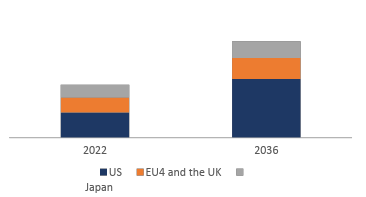
The IBS market size is assessed separately for various countries, including the United States, EU4 (Germany, France, Italy, and Spain), the UK, and Japan. In 2025, the United States held a significant share of the overall 7MM (Seven Major Markets) IBS market, primarily attributed to the country's higher diagnosed Prevalence of the condition and the elevated cost of the available treatments. This dominance is projected to persist, especially with the potential early introduction of new products.
|
Country-wise Market Size Distribution of Irritable Bowel Syndrome (IBS) |
|
|
Irritable Bowel Syndrome (IBS) Market Size by Therapies
IBS Market Size by Therapies is categorized into current and emerging markets for the study period 2022–2036.
|
Market Share Distribution of Irritable Bowel Syndrome (IBS) by Therapies in 2036 |
|
|

Note: Detailed market segment assessment will be provided in the final report.
Irritable Bowel Syndrome (IBS) Drugs Uptake
This section focuses on the sales uptake of potential of IBS drugs that have recently been launched or are anticipated to be launched in the IBS market between 2022 and 2036. It estimates the market penetration of IBS drugs for a given country, examining their impact within and across classes and segments. It also touches upon the financial and regulatory decisions contributing to the probability of success (PoS) of the drugs in the IBS market.
The emerging IBS therapies are analyzed based on various attributes such as safety and efficacy in randomized clinical trials, order of entry and other market dynamics, and the unmet need they fulfill in the IBS market.
Note: Detailed assessment of drug uptake and attribute analysis will be provided in the full report on Irritable Bowel Syndrome (IBS).
Irritable Bowel Syndrome (IBS) Market Access and Reimbursement
DelveInsight’s ‘Irritable Bowel Syndrome (IBS) – Market Insights, Epidemiology, and Market Forecast – 2036’ report provides a descriptive overview of the market access and reimbursement scenario of IBS.
This section includes a detailed analysis of the country-wise healthcare system for each therapy, enlightening the market access, reimbursement policies, and health technology assessments.
KOL Views
To keep up with current IBS market trends and fill gaps in secondary findings, we interview KOLs and SMEs’ working in IBS domain. Their opinion helps understand and validate current and emerging therapies and treatment patterns or IBS market trends. This will support the clients in potential upcoming novel treatments by identifying the overall scenario of the market and the IBS unmet needs.
Irritable Bowel Syndrome (IBS): KOL Insights
DelveInsight's analysts connected with 50+ KOLs to gather insights; however, interviews were conducted with 15+ KOLs in the 7MM. These KOLs were from organizations, institutes, and hospitals, such as National Jewish Health, Charité – Universitätsmedizin Berlin, Hospital Clínic de Barcelona, Humanitas Research Hospital, Hôpital Européen Georges-Pompidou, Royal Brompton Hospital, and Jikei University Hospital among others.
|
Region |
Key Opinion Leaders (KOLs) and Subject Matter Experts (SMEs) |
|
United States |
“The clinical heterogeneity of IBS continues to complicate diagnosis and disease assessment, reflecting the complex interplay between gut motility disturbances, visceral hypersensitivity, microbiome alterations, and gut-brain axis dysfunction.” |
|
United Kingdom |
“Despite the availability of multiple symptom-directed therapies, a substantial proportion of patients continue to experience persistent symptoms, underscoring the need for treatments that address the underlying biological drivers of IBS.” |
Note: Detailed assessment of KOL Views will be provided in the full report on Irritable Bowel Syndrome (IBS).
Competitive Intelligence Analysis
We conduct a Competitive and Market Intelligence analysis of the IBS market, utilizing various Competitive Intelligence tools such as SWOT analysis and Market entry strategies. The inclusion of these analyses is contingent upon data availability, ensuring a comprehensive and well-informed assessment of the market landscape and competitive dynamics.
Irritable Bowel Syndrome (IBS) Pipeline Development Activities
The report offers an analysis of therapeutic candidates in Phase I/II and III stages and examines companies involved in developing targeted therapeutics for IBS. It provides valuable insights into the advancements and progress of potential treatments in clinical development for this condition.
Pipeline Development Activities
The report covers information on collaborations, acquisition and merger, licensing, patent details, and other information for emerging IBS therapies.
Irritable Bowel Syndrome (IBS) Report Insights
- Irritable Bowel Syndrome (IBS) Patient Population
- Therapeutic Approaches
- Irritable Bowel Syndrome (IBS) Pipeline Analysis
- Irritable Bowel Syndrome (IBS) Market Size and Trends
- Irritable Bowel Syndrome (IBS) Market Opportunities
- Impact of Upcoming Therapies
Irritable Bowel Syndrome (IBS) Report Key Strengths
- 11 Years Forecast
- The 7MM Coverage
- Irritable Bowel Syndrome (IBS) Epidemiology Segmentation
- Competitive Landscape
- Highly Analyzed Irritable Bowel Syndrome (IBS) Market
- Irritable Bowel Syndrome (IBS) Drugs Uptake
Irritable Bowel Syndrome (IBS) Report Assessment
- Irritable Bowel Syndrome (IBS) Current Treatment Practices
- Unmet Needs
- Irritable Bowel Syndrome (IBS) Pipeline Product Profiles
- Irritable Bowel Syndrome (IBS) Market Attractiveness
Key Questions
- How common is IBS?
- What are the key findings of IBS epidemiology across the 7MM, and which country will have the highest number of patients during the study period (2022–2036)?
- What are the currently available treatments for IBS?
- What are the disease risk, burden, and unmet needs of IBS?
- At what CAGR is the IBS market and its epidemiology is expected to grow in the 7MM during the forecast period (2026–2036)?
- How would the unmet needs impact the IBS market dynamics and subsequently influence the analysis of the related trends?
- What would be the forecasted patient pool of IBS in the 7MM covering the United States, EU4 (Germany, France, Italy, and Spain), the UK, and Japan?
- Among EU4 and the UK, which country will have the highest number of patients during the forecast period (2026–2036)?
- How many companies are currently developing therapies for the treatment of IBS?
Reasons to buy
- The report will help in developing business strategies by understanding the latest trends and changing treatment dynamics driving the IBS market.
- Insights on patient burden/disease Prevalence, evolution in diagnosis, and factors contributing to the change in the epidemiology of the disease during the forecast years.
- To understand the existing market opportunity in varying geographies and the growth potential over the coming years.
- Distribution of historical and current patient share based on real-world prescription data along with reported sales of current treatment in the US, EU4 (Germany, France, Italy, and Spain), the United Kingdom, and Japan.
- Identification of strong upcoming players in the market will help in devising strategies that will help in getting ahead of competitors.
- Detailed analysis and ranking of class-wise potential current and emerging therapies under the attribute analysis section to provide visibility around leading classes.
- Highlights of access and reimbursement policies of approved therapies, barriers to accessibility of off-label expensive therapies, and patient assistance programs.
- To understand the perspective of Key Opinion Leaders around the accessibility, acceptability, and compliance-related challenges of existing treatment to overcome barriers in the future.
- Detailed insights on the unmet needs of the existing market so that the upcoming players can strengthen their development and launch strategy.
-pipeline.png&w=256&q=75)