-market.png&w=256&q=75)
Juvenile Idiopathic arthritis Market Summary
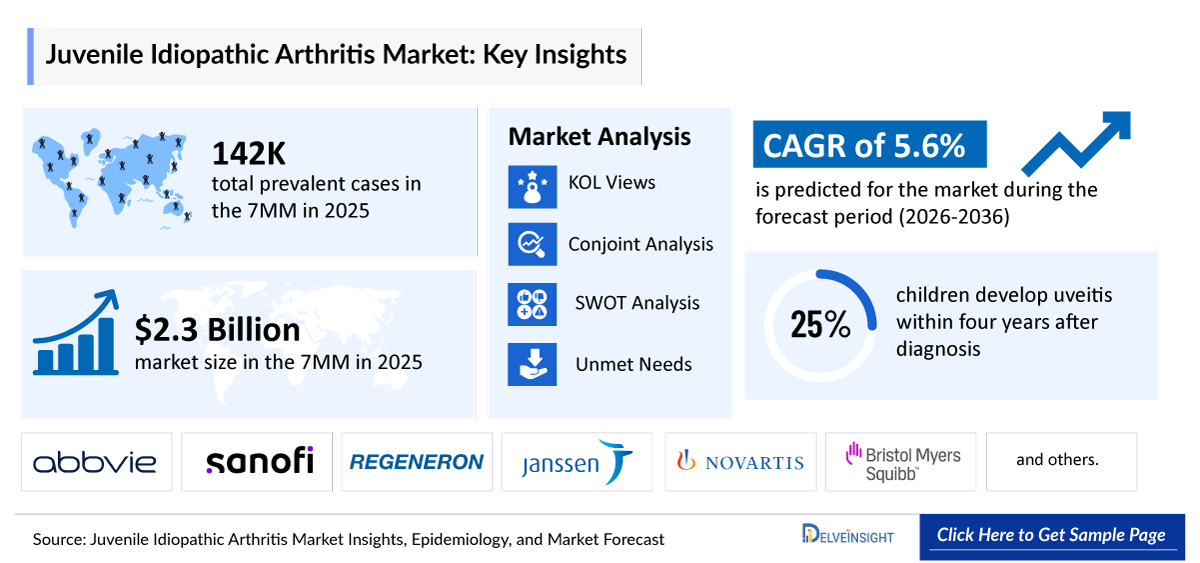
- According to DelveInsight’s analysis, the Juvenile Idiopathic Arthritis Therapeutics Market Size was found to be ~USD 2,300 million in the leading markets (the United States, the EU4 (Germany, France, Italy, and Spain), the United Kingdom, and Japan) in 2025.
- The leading Juvenile Idiopathic Arthritis Companies such as AbbVie, Sanofi/Regeneron Pharmaceuticals, Janssen Pharmaceutical (Johnson & Johnson), Novartis, Bristol-Myers Squibb, UCB Biopharma, and others.
Juvenile Idiopathic Arthritis Market Insights and Trends
- A concentration of Juvenile Idiopathic Arthritis Cases in pediatric and adolescent age groups points to cumulative disease burden and possible delays in recognition and referral. This underscores opportunities for earlier identification, timely risk stratification, and proactive management in younger children to reduce progression and long-term complications.
- Juvenile Idiopathic Arthritis Therapeutic management in is focused on achieving rapid and sustained disease remission, or at a minimum, maintaining low disease activity, by effectively controlling inflammation and associated symptoms. Current Juvenile Idiopathic Arthritis Treatment strategies span a step-wise and individualized approach, utilizing nonsteroidal anti-inflammatory drugs (NSAIDs), glucocorticoids, conventional synthetic DMARDs (csDMARDs), biologic DMARDs (bDMARDs), and targeted small-molecule therapies such as Janus kinase inhibitors (JAK inhibitors).
- The current Juvenile Idiopathic Arthritis Therapeutics Market is witnessing a gradual shift from conventional DMARDs to advanced biologics and targeted therapies, driven by rising disease awareness, evolving clinical guidelines, expanded reimbursement frameworks, and the introduction of novel therapeutic agents. This shift is particularly evident in Polyarticular Juvenile Idiopathic Arthritis (pJIA) and juvenile psoriatic arthritis, where substantial Juvenile Idiopathic Arthritis unmet medical need and higher disease burden necessitate escalation to advanced treatment options.
- The current Juvenile Idiopathic Arthritis Treatment Market Landscape includes a broad range of marketed targeted therapies spanning multiple mechanisms of action, developed by leading pharmaceutical companies, including AbbVie (RINVOQ), Sanofi/Regeneron (KEVZARA), Johnson & Johnson (TREMFYA), Novartis (COSENTYX and ILARIS), UCB (CIMZIA), Bristol Myers Squibb (ORENCIA), Johnson & Johnson/Merck (SIMPONI ARIA), Eli Lilly (OLUMIANT and TALTZ), Swedish Orphan Biovitrum (KINERET), and Pfizer (XELJANZ), reflecting continued innovation and competition in the Juvenile Idiopathic Arthritis therapeutic space.
- Whereas the emerging Juvenile Idiopathic Arthritis Pipeline remains relatively limited, a small number of late- and mid-stage assets such as SOTYKTU (deucravacitinib), BIMZELX (Bimekizumab), MAS825, and filgotinib are being evaluated.
Juvenile Idiopathic Arthritis Market Size and Forecast in the 7MM
- 2036 Projected JIA Market Size: USD 3,760 million
- JIA Growth Rate (2026–2036): 4.6% CAGR
Request for Unlocking the Sample Page of the "Juvenile Idiopathic Arthritis Treatment Market"
Key Factors Driving the Juvenile Idiopathic Arthritis Market Growth by DelveInsight
-
Rising Prevalence of Pediatric Autoimmune Disorders
Increasing incidence of autoimmune and inflammatory diseases among children is driving the demand for effective JIA therapies.
-
Growing Awareness and Early Diagnosis
Improved awareness among parents and healthcare professionals is enabling earlier diagnosis and timely treatment intervention.
-
Advancements in Biologic Therapies
The introduction of biologics targeting TNF inhibitors, IL-6 inhibitors, and JAK pathways has significantly improved treatment outcomes for JIA patients.
-
Strong Pipeline of Emerging Therapies
Pharmaceutical companies are actively developing innovative therapies focused on improving efficacy, safety, and long-term disease management.
-
Increasing Adoption of Personalized Medicine
Precision medicine and targeted treatment approaches are helping optimize therapy selection based on disease subtype and patient response.
-
Rising Healthcare Expenditure
Growing investments in pediatric healthcare infrastructure and autoimmune disease management are supporting market expansion.
-
Improved Access to Advanced Therapies
Better reimbursement policies and wider availability of biologics are increasing patient access to advanced treatment options.
-
Growing Focus on Long-Term Disease Management
Increasing emphasis on preventing joint damage, improving quality of life, and reducing disability in pediatric patients is driving continuous treatment adoption.
-
Technological Advancements in Diagnostics
Improvements in imaging techniques, biomarker research, and disease monitoring tools are enhancing diagnosis and treatment planning.
DelveInsight's ‘Juvenile Idiopathic Arthritis Market Insights, Epidemiology and Market Forecast – 2036’ report delivers an in-depth understanding of the JIA, historical and forecasted epidemiology, as well as the JIA market trends in the United States, EU4 (Germany, Spain, Italy, and France) and the United Kingdom, and Japan.
The Juvenile Idiopathic Arthritis Treatment Market Report delivers a comprehensive analysis of the current treatment landscape, including standards of care, clinical practices, and evolving therapeutic algorithms. It evaluates JIA patient burden trends, revenue & market share dynamics, peak patient share & therapy uptake analysis, and provides an in-depth market size assessment, and growth rate projections (Historical & Forecast 2022–2036) across global regions. The report highlights key unmet medical needs in Juvenile Idiopathic Arthritis and maps the competitive and clinical landscape to uncover high-value opportunities, providing a clear outlook on future market growth potential.
Scope of the Juvenile Idiopathic Arthritis Market Report | |
|
Study Period |
2022–2036 |
|
Historical Year |
2022–2025 |
|
Forecast Period |
2026–2036 |
|
Base Year |
2026 |
|
Geographies Covered |
|
|
Juvenile Idiopathic Arthritis Market CAGR | |
|
Juvenile Idiopathic Arthritis Epidemiology Segmentation Analysis |
Patient Burden Assessment
|
|
Juvenile Idiopathic Arthritis Companies |
|
|
Juvenile Idiopathic Arthritis Therapies |
|
|
Juvenile Idiopathic Arthritis Market |
Segmented by
|
|
Juvenile Idiopathic Arthritis Analysis |
|
Juvenile Idiopathic Arthritis Understanding and Treatment Algorithm
Juvenile Idiopathic Arthritis Overview and Diagnosis
Juvenile Idiopathic Arthritis is the most common chronic inflammatory arthritis in children, caused by immune-mediated synovial inflammation leading to persistent joint pain, swelling, stiffness, and potential cartilage or bone damage, with possible extra-articular complications such as uveitis and impaired growth if untreated. It includes multiple subtypes defined by arthritis lasting =6 weeks, oligoarticular, polyarticular (RF-positive/negative), enthesitis-related, psoriatic, systemic JIA, and undifferentiated arthritis—with disease severity and clinical course varying widely across patients.
Juvenile Idiopathic Arthritis Diagnosis
Diagnosis of Juvenile Idiopathic Arthritis is clinical and based on persistent arthritis for =6 weeks in children under 16, supported by laboratory tests and imaging while excluding other causes of pediatric arthritis. Evaluation typically includes CBC, ESR, and CRP to assess inflammation; ANA for oligoarticular disease and uveitis risk; RF and anti-CCP to identify RA-like polyarticular disease; and HLA-B27 for enthesitis-related arthritis. Imaging such as X-ray, ultrasound, and MRI helps detect synovitis, effusions, and early joint damage. JIA is further classified using ILAR criteria into subtypes including oligoarticular, polyarticular (RF-positive/negative), systemic, psoriatic, enthesitis-related, and undifferentiated arthritis.
Juvenile Idiopathic Arthritis Treatment
The primary goals of Juvenile Idiopathic Arthritis Treatment are to control inflammation, relieve pain and stiffness, prevent joint and organ damage, preserve function, support normal physical, emotional, and social development, achieve remission or minimal disease activity, and enable full participation in daily activities. Management is multidisciplinary and centers on pharmacologic therapy, with NSAIDs used for symptomatic relief, corticosteroids reserved for short-term control or localized inflammation, and disease-modifying antirheumatic drugs (DMARDs), most commonly methotrexate, used to suppress immune activity and prevent long-term joint damage. Biologic agents targeting specific inflammatory pathways, including TNF-a, IL-1, and IL-6, are widely used to achieve sustained disease control, often in combination with DMARDs, though they carry an increased risk of infection.
Juvenile Idiopathic Arthritis Unmet Needs
The section “unmet needs of Juvenile Idiopathic Arthritis” outlines the critical gaps between the current state of patient care, diagnosis, and the ideal & effective management of the disease. It highlights the obstacles experienced by patients, clinicians, and researchers and identifies potential solutions for future progress.
- Limited Approved Options and Regulatory Gaps
- Ongoing Psychosocial and QoL Burden
- Delayed Diagnosis and Limited Access to Specialist Care
- Gaps in Transition from Pediatric to Adult Care, and others…..
Juvenile Idiopathic Arthritis Epidemiology
Key Findings from Juvenile Idiopathic Arthritis Epidemiological Analysis and Forecast
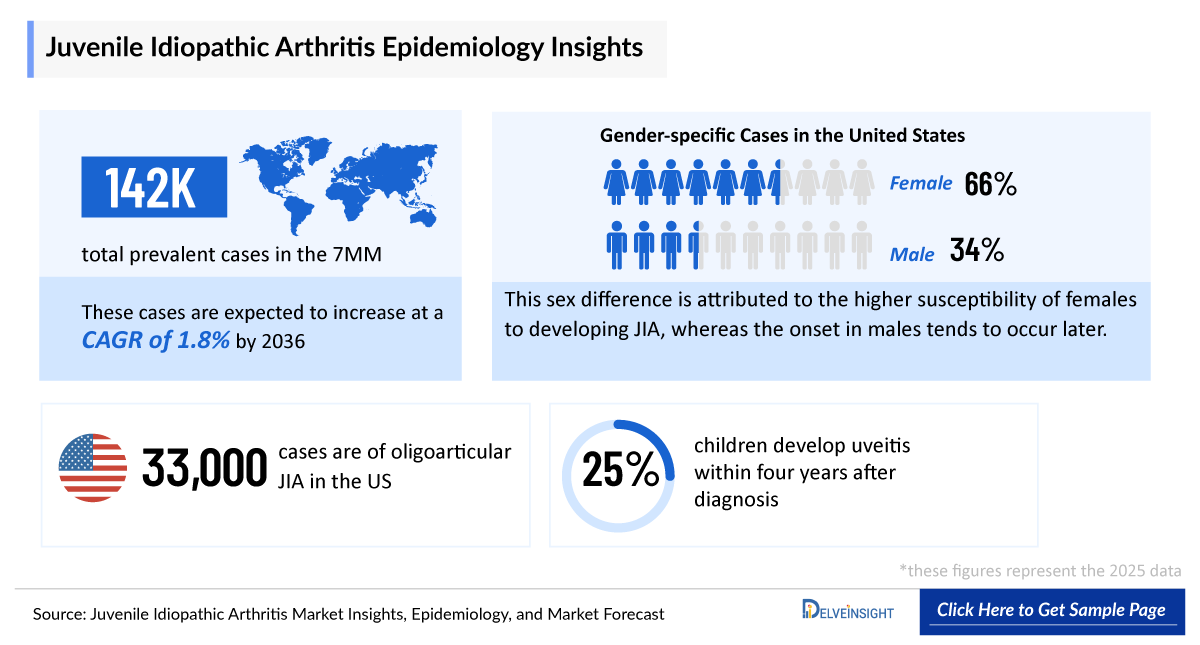
- According to DelveInsight’s estimates, the Juvenile Idiopathic Arthritis Prevalent Cases in the 7MM were approximately 141,800 in 2025.
- In 2025, among mutation-specific Juvenile Idiopathic Arthritis Prevalent Cases in the US, oligoarticular Juvenile Idiopathic Arthritis is the most prevalent subtype (~33,000 cases), reflecting its strong links with HLA class II alleles and ANA positivity, followed by polyarticular JIA accounting for ~29,000.
- The observed female predominance and earlier onset of JIA highlight the importance of sex-specific screening and early intervention strategies, particularly in recognizing susceptibility patterns and addressing disease at onset to prevent long-term complications.
Juvenile Idiopathic Arthritis Drug Analysis & Competitive Analysis
The Juvenile Idiopathic Arthritis drug chapter provides a detailed, market-focused review of approved therapies and the emerging pipeline across Phase I–III Juvenile Idiopathic Arthritis Clinical Trials. It covers the mechanism of action, clinical trial data, regulatory approvals, patents, collaborations, and strategic partnerships for each therapy, along with their advantages, limitations, and recent developments. This section offers critical insights into the Juvenile Idiopathic Arthritis Treatment landscape, supporting market assessment, competitive analysis, and growth forecasting for the Juvenile Idiopathic Arthritis Therapeutics Market.
Juvenile Idiopathic Arthritis Approved Therapies
-
Upadacitinib (RINVOQ): AbbVie
Upadacitinib, developed by AbbVie, is an oral, once-daily selective JAK inhibitor approved in April 2024 for the treatment of pJIA in pediatric patients who have had an inadequate response or intolerance to one or more conventional or biologic DMARDs. By inhibiting JAK-mediated intracellular signaling pathways involved in immune activation and inflammation, upadacitinib helps reduce joint inflammation, pain, and overall disease activity associated with pJIA, highlighting AbbVie’s strategic expansion into younger patient populations with significant unmet need.
Juvenile Idiopathic Arthritis Marketed/Approved Therapies | ||||||
|
Drug/Therapy |
Company |
Indication |
Molecule Type |
RoA |
MoA |
Marketed Region |
|
Deucravacitinib (SOTYKTU) |
Bristol-Myers Squibb |
Psoriatic arthritis |
Small molecule |
Oral |
TYK2 kinase inhibitors |
US: 2026 |
|
Upadacitinib (RINVOQ) |
AbbVie |
pJIA |
Small molecule |
Oral |
JAK inhibitor |
US: 2024 |
|
Sarilumab (KEVZARA) |
Sanofi/ Regeneron Pharmaceuticals |
pJIA |
Monoclonal antibody |
SC |
IIL-6 inhibitor |
US: 2024 EU: 2025 |
Juvenile Idiopathic Arthritis Pipeline Analysis
-
Bimekizumab (BIMZELX): UCB Biopharma
Bimekizumab (BIMZELX) is a humanized monoclonal IgG1 antibody developed to target key drivers of inflammation. It works by selectively blocking both interleukin-17A (IL-17A) and interleukin-17F (IL-17F), cytokines that play central roles in the immune pathways responsible for chronic inflammatory disease activity. By inhibiting the signaling of these two IL-17 family members, the therapy helps reduce inflammatory responses and associated clinical symptoms.
Comparison of Emerging Drugs Under Development | |||||||
|
Drug Name |
Company |
Highest Phase |
Indication |
RoA |
MoA |
Molecule Type |
Anticipated Launch in the US |
|
Bimekizumab (BIMZELX) |
UCB Biopharma |
III |
Psoriatic arthritis |
SC |
IL17A protein inhibitors and IL17F protein inhibitors |
Monoclonal antibody |
2029 |
|
MAS825 |
Novartis |
II |
Pediatric and adult participants with Still's disease, including MAS |
IV |
IL-1β and IL-18 inhibitor |
Monoclonal antibody |
Information is available in the full report |
|
Filgotinib (JYSELECA) |
Alfasigma |
I |
JIA |
Oral |
JAK 1 inhibitor |
Small molecule |
Information is available in the full report |
|
Note: Launch insights are provisional and may change with future report updates or the occurrence of major key catalysts. | |||||||
Juvenile Idiopathic Arthritis Companies, Market Leaders and Emerging Companies
- AbbVie
- Sanofi/Regeneron Pharmaceuticals
- Janssen Pharmaceutical (Johnson & Johnson)
- Novartis
- Bristol-Myers Squibb
- UCB Biopharma, and others
Juvenile Idiopathic Arthritis Drug Updates
- In June 2026, the U.S. FDA approved expanded indications for Organon’s TOFIDENCE (tocilizumab-bavi), a biosimilar to Actemra. The drug is now indicated for treating severe or life-threatening CAR T-cell-induced cytokine release syndrome (CRS) and hospitalized COVID-19 in adult and pediatric patients aged two years and older.
- In March 2026, Celltrion announced the U.S. commercial availability of its AVTOZMA (tocilizumab-anoh) subcutaneous formulation. Referencing Actemra, it is among the first tocilizumab biosimilars to offer both intravenous and subcutaneous options in the U.S., allowing convenient, at-home self-injection for chronic inflammatory diseases like rheumatoid arthritis.
- In March 2026, the FDA deucravacitinib (SOTYKTU) for the treatment of adults with active psoriatic arthritis, based on positive results from the pivotal POETYK PsA-1 and POETYK PsA-2 trials.
- In February 2026, Dr. Reddy’s Laboratories announced that the U.S. FDA accepted for review its Biologics License Application for DRL_AB, a proposed interchangeable biosimilar to Orencia (abatacept). The application covers the intravenous formulation for treating moderate-to-severe rheumatoid arthritis, psoriatic arthritis, and polyarticular juvenile idiopathic arthritis.
- In November 2025, Biocon Pharma, a wholly owned subsidiary of Pfizer, has received FDA approval for its Abbreviated New Drug Application (ANDA) for tofacitinib (XELJANZ) Extended-Release Tablets (ERTs). Final approval has been granted for the 11 mg strength and tentative approval for the 22 mg strength.
- In September 2025, AbbVie submitted a filing in Japan for label expansion of upadacitinib for an additional indication of pJIA inadequately controlled with existing treatments, indicating work toward broader global availability for this indication beyond the US.
Juvenile Idiopathic Arthritis Market Outlook
The Juvenile Idiopathic Arthritis Therapeutics Market is undergoing a significant shift after years of dependence on conventional immunosuppression and stepwise empiric treatment. The approvals and expanding use of targeted therapies such as upadacitinib (RINVOQ), an advanced targeted JAK inhibitor and sarilumab (KEVZARA) mark a transition toward mechanism-driven, disease-modifying management in JIA. These advances validate cytokine- and pathway-specific approaches, reinforce regulatory and clinical confidence in targeted immunomodulation, and are reshaping the competitive landscape by expanding therapeutic options and accelerating innovation across the JIA pipeline.
With the advancement of targeted and biologic therapies such as bimekizumab, and MAS825, the Juvenile Idiopathic Arthritis Treatment Market Landscape is evolving in a manner similar to other immune-mediated and rare inflammatory diseases, where early approvals often catalyze broader therapeutic expansion. The United States continues to represent the largest JIA market, driven by higher diagnosis rates, earlier biologic adoption, strong patient and physician awareness, and more rapid uptake of innovative therapies compared with the EU4, the UK, and Japan.
Overall, the launch of first-in-class therapies, improved diagnostic approaches, and increasing disease awareness are expected to drive steady growth in the 7MM JIA market from 2022–2036, with strong commercial implications for both marketed products and emerging pipelines.
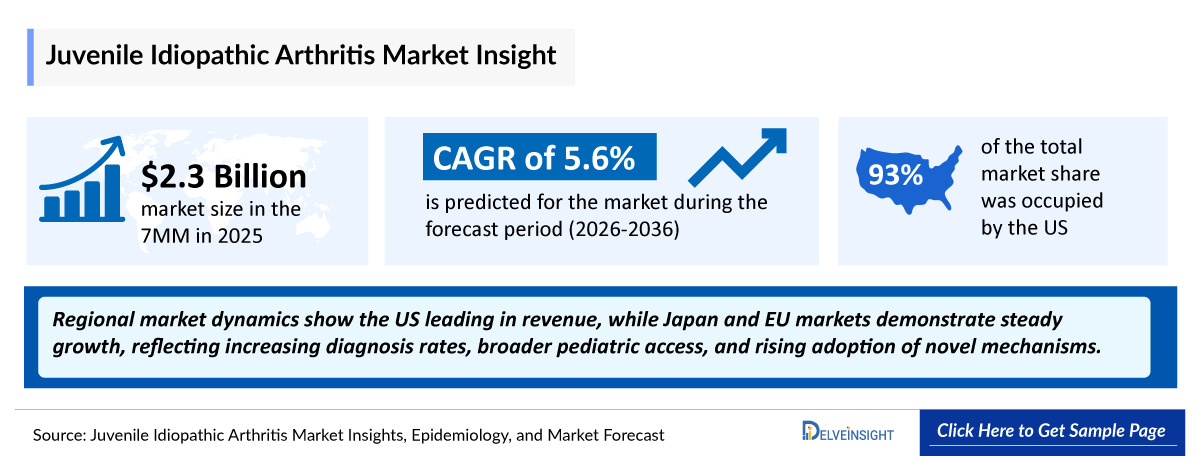
- According to the estimates, the largest Juvenile Idiopathic Arthritis Therapeutics Market Size was captured by the United States, i.e., ~USD 2,130 million by 2036.
- The Juvenile Idiopathic Arthritis Therapeutics Market is evolving as treatment focus shifts from broad-spectrum biologics to more targeted therapies, with JAK inhibitors and IL-targeted agents driving adoption due to their favorable efficacy, safety, and expanded pediatric indications.
- Regional Juvenile Idiopathic Arthritis Market Dynamics show the US leading in revenue, while Japan and EU markets demonstrate steady growth, reflecting increasing diagnosis rates, broader pediatric access, and rising adoption of novel mechanisms.
- In 2036, among all the therapies for JIA, the highest revenue is estimated to be generated by upadacitinib, in the United States.
- The entry of mid- to late-stage candidates such as bimekizumab (BIMZELX) and MAS825 is expected to intensify competition in the Juvenile Idiopathic Arthritis Treatment Market Landscape during the forecast period.
Juvenile Idiopathic Arthritis Drug Class/Insights into Leading Emerging and Marketed Therapies (2022–2036 Forecast)
The Juvenile Idiopathic Arthritis Therapeutics Market comprises targeted small molecules and biologics, and T-cell co-stimulation modulators alongside conventional and supportive therapies, each addressing distinct immunologic pathways and inflammatory mechanisms underlying JIA. Targeted small molecules: Upadacitinib (RINVOQ) is a selective JAK1 inhibitor that delivers robust anti-inflammatory efficacy in JIA by modulating key cytokine signaling pathways, validating the clinical and commercial potential of oral, mechanism-driven therapies in pediatric autoimmune disease.
Biologics: Sarilumab (KEVZARA) is an interleukin-6 receptor blocking monoclonal antibody that targets a central inflammatory pathway in JIA, reducing systemic and joint inflammation and supporting the role of cytokine-specific biologics as effective disease-modifying therapies in pediatric autoimmune disease. T-cell co-stimulation modulators: Abatacept (ORENCIA), a recombinant fusion protein from Bristol-Myers Squibb, inhibits CD80/CD86-CD28 signaling to modulate T-cell activation. It is administered subcutaneously or by intravenous infusion and is approved for pediatric JIA and psoriatic arthritis, providing targeted immune control and durable disease management.
Biologics and targeted small molecules together define the core innovation landscape in JIA, with biologics already well established clinically and commercially, while oral small molecules are driving next-generation pipeline growth.
Juvenile Idiopathic Arthritis Drug Uptake
This section focuses on the uptake rate of potential Juvenile Idiopathic Arthritis drugs expected to be launched in the market during the forecast period (2026–2036). The analysis covers the JIA market's uptake by drugs, patient uptake by therapy, and sales of each drug.
The uptake of Juvenile Idiopathic Arthritis Therapies is expected to vary across targeted biologics, small-molecule inhibitors, and conventional immunomodulators. Recently approved or emerging targeted therapies such as upadacitinib (RINVOQ), and sarilumab (KEVZARA) demonstrate moderate uptake while deucravacitinib (SOTYKTU) anticipated to show slightly higher but progressive uptake, supported by their targeted mechanisms, defined patient populations, and growing physician familiarity in managing refractory disease. Their adoption is likely to be driven by the limitations of conventional DMARDs in achieving sustained disease control and the need for improved long-term outcomes in pediatric patients.
In comparison, other next-generation targeted therapies such as baricitinib are expected to show a gradual but steady uptake as clinical evidence expands and these agents are progressively incorporated into treatment algorithms across heterogeneous JIA subtypes.
Juvenile Idiopathic Arthritis Market Access and Reimbursement
The United States
The US Reimbursement for Juvenile Idiopathic Arthritis Therapies | |
|
Drug |
Access Program |
|
Upadacitinib (RINVOQ) |
|
|
Sarilumab (KEVZARA) |
|
Reimbursement is a crucial factor that affects the drug’s access to the market. Often, the decision to reimburse comes down to the price of the drug relative to the benefit it produces in treated patients. To reduce the healthcare burden of these high-cost therapies, many payment models are being considered by payers and other industry insiders.
Juvenile Idiopathic Arthritis Therapies Price Scenario & Trends
Pricing and analogue assessment of Juvenile Idiopathic Arthritis Therapies highlights evolving price dynamics structures. This section summarizes the cost of approved treatments, closest and most appropriate analogue selection for emerging therapies, and understanding of how pricing influences market access, adherence, and long-term uptake.
Pricing of Juvenile Idiopathic Arthritis Approved Drugs
Upadacitinib is administered at a dose of 15 mg once daily for patients weighing =30 kg. The list price (WAC) for a 30-day supply is USD 6,752.77, translating to an estimated annual therapy cost of approximately USD 74,299.
Juvenile Idiopathic Arthritis Industry Experts and Physician Views
To keep up with JIA market trends, we take Key Opinion Leaders (KOLs) and Subject Matter Experts (SMEs) opinions working in the domain through primary research to fill the data gaps and validate our secondary research. Industry experts were contacted for insights on the JIA emerging therapies, evolving treatment landscape, patient adherence to conventional therapies, therapy switching trends, drug adoption and uptake, accessibility challenges, and epidemiology and real-world prescription patterns in JIA, including MD, PhD, Instructor, Postdoctoral Researcher, Professor, Researcher, and others.
DelveInsight’s analysts connected with 10+ KOLs to gather insights; however, interviews were conducted with 6+ KOLs in the 7MM. Centers such as the University of North Carolina at Chapel Hill, Berlin Institute of Health at Charité, and the University of Nottingham, etc. were contacted. Their opinion helps understand and validate current and emerging JIA therapies, highlight unmet medical needs, provide epidemiological context, and support strategic decisions for market access, therapy adoption, and pipeline prioritization in JIA.
|
Region |
Key Opinion Leaders (KOLs) and Subject Matter Experts (SMEs) |
|
United States |
“There are notable clinical and imaging limitations, as certain joints, such as the temporomandibular and sacroiliac, are difficult to assess through routine physical examination. This drives the need, according to experts, for more advanced imaging modalities and harmonized assessment frameworks to improve diagnostic accuracy and monitoring.” |
|
Germany |
“Leading experts, including contributors to current treatment guidelines, advocate initiating conventional DMARDs and biologic therapies early in the disease course. Rather than adopting a prolonged “wait-and-see” strategy, they emphasize prompt intervention to control inflammation, avert irreversible joint damage, and optimize long-term outcomes.” |
Juvenile Idiopathic Arthritis Qualitative Analysis: SWOT and Conjoint Analysis
We perform qualitative and Systemic Juvenile Idiopathic Arthritis Therapeutics Market Intelligence analysis using various approaches, such as SWOT analysis and conjoint analysis. In the SWOT analysis of Juvenile Idiopathic Arthritis, strengths, weaknesses, opportunities, and threats in terms of disease diagnosis, patient awareness, patient burden, competitive landscape, cost-effectiveness, and geographical accessibility of therapies are provided. Conjoint analysis analyzes emerging therapies based on relevant attributes such as safety, efficacy, frequency of administration, route of administration, and order of entry. Scoring is given based on these parameters to analyze the effectiveness of therapy.
The team of analysts analyzes promising emerging therapies based on relevant attributes such as safety, efficacy, frequency of administration, route of administration, and order of entry. In efficacy, the trial’s primary and secondary outcome measures are evaluated, whereas the therapies’ safety is evaluated, wherein the acceptability, tolerability, and adverse events are mainly observed. In addition, the scoring is also based on the route of administration, order of entry, probability of success, and the addressable patient pool for each therapy. According to these parameters, the final weightage score and the ranking of the emerging therapies are decided.
Scope of the Juvenile Idiopathic Arthritis Market Report
- The Juvenile Idiopathic Arthritis Therapeutics Market Report covers a segment of key events, an executive summary, a descriptive overview, explaining its causes, signs and symptoms, pathogenesis, and currently available treatments.
- Comprehensive insight has been provided into the epidemiology segments and forecasts, the future growth potential of the diagnosis rate, and disease progression along Juvenile Idiopathic Arthritis Treatment guidelines.
- Additionally, an all-inclusive account of both the current and emerging treatments, along with the elaborative profiles of late-stage and prominent therapies, will have an impact on the current Juvenile Idiopathic Arthritis Treatment landscape.
- A detailed review of the Juvenile Idiopathic Arthritis Therapeutics Market, historical and forecasted Juvenile Idiopathic Arthritis Market Size, Juvenile Idiopathic Arthritis Market Share by therapies, detailed assumptions, and rationale behind our approach is included in the report, covering the 7MM drug outreach.
- The Juvenile Idiopathic Arthritis Therapeutics Market Report provides an edge while developing business strategies by understanding trends through SWOT analysis and expert insights/KOL views, patient journey, and treatment preferences that help in shaping and driving the 7MM Systemic Juvenile Idiopathic Arthritis Market.
Juvenile Idiopathic Arthritis Market Report Insights
- Juvenile Idiopathic Arthritis Patient Population Forecast
- Juvenile Idiopathic Arthritis Therapeutics Market Size
- Juvenile Idiopathic Arthritis Pipeline Analysis
- Juvenile Idiopathic Arthritis Market Size and Trends
- Juvenile Idiopathic Arthritis Market Opportunity (Current and forecasted)
Juvenile Idiopathic Arthritis Market Report Key Strengths
- Epidemiology-based (Epi-based) Bottom-up Forecasting
- Artificial Intelligence (AI)-enabled Market Research Report
- 11-year forecast
- Juvenile Idiopathic Arthritis Market Outlook (North America, Europe, Asia-Pacific)
- Patient Burden Trends (by geography)
- Juvenile Idiopathic Arthritis Treatment Addressable Market (TAM)
- Juvenile Idiopathic Arthritis Competitive Landscape
- Juvenile Idiopathic Arthritis Major Companies Insights
- Juvenile Idiopathic Arthritis Price Trends and Analogue Assessment
- Juvenile Idiopathic Arthritis Therapies Drug Adoption/Uptake
- Juvenile Idiopathic Arthritis Therapies Peak Patient Share analysis
Juvenile Idiopathic Arthritis Market Report Assessment
- Juvenile Idiopathic Arthritis Current Treatment Practices
- Juvenile Idiopathic Arthritis Unmet Needs
- Juvenile Idiopathic Arthritis Clinical Development Analysis
- Juvenile Idiopathic Arthritis Emerging Drugs Product Profiles
- Juvenile Idiopathic Arthritis Market Attractiveness
- Juvenile Idiopathic Arthritis Qualitative Analysis (SWOT and Conjoint Analysis)
Key Questions Answered in the Juvenile Idiopathic Arthritis Market Report
Juvenile Idiopathic Arthritis Treatment Market Insights
- What was the Juvenile Idiopathic Arthritis Therapeutics Market Size, the Systemic Juvenile Idiopathic Arthritis Market Size by therapies, Juvenile Idiopathic Arthritis Market Share (%) distribution in 2025, and what would it look like by 2036? What are the contributing factors for this growth?
- What are the anticipated pricing variations among different geographies for the emerging therapies in the future?
- What can be the future treatment paradigm of Juvenile Idiopathic Arthritis?
- What are the disease risks, burdens, and unmet needs of Juvenile Idiopathic Arthritis? What will be the growth opportunities across the 7MM concerning the patient population with Juvenile Idiopathic Arthritis?
- Who is the major future competitor in the market, and how will the competitors affect their market share?
- What are the current options for the treatment of Juvenile Idiopathic Arthritis? What are the current guidelines for treating Juvenile Idiopathic Arthritis in the US, Europe, and Japan?
Reasons to Buy the Juvenile Idiopathic Arthritis Market Report
- The Juvenile Idiopathic Arthritis Therapeutics Market Report will help in developing business strategies by understanding the latest trends and changing treatment dynamics driving the Systemic Juvenile Idiopathic Arthritis Market.
- Bottom up forecasting builds from the affected population to product forecasts, delivering a robust, data-driven approach ideal for new therapies and novel classes.
- Insights on patient burden/disease: Juvenile Idiopathic Arthritis Incidence, evolution in diagnosis, and factors contributing to the change in the epidemiology of the disease during the forecast years.
- Understand the existing Juvenile Idiopathic Arthritis Drugs Market opportunities in varying geographies and the growth potential over the coming years.
- Identifying strong upcoming players in the Juvenile Idiopathic Arthritis Drugs Market will help devise strategies to help get ahead of competitors.
- Detailed analysis and ranking of class-wise potential current and emerging therapies under the conjoint analysis section to provide visibility around leading classes.
- To understand KOLs’ perspectives on the accessibility, acceptability, and compliance-related challenges of existing treatment to overcome barriers in the future.
- Detailed insights on the unmet needs of the existing Juvenile Idiopathic Arthritis Drugs Market so that the upcoming players can strengthen their development and launch strategy.
- This Artificial Intelligence (AI) enabled report summarize and simplify complex datasets within the report into clear, actionable insights for stakeholders, investors, and healthcare providers, enabling faster, data driven decisions.
Stay updated with us for Recent Articles