
Large Granular Lymphocytic Leukemia Market Summary
- The treatment Pipeline for Large Granular Lymphocytic Leukemia remains significantly underdeveloped, with no marketed drugs specifically approved for this condition. However, promising emerging therapies such as Ulviprubart (Abcuro), and DR-01 (Dren Bio) show potential to address the unmet medical needs, offering hope for improved disease management and patient outcomes.
Large Granular Lymphocyte Leukemia Market & Epidemiology Analysis
- A definitive Large Granular Lymphocytic Leukemia Diagnosis requires identifying a chronic clonal expansion of T- or NK-Cell LGLs in the proper clinical context. Diagnosis involves cytology, immunophenotyping, monoclonality testing, CBC, flow cytometry, TCR gene rearrangement, bone marrow biopsy, or splenectomy.
- Relapse and resistance to current therapies are common among Large Granular Lymphocytic Leukemia Patients, making long-term disease control difficult. This highlights the urgent need for novel, more effective treatment approaches to achieve better management and improve patient outcomes.
- In recent decades, immunosuppressive drugs have been the main therapy for LGLL, but no new drugs or regimens have been developed. In a recent study, a thalidomide-based regimen was administered for the first time in the treatment of LGLL, showing excellent efficacy, with a complete response rate of 75% and an overall response rate of 90.4%, the highest response rate reported to date.
- Ongoing research in LGLL is focused on improving patient outcomes through the development of more effective therapies. Advances in understanding the disease’s underlying biology and mechanisms of clonal expansion are driving the shift toward more personalized and targeted treatment approaches.
Request for Unlocking the Sample Page of the Report @ Large Granular Lymphocytic Leukemia Treatment Market
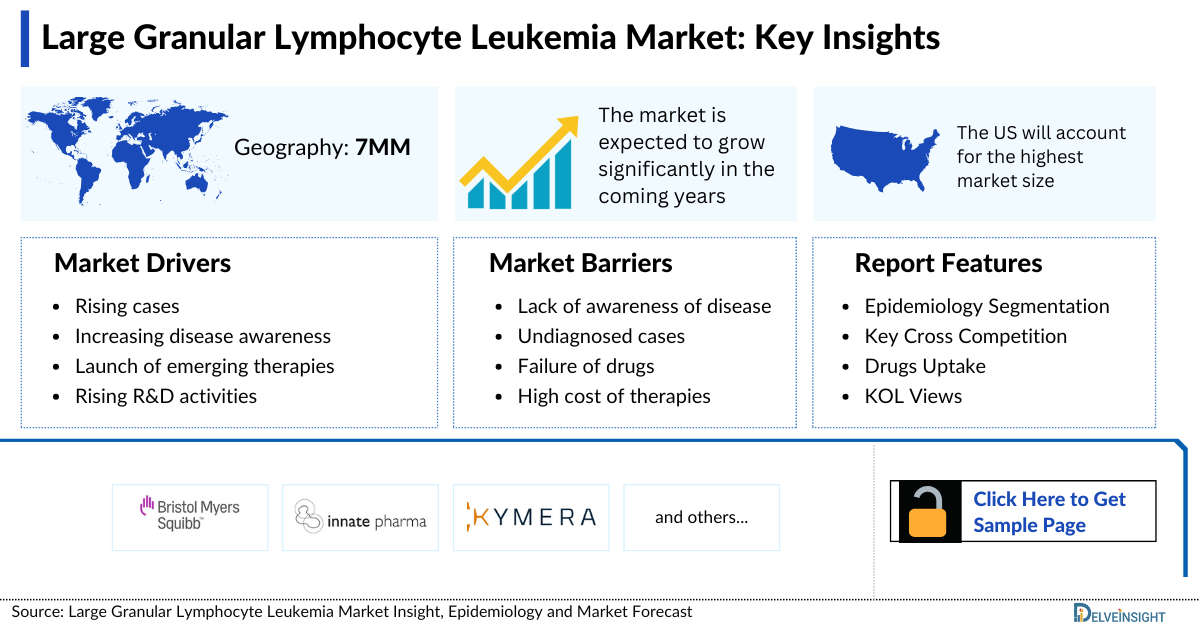
Key Factors Impacting the Large Granular Lymphocytic Leukemia Market Growth
-
Rising unmet medical needs and lack of approved therapies
LGLL currently has no FDA-approved treatments specifically indicated for the disease, and patients rely largely on off-label immunosuppressive therapies and chemotherapy. These approaches are only partially effective, often leading to resistance, relapses, and limited long-term benefit. This significant therapeutic gap is a major factor driving the need for innovative and targeted treatment options.
-
Diagnostic challenges and underdiagnosis
LGLL is a rare disorder with nonspecific symptoms, making diagnosis difficult and often delayed. The requirement for specialized tests such as flow cytometry and genetic analysis further complicates timely identification. Inadequate diagnostic tools and frequent misdiagnosis hinder early treatment initiation and effective disease management.
-
Emergence of targeted and novel therapies
The pipeline, although limited, is evolving with promising candidates such as Ulviprubart (ABC008) and DR-01, which target disease-driving immune cells through novel mechanisms.
-
Ongoing clinical trials and early-stage data presentation
It indicates a shift toward mechanism-based therapies that could potentially address the root cause of the disease rather than just symptoms.
-
Increasing epidemiological burden and aging population
LGLL is more prevalent in older individuals, with most cases occurring in patients above 60 years. Although rare, the diagnosed patient pool is expected to grow over the forecast period due to improved awareness, better diagnostics, and demographic trends such as aging populations.
-
Dependence on symptom management and long-term care
Current treatment strategies focus primarily on symptom control, including managing cytopenias, infections, and anemia through pharmacological and supportive care approaches. The chronic nature of LGLL necessitates long-term disease management, impacting patient quality of life and increasing healthcare burden.
-
Limited clinical pipeline and early-stage development
The LGLL pipeline remains sparse, with only a few therapies in early clinical stages. This limited development landscape slows innovation and delays the availability of effective treatment options, although ongoing research efforts are expected to gradually improve the scenario.
-
Evolving market dynamics driven by R&D and awareness
The Large Granular Lymphocytic Leukemia Market is expected to grow over the forecast period due to increasing research activities, the intr oduction of emerging therapies, and rising awareness among healthcare professionals and patients. These factors are likely to reshape the treatment landscape and improve disease management in the coming years. DelveInsight’s "Large Granular Lymphocyte Leukemia Market Insight, Epidemiology, and Market Forecast – 2036" report delivers an in-depth understanding of LGLL, historical and forecasted epidemiology as well as the LGLL market trends in the United States, EU4 (Germany, France, Italy, and Spain) and the United Kingdom, and Japan.
The Large Granular Lymphocytic Leukemia Treatment Market Report provides current treatment practices, emerging drugs, LGLL share of individual therapies, and current and forecasted Large Granular Lymphocytic Leukemia market size from 2022 to 2036, segmented by seven major markets. The report also covers current Large Granular Lymphocytic Leukemia treatment practices/algorithms and unmet medical needs to curate the best of the opportunities and assess the underlying potential of the market.
Scope of the Large Granular Lymphocytic Leukemia Market | |
| Study Period | 2022–2036 |
| Forecast Period | 2026–2036 |
| Geographies Covered | US, EU4 (Germany, France, Italy, and Spain) and the UK, and Japan |
| Large Granular Lymphocytic Leukemia Epidemiology |
Segmented By
|
| Large Granular Lymphocytic Leukemia Companies |
|
| Large Granular Lymphocytic Leukemia Therapies |
|
| Large Granular Lymphocytic Leukemia Market |
Segmented By
|
| Analysis |
|
Large Granular Lymphocyte Leukemia Understanding
Large Granular Lymphocyte Leukemia Overview
Large granular lymphocytic leukemia (LGLL) is a rare hematological malignancy characterized by aberrant proliferation and resistance to activation-induced apoptosis of mature post-thymic large granular lymphocytes (LGLs) in the peripheral blood, bone marrow, and spleen. It arises from cytotoxic T lymphocytes (T-LGLL) in approximately 85% of cases. The remainder of cases arise from natural killer (NK) cells and are categorized in the 2016 World Health Organization (WHO) classification into chronic lymphoproliferative disorder of NK cells (CLPD-NK) and the transformed aggressive NK-LGL leukemia, Epstein–Barr Virus negative. Both T-LGLL and CLPD-NK share a similar indolent clinical course, presentations, and treatment responses, whereas the aggressive NK-LGL leukemia variant is refractory to chemotherapy and usually quickly fatal.
Large Granular Lymphocyte Leukemia Diagnosis
LGLL is a rare chronic lymphoproliferative disorder diagnosed through a combination of clinical features, blood findings, immunophenotyping, molecular studies, and bone marrow evaluation. Patients often present with chronic neutropenia, recurrent infections, anemia (commonly due to pure red cell aplasia), splenomegaly, or autoimmune conditions like rheumatoid arthritis. Peripheral blood smear shows large lymphocytes with abundant cytoplasm and azurophilic granules, and a persistent LGL count >0.5 × 10?/L for over six months supports the diagnosis, though lower counts may be significant if clonality and symptoms are present.
Flow cytometry helps distinguish between subtypes: T-cell LGLL (T-LGLL) typically expresses CD3, CD8, CD57, and TCRs, while NK-cell LGLL (CLPD-NK) lacks CD3 and expresses CD16, CD56, and CD57. TCR gene rearrangement confirms clonality in T-LGLL; in CLPD-NK, clonality is inferred from aberrant NK markers. Bone marrow biopsy may show interstitial or sinusoidal LGL infiltration and helps exclude other hematologic disorders. Molecular studies often reveal STAT3 mutations in 30–40% of T-LGLL cases, which are associated with more symptomatic disease.
STAT5b mutations are rarer but linked to aggressive variants. Autoimmune markers like rheumatoid factor and ANA may also be present. Overall, diagnosis is based on integrating clinical, morphologic, immunophenotypic, and molecular data while excluding reactive or secondary causes.
Further details related to diagnosis will be provided in the report…
Large Granular Lymphocyte Leukemia Treatment
Immunosuppressive therapy is the cornerstone of Large Granular Lymphocytic Leukemia treatment, as the disease involves activated cytotoxic lymphocytes. First-line options include methotrexate, cyclophosphamide, and cyclosporine A. Methotrexate is preferred for neutropenia, while cyclophosphamide is favored for anemia or Pure red cell aplasia (PRCA). Response rates vary, with cyclophosphamide showing higher complete response and lower relapse rates. Cyclosporine A improves cytopenias but doesn’t eliminate the LGL clone and may be more effective in HLA-DR4-positive patients.
If initial treatment fails, switching between methotrexate and cyclophosphamide is common, with cyclosporine A as a third-line option. Methotrexate and cyclosporine A are continued long-term if tolerated, but cyclophosphamide is usually stopped after 8–12 months due to toxicity risks. Prednisone has limited benefit. Second-line treatments for refractory disease include purine analogs (e.g., fludarabine), alemtuzumab, and stem cell transplant in aggressive cases. Targeted approaches are under investigation, including Ulviprubart, DR-01, and ceramide-based therapies, offering potential in future management.
Further details related to treatment will be provided in the report…
Large Granular Lymphocyte Leukemia Epidemiology
The Large Granular Lymphocytic Leukemia epidemiology chapter in the report provides historical as well as forecasted epidemiology segmented by the total Large Granular Lymphocytic Leukemia incidence cases, Large Granular Lymphocytic Leukemia type-specific cases, Large Granular Lymphocytic Leukemia age-specific cases, Large Granular Lymphocytic Leukemia clinical manifestations- specific cases, Large Granular Lymphocytic Leukemia mutation-specific cases, Large Granular Lymphocytic Leukemia treated cases by line of therapies in the 7MM market covering the United States, EU4 (Germany, France, Italy, and Spain) and the United Kingdom, and Japan from 2022 to 2036.
Key Findings from Large Granular Lymphocytic Leukemia Epidemiological Analyses and Forecast
- According to DelveInsight’s estimates, in 2025, T-cell LGLL (T-LGLL) represented the most prevalent subtype in the US, accounting for the majority of cases. This was followed by chronic lymphoproliferative disorder of NK-cells (CLPD-NK), while aggressive NK-LGL leukemia (ANKL) constituted the least common subtype.
- Based on treated cases of LGLL by line of therapy, Germany reported ~250 cases in the 1L line and ~150 cases in the 2L line and beyond in 2025. These figures are expected to increase over the forecast period through 2036, reflecting anticipated growth in diagnosed and treated patient populations.
- “LGLL is more prevalent in older individuals, primarily due to age-related immune dysregulation and increased clonal lymphocyte expansion, as reflected by a median age at diagnosis of ~66–67 years and the majority of cases occurring in patients aged >60 years.”
Large Granular Lymphocytic Leukemia Epidemiology Segmentation
- Total Large Granular Lymphocytic Leukemia incidence cases
- Large Granular Lymphocytic Leukemia type-specific cases
- Large Granular Lymphocytic Leukemia age-specific cases
- Large Granular Lymphocytic Leukemia clinical manifestations- specific cases
- Large Granular Lymphocytic Leukemia mutation-specific cases
- Large Granular Lymphocytic Leukemia treated cases by line of therapies
Large Granular Lymphocytic Leukemia Market Recent Breakthroughs and Developments
- In December 2025, Abcuro presented interim data from the ongoing Phase I/II clinical trial evaluating ulviprubart in patients with T-LGLL with anemia and/or neutropenia, in an oral presentation at the 67th ASH Annual Meeting and Exposition.
- In November 2025, Dren Bio presented initial clinical data from the Phase 1 study of DR-01 in patients with LGLL at the 67th ASH Annual Meeting and Exposition.
Large Granular Lymphocyte Leukemia Drug Analysis
Large Granular Lymphocytic Leukemia Emerging Drugs
-
Ulviprubart (ABC008): Abcuro
Ulviprubart (ABC008) is potentially a first-in-class, potent, monoclonal antibody targeting KLRG1, a novel proposed Large Granular Lymphocytic Leukemia mechanism of action to drive selective depletion of highly differentiated T cells and modify disease progression. KLRG1 is a cell surface receptor predominantly expressed on highly differentiated T cells, while moderately or minimally expressed on other immune cells. Ulviprubart was designed to selectively deplete KLRG1-expressing T cells while sparing B and regulatory T cells that are required to maintain normal immune system homeostasis.
-
- The drug is being investigated in the Phase I/II for T-LGLL.
- In December 2025, Abcuro presented interim data from the ongoing Phase I/II clinical trial evaluating ulviprubart in patients with T-LGLL with anemia and/or neutropenia, in an oral presentation at the 67th ASH Annual Meeting and Exposition.
-
DR-01: Dren Bio
Dibotatug (DR-01) is a first-in-class antibody therapeutic designed to selectively deplete terminally differentiated cytotoxic cells such as autoreactive CD8 T cells, which are known to play a pathogenic role in various hematological and autoimmune diseases. By depleting these specific cells, DR-01 offers a promising therapeutic approach for managing these conditions, potentially improving treatment outcomes by addressing the underlying immune dysfunction.
DR-01 is currently being evaluated in LGLL and cytotoxic lymphoma patients and is expanding into various autoimmune indications. As per the company’s pipeline, the drug is in Phase I/II. In November 2025, Dren Bio presented initial clinical data from the Phase 1 study of DR-01 in patients with LGLL at the 67th ASH Annual Meeting and Exposition.
Large Granular Lymphocyte Leukemia Drug Class Insight
-
Anti-CD94
Anti-CD94 monoclonal antibodies, such as DR-01, are designed to target CD94, a receptor commonly expressed on cytotoxic T cells and natural killer (NK) cells, including the abnormal clonal populations seen in disorders like LGLL. By binding to CD94, these antibodies trigger antibody-dependent cellular cytotoxicity (ADCC), leading to the selective destruction of CD94-expressing malignant or dysregulated immune cells.
DR-01, a non-fucosylated version, enhances this effect by increasing ADCC potency, promoting more efficient elimination of pathogenic cells. This mechanism also allows for fratricide, where CD94+ cytotoxic cells contribute to the killing of each other. Overall, anti-CD94 therapies offer a promising, targeted approach for controlling clonal lymphoproliferative diseases while preserving broader immune function.
Large Granular Lymphocyte Leukemia Market Outlook
LGLL is a chronic disorder that often requires long-term management strategies. Current off label treatment options, including chemotherapy and immunosuppressive drugs, are only partially effective and do not fully address the underlying immune dysregulation. As a result, many patients experience limited therapeutic benefit, and the long-term effects of treatment on their quality of life are concerning. The lack of targeted therapies further complicates disease management. There is a critical need for more effective, sustainable treatments that specifically address the chronic nature of LGLL. Such therapies could significantly improve patient outcomes, prolong survival, and enhance the overall quality of life for individuals affected by the disease.
LGLL is often underdiagnosed or misdiagnosed because it is rare and presents with non-specific symptoms. The current diagnostic methods and biomarkers are inadequate for quick and accurate detection, causing treatment delays. This lack of timely diagnosis hinders early intervention, which could otherwise improve disease management. Enhanced diagnostic tools that are more sensitive are necessary to identify LGLL in its early stages. Such improvements could allow for more effective treatment, ultimately leading to better outcomes for patients by ensuring they receive the appropriate care sooner.
At present, there are no approved targeted therapies for LGLL. Patients typically depend on nonspecific treatments such as chemotherapy or immunosuppressive drugs, which may not adequately address the underlying immune dysfunction. This lack of targeted treatment options highlights the need for therapies designed to specifically target the abnormal immune cells involved in LGLL. Developing such therapies could greatly enhance patient outcomes by providing more effective and tailored treatment, filling a critical gap in current treatment options and offering hope for better disease management.
Further details will be provided in the report….
Large Granular Lymphocyte Leukemia Drugs Uptake
This section focuses on the uptake rate of potential Large Granular Lymphocytic Leukemia drugs expected to be launched in the market during 2026–2036.
Large Granular Lymphocyte Leukemia Clinical Trials Activities
The Large Granular Lymphocytic Leukemia Therapeutics Market Report provides insights into different therapeutic candidates in early and mid-stage. It also analyzes key Large Granular Lymphocytic Leukemia Companies involved in developing targeted therapeutics.
Large Granular Lymphocytic Leukemia Pipeline Development Activities
The Large Granular Lymphocytic Leukemia Therapeutics Market Report covers detailed information on collaborations, acquisitions and mergers, licensing, and patent details for LGLL emerging therapies.
Latest KOL- Views on Large Granular Lymphocytic Leukemia
To keep up with current market trends, we take KOLs and SMEs' opinions working in the domain through primary research to fill the data gaps and validate our secondary research. Some of the leaders like MD, Professor and Vice Chair of the Department of Rheumatology and Director, PhD, and others. Their opinion helps to understand and validate current and emerging therapies and treatment patterns or LGLL market trends. This will support the clients in potential upcoming novel treatments by identifying the overall scenario of the market and the unmet needs.
Delveinsight’s analysts connected with 15+ KOLs to gather insights; however, interviews were conducted with 5+ KOLs in the 7MM. Centers such as the Washington University School of Medicine, University Medical Center Hamburg-Eppendorf, and University Graduate School of Medicine etc. were contacted. Their opinion helps understand and validate LGLL epidemiology and market trends.
|
KOL Views |
|
“The absence of a curative treatment for LGL leukemia highlights the need for new therapies. Understanding the dysregulated signaling pathways involved could lead to innovative approaches that target the underlying causes, offering more effective, personalized treatments and improving patient outcomes in managing the disease.” |
|
“LGLL is a diverse group of diseases, with varying severity from asymptomatic cases to those with severe symptoms or shortened life expectancy. This series highlights challenges in diagnosing, managing, and treating LGLL of T-cell and NK-cell origin, showcasing unique features and potential pitfalls in these cases.” |
Large Granular Lymphocytic Leukemia Report Qualitative Analysis
We perform qualitative and market intelligence analysis using various approaches, such as SWOT and Conjoint analysis. In the SWOT analysis, strengths, weaknesses, opportunities, and threats in terms of disease diagnosis, patient awareness, patient burden, competitive landscape, cost-effectiveness, and geographical accessibility of therapies are provided. These pointers are based on the Analyst’s discretion and assessment of the patient burden, cost analysis, and existing and evolving Large Granular Lymphocytic Leukemia Treatment landscape.
Conjoint Analysis analyzes multiple approved and emerging therapies based on relevant attributes such as safety, efficacy, frequency of administration, designation, route of administration, and order of entry. Scoring is given based on these parameters to analyze the effectiveness of therapy.
The analyst analyzes multiple emerging therapies based on relevant attributes such as safety, efficacy, frequency of administration, route of administration, and order of entry. In efficacy, the trial’s primary and secondary outcome measures are evaluated. Further, the therapies’ safety is evaluated wherein the acceptability, tolerability, and adverse events are majorly observed, and it sets a clear understanding of the side effects posed by the drug in the trials.
Large Granular Lymphocytic Leukemia Market Access and Reimbursement
Reimbursement may be referred to as the negotiation of a price between a manufacturer and a payer that allows the manufacturer access to the market. It is provided to reduce the high costs and make the essential drugs affordable. Health technology assessment (HTA) plays an important role in reimbursement decision-making and recommending the use of a drug. These recommendations vary widely throughout the seven major markets, even for the same drug. In the US healthcare system, both Public and Private health insurance coverage are included.
Also, Medicare and Medicaid are the largest government-funded programs in the US. The major healthcare programs, including Medicare, Medicaid, Health Insurance Program (CHIP), and the state and federal health insurance marketplaces, are overseen by the Centers for Medicare & Medicaid Services (CMS). Other than these, Pharmacy Benefit Managers (PBMs) and third-party organizations that provide services and educational programs to aid patients are also present.
The Large Granular Lymphocytic Leukemia Market Report further provides detailed insights on the country-wise accessibility and reimbursement scenarios, cost-effectiveness scenario of currently used therapies, programs making accessibility easier and out-of-pocket costs more affordable, insights on patients insured under federal or state government prescription drug programs, etc.
Scope of the Large Granular Lymphocytic Leukemia Market Report
- The Large Granular Lymphocytic Leukemia Therapeutics Market Report covers a descriptive overview, explaining its causes, signs and symptoms, pathogenesis, and currently available therapies.
- Comprehensive insight has been provided into Large Granular Lymphocytic Leukemia Epidemiology and treatment.
- Additionally, an all-inclusive account of both the current and emerging therapies for LGLL is provided, along with the assessment of new therapies, which will have an impact on the current treatment landscape.
- A detailed review of the LGLL market; historical and forecasted is included in the report, covering the 7MM drug outreach.
- The report provides an edge while developing business strategies, by understanding trends shaping and driving the 7MM LGLL market.
Large Granular Lymphocyte Leukemia Market Report Insights
- Patient Large Granular Lymphocytic Leukemia Population
- Large Granular Lymphocytic Leukemia Therapeutic Approaches
- Large Granular Lymphocyte Leukemia Pipeline Analysis
- Large Granular Lymphocyte Leukemia Market Size and Trends
- Large Granular Lymphocytic Leukemia Drugs Market Opportunities
- Impact of Upcoming Large Granular Lymphocytic Leukemia Therapies
Large Granular Lymphocyte Leukemia Market Report Key Strengths
- 11 Years Large Granular Lymphocytic Leukemia Market Forecast
- 7MM Coverage
- Large Granular Lymphocyte Leukemia Epidemiology Segmentation
- Key Cross Competition
- Highly Analyzed Large Granular Lymphocytic Leukemia Drugs Market
- Large Granular Lymphocytic Leukemia Drugs Uptake
Large Granular Lymphocyte Leukemia Market Report Assessment
- Current Large Granular Lymphocytic Leukemia Treatment Practices
- Large Granular Lymphocytic Leukemia Unmet Needs
- Large Granular Lymphocytic Leukemia Pipeline Product Profiles
- Large Granular Lymphocytic Leukemia Drugs Market Attractiveness
- Large Granular Lymphocytic Leukemia Qualitative Analysis (SWOT and Conjoint Analysis)
Key Questions Answered in the Large Granular Lymphocytic Leukemia Market Report
Large Granular Lymphocytic Leukemia Therapeutics Market Insights
- What was the Large Granular Lymphocytic Leukemia market share (%) distribution in 2022 and what it would look like in 2036?
- What would be the Large Granular Lymphocytic Leukemia market size as well as market size by therapies across the 7MM during the study period (2022–2036)?
- What are the key findings about the Large Granular Lymphocytic Leukemia Drugs Market across the 7MM and which country will have the largest LGLL market size during the study period (2022–2036)?
- At what CAGR, the Large Granular Lymphocytic Leukemia Drugs Market is expected to grow at the 7MM level during the study period (2022–2036)?
- What would be the Large Granular Lymphocytic Leukemia Drugs Market growth till 2036?
- What are the disease risks, burdens, and unmet needs of Large Granular Lymphocytic Leukemia?
- What is the historical Large Granular Lymphocytic Leukemia Patient Pool in the United States, EU4 (Germany, France, Italy, and Spain), and the UK, and Japan?
- What will be the growth opportunities across the 7MM concerning the patient population of Large Granular Lymphocytic Leukemia?
- Among the 7MM which country would have the most incident cases of Large Granular Lymphocytic Leukemia?
- At what CAGR the population is expected to grow across the 7MM during the study period (2022–2036)?
- How many companies are developing therapies for the treatment of Large Granular Lymphocytic Leukemia?
- How many emerging therapies are in the early-stage and mid-stage of development for the treatment of LGLL?
- What are the key collaborations (industry–industry, industry-academia), Mergers and acquisitions, and licensing activities related to LGLL therapies?
- What are the recent novel therapies, targets, mechanisms of action, and technologies developed to overcome the limitations of existing therapies?
- What are the clinical studies going on for LGLL and their status?
- What are the key designations that have been granted for the Large Granular Lymphocytic Leukemia Emerging Therapies?
- What are the 7MM historical and forecasted Large Granular Lymphocytic Leukemia Drugs Market?
Reasons to Buy the Large Granular Lymphocytic Leukemia Market Report
- The Large Granular Lymphocytic Leukemia Therapeutics Market Report will help in developing business strategies by understanding trends shaping and driving the Large Granular Lymphocytic Leukemia Drugs Market.
- To understand the future market competition in the Large Granular Lymphocytic Leukemia Drugs Market and insightful review of the SWOT analysis of Large Granular Lymphocytic Leukemia.
- Organize sales and marketing efforts by identifying the best opportunities for LGLL in the US, EU4 (Germany, France, Italy, and Spain), the United Kingdom, and Japan.
- Identification of strong upcoming players in the Large Granular Lymphocytic Leukemia Drugs Market will help in devising strategies that will help in getting ahead of competitors.
- To understand the future market competition in the Large Granular Lymphocytic Leukemia.
Stay updated with us for Recent Articles




