
Leigh Syndrome Market
Key Highlights:
- To drive the Leigh syndrome market in future years, several companies such as Abliva AB, PTC Therapeutics, and others are developing their assets in the mid-late stage of development. With the expected approval of these therapies during the forecast period [2024–2034], the overall therapeutic market of Leigh syndrome is likely to witness a rise at a significant CAGR
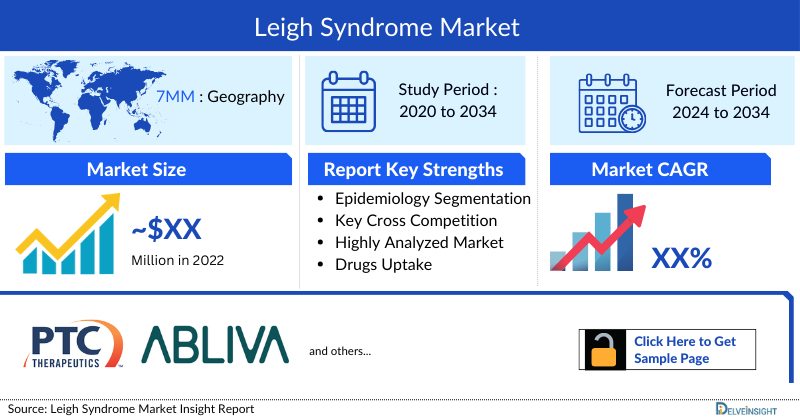
- With ongoing research and continued dedication, the future holds hope for even more effective treatments and, ultimately, a cure for this challenging condition. According to DelveInsight, the Leigh syndrome market in the 7MM is expected to change significantly during the study period 2020–2034.
- Leigh syndrome is often diagnosed late, leading to delays in initiating appropriate interventions. Improved awareness among healthcare providers and access to rapid genetic testing could facilitate earlier diagnosis and intervention.
- Throughout the forecast period (2024-2034), the Leigh syndrome market is expected to maintain a stable Compound Annual Growth Rate (CAGR). This increase in market revenue is primarily driven by progress in diagnostic methodologies, increased awareness of the condition, and a rising prevalence of reported cases.
- The cases of Leigh syndrome are increasing due to various genetic mutations. Common enzymes associated with Leigh syndrome include complex I, complex IV, and pyruvate dehydrogenase complex.
DelveInsight’s comprehensive report titled “Leigh Syndrome Market Insights, Epidemiology, and Market Forecast – 2034” offers a detailed analysis of Leigh syndrome. The report presents historical and projected epidemiological data covering Total Prevalent Cases and Diagnosed Prevalent Cases of Leigh syndrome further segmented by Onset, Mutation, and Gender. In addition to epidemiology, the Leigh Syndrome market report encompasses various aspects related to the patient population. These aspects include the diagnosis process, prescription patterns, physician perspectives, market accessibility, treatment options, and prospective developments in the market across seven major markets: the United States, EU4 (Germany, France, Italy, and Spain), the United Kingdom, and Japan, spanning from 2020 to 2034.
The Leigh Syndrome market report analyzes the existing treatment practices and unmet medical requirements for Leigh syndrome. It evaluates the Leigh Syndrome market potential and identifies potential business prospects for enhancing therapies or interventions. This valuable information enables stakeholders to make well-informed decisions regarding product development and strategic planning for the Leigh Syndrome market.
Leigh Syndrome Treatment Market
According to the National Organization for Rare Disorders, Leigh syndrome is a rare genetic neurometabolic disorder. It is characterized by the degeneration of the central nervous system (i.e., brain, spinal cord, and optic nerve). In most cases, Leigh syndrome is inherited as an autosomal recessive trait. However, X-linked recessive and maternal inheritance, due to a mitochondrial DNA mutation, are additional modes of transmission.
Common enzymes involved include complex I, complex IV, and pyruvate dehydrogenase complex. In addition, dysfunction in coenzyme Q10 metabolism has been associated with Leigh syndrome. Leigh syndrome can also occur spontaneously. When this happens, it is called “de novo.”
Signs and symptoms usually progress rapidly. Early symptoms may include poor sucking ability; loss of head control and motor skills; loss of appetite; vomiting; and seizures. As the condition progresses, symptoms may include weakness and lack of muscle tone; spasticity; movement disorders; cerebellar ataxia; and peripheral neuropathy. Complications can lead to impairment of respiratory, heart, and kidney function.
Leigh Syndrome Diagnosis and Treatment Algorithm
The diagnosis of Leigh syndrome may be confirmed by a thorough clinical evaluation and a variety of specialized tests, particularly advanced imaging techniques. Magnetic resonance imaging (MRI) or Computed Tomography (CT) scans of the brain may reveal abnormal areas in certain parts of the brain (i.e., basal ganglia, brain stem, and gray matter).
Small or large cysts may be present in the cerebral cortex of the brain. Laboratory tests may reveal high levels of acidic waste products in the blood (lactic acidosis) as well as elevated levels of pyruvate and alanine. Blood sugar (glucose) may be slightly lower than normal. The enzyme pyruvate carboxylase may be absent from the liver and an inhibitor of thiamine triphosphate (TTP) production may be present in the blood and urine of affected individuals. Some children with Leigh syndrome may have detectable deficiencies of the enzymes pyruvate dehydrogenase complex or cytochrome C oxidase.
There is no specific treatment for Leigh syndrome, and generally specific therapy for mitochondrial disorders in children is not widely available. Symptomatic treatment aims to manage symptoms and improve the energy state by increasing and optimizing ATP production and lowering lactate levels. This is accomplished by the elimination of noxious metabolics and the supply of oxygen radical scavengers. Antioxidants are a commonly employed mechanism in treatment, Supplementation with B vitamins, such as thiamine, antiseizure medications, physiotherapy, and pharmacotherapy are some of the symptomatic treatments for Leigh Syndrome.
A number of substances, often termed ‘nutraceuticals’ because they are extracted from regular food, have been proposed for the treatment of either Leigh syndrome or other mitochondrial disorders. These Leigh Syndrome Drugs include coenzyme Q10, L-carnitine, α-lipoic acid, creatine-monohydrate, biotin, thiamine, riboflavin, and others. Patients are frequently treated with a combination of these compounds.
Leigh Syndrome Epidemiology
The epidemiology section on the Leigh syndrome market report offers information on the patient populations, including historical and projected trends for each of the seven major markets. Examining key opinion leader views from physicians or clinical experts can assist in identifying the reasons behind historical and projected trends. The diagnosed patient pool, their trends, and the underlying assumptions are all included in this section of the Leigh Syndrome market report.
This section also presents the data with relevant tables and graphs, offering a clear and concise view of the Leigh Syndrome Prevalence. Additionally, the report discloses the assumptions made during the analysis, ensuring data interpretation and presentation transparency. This epidemiological data is valuable for understanding the disease burden and its impact on the patient population across various regions.
Key Findings
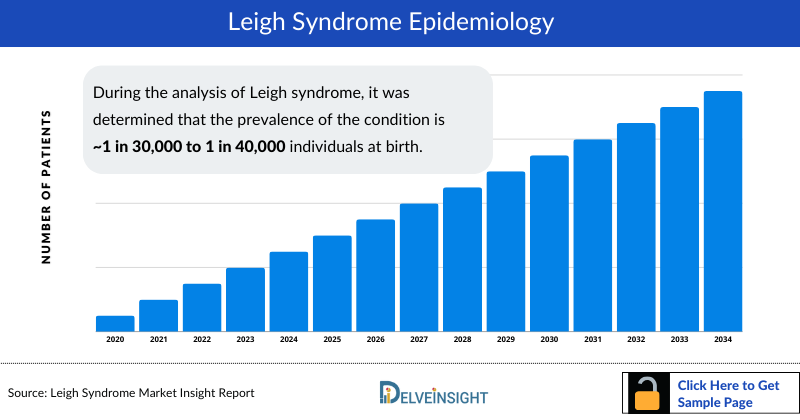
- During the analysis of Leigh syndrome, it was determined that the Leigh Syndrome Prevalence of the condition is approximately 1 in 30,000 to 1 in 40,000 individuals at birth.
- During the analysis, it was noted that 64% of Leigh syndrome patients exhibited a mutation in nuclear DNA. Among nuclear DNA genes, SURF1 was found to be the most prevalent, present in 72% of cases, among a total of 18 different nuclear DNA genes identified during the analysis.
- During the analysis, the prevalence of Leigh Syndrome was determined to be 1 in 5,000 children in Japan.
- Based on secondary research classical form of Leigh syndrome accounts for nearly 80% of cases.
- The epidemiology of Leigh syndrome is expected to change during the forecast period (2024-2034).
Leigh Syndrome Market Outlook
The Leigh syndrome therapeutics market is further expected to increase by the major drivers, such as the rising prevalent population, technological advancements, and upcoming Leigh Syndrome therapies in the forecast period [2024–2034].
- In December 2023, Abliva was granted orphan drug designation by the European Commission for NV354, intended for the treatment of Leigh syndrome.
- In June 2014, the US FDA granted orphan drug designation to Vatiquinone for the treatment of Leigh Syndrome.
- With ongoing research and continued dedication, the future holds hope for even more effective treatments and, ultimately, a cure for this challenging condition. According to DelveInsight, the Leigh syndrome market in the 7MM is expected to change significantly during the study period 2020–2034.

Leigh Syndrome Drug Chapters
Emerging Leigh Syndrome Drugs
The Leigh syndrome market is expected to experience gradual changes, mainly due to the limited availability of emerging therapies in this area. Key Leigh Syndrome companies, including Abliva AB, and others have demonstrated a keen interest in this condition and are actively pursuing the development of potential treatments.
NV354: Abliva AB
NV354 is being developed for mitochondrial disease with neurologic complications, in particular due to insufficient activity in the mitochondrial protein complex I. The resulting deficiency in energy conversion contributes to clinical signs and symptoms in many types of mitochondrial disease, including neurologic complications seen in Leigh syndrome, MELAS, or LHON.
The drug candidate was discovered due to its ability to increase mitochondrial function in cells from mitochondrial Leigh syndrome patients.
Brain-penetrable NV354 is based on an innovation in which the body’s energy substrate, succinate, is made available in the cell via a prodrug technology.
The program’s preclinical development has been completed, and in April 2023, the company was granted orphan drug designation (ODD) for NV354 in the US for the treatment of mitochondrial disease.
|
Drug |
MoA |
RoA |
Company |
Phase |
|
NV354 |
Mitochondrial oxidative phosphorylation modulators |
Oral |
Abliva AB |
Preclinical |
|
XX |
XX |
X |
XXX |
X |
Note: Detailed emerging therapies assessment will be provided in the final report.
Leigh Syndrome Market Segmentation
DelveInsight’s ‘Leigh Syndrome Market Insights, Epidemiology, and Market Forecast – 2034’ report provides a detailed outlook of the current and future Leigh syndrome market, segmented within countries, by therapies, and by classes. Further, the market of each region is then segmented by each therapy to provide a detailed view of the current and future market share of all therapies.
Leigh Syndrome Market Size by Countries
The Leigh syndrome market size is assessed separately for various countries, including the United States, EU4 (Germany, France, Italy, and Spain), the UK, and Japan. In 2023, the United States held a significant share of the overall 7MM (Seven Major Markets) Leigh syndrome market, primarily attributed to the country's higher prevalence of the condition and the elevated cost of the available treatments. This dominance is projected to persist, especially with the potential early introduction of new products.
Leigh Syndrome Market Size by Therapies
Leigh syndrome Market Size by Therapies is categorized into current and emerging markets for the study period 2020–2034.
Note: Detailed market segment assessment will be provided in the final report.
Leigh Syndrome Drugs Uptake
This section focuses on the sales uptake of potential Leigh syndrome drugs that have recently been launched or are anticipated to be launched in the Leigh syndrome drugs market between 2020 and 2034. It estimates the market penetration of Leigh syndrome drugs for a given country, examining their impact within and across classes and segments. It also touches upon the financial and regulatory decisions contributing to the probability of success (PoS) of the drugs in the Leigh syndrome market.
The emerging Leigh syndrome therapies are analyzed based on various attributes such as safety and efficacy in randomized Leigh Syndrome clinical trials, order of entry and other market dynamics, and the unmet need they fulfill in the Leigh syndrome market.
Note: Detailed assessment of drug uptake and attribute analysis will be provided in the full report on Leigh syndrome.
Leigh Syndrome Market Access and Reimbursement
DelveInsight’s ‘Leigh Syndrome Market Insights, Epidemiology, and Market Forecast – 2034’ report provides a descriptive overview of the market access and reimbursement scenario of Leigh syndrome.
This section includes a detailed analysis of the country-wise healthcare system for each therapy, enlightening the market access, reimbursement policies, and health technology assessments.
KOL Views on Leigh Syndrome
To keep up with current Leigh syndrome market trends and fill gaps in secondary findings, we interview KOLs and SMEs working in the Leigh syndrome domain. Their opinion helps understand and validate current and emerging therapies and treatment patterns or Leigh syndrome market trends. This will support the clients in potential upcoming novel treatments by identifying the overall scenario of the Leigh Syndrome market and the Leigh syndrome unmet needs.
Leigh Syndrome: KOL Insights
DelveInsight’s analysts connected with 50+ KOLs to gather insights; however, interviews were conducted with 15+ KOLs in the 7MM. These KOLs were from organizations, institutes, and hospitals, such as the Child Neurology Foundation, Metabolic Medicine Department, Genetics and Genomic Medicine Department, UCL Great Ormond Street Institute of Child Health in the UK, Division of Cardiology, Pauley Heart Center, Department of Internal Medicine, School of Medicine, Virginia Commonwealth University in the US, among others.
- “Comprehensive management of Leigh syndrome hinges on collaboration among specialists. Genetic testing illuminates individualized treatment paths, offering families hope for better prognoses and enhanced quality of life.”
- “Leigh syndrome demands a multidisciplinary approach, combining neurology, genetics, and supportive care. While challenges persist, personalized genetic insights pave the way for targeted interventions and improved patient outcomes.”
- “Even though management of patients happens by off-label therapies, drug development is an ongoing opportunity for patients of this disease group.”
Note: Detailed assessment of KOL Views will be provided in the full report on Leigh syndrome.
Leigh Syndrome Competitive Intelligence Analysis
We conduct a Competitive and Market Intelligence analysis of the Leigh syndrome Market, utilizing various Competitive Intelligence tools such as SWOT analysis and Market entry strategies. The inclusion of these analyses is contingent upon data availability, ensuring a comprehensive and well-informed assessment of the Leigh Syndrome market landscape and competitive dynamics.
Leigh Syndrome Pipeline Development Activities
The Leigh Syndrome drugs market report offers an analysis of therapeutic candidates in Phase II and III stages and examines companies involved in developing targeted therapeutics for Leigh syndrome. It provides valuable insights into the advancements and progress of potential treatments in clinical development for this condition.
Leigh Syndrome Clinical Trial Activities
The Leigh Syndrome treatment market report covers information on collaborations, acquisition and merger, licensing, patent details, and other information for emerging Leigh syndrome therapies.
Leigh Syndrome Market Report Insights
- Leigh Syndrome Patient Population
- Therapeutic Approaches
- Leigh Syndrome Pipeline Analysis
- Leigh Syndrome Market Size
- Leigh Syndrome Market Trends
- Leigh Syndrome Market Opportunities
- Impact of Upcoming Therapies
Leigh Syndrome Market Report Key Strengths
- 11 Years Forecast
- The 7MM Coverage
- Leigh syndrome Epidemiology Segmentation
- Key Cross Competition
- Highly Analyzed Leigh syndrome Market
- Leigh syndrome Drugs Uptake
Leigh Syndrome Market Report Assessment
- Leigh Syndrome Current Treatment Practices
- Leigh Syndrome Unmet Needs
- Leigh Syndrome Pipeline Product Profiles
- Leigh Syndrome Market Attractiveness
Key Questions
- How common is Leigh syndrome?
- What are the key findings of Leigh syndrome epidemiology across the 7MM, and which country will have the highest number of patients during the study period (2020–2034)?
- What are the currently available treatments for Leigh syndrome?
- What is the disease risk, burden, and unmet needs of Leigh syndrome?
- At what CAGR is the Leigh syndrome market and its epidemiology expected to grow in the 7MM during the forecast period (2024–2034)?
- How would the unmet needs impact the Leigh syndrome market dynamics and subsequently influence the analysis of the related trends?
- What would be the forecasted patient pool of Leigh syndrome in the 7MM covering the United States, EU4 (Germany, France, Italy, and Spain), the UK, and Japan?
- Among EU4 and the UK, which country will have the highest number of patients during the forecast period (2024–2034)?
- How many Leigh Syndrome companies are currently developing therapies for the treatment of Leigh syndrome?
Reasons to buy
- The Leigh Syndrome treatment market report will help in developing business strategies by understanding the latest trends and changing treatment dynamics driving the Leigh syndrome Market.
- Insights on patient burden/disease Leigh Syndrome prevalence, evolution in diagnosis, and factors contributing to the change in the epidemiology of the disease during the forecast years
- To understand the existing Leigh Syndrome market opportunity in varying geographies and the growth potential over the coming years.
- Distribution of historical and current patient share based on real-world prescription data along with reported sales of current treatment in the US, EU4 (Germany, France, Italy, and Spain), the United Kingdom, and Japan.
- Identification of strong upcoming Leigh Syndrome companies in the market will help in devising strategies that will help in getting ahead of competitors.
- Detailed analysis and ranking of class-wise potential current and emerging Leigh Syndrome therapies under the conjoint analysis section to provide visibility around leading classes.
- Highlights of Access and Reimbursement policies of approved therapies, barriers to accessibility of off-label expensive therapies, and patient assistance programs.
- To understand the perspective of Key Opinion Leaders around the accessibility, acceptability, and compliance-related challenges of existing treatment to overcome barriers in the future.
- Detailed insights on the unmet needs of the existing Leigh Syndrome market so that the upcoming Leigh Syndrome companies can strengthen their development and launch strategy.
Stay updated with us for Recent Articles @ Latest DelveInsight Blogs