
Lipodystrophy Syndrome Market
Key Highlights
- As per DelveInsight, the Lipodystrophy Syndrome Market size is expected to expand at a significant CAGR during the forecast period (2025-2034), owing to the launch of new therapies in the market and the rise in the number of cases.
- Only a limited number of companies are working in the Lipodystrophy Syndrome Market, and several new players are expected to enter the market in the upcoming years.
Download the Sample PDF to Get More Insight @ Lipodystrophy Syndrome Market
Key Factors Driving the Growth of the Lipodystrophy Syndrome Market
- Rising Awareness and Diagnosis Rates: Increased medical awareness, improved genetic testing, and advanced imaging techniques have led to better identification of lipodystrophy cases. Early and accurate diagnosis is expanding the patient pool eligible for treatment.
- Advancements in Therapeutic Options: Emerging therapies, such as recombinant leptin analogs (e.g., metreleptin), and ongoing R&D in metabolic regulators are providing effective treatment approaches. This innovation is driving higher adoption rates among patients and physicians.
- Growing Prevalence of Metabolic Disorders: Lipodystrophy is often associated with severe insulin resistance, diabetes, hypertriglyceridemia, and liver diseases. The global rise in these metabolic conditions indirectly fuels the demand for lipodystrophy treatments.
- Government and Regulatory Support: Orphan drug designations, research funding, and favorable reimbursement policies are encouraging pharmaceutical companies to invest in lipodystrophy research, further accelerating market growth.
- Increasing Focus on Rare Disease Research: Pharmaceutical and biotech companies are prioritizing rare disease markets, supported by incentives and strong pipeline development. Lipodystrophy, being a rare but severe disorder, benefits from this growing focus, boosting innovation and availability of therapies
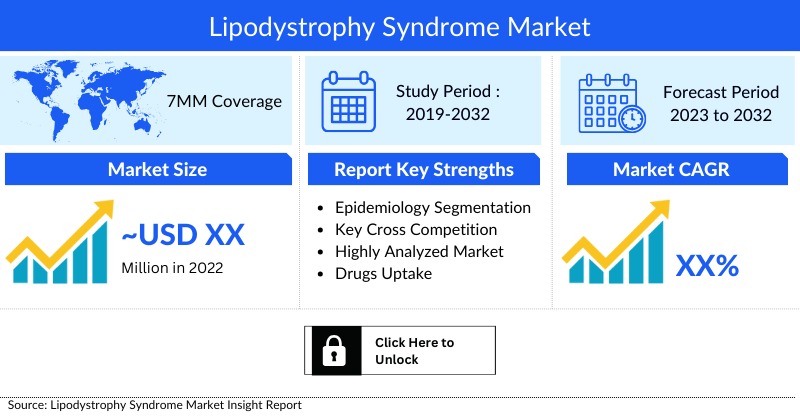
DelveInsight's "Lipodystrophy Syndrome Market Insights, Epidemiology, and Market Forecast-2034" report delivers an in-depth understanding of the Lipodystrophy Syndrome, historical and forecasted epidemiology as well as the Lipodystrophy Syndrome therapeutics market trends in the United States, EU5 (Germany, Spain, Italy, France, and United Kingdom) and Japan.
The Lipodystrophy Syndrome market report provides current treatment practices, emerging drugs, Lipodystrophy Syndrome market share of the individual therapies, current and forecasted Lipodystrophy Syndrome market size from 2020 to 2034 segmented by seven major markets. The Report also covers current Lipodystrophy Syndrome treatment practice/algorithm, market drivers, market barriers and unmet medical needs to curate the best of the opportunities and assesses the underlying potential of the Lipodystrophy Syndrome market.
|
Study Period |
2020 to 2034 |
|
Forecast Period |
2025-2034 |
|
Geographies Covered |
|
|
Lipodystrophy Syndrome Market |
|
| Lipodystrophy Syndromes Market Size | |
|
Lipodystrophy Syndrome Companies |
Only a limited number of companies are working in the market |
|
Lipodystrophy Syndrome Epidemiology Segmentation |
|
Lipodystrophy Syndrome Disease Understanding
Lipodystrophies are a group of rare disorders of diverse etiology which are characterized by variable loss of body fat. The loss of body fat may affect nearly the entire body (generalized), only certain body regions (partial) or small areas under the skin (localized). Depending upon the severity and extent of body fat loss, patients may be predisposed to metabolic complications associated with insulin resistance. These metabolic complications include early onset of diabetes mellitus, hypertriglyceridemia and hepatic steatosis.
There are many different types of lipodystrophy. It can be acquired, or genetic (inherited). The inherited form may be present at birth or develop during childhood (congenital). It may result in fat loss in only one area of the body or throughout the body (generalized).
Generalized lipodystrophy refers to the situation in which the fat tissue throughout the body is affected (sometimes mistaken for weight or fat gain).
Partial, or localized, lipodystrophy affects only one area of the body and is not associated with abnormal health generally.
Lipodystrophy Syndrome can be either inherited (genetic) or acquired. Some of the common causes and risk factors of Lipodystrophy Syndrome include:
- Genetic Mutations: Inherited forms of lipodystrophy are caused by specific genetic mutations that affect the regulation of fat metabolism and distribution.
- Acquired Lipodystrophy: Acquired lipodystrophy may be associated with medical conditions like autoimmune disorders or long-term use of medications like antiretroviral drugs for HIV.
- Metabolic Disorders: Some individuals with lipodystrophy may have underlying metabolic disorders, such as insulin resistance or high cholesterol.
- Hormonal Imbalances: Certain hormonal imbalances, such as in polycystic ovary syndrome (PCOS) or hypothyroidism, can lead to lipodystrophy.
- Trauma: Trauma or physical injury to fat tissue can cause localized lipodystrophy.
Lipodystrophy Syndrome Signs and Symptoms
The signs and symptoms of Lipodystrophy Syndrome vary depending on the subtype and severity. Common symptoms may include:
- Fat Loss: Partial or complete loss of subcutaneous fat, leading to a "skinny" appearance, especially in the limbs and face.
- Fat Accumulation: Abnormal accumulation of fat in certain areas, such as the abdomen, upper back (dorsocervical fat pad or "buffalo hump"), or breasts.
- Metabolic Disturbances: Lipodystrophy is often associated with metabolic abnormalities, such as insulin resistance, diabetes, and dyslipidemia (abnormal cholesterol levels).
- Hepatic Steatosis: Fatty liver disease, or hepatic steatosis, can occur in some cases.
- Muscular Complications: Weakness or muscle-related symptoms may be present.
- Acanthosis Nigricans: A skin condition characterized by dark, thickened patches of skin, often seen in areas with increased friction.
- Cardiovascular Complications: Lipodystrophy can increase the risk of heart disease and hypertension.
Lipodystrophy Syndrome Diagnosis
Diagnosing Lipodystrophy Syndrome involves a combination of clinical evaluation, blood tests, imaging, and genetic testing:
- Medical History: A detailed medical history, including family history and medication use, is essential for diagnosis.
- Physical Examination: The pattern of fat loss or accumulation, along with associated metabolic disturbances, is assessed.
- Blood Tests: Blood tests can reveal metabolic abnormalities, such as insulin resistance, diabetes, and lipid profile imbalances.
- Imaging: Imaging studies, such as ultrasound or MRI, can help assess fat distribution and liver health.
- Genetic Testing: In cases of suspected genetic lipodystrophy, genetic testing can confirm the diagnosis and identify specific mutations.
Lipodystrophy Syndrome Treatment Scenario
The treatment of Lipodystrophy Syndrome is typically focused on managing the associated metabolic and physical symptoms. Treatment options may include:
- Metabolic Management: Controlling insulin resistance and managing diabetes through lifestyle modifications, oral medications, or insulin therapy.
- Lipid Management: Managing abnormal lipid profiles with dietary changes, exercise, and medications if necessary.
- Hormone Replacement: In some cases, hormone replacement therapy may be used to address hormonal imbalances.
- Dietary and Lifestyle Modifications: Diet and exercise play a critical role in managing lipodystrophy, helping to stabilize blood sugar levels and improve overall health.
- Symptomatic Management: Addressing specific symptoms such as hepatic steatosis, cardiovascular complications, and musculoskeletal issues.
Lipodystrophy Syndrome Epidemiology
The Lipodystrophy Syndrome epidemiology section provides insights about the historical and current Lipodystrophy Syndrome patient pool and forecasted trends for individual seven major countries. It helps to recognize the causes of current and forecasted trends by exploring numerous studies and views of key opinion leaders. This part of the Lipodystrophy Syndrome market report also provides the diagnosed patient pool and their trends along with assumptions undertaken.
Key Findings
The disease epidemiology covered in the report provides historical as well as forecasted Lipodystrophy Syndrome epidemiology scenario in the 7MM covering the United States, EU5 countries (Germany, Spain, Italy, France, and the United Kingdom), and Japan from 2020 to 2034.
- As per Elaine Chiquette et. Al., the estimated prevalence of diagnosed Lipodystrophy Syndrome was 3.07 cases/million (95% confidence interval [CI], 2.30-4.02), 0.23 cases/million (95% CI, 0.06-0.59) and 2.84 cases/million (95% CI, 2.10-3.75) for generalized lipodystrophy (GL) and partial lipodystrophy (PL), respectively.
- According to Orphanet registry, Primary lipodystrophies prevalence has been estimated at less than 1 case in 100 000.
Lipodystrophy Syndrome Epidemiology Segmentation
- Prevalence by Type
- Gender-based Segmentation of Lipodystrophy Syndromes in the 7MM
- Age-based Distribution of Lipodystrophy Syndromes in the 7MM
- Diagnosed and Treatable Cases of Lipodystrophy Syndrome
Country Wise- Lipodystrophy Syndrome Epidemiology
The epidemiology segment also provides the Lipodystrophy Syndrome epidemiology data and findings across the United States, EU5 (Germany, France, Italy, Spain, and the United Kingdom), and Japan.
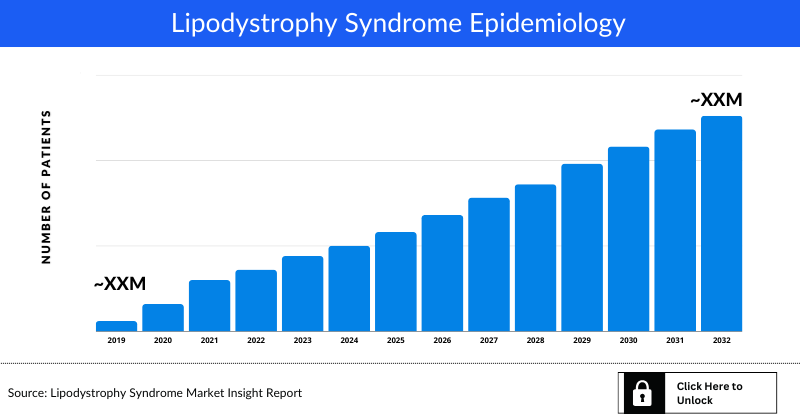
Get detailed insights into the historical as well as forecasted epidemiology trends in the 7MM, at: Lipodystrophy Syndrome (LS) Epidemiology Forecast
Lipodystrophy Syndrome Drug Analysis
The drug chapter segment of the Lipodystrophy Syndrome report encloses the detailed analysis of Lipodystrophy Syndrome marketed drugs and late-stage (Phase-III and Phase-II) Lipodystrophy Syndrome pipeline drugs. It also helps to understand the Lipodystrophy Syndrome clinical trial details, expressive pharmacological action, agreements and collaborations, approval and patent details, advantages and disadvantages of each included drug and the latest news and press releases.
Lipodystrophy Syndrome Marketed Drugs
The report provides the details of the marketed products/off-label treatments available for Lipodystrophy Syndrome treatment.
Lipodystrophy Syndrome Emerging Drugs
The report provides the details of the emerging therapies under the late and mid-stage of development for Lipodystrophy Syndrome treatment.
Current therapies prevent or ameliorate the comorbidities of Lipodystrophy Syndrome (LS). At present, Myalept (Bristol-Myers Squibb) (recombinant human methionyl leptin) is the only drug approved specifically for lipodystrophy. It is approved in the United States as an adjunct to diet for the treatment of metabolic complications in patients with generalized lipodystrophy.
Key players such as Ionis Pharmaceuticals, Zydus Cadila, and many others are involved in developing Lipodystrophy Syndrome therapies. The expected launch of emerging Lipodystrophy Syndrome therapies such as Volanesorsen (Ionis Pharmaceuticals), Lipaglyn (Zydus Cadila), and some others are expected to change the Lipodystrophy Syndrome treatment landscape in upcoming years.
Lipodystrophy Syndrome Market Outlook
The Lipodystrophy Syndrome market outlook of the report helps to build a detailed comprehension of the historic, current, and forecasted Lipodystrophy Syndrome market trends by analyzing the impact of current Lipodystrophy Syndrome therapies on the market, unmet needs, drivers and barriers, and demand for better technology.
This segment gives a thorough detail of Lipodystrophy Syndrome market trend of each marketed drug and late-stage pipeline therapy by evaluating their impact based on the annual cost of therapy, inclusion and exclusion criteria's, mechanism of action, compliance rate, growing need of the market, increasing patient pool, covered patient segment, expected launch year, competition with other therapies, brand value, their impact on the market and view of the key opinion leaders. The calculated Lipodystrophy Syndrome market data are presented with relevant tables and graphs to give a clear view of the market at first sight.
According to DelveInsight, the Lipodystrophy Syndrome market size and share in 7MM is expected to witness a major change in the study period 2020-2034.
Key Findings
This section includes a glimpse of the Lipodystrophy Syndrome market in 7MM.
The United States Lipodystrophy Syndrome Market Outlook
This section provides the total Lipodystrophy Syndrome market size and market size by therapies in the United States.
EU-5 Countries Lipodystrophy Syndrome Market Outlook
The total Lipodystrophy Syndrome market size and market size by therapies in Germany, France, Italy, Spain, and the United Kingdom is provided in this section.
Japan Lipodystrophy Syndrome Market Outlook
The total Lipodystrophy Syndrome market size and market size by therapies in Japan is also mentioned.

Lipodystrophy Syndrome Drugs Uptake
This section focuses on the rate of uptake of the potential Lipodystrophy Syndrome drugs recently launched in the Lipodystrophy Syndrome market or expected to get launched in the market during the study period 2020-2034. The analysis covers Lipodystrophy Syndrome market uptake by drugs; patient uptake by therapies; and sales of each drug.
Lipodystrophy Syndrome Drugs Uptake helps in understanding the drugs with the most rapid uptake, reasons behind the maximal use of new drugs, and allow the comparison of the drugs on the basis of Lipodystrophy Syndrome market share and size which again will be useful in investigating factors important in market uptake and in making financial and regulatory decisions.
Lipodystrophy Syndrome Pipeline Development Activities
The Lipodystrophy Syndrome pipeline report provides insights into Lipodystrophy Syndrome clinical trials within Phase II, and Phase III stage. It also analyses Lipodystrophy Syndrome key players involved in developing targeted therapeutics.
Lipodystrophy Syndrome Pipeline Development Activities
The Lipodystrophy Syndrome clinical triala analysis report covers the detailed information of collaborations, acquisition, and merger, licensing, patent details, and other information for Lipodystrophy Syndrome emerging therapies.
Lipodystrophy Syndrome Market Reimbursement Scenario in Lipodystrophy Syndrome
Approaching reimbursement proactively can have a positive impact both during the late stages of product development and well after product launch. In a report, we take reimbursement into consideration to identify economically attractive indications and market opportunities. When working with finite resources, the ability to select the markets with the fewest reimbursement barriers can be a critical business and price strategy.
KOL- Views on Lipodystrophy Syndrome
To keep up with current Lipodystrophy Syndrome market trends, we take KOLs and SMEs ' opinion working in the Lipodystrophy Syndrome domain through primary research to fill the data gaps and validate our secondary research. Their opinion helps to understand and validate current and emerging therapies treatment patterns or Lipodystrophy Syndrome market trends. This will support the clients in potential upcoming novel treatment by identifying the overall scenario of the market and the unmet needs.
Competitive Intelligence Analysis
We perform Competitive and Market Intelligence analysis of the Lipodystrophy Syndrome by using various Competitive Intelligence tools that include - SWOT analysis, PESTLE analysis, Porter's five forces, BCG Matrix, Market entry strategies etc. The inclusion of the analysis entirely depends upon the data availability.
Scope of the Lipodystrophy Syndrome Market Report
- The report covers the descriptive overview of Lipodystrophy Syndrome, explaining its causes, signs and symptoms, pathophysiology, diagnosis and currently available therapies
- Comprehensive insight has been provided into the Lipodystrophy Syndrome epidemiology and treatment in the 7MM
- Additionally, an all-inclusive account of both the current and emerging therapies for Lipodystrophy Syndrome is provided, along with the assessment of new therapies, which will have an impact on the current treatment landscape
- A detailed review of the Lipodystrophy Syndrome market; historical and forecasted is included in the report, covering drug outreach in the 7MM
- The report provides an edge while developing business strategies, by understanding trends shaping and driving the global Lipodystrophy Syndrome market
Lipodystrophy Syndrome Market Report Highlights
- In the coming years, the Lipodystrophy Syndrome market is set to change due to the rising awareness of the disease, and incremental healthcare spending across the world; which would expand the size of the market to enable the drug manufacturers to penetrate more into the market
- The Lipodystrophy Syndrome companies and academics are working to assess challenges and seek opportunities that could influence Lipodystrophy Syndrome R&D. The therapies under development are focused on novel approaches to treat/improve the disease condition
- Major players are involved in developing therapies for Lipodystrophy Syndrome. The launch of emerging therapies will significantly impact the Lipodystrophy Syndrome market
- A better understanding of disease pathogenesis will also contribute to the development of novel therapeutics for Lipodystrophy Syndrome
- Our in-depth analysis of the pipeline assets across different stages of development (Phase III and Phase II), different emerging trends and comparative analysis of pipeline products with detailed clinical profiles, key cross-competition, launch date along with product development activities will support the clients in the decision-making process regarding their therapeutic portfolio by identifying the overall scenario of the research and development activities
Lipodystrophy Syndrome Market Report Insights
- Lipodystrophy Syndrome Patient Population
- Lipodystrophy Syndrome Therapeutic Approaches
- Lipodystrophy Syndrome Pipeline Analysis
- Lipodystrophy Syndrome Market Size and Trends
- Lipodystrophy Syndrome Market Opportunities
- Impact of Upcoming Lipodystrophy Syndrome Therapies
Lipodystrophy Syndrome Market Report Key Strengths
- 10 Years Forecast
- 7MM Coverage
- Lipodystrophy Syndrome Epidemiology Segmentation
- Key Cross Competition in the Lipodystrophy Syndrome Market
- Highly Analyzed Lipodystrophy Syndrome Market
- Lipodystrophy Syndrome Drugs Uptake
Lipodystrophy Syndrome Market Report Assessment
- Current Lipodystrophy Syndrome Treatment Practices
- Lipodystrophy Syndrome Unmet Needs
- Lipodystrophy Syndrome Pipeline Product Profiles
- Lipodystrophy Syndrome Market Attractiveness
- Lipodystrophy Syndrome Market Drivers and Barriers
- Lipodystrophy Syndrome Market Barriers
Key Questions Answered In The Lipodystrophy Syndrome Market Report:
Lipodystrophy Syndrome Market Insights:
- What was the Lipodystrophy Syndrome drug class share (%) distribution in 2020 and how it would look like in 2034?
- What would be the Lipodystrophy Syndrome total market size as well as market size by therapies across the 7MM during the forecast period (2020-2034)?
- What are the key findings pertaining to the market across 7MM and which country will have the largest Lipodystrophy Syndrome market size during the forecast period (2020-2034)?
- At what CAGR, the Lipodystrophy Syndrome market is expected to grow by 7MM during the forecast period (2020-2034)?
- What would be the Lipodystrophy Syndrome market outlook across the 7MM during the forecast period (2020-2034)?
- What would be the Lipodystrophy Syndrome market growth till 2034, and what will be the resultant market Size in the year 2034?
- How would the unmet needs affect the market dynamics and subsequent analysis of the associated trends?
Lipodystrophy Syndrome Epidemiology Insights:
- What are the disease risk, burden, and regional/ethnic differences of the Lipodystrophy Syndrome?
- What are the key factors driving the epidemiology trend for seven major markets covering the United States, EU5 (Germany, Spain, France, Italy, UK), and Japan?
- What is the historical Lipodystrophy Syndrome patient pool in seven major markets covering the United States, EU5 (Germany, Spain, France, Italy, UK), and Japan?
- What would be the forecasted patient pool of Lipodystrophy Syndrome in seven major markets covering the United States, EU5 (Germany, Spain, France, Italy, UK), and Japan?
- Where will be the growth opportunities in the 7MM with respect to the patient population pertaining to Lipodystrophy Syndrome?
- Out of all 7MM countries, which country would have the highest prevalent population of Lipodystrophy Syndrome during the forecast period (2020-2034)?
- At what CAGR the patient population is expected to grow in 7MM during the forecast period (2020-2034)?
Current Lipodystrophy Syndrome Treatment Scenario, Marketed Drugs and Emerging Therapies
- What are the current options for the Lipodystrophy Syndrome treatment in addition to the approved therapies?
- What are the current treatment guidelines for the treatment of Lipodystrophy Syndrome in the USA, Europe, and Japan?
- What are the Lipodystrophy Syndrome marketed drugs and their respective MOA, regulatory milestones, product development activities, advantages, disadvantages, safety and efficacy, etc.?
- How many Lipodystrophy Syndrome companies are developing therapies for the treatment of Lipodystrophy Syndrome?
- How many therapies are in-development by each company for Lipodystrophy Syndrome treatment?
- How many are emerging therapies in mid-stage, and late stage of development for Lipodystrophy Syndrome treatment?
- What are the key collaborations (Industry - Industry, Industry - Academia), Mergers and acquisitions, licensing activities related to the Lipodystrophy Syndrome therapies?
- What are the recent novel therapies, targets, mechanisms of action and technologies being developed to overcome the limitation of existing therapies?
- What are the clinical studies going on for Lipodystrophy Syndrome and their status?
- What are the current challenges faced in drug development?
- What are the key designations that have been granted for the emerging therapies for Lipodystrophy Syndrome?
- What are the global historical and forecasted market of Lipodystrophy Syndrome?
Reasons to buy Lipodystrophy Syndrome Market Forecast Report
- The report will help in developing business strategies by understanding trends shaping and driving the Lipodystrophy Syndrome market
- To understand the future market competition in the Lipodystrophy Syndrome market and Insightful review of the key market drivers and barriers
- Organize sales and marketing efforts by identifying the best opportunities for Lipodystrophy Syndrome in the US, Europe (Germany, Spain, Italy, France, and the United Kingdom) and Japan
- Identification of strong upcoming players in the market will help in devising strategies that will help in getting ahead of competitors
- Organize sales and marketing efforts by identifying the best opportunities for Lipodystrophy Syndrome market
- To understand the future market competition in the Lipodystrophy Syndrome market
-pipeline.png&w=256&q=75)