Lumbar Disc Herniation Market Summary
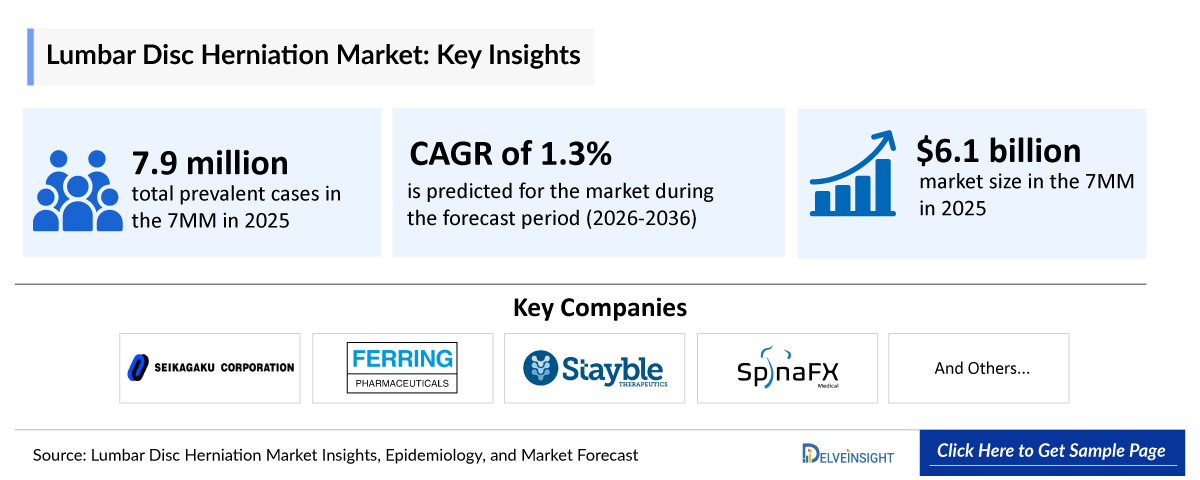
- According to DelveInsight’s analysis, the Lumbar Disc Herniation Therapeutics Market Size was found to be ~USD 6,100 million in the leading markets (the United States, the EU4 (Germany, France, Italy, and Spain), the United Kingdom, and Japan) in 2025.
- The leading Lumbar Disc Herniation Companies include Seikagaku Corporation, Ferring Pharmaceuticals, Stayable Therapeutics, SpinaFX Medical, and others.
Lumbar Disc Herniation Market and Epidemiology Analysis
- The current Lumbar Disc Herniation Therapeutics Market primarily consists of conservative treatments, including analgesics, nonsteroidal anti-inflammatory drugs (NSAIDs), physical therapy, epidural steroid injections, and surgical interventions such as discectomy. In recent years, several emerging treatments targeting disc degeneration and symptom relief have entered clinical development.
- Condoliase is currently the only approved intradiscal pharmacologic therapy for LDH in Japan and is expected to maintain a significant market share throughout the forecast period.
- The late-stage pipeline for Lumbar Disc Herniation remains relatively limited, with only a few pharmacological and device-based therapies advancing through Phase III, pivotal clinical studies. Key late-stage candidates include Condoliase (SI-6603) by Seikagaku Corporation/Ferring Pharmaceuticals, and others.
- Among device-based innovations, the CONCORDE Clear MIS Discectomy Device by Johnson & Johnson enables minimally invasive disc removal and endplate preparation through a suction-curette mechanism, while the Barricaid Annular Closure Device by Intrinsic Therapeutics is designed to reduce recurrent disc herniation following discectomy. Other technologies include the Disc-FX System, which combines percutaneous discectomy with radiofrequency ablation, and the SpinaFX Triojection, which is being developed to facilitate less invasive repair of herniated disc pathology.
- Looking ahead, STA363 and other devices are expected to broaden the treatment paradigm beyond symptomatic relief alone. Together with advanced endoscopic discectomy platforms and annular closure devices, these therapies may help improve long-term functional outcomes, shorten recovery times, and reduce the overall need for conventional open spine surgery in selected LDH patients.
- Improvements in MRI and other diagnostic techniques have enhanced detection and characterization of the disease, yet the epidemiological burden is probably still underestimated because many disc herniations occur without symptoms.
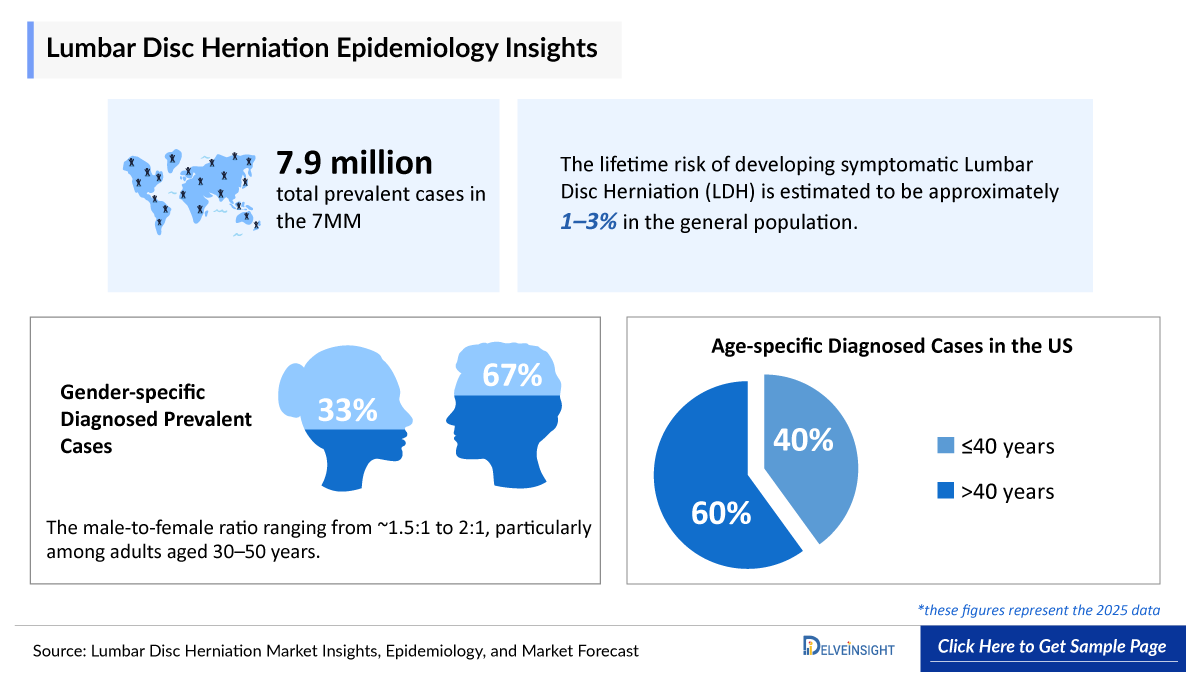
- Males are more prevalent than females with Lumbar Disc Herniation with ~4,214,700 cases in 2025. These cases are expected to increase and reach up to ~4,269,260 by 2036 in the 7MM.
- Lumbar disc herniation shows a clear age related pattern, with prevalence rising from early adulthood, peaking in middle age, and then plateauing or declining in older individuals. Most symptomatic cases occur between 30 and 50 years of age.
- In the United States, the diagnosed prevalent cases of lumbar disc herniation among individuals aged 30–50 years were ~1,514,310 in 2025, and this number is projected to increase to ~1,576,330 by 2036.
- Lumbar disc herniation represents a substantial contribution to the global burden of spinal disorders, with most cases involving the L4–L5 and L5–S1 levels of the lumbar spine.
Lumbar Disc Herniation Market Size and Forecast
| 2025 Lumbar Disc Herniation Market Size | ~USD 6,100 million |
| 2036 Projected Lumbar Disc Herniation Market Size | ~USD 7,200 million |
| Lumbar Disc Herniation Growth Rate (2026–2036) | 1.3% CAGR |
Key Factors Driving the Growth of Lumbar Disc Herniation Market
-
Increasing Prevalence of Lumbar Disc Herniation
The rising incidence of lumbar disc herniation (LDH) is a major factor driving market growth. Sedentary lifestyles, obesity, poor posture, repetitive spinal strain, and an aging population have contributed to the increasing number of individuals affected by degenerative spinal disorders. As the patient pool expands, the demand for effective diagnostic, therapeutic, and surgical interventions continues to grow.
-
Aging Population and Degenerative Spinal Changes
Age-related degeneration of intervertebral discs is one of the leading causes of lumbar disc herniation. As the global geriatric population increases, the prevalence of disc degeneration and associated neurological symptoms such as lower back pain and sciatica is rising. This demographic trend is expected to significantly boost the demand for both conservative and surgical treatment options.
-
Rising Burden of Low Back Pain
Low back pain remains one of the leading causes of disability worldwide, with lumbar disc herniation accounting for a substantial proportion of chronic and acute cases. The increasing socioeconomic burden associated with lost productivity, healthcare utilization, and reduced quality of life has intensified the focus on early diagnosis and effective treatment, thereby supporting market growth.
-
Advancements in Diagnostic Technologies
Technological improvements in imaging modalities, including high-resolution MRI and CT scanning, have enhanced the accuracy and speed of lumbar disc herniation diagnosis. Earlier and more precise detection enables timely intervention, improving patient outcomes and increasing the utilization of diagnostic services and treatment modalities.
-
Growing Preference for Minimally Invasive Procedures
Patients and healthcare providers are increasingly favoring minimally invasive spine surgeries due to smaller incisions, reduced blood loss, shorter hospital stays, faster recovery, and lower complication rates. Innovations such as endoscopic discectomy, microdiscectomy, and minimally invasive spinal decompression procedures are expanding treatment options and driving market adoption.
-
Continuous Innovation in Surgical Techniques and Medical Devices
Rapid advancements in spinal implants, navigation systems, robotic-assisted surgery, and microsurgical instruments have improved the safety and effectiveness of lumbar disc herniation treatment. The introduction of next-generation surgical technologies continues to enhance clinical outcomes while encouraging greater adoption among spine surgeons and healthcare facilities.
-
Expanding Pipeline of Non-Surgical Therapies
Growing research efforts are focused on developing innovative non-surgical treatments, including biologics, regenerative medicine approaches, stem cell therapies, growth factors, and novel pain management drugs. These emerging therapies aim to delay or reduce the need for surgery, offering additional treatment options for patients with lumbar disc herniation.
DelveInsight's ‘Lumbar Disc Herniation Market Insights, Epidemiology and Market Forecast – 2036’ report delivers an in-depth understanding of Lumbar Disc Herniation, historical and forecasted epidemiology, as well as Lumbar Disc Herniation market trends in the United States, EU4 (Germany, Spain, Italy, and France) and the United Kingdom, and Japan.
The Lumbar Disc Herniation Treatment Market Report delivers a comprehensive analysis of the current treatment landscape, including standards of care, clinical practices, and evolving therapeutic algorithms. It evaluates Lumbar Disc Herniation patient burden trends, revenue & market share dynamics, peak patient share & therapy uptake analysis, and provides an in-depth Lumbar Disc Herniation Market Size assessment and growth rate projections (Historical & Forecast 2022–2036) across global regions. The report highlights key unmet medical needs in Lumbar Disc Herniation and maps the competitive and clinical landscape to uncover high-value opportunities, providing a clear outlook on future market growth potential.
Scope of the Lumbar Disc Herniation Market Report | |
|
Study Period |
2022–2036 |
|
Historical Year |
2022–2025 |
|
Forecast Period |
2026–2036 |
|
Base Year |
2026 |
|
Geographies Covered |
|
|
Lumbar Disc Herniation Market CAGR (Study period/Forecast period) | |
|
Lumbar Disc Herniation Epidemiology Segmentation Analysis |
Patient Burden Assessment
|
|
Lumbar Disc Herniation Companies |
|
|
Lumbar Disc Herniation Treatment |
|
|
Lumbar Disc Herniation Market |
Segmented by
|
|
Analysis |
|
Lumbar Disc Herniation Understanding
Lumbar Disc Herniation Overview
Lumbar disc herniation is one of the most common degenerative disorders of the spine and a leading cause of lumbar radiculopathy and sciatica in adults. It occurs when the nucleus pulposus protrudes through a weakened or ruptured annulus fibrosus, resulting in compression and inflammation of adjacent nerve roots.
Age-related degeneration of the intervertebral disc is the primary underlying mechanism, characterized by progressive loss of proteoglycans, reduced water content, annular fissuring, and diminished disc height. Additional risk factors include advancing age, obesity, smoking, occupational heavy lifting, repetitive spinal loading, prolonged exposure to whole-body vibration, and genetic predisposition.
Although many disc herniations remain asymptomatic, symptomatic LDH is a major contributor to disability worldwide and imposes a substantial socioeconomic burden through healthcare utilization, work absenteeism, and reduced quality of life.
The clinical presentation of LDH varies depending on the level and severity of nerve root compression. Patients typically experience low back pain accompanied by unilateral radicular leg pain following a dermatomal distribution, with symptoms often exacerbated by coughing, sneezing, or activities that increase intradiscal pressure.
Neurological manifestations may include sensory disturbances, muscle weakness, diminished deep tendon reflexes, and, in severe cases, cauda equina syndrome characterized by bowel or bladder dysfunction and saddle anesthesia, which constitutes a surgical emergency. While most patients demonstrate gradual improvement with conservative management within several weeks to months, persistent neurological deficits or refractory pain may require interventional procedures or surgical treatment.
Lumbar Disc Hernation Diagnosis
Lumbar Disc Herniation Diagnosis is based on a combination of clinical evaluation and imaging findings. A detailed history and physical examination remain the cornerstone of diagnosis, with neurological assessment focusing on motor strength, sensory function, reflexes, and provocative maneuvers such as the straight leg raise (SLR) and crossed straight leg raise tests, which are highly suggestive of lumbar nerve root irritation.
Magnetic resonance imaging (MRI) is the imaging modality of choice because of its excellent visualization of intervertebral discs, neural structures, and soft tissues, enabling accurate identification of the level, size, and type of disc herniation. Computed tomography (CT) may be used when MRI is contraindicated, while electrodiagnostic studies, including electromyography (EMG) and nerve conduction studies, can assist in confirming radiculopathy and differentiating LDH from other neurological disorders when the diagnosis remains uncertain.
Current Lumbar Disc Herniation Treatment Landscape
Lumbar Disc Herniation treatment follows a stepwise approach that includes conservative pharmacological therapy, interventional pain management, medical devices, and surgical procedures, with treatment individualized according to symptom severity, neurological deficits, imaging findings, and response to prior therapy. First-line conservative management includes nonsteroidal anti-inflammatory drugs (NSAIDs) such as ibuprofen, naproxen, and diclofenac, along with acetaminophen for pain relief.
Short-term use of muscle relaxants (e.g., cyclobenzaprine, tizanidine, and methocarbamol) and neuropathic pain medications such as gabapentin and pregabalin may be considered in selected patients with radicular pain, although evidence supporting their routine use is limited. Physical therapy, structured exercise programs, patient education, and activity modification remain integral components of conservative management. For patients with persistent radicular symptoms, epidural corticosteroid injections using agents such as methylprednisolone, triamcinolone, betamethasone, or dexamethasone may provide short-term pain relief by reducing nerve root inflammation.
Patients with progressive neurological deficits, cauda equina syndrome, or persistent disabling symptoms despite adequate conservative treatment are candidates for surgical intervention. Lumbar microdiscectomy remains the gold-standard surgical procedure for symptomatic LDH and is increasingly performed using minimally invasive or full-endoscopic discectomy techniques to reduce tissue trauma and accelerate recovery. Other surgical options include laminectomy when significant spinal canal stenosis is present and spinal fusion for patients with concomitant spinal instability or recurrent disease.
Several specialized surgical devices have been developed to improve procedural outcomes, including the CONCORDE® Clear MIS Discectomy Device (Johnson & Johnson), Barricaid® Annular Closure Device (Intrinsic Therapeutics), and the Disc-FX® System, which combines percutaneous discectomy with radiofrequency ablation for selected patients.
The Lumbar Disc Herniation treatment landscape is led by Condoliase (SI-6603; HERNICORE®), the first approved intradiscal enzymatic therapy for LDH in Japan. It works by degrading glycosaminoglycans within the nucleus pulposus, thereby reducing disc volume and relieving nerve compression. Beyond Condoliase, several investigational treatment, including STA363, Triojection, and other minimally invasive and regenerative approaches, are currently being evaluated to provide alternatives to conventional surgery and improve long-term outcomes for patients with LDH.
Further details related to country-based variations are provided in the report.
Lumbar Disc Herniation Unmet Needs
The section “unmet needs of Lumbar Disc Herniation” outlines the critical gaps between the current state of patient care, diagnosis, and the ideal & effective management of the disease. It highlights the obstacles experienced by patients, clinicians, and researchers and identifies potential solutions for future progress.
- Persistent risk of recurrent lumbar disc herniation
- Difficulty Identifying the Optimal Timing and Treatment Pathway
- Lack of effective nonsurgical treatment options for patients who fail conservative therapy
- Failure to restore normal disc biomechanics, and others…..
Note: Comprehensive unmet needs insights in LUMBAR DISC HERNIATION and their strategic implications are provided in the full report.
Lumbar Disc Herniation Epidemiology
Key Findings from Lumbar Disc Herniation Epidemiological Analysis and Forecast
- According to DelveInsight’s estimates, the total number of prevalent cases of Lumbar Disc Herniation in the 7MM was nearly 7,902,100 cases in 2025 and is projected to increase during the forecasted period.
- The total number of prevalent cases of Lumbar Disc Herniation in the United States was nearly 3,380,160 cases in 2025.
- Lumbar Disc Herniation shows a slight male predominance and is most common in individuals aged 30-50 years.
Lumbar Disc Herniation Epidemiology Segmentation in the 7MM
- Total Prevalent Cases of Lumbar Disc Herniation
- Total Diagnosed Prevalent Cases of Lumbar Disc Herniation
- Age-specific Cases of Lumbar Disc Herniation
- Gender-specific Cases of Lumbar Disc Herniation
- Location-specific Cases of Lumbar Disc Herniation
Lumbar Disc Herniation Market Recent Breakthroughs and Developments
- In March 2026, Intrinsic Therapeutics introduced the Barricaid® Narrow Anchor, the next generation of its FDA PMA-approved Barricaid® Bone-Anchored Annular Closure Device. The new version of the Barricaid device is 25 percent smaller than the standard Barricaid anchor. This updated device is designed to make implantation easier by reducing bony removal and nerve root retraction, thus increasing the number of high-risk patients that can benefit from a reduction in reherniation and reoperation after discectomy.
- Seikagaku Corporation announced that it has resubmitted to the US Food and Drug Administration (FDA) a biologics license application (BLA) for SI-6603 (generic name: condoliase), a potential treatment for lumbar disc herniation in March 2026.
- According to BPB MEDICA™ it is participating in major 2026 events, including EUROSPINE 2026 and NASS 2026, which are relevant venues where DISKOM™ could be discussed or showcased.
- In January 2025, Stayble Therapeutics AB announced that its scientific abstract on the effect of STA363 on disc volume reduction in patients with lumbar disc herniation was accepted for an oral presentation at the Annual Meeting of the International Society for the Study of the Lumbar Spine (ISSLS) in Atlanta, USA, May 12–16, 2025.
Lumbar Disc Herniation Drug and Device Analysis & Competitive Landscape
The Lumbar Disc Herniation drugs and devices chapter provides a comprehensive, market-focused review of both approved pharmacological therapies and medical devices, as well as the emerging Lumbar Disc Herniation Pipeline across early- to late-stage clinical development, including Phase III and I clinical trials. It covers each product's mechanism of action or technology, clinical trial data, regulatory approvals, patents, collaborations, strategic partnerships, and upcoming key catalysts, along with their advantages, limitations, and recent developments.
This section delivers critical insights into the evolving Lumbar Disc Herniation treatment landscape by evaluating both drug- and device-based innovations. It supports market assessment, competitive benchmarking, and growth forecasting, providing a holistic view of the current and future Lumbar Disc Herniation therapeutics and medical devices market.
Lumbar Disc Herniation Approved Therapies
-
Condoliase (SI-6603): Seikagaku Corporation/ Ferring Pharmaceuticals
SI-6603 is an intradiscally administered condoliase-based therapy for the treatment of lumbar disc herniation. As a minimally invasive, nonsurgical option, it does not require general anesthesia and offers a lower treatment burden than surgery. A single administration selectively degrades Glycosaminoglycans (GAGs) within the nucleus pulposus, reducing intradiscal pressure and relieving nerve root compression, with the potential to improve symptoms and enhance patients’ quality of life.
In March 2018, marketing approval was obtained from the MHLW in Japan for SI-6603 and was launched in August 2018 as HERNICORE 1.25 units for intradiscal injection. In March 2026, Seikagaku Corporation announced that it has resubmitted to the US Food and Drug Administration a Biologics License Application for SI-6603.
Lumbar Disc Herniation Marketed/Approved Therapies | ||||||
|
Drug/Therapy |
Company |
Indication |
Molecule Type |
MoA |
RoA |
Marketed Region (First approval) |
|
Condoliase (SI-6603) |
Seikagaku Corporation/ Ferring Pharmaceuticals |
Adults with Lumbar Disc Herniation |
Peptide |
Chondroitin sulfate proteoglycan degrader; GAGs degradation |
Intradiscal |
JP: 2018 |
Lumbar Disc Herniation Approved Devices
-
BARRICAID: Intrinsic Therapeutics
BARRICAID is an FDA-approved bone-anchored annular closure device developed by Intrinsic Therapeutics for patients undergoing lumbar discectomy surgery for herniated discs. The implant is designed to close large defects in the annulus (outer disc wall) after disc removal, helping to reduce the risk of recurrent disc herniation and repeat surgeries. It consists of a titanium anchor attached to a flexible polymer component that blocks disc material from re-extruding through the defect.
Clinical studies have demonstrated that BARRICAID can significantly reduce reherniation and reoperation rates compared with discectomy alone in high-risk patients. Barricaid has been implanted in nearly 13,000 patients and is supported by clinical studies across eight distinct patient populations, including two randomized controlled trials and six single-arm studies. A multicenter, Level I RCT demonstrating superior outcomes to discectomy alone was published in JAMA with five-year follow-up results.
Lumbar Disc Herniation Marketed/Approved Devices | ||||
|
Category |
Company Name |
Product Name |
Product Type |
Intervention |
|
Discectomy Device |
HydroCision, Inc. |
SpineJet® (PercResector & MicroResector) |
Hydrodiscectomy system (fluid-based percutaneous discectomy device) |
Surgical |
|
Discectomy Device |
Joimax® GmbH |
iLESSYS® Biportal |
Endoscopic biportal discectomy system |
Surgical |
|
Discectomy Device |
Joimax® GmbH |
TESSYS® |
Transforaminal endoscopic discectomy system |
Surgical |
|
Annular Closure Device |
Intrinsic Therapeutics |
BARRICAID |
Annular closure and reherniation reduction implant |
Surgical |
|
Discectomy Device |
Johnson and Johnson |
CONCORDE Clear MIS Discectomy Device |
Minimally invasive discectomy device |
Surgical |
Lumbar Disc Herniation Pipeline Analysis
-
STA363: Stayable Therapeutics
STA363 is a locally acting, single-injection, disease-modifying therapy for LDH that is designed to reduce disc volume, relieve nerve compression, and address the underlying biological cause of pain. Positioned as a non-surgical, second-line treatment for patients who do not achieve adequate relief with physiotherapy or analgesics, STA363 is protected by patents through 2041, with the potential for patent term extensions in the US and other jurisdictions until 2046. Currently, the drug is in the Phase I stage of its development for the treatment of LDH.
Competitive Landscape of Lumbar Disc Herniation Pipeline Drugs | ||||||
|
Drug Name |
Company |
Highest Phase |
Molecule Type |
RoA |
MoA |
Anticipated Launch in the US |
|
STA363 |
Stayable Therapeutics |
I |
Small molecule |
Intradiscal |
Inflammation mediator modulators |
Information is available in the full report |
|
Note: Launch insights are provisional and may change with future report updates or the occurrence of major key catalysts. | ||||||
-
Triojection: SpinaFX Medical
TrioInjection™ (Triojection® Oxygen-Ozone Therapy) by SpinaFX is a minimally invasive intradiscal injection therapy designed to treat symptomatic lumbar disc herniation with associated radicular pain in patients who have not responded to conservative treatment. The procedure involves the image-guided injection of a medical oxygen–ozone mixture into the affected disc to reduce disc volume, lower intradiscal pressure, and alleviate nerve root compression, while also providing anti-inflammatory and analgesic effects.
Performed under local anesthesia in an outpatient setting, the therapy enables rapid recovery with minimal tissue disruption and reduced hospital resource utilization. Clinical studies have reported significant improvements in pain and functional outcomes, with evidence suggesting that the treatment can provide outcomes comparable to surgery in carefully selected patients while helping many individuals avoid more invasive interventions. As a result, TrioInjection™ is emerging as a valuable intermediate treatment option between failed conservative management and surgical intervention for contained lumbar disc herniation.
Lumbar Disc Herniation Competitive Landscape of Pipeline Devices | |||
|
Product |
Company |
Product Type |
Intervention |
|
PerQdisc |
Spinal Stabilization Technologies |
Minimally invasive, image-guided medical Device |
Surgical |
|
Note: Launch insights are provisional and may change with future report updates or the occurrence of major key catalysts. | |||
Lumbar Disc Herniation Market Outlook
The current Lumbar Disc Herniation treatment landscape encompasses conservative management, minimally invasive interventions, pharmacological therapies, and surgical procedures, with treatment selection based on symptom severity, neurological involvement, and response to initial therapy. Conservative management remains the first-line approach and includes nonsteroidal anti-inflammatory drugs (NSAIDs), analgesics, muscle relaxants, short courses of corticosteroids, physical therapy, activity modification, and lifestyle interventions, enabling symptom improvement in the majority of patients.
For individuals with persistent pain despite conservative care, epidural steroid injections and other minimally invasive interventions are commonly employed to reduce nerve root inflammation and facilitate rehabilitation. When symptoms persist, or progressive neurological deficits develop, microdiscectomy remains the gold-standard surgical procedure, while endoscopic discectomy and, in selected cases, spinal fusion provide effective alternatives with improved recovery and functional outcomes.
Despite advances in clinical management, the pharmacological treatment landscape remains limited, as currently available medications primarily provide symptomatic relief without addressing the underlying disc pathology. Condoliase (SI-6603), developed by Seikagaku Corporation, is currently the only approved pharmacological therapy specifically indicated for LDH, having received approval in Japan as a single intradiscal injectable enzyme that reduces intradiscal pressure by selectively degrading glycosaminoglycans within the nucleus pulposus.
Although Condoliase has demonstrated meaningful clinical benefits and represents a minimally invasive alternative to surgery, no pharmacological therapies are currently approved for LDH in the United States or Europe, where treatment continues to rely on conservative measures, interventional pain management, and surgery. The Lumbar Disc Herniation Pipeline is evolving, with STA363 (Stayble Therapeutics) emerging as a promising investigational intradiscal therapy designed to induce controlled fibrosis and provide long-lasting pain relief through a single injection.
Alongside drug development, medical devices and minimally invasive technologies are rapidly transforming the LDH treatment landscape. Commercially available technologies include hydrodiscectomy systems (SpineJet PercResector/MicroResector), endoscopic platforms (iLESSYS Biportal, TESSYS, VERTEBRIS, WishBone, SPINETIP), laser-based decompression systems (PLDD platforms), percutaneous discectomy devices (Dekompressor, NUCLEOTOME, SpineWand, DISKOM, HERNIATOME, Disc-FX, MaxDisc), annular closure devices such as the FDA-approved BARRICAID, non-invasive spinal decompression systems, and minimally invasive surgical instruments including the CONCORDE Clear MIS Discectomy Device.
These technologies aim to improve procedural precision, reduce tissue trauma, shorten recovery time, and decrease recurrence rates. The emerging device pipeline is also gaining momentum, highlighted by TrioInjection (SpinaFX Medical), which received FDA Breakthrough Device Designation and IDE approval for pivotal clinical evaluation, and DISC care (NEOS Surgery), an investigational annular closure implant designed to prevent recurrent disc herniation.
Overall, while conservative therapy and microdiscectomy continue to represent the global standard of care, the future of LDH management is expected to be driven by minimally invasive biologic therapies, regenerative approaches, and next-generation intradiscal devices, offering the potential to reduce surgical dependence and improve long-term patient outcomes.
Key Findings from Lumbar Disc Herniation Market Forecast Report
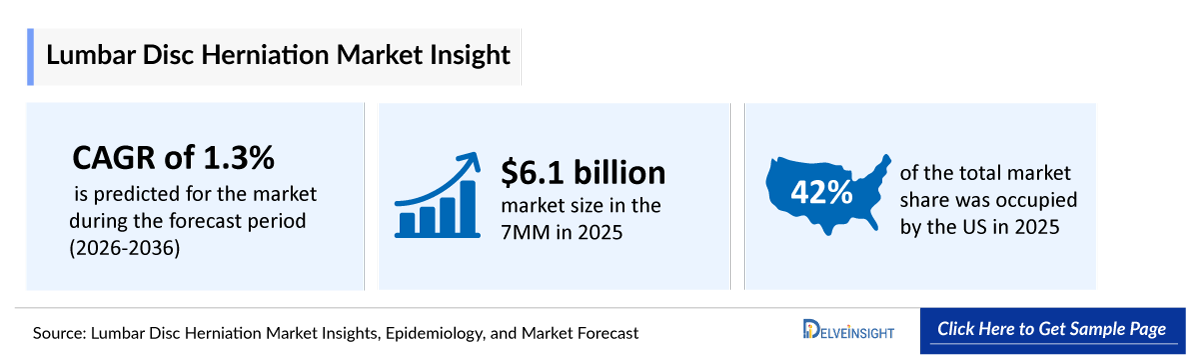
- In 2025, the United States held the largest Lumbar Disc Herniation Market Share among the 7MM, accounting for approximately 42% of the total market.
- With the anticipated introduction of novel treatments such as Condoliase, Triojection, and others, along with the increasing prevalence of lumbar disc herniation driven by aging populations and lifestyle-related risk factors, the 7MM market is expected to reach nearly USD 7,250 million by 2036 at a CAGR of 1.3% during the study period of 2022–2036.
- Among all seven major markets, the US consistently captured the largest market, accounting for approximately USD 3,760 million in 2022, which is expected to grow to nearly USD 4,770 million by 2036 at a CAGR of 1.7% during the study period of 2022–2036.
Lumbar Disc Herniation Companies
- Seikagaku Corporation
- Ferring Pharmaceuticals
- Stayable Therapeutics
- SpinaFX Medical, and others
Lumbar Disc Herniation Treatment Uptake
This section focuses on the uptake rate of potential Lumbar Disc Herniation drugs expected to be launched in the market during the forecast period (2026–2036). The analysis covers the LUMBAR DISC HERNIATION drug’s uptake, performance at peak, factors affecting performance during prime years of growth, patient uptake by therapy, and anticipated sales generated by each drug.
The Lumbar Disc Herniation (LDH) treatment market is primarily driven by conservative therapies, including NSAIDs, analgesics, physical therapy, and epidural steroid injections, which remain the standard first-line approach for most patients. Microdiscectomy continues to be the preferred surgical option for patients with persistent symptoms or neurological deficits, while minimally invasive procedures such as endoscopic discectomy and percutaneous decompression techniques are gaining adoption due to their potential for reduced tissue disruption and faster recovery.
Condoliase (HERNICORE®) has established a niche role in Japan as a minimally invasive intradiscal therapy for selected patients, whereas emerging regenerative and device-based therapies are expected to achieve gradual uptake as clinical evidence, reimbursement, and guideline support continue to expand. Emerging pipeline agents are expected to experience more gradual adoption as clinical evidence matures and guideline integration evolves.
Detailed insights of emerging treatment uptake is included in the report
Lumbar Disc Herniation Market Access and Reimbursement of Approved Therapies
The Lumbar Disc Herniation Therapeutics Market Report further provides detailed insights on the country-wise accessibility and reimbursement scenarios, cost-effectiveness scenario of approved therapies, programs making accessibility easier and out-of-pocket costs more affordable, insights on patients insured under federal or state government prescription drug programs, etc.
HERNICORE
In Japan, SI-6603 (HERNICORE®; condoliase) is reimbursed under the National Health Insurance (NHI) system. The official NHI reimbursement price for HERNICORE® 1.25 units for intradiscal injection is 81,676 yen per vial, corresponding to the recommended single-dose administration for eligible patients with lumbar disc herniation who have not responded adequately to conservative therapy.
Under Japan's universal health insurance system, eligible patients typically pay the applicable statutory copayment (generally 30% for working-age adults), while the remaining cost is reimbursed through the NHI. Patients may also benefit from Japan's High-Cost Medical Expense Benefit program, which can further reduce out-of-pocket expenses based on income eligibility.
Reimbursement is a crucial factor that affects the drug’s access to the market. Often, the decision to reimburse comes down to the price of the drug relative to the benefit it produces in treated patients. To reduce the healthcare burden of these high-cost therapies, many payment models are being considered by payers and other industry insiders.
NOTE: Further Details are provided in the final report….
Lumbar Disc Herniation Therapies Price Scenario & Trends
Pricing and analogue assessment of Lumbar Disc Herniation therapies highlights evolving price dynamics structures. This section summarizes the cost of approved treatments, closest and most approproiate analogue selection for emerging therapies, and understanding of how pricing influences market access, adherence, and long-term uptake.
Pricing of Lumbar Disc Herniation treatment options
Conservative management remains the first-line treatment approach for Lumbar Disc Herniation (LDH). Analgesics and NSAIDs, with an average annual cost of approximately USD 350, are commonly used to relieve pain and inflammation, while physical therapy and rehabilitation, costing around USD 2,000, aim to improve mobility, strengthen supporting musculature, and reduce symptom recurrence.
Epidural steroid injections, priced at approximately USD 1,450 per procedure, are typically reserved for patients with persistent radicular pain who do not respond adequately to initial conservative measures. In Japan, Condoliase is available as a minimally invasive intradiscal pharmacological treatment for selected patients with LDH.
When conservative therapies fail to provide adequate symptom relief, surgical interventions are considered. Microdiscectomy/open discectomy, with an average cost of approximately USD 10,250, remains the standard surgical procedure for patients with significant neurological deficits or refractory symptoms, while endoscopic discectomy, costing around USD 11,250, offers a less invasive alternative with the potential for faster recovery in appropriately selected patients.
Several minimally invasive device-based therapies are also available for LDH management. Percutaneous Laser Disc Decompression (PLDD) devices cost approximately USD 5,650 per procedure and aim to reduce intradiscal pressure through laser ablation. Mechanical decompression and radiofrequency-based disc decompression devices, each costing around USD 11,250, are designed to remove or ablate disc material to relieve nerve compression while minimizing tissue disruption compared with conventional surgery.
Industry Experts and Physician Views for Lumbar Disc Herniation
To keep up with Lumbar Disc Herniation market trends, we take Key Opinion Leaders (KOLs) and Subject Matter Experts (SMEs) opinions working in the domain through primary research to fill the data gaps and validate our secondary research. Industry Experts were contacted for insights on the Lumbar Disc Herniation emerging treatment, evolving treatment landscape, patient adherence to conventional treatment, therapy switching trends, drug adoption and uptake, accessibility challenges, and epidemiology and real-world prescription patterns in Lumbar Disc Herniation, including MD, Ph.D, Instructor, Postdoctoral Researcher, Professor, Researcher, and others.
DelveInsight’s analysts connected with 15+ KOLs to gather insights at country level. Centers such as the Brown University Warren Alpert Medical School, Medway Maritime University Hospital, Albert Einstein College of Medicine, University Hospital Marburg, Fondazione IRCCS Istituto Neurologico Carlo Besta, etc. were contacted. Their opinion helps understand and validate current and emerging Lumbar Disc Herniation treatment, highlight unmet medical needs, provide epidemiological context, and support strategic decisions for market access, therapy adoption, and pipeline prioritization in Lumbar Disc Herniation.
|
United States |
“The epidemiology of lumbar disc herniation highlights that patient characteristics, lifestyle factors, and occupational demands all contribute to disease occurrence. Understanding these factors is essential for prevention and early management.” |
|
United Kingdom |
“Advances in understanding the biological mechanisms of disc herniation are expected to support the development of targeted therapies capable of addressing the underlying disease process rather than symptom management alone.” |
Lumbar Disc Herniation Report Qualitative Analysis: SWOT and Conjoint Analysis
We perform qualitative and Lumbar Disc Herniation Therapeutics Market Intelligence analysis using various approaches, such as SWOT analysis and conjoint analysis. In the SWOT analysis of LUMBAR DISC HERNIATION, strengths, weaknesses, opportunities, and threats in terms of disease diagnosis, patient awareness, patient burden, competitive landscape, cost-effectiveness, and geographical accessibility of treatment are provided.
Conjoint analysis analyzes emerging therapies based on relevant attributes such as safety, efficacy, frequency of administration, route of administration, and order of entry. Scoring is given based on these parameters to analyze the effectiveness of therapy.
The team of analysts analyzes promising Lumbar Disc Herniation emerging therapies based on relevant attributes such as safety, efficacy, frequency of administration, route of administration, and order of entry. In efficacy, the trial’s primary and secondary outcome measures are evaluated, whereas the therapies’ safety is evaluated, wherein the acceptability, tolerability, and adverse events are majorly observed.
In addition, the scoring is also based on the route of administration, order of entry, probability of success, and the addressable patient pool for each therapy. According to these parameters, the final weightage score and the ranking of the emerging therapies are decided.
Scope of the Lumbar Disc Herniation Market Report
- The Lumbar Disc Herniation Therapeutics Market Report covers a segment of key events, an executive summary, a descriptive overview, explaining their causes, signs and symptoms, pathogenesis, and currently available treatments.
- Comprehensive insight has been provided into the epidemiology segments and forecasts, the future growth potential of the diagnosis rate, and disease progression along Lumbar Disc Herniation Treatment guidelines.
- Additionally, an all-inclusive account of both the current and emerging treatments, along with the elaborative profiles of late-stage and prominent treatment, will have an impact on the current treatment landscape.
- A detailed review of the Lumbar Disc Herniation Therapeutics Market, historical and forecasted Lumbar Disc Herniation Treatment Market Size, Lumbar Disc Herniation Drugs Market Share by treatment, detailed assumptions, and rationale behind our approach is included in the report, covering the 7MM drug outreach.
- The report provides an edge while developing business strategies by understanding trends through SWOT analysis and expert insights/KOL views, patient journey, and treatment preferences that help in shaping and driving the 7MM Lumbar Disc Herniation Drugs Market.
Lumbar Disc Herniation Market Report Insights
- Lumbar Disc Herniation Patient Population Forecast
- Lumbar Disc Herniation Therapeutics Market Size
- Lumbar Disc Herniation Pipeline Analysis
- Lumbar Disc Herniation Market Size and Trends
- Lumbar Disc Herniation Market Opportunity (Current and forecasted)
Lumbar Disc Herniation Market Report Key Strengths
- Epidemiology-based (Epi-based) Bottom-up Forecasting
- Artificial Intelligence (AI)-enabled Market Research Report
- 11-year forecast
- Lumbar Disc Herniation Market Outlook (North America, Europe, Asia-Pacific)
- Patient Burden Trends (by geography)
- Lumbar Disc Herniation Treatment Addressable Market (TAM)
- Lumbar Disc Herniation Competitive Landscape
- Lumbar Disc Herniation Major Companies Insights
- Lumbar Disc Herniation Price Trends and Analogue Assessment
- Lumbar Disc Herniation Treatment Drug Adoption/Uptake
- Lumbar Disc Herniation Treatment Peak Patient Share Analysis
Lumbar Disc Herniation Market Report Assessment
- Lumbar Disc Herniation Current Treatment Practices
- Lumbar Disc Herniation Unmet Needs
- Lumbar Disc Herniation Clinical Development Analysis
- Lumbar Disc Herniation Emerging Drugs Product Profiles
- Lumbar Disc Herniation Market Attractiveness
- Lumbar Disc Herniation Qualitative Analysis (SWOT and conjoint analysis)
Key Questions Answered in the Lumbar Disc Herniation Therapeutics Market Report
Lumbar Disc Herniation Treatment Market Insights
- What was the Lumbar Disc Herniation Treatment Market Size, the Lumbar Disc Herniation Market Size by treatment, Lumbar Disc Herniation Drugs Market Share (%) distribution in 2025, and what would it look like by 2036? What are the contributing factors for this growth?
- What are the anticipated pricing variations among different geographies for the emerging treatment in the future?
- What can be the future treatment paradigm of Lumbar Disc Herniation?
- What impact will patent expiry have on the Lumbar Disc Herniation therapy market?
- What are the disease risks, burdens, and unmet needs of Lumbar Disc Herniation?
- What will be the growth opportunities across the 7MM concerning the patient population with Lumbar Disc Herniation?
- Who is the major future competitor in the market, and how will the competitors affect their market share?
- What are the current options for the treatment of Lumbar Disc Herniation? What are the current guidelines for treating Lumbar Disc Herniation in the US, Europe, and Japan?
Reasons to Buy the Lumbar Disc Herniation Market Report
- The Lumbar Disc Herniation Therapeutics Market Report will help in developing business strategies by understanding the latest trends and changing treatment dynamics driving the Lumbar Disc Herniation Drugs Market.
- Bottom up forecasting builds from the affected population to product forecasts, delivering a robust, data driven approach ideal for new treatment and novel classes.
- Insights on patient burden/disease Lumbar Disc Herniation Incidence, evolution in diagnosis, and factors contributing to the change in the epidemiology of the disease during the forecast years.
- Understand the existing Lumbar Disc Herniation Drugs Market opportunities in varying geographies and the growth potential over the coming years.
- Identifying strong upcoming players in the Lumbar Disc Herniation Drugs Market will help devise strategies to help get ahead of competitors.
- Detailed analysis and ranking of class-wise potential current and emerging treatments under the conjoint analysis section to provide visibility around leading classes.
- To understand KOLs’ perspectives on the accessibility, acceptability, and compliance-related challenges of existing treatment to overcome barriers in the future.
- Detailed insights on the unmet needs of the existing Lumbar Disc Herniation Drugs Market so that the upcoming players can strengthen their development and launch strategy.
- This Artificial Intelligence (AI) enabled report summarize and simplify complex datasets within the report into clear, actionable insights for stakeholders, investors, and healthcare providers, enabling faster, data driven decisions.
Stay updated with us for Recent Articles @ New DelveInsight Blogs



