
Meniscus Tear Market
- The Meniscus Tear market size is projected to witness consistent growth throughout the forecast period (2023–2032) due to increased incidence of sports injuries, increasing awareness about cutting-edge medical technology, and increasing cases of osteoarthritis, which will stimulate revenue growth.
- Analysts from DelveInsight have observed a significant surge in the incidence of Meniscus Tears in recent times. Breakthrough discoveries and advancements in scientific knowledge are expected to drive market growth by introducing new therapeutic approaches.
- To propel the growth of the Meniscus Tear market in the coming years, several companies, such as FUJIFILM Toyama Chemical Co., Ltd., and others, are currently developing drugs in early to mid-phase clinical trials. With the anticipated approval of these innovative therapies within the forecast period of 2023–2032, the overall therapeutic market for Meniscus Tears is expected to experience a substantial increase, exhibiting a significant compound annual growth rate (CAGR).
Request for Sample Page @ Meniscus Tear Market Report
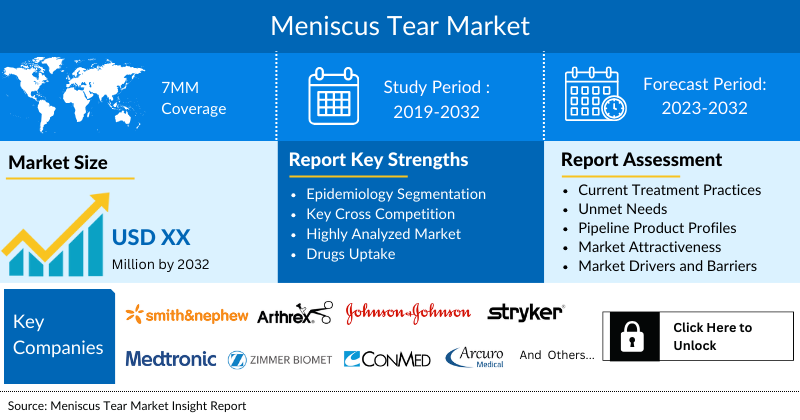
DelveInsight’s report titled “Meniscus Tear Market Insights, Epidemiology, and Market Forecast –2032” provides a comprehensive analysis of Meniscus Tear. The report includes a detailed examination of the historical and projected epidemiology data that includes Total Incident Cases of Meniscus Tear, Gender-specific Incident Cases of Meniscus Tear, Age-specific Incident Cases of Meniscus Tear, Treatable Cases of Meniscus Tear. The Meniscus Tear market report offers an in-depth understanding of the various aspects related to the patient population, including diagnosis, prescription patterns, physician perspectives, market access, treatment, and future market developments for the seven major markets, including the United States, EU4 (Germany, France, Italy, and Spain) and the UK, and Japan from 2019 to 2032.
In order to gauge the market’s overall potential and identify business opportunities, the report discusses current Meniscus Tear treatment practices and algorithms as well as unmet medical needs.
|
Study Period |
2019–2032 |
|
Forecast Period |
2023–2032 |
|
Geographies Covered |
US, EU4 (Germany, France, Italy, and Spain) and the UK, and Japan |
|
Meniscus Tear Epidemiology |
|
|
Meniscus Tear Market |
|
|
Market Analysis |
|
|
Meniscus Tear Companies |
Smith & Nephew Plc, Arthrex Inc., Johnson & Johnson, Medtronic Plc., Zimmer Biomet, Stryker Corporation, Conmed Corporation, Arcuro Medical Ltd |
|
Class of Drugs |
|
Meniscus Tear Treatment Market
Meniscus Tear Overview
A meniscus tear is an injury to one of the bands of rubbery cartilage that act as shock absorbers for the knee. A meniscus tear can occur when the knee is suddenly twisted while the foot is planted on the ground. A tear can also develop slowly as the meniscus loses resiliency. In this case, a portion may break off, leaving frayed edges. A torn meniscus is a very common knee injury. Often, athletes and people who play sports for fun suffer meniscus tears. The injury also commonly affects older people and those with arthritis in their knees. Depending on the severity of the injury, surgical repair may or may not be needed. Common symptoms include pain, swelling, stiffness, and difficulty extending the knee.
Meniscus Tear Diagnosis
The diagnosis of Meniscus Tear is frequently made through physical examination. Various diagnostic tests are involved in the diagnosis of meniscus tear. Imaging tests such as Magnetic resonance imaging (MRI), x-rays, and arthroscopy are used.
Meniscus Tear Treatment Landscape
Management of Meniscus Tear is based on several factors, including the patient’s age, symptoms, and activity level. Treatment is categorized as nonsurgical, comprising physical therapy medications, and surgical, comprising Knee arthroscopy. Treatments for meniscus tears begin with conservative measures, including rest, ice, compression, and elevation; medications to relieve pain; physical therapy; corticosteroid injections; and biologic injections. Nonsteroidal anti-inflammatory medications such as ibuprofen and naproxen can help reduce inflammation and pain caused by a meniscus tear. Acetaminophen can also help manage pain but does not reduce inflammation. Corticosteroids are powerful anti-inflammatory medications that can alleviate knee pain. Although corticosteroids injected directly into the knee do not heal a meniscus tear, they may reduce swelling and discomfort. Biologics, medicines derived from biological sources such as blood, bone marrow, and fat cells, are an emerging technology and possible complement to other nonsurgical approaches to care. These medicines may help tissue to heal and decrease inflammation in the patient’s knee.
Meniscus Tear Epidemiology
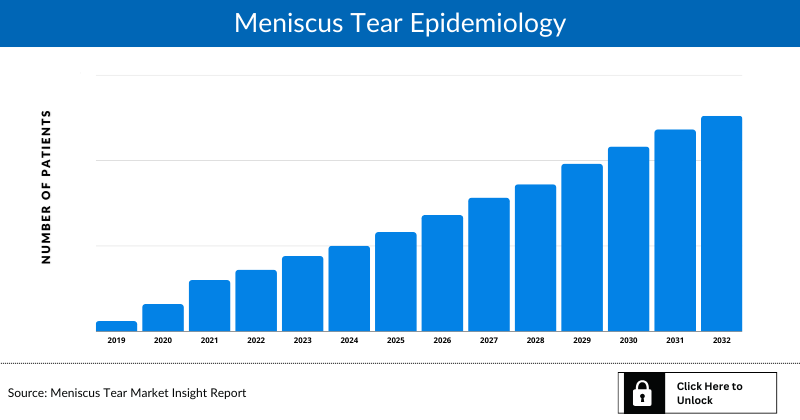
The Meniscus Tear epidemiology section provides insights into the historical and current Meniscus Tear patient pool and forecasted trends for seven individual major countries. It helps recognize the causes of current and forecasted trends by exploring numerous studies and views of key opinion leaders. This part of the report also provides the diagnosed patient pool, its trends, and assumptions undertaken.
The epidemiology section on the Meniscus Tear market report offers information on the patient populations, including historical and projected trends for each of the seven major markets. Examining key opinion leader views from physicians or clinical experts can assist in identifying the reasons behind historical and projected trends. The diagnosed patient pool, their trends, and the underlying assumptions are all included in this section of the report.
Key Findings
According to Luvsannyam et al. (2022), in the US, the incidence of meniscal tears is estimated to be 60 per 100,000 population, and the incidence of meniscal-related injuries is rising significantly due to increased sports participation and advanced diagnostic tools.
As per Masini et al. (2015), in the US, there were 79 instances of meniscus tears in stable knees in a cohort of 9,086 subjects from 2005 to 2012. Of these, 68 (86%) were in males and 11 (14%) in females.
According to the study conducted by Leitao et al. (2022), several risk factors increase the likelihood of developing meniscal tears. The non-modifiable risk factors for meniscal tears include sex, where the incidence in men is 2.5 times more than in women.
In a study conducted by Bubnis et al. (2023), it was found that males aged over 40 are also associated with an increased risk of meniscal tears.
Meniscus Tear Market Outlook
The therapeutic market for Meniscus Tear primarily relies on using nonsteroidal anti-inflammatory drugs (NSAIDs) medications. Regrettably, there exists no pharmacological definitive cure for this condition. Nevertheless, nonsteroidal anti-inflammatory drugs (NSAIDs) help reduce pain and swelling around the knee.
The medical management of patients afflicted with Meniscus Tear is frequently deemed inadequate. However, implementing existing diagnostic, therapeutic, and preventative measures and surgical interventions can greatly enhance treatment efficacy. Biologics, medicines derived from biological sources such as blood, bone marrow, and fat cells, are an emerging technology and possible complement to other nonsurgical approaches to care. These medicines may help tissue to heal and decrease inflammation in the patient’s knee.
According to DelveInsight, the Meniscus Tear market in the 7MM is expected to significantly change during the study period 2019–2032.
Meniscus Tear Drug Chapters
Meniscus Tear Marketed Drugs
The present therapeutic market for Meniscus Tear is replete with the off-label use of anti-inflammatory drugs. Consequently, the market is driven by devices involved in surgical procedures and painkillers. Nevertheless, the entry of emerging therapies into the market is expected to change the market dynamics.
Note: Detailed marketed therapies assessment will be provided in the final report…
Emerging Meniscus Tear Drugs
The Meniscus Tear market dynamics are expected to change, primarily due to increased healthcare spending worldwide. Meniscus Tear Market players such as FUJIFILM Toyama Chemical Co., Ltd. are actively developing Meniscus Tear treatments.
FF-31501: FUJIFILM Toyama Chemical Co., Ltd.
FF-31501 involves arthroscopic treatment with the suspension of autologous synovial MSCs, a cell transplantation technology developed by Professor Ichiro Sekiya, the director of the Center for Stem Cell and Regenerative Medicine, Tokyo Medical and Dental University (TMDU). It is expected to preserve the injured meniscus by the implanted MSCs promoting injury healing, possibly resulting in reduced risk of knee osteoarthritis. The company has initiated a Phase III trial that targets patients with meniscus injuries indicated for meniscectomy. As part of the trial, FF-31501 effects on restoration of meniscus function and structure, in addition to reduction of knee symptoms and pain, will be verified 52 weeks after transplantation, using the Lysholm Knee Scoring system*3 as a primary endpoint, as well as MRI and arthroscopic image diagnosis as secondary endpoints. The clinical trial is already underway on the first patient at the Tokyo Medical and Dental University Hospital, and the target enrollment is 18 patients.
|
Drug |
MoA |
RoA |
Company |
Phase |
|
FF-31501 |
Regeneration |
IV |
FUJIFILM Toyama Chemical Co., Ltd |
III |
|
XX |
XX |
XX |
XX |
I |
Note: Detailed emerging therapies assessment will be provided in the final report…
Meniscus Tear Market Segmentation
DelveInsight’s ‘Meniscus Tear Market Insights, Epidemiology, and Market Forecast – 2032’ report provides a detailed outlook of the current and future Meniscus Tear market, segmented within countries, by therapies, and by classes. Further, the market of each region is then segmented by each therapy to provide a detailed view of the current and future market share of all therapies.
Meniscus Tear Market Size by Countries
The total Meniscus Tear market size is analyzed for individual countries (the United States Market, EU4 [Germany, France, Italy, and Spain] and the UK market, and Japan). The United States accounted for a larger portion of the 7MM market for Meniscus Tear in 2022 due to the incidence of the condition and the higher cost of treatments. This dominance is predicted to continue with the potential early entry of new products.

Meniscus Tear Market Size by Therapies
The Meniscus Tear market encompasses off-label meniscus tear therapies to manage and treat this condition characterized by pain, swelling, and stiffness. Major companies, such as FUJIFILM Toyama Chemical Co., Ltd., and others, are key players in developing new therapies for managing Meniscus Tear. As research and development efforts continue, it is expected that the market size for Meniscus Tear therapies will expand further, driven by advancements in treatment options, increased awareness, and growing demand for innovative approaches to address the needs of individuals living with Meniscus Tear.
Note: Detailed market segment assessment will be provided in the final report…
Meniscus Tear Drugs Uptake
This section focuses on the sales uptake of potential Meniscus Tear drugs that have recently been launched or are anticipated to be launched in the Meniscus Tear market between 2019 and 2032. It estimates the market penetration of Meniscus Tear drugs for a given country, examining their impact within and across classes and segments. It also touches upon the financial and regulatory decisions contributing to the probability of success (PoS) of the drugs in the Meniscus Tear market.
The emerging Meniscus Tear therapies are analyzed based on various attributes such as safety and efficacy in randomized clinical trials, order of entry and other market dynamics, and the unmet need they fulfill in the Meniscus Tear market.
Note: Detailed assessment of drug uptake and attribute analysis will be provided in the full report on Meniscus Tear…
Meniscus Tear Market Access and Reimbursement
DelveInsight’s ‘Meniscus Tear Market Insights, Epidemiology, and Market Forecast – 2032’ report provides a descriptive overview of the market access and reimbursement scenario of Meniscus Tear.
This section includes a detailed analysis of the country-wise healthcare system for each therapy, enlightening the market access, reimbursement policies, and health technology assessments.
KOL Views
To keep up with current Meniscus Tear market trends and fill gaps in secondary findings, we interview KOLs and SMEs working in the Meniscus Tear domain. Their opinion helps understand and validate current and emerging therapies and treatment patterns or Meniscus Tear market trends. This will support the clients in potential upcoming novel treatments by identifying the overall scenario of the market and the Meniscus Tear unmet needs.
Meniscus Tear: KOL Insights
DelveInsight’s analysts connected with 50+ KOLs to gather insights; however, interviews were conducted with 15+ KOLs in the 7MM. These KOLs were from organizations, institutes, and hospitals, such as the Department of Physical Medicine and Rehabilitation, Temple University, the US, and others.
“Meniscal tears are more common among males and can be attributed to their increased participation in physically demanding sports and manual labor.”
Note: Detailed assessment of KOL Views will be provided in the full report of Meniscus Tear…
Competitive Intelligence Analysis
We perform Competitive and Market Intelligence analysis of the Meniscus Tear Market using various Competitive Intelligence tools, including SWOT analysis, Market entry strategies, etc. The inclusion of the analysis entirely depends upon the data availability.
Meniscus Tear Pipeline Development Activities
The Meniscus Tear report provides insights into Meniscus Tear Clinical Trials within Phase II and Phase III stages. It also analyses Meniscus Tear Companies involved in developing targeted therapeutics.
Pipeline Development Activities
The report covers information on collaborations, acquisition and merger, licensing, patent details, and other information for emerging Meniscus Tear therapies.
Meniscus Tear Report Insights
- Meniscus Tear Patient Population
- Meniscus Tear Therapeutic Approaches
- Meniscus Tear Pipeline Analysis
- Meniscus Tear Market Size and Trends
- Meniscus Tear Market Opportunities
- Impact of Upcoming Meniscus Tear Therapies
Meniscus Tear Report Key Strengths
- 10 Years Forecast
- The 7MM Coverage
- Meniscus Tear Epidemiology Segmentation
- Key Cross Competition
- Highly Analyzed Meniscus Tear Market
- Meniscus Tear Drugs Uptake
Meniscus Tear Report Assessment
- Meniscus Tear Current Treatment Practices
- Meniscus Tear Unmet Needs
- Meniscus Tear Pipeline Product Profiles
- Meniscus Tear Market Attractiveness
- Meniscus Tear Market Drivers
- Meniscus Tear Market Barriers
Key Questions Answered In The Meniscus Tear Market Report
- At what CAGR is the Meniscus Tear market, and is epidemiology expected to grow in the 7MM during the forecast period (2023–2032)?
- What are the key findings of the market across the 7MM, and what country will have the largest Meniscus Tear market size during the forecast period (2023–2032)?
- Are there any market barriers or challenges hindering the growth of the Meniscus Tear market (2023–2032)?
- What strategies are pharmaceutical companies adopting to capture a larger share of the Meniscus Tear market (2023–2032)?
Frequently Asked Questions
What is the forecast period covered in the report?
The Meniscus Tear Epidemiology and Market Insight report for the 7MM covers the forecast period from 2023 to 2032, providing a projection of market dynamics and trends during this timeframe.
What are the causes of Meniscus Tear?
Meniscus Tear results from any activity that causes one to forcefully twist or rotate one’s knee, such as aggressive pivoting or sudden stops and turns.
Who are the key players in the Meniscus Tear market?
The Meniscus Tear market is scarce. The major players currently developing drugs for the treatment of Meniscus Tear are FUJIFILM Toyama Chemical Co., Ltd. and others.
How is the market size estimated in the forecast report?
The market size is estimated through data analysis, statistical modeling, and expert opinions. It may consider factors such as incident cases, treatment costs, revenue generated, and market trends.
What is the key driver of the Meniscus Tear market?
The increase in Incident cases of Meniscus Tear is attributed to the current population size.
What is the expected impact of emerging therapies or advancements in Meniscus Tear treatment on the market?
Introducing new therapies, increasing awareness, and innovations in treatment approaches can significantly impact the Meniscus Tear treatment market. Market forecast reports may provide analysis and predictions regarding the potential impact of these developments.
Does the report provide insights into the competitive landscape of the market?
The market forecast report may include information on the competitive landscape, profiling key market players, their product offerings, partnerships, and strategies, and helping stakeholders understand the competitive dynamics of the Meniscus Tear market.