
Metagenomic Sequencing Market Summary
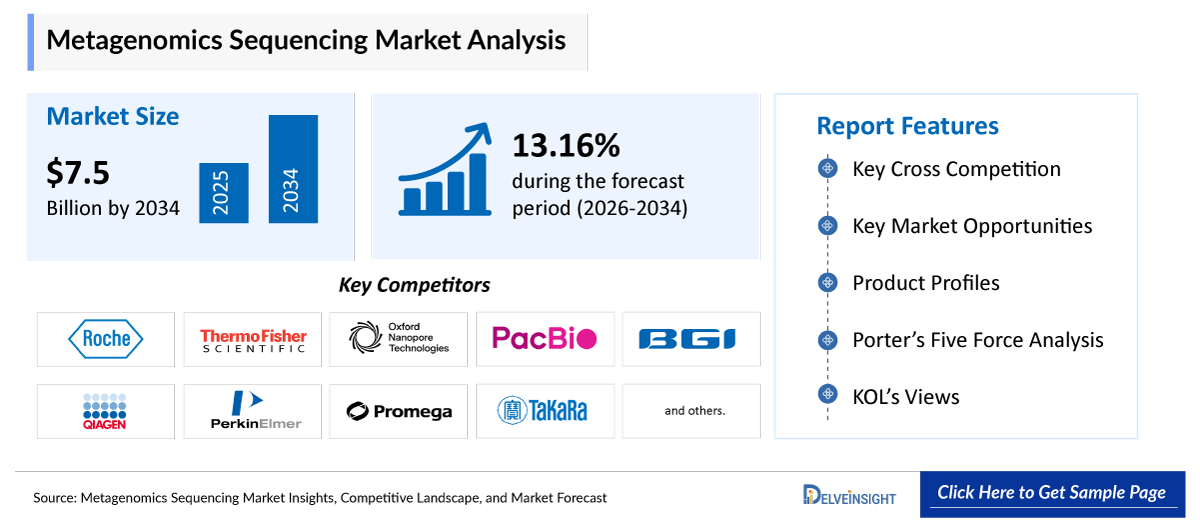
- The global metagenomics sequencing market is expected to increase from USD 2,510.68 million in 2025 to USD 7,577.83 million by 2034, reflecting strong and sustained growth.
- The global metagenomics sequencing market is growing at a CAGR of 13.16% during the forecast period from 2026 to 2034.
- The metagenomics sequencing market is primarily driven by the combined impact of several key drivers. The rising burden of infectious diseases, including emerging and re-emerging pathogens, has increased the need for rapid, unbiased diagnostic tools capable of identifying a wide range of microorganisms without prior knowledge. At the same time, continuous advancements in next-generation sequencing (NGS) technologies, such as improved accuracy, reduced turnaround time, and declining costs, have made metagenomic approaches more accessible and scalable across clinical and research settings. Additionally, the growing demand for personalized medicine is further accelerating adoption, as metagenomic sequencing enables precise characterization of microbial communities and pathogen profiles, supporting targeted therapies and better patient outcomes. Collectively, these factors are driving widespread adoption and expansion of the metagenomic sequencing market globally.
- The leading companies operating in the metagenomics sequencing market include F. Hoffmann-La Roche Ltd., Thermo Fisher Scientific, Oxford Nanopore Technologies, Pacific Biosciences, BGI Genomics, QIAGEN, PerkinElmer, Promega Corporation, Takara Bio, Eurofins Scientific, Novogene, Macrogen, GENEWIZ, MR DNA, SeqMatic, and others.
- North America is expected to dominate the metagenomic sequencing market due to its well-established healthcare infrastructure, high adoption of advanced technologies such as next-generation sequencing (NGS), and strong presence of leading biotechnology and genomics companies like Illumina and Thermo Fisher Scientific. The region also benefits from substantial government and private funding for genomics research, the increasing prevalence of infectious and chronic diseases, and a growing focus on precision medicine. Additionally, supportive regulatory frameworks and ongoing research initiatives further accelerate the integration of metagenomic sequencing into clinical and research applications, driving market growth in the region.
- In the component segment of the metagenomics sequencing market, the reagents and consumables category is estimated to account for the largest market share in 2025.
Request for unlocking the report of the @Metagenomics Sequencing Market
Metagenomics Sequencing Market Size and Forecasts
|
Report Metrics |
Details |
|
2025 Market Size |
USD 2,510.68 million |
|
2034 Projected Market Size |
USD 7,577.83 million |
|
Growth Rate (2026-2034) |
13.16% CAGR |
|
Largest Market |
North America |
|
Fastest Growing Market |
Asia-Pacific |
|
Market Structure |
Moderately Concentrated |
Factors Contributing to the Growth of the Metagenomics Sequencing Market
-
Rising burden of infectious diseases:
The rising burden of infectious diseases is a major driver boosting the demand for metagenomic sequencing. With the increasing incidence of diseases such as respiratory infections, sepsis, and emerging viral outbreaks, there is a growing need for rapid and accurate diagnostic methods. Metagenomic sequencing enables the comprehensive detection of pathogens, bacteria, viruses, fungi, and parasites without prior assumptions, making it highly valuable in complex or unknown infections. This capability supports early diagnosis, effective treatment decisions, and improved outbreak surveillance, thereby driving the growth of the metagenomic sequencing market.
-
Advancements in next-generation sequencing technologies are escalating the market of metagenomics sequencing:
Advancements in next-generation sequencing (NGS) technologies are significantly driving the growth of the metagenomic sequencing market. Continuous improvements in sequencing speed, accuracy, and throughput, along with a substantial reduction in costs, have made these technologies more accessible for clinical and research applications. Modern NGS platforms from companies like Illumina and Oxford Nanopore Technologies enable rapid, high-resolution analysis of complex microbial communities. Additionally, advancements in bioinformatics tools and automation have simplified data analysis, allowing for faster and more reliable interpretation of results. These innovations are expanding the use of metagenomic sequencing in diagnostics, epidemiology, and personalized medicine, thereby fueling market growth.
-
Rising demand for personalized medicine:
The rising demand for personalized medicine is significantly boosting the metagenomic sequencing market by enabling more precise and individualized treatment approaches. Metagenomic sequencing allows comprehensive profiling of a patient’s microbiome and identification of specific pathogens, helping clinicians tailor therapies based on unique genetic and microbial characteristics. This is particularly valuable in areas such as infectious diseases, oncology, and antimicrobial resistance management. Companies like Illumina and QIAGEN are actively developing advanced sequencing and analysis solutions to support personalized healthcare. As healthcare systems increasingly shift toward targeted and precision-based treatments, the adoption of metagenomic sequencing continues to grow, driving overall market expansion.
Metagenomics Sequencing Market Report Segmentation
This metagenomics sequencing market report offers a comprehensive overview of the global metagenomics sequencing market, highlighting key trends, growth drivers, challenges, and opportunities. It covers detailed market segmentation by Component (Product {Instruments and Reagents & Kits} and Services), Technology (Shotgun Metagenomic Sequencing, 16S rRNA Sequencing, Whole Genome Sequencing (WGS) & De Novo Assembly, and Metatranscriptomics), Application (Drug Discovery and Development, Clinical Diagnostics, and Others), End-Users (Pharmaceutical & Biotechnology Companies, Research Laboratories, and Others), and geography. The report provides valuable insights into the competitive landscape, regulatory environment, and market dynamics across major markets, including North America, Europe, and Asia-Pacific. Featuring in-depth profiles of leading industry players and recent product innovations, this report equips businesses with essential data to identify market potential, develop strategic plans, and capitalize on emerging opportunities in the rapidly growing metagenomics sequencing market.
Metagenomic sequencing is a molecular technique used to analyze the genetic material of all microorganisms present in a given sample, such as blood, soil, or water, without the need for culturing them in a laboratory. Using advanced next-generation sequencing (NGS) technologies enables the simultaneous identification of bacteria, viruses, fungi, and parasites, providing a comprehensive view of microbial communities. This approach is widely used in clinical diagnostics, environmental studies, and microbiome research for its ability to detect known and unknown organisms quickly and accurately.
The metagenomic sequencing market is experiencing robust growth, driven by the combined impact of several key factors. The rising burden of infectious diseases, including emerging and re-emerging pathogens such as novel viruses, antimicrobial-resistant bacteria, and hospital-acquired infections, has significantly increased the demand for rapid, accurate, and unbiased diagnostic solutions. Unlike conventional methods, metagenomic sequencing enables the simultaneous detection of a broad spectrum of microorganisms without prior assumptions, making it highly valuable in complex and time-sensitive clinical scenarios such as sepsis and outbreak investigations.
At the same time, continuous advancements in next-generation sequencing (NGS) technologies, including enhanced sequencing accuracy, higher throughput, automation, and significantly reduced turnaround times, have improved the efficiency and reliability of metagenomic workflows. The declining cost of sequencing, along with the development of user-friendly bioinformatics platforms, has further expanded accessibility across hospitals, research institutions, and public health laboratories, enabling large-scale adoption.
Additionally, the growing demand for personalized medicine is playing a crucial role in accelerating market expansion. Metagenomic sequencing allows for in-depth profiling of individual microbiomes and precise identification of pathogen strains, enabling clinicians to design targeted therapies and optimize treatment strategies based on patient-specific data. This is particularly important in areas such as infectious disease management, oncology, and microbiome-based therapeutics. Collectively, these factors are not only enhancing clinical decision-making and patient outcomes but also driving widespread adoption and sustained growth of the metagenomic sequencing market globally.
Get More Insights into the Report @Metagenomics Sequencing Market
What are the latest metagenomics sequencing market dynamics and trends?
The rising global burden of infectious diseases such as tuberculosis, sepsis, HIV/AIDS, and COVID-19 is significantly driving the growth of the metagenomic sequencing market by creating an urgent need for faster, more accurate, and comprehensive diagnostic solutions. Traditional diagnostic methods, including culture-based techniques and targeted molecular assays, often fail to detect pathogens in cases of polymicrobial infections, rare organisms, or when prior antibiotic use suppresses microbial growth, leading to delayed or incorrect diagnoses. In contrast, metagenomic sequencing, powered by advancements in next-generation sequencing, enables unbiased, culture-independent detection of a broad spectrum of pathogens, bacteria, viruses, fungi, and parasites in a single test, thereby improving diagnostic accuracy and clinical decision-making.
According to the World Health Organization (2025), in 2024, an estimated 10.7 million people fell ill with TB worldwide, including 5.8 million men, 3.7 million women, and 1.2 million children. TB remains one of the leading infectious causes of mortality worldwide, and its diagnosis is often complicated by factors such as low bacterial load, the slow-growing nature of the pathogen, and the presence of drug-resistant strains. Conventional diagnostic methods like sputum microscopy and culture are time-consuming and may lack sensitivity, especially in extrapulmonary or latent TB cases. In contrast, metagenomic sequencing, enabled by advancements in next-generation sequencing, allows for unbiased detection of Mycobacterium tuberculosis directly from clinical samples without the need for culture, significantly reducing diagnostic time, thereby boosting the overall market of metagenomics sequencing.
Additionally, as per the data provided by the Global Sepsis Alliance (2025), in 2021, approximately 166 million sepsis cases and 21.4 million deaths were estimated in 2021. Sepsis is a life-threatening condition caused by a dysregulated immune response to infection, and its mortality risk increases significantly with every hour of delay in appropriate treatment. Traditional diagnostic methods, such as blood cultures, are often slow (taking 24–72 hours) and may fail to detect pathogens in a substantial proportion of cases, especially when patients have already received antibiotics. In contrast, metagenomic sequencing, powered by next-generation sequencing, enables culture-independent, comprehensive detection of bacteria, viruses, fungi, and parasites directly from blood samples within a much shorter time frame.
Furthermore, as per the data provided by the U.S. Department of Health & Human Services (2025), in 2024, nearly 41 million people were living with HIV worldwide, including 1.4 million children under age 15. Individuals with HIV/AIDS are highly susceptible to opportunistic infections caused by a wide range of pathogens, including bacteria, viruses, fungi, and parasites, many of which are difficult to detect using conventional diagnostic methods. Traditional tests are often limited to identifying specific pathogens, which can delay diagnosis when multiple or unknown infections are present. In contrast, metagenomic sequencing, enabled by next-generation sequencing, allows for comprehensive, unbiased detection of all potential pathogens in a single test, making it particularly valuable in managing HIV-related co-infections. Additionally, metagenomics can be used to monitor viral load, detect drug resistance mutations, and study the impact of HIV on the host microbiome, supporting personalized treatment strategies.
Additionally, in November 2025, Oxford Nanopore Technologies released a rapid metagenomic sequencing protocol using the SQK-RPB114.24 kit, which is significantly boosting the metagenomic sequencing market by enabling faster, real-time pathogen detection without the need for culture-based methods. This advancement improves turnaround time in infectious disease diagnostics and supports timely clinical decision-making, particularly in critical care and outbreak scenarios. Additionally, the ability to perform multiplexed, cost-efficient shotgun sequencing enhances laboratory throughput and accessibility, encouraging wider adoption across research and clinical settings. As a result, such innovations are accelerating the shift toward culture-independent, precision diagnostics, thereby driving overall market growth in metagenomic sequencing.
Thus, the factors mentioned above are expected to boost the overall market of metagenomics sequencing during the forecast period from 2026 to 2034.
However, the regulatory and clinical validation challenges, along with the high cost of sequencing and infrastructure, are acting as key restraints on the growth of the metagenomic sequencing market. The lack of standardized regulatory frameworks and limited clinical validation for many metagenomic workflows makes it difficult for these technologies to gain widespread approval and adoption in routine diagnostics, particularly in clinical settings. At the same time, the high costs associated with advanced sequencing platforms, reagents, data analysis tools, and the need for specialized infrastructure and skilled personnel create significant financial barriers, especially for smaller laboratories and developing regions. Together, these factors limit scalability and slow the broader commercialization and adoption of metagenomic sequencing solutions.
Metagenomics Sequencing Market Segment Analysis
Metagenomics Sequencing Market by Component (Product {Instruments and Reagents & Kits} and Services), Technology (Shotgun Metagenomic Sequencing, 16S rRNA Sequencing, Whole Genome Sequencing (WGS) & De Novo Assembly, and Metatranscriptomics), Application (Drug Discovery and Development, Clinical Diagnostics, and Others), End-Users (Pharmaceutical & Biotechnology Companies, Research Laboratories, and Others), and Geography (North America, Europe, Asia-Pacific, and Rest of the World)
By Component: Under the Product Segment, the Reagents and Kits Projected to Register the Largest Revenue Share
In the component segment of the metagenomics sequencing market, under the product segment, the reagents and kits category is projected to dominate the market with a market share of 63% in 2025. Reagents and kits are playing a pivotal role in boosting the overall metagenomic sequencing market by simplifying workflows, improving reproducibility, and expanding accessibility across laboratories. Leading companies such as Illumina Inc. and Oxford Nanopore Technologies are continuously launching advanced library preparation kits, extraction reagents, and rapid sequencing chemistries that reduce hands-on time and technical complexity, enabling even non-specialized labs to adopt metagenomic approaches. These kits often integrate multiple steps such as DNA/RNA extraction, fragmentation, barcoding, and amplification into streamlined solutions, thereby minimizing errors and ensuring consistent, high-quality outputs.
Additionally, innovations like rapid metagenomic kits and high-accuracy chemistries support real-time pathogen detection and high-throughput sequencing, which are critical for infectious disease diagnostics, environmental monitoring, and microbiome research. For instance, in May 2024, QIAGEN announced the launch of its QIAseq Multimodal DNA/RNA Library Kit, which enabled simultaneous preparation of DNA and RNA libraries from a single sample for next-generation sequencing applications such as whole genome and transcriptome sequencing. The kit streamlined workflows, reduced turnaround time, and enhanced sequencing efficiency, supporting a wide range of applications, including metagenomics.
Furthermore, the availability of ready-to-use, standardized reagent kits also accelerates clinical and research adoption by reducing dependency on customized protocols, while multiplexing capabilities lower per-sample costs. As a result, continuous advancements in reagents and kits are not only enhancing sequencing efficiency and scalability but also significantly driving the commercialization and widespread adoption of metagenomic sequencing technologies.
By Technology: Shotgun Metagenomic Sequencing Category Dominates the Market
In the technology segment, the shotgun metagenomics sequencing category is expected to dominate the market with a market share of 48% in 2025. Shotgun metagenomic sequencing technology is significantly boosting the overall metagenomic sequencing market by enabling comprehensive, unbiased analysis of all genetic material present in a sample without the need for prior target selection. Unlike traditional methods such as 16S rRNA sequencing, shotgun sequencing allows simultaneous identification of bacteria, viruses, fungi, and parasites, along with insights into antimicrobial resistance genes and functional pathways. This capability is driving its adoption in clinical diagnostics, infectious disease surveillance, microbiome research, and environmental studies, where rapid and accurate pathogen detection is critical. Furthermore, advancements in next-generation sequencing platforms from companies like Illumina Inc. and Oxford Nanopore Technologies have improved throughput, reduced turnaround time, and lowered per-sample costs, making shotgun metagenomics more accessible. Additionally, in February 2025, developers introduced the EasyMetagenome pipeline, a user-friendly bioinformatics solution designed to support shotgun metagenomic sequencing data analysis, improving quality control, assembly, and microbial profiling workflows.
As a result, the growing demand for precision medicine, outbreak monitoring, and culture-independent diagnostics is accelerating the widespread adoption of shotgun metagenomic sequencing, thereby driving market growth.
By Application: Drug Discovery and Development Category Dominates the Market
In the application segment, the drug discovery and development category is expected to dominate the market with a market share of 43% in 2025. The drug discovery and development segment is significantly boosting the metagenomic sequencing market by enabling the identification of novel drug targets, biomarkers, and bioactive compounds from complex microbial communities. Metagenomic sequencing allows researchers to analyze the genetic material of unculturable microorganisms, leading to the discovery of new antibiotics, enzymes, and therapeutic molecules that were previously inaccessible through traditional methods. Pharmaceutical and biotechnology companies such as Pfizer Inc. and Novartis AG are increasingly leveraging metagenomic data to accelerate target identification and validation, particularly in areas like antimicrobial resistance and microbiome-based therapies. For example, metagenomic approaches have been used to discover novel antimicrobial compounds from soil microbiomes and to develop microbiome-modulating therapies for diseases such as inflammatory bowel disease and cancer. Additionally, the integration of metagenomics with AI-driven analytics is enhancing drug screening efficiency and reducing R&D timelines. As a result, the growing application of metagenomic sequencing in drug discovery is driving demand for advanced sequencing technologies, reagents, and bioinformatics tools, thereby propelling overall market growth.
By End-Users: Pharmaceutical & Biotechnology Companies Category Dominates the Market
In the end-user segment, pharmaceutical and biotechnology companies are significantly boosting the metagenomic sequencing market by driving high demand for advanced sequencing technologies in drug discovery, biomarker identification, and microbiome research. Companies such as Pfizer Inc. and Novartis AG are increasingly utilizing metagenomic sequencing to identify novel therapeutic targets, study host-microbiome interactions, and develop microbiome-based drugs. Their substantial R&D investments, coupled with the need for faster and more precise drug development processes, are accelerating the adoption of sequencing platforms, reagents, and bioinformatics tools. As a result, the growing involvement of pharmaceutical and biotech firms is playing a crucial role in expanding the application scope and commercial growth of the metagenomic sequencing market.
Metagenomics Sequencing Market Regional Analysis
North America Metagenomics Sequencing Market Trends
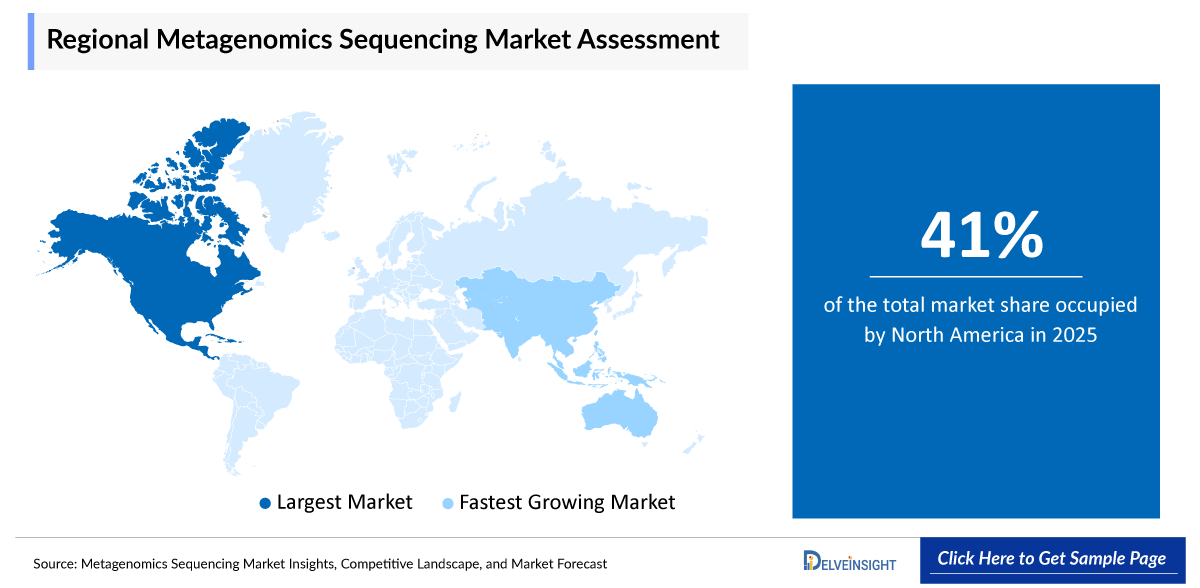
North America is expected to account for the highest proportion of 41% of the metagenomics sequencing market in 2025, out of all regions, due to its strong combination of advanced healthcare infrastructure, high research funding, technological innovation, and early clinical adoption, making it the global leader in this space.
This leadership is primarily driven by the presence of major industry players such as Illumina, Thermo Fisher Scientific, and Roche, which continuously invest in developing high-throughput sequencing technologies and innovative reagents, thereby accelerating adoption.
Additionally, strong government support through organizations like the NIH and large-scale genomics initiatives has significantly increased funding for microbiome research, infectious disease surveillance, and precision medicine, further fueling demand for metagenomic sequencing.
Furthermore, the increasing infectious diseases have also escalated the overall market. According to the data provided by the CDC (2025), during 2023, the United States reported 9,633 TB cases. Metagenomic sequencing, enabled by advancements in next-generation sequencing, allows for unbiased detection of Mycobacterium tuberculosis directly from clinical samples without the need for culture, significantly reducing diagnostic time and thereby boosting the overall market.
The U.S. also benefits from a highly developed research ecosystem, with leading institutions such as Mayo Clinic, UCSF, and Johns Hopkins establishing dedicated clinical metagenomics programs, which have led to a rapid increase in the number of tests performed and broader clinical integration.
Technological advancements and continuous innovation have contributed to a steady decline in sequencing costs, making metagenomic approaches more accessible and scalable across research and clinical settings. Furthermore, the U.S. market is witnessing significant recent developments, including product launches and strategic initiatives. For instance, in June 2023, Illumina introduced PrimateAI-3D, an AI-based tool for predicting disease-causing mutations, enhancing genomic analysis capabilities, and increasing reliance on sequencing technologies.
In August 2023, PacBio acquired Apton Biosystems to accelerate sequencing innovation and expand its technological capabilities. The growing integration of metagenomics into clinical diagnostics, environmental monitoring, and drug discovery, combined with increasing demand for personalized medicine and microbiome-based therapies, is further strengthening market expansion.
Overall, North America is acting as a major growth engine for the metagenomic sequencing market by combining strong financial investment, cutting-edge technological advancements, robust research infrastructure, and rapid clinical adoption, thereby significantly driving global market growth.
Europe Metagenomics Sequencing Market Trends
In Europe, the growth of the metagenomic sequencing market is being strongly driven by the increasing adoption of advanced genomic technologies, rising government funding for microbiome and infectious disease research, and the presence of well-established healthcare and research infrastructure.
Countries such as Germany, the United Kingdom, and France are investing heavily in precision medicine initiatives and large-scale genomics projects, which are accelerating the use of metagenomic sequencing in clinical diagnostics and research. Additionally, supportive regulatory frameworks and collaborations between academic institutions and biotechnology companies are fostering innovation and facilitating the adoption of sequencing technologies. For example, in February 2025, Ginkgo Bioworks announced a collaboration with the European Health and Digital Executive Agency as a contracting authority under a joint tender of €24 million. The partnership will aim to develop a point-of-care metagenomics next-generation sequencing (mNGS) solution that allows rapid turnaround diagnostics for identifying respiratory viruses.
Additionally, the rising prevalence of infectious diseases and antimicrobial resistance across the region is further increasing the demand for rapid, culture-independent diagnostic solutions, thereby driving overall market growth. According to the data provided by the European Centre for Disease Prevention and Control (2025), in 2023, approximately 38,993 cases of TB were reported in 29 European Union and European Economic Area (EU/ EEA) countries. Thus, the factors mentioned are expected to boost the overall market of metagenomics sequencing across the region.
Asia-Pacific Metagenomics Sequencing Market Trends
The Asia Pacific region is emerging as a significant growth driver for the metagenomic sequencing market due to the rapid expansion of healthcare infrastructure, increasing government investments in genomics research, and the rising burden of infectious diseases. Countries such as China, India, and Japan are actively promoting precision medicine initiatives and large-scale genomic projects, which are accelerating the adoption of advanced sequencing technologies. For instance, China’s Precision Medicine Initiative aims to sequence over 1 million genomes by 2030, significantly expanding national sequencing infrastructure and data generation. In India, the government launched the Indian Genomic Data Set and GenomeIndia Project in January 2025, providing access to over 10,000 whole genome sequences to support research, drug development, and personalized healthcare. Similarly, Japan has been investing in genomic platform projects and precision medicine programs, strengthening its capabilities in population genomics and clinical sequencing adoption. These initiatives are generating massive genomic datasets, improving research capabilities, and increasing demand for next-generation sequencing technologies, thereby driving the growth of the metagenomic sequencing market.
Additionally, the growing presence of local biotechnology companies, increasing awareness of early disease detection, and improving access to next-generation sequencing platforms are further fueling market growth. The region’s focus on strengthening disease surveillance systems and managing outbreaks is also driving demand for rapid and comprehensive metagenomic sequencing solutions, making the Asia Pacific a key contributor to the global market expansion.
Who are the major players in the metagenomics sequencing market?
The following are the leading companies in the metagenomics sequencing market. These companies collectively hold the largest market share and dictate industry trends.
- F. Hoffmann-La Roche Ltd.
- Thermo Fisher Scientific
- Oxford Nanopore Technologies
- Pacific Biosciences
- BGI Genomics
- QIAGEN
- PerkinElmer
- Promega Corporation
- Takara Bio
- Eurofins Scientific
- Novogene
- Macrogen
- GENEWIZ
- MR DNA
- SeqMatic
- Others
How is the competitive landscape shaping the Metagenomics Sequencing market?
The competitive landscape of the metagenomic sequencing market is characterized by moderate to high concentration at the top level, combined with a fragmented ecosystem of smaller players. The market is largely dominated by a few key companies such as Illumina Inc., Thermo Fisher Scientific, QIAGEN, Oxford Nanopore Technologies, and Pacific Biosciences, which collectively hold a significant share due to their strong portfolios of sequencing platforms, reagents, and bioinformatics solutions. The market exhibits an oligopolistic structure at the instrumentation level, where a few large players dominate, while it remains fragmented in services and data analysis segments, with numerous niche and regional companies contributing innovation.
Additionally, competition is driven by continuous technological advancements, strategic partnerships, and acquisitions, as companies aim to enhance sequencing accuracy, reduce costs, and integrate end-to-end workflows. Mid-sized and emerging players focus on specialized applications such as microbiome analysis or environmental sequencing to differentiate themselves. Overall, the market shows a balanced structure consolidated among leading global players, but is highly competitive and dynamic due to the presence of multiple smaller innovators, which collectively shape the growth and evolution of the metagenomic sequencing market.
Recent Developmental Activities in the Metagenomics Sequencing Market
- In November 2025, Oxford Nanopore Technologies released a rapid metagenomic sequencing protocol using the SQK-RPB114.24 kit.
- In May 2024, QIAGEN announced the launch of its QIAseq Multimodal DNA/RNA Library Kit, which enabled the simultaneous preparation of DNA and RNA libraries from a single sample for next-generation sequencing applications such as whole genome and transcriptome sequencing.
- In April 2025, Karius launched Karius Focus™ | BAL (a metagenomic sequencing-based microbial cell-free DNA test) designed to identify pneumonia-causing pathogens and lung infections.
- In February 2025, Ginkgo Bioworks announced a collaboration with the European Health and Digital Executive Agency as a contracting authority under a joint tender of €24 million. The partnership will aim to develop a point-of-care metagenomics next-generation sequencing (mNGS) solution that allows rapid turnaround diagnostics for identifying respiratory viruses.
- In January 2025, the UK launched mSCAPE (Metagenomics Surveillance Collaboration and Analysis Programme), the world’s first metagenomics initiative for rapid detection of infectious diseases in the UK.
|
Report Metrics |
Details |
|
Study Period |
2023 to 2034 |
|
Base Year |
2025 |
|
Forecast Period |
2026 to 2034 |
|
Metagenomics Sequencing Market CAGR |
XX% |
|
Key Companies in the Metagenomics Sequencing Market |
F. Hoffmann-La Roche Ltd., Thermo Fisher Scientific, Oxford Nanopore Technologies, Pacific Biosciences, BGI Genomics, QIAGEN, PerkinElmer, Promega Corporation, Takara Bio, Eurofins Scientific, Novogene, Macrogen, GENEWIZ, MR DNA, SeqMatic, and others. |
|
Metagenomics Sequencing Market Segments |
By Component, by Technology, by Application, by End-Users, and by Geography |
|
Metagenomics Sequencing Regional Scope |
North America, Europe, Asia Pacific, Middle East, Africa, and South America |
|
Metagenomics Sequencing Country Scope |
U.S., Canada, Mexico, Germany, United Kingdom, France, Italy, Spain, China, Japan, India, Australia, South Korea, and key Countries |
Metagenomics Sequencing Market Segmentation
- Metagenomics Sequencing by Component Exposure
- Product
- Instruments
- Reagents & Kits
- Services
- Product
- Metagenomics Sequencing Technology Exposure
- Shotgun Metagenomic Sequencing
- 16S rRNA Sequencing
- Whole Genome Sequencing (WGS) & De Novo Assembly
- Metatranscriptomics
- Metagenomics Sequencing Application Exposure
- Drug Discovery and Development
- Clinical Diagnostics
- Others
- Metagenomics Sequencing End-Users Exposure
- Pharmaceutical & Biotechnology Companies
- Research Laboratories
- Others
- Metagenomics Sequencing Geography Exposure
- North America Metagenomics Sequencing Market
- United States Metagenomics Sequencing Market
- Canada Metagenomics Sequencing Market
- Mexico Metagenomics Sequencing Market
- Europe Metagenomics Sequencing Market
- United Kingdom Metagenomics Sequencing Market
- Germany Metagenomics Sequencing Market
- France Metagenomics Sequencing Market
- Italy Metagenomics Sequencing Market
- Spain Metagenomics Sequencing Market
- Rest of Europe Metagenomics Sequencing Market
- Asia-Pacific Metagenomics Sequencing Market
- China Metagenomics Sequencing Market
- Japan Metagenomics Sequencing Market
- India Metagenomics Sequencing Market
- Australia Metagenomics Sequencing Market
- South Korea Metagenomics Sequencing Market
- Rest of Asia-Pacific Metagenomics Sequencing Market
- Rest of the World Metagenomics Sequencing Market
- South America Metagenomics Sequencing Market
- Middle East Metagenomics Sequencing Market
- Africa Metagenomics Sequencing Market
- North America Metagenomics Sequencing Market
Metagenomics Sequencing Market Recent Industry Trends and Milestones (2022-2026)
|
Category |
Key Developments |
|
Metagenomics Sequencing Product Launch |
QIAGEN announced the launch of its QIAseq Multimodal DNA/RNA Library Kit, Karius launched Karius Focus™ | BAL (a metagenomic sequencing-based microbial cell-free DNA test), the UK launched mSCAPE (Metagenomics Surveillance Collaboration and Analysis Programme), the world’s first metagenomics initiative for rapid detection of infectious diseases in the UK. |
|
Company Strategy |
Thermo Fisher Scientific adopted a strategy of end-to-end workflow automation by launching the Ion Torrent Genexus Metagenomics Kit, integrating library preparation, sequencing, and data analysis into a single platform to accelerate clinical adoption of metagenomic sequencing. Pacific Biosciences focused on expanding long-read sequencing capabilities by introducing its Revio Long-Read Metagenomics Service, enabling complete microbial genome assembly without culturing, thereby strengthening its position in high-resolution metagenomics. |
|
Emerging Technology |
AI-Driven Metagenomic Analysis, Single-Cell Metagenomics, Real-Time & Portable Sequencing, Multi-Omics Integration (Metagenomics + Transcriptomics + Proteomics), and others |
Impact Analysis
AI-Powered Innovations and Applications:
AI-powered innovations are significantly transforming metagenomic sequencing by enabling faster, more accurate, and scalable analysis of complex microbial data. Advanced machine learning and deep learning algorithms are being used to improve taxonomic classification, pathogen identification, and functional annotation, even from highly fragmented or noisy sequencing data. Companies such as Illumina Inc. and QIAGEN are integrating AI-driven bioinformatics tools into their platforms to automate data interpretation and reduce analysis time from days to hours. AI is also playing a critical role in real-time metagenomic sequencing, particularly with nanopore technologies, where algorithms can continuously analyze sequencing reads as they are generated, enabling rapid detection of infectious agents during outbreaks. Additionally, AI-powered models are being applied in drug discovery, antimicrobial resistance prediction, microbiome research, and precision medicine, where they help uncover hidden patterns and correlations within large genomic datasets. These innovations are reducing computational complexity, enhancing diagnostic accuracy, and accelerating decision-making, thereby driving the widespread adoption and growth of the metagenomic sequencing market.
U.S. Tariff Impact Analysis on Metagenomics Sequencing Market:
The U.S. tariff impact on the metagenomic sequencing market is creating a mixed but largely restrictive effect by increasing costs and disrupting global supply chains. The implementation of tariffs in 2025 on imported goods, including sequencing instruments, reagents, and consumables, has led to higher capital and operational costs for laboratories and research institutions, as many critical components are sourced globally. This cost pressure can reduce purchasing capacity, delay technology adoption, and limit market expansion, particularly for smaller labs. Additionally, tariffs on key regions such as China, the EU, and India are reshaping supply chains and forcing companies to shift toward domestic manufacturing or alternative sourcing strategies, which may increase lead times and operational complexity.
However, the impact is not entirely negative; tariffs are also encouraging local production, strategic partnerships, and supply chain diversification, which could strengthen domestic capabilities in the long term. Despite this, short-term effects such as increased pricing of sequencing systems and reagents, delayed investments, and reduced competitiveness of global players are acting as constraints on the rapid growth of the metagenomic sequencing market in the U.S.
How This Analysis Helps Clients
- Cost Management: By understanding the tariff landscape, clients can anticipate cost increases and adjust pricing strategies accordingly, ensuring profitability.
- Supply Chain Optimization: Clients can identify alternative sourcing options and diversify their supply chains to reduce dependency on high-tariff regions, enhancing resilience.
- Regulatory Navigation: Expert guidance on navigating the evolving regulatory environment helps clients maintain compliance and avoid potential legal challenges.
- Strategic Planning: Insights into tariff impacts enable clients to make informed decisions about manufacturing locations, partnerships, and market entry strategies.
Startup Funding & Investment Trends
|
Company Name |
Total Funding |
Main Products |
Stage of Development |
Core Technology |
|
Ginkgo Bioworks with the European Health and Digital Executive Agency |
€24 million |
point-of-care metagenomics next-generation sequencing (mNGS) solution |
- |
Aims to develop a point-of-care metagenomics next-generation sequencing (mNGS) solution that allows rapid turnaround diagnostics for identifying respiratory viruses. |
Key takeaways from the Metagenomics Sequencing market report study
- Market size analysis for the current metagenomics sequencing market size (2025), and market forecast for 8 years (2026 to 2034)
- Top key product/technology developments, mergers, acquisitions, partnerships, and joint ventures happened over the last 3 years.
- Key companies dominating the metagenomics sequencing market.
- Various opportunities available for the other competitors in the metagenomics sequencing market space.
- What are the top-performing segments in 2025? How these segments will perform in 2034?
- Which are the top-performing regions and countries in the current metagenomics sequencing market scenario?
- Which are the regions and countries where companies should have concentrated on opportunities for the metagenomics sequencing market growth in the future?

