
Mouth Ulcer Treatment Market Summary
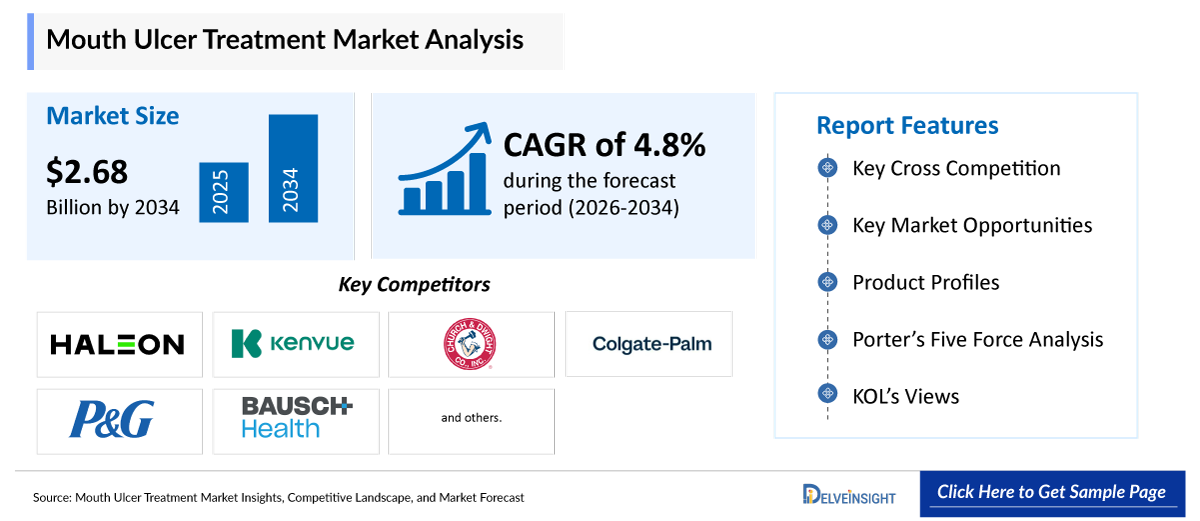
- The Mouth Ulcer Treatment market is estimated at USD 1.75 billion in 2025 and is projected to reach USD 2.68 billion by 2034. Growth is anchored in the high global prevalence of aphthous and recurrent oral ulcers, expanding consumer demand for fast-acting over-the-counter (OTC) topical therapies, and the broadening retail and e-commerce footprint of oral care brands.
- The global mouth ulcer treatment market is growing at a CAGR of 4.8% during the forecast period from 2026 to 2034.
- By treatment type, the topical treatment segment dominated the Mouth Ulcer Treatment market with a 58% share in 2025.
- By product type, the oral gels segment dominated the Mouth Ulcer Treatment market with a 34% share in 2025.
- By ulcer type, the aphthous ulcers segment dominated the Mouth Ulcer Treatment market with a 65% share in 2025.
- By therapeutic class, the local anesthetics segment dominated the Mouth Ulcer Treatment market with a 33% share in 2025.
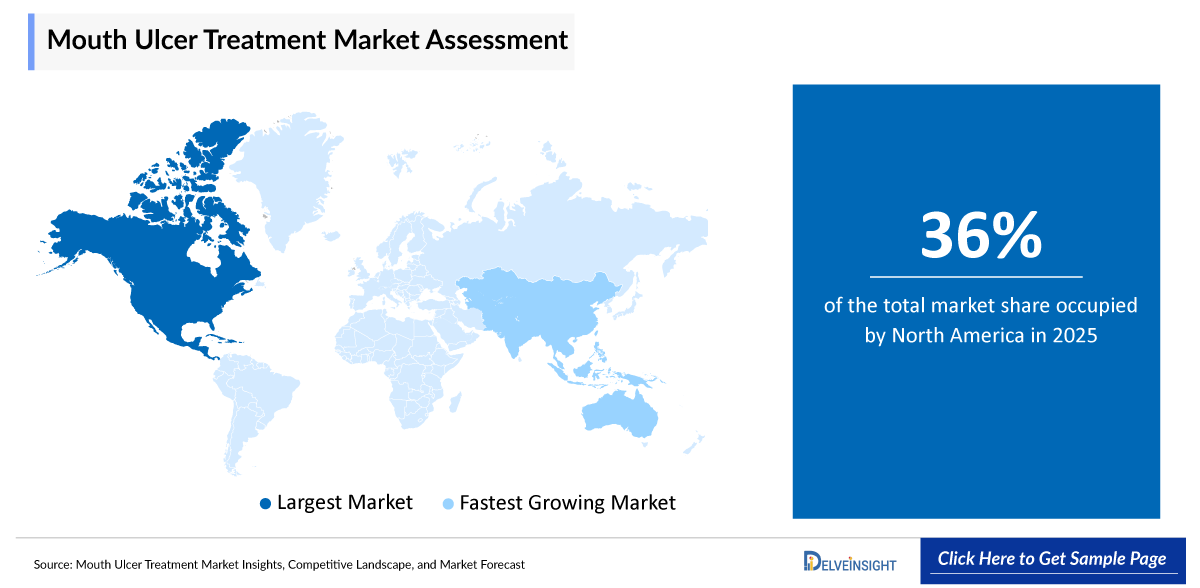
- North America dominated the global mouth ulcer treatment market revenue with a 36% share in 2025, representing the highest regional market share globally.
Mouth ulcers, also referred to as canker sores or oral aphthae, are painful lesions that develop on the soft tissues of the mouth, including the lips, cheeks, tongue, gums, and the floor or roof of the mouth. They are triggered by a wide range of factors, including minor oral trauma, nutritional deficiencies, hormonal fluctuations, stress, viral infection, and cancer-therapy-related mucosal toxicity. Because mouth ulcers are painful, recurrent, and highly prevalent, demand spans a broad range of therapeutic approaches, from self-administered over-the-counter topical products to prescription systemic therapies used for severe or recurrent cases. The market is organized by treatment type across topical, systemic, and supportive care; by product type, including oral gels, oral ointments/creams, oral rinses/mouthwashes, oral sprays, lozenges/tablets, patches/films, and other products; by ulcer type, led by aphthous ulcers alongside traumatic, herpetic, and oral mucositis-associated ulcers; by therapeutic class, spanning corticosteroids, local anesthetics, antiseptics/antimicrobials, and analgesics/NSAIDs; and by distribution channel across hospital and clinic pharmacies, retail pharmacies and drugstores, and online pharmacies and e-commerce. Driven by rising global prevalence, growing consumer self-treatment behavior, and continuous product innovation by major consumer health and oral care companies, the mouth ulcer treatment market has become an established and resilient segment of the broader oral care and consumer health industry.
Mouth Ulcer Treatment Market Key Growth Drivers
• The high global prevalence of recurrent aphthous stomatitis, which affects an estimated one in four people worldwide at some point in their lives, is sustaining broad-based, recurring consumer demand.
• Growing consumer preference for fast-acting, easy-to-use topical formulations, such as benzocaine- and lidocaine-based gels and chlorhexidine rinses, is reinforcing the position of OTC self-care as the primary route to treatment.
• Expanding retail pharmacy networks and rapid growth of online pharmacies and e-commerce platforms are improving product accessibility and driving impulse and repeat purchases of oral ulcer-care products.
• Rising cancer incidence and the associated growth in chemotherapy- and radiotherapy-induced oral mucositis are expanding clinical and hospital-channel demand for supportive and prescription-strength therapies.
• Continuous product innovation, including mucoadhesive patches and films, single-application sprays, and combination formulations, is broadening consumer choice and supporting premiumization.
• Growing awareness of oral hygiene and preventive dental care, supported by dental-professional recommendations and consumer education campaigns, is expanding the addressable patient base.
• Strategic portfolio expansion, new product launches, and brand investment by major global consumer health and oral care companies are sustaining innovation and shelf visibility across geographies.
Key Companies in Mouth Ulcer Treatment Market
The competitive landscape is led by the following active manufacturers:
• Haleon
• Kenvue
• Church & Dwight
• Colgate-Palmolive
• Procter & Gamble
• 3M
• Sunstar
• Bausch Health
• Reckitt
• Dentaid
Factors Contributing to the Growth of the Mouth Ulcer Treatment Market
Market Drivers
High Global Prevalence of Recurrent Aphthous and Oral Ulcers
The single most powerful driver of the Mouth Ulcer Treatment market is the sheer scale of global prevalence. Recurrent aphthous stomatitis is estimated to affect roughly a quarter of the world's population at some point in their lives, making it one of the most common oral mucosal conditions. Episodes are frequently recurring, painful, and disruptive to eating, speaking, and daily comfort, which drives repeat purchases of self-care products. Because most cases are managed without a physician visit, demand is concentrated in the retail and online OTC channel, and the sheer breadth of the affected population, spanning children, adults, and the elderly, anchors durable, non-cyclical demand for topical and supportive treatments through 2034.
Growing Consumer Preference for Fast-Acting OTC Topical Therapies
Consumers increasingly favor rapid, direct-acting topical treatments, including benzocaine- and lidocaine-based gels, chlorhexidine and antiseptic mouth rinses, and single-application sprays, because they deliver immediate pain relief without requiring a prescription. This preference is reinforced by the convenience of self-diagnosis for common canker sores and by strong brand recognition built by established consumer-health companies. As pharmaceutical and consumer-health companies continue to refine formulation speed, taste, and ease of application, topical products are expected to remain the primary route through which consumers manage mouth ulcers, sustaining segment-wide growth.
Market Restraints
Despite steady momentum, the Mouth Ulcer Treatment market faces material constraints. The category is highly genericized and price-competitive, with numerous private-label and generic OTC alternatives creating pricing pressure and limiting premium differentiation for branded products. Reimbursement for OTC oral ulcer-care products is limited across most geographies, restricting growth to consumer out-of-pocket spending and constraining volumes in lower-income markets. The self-limiting nature of most mouth ulcers, which typically resolve within one to two weeks without treatment, caps the frequency and duration of product use and limits basket size compared with chronic-condition therapies. Prolonged or inappropriate use of corticosteroids and local anesthetics carries risks of local irritation, systemic absorption, and masking of more serious underlying conditions, requiring cautious labeling and consumer education. Regulatory classification of oral ulcer-care products as OTC, cosmetic, or medicinal varies across geographies, complicating market entry and product claims for multinational companies. The presence of counterfeit and substandard products in some emerging markets further undermines consumer trust and brand equity. Together, these pricing, reimbursement, regulatory, and product-lifecycle factors moderate the pace of growth, even as the underlying drivers of prevalence, self-care adoption, and distribution expansion remain firmly intact.
Mouth Ulcer Treatment Market Segment Analysis
The mouth ulcer treatment market by treatment type (topical treatment, systemic treatment, supportive treatment), product type (oral gels, oral ointments/creams, oral rinses/mouthwashes, oral sprays, lozenges/tablets, patches/films, other products), ulcer type (aphthous ulcers, traumatic ulcers, herpetic ulcers, oral mucositis-associated ulcers, other oral ulcers), therapeutic class (corticosteroids, local anesthetics, antiseptics/antimicrobials, analgesics/nsaids, others), distribution channel (hospital & clinic pharmacies, retail pharmacies/drugstores, online pharmacies & e-commerce), and geography (North America, Europe, Asia-Pacific, and Rest of World).
By Treatment Type
Dominant Subsegment: Topical Treatment.
The topical treatment segment accounted for 58% of the Mouth Ulcer Treatment market in 2025. Topical treatment leads the market because most mouth ulcers are self-limiting, painful lesions that consumers prefer to manage directly at the site of the sore using gels, ointments, rinses, sprays, and patches. Topical formulations deliver rapid, localized pain relief and are widely available without a prescription, making them the default first-line choice for the vast majority of aphthous and traumatic ulcer cases. The segment benefits from strong brand recognition, wide retail distribution, and frequent repeat purchase given the recurring nature of canker sores. Systemic treatment, used for severe, recurrent, or underlying-condition-associated ulcers, and supportive treatment, used alongside cancer therapy for oral mucositis management, are both growing steadily, but the scale, accessibility, and self-care convenience of topical products secure the segment's clear leadership across the forecast period.
By Product Type
Dominant Subsegment: Oral Gels.
The oral gels segment accounted for 34% of the Mouth Ulcer Treatment market in 2025. Oral gels are the leading product type because they combine direct, targeted application to the ulcer site with a protective, adhesive consistency that keeps active ingredients in contact with the lesion longer than rinses or sprays. Benzocaine- and lidocaine-based analgesic gels and antiseptic gels are widely recommended by pharmacists and dentists as first-line self-care options, and broad availability across retail and online channels reinforces the segment's scale. Oral rinses and mouthwashes form the second-largest category, valued for their ability to treat multiple ulcers simultaneously and support overall oral hygiene, while lozenges/tablets, sprays, and emerging patches/films are growing quickly as consumers seek convenient, mess-free alternatives. Nonetheless, the efficacy, familiarity, and broad retail penetration of gels secure their leadership through 2034.
Mouth Ulcer Treatment Market Region Analysis
Dominant Region: North America
North America accounted for 36% of the global mouth ulcer treatment market revenue in 2025, representing the highest regional market share globally. The region's dominance reflects high consumer awareness of oral health, well-established retail pharmacy infrastructure, strong brand penetration by leading consumer-health companies, and broad access to OTC self-care products across the United States, Canada, and Mexico. The region benefits from a mature oral care industry, consistent new product launches, and high per-capita spending on consumer health products. Strong retail and e-commerce infrastructure, combined with active consumer education around oral hygiene, anchors the region's continued leadership across the forecast period.
Fastest Growing Region: Asia-Pacific
Asia-Pacific is the fastest-growing region in the Mouth Ulcer Treatment market. The region's elevated CAGR is driven by rising disposable incomes, expanding retail and e-commerce pharmacy infrastructure, and growing oral health awareness across China, Japan, India, South Korea, and Australia. China and India are witnessing rapid growth in organized retail pharmacy chains and online pharmacy penetration, Japan continues to see steady demand supported by an aging population prone to recurrent oral ulcers, and South Korea and Australia are seeing increased consumer spending on premium oral care products. Rising awareness campaigns, expanding dental care access, and growing urbanization are accelerating adoption of branded OTC treatments, positioning Asia-Pacific as the principal source of incremental growth over the forecast period.
Regional Commentary
North America
North America accounted for 36% of the global mouth ulcer treatment market revenue in 2025. The United States dominates on the strength of its mature oral care retail infrastructure, high consumer awareness, and strong presence of leading global oral care brands, while continued new product launches and expanding e-commerce penetration reinforce the region's leadership.
Europe
Europe is a large and mature regional market, supported by well-established retail pharmacy networks, strong consumer awareness of oral hygiene, and a dense presence of leading oral care brands across Germany, the United Kingdom, France, Italy, and Spain. Steady demand for both branded and private-label topical treatments, along with growing online pharmacy adoption, reinforces the region's stable growth profile.
Asia-Pacific
Asia-Pacific is the fastest-growing region, propelled by rising disposable incomes, expanding organized retail and e-commerce pharmacy infrastructure, and growing oral health awareness across China, Japan, India, South Korea, and Australia. Rapid urbanization, an expanding middle class, and increasing penetration of branded OTC oral care products are accelerating regional category growth.
Rest of World
The Rest of World region, spanning Latin America, the Middle East, and Africa, is an emerging growth frontier. Expanding retail pharmacy infrastructure, rising consumer health awareness, and gradual growth of organized e-commerce distribution are broadening access to branded oral ulcer-care products, while multinational companies continue to expand their distribution footprint across the region.
Mouth Ulcer Treatment Market Competitive Landscape
The Mouth Ulcer Treatment market is classified as Fragmented. A group of large, diversified consumer-health and oral-care companies with global brand portfolios, including Haleon, Kenvue, Colgate-Palmolive, and Procter & Gamble, anchor the top tier through strong brand equity and broad retail distribution, while other established players such as Church & Dwight, 3M, Sunstar, Bausch Health, Reckitt, and Dentaid compete through targeted product innovation, dental-professional relationships, and regional distribution strength, sustaining intense competition across both mass-retail and pharmacy channels.
The competitive landscape can be evaluated across the following dimensions:
• Market concentration: Fragmented, with large diversified consumer-health companies leading and numerous regional and private-label competitors active across geographies.
• Leading players: Haleon, Kenvue, Colgate-Palmolive, and Procter & Gamble anchor the top tier through global brand portfolios and broad retail reach.
• Geographic reach: Leading players operate extensive multinational distribution networks spanning retail pharmacies, mass-market retail, and e-commerce across developed and emerging markets.
• Product portfolio strength: Top players offer diversified portfolios spanning gels, mouthwashes, sprays, lozenges, and emerging patch/film formats under well-recognized consumer brands.
• Brand equity: Long-established consumer brand recognition and pharmacist/dentist recommendation are decisive competitive advantages in a largely OTC, self-selected category.
• Distribution partnerships: Strong retail-pharmacy and mass-merchandiser relationships, along with growing e-commerce partnerships, extend reach and support new product launches.
• Portfolio expansion activity: Active new product development and line extensions, including combination formulations and novel delivery formats, characterize ongoing competitive investment.
• Manufacturing capabilities: Established consumer-health manufacturing scale, quality-control systems, and formulation expertise are key competitive moats.
• Innovation focus: Mucoadhesive films and patches, faster-acting analgesic formulations, combination antiseptic-anesthetic products, and natural/clean-label ingredient positioning.
Mouth Ulcer Treatment Market Recent Developmental Activities
In 2026, Haleon expanded its oral care portfolio with new topical mouth ulcer relief formulations aimed at strengthening its consumer health presence in key retail markets. Strategic significance: Reinforces Haleon's position as a leading global oral care and consumer health provider.
In 2026, Kenvue invested in broadening distribution and marketing of its OTC oral ulcer-care brands across retail and e-commerce channels. Strategic significance: Strengthens Kenvue's consumer health footprint following its establishment as a standalone company.
Mouth Ulcer Treatment Market Segmentation
Mouth Ulcer Treatment Market by Treatment Type
• Topical Treatment
• Systemic Treatment
• Supportive Treatment
Mouth Ulcer Treatment Market by Product Type
• Oral Gels
• Oral Ointments/Creams
• Oral Rinses/Mouthwashes
• Oral Sprays
• Lozenges/Tablets
• Patches/Films
• Other Products
Mouth Ulcer Treatment Market by Ulcer Type
• Aphthous Ulcers
• Traumatic Ulcers
• Herpetic Ulcers
• Oral Mucositis-Associated Ulcers
• Other Oral Ulcers
Mouth Ulcer Treatment Market by Therapeutic Class
• Corticosteroids
• Local Anesthetics
• Antiseptics/Antimicrobials
• Analgesics/NSAIDs
• Others
Mouth Ulcer Treatment Market by Distribution Channel
• Hospital & Clinic Pharmacies
• Retail Pharmacies/Drugstores
• Online Pharmacies & E-Commerce
Mouth Ulcer Treatment Market by Geography
• North America Mouth Ulcer Treatment Market
▪ United States Mouth Ulcer Treatment Market Size in USD million (2023-2034)
▪ Canada Mouth Ulcer Treatment Market Size in USD million (2023-2034)
▪ Mexico Mouth Ulcer Treatment Market Size in USD million (2023-2034)
• Europe Mouth Ulcer Treatment Market
▪ Germany Mouth Ulcer Treatment Market Size in USD million (2023-2034)
▪ United Kingdom Mouth Ulcer Treatment Market Size in USD million (2023-2034)
▪ France Mouth Ulcer Treatment Market Size in USD million (2023-2034)
▪ Italy Mouth Ulcer Treatment Market Size in USD million (2023-2034)
▪ Spain Mouth Ulcer Treatment Market Size in USD million (2023-2034)
▪ Rest of Europe Mouth Ulcer Treatment Market Size in USD million (2023-2034)
• Asia-Pacific Mouth Ulcer Treatment Market
▪ China Mouth Ulcer Treatment Market Size in USD million (2023-2034)
▪ Japan Mouth Ulcer Treatment Market Size in USD million (2023-2034)
▪ India Mouth Ulcer Treatment Market Size in USD million (2023-2034)
▪ Australia Mouth Ulcer Treatment Market Size in USD million (2023-2034)
▪ South Korea Mouth Ulcer Treatment Market Size in USD million (2023-2034)
▪ Rest of Asia-Pacific Mouth Ulcer Treatment Market Size in USD million (2023-2034)
• Rest of the World (RoW) Mouth Ulcer Treatment Market
▪ Middle East Mouth Ulcer Treatment Market Size in USD million (2023-2034)
▪ Africa Mouth Ulcer Treatment Market Size in USD million (2023-2034)
▪ South America Mouth Ulcer Treatment Market Size in USD million (2023-2034)
Key Takeaways from the Mouth Ulcer Treatment Market Report Study
• Market size analysis for the current Mouth Ulcer Treatment market size (2025), and market forecast for 9 years (2026 to 2034).
• Top key product/technology developments, mergers, acquisitions, partnerships, and joint ventures that happened over the last 3 years.
• Key companies dominating the global mouth ulcer treatment market.
• Various opportunities available for competitors in the Mouth Ulcer Treatment market space.
• What are the top-performing segments in 2025? How will these segments perform in 2034?
• Which are the top-performing regions and countries in the current Mouth Ulcer Treatment market scenario?
• Which are the regions and countries where companies should concentrate their opportunities for Mouth Ulcer Treatment market growth in the future?
Target audience who can benefit from this Mouth Ulcer Treatment market report study
• Mouth Ulcer Treatment product providers
• Research organizations and consulting companies
• Neurodegenerative disease therapeutics-related organizations, associations, forums, and other alliances
• Government and corporate offices
• Start-up companies, venture capitalists, and private equity firms
• Distributors and traders dealing in Mouth Ulcer Treatment
• Various end-users who want to know more about the Mouth Ulcer Treatment market and the latest technological developments in the Mouth Ulcer Treatment market.

