
Musculoskeletal Pain Market Summary
- The Musculoskeletal Pain Therapeutics Market is expected to grow steadily due to aging populations, rising prevalence of osteoarthritis and chronic pain conditions, sedentary lifestyles, obesity, and increasing demand for safer long-term non-opioid therapies, driving continued innovation in both symptomatic and disease-modifying treatment approaches.
- The Musculoskeletal Pain Pipeline is gradually evolving toward non-opioid analgesics, regenerative medicine, and potential disease-modifying Osteoarthritis Therapies (DMOADs), including stem cell–based therapies, monoclonal antibodies, and novel small molecules, though most remain investigational.
Musculoskeletal Pain Market and Epidemiology Analysis
- Musculoskeletal Pain includes a broad range of conditions such as low back pain, neck pain, Osteoarthritis, Rheumatoid Arthritis, and Fibromyalgia, and is consistently reported in Global Burden of Disease (GBD) studies as the leading cause of disability worldwide, primarily driven by low back pain as the top contributor to years lived with disability (YLDs).
- The treatment paradigm is largely multimodal and symptom-focused, combining non-pharmacological interventions (exercise therapy, physiotherapy, patient education, cognitive-behavioral and psychosocial approaches) with pharmacological therapies tailored to disease severity and patient profile.
- NSAIDs (including COX-2 selective inhibitors such as celecoxib) remain the first-line pharmacological therapy for most musculoskeletal conditions due to their proven analgesic and anti-inflammatory effects, while acetaminophen is used in mild pain settings with limited efficacy in inflammatory conditions.
- Opioid analgesics are reserved for short-term management of severe Acute Pain or refractory cases, as clinical guidelines consistently highlight concerns regarding dependence, overdose risk, and limited long-term benefit in chronic musculoskeletal conditions.
- Topical NSAIDs (Nonsteroidal Anti-Inflammatory Drugs) are increasingly recommended, particularly for knee and hand osteoarthritis, due to comparable efficacy in localized pain with a more favorable systemic safety profile compared to oral NSAIDs.
- In selected inflammatory and degenerative conditions, intra-articular corticosteroid injections provide short-term symptom relief, while surgical interventions (e.g., joint replacement in advanced osteoarthritis, spinal decompression procedures) are reserved for advanced or refractory disease.
Musculoskeletal Pain Market Size and Forecast in the 7MM
| 2025 Musculoskeletal Pain Market Size | ~USD XX million |
| Musculoskeletal Pain Growth Rate (2026–2036) | XX % CAGR |
Key Factors Driving the Musculoskeletal Pain Market Growth
-
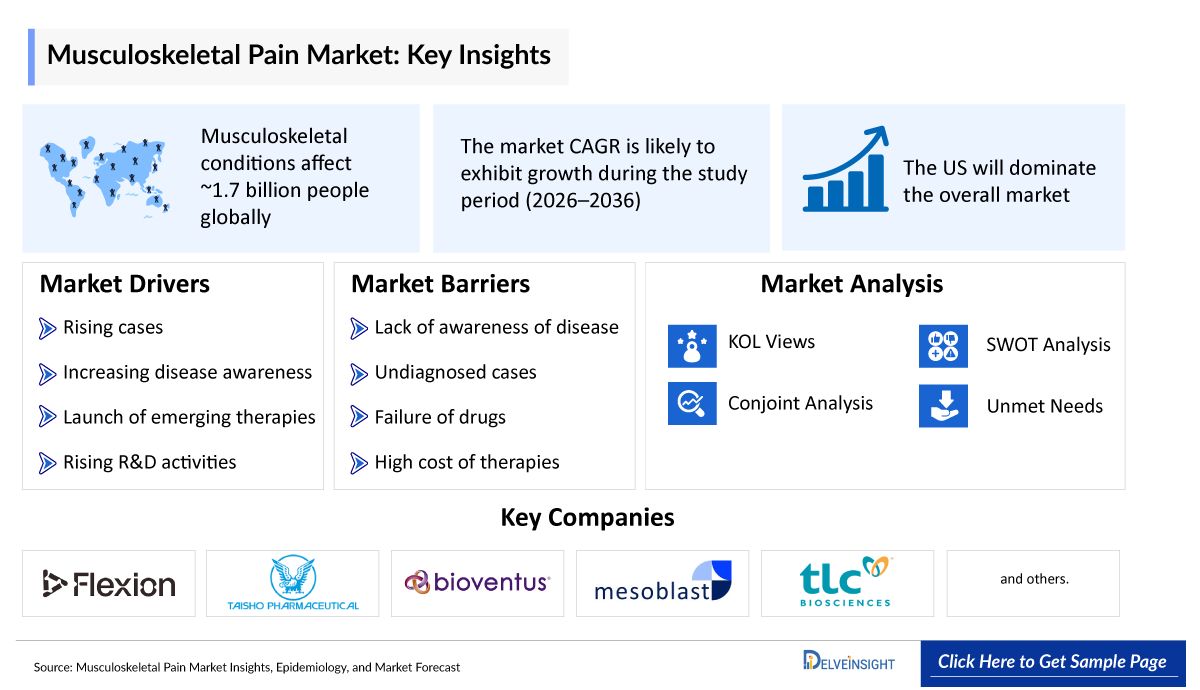
Rising global burden of musculoskeletal disorders
Musculoskeletal disorders remain the leading contributor to disability worldwide, with conditions such as osteoarthritis and chronic lower back pain accounting for a substantial proportion of years lived with disability (YLDs). The growing patient pool continues to drive demand for effective long-term pain management and functional improvement therapies.
-
An aging population and increasing osteoarthritis prevalence
Population aging is a key market driver, as the incidence of osteoarthritis, degenerative disc disease, and other chronic musculoskeletal conditions increases significantly with age. The expanding elderly population is expected to sustain demand for both symptomatic and disease-modifying treatment options.
-
High unmet need for durable and disease-modifying therapies
Current treatment options, including nonsteroidal anti-inflammatory drugs (NSAIDs), corticosteroids, and viscosupplements, primarily provide symptomatic relief and have limited effects on disease progression. The lack of therapies capable of delivering sustained pain control and structural improvement continues to create significant opportunities for therapeutic innovation.
-
Shift towards non-opioid pain management
Growing awareness of opioid-related safety risks, dependence, and regulatory restrictions has accelerated the adoption of non-opioid treatment strategies. This trend is supporting the development and uptake of novel analgesics, localized therapies, regenerative medicines, and other safer long-term treatment approaches.
DelveInsight's ‘Musculoskeletal Pain Market Insights, Epidemiology and Market Forecast – 2036’ report delivers an in-depth understanding of the Musculoskeletal Pain, historical and forecasted epidemiology, as well as the Musculoskeletal Pain market trends in the United States, EU4 (Germany, Spain, Italy, and France), the United Kingdom, and Japan.
The Musculoskeletal Pain Treatment Market Report delivers a comprehensive analysis of the current treatment landscape, including standards of care, clinical practices, and evolving therapeutic algorithms. It evaluates Musculoskeletal Pain patient burden trends, revenue & market share dynamics, peak patient share & therapy uptake analysis, and provides an in-depth market size assessment, and growth rate projections (Historical & Forecast 2022–2036) across global regions. The report highlights key unmet medical needs in Musculoskeletal Pain and maps the competitive and clinical landscape to uncover high‑value opportunities, providing a clear outlook on future market growth potential.
Scope of the Musculoskeletal Pain Therapeutics Market Report | |
|
Study Period |
2022–2036 |
|
Historical Year |
2022–2025 |
|
Forecast Period |
2026–2036 |
|
Base Year |
2026 |
|
Geographies Covered |
|
|
Musculoskeletal Pain Market CAGR (Forecast Period) |
XX% (2026–2036) |
|
Musculoskeletal Pain Epidemiology Segmentation Analysis |
Patient Burden Assessment
|
|
Musculoskeletal Pain Companies |
|
|
Musculoskeletal Pain Therapies |
|
|
Musculoskeletal Pain Market |
Segmented by
|
|
Analysis |
|
Musculoskeletal Pain Understanding and Treatment Algorithm
Musculoskeletal Pain Overview and Diagnosis
Musculoskeletal Pain refers to pain arising from the muscles, bones, joints, tendons, ligaments, and other supporting structures of the body. It encompasses a wide range of acute and chronic conditions, including osteoarthritis, low back pain, neck pain, rheumatoid arthritis, and sports-related injuries.
Musculoskeletal Pain can vary in severity and duration, often leading to reduced mobility, physical disability, and impaired quality of life. Owing to its diverse causes and significant impact on daily functioning, Musculoskeletal Pain represents a major clinical and public health burden worldwide.
Musculoskeletal Pain Diagnosis
Musculoskeletal Pain Diagnosis is based on clinical evaluation and patient history, supported by targeted investigations to identify the underlying cause. A detailed physical examination assesses pain location, range of motion, tenderness, swelling, and functional impairment. Imaging techniques such as X-ray, MRI, and CT are used to detect structural, degenerative, or soft tissue abnormalities, with MRI preferred for soft tissue and nerve involvement.
In suspected inflammatory or autoimmune conditions, laboratory tests including Erythrocyte Sedimentation Rate (ESR), C-Reactive Protein (CRP), Rheumatoid Factor (RF), and Anti-Cyclic Citrullinated Peptide (anti-CCP) antibodies help support diagnosis. Ultrasonography (Ultrasound) may also be used to evaluate joint inflammation and joint effusion (excess fluid accumulation within a joint).
Further details are provided in the report.
Musculoskeletal Pain Treatment
The treatment of Musculoskeletal Pain is well established in published clinical guidelines and follows a multimodal, stepwise approach based on pain severity and underlying cause. First-line therapy typically includes NSAIDs such as ibuprofen, naproxen, and diclofenac, which provide analgesic and anti-inflammatory effects through cyclooxygenase (COX) inhibition. Paracetamol (acetaminophen) is also widely used for mild pain relief, particularly when NSAIDs are contraindicated.
Adjunct pharmacologic options include muscle relaxants for acute musculoskeletal spasm and short-term opioids (e.g., tramadol, morphine) for severe pain, though their use is generally limited due to risks of dependence and adverse effects. Non-pharmacological interventions are central to management and include physiotherapy, structured exercise programs, weight reduction, manual therapy, and heat/cold application, all of which are strongly supported in clinical guidelines for improving pain and functional outcomes.
In selected cases, interventional procedures such as corticosteroid injections, nerve blocks, and image-guided minimally invasive techniques are used for localized or refractory pain.
Musculoskeletal Pain Unmet Needs
The section “unmet needs of Musculoskeletal Pain” outlines the critical gaps between the current state of patient care, diagnosis, and the ideal & effective management of the disease. It highlights the obstacles experienced by patients, clinicians, and researchers and identifies potential solutions for future progress.
- Lack of disease-modifying or curative therapies
- High burden of chronic and recurrent pain
- Limited effectiveness and safety concerns of long-term pharmacotherapy
- Need for better patient stratification and biomarkers, and others…..
Note: Comprehensive unmet needs insights in Musculoskeletal Pain and their strategic implications are provided in the full report.
Musculoskeletal Pain Epidemiology
Key Findings from Musculoskeletal Pain Epidemiological Analysis and Forecast
- Musculoskeletal conditions affect approximately 1.7 billion people globally, making them one of the most prevalent causes of long-term disability.
- Musculoskeletal Pain is highly prevalent among the general population. In the United States, it affects almost 37% population.
- Low back pain is the leading cause of disability worldwide, consistently ranking highest in years lived with disability (YLDs) across Global Burden of Disease (GBD) studies.
- The burden of musculoskeletal disorders increases significantly with age, with higher prevalence of osteoarthritis, spinal disorders, and chronic back pain in older populations due to degenerative changes.
- Musculoskeletal Pain is strongly associated with functional impairment and reduced quality of life, contributing substantially to global work absenteeism and productivity loss, particularly in working-age adults.
- The prevalence of musculoskeletal conditions is rising due to population aging, obesity, sedentary lifestyles, and occupational risk factors, driving increasing healthcare demand worldwide.
- Musculoskeletal disorders account for a major share of global healthcare utilization, with a high proportion of patients requiring long-term pain management and rehabilitation services.
Musculoskeletal Pain Epidemiology Segmentation in the 7MM
- Musculoskeletal Pain Diagnosed Prevalent Cases
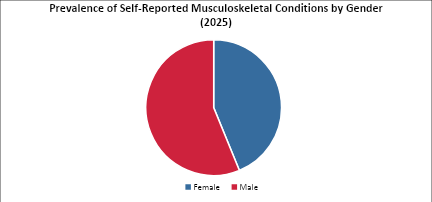
- Musculoskeletal Pain Gender-specific Diagnosed Prevalent Cases
- Musculoskeletal Pain Age-specific Diagnosed Prevalent Cases
- Musculoskeletal Pain Treated Cases
Musculoskeletal Pain Market Recent Breakthroughs and Developments
- In April 2026, Taiwan Liposome Company reported exploratory Phase III data at OARSI 2026 showing that TLC599 may reduce joint structural deterioration, reinforcing its potential as a disease-modifying osteoarthritis therapy.
- In January 2026, Mesoblast announced receipt of FDA feedback regarding a potential Biologics License Application (BLA) for rexlemestrocel-L in patients with chronic discogenic low back pain (CLBP).
- In January 2026, Biosplice Therapeutics announced that it has submitted NDA to the FDA for approval of Lorecivivint for the treatment of knee osteoarthritis.
Musculoskeletal Pain Drug Analysis & Competitive Landscape
The Musculoskeletal Pain drug chapter provides a detailed, market-focused review of approved Musculoskeletal Pain Therapies and the emerging Musculoskeletal Pain pipeline across Phase I–III clinical trials. It covers the mechanism of action, clinical trial data, regulatory approvals, patents, collaborations, and strategic partnerships for each therapy, along with their advantages, limitations, and recent developments.
This section offers critical insights into the Musculoskeletal Pain treatment landscape, supporting market assessment, competitive analysis, and growth forecasting for the Musculoskeletal Pain therapeutics market.
Musculoskeletal Pain Approved Therapies
-
Triamcinolone Acetonide (ZILRETTA/ FX006): Flexion
Triamcinolone Acetonide extended-release is an intra-articular corticosteroid approved for the management of osteoarthritis knee pain. As the first and only extended-release corticosteroid formulation for knee osteoarthritis, it utilizes proprietary poly lactic-co-glycolic acid (PLGA) microsphere technology to enable sustained intra-articular drug release and prolong therapeutic exposure compared with conventional corticosteroid injections.
The therapy received the US FDA approval in October 2017 based on results from a pivotal Phase III trial demonstrating statistically significant improvements in knee pain versus comparator groups, with clinical benefits maintained for up to 12 weeks and pain relief extending through Week 16 in some patients. The approval established ZILRETTA as a differentiated treatment option within the corticosteroid segment, addressing the need for more durable symptom control in patients with knee osteoarthritis.
-
S-Flurbiprofen+ Mentha Oil (LOQOA TAPE): Taisho Pharmaceutical
S-flurbiprofen + mentha oil is a transdermal anti-inflammatory analgesic patch formulation indicated for the treatment of osteoarthritis pain and inflammation. The product was co-developed by Taisho Pharmaceutical and TOKUHON Corporation and is marketed in Japan by Taisho Toyama Pharmaceutical and Teijin Pharma.
LOQOA TAPE received manufacturing and marketing approval in Japan on September 2015, and was launched on January 21, 2016. In Phase III clinical studies in patients with osteoarthritis of the knee, LOQOA TAPE demonstrated significant improvement in knee pain compared with a flurbiprofen gel patch control.
Note: Detailed marketed therapies assessment of therapies will be provided in the final report.
Table 1: Competitive Landscape of Musculoskeletal Pain Marketed/Approved Therapies | ||||||
|
Drug/Therapy |
Company |
Indication |
Molecule Type |
MoA |
RoA |
Marketed Region |
|
Triamcinolone Acetonide (Zilretta/ FX006) |
Flexion |
Musculoskeletal Pain |
Small molecule |
Anti-inflammatory |
Intra-articular injectioni |
US: 2017 |
|
S-Flurbiprofen, Mentha Oil (LOQOA TAPE) |
Taisho Pharmaceutical |
Musculoskeletal Pain |
Small molecule |
COX-inhibitior |
Transdermal |
JP: 2015 |
|
DUROLANE |
Bioventus |
Knee osteoarthritis pain |
Small molecule |
Viscosupplementation |
Intra-articular injectioni |
US: 2017 |
Musculoskeletal Pain Pipeline Analysis
-
Rexlemestrocel-L (MPC-06-ID): Mesoblast
Rexlemestrocel-L is a candidate for treating Chronic Lower Back Pain caused by disc degeneration. It is being developed for patients who have exhausted conservative treatment options, may have failed epidural steroid injections, and have no further treatment option other than invasive and costly surgical interventions. Mesoblast completed the Phase III trial of rexlemestrocel-L for CLBP.
In the April 2026 corporate presentation, Mesoblast outlined key development milestones for its CLBP program, including completion of pivotal trial enrollment by the end of April 2026, top-line primary endpoint data expected in mid-2027, a planned BLA submission in Q3 2027, and potential FDA approval and US launch in Q2 2028.
-
TLC599: Taiwan Liposome Company
TLC599 is Taiwan Liposome’s proprietary BioSeizer formulation of dexamethasone sodium phosphate (DSP) designed to provide sustained pain management for up to 24 weeks. TLC599 has the potential to enable patients to receive both immediate and sustained benefits from the local delivery of a highly potent and clinically validated steroid that typically has a very short half-life.
It is the world’s first multilamellar and multivesicular lipid formulation of DSP for osteoarthritis and provides fast onset and sustained release of up to 6 months. TLC599 could achieve usage in 26% of all US knee osteoarthritis patients. It is presently being studied in Phase III to treat osteoarthritis.
In April 2026, Taiwan Liposome Company announced the presentation of late-breaking structural benefit data for TLC599 at the OARSI 2026 World Congress, supporting its potential as a disease-modifying therapy for knee osteoarthritis.
Table 2: Competitive Landscape of Musculoskeletal Pain Emerging Drugs | ||||||
|
Drug Name |
Company |
Highest Phase |
Indication |
RoA |
MoA |
Anticipated Launch in the US |
|
Rexlemestrocel-L (MPC-06-ID) |
Mesoblast |
III |
CLBP |
Intradiscal injection |
MSC-based regeneration + anti-inflammatory paracrine signaling |
Information is available in the full report |
|
TLC599 |
Taiwan Liposome Company |
III |
Osteoarthritis |
Intra-articular injection |
Sustained-release corticosteroid |
Information is available in the full report |
|
Lorecivivint (SM04690) |
Biosplice |
III |
Osteoarthritis |
Intra-articular injection |
Clk dual-specificity kinase inhibitors |
Information is available in the full report |
|
CNTX 0066 |
Centrexion Therapeutics |
II |
Knee Osteoarthritis Pain |
Intra-articular injection |
TrkA receptor antagonists |
Information is available in the full report |
|
Note: Launch insights are provisional and may change with future report updates or the occurrence of major key catalysts. | ||||||
Musculoskeletal Pain Companies
- Flexion
- Taisho Toyama Pharmaceutical
- Mesoblast
- Taiwan Liposome Company
- Centrexion Therapeutics
- Biosplice, and others.
Musculoskeletal Pain Market Outlook
The Musculoskeletal Pain therapeutics market remains one of the largest and most established therapeutic areas, driven by the high global prevalence of osteoarthritis, CLBP, neck pain, and other degenerative musculoskeletal disorders. Current Musculoskeletal Pain Treatment Strategies are primarily focused on symptomatic pain relief through NSAIDs, corticosteroid injections, hyaluronic acid viscosupplements, and centrally acting analgesics. Despite widespread utilization, these therapies generally provide temporary symptom control and have limited impact on underlying disease progression, highlighting the substantial unmet need for more durable and disease-modifying treatment options.
Approved therapies such as DUROLANE, ZILRETTA, and viscosupplementation products including Synvisc-One continue to maintain a significant presence in the treatment landscape. However, concerns regarding gastrointestinal, cardiovascular, and renal toxicities associated with long-term NSAID use, as well as the limited durability of corticosteroid and hyaluronic acid injections, have intensified the search for novel therapies capable of providing sustained pain relief while addressing structural disease progression.
The Musculoskeletal Pain Competitive Landscape is increasingly shifting toward innovative non-opioid analgesics, regenerative therapies, and disease-modifying osteoarthritis drugs (DMOADs). Recent advances in pain signaling modulation, intra-articular therapies, and cell-based regenerative approaches have demonstrated the potential to address both symptomatic and structural aspects of disease.
In particular, therapies targeting degenerative disc disease-associated CLBP and knee osteoarthritis are expected to emerge as key drivers of future market growth.
Key Findings from Musculoskeletal Pain Market Forecast Report
- The Musculoskeletal Pain Therapeutics Market is anticipated to experience continued expansion, supported by the growing burden of age-related musculoskeletal disorders, increasing demand for non-opioid pain management strategies, and ongoing development of therapies designed to provide longer-lasting pain relief and functional improvement.
- Emerging regenerative and disease-modifying approaches may significantly reshape the treatment paradigm, particularly in osteoarthritis and CLBP, where current treatment options remain largely symptomatic.
- ZILRETTA generated USD 116.6 million in 2025 sales, demonstrating continued commercial demand for localized non-opioid pain management despite increasing pipeline competition.
- Products offering fewer services and longer duration of benefit may gain competitive advantages in an increasingly crowded market. Bioventus highlights that DUROLANE's single-injection regimen and pain relief lasting up to 26 weeks may provide economic and patient-convenience advantages versus multi-injection viscosupplementation products.
Musculoskeletal Pain Drug Class/Insights into Leading Emerging and Marketed Therapies (2022–2036 Forecast)
The Musculoskeletal Pain treatment vmarket landscape comprises NSAIDs, corticosteroids, viscosupplements, centrally acting analgesics, regenerative therapies, and emerging disease-modifying osteoarthritis therapies (DMOADs), all aimed at reducing pain, improving function, and enhancing quality of life.
- COX Inhibitors: These include NSAID-based therapies such as S-flurbiprofen, which inhibit cyclooxygenase enzymes and reduce prostaglandin synthesis, thereby alleviating inflammation and pain. This mechanism remains a key component of symptomatic Musculoskeletal Pain management.
- Glucocorticoid Receptor Agonists: Triamcinolone acetonide and TLC599 activate glucocorticoid receptors to suppress inflammatory cytokines and downstream inflammatory signaling pathways. These therapies are primarily utilized for localized and prolonged pain relief.
Musculoskeletal Pain Drug Uptake
This section focuses on the uptake rate of potential Musculoskeletal Pain drugs expected to be launched in the market during the forecast period (2026–2036). The analysis covers the Musculoskeletal Pain drug’s uptake, performance at peak, factors affecting performance during prime years of growth, patient uptake by therapy, and anticipated sales generated by each drug.
Among approved therapies, triamcinolone acetonide (ZILRETTA) is expected to maintain stable uptake in osteoarthritis-related musculoskeletal pain due to its extended release formulation, which provides prolonged pain relief versus conventional corticosteroid injections. DUROLANE is expected to sustain uptake in viscosupplementation, particularly in patients seeking to delay surgery or reduce repeated corticosteroid use, supported by reported double-digit demand growth and continued use in knee osteoarthritis management. S-flurbiprofen (LOQOA TAPE) is expected to maintain uptake in Japan, driven by its transdermal NSAID delivery, enabling localized pain relief with reduced systemic exposure.
Among emerging therapies, Rexlemestrocel-L is expected to have the highest uptake potential due to its MSC-based regenerative mechanism and ability to address the high unmet need in chronic low back pain. If clinical studies confirm durable pain relief and functional improvement after a single administration, it could emerge as a differentiated, disease-modifying option versus symptomatic therapies. TLC599 is expected to compete in the long-acting corticosteroid segment, supported by physician familiarity and the potential for prolonged symptom control via sustained release.
Detailed insights of emerging therapies' drug uptake is included in the report.
Musculoskeletal Pain Market Access and Reimbursement
The Musculoskeletal Pain Therapeutics Market Report further provides detailed insights on the country-wise accessibility and reimbursement scenarios, cost-effectiveness scenario of approved therapies, programs making accessibility easier and out-of-pocket costs more affordable, insights on patients insured under federal or state government prescription drug programs, etc.
|
Table 3: United States Reimbursement | |
|
Drug |
Reimbursement Program |
|
Triamcinolone Acetonide ER (ZILRETTA) |
|
Reimbursement is a crucial factor that affects the drug’s access to the Musculoskeletal Pain Therapeutics Market. Often, the decision to reimburse comes down to the price of the drug relative to the benefit it produces in treated patients. To reduce the healthcare burden of these high-cost therapies, many payment models are being considered by payers and other industry insiders.
NOTE: Further Details are provided in the final report….
Musculoskeletal Pain Therapies Price Scenario & Trends
Pricing and analogue assessment of Musculoskeletal Pain Therapies highlights evolving price dynamics structures. This section summarizes the cost of approved treatments, the closest and most appropriate analogue selection for emerging therapies, and the understanding of how pricing influences market access, adherence, and long-term uptake.
Further details are provided in the final report….
Musculoskeletal Pain Industry Experts and Physician Views
To keep up with Musculoskeletal Pain Treatment Market Trends, we take Key Opinion Leaders (KOLs) and Subject Matter Experts (SMEs) opinions working in the domain through primary research to fill the data gaps and validate our secondary research. Industry experts were contacted for insights on the emerging Musculoskeletal Pain therapies, evolving Musculoskeletal Pain treatment landscape, patient adherence to conventional therapies, therapy switching trends, drug adoption and uptake, accessibility challenges, and epidemiology and real-world prescription patterns in Musculoskeletal Pain, including MD, PhD, Instructor, Postdoctoral Researcher, Professor, Researcher, and others.
DelveInsight’s analysts connected with 10+ KOLs to gather insights at the country level. Centers such as the Mount Sinai School of Medicine, University Hospital Münster, Kyushu University Hospital etc., were contacted. Their opinion helps understand and validate current and emerging Musculoskeletal Pain therapies, highlight unmet medical needs, provide epidemiological context, and support strategic decisions for market access, therapy adoption, and pipeline prioritization in Musculoskeletal Pain.
Region |
Key Opinion Leaders (KOLs) and Subject Matter Experts (SMEs) |
|
United States |
“There is no doubt that nerve growth factor is important in the pain of osteoarthritis. It is clear that inhibiting it with an antibody does reduce pain and improve function. The question is how to balance the safety with the potential adverse events, including rapidly progressing disease.” |
|
Japan |
“Common symptoms of musculoskeletal disorders include pain, weakness, stiffness, joint noises, and decreased range of motion. Inflammation may cause pain, swelling, warmth, tenderness, impaired function, and sometimes redness of the overlying skin.” |
Musculoskeletal Pain Report Qualitative Analysis: SWOT and Conjoint Analysis
We perform qualitative and Musculoskeletal Pain Therapeutics Market Intelligence analysis using various approaches, such as SWOT analysis and conjoint analysis. In the SWOT analysis of Musculoskeletal Pain, strengths, weaknesses, opportunities, and threats in terms of disease diagnosis, patient awareness, patient burden, competitive landscape, cost-effectiveness, and geographical accessibility of therapies are provided.
Conjoint analysis analyzes Musculoskeletal Pain Emerging Therapies based on relevant attributes such as safety, efficacy, frequency of administration, route of administration, and order of entry. Scoring is given based on these parameters to analyze the effectiveness of therapy.
The team of analysts analyzes promising Musculoskeletal Pain Emerging Therapies based on relevant attributes such as safety, efficacy, frequency of administration, route of administration, and order of entry. In efficacy, the trial’s primary and secondary outcome measures are evaluated, whereas the therapies’ safety is evaluated, wherein the acceptability, tolerability, and adverse events are mainly observed.
In addition, the scoring is also based on the route of administration, order of entry, probability of success, and the addressable patient pool for each therapy. According to these parameters, the final weightage score and the ranking of the emerging therapies are decided.
Scope of the Musculoskeletal Pain Therapeutics Market Report
- The Musculoskeletal Pain Therapeutics Market Report covers a segment of key events, an executive summary, a descriptive overview, explaining their causes, signs and symptoms, pathogenesis, and currently available treatments.
- Comprehensive insight has been provided into the Musculoskeletal Pain Epidemiology segments and forecasts, the future growth potential of the diagnosis rate, and disease progression along Musculoskeletal Pain Treatment guidelines.
- Additionally, an all-inclusive account of both the current and emerging treatments, along with the elaborate profiles of late-stage and prominent therapies, will have an impact on the current Musculoskeletal Pain Treatment landscape.
- A detailed review of the Musculoskeletal Pain Therapeutics Market, historical and forecasted Musculoskeletal Pain Market Size, Musculoskeletal Pain Drugs Market Share by therapies, detailed assumptions, and rationale behind our approach is included in the report, covering the 7MM drug outreach.
- The Musculoskeletal Pain Therapeutics Market Report provides an edge while developing business strategies by understanding trends through SWOT analysis and expert insights/KOL views, patient journey, and treatment preferences that help in shaping and driving the 7MM Musculoskeletal Pain Drugs Market.
Musculoskeletal Pain Treatment Market Report Insights
- Musculoskeletal Pain Patient Population Forecast
- Musculoskeletal Pain Therapeutics Market Size
- Musculoskeletal Pain Pipeline Drugs Analysis
- Musculoskeletal Pain Market Size and Trends
- Musculoskeletal Pain Market Opportunity (Current and Forecasted)
Musculoskeletal Pain Treatment Market Report Key Strengths
- Epidemiology‑based (Epi‑based) Bottom‑up Forecasting
- Artificial Intelligence (AI)-Enabled Market Research Report
- 11-Year Forecast
- Musculoskeletal Pain Market Outlook (North America, Europe, Asia-Pacific)
- Patient Burden Trends (By Geography)
- Musculoskeletal Pain Treatment Addressable Market (TAM)
- Musculoskeletal Pain Competitive Landscape
- Musculoskeletal Pain Major Companies Insights
- Musculoskeletal Pain Price Trends and Analogue Assessment
- Musculoskeletal Pain Therapies Drug Adoption/Uptake
- Musculoskeletal Pain Therapies Peak Patient Share Analysis
Musculoskeletal Pain Treatment Market Report Assessment
- Current Musculoskeletal Pain Treatment Practices
- Musculoskeletal Pain Unmet Needs
- Musculoskeletal Pain Clinical Development Analysis
- Musculoskeletal Pain Emerging Drugs Product Profiles
- Musculoskeletal Pain Treatment Market Attractiveness
- Musculoskeletal Pain Qualitative Analysis (SWOT and Conjoint Analysis)
Key Questions Answered in the Musculoskeletal Pain Treatment Market Report
Musculoskeletal Pain Therapeutics Market Insights
- What was the Musculoskeletal Pain Treatment Market Size, the Musculoskeletal Pain Market Size by therapies, the Musculoskeletal Pain Drugs Market Share (%) distribution in 2025, and what would it look like by 2036? What are the contributing factors for this growth?
- What are the anticipated pricing variations among different geographies for the emerging therapies in the future?
- What can be the future treatment paradigm of Musculoskeletal Pain?
- What are the disease risks, burdens, and unmet needs of Musculoskeletal Pain?
- What will be the growth opportunities across the 7MM concerning the patient population with Musculoskeletal Pain?
- Who is the major future competitor in the market, and how will the competitors affect their market share?
- What are the current options for the treatment of Musculoskeletal Pain?
- What are the current guidelines for treating Musculoskeletal Pain in the US, Europe, and Japan?
Reasons to Buy the Musculoskeletal Pain Therapeutics Market Report
- The Musculoskeletal Pain Therapeutics Market Report will help in developing business strategies by understanding the latest trends and changing treatment dynamics driving the Musculoskeletal Pain Drugs Market.
- Bottom-up forecasting builds from the affected population to product forecasts, delivering a robust, data-driven approach ideal for new therapies and novel classes.
- Insights on patient burden/disease Musculoskeletal Pain Incidence, evolution in diagnosis, and factors contributing to the change in the epidemiology of the disease during the forecast years.
- Understand the existing Musculoskeletal Pain Drugs Market opportunities in varying geographies and the growth potential over the coming years.
- Identifying strong upcoming players in the Musculoskeletal Pain Drugs Market will help devise strategies to help get ahead of competitors.
- Detailed analysis and ranking of class-wise potential current and Musculoskeletal Pain Emerging Therapies under the conjoint analysis section to provide visibility around leading classes.
- To understand KOLs’ perspectives on the accessibility, acceptability, and compliance-related challenges of existing treatment to overcome barriers in the future.
- Detailed insights into the unmet needs of the existing Musculoskeletal Pain Drugs Market so that the upcoming players can strengthen their development and launch strategy.
- This Artificial Intelligence (AI)-enabled report summarizes and simplifies complex datasets within the report into clear, actionable insights for stakeholders, investors, and healthcare providers, enabling faster, data-driven decisions.
Stay updated with us for Recent Articles @ New DelveInsight Blogs