-market-report.png&w=256&q=75)
Myopic Macular Degeneration Market
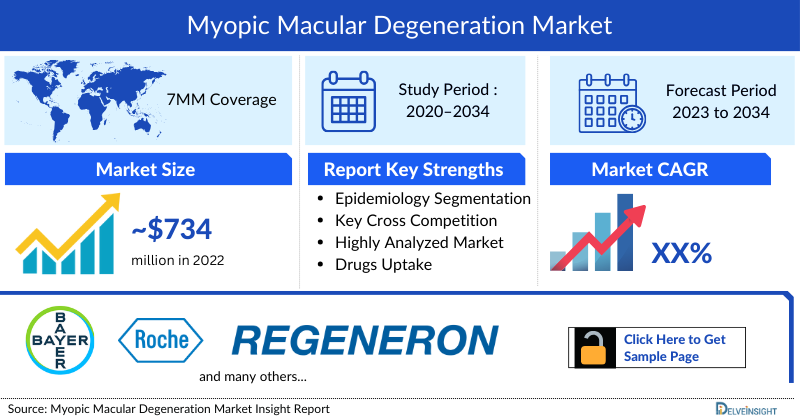
- In the 7MM, the Myopic Macular Degeneration market size mainly consisted of anti-VEGF therapies and standard of care which generated nearly ~USD 734 million in 2022.
- The Myopic Macular Degeneration market is poised for slow and steady growth throughout the forecast period (2023–2034) due to a scarcity of emerging therapies.
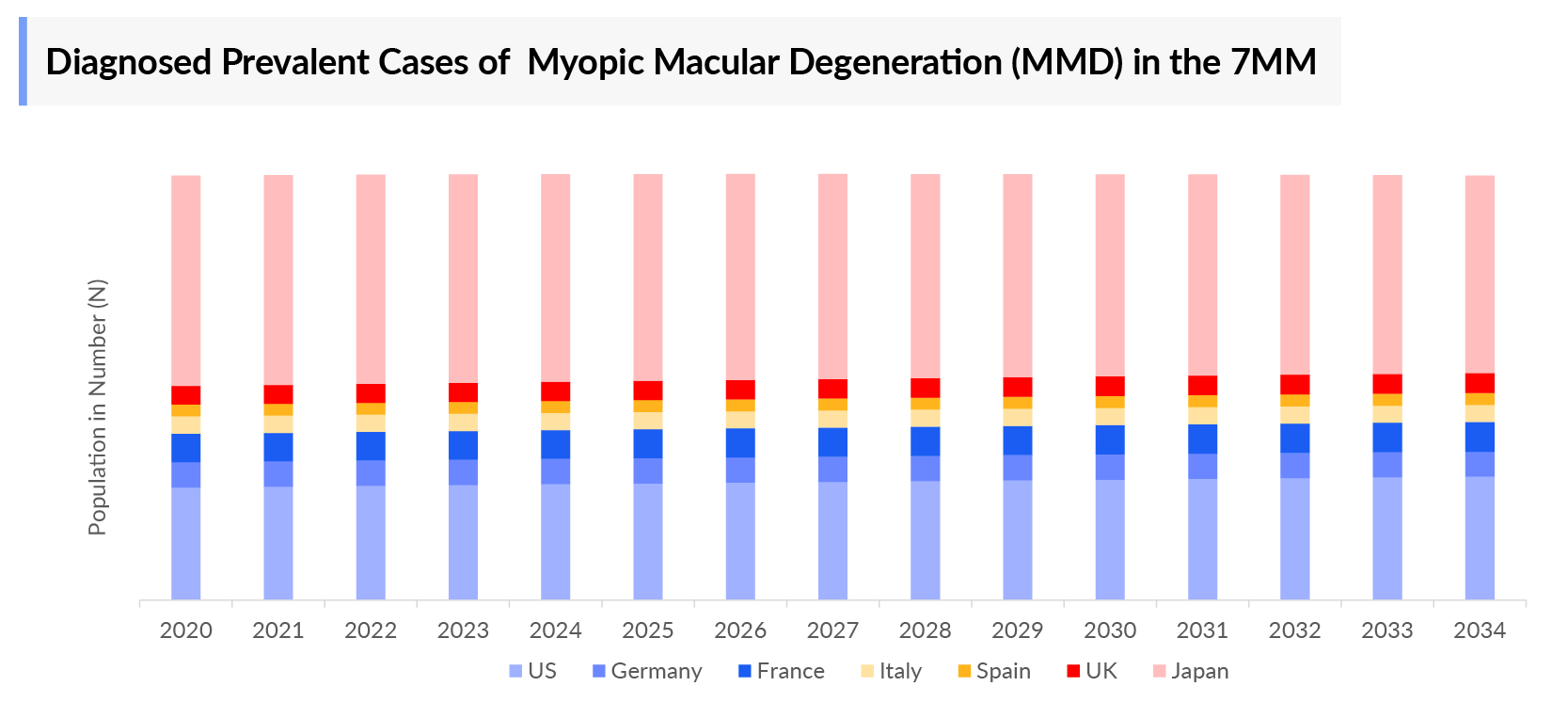
- DelveInsight's analysis indicates that Japan has the highest prevalence of diagnosed Myopic Macular Degeneration cases, comprising 49% of the total in the 7MM. Following this, the United States contributes approximately 27% of the diagnosed Myopic Macular Degeneration cases among the 7MM countries in 2022.
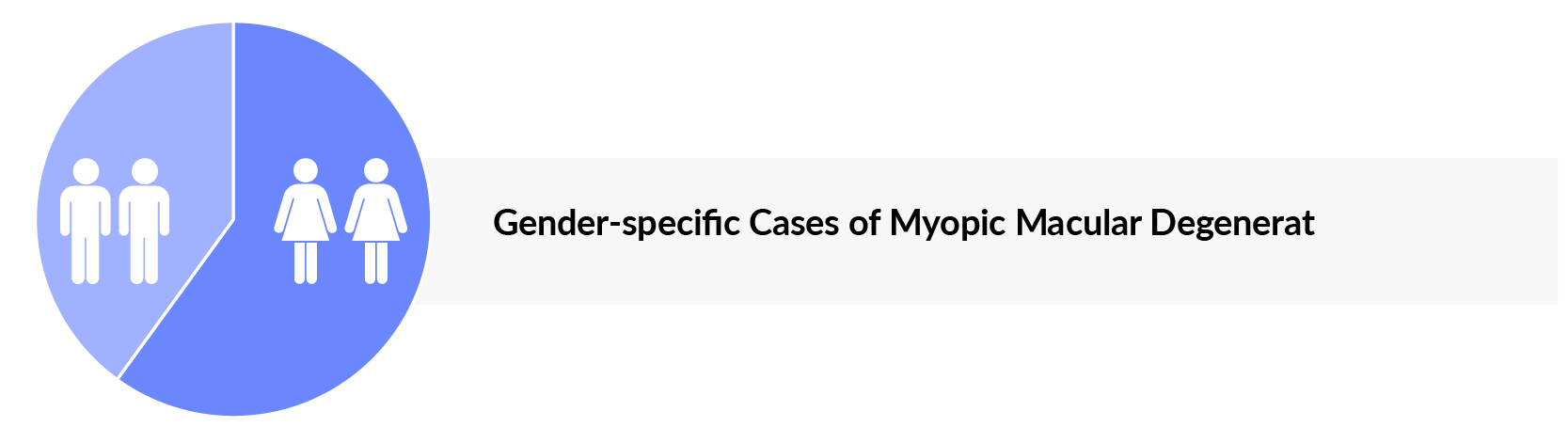
- Based on our analysis and estimations, females are predominantly more affected by Myopic Macular Degeneration in the 7MM. This gender discrepancy may be influenced by various factors, including hormonal, genetic, or environmental considerations.
- Choroidal neovascularization (CNV) is a concerning complication of myopia or pathological myopia. In 2022, diagnosed prevalent cases of mCNV accounted for 5% of the total Myopic Macular Degeneration cases in the 7MM.
- Several leading Myopic Macular Degeneration companies Roche, Bayer, Regeneron Pharmaceuticals, and others are advancing innovative therapies to address unmet needs and improve patient outcomes worldwide.
Key Factors Driving Myopic Macular Degeneration Market
Myopic Macular Degeneration Rising Prevalence
In 2023, Myopic Macular Degeneration (MMD) exhibited notable prevalence in the 7MM, with Japan accounting for 49% of diagnosed cases, followed by the US at approximately 27%. Analysis indicates that females are predominantly affected, possibly due to hormonal, genetic, or environmental factors. A concerning complication of MMD is choroidal neovascularization (CNV), which represented around 5% of total diagnosed MMD cases in 2022.
Myopic Macular Degeneration Market Dynamics
The Myopic Macular Degeneration market is anticipated to experience slow but steady growth through 2034, primarily due to limited therapeutic options and scarcity of emerging therapies. Key companies driving research and development include Roche, Bayer, and Regeneron Pharmaceuticals, focusing on innovative approaches to manage vision-threatening complications of pathological myopia.
Myopic Macular Degeneration Treatment Landscape
Current management of Myopic Macular Degeneration emphasizes monitoring, early detection, and treatment of complications like CNV. Approved therapies targeting vascular endothelial growth factor (VEGF) pathways, such as anti-VEGF agents, form the cornerstone of treatment. The lack of robust pipeline activity limits rapid market expansion, although ongoing awareness and clinical research are gradually shaping more effective management protocols.
Myopic Macular Degeneration Clinical Trials and Emerging Therapies
Emerging therapies include VABYSMO (faricimab) by Roche, a bispecific antibody designed to inhibit angiopoietin-2 (Ang-2) and VEGF-A signaling pathways. Currently registered in a Phase III “not yet recruiting” trial for retinal conditions, faricimab has potential applicability for mCNV, highlighting opportunities for future growth in the Myopic Macular Degeneration market.
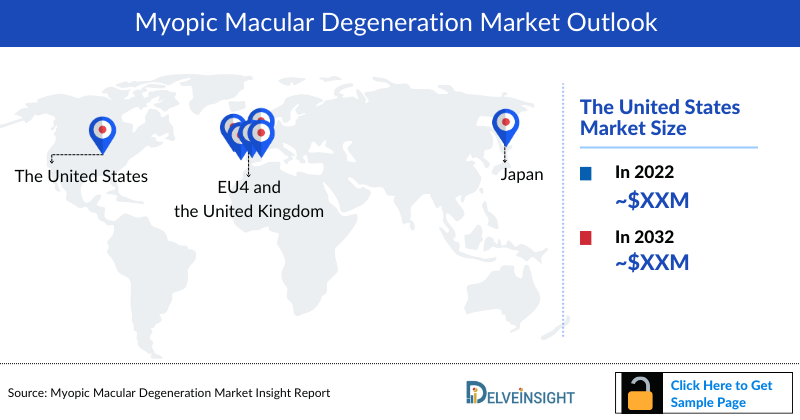
DelveInsight’s “Myopic Macular Degeneration Market Insights, Epidemiology, and Market Forecast – 2034” report delivers an in-depth understanding of the Myopic Macular Degeneration, historical and forecasted epidemiology and the Myopic Macular Degeneration therapeutics market trends in the United States, EU4 (Germany, France, Italy, and Spain) and the United Kingdom, and Japan.
The Myopic Macular Degeneration market report provides current treatment practices, emerging drugs, market share of individual therapies, and current and forecasted 7MM Myopic Macular Degeneration market size from 2020 to 2034. The report also covers current Myopic Macular Degeneration treatment practices/algorithms and unmet medical needs to curate the best of the opportunities and assesses the underlying potential of the market.
|
Study Period |
2020 to 2034 |
|
Forecast Period |
2024-2034 |
|
Geographies Covered |
|
|
Myopic Macular Degeneration Market |
|
|
Myopic Macular Degenerations Market Size | |
|
Myopic Macular Degeneration Companies |
Roche, Bayer, Regeneron Pharmaceuticals, and others. |
|
Myopic Macular Degeneration Epidemiology Segmentation |
|
Myopic Macular Degeneration Treatment Market
Myopic Macular Degeneration Overview
Myopia is a refractive error where distant objects appear blurry while close objects can be seen more clearly. High myopia is characterized by a higher degree of nearsightedness. Individuals with high myopia are at increased risk of developing myopia-related blinding complications, such as myopic macular degeneration (Myopic Macular Degeneration), posterior staphyloma, and retinal detachment, all of which can cause irreversible vision loss.
The transition from myopia to pathological myopia sets the stage for various ocular complications, one of which is Myopic Macular Degeneration. This condition involves the progressive degeneration of the macula, the central region of the retina responsible for detailed vision. The elongated eyeball, thinning of the choroid, and structural changes in the retina contribute to the vulnerability of the macula, leading to the development of Myopic Macular Degeneration. It is characterized by the presence of staphyloma, lacquer cracks, Fuchs’ spot, or chorio-retinal atrophy at the posterior pole.

Symptoms of Myopic Macular Degeneration manifest as visual disturbances related to the central vision. Common symptoms include gradual loss of sharp vision, visual distortions, and difficulties with color perception, and challenges in recognizing faces.
Myopic Macular Degeneration Diagnosis
Myopic Macular Degeneration diagnosis is complex, encompassing fibrosis-related alterations, neurological aspects, airway irritation, and possible involvement of gastroesophageal reflux. Detecting Myopic Macular Degeneration involves visual acuity assessments, dilated eye exams, and advanced imaging such as optical coherence tomography (OCT). Macular abnormalities are identified through fluorescein angiography and Amsler grid tests. Genetic testing may be recommended for familial cases. Early detection allows for prompt intervention and effective management.
Myopic Macular Degeneration Treatment
Treatment for Myopic Macular Degeneration involves various strategies such as anti-VEGF therapy, photodynamic therapy, and retinal laser treatments. The multidisciplinary approach aims to preserve vision and manage complications. Lifestyle adjustments, corrective lenses, low vision aids, and regular monitoring are crucial. Notably, LUCENTIS (ranibizumab), the first FDA-approved anti-VEGF therapy for treating mCNV, was approved in January 2017. However, the availability of biosimilars may impact its market dynamics. The cost-utility of these treatments is a consideration, with the need for consistent estimation to guide decision-making for countries and national health services. Myopic Macular Degeneration clinical trials are advancing innovative therapies, offering hope for improved vision outcomes and better patient care globally.
Myopic Macular Degeneration Epidemiology
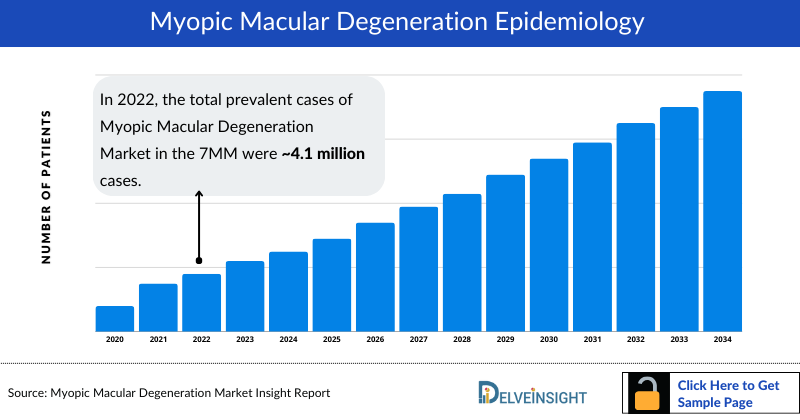
As the Myopic Macular Degeneration market is derived using the patient-based model, the Myopic Macular Degeneration epidemiology chapter in the report provides historical as well as forecasted epidemiology segmented by Total Diagnosed Prevalent Cases of Myopic Macular Degeneration, Gender-specific Diagnosed Prevalent Cases of Myopic Macular Degeneration, and Total Diagnosed Prevalent cases of myopic choroidal neovascularization (mCNV), in the 7MM covering the United States, EU4 countries (Germany, France, Italy, and Spain) and the United Kingdom, and Japan, from 2020 to 2034.
- As per DelveInsight’s estimations, the total diagnosed prevalent cases of Myopic Macular Degeneration in the 7MM were approximately 4.1 million in 2022 and are projected to increase during the forecast period.
- The overall count of individuals diagnosed with Myopic Macular Degeneration in the United States was approximately 1.1 million in 2022, and it is expected to increase at an estimated CAGR throughout the study period (2020-2034).
- Among the 7MM, Japan accounted for the highest number of Myopic Macular Degeneration diagnosed cases of around 2 million cases in 2022. Forecasts indicate a projected increase in the cases during the period (2023-2034).
- Among EU4 and the UK, France had the highest diagnosed prevalent population of Myopic Macular Degeneration, with about 0.27 million cases, followed by Germany and the UK in 2022. On the other hand, Spain had the lowest diagnosed prevalent population in EU4 and the UK in 2022.
- In 2022, DelveInsight's analysis of gender-specific diagnosed prevalent Myopic Macular Degeneration cases within the 7MM indicated an approximate distribution of 39% in males and 61% in females.
Stay ahead with insights on Myopic Macular Degeneration prevalence and patient population projections.
Myopic Macular Degeneration Drug Chapters
The drug chapter segment of the Myopic Macular Degeneration report encloses a detailed analysis of Myopic Macular Degeneration marketed drugs and late-stage (Phase III and Phase II) pipeline drugs. It also understands Myopic Macular Degeneration clinical trial details, expressive pharmacological action, agreements and collaborations, approval, and patent details, advantages and disadvantages of each included drug, and the latest news and press releases. The Myopic Macular Degeneration drugs market is witnessing growth due to rising prevalence, advanced therapies, and increased awareness among patients.
Marketed Myopic Macular Degeneration Drugs
EYLEA (aflibercept): Bayer/Regeneron Pharmaceuticals
EYLEA is a vascular endothelial growth factor (VEGF) inhibitor formulated as an injection for the eye. EYLEA helps prevent VEGF-A and PLGF from interacting with their natural VEGF receptors in previous clinical trials. While ensuring a commendable safety profile, EYLEA's impact on the market and its cost-effectiveness compared to other treatments are essential considerations.
EYLEA, the sole approved mCNV treatment in Japan and Europe with an active patent, dominates the Myopic Macular Degeneration treatment landscape, immune to biosimilar competition.
Note: Detailed marketed therapies assessment will be provided in the final report of Myopic Macular Degeneration...
Emerging Myopic Macular Degeneration Drugs
VABYSMO (faricimab): Roche
VABYSMO (faricimab) is the first bispecific antibody designed for the eye. It targets and inhibits two signaling pathways linked to a number of vision-threatening retinal conditions by neutralizing angiopoietin-2 (Ang-2) and VEGF-A. Faricimab is not present in the pipeline of Roche for the treatment of mCNV, but the trial is registered on CT, which is in Phase III “not yet recruiting” stage.
The absence of approved alternatives highlights the potential for VABYSMO to contribute significantly to the expansion of the Myopic Macular Degeneration treatment market.
Note: Detailed emerging therapies assessment will be provided in the final report of Myopic Macular Degeneration....
Myopic Macular Degeneration Market Outlook
Myopic maculopathy (Myopic Macular Degeneration), also named Myopic Macular Degeneration and myopic retinopathy, encompassing macular atrophy, lacquer cracks, and choroidal neovascularization (mCNV), is influenced by age and axial length. Strategies like low concentration atropine and optical interventions aim to curb myopic progression.
Currently, no available treatment has been found for myopic maculopathy except for mCNV, creating a pressing need for more treatment options. Present treatments for Myopic Macular Degeneration align with wet AMD approaches, utilizing anti-VEGF medications such as LUCENTIS (with an expired patent) and EYLEA.
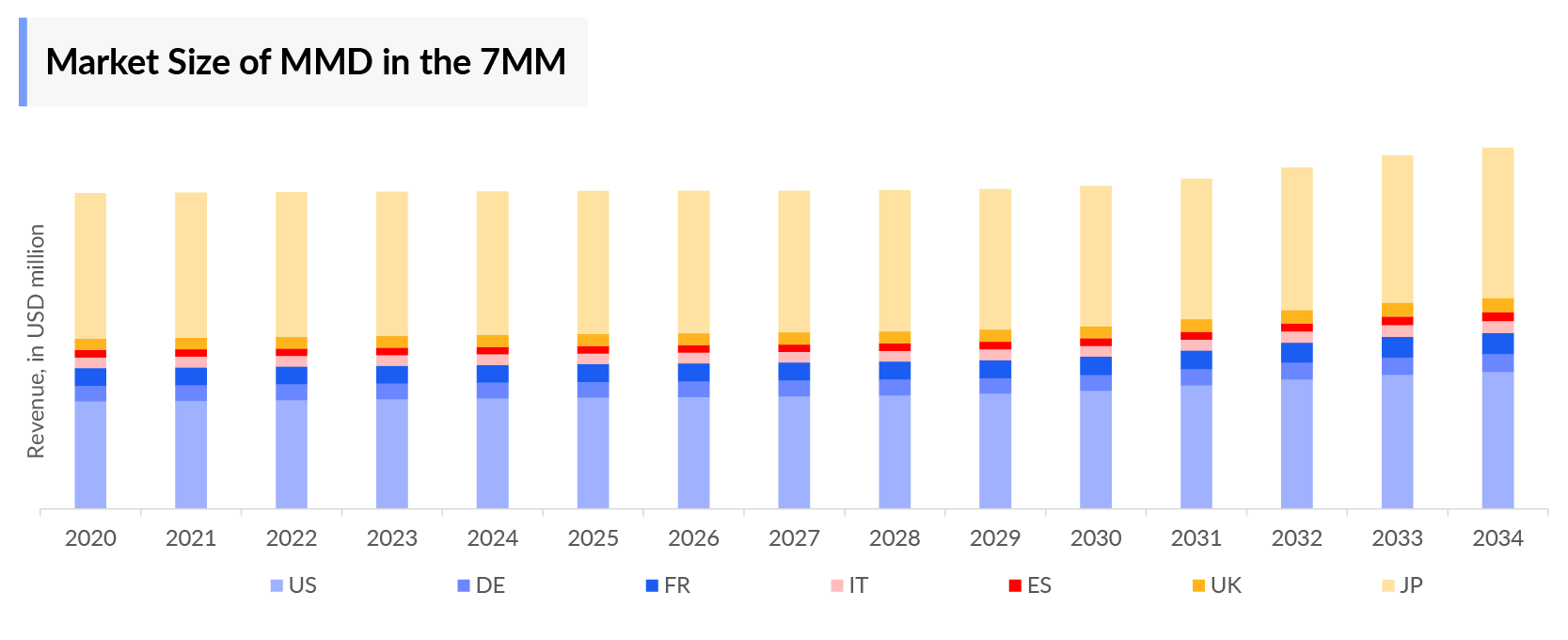
Surgical options, like posterior scleral reinforcement, provide alternatives. EYLEA, the exclusive mCNV treatment in Japan and Europe, maintains significance, unaffected by biosimilar competition, unlike LUCENTIS. Ongoing developments in this multifaceted landscape underscore the evolving strategies for managing Myopic Macular Degeneration.
- As the Myopic Macular Degeneration treatment landscape evolves, the emergence of VABYSMO in a Phase III trial brings hope for a targeted therapeutic option. The projected introduction of VABYSMO for mCNV is anticipated to propel the overall Myopic Macular Degeneration market in the 7MM, potentially reaching nearly USD 837 million by 2034.
- The Myopic Macular Degeneration market’s total size in the 7MM reached approximately USD 734 million in 2022. Projections indicate a steady growth during the forecast period.
- Out of the 7MM, Japan dominated the Myopic Macular Degeneration therapeutics market in 2022, representing the largest share at nearly 46%.
- The US alone represented approximately 34% of the total Myopic Macular Degeneration market in 2022, projected to increase at a substantial CAGR during the study period.
- In 2022, EU4 and the UK captured an estimated USD 147 million, which is anticipated to increase at a substantial CAGR. Among the European countries, France covered the largest Myopic Macular Degeneration market share in 2022, followed by Germany.
- At present, the pipeline for Myopic Macular Degeneration is limited. Nevertheless, with increased awareness and extensive research, the market outlook for Myopic Macular Degeneration treatment indicates a gradual expansion, promising a future characterized by effective management protocols.
Myopic Macular Degeneration Drugs Uptake
This section focuses on the uptake rate of potential Myopic Macular Degeneration drugs expected to launch in the market during 2020–2034. For example, VABYSMO (faricimab-svoa), in the US is expected to get launched by 2028 with medium uptake.
Further detailed analysis of emerging therapies drug uptake in the report…
Myopic Macular Degeneration Pipeline Development Activities
The Myopic Macular Degeneration therapeutics market report provides insights into different Myopic Macular Degeneration clinicla trials within Phase III, Phase II, and Phase I stage. It also analyzes key players involved in developing targeted therapeutics.
Pipeline Development Activities
The report covers information on collaborations, acquisitions and mergers, licensing, and patent details for Myopic Macular Degeneration emerging therapies.
KOL Views
To keep up with current Myopic Macular Degeneration market trends, we take KOLs and SMEs’ opinions working in the domain through primary research to fill the data gaps and validate the secondary research. Industry Experts were contacted for insights on Myopic Macular Degeneration evolving treatment landscape, patient reliance on conventional therapies, patient therapy switching acceptability, and drug uptake along with challenges related to accessibility, including KOL from University of Utah Hospital, US; Department of Ophthalmology, Columbia University, New York; Department of Ophthalmology, University Medical Center of the Johannes Gutenberg-University Mainz, Germany; Department of Ophthalmology, University of Padova, Italy; The Royal College of Ophthalmologists, London, UK; Department of Ophthalmology, Osaka University Medical School, Osaka, Japan; and others.
Delveinsight’s analysts connected with 50+ KOLs to gather insights; however, interviews were conducted with 15+ KOLs in the 7MM. Their opinion helps understand and validate current and emerging therapies, treatment patterns, or Myopic Macular Degeneration market trends. This will support the clients in potential upcoming novel treatments by identifying the overall scenario of the market and the unmet needs.
Qualitative Analysis
We perform Qualitative and market Intelligence analysis using various approaches, such as SWOT and Conjoint Analysis. In the SWOT analysis, strengths, weaknesses, opportunities, and threats in terms of disease diagnosis, patient awareness, patient burden, competitive landscape, cost-effectiveness, and geographical accessibility of therapies are provided. These pointers are based on the Analyst’s discretion and assessment of the patient burden, cost analysis, and existing and evolving treatment landscape.
Conjoint Analysis analyzes multiple approved and emerging Myopic Macular Degeneration therapies based on relevant attributes such as safety, efficacy, frequency of administration, route of administration, and order of entry. Scoring is given based on these parameters to analyze the effectiveness of therapy.
Further, the therapies’ safety is evaluated wherein the acceptability, tolerability, and adverse events are majorly observed, and it sets a clear understanding of the side effects posed by the drug in the trials. In addition, the scoring is also based on the route of administration, order of entry and designation, probability of success, and the addressable patient pool for each therapy. According to these parameters, the final weightage score and the ranking of the emerging therapies are decided.
Myopic Macular Degeneration Market Access and Reimbursement
The high cost of therapies for the treatment is a major factor restraining the growth of the global drug market. Because of the high cost, the economic burden is increasing, leading the patient to escape from proper treatment.
The report further provides detailed insights on the country-wise accessibility and reimbursement scenarios, cost-effectiveness scenario of approved therapies, programs making accessibility easier and out-of-pocket costs more affordable, insights on patients insured under federal or state government prescription drug programs, etc.
Scope of the Myopic Macular Degeneration Market Report
- The report covers a segment of key events, an executive summary, descriptive overview of Myopic Macular Degeneration, explaining its causes, signs and symptoms, pathogenesis, and currently available therapies.
- Comprehensive insight has been provided into the epidemiology segments and forecasts, the future growth potential of diagnosis rate, disease progression, and treatment guidelines.
- Additionally, an all-inclusive account of the current and emerging therapies and the elaborative profiles of late-stage and prominent therapies will impact the current treatment landscape.
- A detailed review of the Myopic Macular Degeneration market, historical and forecasted market size, market share by therapies, detailed assumptions, and rationale behind the approach is included in the report covering the 7MM drug outreach.
- The report provides an edge while developing business strategies, by understanding trends, through SWOT analysis and expert insights/KOL views, patient journey, and treatment preferences that help shape and drive the 7MM Myopic Macular Degeneration market.
Myopic Macular Degeneration Market Report Insights
- Myopic Macular Degeneration Patient Population
- Myopic Macular Degeneration Therapeutic Approaches
- Myopic Macular Degeneration Pipeline Analysis
- Myopic Macular Degeneration Market Size
- Myopic Macular Degeneration Market Trends
- Myopic Macular Degeneration Drugs Market
- Existing and Future Myopic Macular Degeneration Market Opportunity
Myopic Macular Degeneration Market Report Key Strengths
- 12 years Forecast
- The 7MM Coverage
- Myopic Macular Degeneration Epidemiology Segmentation
- Key Cross Competition
- Conjoint Analysis
- Myopic Macular Degeneration Drugs Uptake
- Key Myopic Macular Degeneration Market Forecast Assumptions
Myopic Macular Degeneration Market Report Assessment
- Current Myopic Macular Degeneration Treatment Practices
- Myopic Macular Degeneration Unmet Needs
- Myopic Macular Degeneration Pipeline Product Profiles
- Myopic Macular Degeneration Market Attractiveness
- Qualitative Analysis (SWOT and Conjoint Analysis)
- Myopic Macular Degeneration Market Drivers
- Myopic Macular Degeneration Market Barriers
Key Questions Myopic Macular Degeneration Market Report
Myopic Macular Degeneration Market Insights
- What was the Myopic Macular Degeneration total market size, the market size by therapies, and market share (%) distribution in 2020, and how would it all look in 2034? What are the contributing factors for this growth?
- What unmet needs are associated with the current treatment market of Myopic Macular Degeneration?
- What are the patents of emerging therapies for Myopic Macular Degeneration?
- Which drug is going to be the largest contributor by 2034?
- What are the pricing variations among different geographies for approved and off-label therapies?
- How would the market drivers, barriers, and future opportunities affect the market dynamics and subsequent analysis of the associated trends?
Myopic Macular Degeneration Epidemiology Insights
- What are the disease risks, burdens, and unmet needs of Myopic Macular Degeneration? What will be the growth opportunities across the 7MM concerning the patient population of Myopic Macular Degeneration?
- What is the historical and forecasted Myopic Macular Degeneration patient pool in the United States, EU4 (Germany, France, Italy, and Spain), the United Kingdom, and Japan?
- Why do only limited patients appear for diagnosis?
- Which country is more prevalent for Myopic Macular Degeneration and why?
- What factors are affecting the diagnosis of the indication?
Current Myopic Macular Degeneration Treatment Scenario, Marketed Drugs, and Emerging Therapies
- What are the current options for treating Myopic Macular Degeneration? What are the current guidelines for treating Myopic Macular Degeneration in the US and Europe?
- How many companies are developing therapies for treating Myopic Macular Degeneration?
- How many emerging therapies are in the mid-stage and late stage of development for treating Myopic Macular Degeneration?
- What are the recent novel therapies, targets, mechanisms of action, and technologies developed to overcome the limitations of existing therapies?
- What are the key designations that have been granted for the emerging therapies for Myopic Macular Degeneration?
- Patient acceptability in terms of preferred treatment options as per real-world scenarios?
- What are the country-specific accessibility issues of expensive, recently approved therapies? Focus on reimbursement policies.
- What are the 7MM historical and forecasted markets of Myopic Macular Degeneration?
Reasons to Buy Myopic Macular Degeneration Market Forecast Report
- The report will help develop business strategies by understanding the latest trends and changing treatment dynamics driving the Myopic Macular Degeneration Market.
- Insights on patient burden/disease prevalence, evolution in diagnosis, and factors contributing to the change in the epidemiology of the disease during the forecast years.
- To understand the existing market opportunity in varying geographies and the growth potential over the coming years.
- Distribution of historical and current patient share based on real-world prescription data along with reported sales of approved products in the US, EU4 (Germany, France, Italy, and Spain) and the United Kingdom, and Japan.
- Identifying strong upcoming players in the market will help devise strategies that will help get ahead of competitors.
- Detailed analysis and ranking of potential current and emerging therapies under the conjoint analysis section to provide visibility around leading classes.
- Highlights of Access and Reimbursement policies of approved therapies, barriers to accessibility of off-label expensive therapies, and patient assistance programs.
- To understand the perspective of Key Opinion Leaders around the accessibility, acceptability, and compliance-related challenges of existing treatment to overcome barriers in the future.
- Detailed insights on the unmet needs of the existing market so that the upcoming players can strengthen their development and launch strategy.
Explore key insights with our Myopic Macular Degeneration Market Infographics now!