
Nanorobots in Healthcare Market Summary
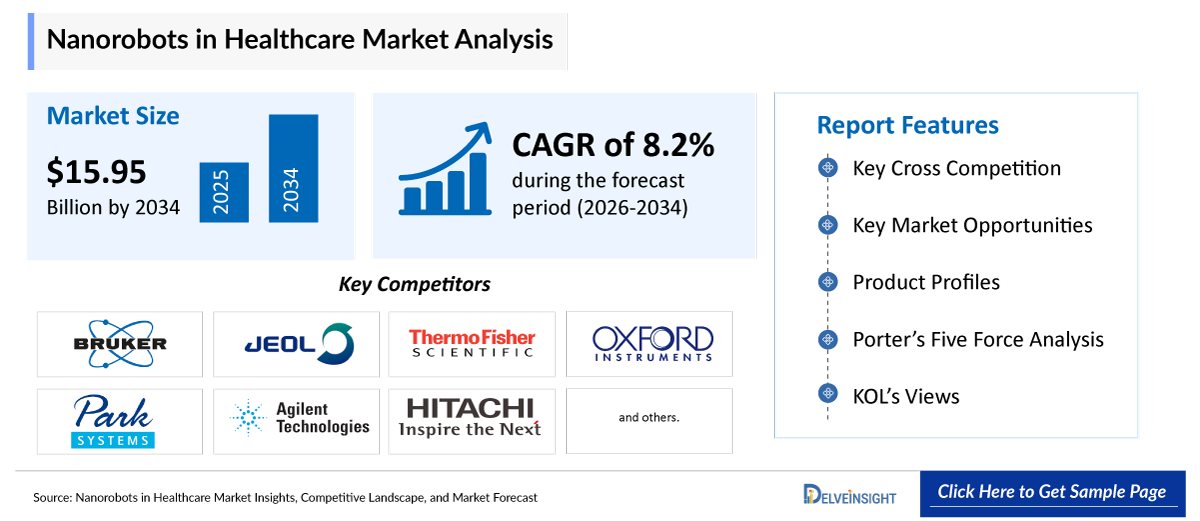
- The Nanorobots in Healthcare market size is estimated at USD 7.85 billion in 2025 and is projected to reach USD 15.95 billion by 2034. Growth is anchored in the rising global cancer burden, the transition of magnetically guided micro and nanorobots from laboratory demonstration into first-in-human clinical testing, and sustained public and venture investment in nanoscale instrumentation and programmable therapeutic robots.
- The global Nanorobots in Healthcare market is growing at a CAGR of 8.2% during the forecast period from 2026 to 2034.
- By product type, the nanomanipulation systems segment dominated the Nanorobots in Healthcare market with a 72% share in 2025.
- By actuation technology, the magnetic actuation segment dominated the Nanorobots in Healthcare market with a 44% share in 2025.
- By application, the targeted drug delivery segment dominated the Nanorobots in Healthcare market with a 38% share in 2025.
- By end user, the academic and research institutes segment dominated the Nanorobots in Healthcare market with a 46% share in 2025.
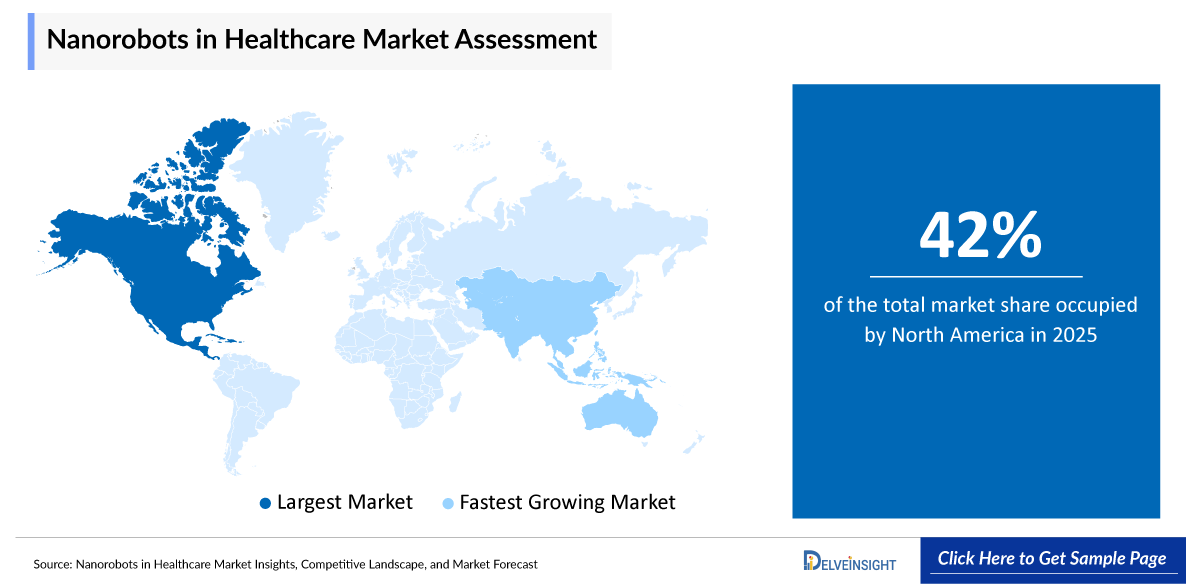
- North America dominated the global Nanorobots in Healthcare market revenue with a 42% share in 2025, representing the highest regional market share globally.
Nanorobots in healthcare are nanoscale and near-nanoscale robotic devices, typically engineered between 1 and 100 nanometres for molecular constructs and extending to micrometre and millimetre scales for clinically deployed systems, designed to perform diagnostic, therapeutic, and interventional tasks inside the human body. A functional system integrates four components: a biocompatible structural body fabricated from silica, iron oxide, hydrogel, gelatin, or folded nucleic acid; an actuation mechanism that supplies propulsion, most commonly an external magnetic field but also acoustic, catalytic, biohybrid, or optical drive; a payload or sensing element such as a cytotoxic agent, thrombolytic enzyme, imaging tracer, or aptamer probe; and an external navigation and imaging platform that localizes the device and triggers release.
The workflow spans design and simulation, nanofabrication and DNA origami self-assembly, functionalization, magnetic or acoustic guidance, and imaging-based verification. Principal applications include targeted drug delivery in oncology, diagnostics and biosensing, nanosurgery and tissue repair, medical imaging, and dental therapy, alongside a large installed base of nanomanipulation instrumentation supporting research. The field has evolved from theoretical proposals and isolated in vitro demonstrations through in vivo animal validation and, more recently, into clinically ready integrated platforms and first-in-human studies, positioning nanorobotics as an emerging pillar of precision medicine rather than a purely academic discipline.
Nanorobots in Healthcare Market Key Growth Drivers
- The escalating global cancer burden, with the World Health Organization and the International Agency for Research on Cancer reporting 20.6 million new cases annually and projecting 35 million by 2050, is driving demand for therapies that concentrate cytotoxic payloads at the tumour and spare healthy tissue.
- Systemically administered drugs are implicated in a substantial share of clinical-trial failures, and targeted nanorobotic delivery directly addresses the therapeutic-window problem that limits conventional chemotherapy and thrombolysis.
- Magnetic actuation has matured into clinically ready navigation, demonstrated by integrated electromagnetic platforms that combine catheter-based release, X-ray tracking, and dissolvable drug-loaded microrobots validated in vivo.
- Programmable DNA nanotechnology, including pH-gated DNA origami robots that expose cytotoxic ligand patterns only in the acidic tumour microenvironment, is converting molecular nanorobotics into a credible therapeutic modality.
- First-in-human clinical testing by companies such as Bionaut Labs, Robeauté, and Theranautilus is generating the safety evidence needed to unlock regulatory pathways and hospital adoption.
- Sustained government and institutional funding for nanotechnology research sustains demand for nanomanipulators, atomic force microscopes, and electron-microscopy accessories, which constitute the revenue base of the market today.
- Artificial intelligence applied to trajectory planning, swarm control, image-free localization, and biomarker interpretation is improving navigation accuracy and diagnostic sensitivity, sustaining mid-single-digit to high-single-digit market growth through 2034.
Key Companies in Nanorobots in Healthcare Market
The competitive landscape is led by the following instrumentation providers, clinical-stage developers, and platform innovators:
- Bruker Corporation
- JEOL Ltd.
- Thermo Fisher Scientific Inc.
- Oxford Instruments plc
- Park Systems Corp.
- Agilent Technologies, Inc.
- Hitachi High-Tech Corporation
- Nanosurf AG
- SmarAct GmbH
- Imina Technologies SA, and others
For illustrative purposes, only the top 10 companies are listed in the Table of Contents. The report may include analysis and references to additional companies, where relevant to the market assessment.
Nanorobots in Healthcare Market Size
The following snapshot summarizes the principal report metrics for the Nanorobots in Healthcare market.
|
Report Metrics |
Details |
|
2025 Market Size |
USD 7.85 billion |
|
2034 Projected Market Size |
USD 15.95 billion |
|
Growth Rate (2026-2034) |
8.2% CAGR |
|
Largest Market |
North America |
|
Fastest Growing Market |
Asia-Pacific |
|
Market Structure |
Moderately Concentrated |
All market values are expressed in USD at the instrument, device, and platform revenue level and represent DelveInsight estimates synthesized from primary and secondary research.
Factors Contributing to the Growth of the Nanorobots in Healthcare Market
Nanorobots in Healthcare Market Drivers
- Rising Global Cancer Burden and Demand for Targeted Therapy: The most powerful driver of the nanorobots in healthcare market is the escalating global cancer burden, which creates sustained demand for therapies capable of concentrating cytotoxic agents at the tumour while sparing healthy tissue. The World Health Organization, in its Global Status Report on Cancer 2026 prepared jointly with the International Agency for Research on Cancer, reports an estimated 20.6 million new cancer cases and 10 million deaths each year, with cancer the second leading cause of death globally after cardiovascular disease. Demographic projections indicate the annual case count will rise to 35 million by 2050, a 77% increase on the 20 million cases recorded in 2022, with the steepest proportional increases in low and medium human-development-index countries. Conventional chemotherapy and radiotherapy act on malignant and healthy cells alike, producing dose-limiting toxicity that constrains efficacy and degrades quality of life. Nanorobots address this directly by carrying payloads to the tumour under external guidance or by releasing them only in response to the acidic tumour microenvironment, thereby widening the therapeutic window. As oncology shifts toward precision delivery and as patient volumes expand, the addressable opportunity for nanorobotic drug delivery, theranostics, and biosensing grows in step, anchoring market expansion through 2034.
- Transition of Micro and Nanorobots from Laboratory Demonstration to Clinical Readiness: The market is being reshaped by the movement of micro and nanorobots out of the laboratory and into first-in-human evaluation. For two decades the field advanced through isolated demonstrations of propulsion in vitro, with clinical translation blocked by the absence of integrated systems combining locomotion, navigation, payload release, and imaging. That barrier is now falling. In 2025, researchers reported in Science a clinically ready magnetically guided microrobotic platform pairing an electromagnetic navigation system with a custom release catheter and gelatin microrobots loaded with magnetic and radiopaque nanoparticles, allowing real-time X-ray tracking and controlled dissolution after use, with validation in human vasculature models and living animals. In parallel, Bionaut Labs advanced its magnetically steered devices into human clinical trials, and Robeaute is preparing an international first-in-human study of a neurosurgical microrobot for tumour microbiopsy. Theranautilus has progressed toward human testing of magnetically controlled dental nanorobots. Each of these programmes converts theoretical capability into regulated clinical evidence, de-risks the category for hospitals, investors, and payers, and establishes reference pathways that later entrants can follow, accelerating adoption across the forecast period.
- Maturation of Magnetic Actuation and Real-Time Navigation Systems: Magnetic actuation has become the dominant control modality because magnetic fields penetrate biological tissue without attenuation, are safe at clinically relevant strengths, and permit wireless, untethered steering of devices through vasculature, cerebrospinal fluid, and soft tissue. Progress has shifted from demonstrating that a single device can be moved to controlling large swarms, integrating imaging feedback, and manufacturing at scale. Superparamagnetic iron oxide and neodymium-iron-boron formulations provide the required magnetic response with acceptable biocompatibility, and iron oxide materials benefit from an established regulatory precedent as imaging agents. Localization has advanced beyond fluoroscopy: researchers at Korea University reported alginate hydrogel microrobots trackable through magnetic particle imaging, enabling real-time localization, selective thermal therapy, and cell delivery from a single magnetic actuation system without cameras, computed tomography, or X-ray. Clinical electromagnetic navigation consoles, already familiar to interventional cardiologists through catheter robotics, provide a credible commercial platform for hospital deployment. Together these advances resolve the navigation and traceability problems that historically prevented regulatory submission, and they position magnetic systems to retain technology leadership across the forecast period.
- Expansion of DNA Nanotechnology and Programmable Bio-Nanorobots: Programmable nucleic acid nanostructures have transformed bio-nanorobotics from a materials-science curiosity into a therapeutic and diagnostic modality. DNA origami permits the folding of scaffold strands into precisely specified three-dimensional geometries that can conceal, display, or release molecular cargo in response to defined environmental triggers. In 2024, researchers at the Karolinska Institutet published in Nature Nanotechnology a DNA robotic switch that hides six cytotoxic peptide ligands in a hexagonal nanopattern and exposes them autonomously only at the acidic pH of 6.5 characteristic of the solid tumour microenvironment, sparing healthy tissue at physiological pH 7.4 and reducing tumour growth in mice. The same structural logic supports diagnostics: Nanovery has commercialized DNA nanorobotic sensors that bind circulating tumour DNA and emit a fluorescent signal, enabling enzyme-free, point-of-care quantification of nucleic acid biomarkers and antisense oligonucleotide pharmacokinetics. Because these constructs are designed computationally and self-assemble, they scale differently from fabricated devices and open a lower-capital route to clinical entry. This programmability broadens the market beyond instrumentation into therapeutics and diagnostics across the forecast period.
- Sustained Public Research Funding and Instrumentation Demand: The realized revenue base of the market today rests on instrumentation rather than therapeutics. Nanomanipulators, atomic force microscopes, scanning probe systems, and electron-microscopy accessories are the tools through which nanoscale structures are fabricated, characterized, and manipulated, and they are purchased continuously by universities, national laboratories, and corporate research centres. Government commitments to nanotechnology and precision-medicine research in the United States, the European Union, Japan, China, South Korea, and India sustain this procurement independent of clinical approval timelines, giving the market a stable, recurring revenue floor that is unusual for an emerging technology. Academic environments also function as incubation hubs, generating the spin-outs and intellectual property that populate the therapeutic segment, so instrument demand and clinical innovation reinforce one another. Established suppliers including Bruker, JEOL, Thermo Fisher Scientific, Oxford Instruments, and Park Systems benefit from long replacement cycles, service contracts, and consumable attachment. This durable institutional demand underpins the dominance of nanomanipulation systems and of academic end users, and it cushions the market against the volatility inherent in early-stage clinical development.
- Venture Formation and Strategic Investment in Clinical Microrobotics: Capital is flowing into the clinical frontier of the market at a pace that materially accelerates development. Bionaut Labs has raised funding disclosed at USD 70 million since inception, with an extension round supported by the Mayo Clinic and Gates Ventures alongside Khosla Ventures, Upfront Ventures, and OurCrowd, financing the company through the start of human clinical trials in 2024. In January 2025, the Paris-based neurosurgical microrobot developer Robeaute closed a USD 28 million Series A co-led by Plural, Cherry Ventures, and Kindred Ventures, with strategic participation from the image-guided-surgery company Brainlab, an investment that signals validation from an established medical technology incumbent. Theranautilus, incubated at the Indian Institute of Science, raised USD 1.2 million in seed funding led by pi Ventures to build an ISO-certified manufacturing facility and prepare dental nanorobot trials. Nanovery secured further backing from Northstar Ventures and Smartlink in 2025 to scale its nucleic acid nanorobot platform. Strategic investment by incumbents alongside specialist venture funds shortens commercialization timelines and validates nanorobotics as a strategic capability rather than a speculative bet.
- Integration of Artificial Intelligence into Design, Navigation, and Diagnostics: Artificial intelligence is becoming inseparable from practical nanorobotics because the control problem is intractable by conventional means. A therapeutic dose requires coordinated swarms rather than single devices, and steering thousands of agents through pulsatile flow, variable viscosity, and irregular anatomy exceeds the reach of hand-tuned controllers. Reinforcement-learning and model-based approaches now support semi-autonomous trajectory planning, adaptive swarm control, and image-free localization, allowing systems to infer position from magnetic signatures rather than continuous radiographic imaging and thereby reducing radiation exposure and procedural cost. In fabrication, machine-learning models accelerate the design of DNA origami geometries and the selection of biocompatible magnetic composites, compressing iteration cycles that previously required extensive empirical screening. In diagnostics, AI-enhanced signal processing raises the sensitivity of nanorobotic biosensors for circulating tumour DNA and other low-abundance biomarkers, as reflected in commercial platforms that couple nanorobotic detection with algorithmic interpretation. By improving accuracy, autonomy, and throughput simultaneously, artificial intelligence raises the probability of technical and regulatory success and sustains the growth trajectory through 2034.
Nanorobots in Healthcare Market Restraints
Despite accelerating scientific progress, the nanorobots in healthcare market faces constraints that materially temper near-term commercialization. The regulatory position is the most consequential: no nanorobotic therapeutic has secured marketing authorization from a major agency, and because these systems combine a device, a drug payload, and an external navigation console, they fall across device, drug, and combination-product frameworks without a settled review pathway, imposing long, uncertain, and costly submissions. Capital intensity compounds this, as bringing a nanoscale device through clinical development typically consumes tens to hundreds of millions of dollars, and specialized cleanroom and nanofabrication build-outs demand eight-figure investment before revenue. Manufacturing presents a distinct bottleneck: nanorobots are produced today at laboratory scale in milligram quantities, and translating that to reproducible, sterile, commercially certified output with batch-to-batch consistency is unresolved for most developers. Supply chains for high-purity magnetic materials, scaffold oligonucleotides, and biocompatible polymers are concentrated among few qualified vendors, exposing programmes to lead-time and quality risk. Biological barriers persist, including material toxicity, immune clearance, limited magnetic-field penetration depth at anatomical depth, possible tissue heating, and contraindication in patients with metallic implants. Reimbursement is undefined for a category with no approved products and no procedure codes, leaving payer acceptance speculative. Workforce constraints are acute, as the field requires simultaneous expertise in nanofabrication, magnetics, control theory, imaging, and clinical medicine, a combination concentrated in a small number of institutions. Data-management demands grow with imaging-intensive navigation and longitudinal safety follow-up. Finally, adoption depends on hospitals investing in electromagnetic navigation infrastructure ahead of proven clinical benefit, a sequencing problem that slows diffusion even where the underlying technology performs. Together these factors keep revenue concentrated in research instrumentation and moderate the pace at which therapeutic value converts into sales.
Nanorobots in Healthcare Market Segment Analysis
The Nanorobots in Healthcare Market by Product Type (Nanomanipulation Systems, Bio-Nanorobots, Magnetically Guided Nanorobots, Microrobotic Intervention Platforms, Others), Actuation Technology (Magnetic Actuation, Acoustic and Ultrasound Actuation, Chemical and Catalytic Propulsion, Biohybrid Propulsion, Light-Driven Actuation, Others), Application (Targeted Drug Delivery, Diagnostics and Biosensing, Nanosurgery and Tissue Repair, Medical Imaging, Dental Applications, Others), End User (Academic and Research Institutes, Pharmaceutical and Biotechnology Companies, Hospitals and Specialty Clinics, Diagnostic and Imaging Centers, Others), and Geography (North America, Europe, Asia-Pacific, Rest of World).
By Product Type
Dominant Subsegment: Nanomanipulation Systems. The nanomanipulation systems category is expected to dominate the market.
Dominant: Nanomanipulation Systems ~ 72%
The nanomanipulation systems segment accounted for a 72% share of the Nanorobots in Healthcare market in 2025. Nanomanipulation systems dominate because they are the only part of the market that generates substantial, recurring, invoiced revenue today. These instruments, comprising nanomanipulators, atomic force and scanning probe microscopes, and manipulation stages integrated with electron microscopes, provide the high-resolution imaging and sub-nanometre positioning required to fabricate, characterize, and test every other class of nanorobot. They are procured continuously by universities, national laboratories, and corporate research centres, supported by government nanotechnology funding that is largely insensitive to clinical approval timelines, and they carry service contracts, consumables, and long replacement cycles that stabilize supplier revenue. Established manufacturers including Bruker, JEOL, Thermo Fisher Scientific, Oxford Instruments, and Park Systems hold entrenched positions supported by installed bases, application libraries, and distribution reach, while specialists such as SmarAct, Imina Technologies, and Klocke Nanotechnik serve precision niches. Bio-nanorobots and magnetically guided nanorobots are advancing rapidly from smaller bases as DNA origami therapeutics and clinically ready magnetic platforms enter human testing, and microrobotic intervention platforms are emerging alongside first-in-human neurosurgical and dental programmes. Those categories will capture a rising share of incremental value as approvals arrive, but nanomanipulation systems retain clear leadership across the forecast period on the strength of installed demand and revenue certainty.
By Actuation Technology
Dominant Subsegment: Magnetic Actuation. The magnetic actuation category is expected to dominate the market.
Dominant: Magnetic Actuation ~ 44%
The magnetic actuation segment accounted for a 44% share of the Nanorobots in Healthcare market in 2025. Magnetic actuation leads because magnetic fields pass through biological tissue without attenuation or ionizing exposure, allowing wireless, untethered control of devices deep within vasculature, cerebrospinal fluid, and soft tissue at field strengths already accepted in clinical practice. Superparamagnetic iron oxide and neodymium-iron-boron formulations deliver the necessary magnetic response with acceptable biocompatibility, and iron oxide benefits from established regulatory familiarity through its use as an imaging agent. The approach underpins the most clinically advanced programmes in the market: the electromagnetic navigation platform reported in Science in 2025 that combines catheter-based release, radiopaque tracking, and dissolvable drug-loaded microrobots; the magnetically steered devices Bionaut Labs has taken into human trials; and the magnetically controlled dental nanorobots developed by Theranautilus. Hospital familiarity with magnetic catheter robotics lowers the adoption barrier for the required consoles. Acoustic and ultrasound actuation is the fastest advancing alternative, offering deeper penetration for certain geometries, while chemical and catalytic propulsion, biohybrid systems built on bacteria and sperm cells, and light-driven designs address specialized applications. Magnetic actuation retains leadership in 2025 through clinical validation, imaging compatibility, and controllability at depth.
By Application
Dominant Subsegment: Targeted Drug Delivery. The targeted drug delivery category is expected to dominate the market.
Dominant: Targeted Drug Delivery ~ 38%
The targeted drug delivery segment accounted for a 38% share of the Nanorobots in Healthcare market in 2025. Targeted drug delivery is the leading application because it addresses the single largest unmet need in the field, the inability of systemically administered drugs to reach diseased tissue at therapeutic concentration without unacceptable toxicity. In oncology, where the World Health Organization and the International Agency for Research on Cancer report 20.6 million new cases annually and project 35 million by 2050, chemotherapy acts indiscriminately on malignant and healthy cells, creating dose-limiting toxicity that nanorobotic delivery is designed to eliminate. Clinical and preclinical evidence is concentrated here: the Karolinska Institutet DNA robotic switch published in Nature Nanotechnology in 2024 releases cytotoxic ligands only at tumour-associated acidic pH; magnetic microrobots have delivered thrombolytic payloads that dissolve clots far faster than systemic infusion; and the clinically ready platform reported in Science in 2025 was engineered expressly for controlled drug release. Diagnostics and biosensing forms the next major application, anchored by nucleic acid nanorobot sensors for circulating tumour DNA, followed by nanosurgery and tissue repair, medical imaging, and dental therapy, where magnetically guided nanorobots treat hypersensitivity in a short in-clinic procedure. Targeted drug delivery retains leadership on breadth of pipeline and depth of evidence across the forecast period.
By End User
Dominant Subsegment: Academic and Research Institutes. The academic and research institutes category is expected to dominate the market.
Dominant: Academic and Research Institutes ~ 46%
The academic and research institutes segment accounted for a 46% share of the Nanorobots in Healthcare market in 2025. Academic and research institutes are the largest end users because the market remains pre-commercial on the therapeutic side, and the overwhelming majority of nanorobot activity occurs in laboratories rather than clinics. Universities and national research centres purchase the nanomanipulators, scanning probe systems, and microscopy platforms that constitute the revenue base, supported by government nanotechnology and precision-medicine funding with minimal regulatory friction and predictable procurement cycles. These institutions also originate the science that defines the category, from the DNA origami work at the Karolinska Institutet to the electromagnetic navigation systems developed in European robotics laboratories and the magnetic particle imaging microrobots reported by Korea University, and they function as incubation hubs whose spin-outs, including Theranautilus from the Indian Institute of Science and Nanovery from Newcastle University, populate the commercial landscape. Pharmaceutical and biotechnology companies form the next segment as delivery platforms attract licensing interest, followed by hospitals and specialty clinics that will adopt systems as first-in-human programmes mature, and diagnostic and imaging centres deploying nanorobotic biosensors. Clinical end users will expand rapidly from a small base, but academic and research institutes retain clear leadership in 2025.
Nanorobots in Healthcare Market Region Analysis
Dominant Region: North America
Dominant: North America ~ 42% (Largest)
North America accounted for a 42% share of the global Nanorobots in Healthcare market revenue in 2025, representing the highest regional market share globally. The region’s leadership rests on the deepest research infrastructure in the field, sustained federal funding through the National Institutes of Health and the National Nanotechnology Initiative, and a dense concentration of universities and national laboratories that drive instrument procurement. The United States hosts the most active clinical-stage developers, led by Bionaut Labs, whose magnetically steered devices entered human trials in 2024 with backing that includes the Mayo Clinic and Gates Ventures, and it supplies the venture capital and strategic medtech capital that shorten commercialization timelines. Instrumentation demand is amplified by the presence of Thermo Fisher Scientific, Bruker, and Agilent Technologies alongside academic buyers, and by the interventional-robotics installed base represented by companies such as Stereotaxis, which lowers the infrastructure barrier for magnetic navigation. Regulatory engagement is more advanced than elsewhere, with the Food and Drug Administration actively consulted by developers seeking pathways for device-drug combination systems, and European developers explicitly establishing United States operations ahead of submission. Comprehensive academic medical centres capable of running complex first-in-human protocols, high healthcare expenditure, and a mature nanotechnology supply base anchor the region’s continued dominance across the forecast period.
Fastest Growing Region: Asia-Pacific
Asia-Pacific is the fastest-growing region in the Nanorobots in Healthcare market. The region’s elevated CAGR reflects rapidly expanding research funding, large and ageing patient populations, and growing domestic manufacturing capability across China, Japan, South Korea, India, and Singapore. Government agencies in these markets have prioritized nanotechnology and precision medicine within national science strategies, funding both instrumentation and translational programmes. Japan contributes established instrumentation leadership through JEOL and Hitachi High-Tech, South Korea supplies Park Systems alongside university groups advancing magnetic particle imaging microrobots, and China combines substantial state research investment with a deep materials and microfabrication base. India has emerged as a translational centre, with Theranautilus, incubated at the Indian Institute of Science, building ISO-certified nanorobot manufacturing capacity and progressing toward human testing of dental nanorobots at price points suited to high-volume markets. Lower material and clinical-trial costs, expanding contract research capacity, and increasing cross-border collaboration position the region as the principal source of incremental demand over the forecast period.
Nanorobots in Healthcare Regional Commentary
North America
North America accounted for a 42% share of the global Nanorobots in Healthcare market revenue in 2025. The United States dominates on the strength of federal research funding, the largest concentration of clinical-stage microrobotics developers, and instrument suppliers with global reach, while Canada contributes through university nanotechnology programmes and participation in multinational trials.
Europe
Europe represents the second-largest regional market, led by Switzerland, Germany, the United Kingdom, Sweden, and France. Swiss and German robotics laboratories produced the electromagnetic navigation systems that underpin clinically ready magnetic microrobots, Sweden hosts the Karolinska Institutet DNA origami programme, the United Kingdom supplies Oxford Instruments and the nucleic acid nanorobot developer Nanovery, and France hosts Robeaute. Strong public research funding and coordinated academic networks reinforce European leadership in platform innovation.
Asia-Pacific
Asia-Pacific is the fastest-growing region, propelled by Japanese and South Korean instrumentation leadership, substantial Chinese state investment in nanotechnology research, and Indian translational ventures such as Theranautilus. Expanding domestic manufacturing, government precision-medicine initiatives, and cost-competitive clinical development are broadening access and accelerating local innovation.
Rest of World
The Rest of World region, spanning the Middle East, Africa, and South America, is an early-stage frontier. Rising chronic disease burden, sovereign investment in research infrastructure in the Gulf states, and participation in multinational studies are gradually building capacity, although instrumentation procurement and clinical adoption remain limited relative to other regions.
Nanorobots in Healthcare Market Competitive Landscape
The Nanorobots in Healthcare market is classified as Moderately Concentrated. The instrumentation layer, which generates the majority of realized revenue, is concentrated among a small group of global scientific-instrument manufacturers led by Bruker, JEOL, Thermo Fisher Scientific, Oxford Instruments, and Park Systems, whose installed bases and service networks create high switching costs. The therapeutic and diagnostic layer is fragmented and pre-commercial, populated by venture-backed specialists such as Bionaut Labs, Robeaute, Theranautilus, and Nanovery, none of which yet holds marketing authorization. This bifurcation defines the competitive structure: incumbents hold revenue and distribution, challengers hold clinical optionality, and the boundary between them is where strategic investment and future consolidation will concentrate.
The competitive landscape can be evaluated across the following dimensions:
- Market concentration: Moderately concentrated, with instrumentation revenue held by a few global suppliers and clinical development dispersed across specialized ventures.
- Leading players: Bruker, JEOL, Thermo Fisher Scientific, Oxford Instruments, and Park Systems anchor the instrumentation tier; Bionaut Labs, Robeaute, Theranautilus, and Nanovery lead the clinical tier.
- Geographic reach: Instrument suppliers operate global sales and service networks, while clinical-stage developers are concentrated in the United States, France, India, and the United Kingdom.
- Product portfolio strength: Incumbents hold broad portfolios spanning microscopy, nanomanipulation, and analytical characterization; challengers hold single-platform, single-indication assets.
- Pipeline strength: First-in-human programmes in neurosurgical microbiopsy, intracranial drug delivery, and dental hypersensitivity, alongside preclinical oncology and thrombolysis candidates.
- Strategic partnerships: Strategic investment by Brainlab in Robeaute and by the Mayo Clinic in Bionaut Labs, alongside academic collaborations that source core intellectual property.
- M&A activity: Limited to date, with consolidation expected as clinical evidence matures and instrumentation incumbents seek exposure to therapeutic platforms.
- Manufacturing capabilities: Scaling nanorobot production from milligram laboratory batches to certified commercial output is the principal competitive moat and the sector’s hardest problem.
- Innovation focus: Magnetic swarm control, image-free localization, DNA origami therapeutics, biodegradable carriers, and artificial-intelligence-guided navigation.
Nanorobots in Healthcare Market Recent Developmental Activities
- In 2026, Robeaute SAS advanced preparations for an international first-in-human study of its neurosurgical microrobot, a device measuring 1.8 millimetres that follows curved paths through brain tissue to perform tumour microbiopsy, with sites planned across the United States, Germany, and France and international launch targeted for 2030. Strategic significance: Positions microrobotics as a surgical platform for the brain and establishes a regulatory reference pathway for untethered intracranial devices.
- In November 2025, an international research consortium published Clinically Ready Magnetic Microrobots for Targeted Therapies in Science, presenting a modular platform that pairs an electromagnetic navigation system with a custom release catheter and gelatin microrobots containing magnetic and radiopaque nanoparticles, tracked in real time by X-ray and dissolvable after use, with validation in human vasculature models and living animals. Strategic significance: Resolves the integration barrier that blocked clinical translation and supplies the reference architecture for commercial systems.
- In September 2025, a research team at Korea University reported alginate hydrogel microrobots embedded with superparamagnetic iron oxide nanoflowers and neodymium-iron-boron microparticles that can be localized through magnetic particle imaging, enabling real-time tracking, selective thermal therapy, and cell delivery from a single magnetic actuation system without cameras or computed tomography. Strategic significance: Removes dependence on conventional imaging hardware and lowers the infrastructure cost of clinical deployment.
- In April 2025, Nanovery Limited secured GBP 1.1 million from Northstar Ventures and Smartlink, including support through the Innovate UK investor partnership programme, to scale its DNA nanorobot sensing platform for RNA therapeutic analysis and biomarker quantification. Strategic significance: Extends nucleic acid nanorobotics from cancer diagnostics into pharmaceutical development workflows.
- In January 2025, Robeaute SAS closed a USD 28 million Series A co-led by Plural, Cherry Ventures, and Kindred Ventures, with participation from LocalGlobe, APEX Ventures, and strategic investor Brainlab, to fund human trials and establish United States operations ahead of Food and Drug Administration engagement. Strategic significance: Marks the first strategic investment by an established image-guided-surgery company in a microrobotics developer.
- In November 2024, Theranautilus Private Limited raised USD 1.2 million in seed funding led by pi Ventures, with Golden Sparrow Ventures and angel investors, to build an ISO-certified manufacturing facility and prepare human trials of magnetically controlled nanorobots that treat dental hypersensitivity in a ten-minute procedure. Strategic significance: Advances the first nanorobotic medical device toward human testing and establishes India as a translational centre for the technology.
- In 2024, Bionaut Labs, Inc. commenced human clinical trials of its magnetically steered millimetre-scale devices for precise intracranial drug delivery, following animal studies and total disclosed funding of USD 70 million. Strategic significance: Represents the first sustained clinical evaluation of remotely controlled medical microrobots in the West.
- In July 2024, researchers at the Karolinska Institutet published a DNA robotic switch in Nature Nanotechnology that conceals six cytotoxic peptide ligands in a hexagonal nanopattern and exposes them autonomously at the acidic pH of the solid tumour microenvironment, killing breast cancer cells in mice while sparing healthy tissue. Strategic significance: Demonstrates autonomous, environment-gated therapeutic action and validates DNA origami as a therapeutic architecture.
- In April 2024, a research team at the Chinese University of Hong Kong developed magnetic nanorobots anchored with tissue plasminogen activator for ischemic stroke, reported to dissolve blood clots five to twenty times faster than conventional thrombolysis while reopening smaller and more distal vessels. Strategic significance: Extends nanorobotic delivery beyond oncology into acute neurovascular intervention.
- In February 2024, Bionaut Labs, Inc. closed an extension financing round that included the Mayo Clinic and Gates Ventures alongside existing investors Khosla Ventures, Upfront Ventures, and OurCrowd, ahead of its first human trials. Strategic significance: Signals institutional clinical and philanthropic validation of medical microrobotics.
- In 2023, Nanovery Limited raised GBP 1.85 million including a GBP 750,000 Innovate UK grant, and partnered with Prostate Cancer Research to develop nanorobot-based prostate cancer testing, with its technology subsequently evaluated in National Health Service laboratories. Strategic significance: Establishes nanorobotic biosensing as a near-term commercial application ahead of therapeutic approvals.
Nanorobots in Healthcare Market Segmentation
- Nanorobots in Healthcare Market by Product Type
- Nanomanipulation Systems
- Bio-Nanorobots
- Magnetically Guided Nanorobots
- Microrobotic Intervention Platforms
- Others
- Nanorobots in Healthcare Market by Actuation Technology
- Magnetic Actuation
- Acoustic and Ultrasound Actuation
- Chemical and Catalytic Propulsion
- Biohybrid Propulsion
- Light-Driven Actuation
- Others
- Nanorobots in Healthcare Market by Application
- Targeted Drug Delivery
- Diagnostics and Biosensing
- Nanosurgery and Tissue Repair
- Medical Imaging
- Dental Applications
- Others
- Nanorobots in Healthcare Market by End User
- Academic and Research Institutes
- Pharmaceutical and Biotechnology Companies
- Hospitals and Specialty Clinics
- Diagnostic and Imaging Centers
- Others
Nanorobots in Healthcare Market by Geography
- North America Nanorobots in Healthcare Market
- United States Nanorobots in Healthcare Market Size in USD million (2023-2034)
- Canada Nanorobots in Healthcare Market Size in USD million (2023-2034)
- Mexico Nanorobots in Healthcare Market Size in USD million (2023-2034)
- Europe Nanorobots in Healthcare Market
- Germany Nanorobots in Healthcare Market Size in USD million (2023-2034)
- United Kingdom Nanorobots in Healthcare Market Size in USD million (2023-2034)
- France Nanorobots in Healthcare Market Size in USD million (2023-2034)
- Italy Nanorobots in Healthcare Market Size in USD million (2023-2034)
- Spain Nanorobots in Healthcare Market Size in USD million (2023-2034)
- Rest of Europe Nanorobots in Healthcare Market Size in USD million (2023-2034)
- Asia-Pacific Nanorobots in Healthcare Market
- China Nanorobots in Healthcare Market Size in USD million (2023-2034)
- Japan Nanorobots in Healthcare Market Size in USD million (2023-2034)
- India Nanorobots in Healthcare Market Size in USD million (2023-2034)
- Australia Nanorobots in Healthcare Market Size in USD million (2023-2034)
- South Korea Nanorobots in Healthcare Market Size in USD million (2023-2034)
- Rest of Asia-Pacific Nanorobots in Healthcare Market Size in USD million (2023-2034)
- Rest of the World (RoW) Nanorobots in Healthcare Market
- Middle East Nanorobots in Healthcare Market Size in USD million (2023-2034)
- Africa Nanorobots in Healthcare Market Size in USD million (2023-2034)
- South America Nanorobots in Healthcare Market Size in USD million (2023-2034)
Nanorobots in Healthcare Market Recent Industry Trends and Milestones (2023-2026):
|
Category |
Key Developments |
|
Product Approval |
No nanorobotic therapeutic or interventional device has yet received marketing authorization from the United States Food and Drug Administration, the European Medicines Agency, or a comparable authority, and the category is defined today by first-in-human evidence rather than approvals. Bionaut Labs commenced human clinical trials of magnetically steered intracranial devices in 2024. Robeaute is preparing an international first-in-human study of its neurosurgical microrobot for tumour microbiopsy across the United States, Germany, and France. Theranautilus has progressed magnetically controlled dental nanorobots toward human testing following international patent filings. Regulatory engagement centres on classification, because systems combining an untethered device, a drug payload, and an external navigation console span device, drug, and combination-product frameworks without an established review pathway. |
|
Product Expansion |
Pipeline breadth expanded materially across indications and modalities. Robeaute extended its platform roadmap from advanced biopsy toward targeted therapeutic delivery and electrode implantation for Parkinson’s disease. Theranautilus articulated a platform strategy moving from dental hypersensitivity into precision theranostics for oncology. Nanovery broadened its nucleic acid nanorobot sensors from prostate cancer detection into RNA therapeutic analysis, antisense oligonucleotide pharmacokinetics, and biomarker quantification for pharmaceutical partners. Academic programmes extended magnetic nanorobots into ischemic stroke thrombolysis, biofilm eradication in multidrug-resistant infection, selective embolization, and chemoembolization of liver cancer, while DNA origami constructs advanced from tumour cytotoxicity into imaging of KRAS-mutant pancreatic cancer cells. |
|
Product Investment |
Capital formation accelerated across the clinical tier. Bionaut Labs reached USD 70 million in disclosed funding, with a February 2024 extension round joined by the Mayo Clinic and Gates Ventures alongside Khosla Ventures, Upfront Ventures, and OurCrowd. Robeaute raised a USD 28 million Series A in January 2025 co-led by Plural, Cherry Ventures, and Kindred Ventures, with strategic participation from Brainlab. Theranautilus secured USD 1.2 million in seed funding led by pi Ventures in November 2024 to build ISO-certified manufacturing capacity. Nanovery raised GBP 1.85 million in 2023 including a GBP 750,000 Innovate UK grant, followed by GBP 1.1 million from Northstar Ventures and Smartlink in 2025. Instrumentation incumbents continued sustained internal investment in nanomanipulation and scanning probe platforms. |
|
Company Strategy |
Bruker Corporation, JEOL Ltd., Thermo Fisher Scientific Inc., Oxford Instruments plc, and Park Systems Corp.: Defend instrumentation leadership through installed base, service revenue, and application breadth across nanomanipulation and scanning probe microscopy. Bionaut Labs, Inc.: Clinical-first strategy centred on magnetically steered intracranial delivery, backed by clinical and philanthropic investors. Robeaute SAS: Platform strategy beginning with advanced biopsy and expanding toward therapeutic delivery, supported by a strategic medtech investor. Theranautilus Private Limited: Manufacturing-led scale-up from dental therapy toward oncology theranostics. Nanovery Limited: Diagnostics-first commercialization that generates near-term revenue while therapeutic programmes mature. Stereotaxis, Inc.: Magnetic navigation infrastructure that lowers hospital adoption barriers. |
|
Emerging Technologies |
Clinically ready magnetic navigation platforms integrating electromagnetic actuation, release catheters, radiopaque tracking, and biodegradable carriers; magnetic particle imaging for image-free localization without computed tomography or X-ray; pH-gated DNA origami robotic switches that display cytotoxic ligand nanopatterns autonomously in the tumour microenvironment; nucleic acid nanorobot biosensors for circulating tumour DNA and antisense oligonucleotide quantification; acoustic and ultrasound propulsion for deeper anatomical access; biohybrid microrobots built on bacteria, sperm, and algal cells; swarm control and reinforcement-learning navigation for coordinated multi-agent dosing; and near-infrared light-propelled biodegradable nanorobots for biofilm penetration in resistant infection. |
Nanorobots in Healthcare Market Startup Funding and Investment Trends
Investment in the Nanorobots in Healthcare ecosystem has concentrated on magnetically guided clinical microrobots, nucleic acid nanorobot diagnostics, and manufacturing scale-up. The following companies illustrate recent funding activity and technology focus.
|
Company |
Total Funding |
Funding Stage |
Main Product |
Core Technology |
|
Bionaut Labs, Inc. |
USD 70 million |
Series B and extension |
Bionaut intracranial microrobot |
Magnetically steered drug-delivery devices |
|
Robeaute SAS |
USD 28 million |
Series A |
Neurosurgical microrobot |
Curved-path intracranial navigation and biopsy |
|
Request for unlocking the report of the @ Nanorobots in Healthcare Market Insights | ||||
Bionaut Labs and Robeaute account for the majority of disclosed capital in the sector, reflecting investor conviction that magnetically guided intracranial microrobots represent the shortest credible path from laboratory to clinic. The participation of the Mayo Clinic and Gates Ventures in Bionaut Labs, and of the image-guided-surgery company Brainlab in Robeaute, signals that clinical and strategic investors now regard the category as investable rather than speculative. Theranautilus illustrates a distinct thesis, using a lower-risk dental indication and domestic manufacturing to reach human trials and revenue before expanding into oncology theranostics. Nanovery demonstrates the diagnostics-first route, generating near-term revenue from pharmaceutical customers while therapeutic nanorobotics matures, and DNA Nanorobots represents the molecular-construct end of the spectrum. Capital remains modest relative to the clinical development costs these programmes will encounter, and manufacturing scale-up from milligram laboratory batches to certified commercial output is the most common use of proceeds. Collectively, this activity signals that nanorobotics has moved from a research curiosity to an investable frontier of precision medicine.
Key Takeaways from the Nanorobots in Healthcare Market Report Study
- Market size analysis for the current nanorobots in healthcare market size (2025), and market forecast for 9 years (2026 to 2034).
- Top key product/technology developments, mergers, acquisitions, partnerships, and joint ventures that happened over the last 3 years.
- Key companies dominating the global nanorobots in healthcare market.
- Various opportunities available for competitors in the nanorobots in healthcare market space.
- What are the top-performing segments in 2025? How will these segments perform in 2034?
- Which are the top-performing regions and countries in the current nanorobots in healthcare market scenario?
- Which are the regions and countries where companies should concentrate their opportunities for nanorobots in healthcare market growth in the future?
Target audience who can benefit from this nanorobots in healthcare market report study
- Nanorobots in Healthcare product providers
- Research organizations and consulting companies
- Nanorobots in Healthcare-related organizations, associations, forums, and other alliances
- Government and corporate offices
- Start-up companies, venture capitalists, and private equity firms
- Distributors and traders dealing in nanorobots in healthcare
- Various end-users who want to know more about the nanorobots in healthcare market and the latest technological developments in the nanorobots in healthcare market.
Frequently Asked Questions
Q1. What is the growth rate of the Nanorobots in Healthcare market?
The Nanorobots in Healthcare market is projected to expand at a CAGR of 8.2% during the forecast period from 2026-2034.
Q2. What is the market size of the Nanorobots in Healthcare market?
The Nanorobots in Healthcare market size is estimated at USD 7.85 billion in 2025 and is projected to reach USD 15.95 billion by 2034.
Q3. Which region dominates the Nanorobots in Healthcare market?
North America dominated the Nanorobots in Healthcare market with a 42% share of global revenue in 2025, supported by federal research funding, the densest concentration of clinical-stage microrobotics developers, established instrument suppliers, and active regulatory engagement with the Food and Drug Administration. Asia-Pacific is the fastest-growing region over the forecast period, driven by government nanotechnology programmes, instrumentation leadership in Japan and South Korea, and translational ventures in India and China.
Q4. What are the key drivers of the Nanorobots in Healthcare market?
The principal drivers are the rising global cancer burden, with the World Health Organization and the International Agency for Research on Cancer reporting 20.6 million new cases annually and projecting 35 million by 2050; the arrival of clinically ready magnetic navigation platforms integrating actuation, release, and imaging; the maturation of programmable DNA origami nanorobots demonstrated at the Karolinska Institutet; sustained public research funding that underpins instrumentation demand; and venture and strategic investment in clinical microrobotics from investors including the Mayo Clinic, Gates Ventures, and Brainlab.
Q5. Who are the major players in the Nanorobots in Healthcare market?
The major Nanorobots in Healthcare companies in the market include - Bruker Corporation, JEOL Ltd., Thermo Fisher Scientific Inc., Oxford Instruments plc, Park Systems Corp., Agilent Technologies, Inc., Bionaut Labs, Inc., Robeaute SAS, Theranautilus Private Limited, and Nanovery Limited, among other companies profiled in the Competitive Landscape section. Instrumentation incumbents hold the majority of realized revenue, while Bionaut Labs, Robeaute, and Theranautilus lead first-in-human clinical development of therapeutic and interventional nanorobots.

