Optic Neuritis Market
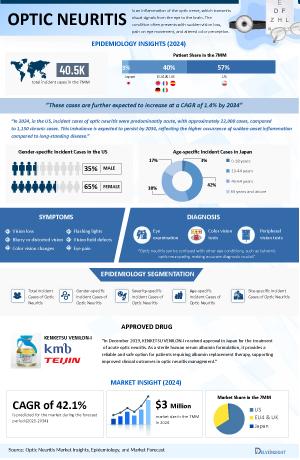
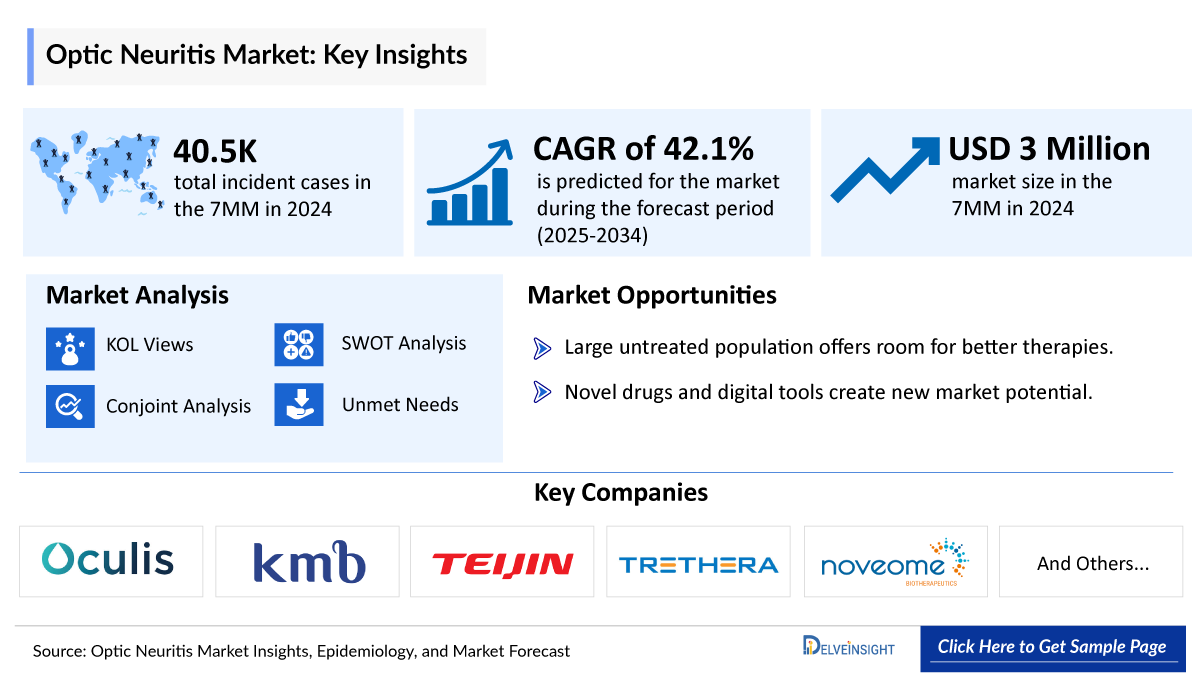
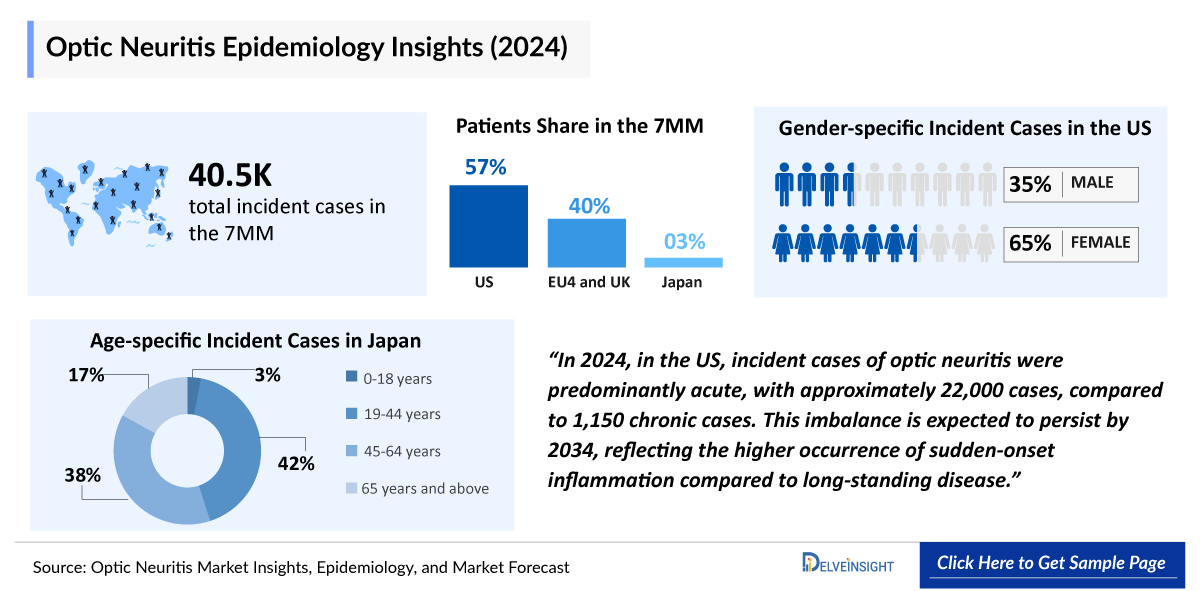
- DelveInsight research indicates that in 2024, there were approximately 40,500 total incident cases of optic neuritis across the 7MM, which are expected to increase by 2034 at Compound annual growth rate (CAGR) of 1.4%.
- The Optic Neuritis companies developing therapies include - Oculis, KM Biologics, TEJIN LIMITED, Trethera Corporation, Noveome Biotherapeutics, and others
Optic Neuritis Market and Epidemiology Analysis
- In the US, incident cases of optic neuritis were approximately 23,000 in 2024, with numbers expected to climb further by 2034, reflecting a growing disease burden.
- According to DelveInsight’s analysis, optic neuritis market in the 7MM was valued at approximately USD 3 million in 2024. Over the forecast period from 2025 to 2034, this market is projected to grow at a CAGR of 42.1%.
- In Germany, incident cases of optic neuritis in 2024 were notably higher among females, at nearly 3,000 compared to nearly 1,400 among males. This gender disparity highlights potential differences in underlying risk factors or disease susceptibility, with overall numbers anticipated to rise further by 2034.
- In Japan, incident cases of optic neuritis in 2024 were predominantly unilateral, accounting for approximately 1,180 cases, while bilateral cases were around 145. This distribution underscores the higher occurrence of single-eye involvement, with overall cases expected to increase by 2034.
- Several companies, including Oculis, Trethera Corporation, and Noveome Biotherapeutics, are advancing novel therapeutic candidates for optic neuritis, reflecting growing industry focus on developing targeted interventions to address the condition’s underlying pathology and improve patient outcomes.
- In optic neuritis, the scarcity of FDA-approved treatments targeting the condition forces patients to depend on off-label medications or supportive care, which often fall short in preventing recurrence or safeguarding long-term vision, highlighting the potential for emerging therapies in development.
Factors Affecting the Optic Neuritis Market Growth
Increasing Prevalence of Autoimmune and Neurological Disorders
One of the most important drivers is the rising incidence of autoimmune diseases such as multiple sclerosis (MS) and neuromyelitis optica spectrum disorder (NMOSD), which are closely linked to optic neuritis. These conditions often cause inflammation of the optic nerve, increasing the number of patients requiring diagnosis and treatment.
Growing Awareness and Early Diagnosis
Greater awareness among clinicians and patients regarding neuro-ophthalmic disorders has improved early detection rates. Early recognition of symptoms such as sudden vision loss, eye pain, or color vision changes encourages timely medical intervention and expands the patient pool seeking treatment.
Expanding Research and Clinical Trials
Pharmaceutical companies and research institutions are investing heavily in clinical trials to develop targeted treatments. Increased R&D activities, partnerships, and collaborations are accelerating drug development and creating new market opportunities.
Rising Healthcare Infrastructure and Access to Care
Improved healthcare infrastructure and the availability of specialized ophthalmology and neurology centers have increased patient access to diagnostic and therapeutic services. Hospitals equipped with advanced imaging and neurological expertise play a key role in the management of optic neuritis.
Adoption of Immunomodulatory and Anti-Inflammatory Treatments
Current treatment approaches often involve corticosteroids, intravenous immunoglobulin therapy, and plasma exchange to reduce inflammation and speed visual recovery. The growing use of these therapies continues to drive treatment demand globally.
Request a sample to unlock the CAGR for "Optic Neuritis Market Forecast"
DelveInsight’s “Optic Neuritis – Market Insights, Epidemiology, and Market Forecast – 2034” report delivers an in-depth understanding of optic neuritis, historical and forecasted epidemiology, as well as the optic neuritis market trends in the United States, EU4 (Germany, France, Italy, and Spain), the United Kingdom, and Japan.
The optic neuritis market report provides current treatment practices, emerging drugs, market share of individual therapies, and current and forecasted 7MM optic neuritis market size from 2020 to 2034. The report also covers optic neuritis treatment practices/algorithm optic neuritis and unmet medical needs to curate the best opportunities and assess the market’s potential.
Scope of the Optic Neuritis Market | |
|
Study Period |
2020–2034 |
|
Forecast Period |
2025–2034 |
|
Geographies Covered |
US, EU4 (Germany, France, Italy, and Spain), the UK, and Japan |
|
Optic Neuritis Epidemiology |
|
|
Optic Neuritis Market |
|
|
Market Analysis |
|
|
Optic Neuritis Market players |
|
|
Future opportunity |
The outlook for optic neuritis treatment is evolving, with research gradually moving toward more targeted, vision-preserving strategies informed by a clearer understanding of disease mechanisms. Currently, corticosteroids remain the only established therapy, primarily aimed at accelerating visual recovery. However, a limited but growing pipeline of emerging therapies, including neuroprotective agents, is being investigated to better preserve optic nerve integrity and lower recurrence risk. Innovations in drug delivery, such as intravitreal injections and sustained-release formulations, are under exploration to achieve localized treatment with fewer systemic effects. Parallel progress in biomarker-based diagnostics, high-resolution optical coherence tomography (OCT), and digital vision monitoring is enhancing early detection and enabling more individualized treatment planning. Together, these developments hold the potential to improve outcomes and provide new options for patients with recurrent or treatment-resistant optic neuritis, despite the current scarcity of approved therapies. |
Optic Neuritis Understanding and Treatment Algorithm
Optic Neuritis Overview
Optic neuritis is an inflammation of the optic nerve, which transmits visual signals from the eye to the brain. The condition often presents with sudden vision loss, pain on eye movement, and altered color perception. It can affect one or both eyes and is frequently linked to autoimmune or neurological disorders, particularly multiple sclerosis and neuromyelitis optica spectrum disorder (NMOSD).
The causes of optic neuritis are multifactorial. Autoimmune conditions, including multiple sclerosis, NMOSD, lupus, and sarcoidosis, are prominent contributors, with NMOSD cases often involving bilateral and more severe vision loss. Infections such as herpes zoster, Epstein–Barr virus (EBV), syphilis, and Lyme disease can trigger immune-mediated inflammation of the optic nerve. Additional risk factors include post-viral or post-vaccination immune responses, exposure to toxins like methanol or ethambutol, and genetic predispositions such as HLA-DRB1 and HLA-B27.
Clinically, optic neuritis typically manifests as acute, unilateral vision loss, although bilateral involvement can occur. Severity ranges from mild blurring to complete blindness. Eye pain, especially with movement, is common and often precedes visual changes. Patients may also experience reduced color vision (dyschromatopsia), decreased contrast sensitivity, and a Relative Afferent Pupillary Defect (RAPD) in unilateral or asymmetric cases. On fundoscopic examination, the optic disc may appear normal in retrobulbar neuritis or swollen (papillitis) when the anterior optic nerve is inflamed.
Further details related to country-based variations are provided in the report…
Optic Neuritis Diagnosis
Diagnosis of optic neuritis relies on a combination of clinical assessment and advanced imaging. Magnetic Resonance Imaging (MRI) of the brain and orbits with gadolinium contrast is the preferred modality, revealing optic nerve inflammation and potential demyelinating lesions suggestive of multiple sclerosis. Visual field testing evaluates the pattern of vision loss, while Optical Coherence Tomography (OCT) quantifies Retinal Nerve Fiber Layer (RNFL) thinning. In suspected infectious or autoimmune cases, further workup includes serologic tests, cerebrospinal fluid (CSF) analysis via lumbar puncture, and antibody screening, such as Aquaporin-4 (AQP4) for NMOSD.
Several conditions can mimic optic neuritis, making differential diagnosis essential. Anterior Ischemic Optic Neuropathy (AION) typically occurs in older adults with vascular risk factors and presents as painless vision loss; arteritic AION involves systemic symptoms like headache and jaw claudication. Leber’s Hereditary Optic Neuropathy (LHON) causes bilateral, subacute vision loss in young men and is maternally inherited. Toxic and nutritional optic neuropathies arise from substances like methanol or vitamin B12 deficiency. Compressive optic neuropathies, from tumors or thyroid disease, are confirmed via MRI. Accurate differentiation guides effective treatment
Further details related to country-based variations are provided in the report…
Optic Neuritis Treatment
Optic Neuritis Treatment of optic neuritis primarily involves high-dose intravenous (IV) corticosteroids, followed by an oral taper. IV methylprednisolone helps accelerate vision recovery but does not alter long-term outcomes. Steroids are also essential for cases linked to autoimmune diseases like NMOSD. If an infectious cause is confirmed, targeted antimicrobial or antiviral therapy is necessary. For patients with recurrent episodes or underlying conditions such as multiple sclerosis or NMOSD, long-term immunomodulatory agents like interferon ß, glatiramer acetate, or monoclonal antibodies such as rituximab may be used to reduce relapse risk.
Further details are provided in the report…
Optic Neuritis Epidemiology
As the Optic Neuritis market is derived using a patient-based model, the optic neuritis epidemiology chapter in the report provides historical as well as forecasted epidemiology segmented by total incident cases of optic neuritis, gender-specific incident cases of optic neuritis, severity-specific incident cases of optic neuritis, age-specific incident cases of optic neuritis, and site-specific incident cases of optic neuritis in the 7MM covering the United States, EU4 countries (Germany, France, Italy, and Spain), the United Kingdom, and Japan from 2020 to 2034.
Key Findings from Optic Neuritis Epidemiological Analyses and Forecast
- In 2024, an estimated 16,500 people in EU4 and the UK had incident cases of optic neuritis, highlighting not only a significant regional disease burden but also the growing need for earlier diagnosis, improved treatment options, and targeted strategies to prevent long-term vision impairment.
- In the US in 2024, optic neuritis incidence showed a marked sex disparity, with females accounting for nearly 15,000 new cases—almost double the approximately 8,000 cases reported in males—highlighting a pronounced gender-related incidence trend.
- In 2024, in the US, incident cases of optic neuritis were predominantly acute, with approximately 22,000 cases, compared to 1,150 chronic cases. This imbalance is expected to persist by 2034, reflecting the higher occurrence of sudden-onset inflammation compared to long-standing disease.
- In 2024, in Japan, incident cases of optic neuritis were highest among individuals aged 19–44 years, with approximately 550 cases, followed by 500 cases in those aged 45–64 years, 220 cases in those 65 years and above, and 40 cases in the 0–18 years group. This age distribution reflects a greater burden in early to mid-adulthood compared to pediatric and older populations.
- In the UK, an around 2,000 incident cases of optic neuritis in 2024 involved unilateral presentation, compared to nearly 500 bilateral cases, highlighting the predominance of single-eye involvement. Projections indicate a gradual rise in total case numbers by 2034.
Optic Neuritis Drug Chapters
Optic Neuritis Marketed Drugs
KENKETSU VENILON-I (Immune globulin sulfonated human): KM Biologics/ TEIJIN LIMITED
KENKETSU VENILON-I is a sterile IV infusion formulation of human serum albumin designed for the treatment of patients requiring albumin replacement therapy. Delivered via a ready-to-use single-dose vial, each vial contains purified human serum albumin stabilized with sodium caprylate and N-acetyltryptophanate as excipients to ensure product stability and safety.
In December 2019, KENKETSU VENILON-I received approval in Japan for the treatment of acute optic neuritis. As a sterile human serum albumin formulation, it provides a reliable and safe option for patients requiring albumin replacement therapy, supporting improved clinical outcomes in optic neuritis management.
Note: Further emerging therapies and their detailed assessment will be provided in the final report.
Optic Neuritis Marketed Drugs | |||
|
Drug |
MoA |
RoA |
Company |
|
KENKETSU VENILON-I (Immune globulin sulfonated human) |
IgG |
IV infusion |
KM Biologics/ TEIJIN LIMITED |
Optic Neuritis Emerging Drugs
Privosegtor (OCS-05): Oculis
Privosegtor (OCS-05) is a novel oral small-molecule therapeutic designed to target neuroprotective pathways. It is formulated to optimize bioavailability and central nervous system penetration, enabling effective modulation of inflammatory and neurodegenerative processes. Privosegtor’s molecular design supports sustained receptor engagement, aiming to provide prolonged therapeutic effects with a favorable safety profile. The formulation is engineered to enhance stability and absorption in the gastrointestinal tract, ensuring consistent systemic exposure. This innovative approach holds promise for treating conditions involving optic nerve inflammation and neurodegeneration. Privosegtor has received Orphan Drug Designation (ODD) by both the Food and Drug Administration (FDA) and the European Commission (EC) for acute optic neuritis.
In January 2025, Oculis reported top-line results of the privosegtor Phase II ACUITY trial in acute optic neuritis. It showed a favorable safety and tolerability profile and achieved statistically significant results compared to placebo on structural measures of retinal thickness and visual improvements.
In March 2022, Oculis expanded its ophthalmology pipeline by acquiring the neuroprotective drug candidate ACT-01 for optic neuritis through an in-licensing agreement with Accure Therapeutics.
Optic Neuritis Emerging Drugs | ||||
|
Drug |
MoA |
RoA |
Company |
Phase |
|
Privosegtor (OCS-05) |
Neuroprotective |
IV infusion |
Oculis |
II |
|
XX |
XX |
XX |
XX |
XX |
Optic Neuritis Market Recent Developments and Breakthroughs
- In January 2026, Oculis Holding AG announced that its neuroprotective candidate Privosegtor was granted breakthrough therapy designation by the U.S. Food and Drug Administration (FDA) for the treatment of optic neuritis (ON).
Optic Neuritis Drug Class Insights
The optic neuritis treatment landscape is evolving from primarily supportive care toward targeted, disease-modifying therapies (DMT) that focus on neuroprotection, inflammation reduction, and remyelination. Conventional approaches, such as corticosteroids and symptomatic management, provide limited long-term benefits, underscoring the urgent need for innovative treatments that can improve recovery and prevent disease progression.
New drug classes with neuroprotective mechanisms are emerging to transform optic neuritis treatment. Currently, no US FDA approved therapies exist, but promising candidates like privosegtor (OCS-05) are under development. As a potential first-in-class neuroprotective agent, privosegtor aims to reduce inflammation and promote neural repair, signaling a shift toward targeted treatments that address the underlying pathology rather than just symptom management.
Continued in report…
Optic Neuritis Market Outlook
The Optic Neuritis market for optic neuritis is undergoing significant transformation, driven by growing disease awareness, evolving clinical strategies, and emerging therapeutic developments. Optic neuritis is a leading cause of acute visual loss, often associated with demyelinating diseases such as multiple sclerosis, and can result in substantial vision impairment and reduced quality of life. Despite the use of corticosteroids and supportive care to manage acute episodes, current treatments offer limited long-term benefit and do not prevent disease progression or recurrence.
There are currently no approved US FDA therapies specifically for optic neuritis, but emerging agents like privosegtor (OCS-05), a potential first-in-class neuroprotective therapy, are poised to reshape the treatment landscape. privosegtor aims to reduce inflammation and promote neural repair, addressing the underlying pathology rather than solely managing symptoms.
Real-world data from the US, Europe, and Japan highlight the clinical and economic burden of optic neuritis, including high rates of vision-related disability and variable diagnostic and treatment practices. These findings underscore challenges such as underdiagnoses, inconsistent care pathways, and the lack of standardized, evidence-based treatment guidelines.
The pipeline for optic neuritis remains limited but promising, with privosegtor leading the way as a novel neuroprotective candidate. Continued research into inflammation modulation and neurodegeneration is expected to drive future therapeutic advances, offering hope for improved outcomes and reduced relapse rates.
With increasing recognition of optic neuritis’ impact and growing clinical research momentum, the therapeutic market is poised for development from 2025 to 2034. As innovative therapies gain approval and adoption, management is expected to shift toward personalized, mechanism-based approaches, ultimately improving visual prognosis and quality of life for patients affected by this debilitating condition.
Oculis, with its candidate privosegtor, exemplifies a strategic push toward therapies that combine neuroprotection with inflammation control to target critical mechanisms driving optic neuritis progression. Similarly, companies such as Trethera Corporation, Noveome Biotherapeutics, and others are pursuing preclinical programs aimed at this condition.
Companies like KM Biologics (KENKETSU VENILON-I) and others are actively advancing therapies for optic neuritis, with development programs spanning from early-stage (Phase I) to late-stage (Phase III). These programs reflect a strategic industry focus on neuroprotection and inflammation modulation—key drivers of disease progression in optic neuritis, aiming to improve visual outcomes and reduce relapse rates in affected patients.
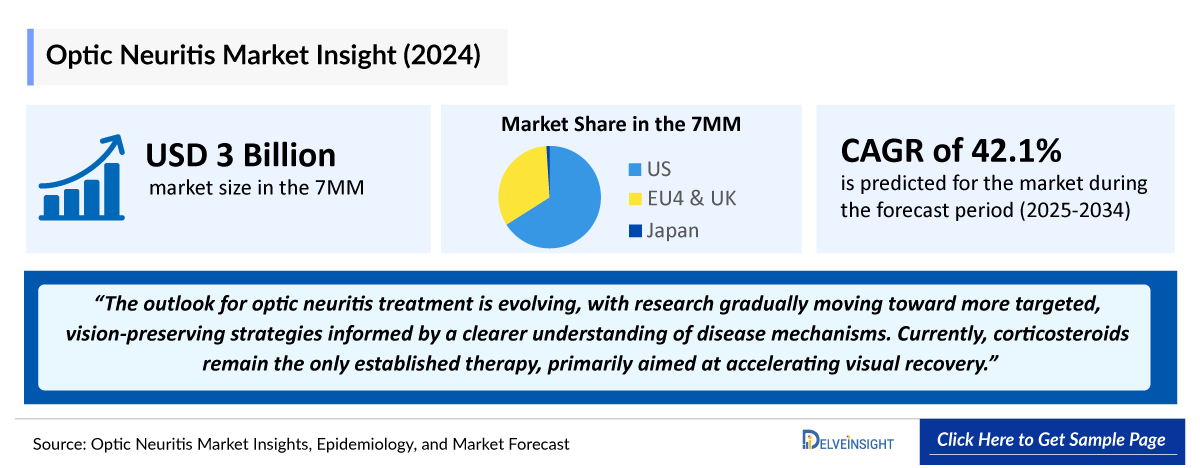
- The total Optic Neuritis market size of optic neuritis in the 7MM was approximately USD 3 million in 2024 and is projected to increase during the forecast period (2025–2034).
- The Optic Neuritis market size for optic neuritis in the US was approximately USD 2 million in 2024 and is anticipated to increase due to the launch of emerging therapies.
- The total market size of EU4 and the UK was calculated to be approximately USD 1 million in 2024, which was nearly 33% of the total market revenue for the 7MM and is expected to increase by 2034.
- In 2024, the total market size of optic neuritis was less than 1 million in Japan, which is anticipated to increase during the forecast period (2025-2034).
Optic Neuritis Competitive Landscape
The Optic Neuritis treatment market features a moderately consolidated yet competitive landscape, where large pharmaceutical companies and emerging biotechnology firms compete through innovative therapies, strong neurology portfolios, and strategic collaborations. The competition is largely driven by treatments that target underlying autoimmune and demyelinating disorders such as multiple sclerosis (MS) and neuromyelitis optica spectrum disorder (NMOSD).
Key Optic Neuritis Companies
The Optic Neuritis companies developing therapies include -
- Oculis,
- KM Biologics,
- TEJIN LIMITED,
- Trethera Corporation,
- Noveome Biotherapeutics, and others
Optic Neuritis Drugs Uptake
This section focuses on the uptake rate of potential drugs expected to be launched in the market during study period 2020–2034.
Optic Neuritis Clinical Trials Activities
The Optic Neuritis market report provides insights into Optic Neuritis Clinical Trials analysis in Phase III, Phase II, and Phase I. It also analyzes key players involved in developing targeted therapeutics.
Optic Neuritis Pipeline Development Activities
The Optic Neuritis market report covers information on collaborations, acquisitions and mergers, licensing, and patent details for emerging therapies for optic neuritis.
Latest KOL Views on Optic Neuritis
To keep up with current market trends, we take KOLs and SMEs’ opinions working in the domain through primary research to fill the data gaps and validate our secondary research. Industry Experts contacted for insights on optic neuritis evolving treatment landscape, patient reliance on conventional therapies, patient therapy switching acceptability, and drug uptake, along with challenges related to accessibility, including Medical/scientific writers, Medical Professionals, Professors, Directors, and others.
DelveInsight’s analysts connected with 50+ KOLs to gather insights; however, interviews were conducted with 15+ KOLs in the 7MM. Centers like the Baylor College of Medicine and Methodist Hospital, US; University of Minnesota, US; University of Freiburg, Germany; Hôpital St Louis, France; University of Siena, Italy; University of Valencia, Spain; University Forvie Site, UK; Jichi Medical University, Japan; and Chiba University, Japan; among others, were contacted. Their opinion helps understand and validate current and emerging therapy treatment patterns or optic neuritis market trends. This will support the clients in potential upcoming novel treatments by identifying the overall scenario of the market and the unmet needs.
Optic Neuritis Market Access and Reimbursement
Optic neuritis is a complex and often disabling condition characterized by inflammation and demyelination of the optic nerve, leading to sudden vision loss and frequently serving as an early indicator of chronic neurodegenerative diseases such as multiple sclerosis. Despite advances in understanding the disease mechanisms, effective treatments that modify disease progression remain limited, and emerging neuroprotective therapies, while promising, often come with substantial costs. These financial barriers can significantly restrict patient access to potentially sight-saving treatments, resulting in delayed intervention and poorer long-term outcomes. Implementing a comprehensive reimbursement program is therefore critical—not only to reduce the direct economic burden on patients but also to encourage early diagnosis and sustained adherence to therapy. Such programs can facilitate equitable access across diverse patient populations, ensuring that innovations in treatment translate into real-world benefits. Furthermore, improving access through reimbursement can reduce the broader societal and healthcare system costs associated with vision impairment, disability, and disease progression. In essence, reimbursement initiatives play a pivotal role in bridging the gap between cutting-edge clinical advances and meaningful improvements in patient quality of life, ultimately supporting better health outcomes and more sustainable healthcare delivery for those affected by optic neuritis.
Further details will be provided in the report.
The Optic Neuritis market report provides detailed insights on the country-wise accessibility and reimbursement scenarios, cost-effectiveness scenarios, optic neuritis making accessibility easier and out-of-pocket costs more affordable, insights on patients insured under federal or state government prescription drug optic neuritis, etc.
Scope of the Optic Neuritis Market Report
- The Optic Neuritis market report covers a segment of key events, an executive summary, and a descriptive overview of optic neuritis, explaining its causes, signs and symptoms, pathogenesis, and currently available therapies.
- Comprehensive insight into the epidemiology segments and forecasts, the future growth potential of incidence rate, disease progression, and treatment guidelines have been provided.
- Additionally, an all-inclusive account of the current and emerging therapies and the elaborative profiles of late-stage and prominent therapies will affect the current treatment landscape.
- A detailed review of the optic neuritis market, historical and forecasted market size, market share by therapies, detailed assumptions, and rationale behind our approach is included in the report, covering the 7MM drug outreach.
- The Optic Neuritis market report provides an edge while developing business strategies by understanding trends through SWOT analysis and expert insights/KOL views, patient journey, and treatment preferences that help shape and drive the 7MM optic neuritis market.
Optic Neuritis Market Report Insights
- Optic Neuritis Patient Population
- Optic Neuritis Therapeutic Approaches
- Optic Neuritis Pipeline Analysis
- Optic Neuritis Market Size and Trends
- Existing and Future Optic Neuritis Market Opportunity
Optic Neuritis Market Report Key Strengths
- 10 years Forecast
- The 7MM Coverage
- Optic Neuritis Epidemiology Segmentation
- Optic Neuritis Key Cross Competition
- Optic Neuritis Attribute analysis
- Drugs Uptake and Key Optic Neuritis Market Forecast Assumptions
Optic Neuritis Market Report Assessment
- Current Optic Neuritis Treatment Practices
- Optic Neuritis Unmet Needs
- Optic Neuritis Pipeline Product Profiles
- Optic Neuritis Market Attractiveness
- Optic Neuritis Qualitative Analysis (SWOT and Attribute Analysis)
Key Questions Answered in the Optic Neuritis Market
Optic Neuritis Market Insights
- What was the total market size of optic neuritis, the market size of optic neuritis by therapies, and market share (%) distribution in 2024, and what would it look like by 2034? What are the contributing factors for this growth?
- How will privosegtor affect the treatment paradigm of optic neuritis?
- Which drug is going to be the largest contributor by 2034?
- What are the pricing variations among different geographies for approved and marketed therapies?
- How would future opportunities affect the market dynamics and subsequent analysis of the associated trends?
Optic Neuritis Epidemiology Insights
- What are the disease risks, burdens, and unmet needs of optic neuritis? What will be the growth opportunities across the 7MM with respect to the patient population pertaining to optic neuritis?
- What is the historical and forecasted optic neuritis patient pool in the United States, EU4 (Germany, France, Italy, and Spain), the United Kingdom, and Japan?
- Out of the countries mentioned above, which country would have the highest incident cases of optic neuritis population during the forecast period (2025–2034)?
- What Optic Neuritis factors are contributing to the growth of optic neuritis cases?
Current Treatment Scenario, Marketed Drugs, and Emerging Therapies
- What are the current options for the treatment of optic neuritis? What are the current clinical and treatment guidelines for treating optic neuritis?
- How many Optic Neuritis companies are developing therapies for the treatment of optic neuritis?
- How many Optic Neuritis emerging therapies are in the mid-stage and late stage of development for treating optic neuritis?
- What are the Optic Neuritis recent novel therapies, targets, optic neuritis of action, and technologies developed to overcome the limitations of existing therapies?
- Patient acceptability in optic neuritis of preferred treatment options as per real-world scenarios?
- What is the 7MM historical and forecasted Optic Neuritis market of optic neuritis?
Reasons to Buy Optic Neuritis Market Forecast Report
- The Optic Neuritis report will help develop business strategies by understanding the latest trends and changing treatment dynamics driving the optic neuritis market.
- Insights on patient burden/incidence, evolution in diagnosis, and factors contributing to the change in the epidemiology of the disease during the forecast years.
- Understand the existing market opportunities in varying geographies and the growth potential over the coming years.
- The distribution of historical and current patient share is based on real-world prescription data in the United States, EU4 (Germany, France, Italy, and Spain), the United Kingdom, and Japan.
- Identifying upcoming solid players in the market will help devise strategies to help get ahead of competitors.
- Detailed analysis, ranking of class-wise potential current, and emerging therapies under the attribute analysis section to provide visibility around leading classes.
- Highlights of access and reimbursement policies for optic neuritis, barriers to accessibility of approved therapy, and patient assistance optic neuritis.
- To understand key opinion leaders’ perspectives around the accessibility, acceptability, and compliance-related challenges of existing treatment to overcome barriers in the future.
- Detailed insights on the Optic Neuritis unmet needs of the existing market so that the upcoming players can strengthen their development and launch strategy.