Osteosarcoma Market Summary
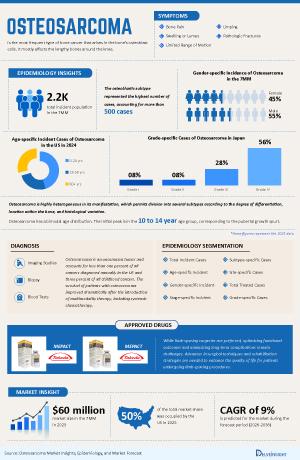
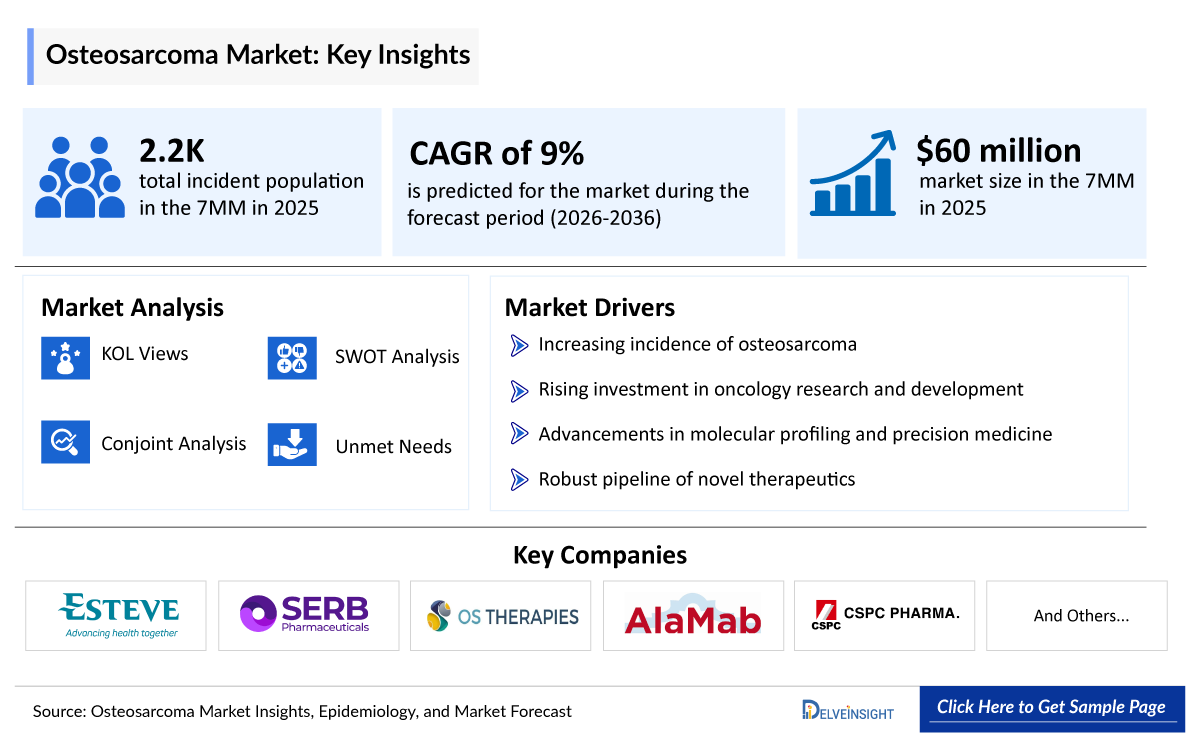
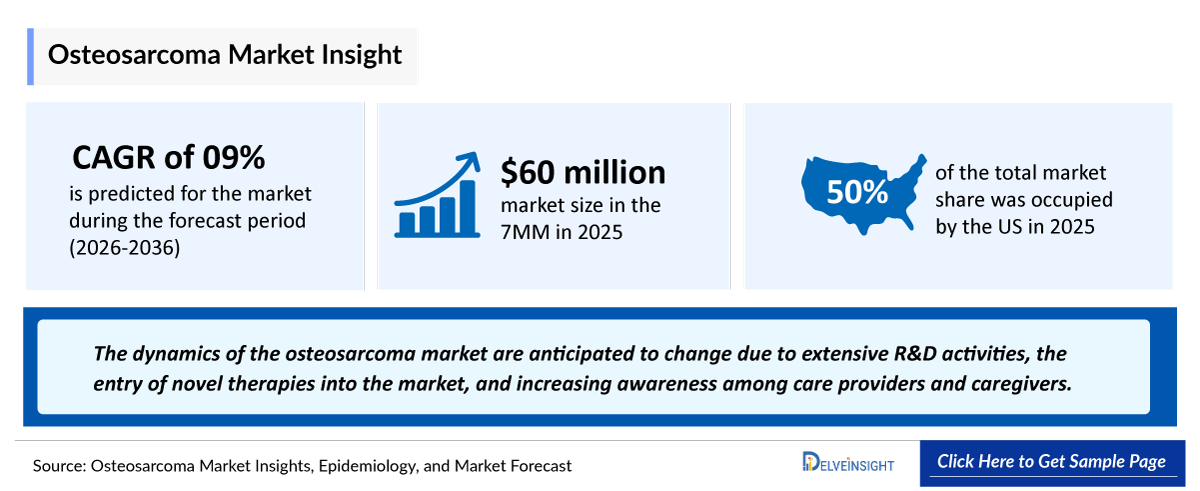
- According to DelveInsight’s analysis, the Osteosarcoma Therapeutics Market Size was nearly USD 60 million in the leading markets (the United States, the EU4 (Germany, France, Italy, and Spain), the United Kingdom, and Japan) in 2025.
- Across the 7MM, the United States represents the largest Osteosarcoma Treatment Market with ~USD 30 million, accounting for the majority of osteosarcoma cases in 2025 and expected to maintain its leading position through 2036.
Osteosarcoma Market and Epidemiology Insights
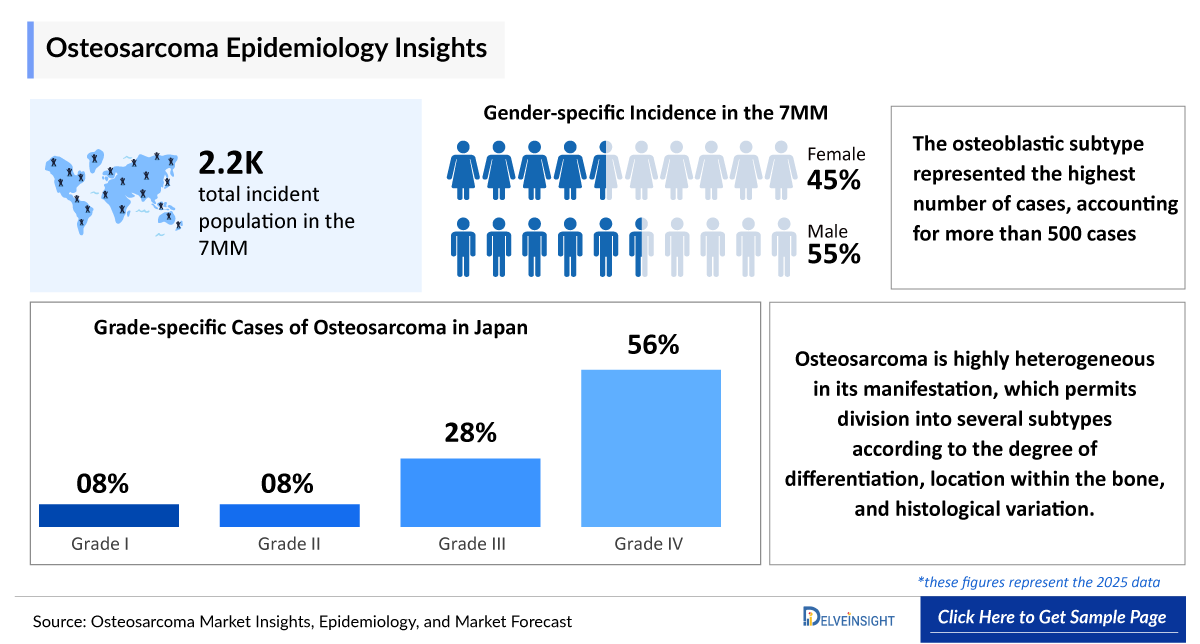
- In 2025, the 7MM accounted for more than 2,200 osteosarcoma incident cases, which are expected to rise by the year 2036.
- Diagnosis relies primarily on radiographic imaging, MRI for local tumor assessment, CT for metastatic evaluation, and histopathological confirmation through biopsy. Prognostic stratification is increasingly guided by factors such as tumor size, anatomical location, metastatic status at diagnosis, histologic response to neoadjuvant chemotherapy, and emerging molecular biomarkers.
- The current Osteosarcoma Treatment landscape continues to be anchored by established multi-agent chemotherapy regimens, particularly methotrexate, doxorubicin, and cisplatin (MAP), which continue to serve as the cornerstone of care across most patient populations. Adjunctive therapies such as mifamurtide (MEPACT) and levoleucovorin (KHAPZORY) complement these chemotherapy-based approaches, with MEPACT utilized in combination with postoperative chemotherapy in eligible patients and KHAPZORY providing folate rescue following high-dose methotrexate administration.
- The emerging osteosarcoma pipeline is increasingly focused on targeted and immunotherapy-based approaches, with candidates such as OST-HER2 leveraging HER2-directed cellular immunotherapy to enhance antitumor immune responses, naxitamab-gqgk (DANYELZA) targeting GD2-expressing tumor cells through antibody-mediated cytotoxicity, Vactosertib inhibiting TGF-ß signaling implicated in tumor progression and metastasis, and Risvutatug Rezetecan utilizing antibody-drug conjugate technology to deliver targeted cytotoxic activity.
- Osteosarcoma Drug Development is largely concentrated in early-phase (Phase II) clinical trials. This limits the availability of large, randomized datasets needed to demonstrate statistically robust improvements in overall survival, event-free survival, or durable response rates. Without such confirmatory evidence, regulatory approvals remain challenging and inconsistent across regions.
Osteosarcoma Market Size and Forecast
| 2025 Osteosarcoma Market Size in the 7MM | ~USD 60 million |
| 2036 Projected Osteosarcoma Market Size in the 7MM | ~USD 150 million |
| Osteosarcoma Growth Rate (2026–2036) | 9% CAGR |
Key Factors Driving the Growth of the Osteosarcoma Market
-
High Unmet Medical Need
Osteosarcoma remains a challenging malignancy, particularly in patients with metastatic, recurrent, or refractory disease. Limited improvements in outcomes over recent decades are creating a strong need for more effective and innovative therapies.
-
Rising Focus on Metastatic and Recurrent Osteosarcoma
The frequent development of pulmonary metastases and poor outcomes associated with recurrent disease are encouraging research into new therapeutic strategies, particularly for patients who do not respond adequately to standard treatment.
-
Growing Clinical Trial Activity
Increasing clinical trial activity is supporting the development of novel treatments for osteosarcoma. Current studies are evaluating therapies such as cabozantinib, trastuzumab deruxtecan, targeted agents, cellular therapies, and immunotherapy-based approaches.
-
Advancements in Targeted Therapies
The identification of molecular pathways involved in osteosarcoma progression is encouraging the development of targeted therapies. Multikinase inhibitors and other pathway-specific agents are being investigated to address tumor growth and angiogenesis.
-
Increasing Interest in Immunotherapy
Immunotherapy is emerging as an important area of osteosarcoma research. Investigational approaches include immune checkpoint inhibitors, CAR T-cell therapies, NK-cell therapies, and other immune-modulating strategies designed to enhance antitumor activity.
-
Development of Novel Combination Therapies
Researchers are increasingly evaluating combinations of chemotherapy with targeted therapies, immunotherapies, and other novel agents. Combination strategies may help overcome treatment resistance and improve outcomes in high-risk and metastatic patients.
-
Advances in Precision Medicine
Genomic profiling and biomarker research are helping identify molecular alterations that could potentially guide treatment selection. These developments are supporting a gradual shift toward more personalized therapeutic approaches in osteosarcoma.
DelveInsight's ‘Osteosarcoma Market Insights, Epidemiology and Market Forecast – 2036’ report delivers an in-depth understanding of osteosarcoma, historical and forecasted epidemiology, as well as the osteosarcoma market trends in the United States, EU4 (Germany, Spain, Italy, and France), the United Kingdom, and Japan.
The Osteosarcoma Treatment Market Report delivers a comprehensive analysis of the current treatment landscape, including standards of care, clinical practices, and evolving therapeutic algorithms. It evaluates Osteosarcoma patient burden trends, revenue & market share dynamics, peak patient share & therapy uptake analysis, and provides an in-depth market size assessment and growth rate projections (Historical & Forecast 2022–2036) across the 7MM regions. The Osteosarcoma Market Report highlights key unmet medical needs in osteosarcoma and maps the competitive and clinical landscape to uncover high-value opportunities, providing a clear outlook on future market growth potential.
Scope of the Osteosarcoma Market Report | |
|
Study Period |
2022–2036 |
|
Historical Year |
2022–2025 |
|
Forecast Period |
2026–2036 |
|
Base Year |
2025 |
|
Geographies Covered |
|
|
Osteosarcoma Market CAGR (Forecast period) | |
|
Osteosarcoma Epidemiology Segmentation Analysis |
Patient Burden Assessment
|
|
Osteosarcoma Companies |
|
|
Osteosarcoma Emerging Therapies |
|
|
Osteosarcoma Market |
Segmented by
|
|
Analysis |
|
Osteosarcoma Understanding
Osteosarcoma Overview
Osteosarcoma is the most common primary malignant bone tumor affecting children, adolescents, and young adults. It is a highly aggressive malignancy characterized by rapid progression, strong invasiveness, and a high mortality rate, posing a significant threat to human health. Osteosarcoma originates from mesenchymal tissue composed of spindle-shaped stromal cells capable of producing osteoid or bone-like tissue. The tumor most commonly develops in the metaphysis of long tubular bones, particularly the distal femur, proximal tibia, and proximal humerus, whereas involvement of the spine, pelvis, and sacrum is relatively uncommon.
Osteosarcoma Diagnosis
The diagnosis of osteosarcoma requires a multidisciplinary approach incorporating clinical evaluation, imaging, laboratory assessment, and histopathological confirmation. Among serum biomarkers, alkaline phosphatase (ALP) is commonly associated with increased osteoblastic activity and tumor burden, providing prognostic information, while lactate dehydrogenase (LDH) may reflect disease aggressiveness and metabolic activity. Diagnostic assessment typically begins with plain radiographs of the affected bone and adjacent joint to identify characteristic abnormalities.
Magnetic resonance imaging is subsequently used to evaluate the local extent of the tumor, including intramedullary and soft-tissue involvement. Computed tomography (CT) of the chest is the standard modality for detecting pulmonary metastases. Bone scintigraphy or PET/CT may be employed to identify skeletal metastases. Histopathological examination of a biopsy specimen is required for definitive diagnosis, while metastatic disease at presentation remains a major determinant of prognosis and survival.
Current Osteosarcoma Treatment Landscape
- Surgery: It is the primary treatment for osteosarcoma and aims to completely remove the tumor. Procedures include limb-salvage surgery, which preserves limb function and appearance, and amputation, which may be required in selected cases. Advances in reconstruction techniques and prosthetic replacement have significantly improved postoperative functional outcomes.
- Chemotherapy: Chemotherapy is a cornerstone of osteosarcoma treatment, particularly in the neoadjuvant and adjuvant settings. It helps eradicate micrometastatic disease, increases limb-salvage rates, and improves survival. The standard MAP regimen consists of high-dose methotrexate, doxorubicin, and cisplatin.
- Radiotherapy: Radiotherapy is generally reserved for patients with unresectable tumors, positive surgical margins, or poor responses to chemotherapy. Although osteosarcoma is relatively radioresistant, radiotherapy can provide local tumor control and symptom relief, with ongoing research focusing on radiosensitizers to enhance efficacy.
- Immunotherapy: It aims to stimulate the immune system to recognize and destroy tumor cells. It has emerged as a promising option for recurrent, metastatic, and advanced osteosarcoma, with approaches including cytokine therapy, adoptive cell therapy, and immune-guided treatments such as interleukin-2 (IL-2).
Further details related to country-based variations are provided in the report.
Osteosarcoma Unmet Needs
The section “unmet needs of osteosarcoma” outlines the critical gaps between the current state of patient care, diagnosis, and the ideal & effective management of the disease. It highlights the obstacles experienced by patients, clinicians, and researchers and identifies potential solutions for future progress.
- Lack of late-stage confirmatory evidence
- Absence of disease-specific approved targeted therapies
- Molecular and diagnostic biomarkers
- Poorly defined translational drug targets due to extreme heterogeneity
Osteosarcoma Epidemiology
Key Findings from Osteosarcoma Epidemiological Analysis and Forecast
- According to DelveInsight’s analysis, the US had nearly 1,120 incident cases of osteosarcoma in 2025, and it is projected to rise in the coming years.
- In the US, the 0–24 years age group accounted for the largest number of osteosarcoma cases, with nearly 600 cases in 2025, followed by the 25–59 years age group with more than 300 cases and the 60+ years age group with nearly 200 cases.
- According to DelveInsight’s estimates, there were approximately 500 incident cases of osteosarcoma in males and around 400 cases in females in EU4 and the UK in 2025. Male dominance in is largely driven by the higher incidence observed during adolescence, which is associated with greater pubertal growth velocity, increased bone growth, and hormonal influences that may contribute to osteosarcoma development.
- In 2025, the osteoblastic subtype represented the highest number of cases, accounting for more than 500 cases, followed by the chondroblastic subtype with nearly 160 cases. The “others” category accounted for approximately 70 cases, while fibroblastic and parosteal subtypes each contributed more than 50 cases, and the telangiectatic subtype accounted for more than 40 cases in EU4 and the UK.
- In 2025, Grade IV osteosarcoma accounted for the largest share of grade-specific cases, with nearly 100 cases, followed by Grade III with nearly 50 cases. Grade II and Grade I accounted for approximately 15 and 15 cases, respectively in Japan.
Osteosarcoma Epidemiology Segmentation in the 7MM
- Total Osteosarcoma Incident Cases
- Osteosarcoma Age-specific Cases
- Osteosarcoma Gender-specific Cases
- Osteosarcoma Stage-specific Cases
- Osteosarcoma Subtype-specific Cases
- Osteosarcoma Site-specific Cases
- Osteosarcoma Grade-specific Cases
- Osteosarcoma Treated Cases
Osteosarcoma Market Recent Breakthroughs and Developments
- In June 2026, OS Therapies achieved regulatory alignment with the US FDA and the UK Medicines and Healthcare products Regulatory Agency (MHRA) on the Phase III trial design of OST-HER2 for patients with fully resected pulmonary metastatic osteosarcoma.
- In May 2026, OS Therapies reported that it anticipates receiving a BLA from the US FDA for OST-HER2 in osteosarcoma in 2026 and, if approved, it would become eligible to receive a Priority Review Voucher that it could then sell.
Osteosarcoma Drug Analysis & Competitive Landscape
The osteosarcoma drug chapter provides a detailed, market-focused review of the emerging Osteosarcoma pipeline across Phase I-II clinical trials. It covers Osteosarcoma mechanism of action, clinical trial data, regulatory approvals, patents, collaborations, strategic partnerships upcoming key catalyst for each therapy, along with their advantages, limitations, and recent developments. This section offers critical insights into the osteosarcoma treatment landscape, supporting market assessment, competitive analysis, and growth forecasting for the osteosarcoma therapeutics market.
Osteosarcoma Approved Therapies
-
Mifamurtide (MEPACT): Esteve Pharmaceuticals
Mifamurtide (MEPACT) is indicated in children, adolescents and young adults for the treatment of high-grade resectable non-metastatic osteosarcoma after macroscopically complete surgical resection. It is used in combination with post-operative multi-agent chemotherapy.
Safety and efficacy have been assessed in studies of patients 2 to 30 years of age at initial diagnosis. Mifamurtide (muramyl tripeptide phosphatidyl ethanolamine, MTP-PE) is a fully synthetic derivative of muramyl dipeptide (MDP), the smallest naturally-occurring immune stimulatory component of cell walls from Mycobacterium sp. It has similar immunostimulatory effects as natural MDP.
- In March 2009, the European Commission granted a marketing authorization valid throughout the European Union for MEPACT to IDM Pharm.
Osteosarcoma Marketed/Approved Therapies | ||||||
|
Drug Name |
Company |
Indication |
Molecule Type |
RoA |
MoA |
Marketed Region |
|
Mifamurtide (MEPACT) |
Esteve Pharmaceuticals |
Osteosarcoma |
Immunostimulants |
IV infusion |
Macrophage stimulants | EU: 2009 |
|
Levoleucovorin (KHAPZORY) |
Acrotech Biopharma |
Rescue after high-dose methotrexate therapy in patients with osteosarcoma |
Small molecules |
IV infusion |
Tetrahydrofolate dehydrogenase inhibitors |
US: 2018 |
Osteosarcoma Pipeline Analysis
-
OST-HER2: OS Therapies
OST-HER2 is an investigational HER2-directed immunotherapy being developed for HER2-expressing malignancies, including osteosarcoma. The therapy is designed to stimulate an anti-tumor immune response by enhancing the activation of HER2-specific T cells that recognize and eliminate cancer cells. Following intravenous administration, the OST-HER2 vector is rapidly taken up by antigen-presenting cells (APCs), which initiate a targeted immune response against HER2-expressing tumors.
Findings from translational studies, including research conducted in canine osteosarcoma, have demonstrated potential for reducing disease recurrence and controlling metastatic progression. OST-HER2 is currently being evaluated as a second-line treatment in Phase IIb clinical development. The company intends to pursue a Biologics License Application (BLA) under the US FDA Accelerated Approval pathway during the second half of 2026.
Competitive Landscape of Osteosarcoma Pipeline Drugs | ||||||
|
Drug Name |
Company |
Highest Phase |
Indication |
RoA |
MoA |
Anticipated Launch in the US |
|
OST-HER2 |
OS Therapies |
II |
Osteosarcoma |
IV infusion |
HER2-targeted cancer vaccine |
2026 |
|
Naxitamab-gqgk (DANYELZA) |
SERB Pharmaceutical |
II |
Osteosarcoma |
IV infusion |
Antibody-dependent cell cytotoxicity |
Information is available in the full report |
|
Vactosertib |
MedPacto |
I/II |
Osteosarcoma |
Oral |
TGF-β1 kinase inhibitor |
Information is available in the full report |
|
Note: Launch insights are provisional and may change with future report updates or the occurrence of major key catalysts. | ||||||
Osteosarcoma Market Outlook
Treatment of Osteosarcoma is centered on eradication of the primary tumor, prevention of metastatic spread, and preservation of limb function whenever feasible. Management typically requires coordination among orthopedic oncology, medical oncology, radiology, pathology, and rehabilitation specialists.
Key findings from Osteosarcoma Market Forecast Report
- According to DelveInsight’s analysis in 2025, the Osteosarcoma Treatment Market Size across the 7MM was approximately USD 60 million.
- The Osteosarcoma Market Size of the United States accounted for a comprehensive market valuation of approximately USD 30 million in 2025.
- The Osteosarcoma Treatment Market Size was nearly USD 25 million in EU4 and the UK. The market is expected to expand with the anticipated launch of the emerging therapies.
Osteosarcoma Companies
- Esteve Pharmaceuticals
- Acrotech Biopharma
- OS Therapies
- SERB Pharmaceutical
- and others
Osteosarcoma Drug Class/Insights into Leading Emerging Therapies (2022–2036 Forecast)
- Small Molecule: Small-molecule therapies are emerging as a promising approach in the treatment of osteosarcoma. Unlike conventional treatment strategies that primarily rely on surgery and multi-agent chemotherapy, small molecules are designed to target key molecular pathways involved in tumor growth, metastasis, and resistance to therapy. These targeted agents offer the potential for greater treatment specificity, improved tolerability, and enhanced efficacy when used alone or in combination with existing therapies.
An example is Vactosertib, an oral small-molecule inhibitor of transforming growth factor-beta (TGF-ß) receptor I (ALK5). By blocking TGF-ß signaling, Vactosertib aims to suppress tumor progression, inhibit metastasis, and modulate the immunosuppressive tumor microenvironment, all of which are important factors in osteosarcoma pathogenesis. Its oral administration and targeted mechanism of action make it a promising investigational therapy, highlighting the growing interest in precision medicine approaches for patients with advanced or refractory osteosarcoma.
Further details will be provided in the report.
Osteosarcoma Drug Uptake
This section focuses on the uptake rate of potential Osteosarcoma drugs expected to be launched in the market during the forecast period (2026–2036). The analysis covers the osteosarcoma drug’s uptake, performance at peak, factors affecting performance during prime years of growth, patient uptake by therapy, and anticipated sales generated by each drug.
Developed by OS Therapies, OST-HER2 is a HER2-targeted immunotherapy being developed for recurrent, metastatic, and high-risk osteosarcoma for second line and above. The therapy is designed to stimulate tumor-specific immune responses against HER2-expressing osteosarcoma cells and has demonstrated encouraging clinical activity in patients with recurrent pulmonary metastatic disease. Regulatory incentives, including Rare Pediatric Disease Designation (RPDD), Orphan Drug Designation (ODD) and Fast Track Designation (FTD), support its development and potential accelerated regulatory pathway.
Detailed insights of emerging therapies' drug uptake is included in the report.
Osteosarcoma Market Access and Reimbursement of Therapies
The Osteosarcoma Therapeutics Market Report further provides detailed insights on the country-wise accessibility and reimbursement scenarios, cost-effectiveness scenario of therapies, programs making accessibility easier and out-of-pocket costs more affordable, insights on patients insured under federal or state government prescription drug programs, etc.
EU4 and the UK
Italy Reimbursement of Therapies Approved for Osteosarcoma | |
|
Drug/Therapy |
AIFA Assessment (Class) |
|
Levoleucovorin (KHAPZORY) |
Class A |
Reimbursement is a crucial factor that affects the drug’s access to the market. Often, the decision to reimburse comes down to the price of the drug relative to the benefit it produces in treated patients. To reduce the healthcare burden of these high-cost therapies, many payment models are being considered by payers and other industry insiders.
NOTE: Further Details are provided in the final report.
Osteosarcoma therapies Price Scenario & Trends
Pricing and analogue assessment of osteosarcoma therapies highlights evolving price dynamics structures. This section summarizes the cost of approved treatments, closest and most appropriate analogue selection for emerging therapies, and understanding of how pricing influences market access, adherence, and long-term uptake.
Pricing of Osteosarcoma Approved Drugs
Levoleucovorin (KHAPZORY) treatment course cost in KHAPZORY was approximately USD 5,000 for first line and USD 2,500 per patient for second line and above.
Osteosarcoma Industry Experts and Physician Views
To keep up with Osteosarcoma Therapeutics Market Trends, we take Key Opinion Leaders (KOLs) and Subject Matter Experts (SMEs) opinions working in the domain through primary research to fill the data gaps and validate our secondary research. Industry Experts were contacted for insights on the osteosarcoma emerging therapies, evolving Osteosarcoma Treatment landscape, patient adherence to conventional therapies, therapy switching trends, drug adoption and uptake, accessibility challenges, and epidemiology and real-world prescription patterns in osteosarcoma, including MD, PhD, Instructor, Postdoctoral Researcher, Professor, Researcher, and others.
DelveInsight’s analysts connected with 10+ KOLs to gather insights at country level. Centers such as the University of California, Harvard Medical School, Vanderbilt-Ingram Cancer Center, KiTZ – Hopp Children's Cancer Center etc. were contacted. Their opinion helps understand and validate current and emerging osteosarcoma therapies, highlight unmet medical needs, provide epidemiological context, and support strategic decisions for market access, therapy adoption, and pipeline prioritization in osteosarcoma.
|
Region |
Key Opinion Leaders (KOLs) and Subject Matter Experts (SMEs) |
|
United States |
“Osteosarcoma typically appears as a mass of abnormal bone in an arm or leg, usually near the knee or shoulder. Less often, the tumor develops in the pelvic bones, jaw, skull, vertebral column, and chest bones. It rarely develops in the fingers or toes. At the time of diagnosis, osteosarcoma may have already spread (metastasized) to other parts of the body, most commonly the lungs.” |
|
Germany |
“Research efforts are focused on advancing osteosarcoma treatment through modern radiation therapy approaches, including proton and heavy-ion therapies, as well as combinations of radiation with agents targeting epigenetic mechanisms. A key objective is the development of novel treatment strategies in preclinical models designed to closely reflect patient disease. This translational approach facilitates the rapid progression of promising therapies into clinical trials. Supporting this work are established primary tumor mouse models and collaborations with leading cancer treatment and research centers.” |
Osteosarcoma Report Qualitative Analysis: SWOT and Attribute Analysis
We perform qualitative and Osteosarcoma Therapeutics Market Intelligence analysis using various approaches, such as SWOT analysis and attribute analysis.
In the SWOT analysis of osteosarcoma, strengths, weaknesses, opportunities, and threats in terms of disease diagnosis, patient awareness, patient burden, competitive landscape, cost-effectiveness, and geographical accessibility of therapies are provided. Attribute analysis analyzes emerging therapies based on relevant attributes such as safety, efficacy, frequency of administration, route of administration, and order of entry. Scoring is given based on these parameters to analyze the effectiveness of therapy.
The team of analysts analyzes promising Osteosarcoma emerging therapies based on relevant attributes such as safety, efficacy, frequency of administration, route of administration, and order of entry. In efficacy, the trial’s primary and secondary outcome measures are evaluated, whereas the therapies’ safety is evaluated, wherein the acceptability, tolerability, and adverse events are majorly observed.
In addition, the scoring is also based on the route of administration, order of entry, probability of success, and the addressable patient pool for each therapy. According to these parameters, the final weightage score and the ranking of the emerging therapies are decided.
Scope of the Osteosarcoma Market Report
- The Osteosarcoma Therapeutics Market Report covers a segment of key events, an executive summary, a descriptive overview explaining their causes, signs and symptoms, pathogenesis, and currently available treatments.
- Comprehensive insight has been provided into the epidemiology segments and forecasts, the future growth potential of the diagnosis rate, and disease progression along Osteosarcoma Treatment guidelines.
- Additionally, an all-inclusive account of both the current and emerging treatments, along with the elaborative profiles of mid-stage and prominent therapies, will have an impact on the current Osteosarcoma Treatment landscape.
- A detailed review of the Osteosarcoma Therapeutics Market, historical and forecasted Osteosarcoma Treatment Market Size, Osteosarcoma Drugs Market Share by therapies, detailed assumptions, and rationale behind our approach is included in the report, covering the 7MM drug outreach.
- The Osteosarcoma Therapeutics Market Report provides an edge while developing business strategies by understanding trends through SWOT analysis and expert insights/KOL views, patient journey, and treatment preferences that help in shaping and driving the 7MM Osteosarcoma Drugs Market.
Osteosarcoma Market Report Insights
- Osteosarcoma Patient Population Forecast
- Osteosarcoma Therapeutics Market Size
- Osteosarcoma Pipeline Analysis
- Osteosarcoma Market Size and Trends
- Osteosarcoma Market Opportunity (Current and Forecasted)
Osteosarcoma Market Report Key Strengths
- Epidemiology-based (Epi-based) Bottom-up Forecasting
- Artificial Intelligence (AI)-enabled Market Research Report
- 11-year forecast
- Osteosarcoma Market Outlook (North America, Europe, Asia-Pacific)
- Patient Burden Trends (by geography)
- Osteosarcoma Treatment Addressable Market (TAM)
- Osteosarcoma Competitive Landscape
- Osteosarcoma Major Companies Insights
- Osteosarcoma Price Trends and Analogue Assessment
- Osteosarcoma Therapies Drug Adoption/Uptake
- Osteosarcoma Therapies Peak Patient Share analysis
Osteosarcoma Market Report Assessment
- Current Osteosarcoma Treatment Practices
- Osteosarcoma Unmet Needs
- Osteosarcoma Clinical Development Analysis
- Osteosarcoma Emerging Drugs Product Profiles
- Osteosarcoma Market Attractiveness
- Osteosarcoma Qualitative Analysis (SWOT and Attribute Analysis)
Key Questions Answered in the Osteosarcoma Therapeutics Market Report
Osteosarcoma Treatment Market Insights
- What was the Osteosarcoma Market Size, the Osteosarcoma Treatment Market Size by therapies, Osteosarcoma Drugs Market Share (%) distribution in 2025, and what would it look like by 2036? What are the contributing factors for this growth?
- What are the anticipated pricing variations among different geographies for the emerging therapies in the future?
- What can be the future treatment paradigm of osteosarcoma?
- What are the disease risks, burdens, and unmet needs of osteosarcoma?
- What will be the growth opportunities across the 7MM concerning the patient population with osteosarcoma?
- Who is the major future competitor in the market, and how will the competitors affect their market share?
- What are the current options for the treatment of osteosarcoma? What are the current guidelines for treating osteosarcoma in the US, Europe, and Japan?
Reasons to Buy the Osteosarcoma Market Report
- The Osteosarcoma Therapeutics Market Report will help in developing business strategies by understanding the latest trends and changing treatment dynamics driving the Osteosarcoma Drugs Market.
- Bottom-up forecasting builds from the affected population to product forecasts, delivering a robust, data driven approach ideal for new therapies and novel classes.
- Insights on patient burden/disease Osteosarcoma Incidence, evolution in diagnosis, and factors contributing to the change in the epidemiology of the disease during the forecast years.
- Understand the existing Osteosarcoma Drugs Market opportunities in varying geographies and the growth potential over the coming years.
- Identifying strong upcoming players in the Osteosarcoma Drugs Market will help devise strategies to help get ahead of competitors.
- Detailed analysis and ranking of class-wise potential current and Osteosarcoma Emerging Therapies under the attribute analysis section to provide visibility around leading classes.
- To understand KOLs’ perspectives on the accessibility, acceptability, and compliance-related challenges of existing treatment to overcome barriers in the future.
- Detailed insights on the unmet needs of the existing market so that the upcoming players can strengthen their development and launch strategy.
- This Artificial Intelligence (AI) enabled report summarize and simplify complex datasets within the report into clear, actionable insights for stakeholders, investors, and healthcare providers, enabling faster, data driven decisions.
Stay updated with us for Recent Articles