Ovarian Granulosa Cell Tumors Market
Key Highlights
- As per Starks et al. (2021), granulosa cell tumors (GCTs), represent about 2% of all ovarian tumors in the US. GCTs can be divided into adult (95%) and juvenile (5%) types based on histologic findings.
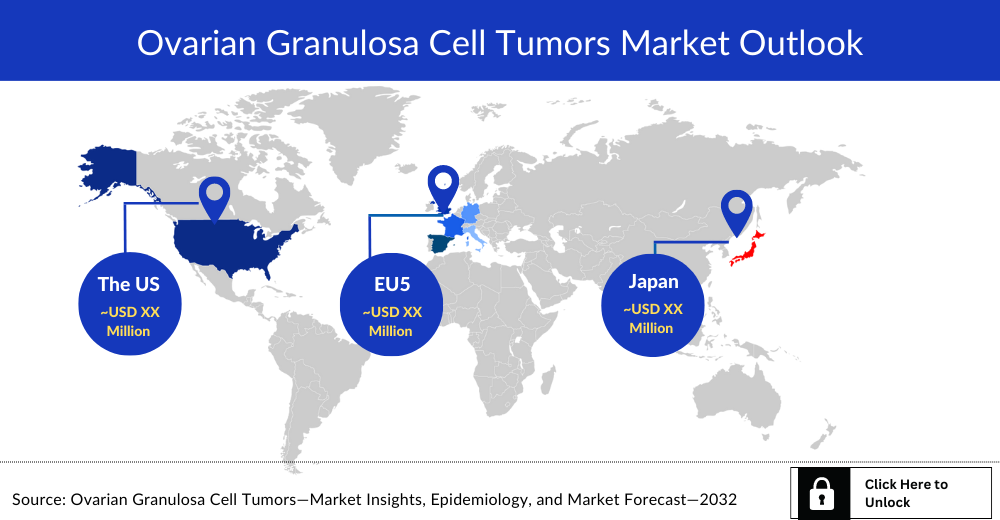
- Ovarian Granulosa Cell Tumors epidemiology [segmented as Total Incident Cases of Ovarian Cancer, Total Incident Cases of Ovarian Granulosa Cell Tumor, Type-specific Incident Cases of Ovarian Granulosa Cell Tumor, Grade-specific Cases of Ovarian Granulosa Cell Tumor, Total Treated Cases of Ovarian Granulosa Cell Tumor] in the Ovarian Granulosa Cell Tumors market report.
Request for unlocking CAGR of the Ovarian Granulosa Cell Tumors Market
DelveInsight’s “Ovarian Granulosa Cell Tumors Market Insights, Epidemiology, and Market Forecast – 2032” report delivers an in-depth understanding of the Ovarian Granulosa Cell Tumors, historical and forecasted epidemiology as well as the Ovarian Granulosa Cell Tumors market trends in the United States, EU4 (Germany, France, Italy, and Spain) and the United Kingdom, and Japan.
The Ovarian Granulosa Cell Tumors market report provides current treatment practices, emerging drugs, Ovarian Granulosa Cell Tumors market share of the individual therapies, and current and forecasted Ovarian Granulosa Cell Tumors market size from 2019 to 2032, segmented by seven major markets. The report also covers current Ovarian Granulosa Cell Tumors treatment practices/algorithms and unmet medical needs to curate the best of the opportunities and assess the underlying potential of the market.
Geography Covered
- The United States
- EU4 (Germany, France, Italy, and Spain) and the United Kingdom
- Japan
Study period: 2019–2032
Ovarian Granulosa Cell Tumors Market Disease: Understanding and Treatment Algorithm
The DelveInsight’s Ovarian Granulosa Cell Tumors market report gives a thorough understanding of Ovarian Granulosa Cell Tumors by including details such as disease definition, symptoms, causes, pathophysiology, diagnosis, and treatment. Ovarian cancer is a disease that affects women and is a group of diseases that originates in the ovaries, or in the related areas of the fallopian tubes and the peritoneum. In this form of cancer, certain cells in the ovary become abnormal and multiply uncontrollably to form a tumor. The ovaries are the female reproductive organs in which egg cells are produced. In about 90 percent of cases, ovarian cancer occurs after age 40, and most cases occur after age 60. The ovaries are mainly made up of three kinds of cells and each type of cell can develop into a different type of tumor. Epithelial tumors start from the cells that cover the outer surface of the ovary (most common). Germ cell tumors start from the cells that produce the eggs (ova). Stromal tumors start from structural tissue cells that hold the ovary together and produce the female hormones estrogen and progesterone.
A granulosa cell tumor (GCT) is a type of ovarian tumor. GCTs are the most common type of sex cord-stromal tumor. In people assigned female at birth, sex cord-stromal tumors are tumors that occur in tissues around their ovaries. These tumors cause high levels of estrogen, one of the female sex hormones. They can occur at any age, but the average age of diagnosis is 50 years old. GCTs can be divided into adult and juvenile types based on histologic findings. Both subtypes commonly produce estrogen, and estrogen production often is the reason for early diagnosis. However, while adult GCTs (AGCTs) usually occur in postmenopausal women and have late recurrences, most juvenile GCTs (JGCTs) develop in individuals younger than 30 years and often recur within the first 3 years.
GCTs are relatively uncommon and can show histomorphological patterns similar to a variety of other unrelated tumors, therefore an unequivocal diagnosis of GCT can be challenging. A single somatic missense mutation (C134W) in the gene encoding for transcription factor FOXL2 has been found to be present in ∼95% of GCTs, making it a pathognomonic defining feature.
Ovarian Granulosa Cell Tumors Diagnosis
A diagnosis of Ovarian Granulosa Cell Tumors requires detailed patient history, as well as a complete physical examination. A blood test can find the level of tumor markers. Inhibin is a tumor marker produced by granulosa cell tumors. Moreover, imaging techniques to diagnose granulosa cell tumors like CT scan, MRI, Transvaginal ultrasound are also used.
Ovarian Granulosa Cell Tumors Treatment
Primary treatment for patients with GCTs is surgical. Chemotherapy and/or radiotherapy are reserved for patients with advanced disease by surgical staging, and for patients with recurrent tumor. Chemotherapy can be used as adjuvant therapy in patients with advanced or recurrent disease and has been effective for improving the disease-free survival.
Single-agent chemotherapy with alkylating agents has been used in patients with GCTs with only modest partial response rates. Current chemotherapy regimens usually consist of multidrug regimens and most commonly include platinum as one of the agents.
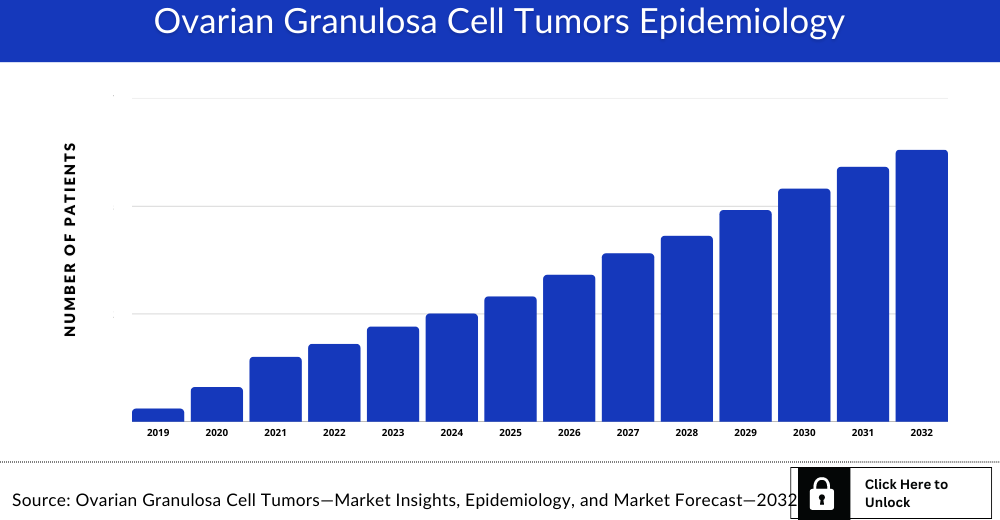
Ovarian Granulosa Cell Tumors Epidemiology
The Ovarian Granulosa Cell Tumors epidemiology section provides insights into historical and current Ovarian Granulosa Cell Tumors patient pool and forecasted trends for seven individual major countries. It helps recognize the causes of current and forecasted trends by exploring numerous studies and views of key opinion leaders. This part of the Ovarian Granulosa Cell Tumors report also provides the diagnosed patient pool, their trends and assumptions undertaken.
Country-wise Ovarian Granulosa Cell Tumors Epidemiology
The epidemiology segment also provides the Ovarian Granulosa Cell Tumors epidemiology data and findings across the United States, EU4 (Germany, France, Italy, and Spain) and the United Kingdom, and Japan.
Ovarian Granulosa Cell Tumors Drug Chapters
The drug chapter segment of the Ovarian Granulosa Cell Tumors report encloses the detailed analysis of Ovarian Granulosa Cell Tumors marketed drugs and late-stage (Phase III and Phase II) Ovarian Granulosa Cell Tumors pipeline drugs. It also helps understand the Ovarian Granulosa Cell Tumors clinical trial details, expressive pharmacological action, agreements and collaborations, approval and patent details, advantages and disadvantages of each included drug, and the latest news and press releases.
Emerging Ovarian Granulosa Cell Tumors drugs
The report details the emerging Ovarian Granulosa Cell Tumors therapies under the late and mid-stage of development for Ovarian Granulosa Cell Tumors treatment.
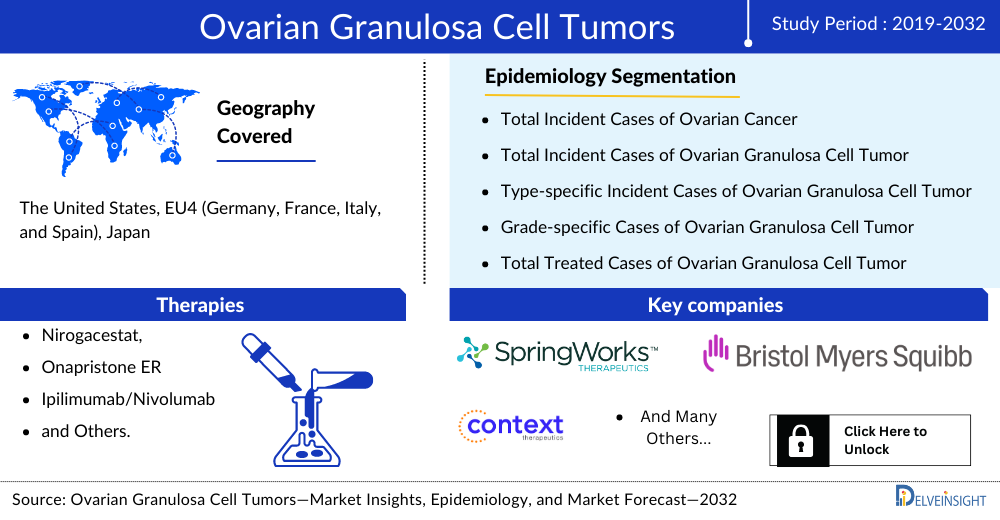
Ovarian Granulosa Cell Tumors Market Outlook
The Ovarian Granulosa Cell Tumors market outlook of the report helps to build a detailed comprehension of the historical, current, and forecasted Ovarian Granulosa Cell Tumors market trends by analyzing the impact of current therapies on the market, unmet needs, and demand for better technology.
This segment gives a thorough detail of the Ovarian Granulosa Cell Tumors market trend of each marketed drug and late-stage pipeline therapy by evaluating their impact based on the annual cost of therapy, inclusion and exclusion criteria, mechanism of action, compliance rate, growing need for the market, increasing patient pool, covered patient segment, expected launch year, competition with other therapies, brand value, their impact on the market and view of the key opinion leaders. The calculated market data are presented with relevant tables and graphs to give a clear view of the market at first sight.
According to DelveInsight, the Ovarian Granulosa Cell Tumors market in 7MM is expected to witness a major change in the study period 2019–2032.
Key findings
This section includes a glimpse of the Ovarian Granulosa Cell Tumors market in 7MM.
The United States: Ovarian Granulosa Cell Tumors Market Outlook
This section provides the total Ovarian Granulosa Cell Tumors market size and market size by therapies in the United States.
EU4 and the United Kingdom Countries: Ovarian Granulosa Cell Tumors Market Outlook
The total Ovarian Granulosa Cell Tumors market size and market size by therapies in Germany, France, Italy, Spain, and the United Kingdom are provided in this section.
Japan: Ovarian Granulosa Cell Tumors Market Outlook
The total Ovarian Granulosa Cell Tumors market size and market size by therapies in Japan is also mentioned.
|
Report Metrics |
Details |
|
Study Period |
2019 to 2032 |
|
Base Year |
2021 |
|
Forecast Period |
2022 to 2032 |
|
CAGR | |
|
Ovarian Granulosa Cell Tumors Drugs |
Nirogacestat, Onapristone ER, Ipilimumab/Nivolumab, and Others. |
|
Ovarian Granulosa Cell Tumors Key Companies |
SpringWorks Therapeutics, Context Therapeutics, Bristol-Myers Squibb, and Many Others. |
Ovarian Granulosa Cell Tumors Drug Uptake
This section focuses on the rate of uptake of the potential drugs recently launched in the Ovarian Granulosa Cell Tumors market or expected to get launched in the market during the study period 2019–2032. The analysis covers Ovarian Granulosa Cell Tumors market uptake by drugs, patient uptake by therapies, and sales of each drug.
This will help in understanding the Ovarian Granulosa Cell Tumors drugs with the most rapid uptake and the reasons behind the maximal use of new drugs and allows the comparison of the drugs based on market share and size, which again will be useful in investigating factors important in the market uptake and in making financial and regulatory decisions.
Ovarian Granulosa Cell Tumors Pipeline Development Activities
The report provides insights into different therapeutic candidates in Phase II, and Phase III stages. It also analyses Ovarian Granulosa Cell Tumors’ key players involved in developing targeted therapeutics.
Ovarian Granulosa Cell Tumors Clinical Trial development activities
The Ovarian Granulosa Cell Tumors Clinical Trial report covers detailed information on collaborations, acquisitions, and mergers, licensing patent details, and other information for Ovarian Granulosa Cell Tumors emerging therapies.
Ovarian Granulosa Cell Tumors Reimbursement Scenario
Approaching reimbursement proactively can have a positive impact both during the late stages of product development and well after product launch. In a report, we consider reimbursement to identify economically attractive indications and market opportunities. When working with finite resources, the ability to select the markets with the fewest reimbursement barriers can be a critical business and price strategy.
KOL Views
To keep up with current epidemiology and market trends, we take KOLs and SMEs' opinions working in the Ovarian Granulosa Cell Tumors domain through primary research to fill the data gaps and validate our secondary research. Their opinion helps to understand and validate current and emerging therapies and treatment patterns along with Ovarian Granulosa Cell Tumors market trends. This will support the clients in potential upcoming novel treatments by identifying the overall scenario of the market and the unmet needs.
Competitive Intelligence Analysis
We perform competitive and market intelligence analysis of the Ovarian Granulosa Cell Tumors market by using various competitive intelligence tools that include – SWOT analysis, PESTLE analysis, Porter's five forces, BCG Matrix, Market entry strategies, etc. The inclusion of the analysis entirely depends upon the data availability.
Scope of the Ovarian Granulosa Cell Tumors Market Report
- Descriptive overview of Ovarian Granulosa Cell Tumors, disease overview, patient journeys, treatment algorithms, diagnosis, and currently available therapies
- Comprehensive insight into the Ovarian Granulosa Cell Tumors epidemiology and forecasts in the 7MM
- An all-inclusive account of both the current and emerging therapies for Ovarian Granulosa Cell Tumors, along with the assessment of new therapies, expected to have an impact on the current treatment landscape
- Exhaustive analysis of the Ovarian Granulosa Cell Tumors market; historical and forecasted covering drug outreach in the 7MM
- Detailed Patient Based Market Forecasting determines the trends shaping and driving the global Ovarian Granulosa Cell Tumors market
Ovarian Granulosa Cell Tumors Market Report Highlights
- In the coming years, the Ovarian Granulosa Cell Tumors market is set to change due to the rising awareness of the disease and incremental healthcare spending across the world; which would expand the size of the market to enable the drug manufacturers to penetrate more into the market
- The companies and academics are working to assess challenges and seek opportunities that could influence Ovarian Granulosa Cell Tumors R&D. The therapies under development are focused on novel approaches to treat/improve the disease condition
- Major players are involved in developing Ovarian Granulosa Cell Tumors therapies. The launch of emerging therapies will significantly impact the Ovarian Granulosa Cell Tumors market
- A better understanding of Ovarian Granulosa Cell Tumors pathogenesis will also contribute to the development of novel therapeutics for Ovarian Granulosa Cell Tumors
- Our in-depth analysis of the Ovarian Granulosa Cell Tumors pipeline assets across different stages of development (Phase III and Phase II), emerging trends, and comparative analysis of pipeline products with detailed Ovarian Granulosa Cell Tumors clinical trial profiles, key cross-competition, launch date along with product development activities will support the clients in the decision-making process regarding their therapeutic portfolio by identifying the overall scenario of the research and development activities
Ovarian Granulosa Cell Tumors Report Insights
- Patient Based Market Forecasting
- Therapeutic approaches
- Ovarian Granulosa Cell Tumors pipeline analysis
- Ovarian Granulosa Cell Tumors market size and trends
- Ovarian Granulosa Cell Tumors market opportunities
- Impact of upcoming therapies
Ovarian Granulosa Cell Tumors Report Key Strengths
- 11 years’ forecast
- 7MM coverage
- Ovarian Granulosa Cell Tumors epidemiology segmentation
- Key cross competition
- KOL views
- Ovarian Granulosa Cell Tumors drugs uptake
Ovarian Granulosa Cell Tumors Report Assessment
- Current treatment practices
- Unmet needs
- Ovarian Granulosa Cell Tumors pipeline product profiles
- Ovarian Granulosa Cell Tumors market attractiveness
Key Questions
Ovarian Granulosa Cell Tumors market insights:
- What would be the Ovarian Granulosa Cell Tumors market growth till 2032, and what will be the resultant market size in 2032?
- What was the Ovarian Granulosa Cell Tumors drug class share (in percentage) distribution in 2019, and how would it look in 2032?
- What would be the Ovarian Granulosa Cell Tumors total market size and market size by therapies across the 7MM during the forecast period (2019–2032)?
- What are the key findings of the market across 7MM, and which country will have the largest Ovarian Granulosa Cell Tumors market size during the forecast period (2019–2032)
- How would the unmet needs affect the Ovarian Granulosa Cell Tumors market dynamics and subsequent analysis of the associated trends?
Ovarian Granulosa Cell Tumors Epidemiology Insights:
- What are the disease risk, burden, and regional/ethnic differences of Ovarian Granulosa Cell Tumors?
- What is the historical and forecasted Ovarian Granulosa Cell Tumors patient pool in 7MM, and where can one observe the highest patient population and growth opportunities?
- What are the key factors driving the epidemiology trends for seven major markets covering the United States, EU4 (Germany, France, Italy, and Spain) and the United Kingdom, and Japan?
Current Treatment Scenario, Marketed Drugs, and Emerging Therapies
- What are the current treatment guidelines and treatment options, in addition to approved therapies for Ovarian Granulosa Cell Tumors in the US, Europe, and Japan?
- What are the key collaborations (Industry–Industry, Industry-Academia), mergers and acquisitions, and licensing activities related to Ovarian Granulosa Cell Tumors therapies?
- What are the recent novel therapies, targets, mechanisms of action, and technologies being developed to overcome the limitation of existing therapies?
- What are the clinical studies going on for Ovarian Granulosa Cell Tumors and its status, along with the challenges faced?
Reasons to Buy
- The Patient Based Market Forecasting analysis will help in developing business strategies by understanding trends shaping and driving the Ovarian Granulosa Cell Tumors market
- Organize sales and marketing efforts by identifying the best opportunities for Ovarian Granulosa Cell Tumors in the US, Europe (Germany, France, Italy, and Spain) and the United Kingdom, and Japan
- Identification of strong upcoming players in the market that will help devise strategies that will help in getting ahead of competitors

