
Pacemaker/Defibrillator Lead Extraction Kit Market Summary
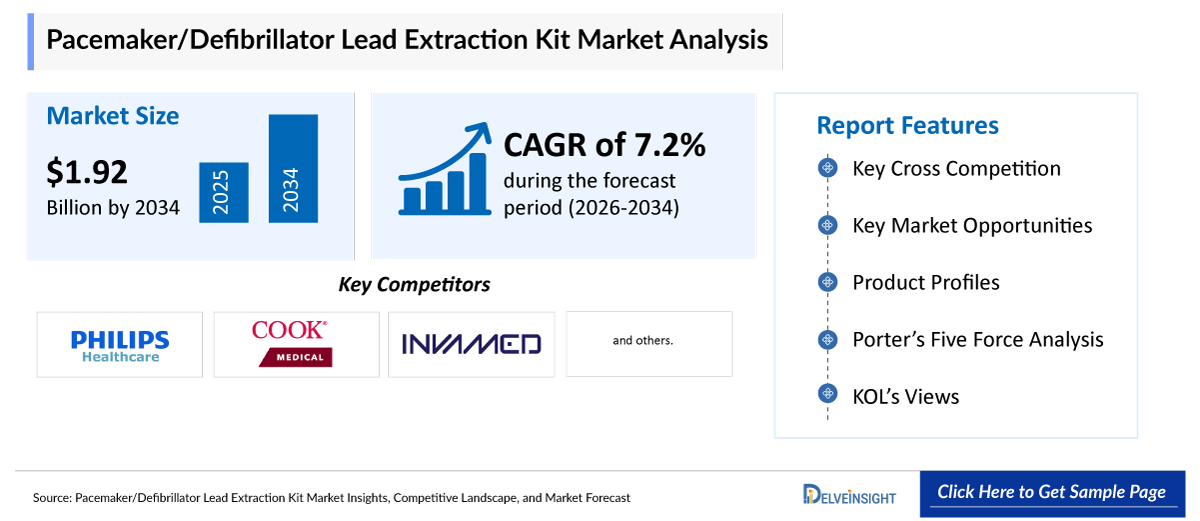
- The Pacemaker/Defibrillator Lead Extraction Kit market size is estimated at USD 1.03 billion in 2025 and is projected to reach USD 1.92 billion by 2034. Growth is anchored in the rising global burden of cardiac implantable electronic devices (CIEDs), increasing device-related infections, and the accelerating shift from surgical to minimally invasive percutaneous extraction.
- The global Pacemaker/Defibrillator Lead Extraction Kit market is growing at a CAGR of 7.2% during the forecast period from 2026 to 2034.
- By product type, the mechanical extraction system segment dominated the Pacemaker/Defibrillator Lead Extraction Kit market with a 46% share in 2025.
- By end-user, the hospitals segment dominated the Pacemaker/Defibrillator Lead Extraction Kit market with an 85% share in 2025.
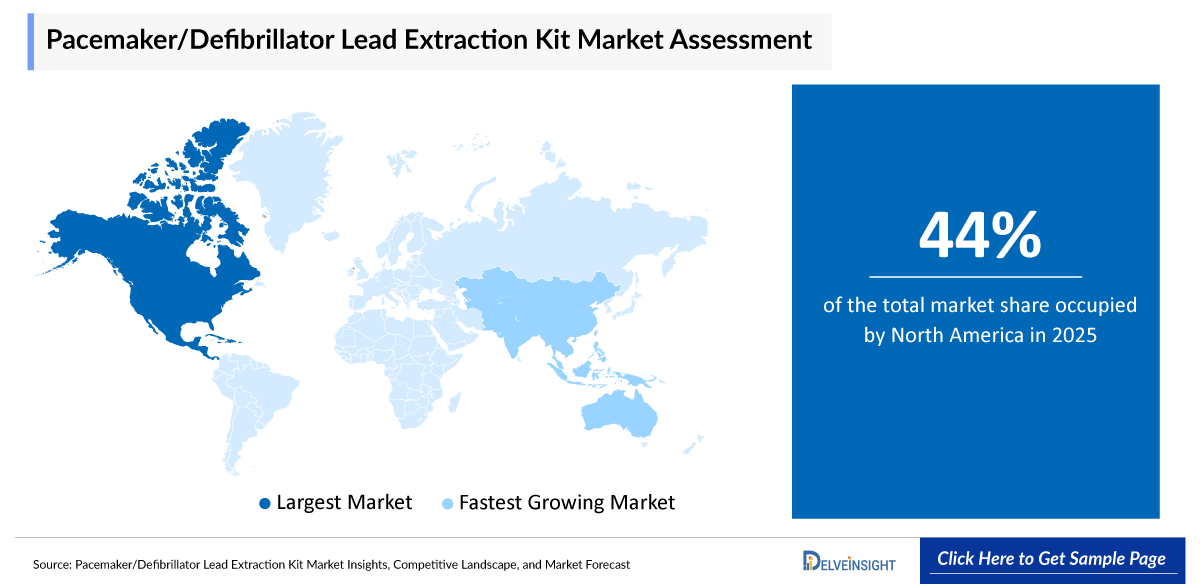
- North America dominated the global Pacemaker/Defibrillator Lead Extraction Kit market revenue with a 44% share in 2025, representing the highest regional market share globally.
A pacemaker/defibrillator lead extraction kit is a specialized set of percutaneous tools used by electrophysiologists and cardiac surgeons to remove chronically implanted pacemaker, implantable cardioverter-defibrillator (ICD), and cardiac resynchronization therapy (CRT) leads that have become infected, fractured, malfunctioning, or clinically unnecessary. Because chronically implanted leads become encased in dense fibrous tissue and adherent to vascular and cardiac structures, simple manual traction is frequently insufficient, and physicians rely on locking stylets, telescoping sheaths, and either mechanical or powered (laser or radiofrequency) energy to dissect binding sites and free the lead for safe removal.
The market is organized by product type across systems, comprising mechanical extraction systems and powered extraction systems, and accessories such as locking stylets, sheaths, and counter-traction devices; and by end-user across hospitals and specialty cardiac clinics. Driven by rising CIED implantation volumes, growing device-related infection rates, expert-consensus guidance favoring early and complete hardware removal, and continued innovation in energy-assisted extraction tools, pacemaker/defibrillator lead extraction kits have become an essential capability within the transvenous lead management pathway.
Pacemaker/Defibrillator Lead Extraction Kit Market Key Growth Drivers
- The steadily rising number of pacemaker, ICD, and CRT implantations worldwide is expanding the population of chronically implanted leads that will eventually require revision, upgrade, or extraction.
- Cardiac implantable electronic device infection, a Class I indication for complete hardware removal under the 2026 HRS/AHA/APHRS/EHRA/IDSA/LAHRS/PACES/STS consensus statement, affects roughly 1.1% of CIED recipients and is a primary driver of extraction volumes.
- The aging global population and rising prevalence of arrhythmias and heart failure are increasing the pool of patients dependent on cardiac rhythm management devices and, over time, on lead revision and extraction.
- Continued innovation in mechanical and powered (laser) extraction tools, including flexible rotating dilator sheaths and adjustable-repetition-rate laser sheaths, is improving procedural success and safety, encouraging broader adoption.
- A structural shift away from surgical and toward minimally invasive percutaneous transvenous lead extraction (TLE) is expanding the addressable procedure volume for dedicated extraction kits.
- Growing recognition that high-volume extraction centers achieve superior outcomes is encouraging hospitals to build dedicated lead management programs and stock a broader range of extraction tools.
- Rising device and lead advisories, recalls, and battery-related upgrades are adding a recurring, non-infectious source of extraction demand.
- Expanding physician training programs and updated international consensus guidelines are standardizing extraction as an early, rather than last-resort, therapeutic option.
Key Companies in Pacemaker/Defibrillator Lead Extraction Kit Market
The competitive landscape is led by the following active manufacturers:
- Koninklijke Philips N.V.
- Cook Medical
- INVAMED
- Xtrac O.S. (Pipeline), and others
For illustrative purposes, only a few limited companies are listed in the Table of Contents. The report may include analysis and references to additional companies relevant to the market assessment.
Pacemaker/Defibrillator Lead Extraction Kit Market Size
The following snapshot summarizes the principal report metrics for the Pacemaker/Defibrillator Lead Extraction Kit market.
|
Report Metrics |
Details |
|
2025 Market Size |
USD 1.03 billion |
|
2034 Projected Market Size |
USD 1.92 billion |
|
Growth Rate (2026-2034) |
7.2% CAGR |
|
Largest Market |
North America |
|
Fastest Growing Market |
Asia-Pacific |
|
Market Structure |
Moderately Concentrated |
All market values are expressed in USD and represent DelveInsight estimates synthesized from primary and secondary research.
Factors Contributing to the Growth of the Pacemaker/Defibrillator Lead Extraction Kit Market
Pacemaker/Defibrillator Lead Extraction Kit Market Drivers
- Rising Global Burden of Cardiac Implantable Electronic Devices: The most fundamental driver of the Pacemaker/Defibrillator Lead Extraction Kit market is the steady worldwide growth in pacemaker, ICD, and CRT implantation. Every newly implanted lead becomes, over its multi-year dwell time, a candidate for eventual revision, upgrade, or extraction, so cumulative implant volume directly expands the addressable extraction population. As device longevity extends and patients live longer with multiple leads, the prevalence of abandoned, fractured, or functionally obsolete hardware rises in parallel. Electrophysiology programs are increasingly encountering patients with two or more chronically implanted leads requiring a device upgrade to cardiac resynchronization therapy or a leadless pacing system, each of which may first require extraction of existing hardware. This growing base of implanted leads anchors durable, multi-year demand for dedicated extraction tool kits across the forecast period.
- Increasing Incidence of CIED-Related Infections: Device-related infection is the single most important clinical driver of lead extraction, and consensus guidelines classify complete hardware removal as a Class I recommendation whenever infection is confirmed. Population-level data indicate that roughly 1.1% of CIED recipients develop a device infection over long-term follow-up, and infection risk rises substantially with each subsequent generator change or lead revision. The large multinational ELECTRa registry, which enrolled over 3,500 patients across 73 centers in 19 European countries, documented that infection remains a leading indication for transvenous lead extraction, alongside lead malfunction and non-infectious upgrade needs. As the global inventory of implanted devices grows and more patients undergo repeat procedures, the cumulative burden of device infection and the corresponding extraction volume is expected to increase steadily through 2034.
- Growing Preference for Minimally Invasive Percutaneous Extraction: A structural shift away from open surgical lead removal toward minimally invasive, catheter-based transvenous lead extraction (TLE) is expanding the addressable market for dedicated extraction tool kits. Percutaneous TLE performed with locking stylets and mechanical or powered sheaths avoids the morbidity, recovery time, and cost associated with surgical extraction, and has become the preferred first-line approach at experienced centers. Studies of high-volume programs report complete procedural success rates exceeding 97% and clinical success rates approaching 99% with contemporary mechanical rotational sheaths, reinforcing physician confidence in the percutaneous approach. As more hospitals build dedicated lead management programs and electrophysiology fellowships expand extraction training, the share of procedures performed percutaneously, and the corresponding demand for extraction kits, continues to rise.
- Technological Advancements in Mechanical and Powered Extraction Tools: Continuous innovation across both mechanical and powered extraction platforms is improving procedural safety and expanding the tools available to electrophysiologists. Mechanical systems, such as flexible, hand- or motor-driven rotating dilator sheaths, allow physicians to feel progress through fibrous binding sites without capital equipment or annual maintenance contracts. Powered laser sheaths, which can now customize pulse repetition rate throughout a procedure, advance more efficiently through dense binding sites and require substantially less mechanical advancement force than earlier-generation devices, reducing the risk of vascular injury. Emerging non-thermal approaches, including vibration-energy dissection tools now in first-in-human clinical evaluation, aim to separate leads from surrounding tissue without an external cutting sheath. This continuous innovation cycle is broadening the addressable procedure population, including patients with very long lead dwell times and dense fibrosis who were previously considered poor candidates for percutaneous extraction.
- Rising Lead Advisories, Recalls, and Device Upgrades: Periodic manufacturer advisories and recalls affecting specific lead families, combined with routine generator battery depletion and the ongoing transition toward cardiac resynchronization therapy and leadless pacing platforms, create a recurring, non-infectious source of extraction demand. When an existing lead is deemed unsuitable for continued use, either because of a known reliability concern or because a planned upgrade requires additional venous access that is no longer available, extraction is frequently required before a new system can be implanted. This category of elective, non-infectious extraction has grown alongside the increasing complexity of modern CIED systems, which commonly involve two, three, or more leads per patient, and is expected to remain a steady contributor to procedure volumes through the forecast period.
- Strengthening Clinical Guidelines and Physician Training Standardizing Extraction Practice: Updated international consensus guidance is standardizing lead extraction as an early, evidence-based therapeutic option rather than a last-resort procedure. The 2026 HRS/AHA/APHRS/EHRA/IDSA/LAHRS/PACES/STS expert consensus statement update on CIED lead management and extraction, which follows the foundational 2017 HRS statement, incorporates new evidence on emerging extraction tools and reinforces recommendations around procedural volume, operator training, and surgical backup availability. Research demonstrating that high-volume extraction centers achieve better outcomes and lower mortality than low-volume centers is encouraging hospital systems to consolidate extraction procedures and invest in dedicated lead management programs, expanding the base of trained operators and driving broader kit utilization.
- Aging Population and Rising Prevalence of Arrhythmias and Heart Failure: The rising global prevalence of atrial fibrillation, bradyarrhythmias, and heart failure with reduced ejection fraction is expanding the population eligible for pacemakers, ICDs, and cardiac resynchronization therapy. As this population ages further and accumulates comorbidities, the likelihood of device-related complications, generator changes, and eventual system upgrades rises correspondingly. Elderly patients, who represent the majority of CIED recipients, are also more likely to require multiple procedures over their lifetime, sustaining long-run demand for lead management and extraction services.
Pacemaker/Defibrillator Lead Extraction Kit Market Restraints
Despite strong underlying momentum, the Pacemaker/Defibrillator Lead Extraction Kit market faces material constraints. Lead extraction remains an inherently high-risk procedure, with rare but potentially fatal complications such as superior vena cava tears and cardiac tamponade, so hospitals must maintain immediate surgical backup and a multidisciplinary team, which concentrates procedures among larger, well-resourced centers and limits broader adoption. Powered laser extraction systems require significant upfront capital investment, periodic calibration, and service contracts that can be prohibitive for smaller hospitals and specialty clinics, particularly in cost-sensitive and emerging markets. A persistent shortage of physicians formally trained in transvenous lead extraction constrains procedural volumes even where clinical need exists, and studies show that a majority of hospitals performing extraction do so at low annual volumes, which is associated with inferior outcomes. Reimbursement for lead extraction procedures and dedicated tool kits remains uneven across geographies, and stringent regulatory clearance requirements for novel energy-based extraction technologies can lengthen time to market. Together, these capital, training, safety, and reimbursement barriers temper the pace of adoption, even as the underlying drivers of rising CIED implantation, infection burden, and guideline-driven demand remain firmly intact.
Pacemaker/Defibrillator Lead Extraction Kit Market Segment Analysis
The pacemaker/defibrillator lead extraction kit market by product type (system [mechanical extraction system, powered extraction system] and accessories), end-user (hospitals and specialty cardiac clinics), and geography (North America, Europe, Asia-Pacific, and Rest of World).
By Product Type
Dominant Subsegment: Mechanical Extraction System.
The mechanical extraction system segment accounted for 46% of the Pacemaker/Defibrillator Lead Extraction Kit market in 2025. Mechanical extraction systems, such as flexible rotating dilator sheath sets, are the leading product type because they require no capital equipment, electricity, or annual maintenance contracts, giving hospitals of nearly any size an economical entry point into percutaneous lead extraction. Their hand- or motor-driven rotational mechanism allows the operator to feel progress through fibrous binding sites, and a single sheath set can extract multiple leads of the same diameter from one patient, reducing per-procedure device cost. Published multicenter experience with contemporary bidirectional mechanical sheaths reports complete lead removal rates around 97% and clinical success rates approaching 99%, reinforcing physician confidence. Systems as a category, encompassing both mechanical and powered extraction platforms, comprise the substantial majority of category revenue, while accessories such as locking stylets, counter-traction devices, and compression coils support nearly every procedure regardless of the primary extraction tool selected. While powered extraction systems are the fastest-growing product type, propelled by their efficiency in dense, long-dwell-time fibrosis, the affordability, simplicity, and broad installed base of mechanical systems secure the segment's leadership across the forecast period.
By End-Users
Dominant Subsegment: Hospitals.
The hospitals segment accounted for 85% of the Pacemaker/Defibrillator Lead Extraction Kit market in 2025. Hospitals are the leading end-user because lead extraction is classified as a high-risk procedure that requires immediate access to cardiac surgical backup, a hybrid operating room or catheterization laboratory equipped for emergency sternotomy, and a multidisciplinary team spanning electrophysiology, cardiac surgery, and anesthesiology. Consensus guidelines explicitly recommend that extraction be performed only at centers capable of managing major vascular or cardiac complications, which concentrates procedure volumes, and therefore kit purchasing, among hospitals rather than outpatient or ambulatory settings. Large academic and tertiary hospitals with high annual extraction volumes are also associated with superior outcomes and lower mortality, encouraging further procedural consolidation within the hospital setting. Specialty cardiac clinics are the fastest-growing end-user as select high-volume, well-resourced cardiac centers build dedicated lead management programs with on-site surgical support, but the safety requirements and infrastructure intensity of the procedure keep hospitals the dominant end-user across the forecast period.
Pacemaker/Defibrillator Lead Extraction Kit Market Region Analysis
Dominant Region: North America
North America accounted for 44% of the global Pacemaker/Defibrillator Lead Extraction Kit market revenue in 2025, representing the highest regional market share globally. The region's dominance reflects a high per-capita rate of pacemaker and ICD implantation, a mature network of high-volume electrophysiology centers, well-established reimbursement pathways, and the concentrated presence of leading extraction device manufacturers. The United States hosts a dense base of hospitals with dedicated lead management programs and cardiac surgical backup, supporting broad adoption of both mechanical and powered extraction systems. Rising CIED-related infection rates, an aging population with a growing burden of arrhythmia and heart failure, and continued clinical education aligned with updated HRS and multi-society consensus guidance are sustaining strong procedural and device demand. Strong reimbursement, regulatory clarity from the FDA, and proximity to leading device manufacturers anchor the region's continued leadership across the forecast period.
Fastest Growing Region: Asia-Pacific
Asia-Pacific is the fastest-growing region in the Pacemaker/Defibrillator Lead Extraction Kit market. The region's elevated CAGR is driven by rapidly rising CIED implantation volumes, expanding electrophysiology infrastructure, and growing healthcare investment across China, Japan, India, South Korea, and Australia. China is expanding its base of tertiary cardiac centers capable of performing complex extraction procedures, Japan's aging population is sustaining high rates of device implantation and eventual lead revision, and India is emerging as a lower-cost manufacturing and clinical-training hub for percutaneous cardiac procedures. Rising awareness of device-related infection management, growing government healthcare investment, and the gradual build-out of hybrid operating rooms with surgical backup are accelerating adoption of dedicated extraction kits across the region's higher-volume hospitals. The combination of rising disease burden, expanding device implantation, and improving procedural infrastructure positions Asia-Pacific as the principal source of incremental growth over the forecast period.
Pacemaker/Defibrillator Lead Extraction Kit Market Regional Commentary
North America
North America accounted for 44% of the global Pacemaker/Defibrillator Lead Extraction Kit market revenue in 2025. The United States dominates on the strength of its high CIED implantation base, dense network of high-volume extraction centers, FDA regulatory clarity, and the concentrated presence of leading mechanical and powered extraction device manufacturers, while growing device infection rates and system-upgrade volumes reinforce its leadership.
Europe
Europe is a large and advanced regional market, supported by an established multinational extraction registry infrastructure exemplified by the ELECTRa study, harmonized regulatory pathways under the EU Medical Device Regulation, and a well-developed base of high-volume electrophysiology centers across Germany, France, the United Kingdom, Italy, and Spain. Continued adoption of both laser and mechanical extraction platforms, alongside growing clinical publication activity on extraction outcomes, reinforces the region's role in supplying both diagnostic and therapeutic lead management programs.
Asia-Pacific
Asia-Pacific is the fastest-growing region, propelled by rising CIED implantation, expanding tertiary cardiac care infrastructure, and growing healthcare investment across China, Japan, India, South Korea, and Australia. China's tertiary cardiac center build-out, Japan's aging-population-driven device volumes, and India's expanding low-cost manufacturing and clinical-training base are accelerating regional adoption of dedicated lead extraction kits.
Rest of World
The Rest of World region, spanning Latin America, the Middle East, and Africa, is an emerging growth frontier. Expanding cardiac care infrastructure, rising CIED implantation rates, and efforts to build dedicated electrophysiology and surgical-backup capability are gradually broadening access to safe percutaneous lead extraction, while training partnerships with established international centers support the build-out of regional procedural capacity.
Pacemaker/Defibrillator Lead Extraction Kit Market Competitive Landscape
The Pacemaker/Defibrillator Lead Extraction Kit market is classified as Moderately Concentrated. Established players with broad, clinically validated product portfolios, including Koninklijke Philips N.V. and Cook Medical, anchor the top tier through decades of clinical evidence and global distribution reach, while specialized and fast-scaling providers such as INVAMED compete through differentiated mechanical and laser platforms, and clinical-stage innovators such as Xtrac O.S. pursue novel, non-thermal extraction technologies, increasing competitive intensity in the powered and next-generation segments.
The competitive landscape can be evaluated across the following dimensions:
- Market concentration: Moderately concentrated, with established, clinically validated players leading and a growing field of specialized and clinical-stage extraction-technology innovators.
- Leading players: Koninklijke Philips N.V. and Cook Medical anchor the top tier through long-standing clinical evidence, global distribution networks, and broad extraction tool portfolios.
- Geographic reach: Leading players operate global distribution networks spanning North America, Europe, and Asia-Pacific, supported by regional distributor partnerships for emerging markets.
- Product portfolio strength: Top players offer end-to-end lead management portfolios spanning locking stylets, mechanical rotating dilator sheaths, powered laser sheaths, tissue stabilization sheaths, and compression coils.
- Clinical evidence base: Ownership of large, published multicenter outcome data, such as multicenter mechanical-sheath safety and efficacy studies and manufacturer-sponsored registries, is a decisive competitive advantage.
- Strategic partnerships: Collaborations with academic electrophysiology centers and distributor partnerships, such as INVAMED's regional distribution agreements, extend market reach.
- Innovation pipeline: Clinical-stage development of non-thermal, vibration-energy extraction technology by Xtrac O.S. represents an emerging competitive vector distinct from established mechanical and laser platforms.
- Manufacturing capabilities: Precision catheter and sheath manufacturing, laser system integration, and rigorous biocompatibility and mechanical validation testing are key competitive moats.
- Innovation focus: Adjustable-energy powered sheaths, flexible-shaft mechanical systems optimized for tortuous vasculature, and non-thermal dissection technologies are the primary areas of ongoing innovation.
Pacemaker/Defibrillator Lead Extraction Kit Market Recent Developmental Activities
- In 2026, Koninklijke Philips N.V. continued to expand its Image-Guided Therapy lead management portfolio, reinforcing adoption of its GlideLight laser sheath, which offers adjustable pulse repetition rate to improve advancement efficiency through dense binding sites, and its TightRail and TightRail Sub-C flexible mechanical rotating dilator sheaths designed for tortuous and subclavian vasculature. Strategic significance: Strengthens Philips' position as an integrated provider of both powered and mechanical extraction platforms.
- In 2026, Cook Medical continued to broaden its Lead Management portfolio around the Evolution RL and Evolution Shortie RL controlled-rotation dilator sheath sets, alongside the SteadySheath Evolution tissue stabilization sheath and OneTie compression coil used to manage tenacious fibrosis-anchored leads. Strategic significance: Reinforces Cook's long-standing leadership in mechanical, capital-equipment-free lead extraction technology.
- In 2024, Xtrac O.S. Ltd initiated a multicenter feasibility clinical trial (NCT06115980) evaluating the safety and preliminary performance of its vibration-based lead extraction system in patients with pacing or defibrillator leads implanted for one to five years. Strategic significance: Advances clinical evidence generation required to support future regulatory clearance and commercialization.
- In 2025, INVAMED continued to expand distribution of its Hero Laser Lead Removal System and Hero Mechanical Lead Removal System, marketed as a combined powered-and-mechanical extraction platform compatible with a wide range of lead sizes and coil designs. Strategic significance: Broadens the competitive field in both the powered and mechanical extraction segments with a dual-platform offering.
- In 2025, professional cardiac electrophysiology societies (HRS/AHA/APHRS/EHRA/IDSA/LAHRS/PACES/STS) finalized an updated expert consensus statement on CIED lead management and extraction, incorporating new evidence on emerging extraction technologies and updated operator-training and procedural-volume recommendations. Strategic significance: Standardizes clinical practice and reinforces the safety and training requirements that shape hospital purchasing of extraction tool kits.
Pacemaker/Defibrillator Lead Extraction Kit Market Segmentation
- Pacemaker/Defibrillator Lead Extraction Kit Market by Product Type
- System
- Mechanical Extraction System
- Powered Extraction System
- Accessories
- Pacemaker/Defibrillator Lead Extraction Kit Market by End-Users
- Hospitals
- Specialty Cardiac Clinics
- Others
Pacemaker/Defibrillator Lead Extraction Kit Market by Geography
- North America Pacemaker/Defibrillator Lead Extraction Kit Market
- United States Pacemaker/Defibrillator Lead Extraction Kit Market Size in USD million (2023-2034)
- Canada Pacemaker/Defibrillator Lead Extraction Kit Market Size in USD million (2023-2034)
- Mexico Pacemaker/Defibrillator Lead Extraction Kit Market Size in USD million (2023-2034)
- Europe Pacemaker/Defibrillator Lead Extraction Kit Market
- Germany Pacemaker/Defibrillator Lead Extraction Kit Market Size in USD million (2023-2034)
- United Kingdom Pacemaker/Defibrillator Lead Extraction Kit Market Size in USD million (2023-2034)
- France Pacemaker/Defibrillator Lead Extraction Kit Market Size in USD million (2023-2034)
- Italy Pacemaker/Defibrillator Lead Extraction Kit Market Size in USD million (2023-2034)
- Spain Pacemaker/Defibrillator Lead Extraction Kit Market Size in USD million (2023-2034)
- Rest of Europe Pacemaker/Defibrillator Lead Extraction Kit Market Size in USD million (2023-2034)
- Asia-Pacific Pacemaker/Defibrillator Lead Extraction Kit Market
- China Pacemaker/Defibrillator Lead Extraction Kit Market Size in USD million (2023-2034)
- Japan Pacemaker/Defibrillator Lead Extraction Kit Market Size in USD million (2023-2034)
- India Pacemaker/Defibrillator Lead Extraction Kit Market Size in USD million (2023-2034)
- Australia Pacemaker/Defibrillator Lead Extraction Kit Market Size in USD million (2023-2034)
- South Korea Pacemaker/Defibrillator Lead Extraction Kit Market Size in USD million (2023-2034)
- Rest of Asia-Pacific Pacemaker/Defibrillator Lead Extraction Kit Market Size in USD million (2023-2034)
- Rest of the World (RoW) Pacemaker/Defibrillator Lead Extraction Kit Market
- Middle East Pacemaker/Defibrillator Lead Extraction Kit Market Size in USD million (2023-2034)
- Africa Pacemaker/Defibrillator Lead Extraction Kit Market Size in USD million (2023-2034)
- South America Pacemaker/Defibrillator Lead Extraction Kit Market Size in USD million (2023-2034)
Pacemaker/Defibrillator Lead Extraction Kit Market Recent Industry Trends and Milestones (2023-2026):
|
Category |
Key Developments |
|
Pacemaker/Defibrillator Lead Extraction Kit Market Product Approval |
Clinical practice is being reshaped by the 2026 HRS/AHA/APHRS/EHRA/IDSA/LAHRS/PACES/STS expert consensus statement update on CIED lead management and extraction, which builds on the foundational 2017 HRS statement and incorporates new evidence on emerging extraction technologies, operator training, and procedural-volume standards. This guidance reinforces complete hardware removal as a Class I recommendation for device infection, sustaining a durable, evidence-based source of extraction demand across the forecast period. |
|
Pacemaker/Defibrillator Lead Extraction Kit Market Expansion |
Manufacturers broadened both mechanical and powered platforms. Philips continued to advance its GlideLight adjustable-repetition-rate laser sheath and TightRail/TightRail Sub-C flexible mechanical sheaths, Cook Medical sustained global distribution of its Evolution RL controlled-rotation sheath family alongside SteadySheath and OneTie accessories, and INVAMED expanded its combined Hero Laser and Hero Mechanical lead removal systems into new distribution markets. |
|
Pacemaker/Defibrillator Lead Extraction Kit Market Investment |
Clinical-stage innovation accelerated around non-thermal extraction technology. Xtrac O.S. Ltd advanced a vibration-energy extraction system through bench, animal, and first-in-human studies published in EP Europace, and initiated a multicenter feasibility trial (NCT06115980) evaluating safety and preliminary performance in patients with one-to-five-year lead dwell times, while other early-stage developers pursued motor-assisted and steerable powered extraction concepts. |
|
Company Strategy |
Koninklijke Philips N.V.: Integrated leadership across powered laser and mechanical rotating dilator sheath platforms within its Image-Guided Therapy Devices portfolio. Cook Medical: Sustained leadership in capital-equipment-free mechanical extraction through its long-standing Evolution platform and supporting accessories. INVAMED: Regional expansion through a combined laser-and-mechanical dual-platform offering. Xtrac O.S.: Clinical-stage development of a differentiated, non-thermal vibration-energy extraction technology. |
|
Emerging Technologies |
Non-thermal, sheathless vibration-energy dissection is the leading edge of innovation, aiming to separate chronically implanted leads from surrounding fibrotic tissue via a locking stylet without an external cutting sheath. Adjustable-energy powered laser sheaths and increasingly flexible mechanical shaft designs optimized for tortuous and subclavian vasculature continue to improve procedural safety, while growing outcomes registries and procedural-volume research are informing hospital-level program design and operator training standards. |
Pacemaker/Defibrillator Lead Extraction Kit Market Startup Funding and Investment Trends
Investment in the Pacemaker/Defibrillator Lead Extraction Kit ecosystem has concentrated on non-thermal and next-generation powered extraction technologies aimed at improving safety in patients with long lead dwell times and dense fibrosis. The following companies illustrate recent funding and investment activity and technology focus.
|
Company |
Total Funding |
Funding Stage |
Main Offering |
Core Technology |
|
Xtrac O.S. Ltd |
Private/Seed |
Clinical-Stage (First-in-Human) |
Vibration-energy lead extraction system |
Non-thermal, sheathless vibration-energy dissection |
|
Request for unlocking the report of the @ Pacemaker/Defibrillator Lead Extraction Kit Market Insights | ||||
Capital is flowing toward developers pursuing differentiated extraction mechanisms with the potential to reduce vascular injury risk relative to established mechanical and laser platforms. Xtrac O.S.'s progression from bench and animal studies to a multicenter first-in-human feasibility trial underscores growing clinical and investor interest in non-thermal, sheathless extraction technology, while established players including Koninklijke Philips N.V., Cook Medical, and INVAMED continue to invest in incremental improvements to their mechanical and powered platforms. Collectively, these investments signal conviction that procedural safety, ease of use in dense fibrosis, and reduced reliance on capital equipment will define the next phase of competitive advantage in the global Pacemaker/Defibrillator Lead Extraction Kit market.
Key Takeaways from the Pacemaker/Defibrillator Lead Extraction Kit Market Report Study
- Market size analysis for the current pacemaker/defibrillator lead extraction kit market size (2025), and market forecast for 9 years (2026 to 2034).
- Top key product/technology developments, mergers, acquisitions, partnerships, and joint ventures that happened over the last 3 years.
- Key companies dominating the global pacemaker/defibrillator lead extraction kit market.
- Various opportunities available for competitors in the pacemaker/defibrillator lead extraction kit market space.
- What are the top-performing segments in 2025? How will these segments perform in 2034?
- Which are the top-performing regions and countries in the current pacemaker/defibrillator lead extraction kit market scenario?
- Which are the regions and countries where companies should concentrate their opportunities for pacemaker/defibrillator lead extraction kit market growth in the future?
Target audience who can benefit from this pacemaker/defibrillator lead extraction kit market report study
- Pacemaker/defibrillator lead extraction kit product providers
- Research organizations and consulting companies
- Neurodegenerative disease therapeutics-related organizations, associations, forums, and other alliances
- Government and corporate offices
- Start-up companies, venture capitalists, and private equity firms
- Distributors and traders dealing in pacemaker/defibrillator lead extraction kits
- Various end-users who want to know more about the pacemaker/defibrillator lead extraction kit market and the latest technological developments in the pacemaker/defibrillator lead extraction kit market.

