Pertussis Market Summary
Pertussis Insights and Trends
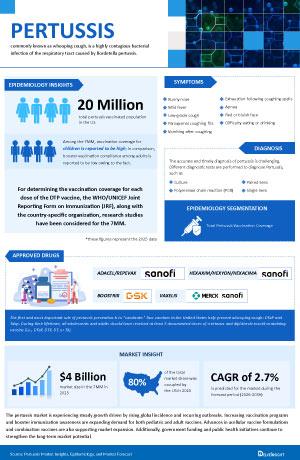
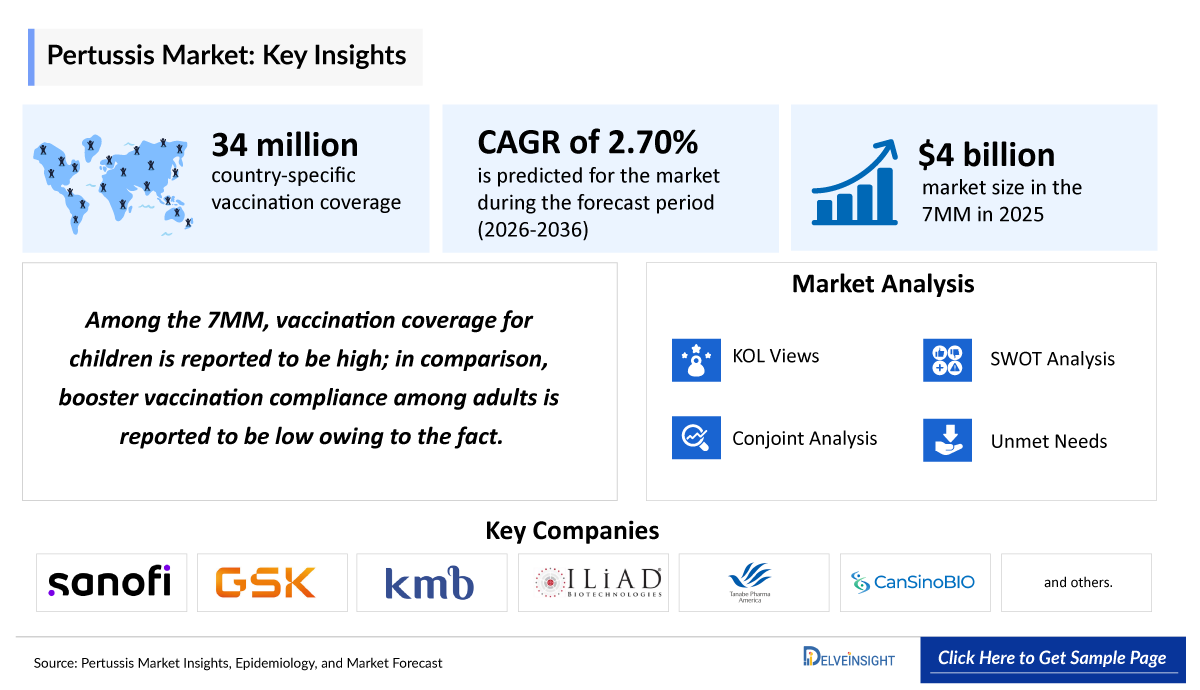
- According to DelveInsight’s analysis, Pertussis market size was found to be ~USD 4,000 million in the leading markets (the United States, the EU4 (Germany, France, Italy, and Spain), the United Kingdom, and Japan) in 2025.
- Pertussis can cause serious illness in babies, children, teens, and adults. Symptoms of pertussis usually develop within 5–10 days after exposure. Sometimes pertussis symptoms do not develop for as long as 3 weeks. The severity of the symptoms depends on several factors, including the patient's age, the strength of the immune response, and the extent of systemic bacterial dissemination.
- The rising incidence of pertussis, due to inadequate immunization and waning immunity among vaccinated groups, is driving market demand for vaccines and treatments. This resurgence highlights the need for enhanced vaccination programs to curb transmission rates. Increased awareness and healthcare investments are further accelerating this demand.
- The accurate and timely diagnosis of pertussis continues to be challenging. The widespread use of pertussis vaccines has dramatically altered the epidemiology and clinical presentation of pertussis disease. Isolation of B. pertussis through culture is insensitive, though traditional, 'gold standard for diagnosing pertussis and serological methods have been used to diagnose pertussis for nearly a century.
- The whole-cell pertussis vaccine in combination with diphtheria and tetanus toxoids was introduced in 1948. Acellular pertussis vaccines were developed after studies raised concerns about a temporal relation between pertussis-containing vaccines and neurologic illnesses, including encephalopathy, infantile spasms, and sudden infant death syndrome. They include representative antigens of pathologic toxins seen in B. pertussis strains.
- Currently, the vaccines available in the 7MM include ADACEL, BOOSTRIX, HEXAXIM, VAXELIS, QUADRACEL, TETRABIK, TRIBIK/BK1301, and others.
- Intense competition in the pertussis vaccine market, with multiple key players vying for market share, may lead to price wars that reduce profitability. This price pressure could discourage investment in the development of new and improved vaccines. As a result, innovation and long-term market growth may be hindered.
- Key players involved in developing Pertussis therapy include ILiAD Biotechnologies, Mitsubishi Tanabe Pharma Corporation, the Research Foundation for Microbial Diseases of Osaka University, and Cansino Bio among others.
Pertussis Market Size and Forecast in the 7MM
- 2025 Pertussis Market Size: ~USD 4,000 million
- 2036 Projected Pertussis Market Size: USD 5,000 million
- Pertussis Growth Rate (2026–2036): 2.7% CAGR
DelveInsight's ‘Pertussis – Market Insights, Epidemiology and Market Forecast – 2036’ report delivers an in-depth understanding of the Pertussis, historical and forecasted epidemiology, as well as the Pertussis market trends in the United States, EU4 (Germany, Spain, Italy, and France) and the United Kingdom, and Japan.
The Pertussis market report delivers a comprehensive analysis of the current treatment landscape, including standards of care, clinical practices, and evolving therapeutic algorithms. It evaluates, Pertussis patient burden trends, revenue & market share dynamics, peak patient share & therapy uptake analysis, and provides an in-depth market size assessment, and growth rate projections (Historical & Forecast 2022–2036) across global regions. The report highlights key unmet medical needs in Pertussis and maps the competitive and clinical landscape to uncover high‑value opportunities, providing a clear outlook on future market growth potential.
|
Scope of the Pertussis Market Report | |
|
Study Period |
2022–2036 |
|
Historical Year |
2022–2025 |
|
Forecast Period |
2026–2036 |
|
Base Year |
2026 |
|
Geographies Covered |
|
|
Pertussis Market CAGR (Study period/Forecast period) |
2.7% (2026–2036) |
|
Pertussis Epidemiology Segmentation Analysis |
Patient Burden Assessment
|
|
Pertussis Companies |
|
|
Pertussis Therapies |
|
|
Pertussis Market |
Segmented by
|
|
Analysis |
|
Key Factors Driving the Pertussis Market
Increasing disease awareness and surveillance
Improved diagnosis and reporting systems are leading to higher detection and recognition of pertussis cases globally.
Waning immunity and need for booster vaccinations
Declining immunity over time is driving demand for Tdap booster vaccines in adolescents, adults, and pregnant women.
Expansion of immunization programs
Strong government initiatives and inclusion of combination vaccines in national schedules are boosting vaccination coverage and market growth.
Pertussis Understanding and Treatment Algorithm
Pertussis Overview and Diagnosis
Pertussis, literally meaning “a violent cough” and commonly known as whooping cough or the“cough of 100 days,” is an acute, highly contagious respiratory infection caused by Bordetella pertussis. First recognized during the Paris epidemic of 1578, the disease is characterized by a prolonged paroxysmal cough lasting ≥2 weeks, often accompanied by an inspiratory “whoop,” posttussive vomiting, and syncope, with the “whoop” resulting from forceful inspiration against a partially closed glottis. Although traditionally considered a childhood disease, over half of reported cases now occur in adolescents and adults, largely due to waning immunity (declining to ~50% within 12 years post-vaccination).
Transmission occurs via respiratory droplets, and the disease progresses through three stages: catarrhal (mild, cold-like symptoms), paroxysmal (severe coughing fits with characteristic whoop), and convalescent (gradual recovery). Historically, a major cause of infant morbidity and mortality before vaccine introduction in the 1940s, pertussis remains a significant public health concern due to periodic outbreaks and incomplete long-term immunity. Diagnosis relies on clinical features and is confirmed by PCR (most sensitive in early stages), culture, or serology, with early detection crucial to initiate treatment and limit transmission.
Pertussis Diagnosis
Diagnosis of Pertussis is based on a combination of clinical presentation and laboratory confirmation. It is suspected in patients presenting with persistent cough and paroxysmal coughing episodes, particularly in high-risk groups such as infants. Confirmation is achieved through PCR (preferred and most sensitive in early stages), along with culture and serology depending on the stage of infection. The disease is transmitted via aerosols, with Bordetella pertussis infecting the ciliated epithelium of the respiratory tract, where it produces toxins that drive both local and systemic disease manifestations, despite no systemic spread of the bacteria itself. While significant progress has been made, gaps remain in understanding the role of virulence factors and disease pathogenesis, especially in severe infant cases. Ongoing research, including advanced animal models and potential human studies, aims to improve understanding and support the development of more effective vaccines and therapeutic strategies.
Further details are provided in the report.
Pertussis Treatment
Treatment of Pertussis depends on the patient’s age and stage of infection, with early intervention being crucial to reduce severity and transmission. Macrolide antibiotics, such as Azithromycin and Clarithromycin, are the mainstay of treatment, particularly when initiated in the early phase of the disease. Supportive care plays a vital role, especially in infants, and may include hydration, oxygen support, and close monitoring for complications, with hospitalization often required for severe cases or infants under 6 months. In addition, prophylactic antibiotics for close contacts help limit disease spread. Preventive strategies are critical, with routine immunization using DTaP in childhood and Tdap booster doses recommended for adolescents, adults, and pregnant women (during the third trimester) to protect both individuals and vulnerable infants.
Further details related to country-based variations are provided in the report.
Pertussis Unmet Needs
The section “unmet needs of Pertussis” outlines the critical gaps between the current state of patient care, diagnosis, and the ideal & effective management of the disease. It highlights the obstacles experienced by patients, clinicians, and researchers and identifies potential solutions for future progress.
- Resurgence of pertussis
- Vaccine Failure in Pertussis
- Remaining gaps in control of pertussis
- Lack of proper epidemiology data, and others…..
Comprehensive unmet needs insights in Pertussis and their strategic implications are provided in the full report.
Pertussis Epidemiology
Key Findings from Pertussis Epidemiological Analysis and Forecast
- In 2025, the US accounted for the highest cases of pertussis i.e., 60% of the total cases in the 7MM.
- Among the 7MM, vaccination coverage for children is reported to be high; in comparison, booster vaccination compliance among adults is reported to be low owing to the fact. With the increasing awareness, the updation of immunization recommendations and the entry of emerging vaccines are expected to increase the vaccination coverage rate.
- As per DelveInsight’s estimate, the total Pertussis vaccinated population in the US was approximately 20 million in 2025 and is projected to increase during the forecast period (2026–2036).
- Pertussis infection can lead to complications, particularly pneumonia (lung infection) in infants and older adults. In severe cases, infants may show signs such as poor feeding, irritability and unusual tiredness, while breathing difficulties can progress to respiratory distress.
Pertussis Drug Chapters & Competitive Analysis
The Pertussis drug chapter provides a detailed, market-focused review of approved therapies and the emerging pipeline across Phase I–III clinical trials. It covers the mechanism of action, clinical trial data, regulatory approvals, patents, collaborations, and strategic partnerships for each therapy, along with their advantages, limitations, and recent developments. This section offers critical insights into the Pertussis treatment landscape, supporting market assessment, competitive analysis, and growth forecasting for the Pertussis therapeutics market.
Approved Therapies for Pertussis
ADACEL/REPEVAX: Sanofi Pasteur
ADACEL is a trivalent Tdap booster vaccine indicated for active immunization against pertussis, tetanus, and diphtheria, administered as a single-dose booster following primary immunization. It is typically recommended for individuals aged 10–64 years, with some regions allowing use from ≥4 years, and includes approval for repeat dosing at least 8 years after the initial vaccination. Since its initial FDA approval in 2005, ADACEL has expanded its clinical utility, including approval for repeat vaccination and use during the third trimester of pregnancy, supporting passive protection of infants against pertussis. The vaccine is widely available across more than 50 countries, including the US, Europe, Asia, and Latin America, and is marketed as REPEVAX in Europe, where it additionally provides protection against polio. It is also available in a latex-free prefilled syringe, reducing the risk for patients with latex allergies, and continues to be supported by strong safety and immunogenicity data, including Phase III studies conducted in Japan.
In January 2023, FDA approves ADACEL for use during pregnancy to help protect newborns from pertussis.
In January 2019, the US FDA approved the expanded use of ADACEL to include repeat vaccination to protect against pertussis, diphtheria, and tetanus. ADACEL is also the only Tdap vaccine available in a syringe made without natural rubber latex, which may help reduce risk to patients with an allergy.
BOOSTRIX: GlaxosmithKline
BOOSTRIX (Diphtheria and Tetanus Toxoids and Acellular Pertussis) is a Tdap booster vaccine indicated for active immunization against tetanus, diphtheria, and pertussis in individuals aged 10 years and older. It is administered as a 0.5 mL intramuscular injection into the deltoid muscle and is routinely recommended for maternal immunization during pregnancy to protect newborns from pertussis. Initially approved by the US FDA in 2005 for individuals aged 10–18 years, BOOSTRIX subsequently received label expansions for adults aged 19–64 years (2008) and 65 years and older (2011). In Europe, BOOSTRIX is also approved for maternal immunization, supporting public health strategies for early-life protection. The vaccine has a strong safety and immunogenicity profile, making it a widely used component of booster vaccination programs globally.
In October 2022, FDA approves BOOSTRIX for maternal immunization to help protect newborns from whooping cough.
Pertussis Marketed/Approved Therapies | ||||||
|
Drug/Therapy |
Company |
Indication |
Molecule Type |
MoA |
Marketed Region | |
|
ADACEL/REPEVAX |
Sanofi |
Pertussis |
Combination vaccine (biologic) |
Trivalent booster vaccine |
US: 2005 Label expansion: 2019 (Repeat vaccination) EU: 2001-2016 | |
|
HEXAXIM/HEXYON/HEXACIMA |
Sanofi |
Pertussis |
Combination vaccine (biologic) |
Hexavalent vaccine |
DE: 2013 FR: 2016 IT, ESP: Available | |
|
BOOSTRIX |
GSK |
Pertussis |
Combination vaccine (biologic) |
Immunostimulants |
US: 2005 (In Adults), Label expansion: 2011 (In older people), 2020 (Maternal immunization) FR: 2005 UK: Recommended and used IT: Available | |
|
VAXELIS |
Merck and Sanofi |
Pertussis |
Combination vaccine (biologic) |
PR5i hexavalent |
US: 2018, launched 2021 DE: 2016 FR: 2018 IT, ESP: Available | |
Note: Detailed marketed therapies assessment will be provided in the final report.
Pertussis Pipeline Analysis
BPZE1: ILiAD Biotechnologies
BPZE1 is a novel intranasal, live attenuated pertussis vaccine candidate designed to provide protection against Bordetella pertussis through broad mucosal and systemic immunity. It incorporates genetic modifications to inactivate or attenuate key toxins, including pertussis toxin, dermonecrotic toxin, and tracheal cytotoxin, thereby enhancing safety while maintaining immunogenicity. BPZE1 is currently being developed as a booster vaccine, with ongoing research exploring its potential use as a primary vaccination in infants. Preclinical studies indicate that it does not exacerbate airway pathology, and Phase IIb clinical data have demonstrated strong safety, induction of mucosal immunity, and up to 90% prevention of bacterial colonization upon challenge, with no vaccine-related serious adverse events. This positions BPZE1 as a promising next-generation approach for improved pertussis prevention.
- In January 2022, the US FDA granted Fast Track status to BPZE1 for pertussis booster immunization.
- In February 2026, ILiAD Biotechnologies Secures Oversubscribed USD115M Series B to Advance BPZE1 Pertussis Vaccine Development.
DPT-IPV-Hib (BK-1310/MT-2355): Mitsubishi Tanabe Pharma Corporation
DPT-IPV-Hib (BK1310/MT-2355) is a 5-in-1 combination vaccine that provides protection against pertussis, diphtheria, tetanus, poliomyelitis, and Haemophilus influenzae type b (Hib) infections in infants and children. It is co-developed with the Research Foundation for Microbial Diseases of Osaka University (Japan) and has successfully completed Phase III trials demonstrating safety and efficacy for all five target diseases.
In April 2022, application for marketing authorization of combination vaccine DPT-IPV-Hib was submitted to the Ministry of Health, Labour and Welfare for prophylaxis of pertussis, diphtheria, tetanus, acute poliomyelitis, and heamophilus influenza type b.
Comparison of Emerging Drugs Under Development | ||||||
|
Drug Name |
Company |
Highest Phase |
Indication |
RoA |
Molecule Type |
Anticipated Launch in the US |
|
DPT-IPV-HiB (BK-1310/MT-2355) |
Mitsubishi Tanabe Pharma Corporation |
III |
Pertussis |
Subcutanous |
Vaccine |
- |
|
BPZE1 |
ILiAD Biotechnologies |
IIb |
Pertussis |
Intranasal |
Live vaccine |
Information is available in the full report |
|
DTcP |
Cansino Bio |
I |
Pertussis |
Intramuscular |
vaccine |
Information is available in the full report |
|
Note: Launch insights are provisional and may change with future report updates or the occurrence of major key catalysts. | ||||||
Note: A detailed emerging therapies assessment will be provided in the final report
Pertussis Key Players, Market Leaders and Emerging Companies
- Sanofi
- GSK
- Biken
- KM Biologics
- ILiAD Biotechnologies
- Mitsubishi Tanabe Pharma Corporation
- Cansino Bio, and others
Pertussis Drug Updates
- In February 2026, ILiAD Biotechnologies Secures Oversubscribed USD115M Series B to Advance BPZE1 Pertussis Vaccine Development.
- GSK Reports Q3 2025 Results shows BOOSTRIX Generates USD122M Sales, Supporting Established Vaccines Portfolio Growth.
- In June 2024, ILiAD Biotechnologies announced the selection of Emmes Group, to conduct upcoming Phase III studies of its lead pertussis vaccine candidate, BPZE1. ILiAD and Emmes Group are currently working to finalize the definitive agreement.
- In May 2024, ILiAD Biotechnologies reported that BPZE1 demonstrated positive topline interim results in the SUPER (Stand Up to Pertussis) school-age trial conducted in 366 participants in the United Kingdom, Australia and Costa Rica.
Drug Class Insights
Pertussis Market Outlook
The most important way to prevent pertussis is through complete immunization. The vaccine for pertussis is usually given with diphtheria and tetanus (often in combination also with poliomyelitis, H. influenza, and hepatitis B). Three vaccine formulations are available to protect against these diseases. DTaP vaccine is given to children 6 weeks to 6 years of age to protect them from illnesses. It is given at 2 months, 4 months, 6 months, 15–18 months, and 4–6 years. DTaP produces fewer side effects and is a safer version of an older vaccine called DTP, no longer used in the United States. Tdap vaccine, which contains a lower concentration of diphtheria and pertussis toxoids than DTaP, is licensed for people 10–64 years of age. It is given at 11–12 years. Adolescents and adults who have not yet received it should get a one-time dose of Tdap at the time of their next tetanus booster. A vaccine against tetanus and diphtheria only, Td, is recommended every 10 years after that (or sooner if patients have a wound). Td can be given to anyone ≥7 years.
The more defined acellular vaccines (aPVs) were developed in the late 1980s, after local and systemic adverse events that have been associated with wPV, but also because of the difficulties inconsistency. All contain inactivated pertussis toxin, most of them also contain filamentous hemagglutinin, many contain pertactin in addition, and some also contain fimbriae. They have an improved safety profile over wPV. However, when compared in these short-term studies to well-performing wPV, the efficacy of aPV was slightly lower. Because of their improved safety profile and similar efficacy, most industrialized countries have replaced wPV with aPV. Nevertheless, wPVs are still the most used vaccine globally, primarily because of the high cost of aPV, making it difficult to afford in resource-poor countries. In recent years, it has become apparent that immunity induced by aPV wanes substantially faster than that induced by wPV, which led the Strategic Advisory Group of Experts on Immunization at the WHO (WHO/SAGE) to recommend that countries considering a switch from wPV to aPV should await further guidance.
- The total market size in the US for pertussis was estimated to be nearly USD 3,200 million in 2025, which is expected to increase due to the launch of emerging therapies and label expansion of current therapies.
- The market share of Spain for pertussis was found to be the lowest in 2025.
- In the 7MM, PENTACEL leads in market size due to high-volume pediatric use, while BOOSTRIX shows strong growth potential driven by expanding booster and maternal immunization programs.
Further details will be provided in the report….
Drug Class/Insights into Leading Emerging and Marketed Therapies in Pertussis (2022–2036 Forecast)
The pertussis treatment landscape includes antibiotic therapies, supportive care, and emerging vaccine-based and immunomodulatory approaches, each targeting key aspects of disease progression, such as Bordetella pertussis infection, toxin-mediated respiratory damage, and transmission prevention.
- Trivalent Tdap booster vaccine: ADACEL is a trivalent Tdap booster vaccine indicated for active immunization against pertussis, tetanus, and diphtheria. Administered as a single-dose booster, it enhances protective immunity in adolescents, adults, and pregnant women, supporting passive protection of infants from pertussis. REPEVAX, the European formulation, provides similar protection with the addition of polio immunization, highlighting its role in comprehensive combination vaccination strategies.
- Hexavalent combination vaccines: HEXAXIM/HEXYON/HEXACIMA these hexavalent combination vaccines protect against diphtheria, tetanus, pertussis, poliomyelitis, hepatitis B, and Haemophilus influenzae type b (Hib) in infants. By combining six antigens into a single regimen, they simplify immunization schedules, improve compliance, and ensure broad early-life protection, making them a key component of pediatric vaccination programs globally.
Further details will be provided in the report….
Pertussis Drug Uptake
This section focuses on the uptake rate of potential drugs expected to be launched in the market during the forecast period (2026–2036). The analysis covers the Pertussis market uptake by drugs, patient uptake by therapy, and sales of each drug.
The uptake of vaccines in the Pertussis prevention landscape is expected to vary across Tdap boosters and combination pediatric vaccines, driven by immunization policies, maternal vaccination programs, and pediatric schedule optimization. Established booster vaccines such as ADACEL/REPEVAX and BOOSTRIX demonstrate strong and sustained uptake, supported by their proven safety, immunogenicity, and increasing adoption in maternal immunization to protect newborns. Their use is further reinforced by waning immunity over time and the need for booster doses in adolescents and adults, along with expanding recommendations for pregnant women to reduce infant disease burden.
In comparison, combination pediatric vaccines such as HEXAXIM/HEXYON/HEXACIMA and VAXELIS are expected to show progressive and widespread uptake, driven by their ability to simplify immunization schedules, reduce injection burden, and improve compliance in infants. Their adoption is supported by strong inclusion in national immunization programs and global vaccination initiatives, particularly in regions prioritizing high coverage and early-life protection. Over time, next-generation combination vaccines and expanded access in emerging markets are anticipated to further strengthen uptake, enhancing the overall prevention landscape for pertussis.
Further detailed analysis of emerging therapies' drug uptake in the report…
Market Access and Reimbursement of Pertussis
The United States
In the US healthcare system, both Public and Private health insurance coverage are included. Also, Medicare and Medicaid are the largest government-funded programs in the US. The major healthcare programs, including Medicare, Medicaid, the Children’s Health Insurance Program (CHIP), and the state and federal health insurance marketplaces, are overseen by the Centers for Medicare & Medicaid Services (CMS). Other than these, Pharmacy Benefit Managers (PBMs), third-party organizations that provide services, and educational programs to aid patients are also present.
Reimbursement is a crucial factor that affects the drug’s access to the market. Often, the decision to reimburse comes down to the price of the drug relative to the benefit it produces in treated patients. To reduce the healthcare burden of these high-cost therapies, many payment models are being considered by payers and other industry insiders.
The programs available in the US are:
- Vaccines for Children Program (VFC)
- Children’s Health Insurance Program (CHIP)
- Medicare and Medicaid Coverage
Further details are provided in the final report….
Pertussis Therapies Price Scenario & Trends
Pricing and analogue assessment of Pertussis therapies highlights evolving price dynamics structures. This section summarizes the cost of approved treatments, closest and most appropriate analogue selection for emerging therapies, and understanding of how pricing influences market access, adherence, and long-term uptake.
- Pertussis Approved Drugs
ADACEL/REPEVAX are administered as a single booster dose (0.5 mL), with an approximate cost of USD 132 per dose. As these vaccines are typically given as one-time or periodic booster immunizations rather than continuous therapy, the overall annual cost remains relatively low compared to chronic treatments. This favorable cost profile supports broad accessibility and inclusion in national immunization programs, although reimbursement policies and public health funding remain key to ensuring widespread uptake, particularly in maternal and adult booster populations.
Further details are provided in the final report….
Industry Experts and Physician Views for Pertussis
To keep up with Pertussis market trends, we take Key Opinion Leaders (KOLs) and Subject Matter Experts (SMEs) opinions working in the domain through primary research to fill the data gaps and validate our secondary research. Industry experts were contacted for insights on the Pertussis emerging therapies, evolving treatment landscape, patient adherence to conventional therapies, therapy switching trends, drug adoption and uptake, accessibility challenges, and epidemiology and real-world prescription patterns in Pertussis, including MD, PhD, Instructor, Postdoctoral Researcher, Professor, Researcher, and others.
DelveInsight’s analysts connected with 10+ KOLs to gather insights; however, interviews were conducted with 6+ KOLs in the 7MM. Centers such as the Memorial Sloan Kettering Cancer Center, Strasbourg-Europe Cancer Institute (ICANS), and the University of Nottingham, etc. were contacted. Their opinion helps understand and validate current and emerging Pertussis therapies, highlight unmet medical needs, provide epidemiological context, and support strategic decisions for market access, therapy adoption, and pipeline prioritization in Pertussis.
|
Region |
Key Opinion Leaders (KOLs) and Subject Matter Experts (SMEs) |
|
United States |
“As the first six-in-one vaccine in the US, Vaxelis is now available to help protect infants and children against diseases caused by six infectious agents. We are proud to offer this vaccine to healthcare professionals and the patients they serve. Studies have shown that combination vaccines may help reduce the shot burden and improve coverage rates and timeliness.” |
|
France |
“With limited duration of immunity and the inability to significantly stop transmission, acellular vaccines have been associated with the resurgence of whooping cough. We need a vaccine that can effectively stop the spread of pertussis. In this study, BPZE1 demonstrated reduced nasal colonization and induction of durable mucosal immunity two key factors necessary for the prevention of transmission and reduction of epidemic pertussis cycles.” |
Qualitative Analysis: SWOT and Conjoint Analysis
We perform qualitative and market Intelligence analysis using various approaches, such as SWOT analysis and conjoint analysis.
In the SWOT analysis of Pertussis, strengths, weaknesses, opportunities, and threats in terms of disease diagnosis, patient awareness, patient burden, competitive landscape, cost-effectiveness, and geographical accessibility of therapies are provided.
Conjoint analysis analyzes emerging therapies based on relevant attributes such as safety, efficacy, frequency of administration, route of administration, and order of entry. Scoring is given based on these parameters to analyze the effectiveness of therapy.
The team of analysts analyzes promising emerging therapies based on relevant attributes such as safety, efficacy, frequency of administration, route of administration, and order of entry. In efficacy, the trial’s primary and secondary outcome measures are evaluated, whereas the therapies’ safety is evaluated, wherein the acceptability, tolerability, and adverse events are majorly observed. In addition, the scoring is also based on the route of administration, order of entry, probability of success, and the addressable patient pool for each therapy. According to these parameters, the final weightage score and the ranking of the emerging therapies are decided.
Scope of the Pertussis Market Report
- The report covers a segment of key events, an executive summary, a descriptive overview of Pertussis, explaining its causes, signs and symptoms, pathogenesis, and currently available treatments.
- Comprehensive insight has been provided into the epidemiology segments and forecasts, the future growth potential of the diagnosis rate, and disease progression along treatment guidelines.
- Additionally, an all-inclusive account of both the current and emerging treatments, along with the elaborative profiles of late-stage and prominent therapies, will have an impact on the current treatment landscape.
- A detailed review of the Pertussis market, historical and forecasted market size, market share by therapies, detailed assumptions, and rationale behind our approach is included in the report, covering the 7MM drug outreach.
- The report provides an edge while developing business strategies by understanding trends through SWOT analysis and expert insights/KOL views, patient journey, and treatment preferences that help in shaping and driving the 7MM Pertussis market.
Pertussis Market Report Insights
- Pertussis Patient Population Forecast
- Pertussis Therapeutics Market Size
- Pertussis Pipeline Analysis
- Pertussis Market Size and Trends
- Pertussis Market Opportunity (Current and forecasted)
Pertussis Market Report Key Strengths
- Epidemiology‑based (Epi‑based) Bottom‑up Forecasting
- Artificial Intelligence (AI)-enabled Market Research Report
- 11-year forecast
- Pertussis Market Outlook (North America, Europe, Asia-Pacific)
- Patient Burden Trends (by geography)
- Pertussis Treatment Addressable Market (TAM)
- Pertussis Competitive Landscape
- Pertussis Major Companies Insights
- Pertussis Price Trends and Analogue Assessment
- Pertussis Therapies Drug Adoption/Uptake
- Pertussis Therapies Peak Patient Share analysis
Pertussis Market Report Assessment
- Pertussis Current Treatment Practices
- Pertussis Unmet Needs
- Pertussis Clinical Development Analysis
- Pertussis Emerging Drugs Product Profiles
- Pertussis Market Attractiveness
- Pertussis Qualitative Analysis (SWOT and Conjoint Analysis)
Key Questions Answered in the Pertussis Market Report
Market Insights
- What was the Pertussis market size, the market size by therapies, market share (%) distribution in 2025, and what would it look like by 2036? What are the contributing factors for this growth?
- What are the anticipated pricing variations among different geographies for the emerging therapies in the future?
- What can be the future treatment paradigm of Pertussis?
- What are the disease risks, burdens, and unmet needs of Pertussis? What will be the growth opportunities across the 7MM concerning the patient population with Pertussis?
- Who is the major future competitor in the market, and how will the competitors affect their market share?
- What are the current options for the treatment of Pertussis? What are the current guidelines for treating Pertussis in the US, Europe, and Japan?
Reasons to Buy Pertussis Market Report
- The report will help in developing business strategies by understanding the latest trends and changing treatment dynamics driving the Pertussis market.
- Bottom‑up forecasting builds from the affected population to product forecasts, delivering a robust, data‑driven approach ideal for new therapies and novel classes.
- Insights on patient burden/disease incidence, evolution in diagnosis, and factors contributing to the change in the epidemiology of the disease during the forecast years.
- Understand the existing market opportunities in varying geographies and the growth potential over the coming years.
- Identifying strong upcoming players in the market will help devise strategies to help get ahead of competitors.
- Detailed analysis and ranking of class-wise potential current and emerging therapies under the conjoint analysis section to provide visibility around leading classes.
- To understand KOLs’ perspectives on the accessibility, acceptability, and compliance-related challenges of existing treatment to overcome barriers in the future.