
Point-of-Care Molecular Diagnostics Market Summary
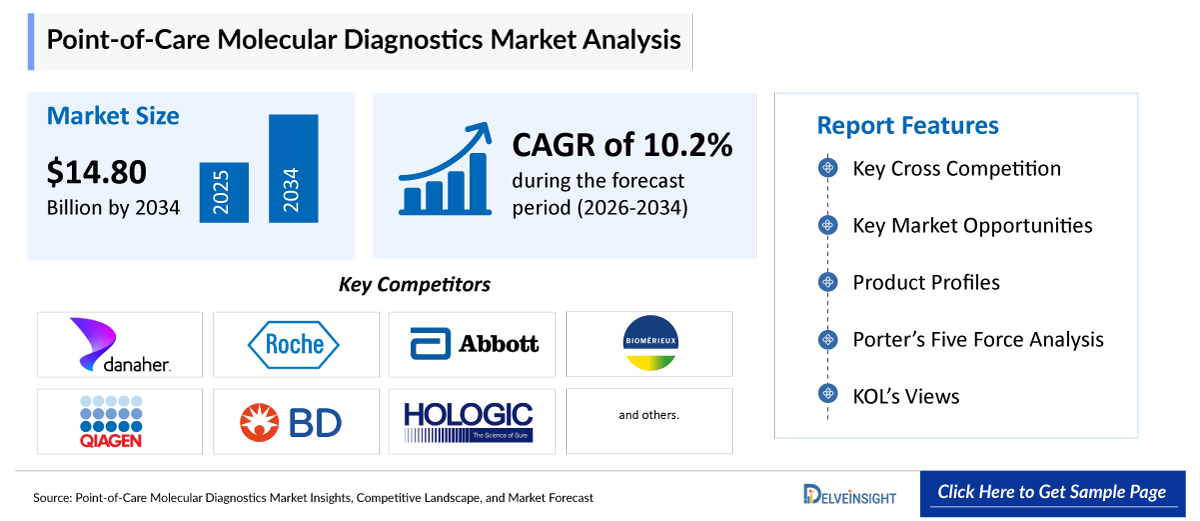
- The Point-of-Care Molecular Diagnostics Market Size is estimated at USD 6.20 billion in 2025 and is projected to reach USD 14.80 billion by 2034. Growth is anchored in the rising global burden of infectious disease, the shift toward decentralized and near-patient testing, and the expansion of CLIA-waived syndromic and home molecular tests.
- The Global Point-of-Care Molecular Diagnostics Market is growing at a CAGR of 10.2% during the forecast period from 2026 to 2034.
Point-of-Care Molecular Diagnostics Market Trends & Insights
- By product, the assays and consumables segment dominated the Point-of-Care Molecular Diagnostics market with a 58% share in 2025.
- By technology, the real-time PCR segment dominated the Point-of-Care Molecular Diagnostics market with a 45% share in 2025.
- By application, the infectious diseases segment dominated the Point-of-Care Molecular Diagnostics market with a 62% share in 2025.
- By end user, the hospitals and critical care settings segment dominated the Point-of-Care Molecular Diagnostics market with a 41% share in 2025.
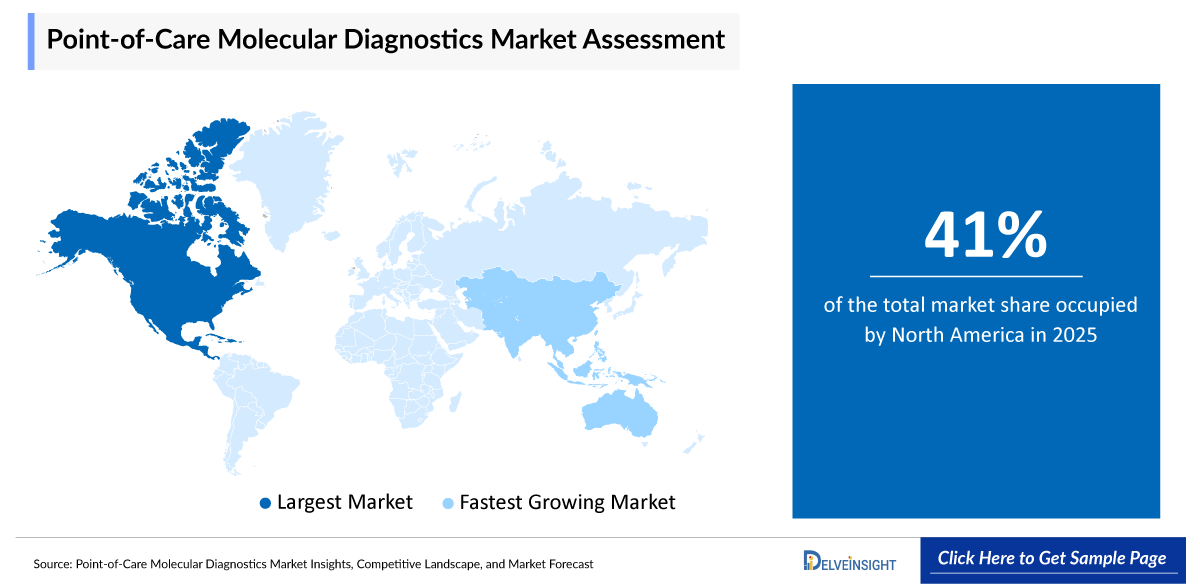
- North America dominated the global Point-of-Care Molecular Diagnostics market revenue with a 46% share in 2025, representing the highest regional market share globally.
Point-of-Care Molecular Diagnostics Market Size
The following snapshot summarizes the principal report metrics for the Point-of-Care Molecular Diagnostics market.
|
Report Metrics |
Details |
|
2025 Market Size | |
|
2034 Projected Market Size | |
|
Growth Rate (2026-2034) | |
|
Largest Market |
North America |
|
Fastest Growing Market |
Asia-Pacific |
|
Market Structure |
Consolidated |
All market values are expressed in USD and represent DelveInsight estimates synthesized from primary and secondary research.
Factors Contributing to the Growth of the Point-of-Care Molecular Diagnostics Market
Point-of-Care Molecular Diagnostics Market Drivers
-
Rising Global Burden of Infectious Disease and Antimicrobial Resistance
The most powerful driver of the Point-of-Care Molecular Diagnostics market is the persistent and rising global burden of infectious disease. The World Health Organization estimates that 374 million new infections occur each year from four curable sexually transmitted infections, and that 10.8 million people fell ill with tuberculosis in 2023. In the United States, the Centers for Disease Control and Prevention reports 1.6 million new chlamydia cases and over 700,000 gonorrhea cases annually, alongside a large seasonal burden of influenza, respiratory syncytial virus, and COVID-19.
Antimicrobial resistance compounds the challenge, as the inability to identify pathogens rapidly drives empirical antibiotic use. Point-of-care molecular tests detect pathogens directly and quickly, enabling earlier, targeted treatment and supporting infection control. As infectious disease incidence and resistance continue to rise, demand for rapid decentralized molecular testing expands across clinical and community settings through 2034.
-
Demand for Rapid, Near-Patient Results and Decentralized Care
Healthcare systems are shifting testing away from centralized laboratories toward near-patient and decentralized settings, where rapid results change clinical decisions in real time. Point-of-care molecular systems deliver laboratory-grade results in 15 to 30 minutes, allowing clinicians to test, counsel, and treat within a single visit, which improves outcomes and reduces loss to follow-up.
The COVID-19 pandemic demonstrated the value of testing at the patient bedside, and that expectation has persisted across emergency departments, urgent care, physician offices, and pharmacies. The Centers for Disease Control and Prevention and the Infectious Diseases Society of America recommend rapid molecular assays over antigen tests for influenza in outpatients, reinforcing the clinical case for decentralized molecular testing. This structural shift toward immediate, actionable diagnosis is a sustained driver of market growth.
-
Expansion of CLIA-Waiver and Syndromic Multiplex Testing
The expansion of CLIA-waived molecular tests is unlocking large new testing volumes by allowing non-laboratory staff to run high-quality PCR at the point of care. A landmark example is the BIOFIRE SPOTFIRE system, which received FDA clearance and CLIA-waiver for its Respiratory Panel and, in 2024, for its Respiratory/Sore Throat panels, detecting up to 15 pathogens in about 15 minutes. Syndromic multiplex panels test simultaneously for many pathogens with overlapping symptoms, increasing diagnostic yield and supporting antimicrobial stewardship.
CLIA-waiver enables deployment in urgent care, physician offices, pharmacies, student health clinics, and emergency departments, dramatically broadening the addressable market. As manufacturers expand waived, multiplex menus across respiratory, sexual health, and gastrointestinal indications, accessible decentralized testing volumes continue to grow.
-
Emergence of Over-the-Counter and Home Molecular Testing
The extension of molecular diagnostics into the home is creating an entirely new consumer channel. In March 2025, the FDA granted De Novo authorization to the Visby Medical Women's Sexual Health Test, the first over-the-counter PCR diagnostic device authorized for home use for any indication, delivering results for chlamydia, gonorrhea, and trichomoniasis in 30 minutes. This followed the first FDA authorization of an at-home combination COVID-19 and influenza molecular test in 2023 and the launch of at-home syphilis testing in 2024.
Home molecular testing improves privacy, convenience, and access, particularly for sexual health, where stigma delays diagnosis. While consumer-pay economics remain challenging, the expansion of instrument-free, palm-sized PCR platforms is steadily building a direct-to-consumer market that complements clinical point-of-care testing.
-
Technological Innovation in Isothermal, CRISPR, and Instrument-Free Platforms
Continuous innovation is improving the speed, portability, and affordability of point-of-care molecular testing. Isothermal nucleic acid amplification methods such as loop-mediated and nicking-enzyme amplification eliminate the need for thermal cycling, enabling rapid, low-power, instrument-light testing, as seen in widely deployed handheld platforms.
CRISPR-based detection is emerging as a highly specific, programmable approach well suited to decentralized use and is expected to be among the fastest-growing technologies. Instrument-free, single-use PCR devices now deliver gold-standard accuracy in the palm of the hand, removing the cost and complexity of bench instruments. These advances expand the range of settings and indications suitable for molecular testing, lower barriers to adoption, and broaden the market beyond traditional laboratory infrastructure.
-
Antimicrobial Stewardship and Antibiotic Optimization
Growing emphasis on antimicrobial stewardship is reinforcing demand for rapid molecular diagnostics. Inappropriate antibiotic prescribing, often driven by diagnostic uncertainty in respiratory and sore-throat presentations, accelerates antimicrobial resistance, a leading global health threat.
By rapidly distinguishing viral from bacterial infection and identifying specific pathogens, point-of-care molecular tests enable clinicians to withhold or target antibiotics appropriately at the moment of care. Manufacturers explicitly position syndromic panels as stewardship tools, and professional guidelines increasingly support molecular testing to guide therapy.
As health systems, payers, and regulators prioritize stewardship to combat resistance, rapid molecular testing becomes an essential clinical and policy instrument, sustaining adoption across outpatient and acute-care settings through the forecast period.
-
AI, Connectivity, and Integration with Digital Health
The integration of connectivity and artificial intelligence is enhancing the value of point-of-care molecular platforms. Cloud-enabled systems link decentralized testing to electronic health records, laboratory information systems, and public health surveillance, supporting real-time data sharing, result reporting, and outbreak monitoring.
Companion applications guide users through sample collection and result interpretation and connect positive results directly to telehealth and treatment, as seen in home sexual-health platforms partnered with major cloud providers. Artificial intelligence is being applied to assay interpretation, quality control, and workflow optimization, improving accuracy and ease of use.
This convergence of diagnostics with digital health expands the clinical and operational value of point-of-care molecular testing, strengthens adoption, and supports premium positioning across both clinical and consumer channels.
Point-of-Care Molecular Diagnostics Market Restraints
Despite strong momentum, the Point-of-Care Molecular Diagnostics Market faces material constraints. The cost per test for molecular point-of-care systems remains higher than for central-laboratory testing and rapid antigen alternatives, with cartridge and consumable expenditure adding recurring cost that can limit adoption in price-sensitive and lower-resource settings. Reimbursement is uneven across geographies and indications, and coverage for decentralized and home molecular testing often lags clinical availability, constraining utilization.
Regulatory complexity is significant, as manufacturers must navigate FDA clearance and CLIA-waiver pathways in the United States and the more demanding European In Vitro Diagnostic Regulation, lengthening time to market for new assays and platforms. Clinical and analytical concerns persist, including the need to confirm certain negative results in centralized laboratories and the risk of variable performance outside controlled settings.
The consumer-pay home market remains commercially unproven, illustrated by the withdrawal of an early at-home combination respiratory test despite regulatory success, underscoring uncertain demand outside pandemic conditions. Supply chains are exposed through reliance on a concentrated set of instrument, cartridge, and reagent suppliers, creating availability and cost risk.
Workforce training, connectivity integration, and quality oversight across distributed sites add operational burden. Together, these cost, reimbursement, regulatory, clinical, and operational barriers temper the pace of growth, even as the underlying drivers of infectious disease burden and decentralization remain firmly intact.
Point-of-Care Molecular Diagnostics Overview
Point-of-care molecular diagnostics refers to nucleic acid amplification testing performed at or near the site of patient care, outside centralized laboratories, to detect the DNA or RNA of pathogens or genetic markers with laboratory-grade accuracy. The category combines compact instruments and analyzers, single-use assays, cartridges, and reagents, and connectivity software, delivered through cartridge-based, handheld, or instrument-free formats.
Core technologies include real-time polymerase chain reaction, isothermal nucleic acid amplification such as loop-mediated and nicking-enzyme amplification, CRISPR-based detection, and microarray methods, designed to meet the rapid, sensitive, and specific REASSURED criteria for decentralized testing. Major applications span infectious diseases, including respiratory, sexually transmitted, hospital-acquired, hepatitis, HIV, and tuberculosis testing, as well as oncology and genetic testing.
Tests are deployed across hospitals and emergency departments, urgent care, physician offices, pharmacies, and increasingly the home. Accelerated by the COVID-19 pandemic and now expanding through CLIA-waiver, syndromic multiplex panels, and over-the-counter home tests, point-of-care molecular diagnostics deliver rapid results that enable earlier treatment, support antimicrobial stewardship, and bring laboratory-quality testing to the frontline of patient care.
Point-of-Care Molecular Diagnostics Market Key Growth Drivers
- The rising global burden of infectious disease is expanding demand, with the World Health Organization estimating 374 million new infections each year from four curable sexually transmitted infections and 10.8 million people falling ill with tuberculosis in 2023.
- Growing demand for rapid, near-patient results is shifting testing from centralized laboratories to decentralized settings, enabling diagnosis and treatment within a single visit.
- The expansion of CLIA-waived syndromic multiplex panels, such as the BIOFIRE SPOTFIRE respiratory range, is bringing laboratory-grade PCR into urgent care, physician offices, and pharmacies.
- The emergence of over-the-counter home molecular testing, including the first FDA-authorized at-home PCR test for sexual health in 2025, is opening new consumer channels.
- Technological innovation in isothermal amplification, CRISPR-based detection, and instrument-free single-use PCR is improving speed, portability, and affordability.
- Antimicrobial stewardship priorities are driving adoption, as rapid molecular results reduce inappropriate antibiotic use and support targeted therapy.
- The convergence of infectious disease burden, decentralization, regulatory support, and technological innovation is expected to sustain double-digit growth in the market through 2034.
Point-of-Care Molecular Diagnostics Companies
The Point-of-Care Molecular Diagnostics Competitive Landscape is led by the following active manufacturers and developers:
- Danaher Corporation
- F. Hoffmann-La Roche Ltd
- Abbott Laboratories
- bioMérieux SA
- QIAGEN N.V.
- Becton, Dickinson and Company
- Hologic, Inc.
- QuidelOrtho Corporation
- Thermo Fisher Scientific Inc.
- SD Biosensor, Inc., and others
For illustrative purposes, only the top 10 companies are listed in the Table of Contents. The report may include analysis and references to additional companies where relevant to the market assessment.
Point-of-Care Molecular Diagnostics Market Segment Analysis
The Point-of-Care Molecular Diagnostics Market by Product (Assays and Consumables, Instruments and Analyzers, Software and Services), Technology (Real-Time PCR, Isothermal Nucleic Acid Amplification, CRISPR-Based Detection, Microarray, Sequencing-Based, Others), Application (Infectious Diseases, Oncology, Genetic Testing, Others), End User (Hospitals and Critical Care Settings, Physician Offices and Clinics, Urgent Care and Ambulatory Centers, Home Care and Self-Testing, Others), and Geography (North America, Europe, Asia-Pacific, Rest of World).
-
Point-of-Care Molecular Diagnostics Market Segmentation By Product
Dominant Subsegment: Assays and Consumables. The assays and consumables category is expected to dominate the market.
Dominant: Assays and Consumables ~ 58%
The assays and consumables segment accounted for 58% of the Point-of-Care Molecular Diagnostics market in 2025. Assays and consumables are the leading product segment because point-of-care molecular testing operates on a razor-and-blade model in which single-use cartridges, reagents, and test kits are consumed on every run, producing recurring revenue that scales directly with testing volume. As decentralized testing expands across respiratory, sexual health, and other indications, consumable demand deepens with each new installed instrument.
Manufacturers reinforce this dynamic by pairing proprietary platforms with closed-system cartridges, locking testing sites into ongoing purchases, as seen with Cepheid GeneXpert cartridges and BIOFIRE SPOTFIRE panels. A steady cadence of new assay launches, including CLIA-waived syndromic respiratory and sore-throat panels and the first over-the-counter PCR sexual health test, continuously expands the consumable menu.
The combination of recurring economics, growing test volumes, and menu expansion secures the segment's leadership across the forecast period, while the instruments and analyzers tier underpins the installed base and the software and services tier captures connectivity, data, and support revenue.
-
Point-of-Care Molecular Diagnostics Market Segmentation By Technology
Dominant Subsegment: Real-Time PCR. The real-time PCR category is expected to dominate the market.
Dominant: Real-Time PCR ~ 45%
The real-time PCR segment accounted for 45% of the Point-of-Care Molecular Diagnostics market in 2025. Real-time polymerase chain reaction is the most widely deployed point-of-care molecular technology, valued as the diagnostic gold standard for its high sensitivity, specificity, and broad validated assay menu. Its dominance is reinforced by large installed bases of cartridge-based PCR platforms such as Cepheid GeneXpert, Roche cobas liat, and bioMérieux BIOFIRE SPOTFIRE, and by professional guidelines that recommend nucleic acid amplification testing over rapid antigen tests for conditions such as influenza.
Continued innovation sustains the segment, including instrument-free single-use PCR devices that deliver laboratory-grade results in the palm of the hand and multiplex panels that detect many pathogens simultaneously. Adjacent technologies are advancing rapidly: isothermal nucleic acid amplification enables low-power, instrument-light testing, and CRISPR-based detection is expected to be among the fastest-growing approaches.
While these alternatives expand the technology landscape and grow quickly from smaller bases, real-time PCR retains leadership through its accuracy, versatility, and entrenched clinical validation across the forecast period.
-
Point-of-Care Molecular Diagnostics Market Segmentation By End User
Dominant Subsegment: Hospitals and Critical Care Settings. The hospitals and critical care settings category is expected to dominate the market.
Dominant: Hospitals and Critical Care Settings ~ 41%
The hospitals and critical care settings segment accounted for 41% of the Point-of-Care Molecular Diagnostics market in 2025. Hospitals and critical care settings are the largest end user because emergency departments, intensive care units, and hospital-based near-patient testing sites combine high testing volumes with the greatest clinical urgency. Rapid molecular results in these settings guide isolation, admission, and treatment decisions for respiratory, bloodstream, and hospital-acquired infections, where delays carry serious consequences.
Hospitals have the infrastructure, accreditation, and throughput to deploy multiple molecular platforms and syndromic panels, and they anchor the installed base for cartridge-based systems. The clinical case is reinforced by antimicrobial stewardship programs that depend on rapid pathogen identification. At the same time, the expansion of CLIA-waived testing is driving rapid growth in physician offices, urgent care and ambulatory centers, and the emerging home-care and self-testing channel, as molecular testing moves closer to the patient.
While these decentralized settings are the fastest-expanding cohort, hospitals and critical care settings retain leadership in 2025 on the strength of volume, acuity, and infrastructure.
Point-of-Care Molecular Diagnostics Market Region Analysis
-
Dominant Region: North America
North America accounted for 46% of the global Point-of-Care Molecular Diagnostics market revenue in 2025, representing the highest regional market share globally. The region's dominance reflects the concentration of leading molecular diagnostics manufacturers, an advanced healthcare infrastructure, and the most active decentralized testing environment, particularly in the United States. Market-size influence is amplified by high per-capita testing volumes, strong reimbursement for molecular diagnostics, and rapid uptake of CLIA-waived syndromic panels in urgent care, physician offices, and pharmacies.
The regulatory environment is supportive, with established FDA clearance and CLIA-waiver pathways and a series of landmark authorizations, including the first over-the-counter PCR sexual health test in 2025 and CLIA-waived BIOFIRE SPOTFIRE respiratory panels in 2024.
Disease burden is substantial, with the Centers for Disease Control and Prevention reporting 1.6 million new chlamydia cases and over 700,000 gonorrhea cases annually alongside heavy seasonal respiratory demand. A deep manufacturer base and strong private and public investment anchor the region's continued leadership.
Dominant: North America ~ 46% (Largest)
-
Fastest Growing Region: Asia-Pacific
Asia-Pacific is the fastest-growing region in the Point-of-Care Molecular Diagnostics market. The region's elevated CAGR is driven by a large population, a high burden of infectious disease including tuberculosis and respiratory and sexually transmitted infections, and expanding access to decentralized testing across China, India, Japan, South Korea, and Australia. Rising healthcare investment, government infectious-disease surveillance programs, and the growth of affordable domestic platforms such as chip-based real-time micro-PCR systems are broadening access in both urban and remote settings.
Manufacturing expansion and local innovation are lowering costs and accelerating adoption, while increasing awareness, urbanization, and insurance coverage support demand. The combination of high disease burden, decentralization, and cost-effective regional platforms positions Asia-Pacific as the principal source of incremental growth over the forecast period.
Point-of-Care Molecular Diagnostics Market Regional Analysis
-
Point-of-Care Molecular Diagnostics Market North America Analysis
North America accounted for 46% of the global Point-of-Care Molecular Diagnostics market revenue in 2025. The United States dominates on the strength of its manufacturer base, decentralized testing infrastructure, CLIA-waiver and FDA pathways, and strong reimbursement, while Canada contributes through public-health testing programs and expanding near-patient diagnostics in primary and remote care.
-
Point-of-Care Molecular Diagnostics Market Europe Analysis
Europe is a large and advanced regional market, led by Germany, the United Kingdom, France, Italy, and Spain. Growth is supported by strong public health systems, antimicrobial stewardship initiatives, and rising syndromic testing, while the transition to the European In Vitro Diagnostic Regulation is raising the evidence bar for new point-of-care molecular assays and shaping market entry across the region.
- Point-of-Care Molecular Diagnostics Market Asia Pacific Analysis
Asia-Pacific is the fastest-growing region, propelled by a large population, a high infectious-disease burden, and expanding access to decentralized testing across China, India, Japan, South Korea, and Australia. Affordable domestic platforms, government surveillance programs, and rising healthcare investment are accelerating adoption in both clinical and community settings.
-
Point-of-Care Molecular Diagnostics Market Rest of World Analysis
The Rest of World region, spanning Latin America, the Middle East, and Africa, is an emerging growth frontier. A high burden of tuberculosis, HIV, and other infectious diseases, combined with limited centralized laboratory capacity, makes rapid decentralized molecular testing especially valuable, and international health programs and donor funding are expanding access to point-of-care platforms across these markets.
Point-of-Care Molecular Diagnostics Market Competitive Landscape
The Point-of-Care Molecular Diagnostics market is classified as Consolidated. A small group of global diagnostics companies controls the majority of platform and consumable revenue, with Danaher leading through its Cepheid GeneXpert systems, followed by bioMérieux in syndromic testing, Roche and Abbott in cartridge-based and rapid molecular platforms, and QIAGEN in portable systems. A broad and active field of specialized challengers, including Visby Medical, Co-Diagnostics, Molbio Diagnostics, and SD Biosensor, competes in instrument-free, home, and emerging-market segments.
The Point-of-Care Molecular Diagnostics Competitive Landscape can be evaluated across the following dimensions:
- Market concentration: Consolidated, with the top five players holding the majority of revenue and high barriers to entry from proprietary chemistry and closed-cartridge ecosystems.
- Leading players: Danaher (Cepheid), bioMérieux, F. Hoffmann-La Roche, Abbott, and QIAGEN anchor the top tier.
- Geographic reach: Leaders operate global commercial and support networks, with expansion programs targeting Asia-Pacific, the Middle East, Africa, and Latin America.
- Product portfolio strength: Top players offer integrated portfolios spanning instruments, single-use cartridges, syndromic panels, and connectivity software.
- Pipeline strength: Active pipelines in CLIA-waived syndromic panels, home and over-the-counter assays, and expanded menus across respiratory, sexual health, and other indications.
- Strategic partnerships: Collaborations with telehealth, cloud, and public-health partners extend reach, exemplified by home testing platforms integrated with major cloud providers.
- M&A activity: Consolidation continues, including bioMérieux's acquisition of SpinChip Diagnostics and Roche's acquisition of LumiraDx point-of-care technology.
- Manufacturing capabilities: Scale manufacturing of cartridges and reagents is a key competitive moat and a supply-chain consideration.
- Innovation focus: Instrument-free single-use PCR, isothermal amplification, CRISPR-based detection, multiplex syndromic panels, and AI-enabled connectivity.
Point-of-Care Molecular Diagnostics Market Recent Breakthroughs and Developments
- In June 2025, Danaher Corporation (Cepheid), received a Health Canada medical device license for the Xpert HIV-1 Viral Load XC, a next-generation extended-coverage test used to monitor the effectiveness of antiretroviral therapy. Strategic significance: Extends decentralized molecular monitoring into HIV care and strengthens Cepheid's GeneXpert menu for global health programs.
- In March 2025, Visby Medical, Inc., received FDA De Novo authorization for the Visby Medical Women's Sexual Health Test, the first over-the-counter PCR diagnostic authorized for home use for any indication, detecting chlamydia, gonorrhea, and trichomoniasis in 30 minutes. Strategic significance: Opens the at-home PCR market and establishes instrument-free molecular testing as a consumer category.
Point-of-Care Molecular Diagnostics Market Segmentation
- Point-of-Care Molecular Diagnostics Market by Product
- Assays and Consumables
- Instruments and Analyzers
- Software and Services
- Point-of-Care Molecular Diagnostics Market by Technology
- Real-Time PCR
- Isothermal Nucleic Acid Amplification
- CRISPR-Based Detection
- Microarray
- Sequencing-Based
- Others
- Point-of-Care Molecular Diagnostics Market by Application
- Infectious Diseases
- Respiratory Infections
- Sexually Transmitted Infections
- Hospital-Acquired Infections
- Hepatitis and HIV
- Tuberculosis
- Oncology
- Genetic Testing
- Others
- Infectious Diseases
- Point-of-Care Molecular Diagnostics Market by End User
- Hospitals and Critical Care Settings
- Physician Offices and Clinics
- Urgent Care and Ambulatory Centers
- Home Care and Self-Testing
- Others
Point-of-Care Molecular Diagnostics Market by Geography
- North America Point-of-Care Molecular Diagnostics Market
- United States Point-of-Care Molecular Diagnostics Market Size in USD million (2023-2034)
- Canada Point-of-Care Molecular Diagnostics Market Size in USD million (2023-2034)
- Mexico Point-of-Care Molecular Diagnostics Market Size in USD million (2023-2034)
- Europe Point-of-Care Molecular Diagnostics Market
- Germany Point-of-Care Molecular Diagnostics Market Size in USD million (2023-2034)
- United Kingdom Point-of-Care Molecular Diagnostics Market Size in USD million (2023-2034)
- France Point-of-Care Molecular Diagnostics Market Size in USD million (2023-2034)
- Italy Point-of-Care Molecular Diagnostics Market Size in USD million (2023-2034)
- Spain Point-of-Care Molecular Diagnostics Market Size in USD million (2023-2034)
- Rest of Europe Point-of-Care Molecular Diagnostics Market Size in USD million (2023-2034)
- Asia-Pacific Point-of-Care Molecular Diagnostics Market
- China Point-of-Care Molecular Diagnostics Market Size in USD million (2023-2034)
- Japan Point-of-Care Molecular Diagnostics Market Size in USD million (2023-2034)
- India Point-of-Care Molecular Diagnostics Market Size in USD million (2023-2034)
- Australia Point-of-Care Molecular Diagnostics Market Size in USD million (2023-2034)
- South Korea Point-of-Care Molecular Diagnostics Market Size in USD million (2023-2034)
- Rest of Asia-Pacific Point-of-Care Molecular Diagnostics Market Size in USD million (2023-2034)
- Rest of the World (RoW) Point-of-Care Molecular Diagnostics Market
- Middle East Point-of-Care Molecular Diagnostics Market Size in USD million (2023-2034)
- Africa Point-of-Care Molecular Diagnostics Market Size in USD million (2023-2034)
- South America Point-of-Care Molecular Diagnostics Market Size in USD million (2023-2034)
Point-of-Care Molecular Diagnostics Market Recent Industry Trends and Milestones (2023-2026):
|
Category |
Key Developments |
|
Point-of-Care Molecular Diagnostics Market Product Approval |
bioMérieux received FDA clearance and CLIA-waiver for the BIOFIRE SPOTFIRE Respiratory Panel (February 2023) and for its Respiratory/Sore Throat Panel and Panel Mini (March and June 2024), detecting up to 15 pathogens in about 15 minutes. Visby Medical received the first-ever FDA De Novo authorization for an over-the-counter PCR test, the Women's Sexual Health Test (March 2025), and 510(k) clearance for a CLIA-waived respiratory PCR test (June 2024). NOWDiagnostics launched the first over-the-counter home syphilis test (November 2024), Cepheid received a Health Canada license for the Xpert HIV-1 Viral Load XC (June 2025), and Lucira secured the first over-the-counter at-home combination COVID-19 and influenza molecular test authorization (February 2023). |
|
Point-of-Care Molecular Diagnostics Market Product Expansion |
Manufacturers expanded CLIA-waived syndromic menus across respiratory, sore-throat, sexual health, and gastrointestinal indications, moving testing into urgent care, physician offices, pharmacies, and student health clinics. Home and over-the-counter testing expanded with at-home PCR sexual health and syphilis tests and same-day delivery models. Cepheid extended its GeneXpert menu across tuberculosis, HIV, and sexually transmitted infections, while instrument-free single-use PCR platforms broadened access in resource-limited and remote settings. Connectivity and telehealth integration linked decentralized testing to treatment and surveillance. |
|
Point-of-Care Molecular Diagnostics Market Product Investment |
bioMérieux agreed to acquire SpinChip Diagnostics to expand its point-of-care portfolio (January 2025), and Roche acquired LumiraDx's point-of-care technology to broaden primary-care testing (July 2024). Venture investment concentrated on instrument-free PCR, CRISPR-based detection, and home testing, with Visby Medical raising USD 486 million in total funding, including USD 55 million in 2025. Co-Diagnostics advanced its low-cost Co-Dx PCR platform for at-home and emerging-market use, while continued capital flowed into multiplex and decentralized molecular platforms. |
|
Company Strategy |
Danaher Corporation (Cepheid): Decentralized leadership through the GeneXpert platform and cartridge-based menu expansion across infectious disease and global health. bioMérieux SA: Syndromic point-of-care leadership via the BIOFIRE SPOTFIRE system and SpinChip acquisition. F. Hoffmann-La Roche Ltd: Near-patient expansion through cobas liat and the LumiraDx acquisition. Abbott Laboratories: Rapid isothermal testing through the ID NOW platform. QIAGEN N.V.: Portable molecular systems with a diverse assay menu, while challengers such as Visby Medical, Co-Diagnostics, and Molbio Diagnostics pursue instrument-free, home, and emerging-market niches. |
|
Emerging Technologies |
Real-time PCR remains the gold standard, while isothermal nucleic acid amplification such as loop-mediated and nicking-enzyme amplification enables low-power, instrument-light testing. CRISPR-based detection is emerging as a highly specific, programmable approach expected to be among the fastest-growing technologies. Instrument-free, single-use PCR delivers laboratory-grade results in the palm of the hand, and multiplex syndromic panels detect many pathogens simultaneously. AI-enabled interpretation, cloud connectivity, and integration with electronic health records and public-health surveillance are enhancing accuracy, workflow, and outbreak response, while over-the-counter home testing extends molecular diagnostics to consumers. |
Point-of-Care Molecular Diagnostics Market Startup Funding and Investment Trends
Investment in the Point-of-Care Molecular Diagnostics ecosystem has concentrated on instrument-free PCR, CRISPR-based detection, and home and decentralized testing. The following companies illustrate recent funding activity and technology focus.
|
Company |
Total Funding |
Funding Stage |
Main Product |
Core Technology |
|
Visby Medical, Inc. |
USD 486 million |
Late-stage venture |
Women's Sexual Health Test |
Instrument-free single-use PCR |
|
Co-Diagnostics, Inc. |
Public (Nasdaq) |
Public listing |
Co-Dx PCR Platform |
Portable and at-home PCR |
|
Request for unlocking the report of the @ Point-of-Care Molecular Diagnostics Market Insights | ||||
Capital is flowing toward developers that move laboratory-grade molecular testing closer to the patient. Visby Medical has raised USD 486 million to commercialize instrument-free, single-use PCR for sexual health and respiratory testing across point-of-care and home settings, while Co-Diagnostics advances a low-cost portable PCR platform for at-home and emerging-market use.
Molbio Diagnostics scales chip-based micro-PCR for decentralized tuberculosis and infectious-disease testing, and Sherlock Biosciences pursues CRISPR-based detection as a next-generation point-of-care approach. Binx Health advances point-of-care molecular sexual-health testing.
Collectively, these investments signal conviction that instrument-free PCR, CRISPR detection, and home and decentralized testing will define the next phase of competitive advantage in the global Point-of-Care Molecular Diagnostics market.
Key Takeaways from the Point-of-Care Molecular Diagnostics Market Report Study
- Market size analysis for the current Point-of-Care Molecular Diagnostics Market Size (2025), and market forecast for 9 years (2026 to 2034).
- Top key product/technology developments, mergers, acquisitions, partnerships, and joint ventures that happened over the last 3 years.
- Key companies dominating the global Point-of-Care molecular diagnostics market.
- Various opportunities available for competitors in the Point-of-Care molecular diagnostics market space.
- What are the top-performing segments in 2025? How will these segments perform in 2034?
- Which are the top-performing regions and countries in the current Point-of-Care molecular diagnostics market scenario?
- Which are the regions and countries where companies should concentrate their opportunities for Point-of-Care molecular diagnostics market growth in the future?
Target audience who can benefit from this Point-of-Care molecular diagnostics market report study
- Point-of-Care Molecular Diagnostics product providers
- Research organizations and consulting companies
- Point-of-Care Molecular Diagnostics-related organizations, associations, forums, and other alliances
- Government and corporate offices
- Start-up companies, venture capitalists, and private equity firms
- Distributors and traders dealing in Point-of-Care molecular diagnostics
- Various end-users who want to know more about the Point-of-Care molecular diagnostics market and the latest technological developments in the Point-of-Care Molecular Diagnostics Market.
Stay updated with us for Recent Articles @ New DelveInsight Blogs

