Poliomyelitis Pipeline Summary
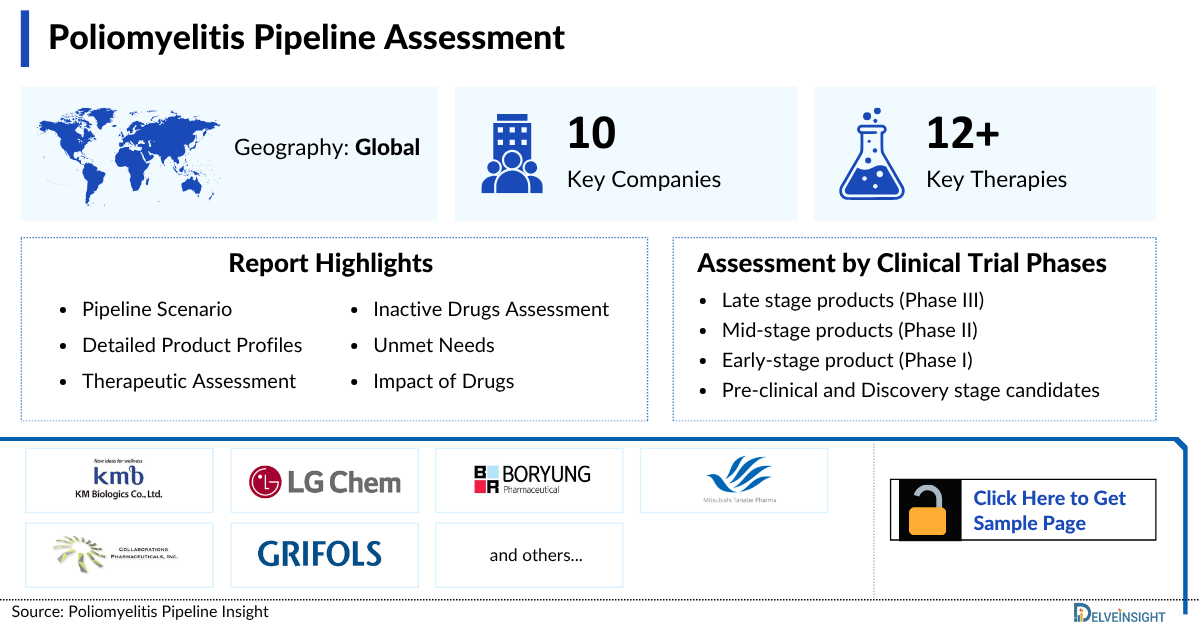
DelveInsight’s, “Poliomyelitis Pipeline Insight, 2026” report provides comprehensive insights about 10+ companies and 12+ pipeline drugs in Poliomyelitis pipeline landscape. It covers the pipeline drug profiles, including clinical and nonclinical stage products. It also covers the therapeutics assessment by product type, stage, route of administration, and molecule type. It further highlights the inactive pipeline products in this space.
Geography Covered
- Global coverage
Poliomyelitis Disease Understanding
Poliomyelitis Overview
Poliomyelitis (polio) is a highly contagious viral disease caused by the poliovirus and is transmitted primarily through the fecal–oral and oral–oral routes. Although vaccination has dramatically reduced its global burden, polio continues to pose a public health risk in regions with inadequate sanitation, low immunization coverage, or ongoing virus circulation. The disease predominantly affects young children and presents with a broad clinical spectrum, ranging from asymptomatic infection or mild flu-like illness to irreversible paralysis, respiratory failure, and, in severe cases, death. As no specific antiviral treatment is available, prevention through vaccination remains the cornerstone of disease control. Survivors may experience permanent neurological deficits and can later develop post-polio syndrome, characterized by progressive muscle weakness, fatigue, and pain. Despite remarkable progress toward eradication, challenges such as vaccine-derived polioviruses, delayed detection of virus circulation, and gaps in immunization continue to hinder global eradication efforts, underscoring the need for sustained surveillance and vaccination programs.
Poliovirus, a member of the Picornaviridae family and Enterovirus C species, is a highly contagious, non-enveloped, positive-sense single-stranded RNA virus that primarily infects humans. It exists as three distinct wild serotypes, each providing lifelong immunity only against the infecting serotype. In addition to wild poliovirus, paralytic disease can also result from vaccine-associated paralytic poliomyelitis (VAPP) and circulating vaccine-derived polioviruses (cVDPVs), both of which are clinically indistinguishable from wild-type infection. VAPP occurs when the attenuated virus in the oral polio vaccine mutates and regains neurovirulence in vaccine recipients or their close contacts, whereas cVDPVs emerge through prolonged circulation of vaccine-derived strains in under-immunized populations or prolonged replication in immunocompromised individuals. These mutated strains can regain the transmissibility and neurovirulence of wild poliovirus, making sustained vaccination coverage essential for preventing outbreaks.
Following infection, poliovirus initially replicates in the oropharynx and gastrointestinal tract, where pre-existing immunity from maternal antibodies, prior infection, or vaccination often limits its spread. In susceptible individuals, the virus may enter the bloodstream and, in a small proportion of cases, invade the central nervous system by crossing the blood–brain barrier or traveling along peripheral nerves. This can lead to aseptic meningitis or destruction of motor neurons in the brainstem and spinal cord, resulting in paralysis. Although some neurological recovery occurs through nerve regeneration and compensatory reinnervation, permanent nerve damage may cause muscle weakness, atrophy, skeletal deformities, joint abnormalities, chronic pain, and respiratory impairment. Following infection, individuals typically develop lifelong immunity, while mucosal immune responses help reduce viral replication and transmission. In contrast, individuals with impaired B-cell immunity are at greater risk of severe paralytic disease and prolonged viral shedding.
Prompt evaluation of acute flaccid paralysis is essential for early detection of poliovirus infection and timely implementation of public health measures. Diagnosis primarily relies on viral culture or molecular detection of poliovirus RNA from stool, throat swabs, or throat wash specimens, with stool being the preferred sample. Confirmation is based on laboratory identification and genetic sequencing of the virus to distinguish wild poliovirus from vaccine-derived strains. As viral shedding can persist for weeks, particularly in stool, timely specimen collection is critical, while a negative cerebrospinal fluid result does not exclude the disease. Serological testing has limited diagnostic value due to widespread immunity from vaccination or prior infection. Magnetic resonance imaging (MRI) and electromyography (EMG) may provide supportive evidence and help differentiate poliomyelitis from other neurological disorders.
As no effective antiviral therapy is available for acute poliomyelitis, treatment is primarily supportive and focuses on symptom relief, prevention of complications, and functional recovery. Management includes controlling fever and pain, preventing respiratory infections, and providing mechanical ventilation when respiratory muscles are affected. Physiotherapy and splinting help reduce pain, prevent muscle contractures, and minimize deformities, while rehabilitation, exercise, counseling, and patient education are essential for maximizing long-term function and independence. Orthopedic surgery may be required to correct deformities or improve mobility in selected patients. For individuals with primary immunodeficiency who are unable to clear the virus, the investigational capsid inhibitor pocapavir is available through compassionate use.
"Poliomyelitis Pipeline Insight, 2026" report by DelveInsight outlays comprehensive insights of present scenario and growth prospects across the indication. A detailed picture of the Poliomyelitis pipeline landscape is provided which includes the disease overview and Poliomyelitis treatment guidelines. The assessment part of the report embraces, in depth Poliomyelitis commercial assessment and clinical assessment of the pipeline products under development. In the report, detailed description of the drug is given which includes mechanism of action of the drug, clinical studies, NDA approvals (if any), and product development activities comprising the technology, Poliomyelitis collaborations, licensing, mergers and acquisition, funding, designations and other product related details.
Poliomyelitis Pipeline Report Highlights
The companies and academics are working to assess challenges and seek opportunities that could influence Poliomyelitis R&D. The therapies under development are focused on novel approaches to treat/improve Poliomyelitis.
Poliomyelitis Emerging Drugs Chapters
This segment of the Poliomyelitis report encloses its detailed analysis of various drugs in different stages of clinical development, including Phase III, II, I, Preclinical and Discovery. It also helps to understand clinical trial details, expressive pharmacological action, agreements and collaborations, and the latest news and press releases.
Poliomyelitis Emerging Drugs
LR20062: LG Chem
LR20062 is an investigational hexavalent (6-in-1) combination vaccine being developed by LG Chem for the prevention of multiple childhood infectious diseases, including poliomyelitis, diphtheria, tetanus, acellular pertussis, hepatitis B, and Haemophilus influenzae type b (Hib). The vaccine is designed to provide broad immunization through a single injection, helping to simplify pediatric vaccination schedules, improve compliance, and reduce the number of required injections. According to LG Chem's pipeline, LR20062 is currently in Phase II clinical development and represents the company's next-generation acellular pertussis (aP)-based hexavalent vaccine program, intended to expand its pediatric vaccine portfolio and strengthen global immunization efforts.
Recombinant Poliomyelitis Vaccine: CanSinoBIO
CanSinoBIO's Recombinant Poliomyelitis Vaccine (VLP-Polio) is an investigational recombinant trivalent virus-like particle (VLP) vaccine being developed to prevent poliomyelitis without the use of live poliovirus. Manufactured using the Sf-RVN insect cell expression platform, the vaccine is designed to mimic the structure of wild poliovirus while eliminating the risk of vaccine-derived poliovirus, potentially offering an improved safety profile over conventional oral polio vaccines. According to company’s pipeline, the candidate is currently being evaluated in a Phase II randomized clinical trial in infants and toddlers to assess its safety and immunogenicity against the licensed inactivated polio vaccine (IPV).
Further product details are provided in the report...
Poliomyelitis Therapeutic Assessment
This segment of the report provides insights about the different Poliomyelitis drugs segregated based on following parameters that define the scope of the report, such as:
Major Players in Poliomyelitis
There are approx. 10+ key companies which are developing the therapies for Poliomyelitis. The companies which have their Poliomyelitis drug candidates in the most advanced stage, i.e. Phase II include, LG Chem.
Poliomyelitis Pipeline Drug Phases
DelveInsight’s report covers around 12+ products under different phases of clinical development like
- Late stage products (Phase III)
- Mid-stage products (Phase II)
- Early-stage product (Phase I) along with the details of
- Pre-clinical and Discovery stage candidates
- Discontinued & Inactive candidates
Poliomyelitis Drugs Route of Administration
Poliomyelitis pipeline report provides the therapeutic assessment of the pipeline drugs by the Route of Administration. Products have been categorized under various ROAs such as
- Oral
- Intravenous
- Subcutaneous
- Parenteral
- Topical
Poliomyelitis Drugs Molecule Type
Products have been categorized under various Molecule types such as
- Recombinant fusion proteins
- Small molecule
- Monoclonal antibody
- Peptide
- Polymer
- Gene therapy
Poliomyelitis Pipeline Product Type
- Drugs have been categorized under various product types like Mono, Combination and Mono/Combination.
Poliomyelitis Pipeline Development Activities
The Poliomyelitis Pipeline report provides insights into different therapeutic candidates in Phase III, II, I, preclinical and discovery stage. It also analyses Poliomyelitis therapeutic drugs key players involved in developing key drugs.
Poliomyelitis Clinical Trials and Development Activities
The Poliomyelitis Clinical Trials analysis report covers the detailed information of collaborations, acquisition and merger, licensing along with a thorough therapeutic assessment of emerging Poliomyelitis drugs.
Poliomyelitis Pipeline Report Insights
- Poliomyelitis Pipeline Analysis
- Poliomyelitis Pipeline Therapeutic Assessment
- Poliomyelitis Pipeline Unmet Needs
- Impact of Poliomyelitis Pipeline Drugs
Poliomyelitis Pipeline Report Assessment
- Poliomyelitis Pipeline Product Profiles
- Poliomyelitis Therapeutic Assessment
- Poliomyelitis Pipeline Assessment
- Inactive drugs assessment
- Poliomyelitis Unmet Needs
Explore the Poliomyelitis market forecast landscape, epidemiological trends, emerging opportunities, and forecast insights through 2032 to support informed decisions.
Key Questions Answered in the Poliomyelitis Pipeline Reports:
- Current Treatment Scenario and Emerging Therapies:
- How many companies are developing Poliomyelitis drugs?
- How many Poliomyelitis drugs are developed by each company?
- How many emerging drugs are in mid-stage, and late-stage of development for the treatment of Poliomyelitis?
- What are the key collaborations (Industry–Industry, Industry–Academia), Mergers and acquisitions, licensing activities related to the Poliomyelitis therapeutics?
- What are the recent trends, drug types and novel technologies developed to overcome the limitation of existing therapies?
- What are the clinical studies going on for Poliomyelitis and their status?
- What are the key designations that have been granted to the emerging drugs?
Key Poliomyelitis Companies
- LG Chem
- CanSinoBIO
- Evaxion Biotech
- Codagenix
- Meiji Holdings Co
Key Poliomyelitis Pipeline Products
- LR20062
- Recombinant Poliomyelitis Vaccine
- Research Program
- Research Program: nOPV
- KD2-396