
Primary Progressive Multiple Sclerosis Market Summary
- Unlike relapsing multiple sclerosis, PPMS is characterized by gradual disability progression with limited inflammatory activity, making it challenging to develop therapies that meaningfully delay disability accumulation.
- In the US, females accounted for the majority of PPMS cases in 2025, representing approximately 80% of gender-specific cases, compared with a smaller share among males.
- By age, the 45–54 years group represented the largest share of PPMS cases in the US in 2025 at approximately 35%, followed by the 35–44 years group at approximately 25%.
- Ocrelizumab (OCREVUS) remains the key approved disease-modifying therapy for PPMS and has established a strong position in the market as the first and currently dominant disease-modifying treatment specifically approved for PPMS.
- As of July 2026, masitinib is not approved for PPMS. AB Science, previously tested it in clinical trials and secured a patent for progressive multiple sclerosis in Japan, but suspended its late-stage clinical trial program for multiple sclerosis to focus on other pipeline priorities.
- In December 2025, tolebrutinib’s Phase III PERSEUS study failed to meet its primary endpoint for delaying 6-month confirmed disability progression in PPMS. Consequently, Sanofi discontinued plans to pursue regulatory approval for PPMS, further narrowing the late-stage pipeline.
- The discontinuation of development of therapies in PPMS highlights the limited success of emerging therapies which reinforces the substantial unmet need for novel therapies that can slow disability progression and provide durable clinical benefit in PPMS.
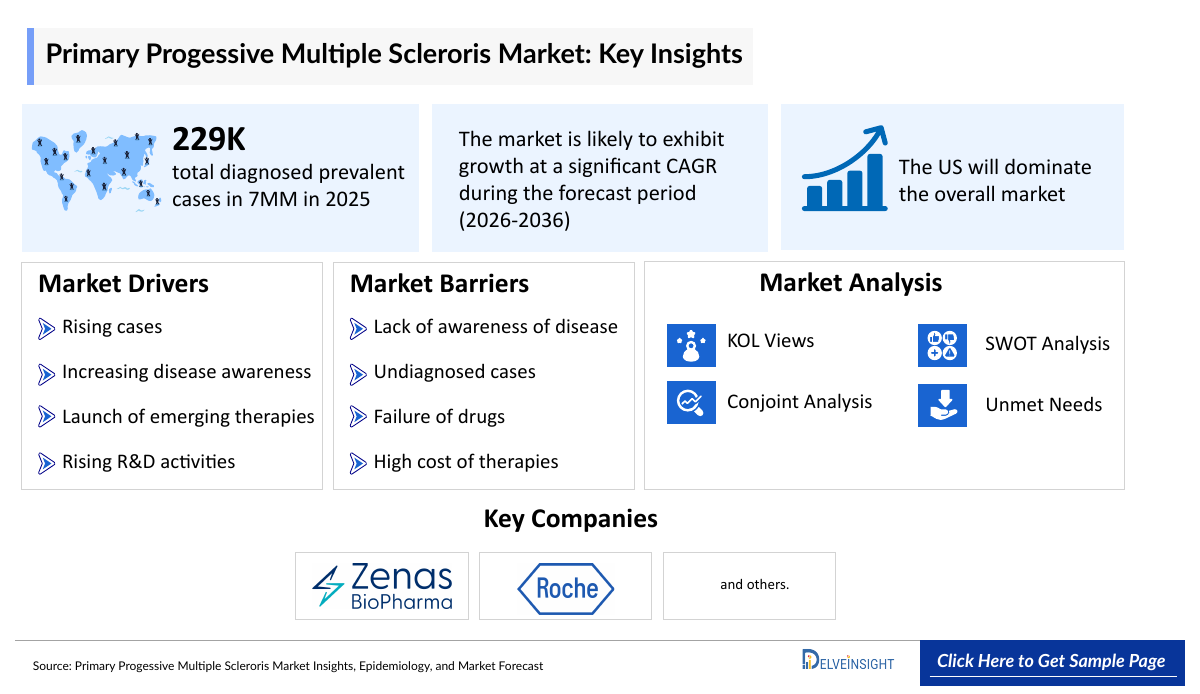
- The emerging pipeline of PPMS is not robust with only a few therapies in clinical trial such as orelabrutinib (Zenas BioPharma) and fenebrutinib (Roche).
Primary Progressive Multiple Sclerosis (PPMS) Market Size and Forecast in the 7MM
- 2025 PPMS Market Size: USD ~XXXX million
- 2036 Projected PPMS Market Size: USD ~XXX million
- PPMS Growth Rate (2026–2036): ~XX% CAGR
DelveInsight's "Primary Progressive Multiple Sclerosis Market Insights, Epidemiology and Market Forecast – 2036" report delivers an in-depth understanding of the PPMS, historical and forecasted epidemiology, as well as the PPMS market trends in the United States, EU4 (Germany, Spain, Italy, and France) and the United Kingdom, and Japan.
The PPMS market report delivers a comprehensive analysis of the current treatment landscape, including standards of care, clinical practices, and evolving therapeutic algorithms. It evaluates PPMS patient burden trends, revenue & market share dynamics, peak patient share & therapy uptake analysis, and provides an in-depth market size assessment, and growth rate projections (Historical & Forecast 2022–2036) across global regions. The report highlights key unmet medical needs in PPMS and maps the competitive and clinical landscape to uncover high‑value opportunities, providing a clear outlook on future market growth potential.
Key Factors Driving the Primary Progressive Multiple Sclerosis (PPMS) Market
- Growing Focus on Disease-Modifying Therapies: The availability of ocrelizumab and the development of next-generation therapies, particularly BTK inhibitors such as fenebrutinib and orelabrutinib, are expanding therapeutic options aimed at slowing disability progression.
- Growing Aging Population and Disease Burden: The increasing number of older adults, coupled with the long-term disability associated with PPMS, is driving demand for effective therapies that can preserve neurological function and quality of life.
- Supportive Regulatory Environment for Innovative Therapies: Orphan drug incentives, expedited regulatory pathways, and increasing collaboration between academia and industry are encouraging the development of novel treatments for PPMS, a disease with limited approved therapeutic options.
Scope of the Primary Progressive Multiple Sclerosis Market Report | |
|
Study Period |
2022–2036 |
|
Historical Year |
2022–2025 |
|
Forecast Period |
2026–2036 |
|
Base Year |
2026 |
|
Geographies Covered |
ü North America: The US; ü Europe: Germany, France, Italy, Spain and the UK; ü Asia-Pacific: Japan; |
|
PPMS Market CAGR (Forecast period) |
~XX% (2026–2036) |
|
PPMS Epidemiology Segmentation Analysis |
Patient Burden Assessment · PPMS Total Diagnosed Prevalent Cases · PPMS Gender-specific Diagnosed Prevalent Cases · PPMS Age-specific Diagnosed Prevalent Cases · PPMS Total treated Cases |
|
PPMS Companies |
· Zenas BioPharma · Roche, and others |
|
PPMS Therapies |
· Ocrelizumab (OCREVUS) · Orelabrutinib · Fenebrutinib, and others |
|
PPMS Market |
Segmented by · Region/Geographies · Drugs/Therapies |
|
Analysis |
· Addressable Patient Population · Market Drivers and Market Barriers · Cost Assumptions and Pricing Analogues · KOL Views · SWOT Analysis · Reimbursement · Conjoint Analysis · Unmet Needs |
Primary Progressive Multiple Sclerosis Disease Understanding
Primary Progressive Multiple Sclerosis Overview
PPMS is a chronic, immune-mediated neurodegenerative disorder characterized by a gradual worsening of neurological function from disease onset without distinct relapses or remissions. Representing approximately 10–15% of all multiple sclerosis cases, PPMS is associated with progressive disability resulting from chronic inflammation, demyelination, axonal loss, and neurodegeneration within the central nervous system. Compared with relapsing forms of Multiple Sclerosis, PPMS typically presents at an older age and affects men and women more equally. Patients commonly experience progressive gait impairment, lower-limb weakness, spasticity, balance difficulties, fatigue, bladder dysfunction, and cognitive impairment, leading to significant reductions in quality of life.
Primary Progressive Multiple Sclerosis Diagnosis
PPMS is diagnosed primarily through evidence of continuous neurological disability progression from disease onset, typically sustained for at least 12 months, in the absence of clear relapses or remissions. Diagnosis is supported by MRI of the brain and spinal cord, which can demonstrate characteristic demyelinating lesions, while cerebrospinal fluid (CSF) analysis may identify oligoclonal bands indicating intrathecal immune activity. A comprehensive neurological examination, clinical history, and appropriate laboratory investigations are also important to confirm PPMS and exclude other conditions that can cause progressive neurological impairment.
Further details are provided in the report...
Current Primary Progressive Multiple Sclerosis (PPMS) Treatment Landscape
The treatment of PPMS aims to delay disability progression, preserve neurological function, and manage symptoms. Ocrelizumab is the primary disease-modifying therapy approved for PPMS and may be used in appropriate patients to slow disease progression. Treatment is complemented by individualized rehabilitation and supportive care, including physiotherapy, occupational therapy, regular physical activity, and mobility interventions. Symptom-specific therapies may be used to address spasticity, pain, fatigue, bladder and bowel dysfunction, and mood disturbances, with ongoing assessment of disability and treatment response to optimize long-term disease management.
Further details related to country-based variations are provided in the report...
Primary Progressive Multiple Sclerosis (PPMS) Unmet Needs
The section “unmet needs of PPMS” outlines the critical gaps between the current state of patient care, diagnosis, and the ideal & effective management of the disease. It highlights the obstacles experienced by patients, clinicians, and researchers and identifies potential solutions for future progress.
1. Neurological deterioration can continue despite treatment, leading to substantial mobility and functional impairment
2. Gradual symptom onset and limited disease-specific biomarkers can make early and definitive diagnosis challenging
3. There remains a major need for treatments that prevent neuronal loss, repair myelin, or restore established neurological damage
4. Persistent fatigue, spasticity, pain, cognitive impairment, and mobility problems require more effective and durable management strategies, and others…..
Note: Comprehensive unmet needs insights in PPMS and their strategic implications are provided in the full report...
Primary Progressive Multiple Sclerosis (PPMS) Epidemiology
The Primary Progressive Multiple Sclerosis epidemiology section provides insights about the historical and current Primary Progressive Multiple Sclerosis patient pool and forecasted trends for individual seven major countries. It helps to recognize the causes of current and forecasted trends by exploring numerous studies and views of key opinion leaders. This part of the Primary Progressive Multiple Sclerosis market report also provides the diagnosed patient pool and their trends along with assumptions undertaken.
Key Findings from PPMS Epidemiological Analysis and Forecast
- In 2025, the total diagnosed prevalent cases of PPMS in the 7MM were ~229,600, and this number is expected to rise during the forecast period.
- Among the 7MM, the US accounted for the largest share of diagnosed prevalent cases of PPMS in 2025, with ~125,000 cases.
- Among EU4 and the UK, Germany accounted for the largest share of maternal PPMS cases in 2025, contributing over 30% of the total cases.
- In 2025, Japan reported ~900 diagnosed prevalent cases of PPMS.
Primary Progressive Multiple Sclerosis Epidemiology Segmentation
- PPMS Total Diagnosed Prevalent Cases
- PPMS Gender-specific Diagnosed Prevalent Cases
- PPMS Age-specific Diagnosed Prevalent Cases
- PPMS Total treated Cases
Recent Developments in the Primary Progressive Multiple Sclerosis Treatment Landscape:
- In September 2026, Roche announced that US FDA accepted the company’s NDA under priority review for fenebrutinib for the treatment of PPMS. The filing acceptance is based on data from the Phase III FENtrepid PPMS study.
- In August 2026, Zenas BioPharma announced that 4 Orelabrutinib abstracts has been accepted for poster presentation at MSToronto 2026.
- In Februray 2026, Roche announced late-breaking data from the Phase III FENtrepid study of fenebrutinib met its primary endpoint of non-inferiority compared ocrelizumab in reducing disability progression in patients with PPMS.
- In October 2025, Zenas BioPharma and InnoCare Pharma Limited announced a transformational license agreement granting Zenas global development and commercialization rights to orelabrutinib for multiple cclerosis and across all therapeutic areas other than oncology.
Primary Progressive Multiple Sclerosis (PPMS) Drug Analysis & Competitive Landscape
The PPMS drug chapter provides a detailed, market-focused review of the emerging pipeline across Phase III Primary Progressive Multiple Sclerosis clinical trials and preclinical trials. It covers the mechanism of action, clinical trial data, regulatory approvals, patents, collaborations, and strategic partnerships for each therapy, along with their advantages, limitations, and recent developments. This section offers critical insights into the PPMS treatment landscape, supporting market assessment, competitive analysis, and growth forecasting for the PPMS therapeutics market.
Approved Therapies for Primary Progressive Multiple Sclerosis (PPMS)
Ocrelizumab (OCREVUS): Roche
Ocrelizumab is a humanised monoclonal antibody designed to target CD20-positive B cells, a specific type of immune cell thought to be a key contributor to myelin (nerve cell insulation and support) and axonal (nerve cell) damage.
- In March 2027, Roche announced that the US FDA approved ocrelizumab as the first and only medicine for both relapsing and primary progressive forms of multiple sclerosis. This is the only FDA approved therapy, a humanized anti-CD20 monoclonal antibody for PPMS. Clinical studies have demonstrated that ocrelizumab significantly slows disability progression, reduces MRI lesion activity, and delays deterioration in walking ability compared with placebo, establishing it as the current standard of care for PPMS. Roche in its 2025 annual report stated that Ocrelizumab had global sales of USD ~8.5 billion.
Note: Detailed marketed therapies assessment will be provided in the final report...
Primary Progressive Multiple Sclerosis (PPMS) Pipeline Analysis
Orelabrutinib: Zenas BioPharma
Orelabrutinib is a potentially best-in-class, highly selective CNS-penetrant, oral, small molecule BTK inhibitor with the potential to address compartmentalized inflammation and disease progression in multiple sclerosis. Phase III PriMroSe trial was initiated in Q3 2025.
Fenebrutinib: Roche
Fenebrutinib is an investigational oral, CNS-penetrant, reversible and non-covalent Bruton’s tyrosine kinase (BTK) inhibitor with an optimised pharmacokinetics (PK) profile and high potency. Fenebrutinib could become a first-in-class BTK inhibitor and the first and only high-efficacy oral for PPMS. Fenebrutinib has a selectivity for BTK 130 times greater than other kinases which means that it can bind to its intended BTK target without interfering in other kinases.
- In September 2026, Roche announced that the US FDA has accepted the company’s New Drug Application (NDA) under priority review for fenebrutinib for the treatment of primary progressive multiple sclerosis (PPMS). The filing acceptance is based on data from the comprehensive clinical programme the Phase III FENtrepid PPMS study.
Competitive Landscape of Primary Progressive Multiple Sclerosis Emerging Drugs | ||||||
|
Drug Name |
Company |
Highest Phase |
Indication |
RoA |
MoA |
Anticipated Launch in the US |
|
Orelabrutinib |
Zenas BioPharma |
III |
PPMS |
Oral |
BTKi |
Information is available in the full report |
|
Fenebrutinib |
Roche |
III |
PPMS |
Oral |
BTKi |
Information is available in the full report |
|
Note: Launch insights are provisional and may change with future report updates or the occurrence of major key catalysts. | ||||||
Note: Detailed emerging therapies assessment will be provided in the final report...
Primary Progressive Multiple Sclerosis (PPMS) Key Players, Market Leaders and Emerging Companies
- Zenas BioPharma
- Roche, and others
Primary Progressive Multiple Sclerosis (PPMS) Market Outlook
The PPMS treatment landscape remains highly concentrated, with ocrelizumab currently the only approved disease-modifying therapy specifically indicated for PPMS. Approved based on the Phase III ORATORIO study, ocrelizumab demonstrated a significant reduction in confirmed disability progression vs. placebo, establishing B-cell depletion as the current treatment foundation for PPMS. However, its effect remains limited to slowing rather than stopping progression, and patients continue to experience cumulative disability over time, leaving a substantial unmet need for therapies that can provide more meaningful and durable control of progressive disease.
The PPMS pipeline is beginning to diversify with the emergence of BTK inhibitors, particularly fenebrutinib and orelabrutinib, which are being developed to address B-cell–mediated and CNS-compartmentalized mechanisms implicated in PPMS. In the Phase III FENtrepid study, fenebrutinib demonstrated non-inferiority to ocrelizumab in delaying disability progression, with a hazard ratio of 0.88. Roche subsequently submitted an NDA, which was accepted by the FDA under Priority Review in September 2026, although the drug remains investigational in PPMS. Orelabrutinib is being evaluated in the Phase III PriMroSe study and remains earlier in development, with no pivotal PPMS efficacy readout reported to date. If successfully developed, these oral BTK inhibitors could introduce the first alternatives to ocrelizumab, with disability-progression efficacy, CNS penetration, durability, safety, and oral administration likely to be important differentiating factors.
Further details will be provided in the report...
Drug Class/Insights into Leading Emerging and Marketed Therapies in PPMS (2022–2036 Forecast)
The PPMS market (2022–2036 forecast) remains largely dominated by ocrelizumab, the only approved disease-modifying therapy specifically indicated for PPMS, while the emerging pipeline is increasingly focused on BTKi designed to address both peripheral B-cell activity and CNS-compartmentalized inflammation associated with progressive disease.
- CD20-Directed B-Cell Depletion: Ocrelizumab is a humanized monoclonal antibody targeting CD20-positive B cells and remains the established standard disease-modifying treatment for PPMS. Its approval established B-cell depletion as a clinically validated approach for slowing disability progression in PPMS, although substantial residual progression remains.
- BTK Inhibitors: Fenebrutinib and Orelabrutinib represent the leading emerging therapeutic class in PPMS. Fenebrutinib is a highly selective, oral, CNS-penetrant BTK inhibitor that has completed Phase III development in PPMS. Orelabrutinib is also an oral, highly selective, CNS-penetrant BTK inhibitor and is being evaluated in the Phase III PriMroSe study. By targeting BTK-dependent B-cell and myeloid-cell signaling, these agents aim to address mechanisms that may contribute to progression beyond conventional peripheral immune modulation.
Overall, PPMS innovation is shifting from a single approved B-cell-depletion therapy toward a broader mechanism-driven landscape centered on CNS-penetrant BTK inhibition. If fenebrutinib and orelabrutinib successfully complete development and obtain regulatory approval, they could introduce the first major alternatives to ocrelizumab and potentially reshape treatment sequencing. Disability-progression efficacy, durability, CNS activity, safety, and the convenience of oral administration are expected to be key factors influencing differentiation and adoption over the forecast period.
Primary Progressive Multiple Sclerosis (PPMS) Drug Uptake
This section focuses on the uptake rate of potential Primary Progressive Multiple Sclerosis drugs expected to be launched in the market during the forecast period (2026–2036). The analysis covers the PPMS drug’s uptake, performance at peak, factors affecting performance during prime years of growth, patient uptake by therapy, and anticipated sales generated by each drug.
Among approved therapies, ocrelizumab is expected to remain the market leader in the near term as the only currently approved disease-modifying therapy for PPMS, supported by established efficacy in slowing disability progression, extensive clinical experience, and twice-yearly IV administration.
Among emerging therapies, fenebrutinib is expected to have the greatest near-term potential to reshape the market. The Phase III FENtrepid study demonstrated non-inferiority to ocrelizumab for disability progression, and its NDA was accepted by the FDA under Priority Review in September 2026. Orelabrutinib remains in Phase III development, with the PriMroSe study ongoing, and would likely have a later market entry contingent on positive results and regulatory approval.
Overall, PPMS uptake is expected to gradually shift from an ocrelizumab-dominated market toward greater competition from BTK inhibitors, subject to successful development and approval. Key drivers of adoption will include disability-progression efficacy, durability, safety, CNS activity, route of administration, and treatment convenience. Fenebrutinib is positioned to exert the earliest competitive impact, while orelabrutinib represents a longer-term pipeline opportunity.
Detailed insights of emerging therapies' drug uptake is included in the report...
Market Access and Reimbursement of Approved therapies in Primary Progressive Multiple Sclerosis (PPMS)
Reimbursement is a crucial factor that affects the drug’s access to the market. Often, the decision to reimburse comes down to the price of the drug relative to the benefit it produces in treated patients. To reduce the healthcare burden of these high-cost therapies, many payment models are being considered by payers and other industry insiders.
The United States
|
US Reimbursement of Therapies Approved for Primary Progressive Multiple Sclerosis (PPMS) | |
|
Drug/Therapy |
Access Program |
|
Ocrelizumab (OCREVUS) |
Ocrevus Co-Pay Program |
The report further provides detailed insights on the country-wise accessibility and reimbursement scenarios, cost-effectiveness scenario of approved therapies, programs making accessibility easier and out-of-pocket costs more affordable, insights on patients insured under federal or state government prescription drug programs, etc.
NOTE: Further Details are provided in the final report...
Primary Progressive Multiple Sclerosis (PPMS) Therapies Price Scenario & Trends
Pricing and analogue assessment of PPMS therapies highlights evolving price dynamics structures. This section summarizes the cost of approved treatments, closest and most appropriate analogue selection for emerging therapies, and understanding of how pricing influences market access, adherence, and long-term uptake.
An annual treatment cost of approximately USD 97,200 has been assumed for market forecasting purposes.
Industry Experts and Physician Views for Primary Progressive Multiple Sclerosis (PPMS)
To keep up with PPMS market trends, we take Key Opinion Leaders (KOLs) and Subject Matter Experts (SMEs) opinions working in the domain through primary research to fill the data gaps and validate our secondary research. Industry experts were contacted for insights on the PPMS emerging therapies, evolving treatment landscape, patient adherence to conventional therapies, therapy switching trends, drug adoption and uptake, accessibility challenges, and epidemiology and real-world prescription patterns in PPMS, including MD, PhD, Instructor, Postdoctoral Researcher, Professor, Researcher, and others.
DelveInsight’s analysts connected with 15+ KOLs to gather insights at the country level. Centers such as University of Washington, University of Córdoba, and Saitama Medical University etc. were contacted. Their opinion helps understand and validate current and emerging PPMS therapies, highlight unmet medical needs, provide epidemiological context, and support strategic decisions for market access, therapy adoption, and pipeline prioritization in PPMS.
|
Region |
Key Opinion Leaders (KOLs) and Subject Matter Experts (SMEs) |
|
United States |
“PPMS presents unique challenges in diagnosis as patients often experience a gradual decline in function without the relapses typical of other forms of multiple sclerosis. Early recognition is crucial for optimizing treatment strategies.” |
|
Germany |
“Unlike relapsing forms of multiple sclerosis, which predominantly affect women, PPMS shows a more equal distribution between genders. This suggests different underlying mechanisms driving the disease pathology.” |
Primary Progressive Multiple Sclerosis Report Qualitative Analysis: SWOT and Conjoint Analysis
We perform qualitative and market Intelligence analysis using various approaches, such as SWOT analysis and conjoint analysis.
In the SWOT analysis of PPMS, strengths, weaknesses, opportunities, and threats in terms of disease diagnosis, patient awareness, patient burden, competitive landscape, cost-effectiveness, and geographical accessibility of therapies are provided.
Conjoint analysis analyzes emerging therapies based on relevant attributes such as safety, efficacy, frequency of administration, route of administration, and order of entry. Scoring is given based on these parameters to analyze the effectiveness of therapy.
The team of analysts analyzes promising emerging therapies based on relevant attributes such as safety, efficacy, frequency of administration, route of administration, and order of entry. In efficacy, the trial’s primary and secondary outcome measures are evaluated, whereas the therapies’ safety is evaluated, wherein the acceptability, tolerability, and adverse events are majorly observed. In addition, the scoring is also based on the route of administration, order of entry, probability of success, and the addressable patient pool for each therapy. According to these parameters, the final weightage score and the ranking of the emerging therapies are decided.
Scope of the Primary Progressive Multiple Sclerosis Market Report
- The report covers a segment of key events, an executive summary, a descriptive overview of PPMS, explaining their causes, signs and symptoms, pathogenesis, and currently available treatments.
- Comprehensive insight has been provided into the epidemiology segments and forecasts, the future growth potential of the diagnosis rate, and disease progression along treatment guidelines.
- Additionally, an all-inclusive account of both the current and emerging treatments, along with the elaborative profiles of late-stage and prominent therapies, will have an impact on the current treatment landscape.
- A detailed review of the PPMS market, historical and forecasted market size, market share by therapies, detailed assumptions, and rationale behind our approach is included in the report, covering the 7MM drug outreach.
- The report provides an edge while developing business strategies by understanding trends through SWOT analysis and expert insights/KOL views, patient journey, and treatment preferences that help in shaping and driving the 7MM PPMS market.
Primary Progressive Multiple Sclerosis Market Report Insights
- Primary Progressive Multiple Sclerosis (PPMS) Patient Population Forecast
- Primary Progressive Multiple Sclerosis (PPMS) Therapeutics Market Size
- Primary Progressive Multiple Sclerosis (PPMS) Pipeline Analysis
- Primary Progressive Multiple Sclerosis (PPMS) Market Size and Trends
- Primary Progressive Multiple Sclerosis (PPMS) Market Opportunity (Current and Forecasted)
Primary Progressive Multiple Sclerosis Market Report Key Strengths
- Primary Progressive Multiple Sclerosis Epidemiology‑based (Epi‑based) Bottom‑up Forecasting
- Artificial Intelligence (AI)-Enabled Market Research Report
- 11-Year Forecast
- Primary Progressive Multiple Sclerosis (PPMS) Market Outlook (North America, Europe, Asia-Pacific)
- Primary Progressive Multiple Sclerosis Patient Burden Trends (By Geography)
- Primary Progressive Multiple Sclerosis (PPMS) Treatment Addressable Market (TAM)
- Primary Progressive Multiple Sclerosis (PPMS) Competitve Landscape
- Primary Progressive Multiple Sclerosis (PPMS)) Major Companies Insights
- Primary Progressive Multiple Sclerosis (PPMS) Price Trends and Analogue Assessment
- Primary Progressive Multiple Sclerosis (PPMS) Therapies Drug Adoption/Uptake
- Primary Progressive Multiple Sclerosis (PPMS) Therapies Peak Patient Share Analysis
Primary Progressive Multiple Sclerosis Market Report Assessment
- Primary Progressive Multiple Sclerosis (PPMS) Current Treatment Practices
- Primary Progressive Multiple Sclerosis (PPMS) Unmet Needs
- Primary Progressive Multiple Sclerosis (PPMS) Clinical Development Analysis
- Primary Progressive Multiple Sclerosis (PPMS) Emerging Drugs Product Profiles
- Primary Progressive Multiple Sclerosis (PPMS) Market attractiveness
- Primary Progressive Multiple Sclerosis (PPMS) Qualitative Analysis (SWOT and Conjoint Analysis)
- Primary Progressive Multiple Sclerosis Market Drivers
- Primary Progressive Multiple Sclerosis Market Barriers
FAQs Related to the Primary Progressive Multiple Sclerosis Market Report:
- Primary Progressive Multiple Sclerosis Market Insights
- What was the PPMS market size, the market size by therapies, market share (%) distribution in 2025, and what would it look like by 2036? What are the contributing factors for this growth?
- What are the anticipated pricing variations among different geographies for the emerging therapies in the future?
- What can be the future treatment paradigm of PPMS?
- What are the disease risks, burdens, and unmet needs of PPMS? What will be the growth opportunities across the 7MM concerning the Primary Progressive Multiple Sclerosis patient population?
- Who is the major future competitor in the market, and how will the competitors affect their market share?
- What are the current options for the treatment of PPMS? What are the current guidelines for treating PPMS in the US, Europe, and Japan?
Reasons to Buy Primary Progressive Multiple Sclerosis Market Report
- The report will help in developing business strategies by understanding the latest trends and changing treatment dynamics driving the PPMS market.
- Bottom up forecasting builds from the affected population to product forecasts, delivering a robust, data driven approach ideal for new therapies and novel classes.
- Insights on patient burden/disease incidence, evolution in diagnosis, and factors contributing to the change in the epidemiology of the disease during the forecast years.
- Understand the existing market opportunities in varying geographies and the growth potential over the coming years.
- Identifying strong upcoming players in the market will help devise strategies to help get ahead of competitors.
- Detailed analysis and ranking of class-wise potential emerging therapies under the conjoint analysis section to provide visibility around leading classes.
- To understand KOLs’ perspectives on the accessibility, acceptability, and compliance-related challenges of existing treatment to overcome barriers in the future.
- Detailed insights on the unmet needs of the existing market so that the upcoming players can strengthen their development and launch strategy.
- This Artificial Intelligence (AI) enabled report summarize and simplify complex datasets with in the report into clear, actionable insights for stakeholders, investors, and healthcare providers, enabling faster, data driven decisions.