Progressive Fibrosing Interstitial Lung Disease Market Summary
- The Progressive Fibrosing Interstitial Lung Disease Market is expected to sustain steady growth from 2025 to 2034, supported by the introduction of novel therapies, advances in diagnostics, greater disease awareness, and a growing number of diagnosed cases worldwide.
- The leading Progressive Fibrosing Interstitial Lung Disease Companies such as Boehringer Ingelheim, Bristol-Myers Squibb, FibroGen, Hoffmann-La Roche, Pliant Therapeutics, United Therapeutics, Vicore Pharma AB, and others.
Progressive Fibrosing Interstitial Lung Disease Market & Epidemiology Analysis
- Based on secondary analysis, PF-ILD affects an estimated 57.82 to 70.30 people per 100,000 in the US, underscoring the substantial patient population at risk for progressive, irreversible lung scarring that demands early diagnosis and specialized management.
- A key unmet need in the diagnosis of PF-ILD is the lack of a single definitive test to identify the progressive fibrosing pattern early. Diagnosis often relies on a combination of imaging, lung function trends, and clinical judgment, which can delay detection and treatment. Improved diagnostic tools and clearer criteria are needed to help clinicians recognize PF-ILD sooner and start timely intervention.
- Boehringer Ingelheim’s OFEV (nintedanib) is an FDA-approved antifibrotic therapy for PF-ILD, addressing a critical need for targeted treatment to slow progressive lung scarring. Its approval reflects growing momentum in developing precision therapies for fibrosing lung diseases, signaling a dynamic PF-ILD market with strong potential for innovation and better long-term outcomes for patients.
- Despite the approval of OFEV, there remains a clear unmet need for emerging drugs in PF-ILD treatment that can halt or reverse fibrosis, address aggressive or treatment-resistant cases, and improve long-term survival. Promising candidates like nerandomilast (BI 1015550) and ENV-101 (taladegib) represent important steps toward expanding options, offering deeper disease modification, and advancing the management of PF-ILD in the years ahead.
Request for Unlocking the Sample Page of the "PF-ILD Treatment Market"
Key Factors Driving the Progressive Fibrosing Interstitial Lung Disease Market Growth
-
Rising Disease Prevalence and Improved Diagnosis
Growing awareness and better diagnostic tools, including high-resolution computed tomography (HRCT) and genetic testing, have led to increased identification of PF-ILD cases worldwide, expanding the patient pool and boosting market demand.
-
Advancements in Therapeutic Research
Ongoing clinical studies exploring anti-fibrotic agents, immunomodulators, and novel combination therapies are reshaping the treatment landscape and contributing to steady market growth.
-
Growing Investment in R&D and Clinical Trials
Pharmaceutical and biotechnology companies are increasing investments in drug development programs targeting fibrotic mechanisms and inflammatory pathways, leading to a robust pipeline of emerging therapies.
-
Increased Awareness among Healthcare Professionals
Educational initiatives and clinical guideline updates from pulmonology societies are improving disease understanding and encouraging early diagnosis and intervention.
DelveInsight’s comprehensive report titled “Progressive Fibrosing Interstitial Lung Disease Treatment Market Insights, Epidemiology, and Market Forecast – 2034” offers a detailed analysis of PF-ILD. The report presents historical and projected epidemiological data covering total prevalent cases of PF-ILD, diagnosed prevalent cases of PF-ILD, gender-specific diagnosed prevalent cases of PF-ILD, type-specific diagnosed prevalent cases of PF-ILD, and treated cases of PF-ILD. In addition to epidemiology, the market report encompasses various aspects related to the patient population. These aspects include the diagnosis process, prescription patterns, physician perspectives, market accessibility, treatment options, and prospective developments in the market across seven major markets: the United States, EU4 (Germany, France, Italy, and Spain), the United Kingdom, and Japan, spanning from 2020 to 2034.
The Progressive Fibrosing Interstitial Lung Disease Treatment Market Report analyzes the existing treatment practices and unmet medical requirements in PF-ILD. It evaluates the market potential and identifies potential business prospects for enhancing therapies or interventions. This valuable information enables stakeholders to make well-informed decisions regarding product development and strategic planning for the market.
Scope of the PF-ILD Market | |
|
Study Period |
2020–2034 |
|
Forecast Period |
2025–2034 |
|
Geographies Covered |
|
|
PF-ILD Epidemiology |
|
|
PF-ILD Market |
|
|
PF-ILD Market Analysis |
|
|
PF-ILD Companies |
|
|
Future opportunity |
The PF-ILD market is driven by better recognition of progressive fibrosing patterns across various ILDs, improved diagnostic tools and imaging, and growing awareness among pulmonologists and patients about early intervention. Advances in antifibrotic drugs and the emergence of novel targeted therapies are expanding the treatment landscape beyond existing options like OFEV. Together, these factors are fueling demand for therapies that can more effectively slow or even halt disease progression, address unmet needs in treatment-resistant cases, and ultimately improve survival and quality of life for patients living with PF-ILD. |
Progressive Fibrosing Interstitial Lung Disease Understanding and Treatment Algorithm
PF-ILD Overview
PF-ILD describes a group of interstitial lung diseases that develop relentless lung scarring, worsening breathlessness, and declining lung function over time, regardless of the original trigger. It highlights that many fibrosing ILDs can behave like a progressive fibrotic disease, with ongoing fibrosis and poor outcomes if untreated. Recognizing this progressive phenotype early and adding antifibrotic therapy can help slow disease progression and preserve quality of life.
The primary signs of PF-ILD are persistent shortness of breath and a dry, chronic cough that gradually worsen over time. People with PF-ILD may also experience fatigue, reduced exercise tolerance, and crackling sounds in the lungs when breathing in. As fibrosis progresses, daily activities can become increasingly difficult, and some may develop low oxygen levels or complications like right heart strain. While PF-ILD itself is not caused by infection, its progressive scarring can lead to significant respiratory disability and highlights the need for early medical evaluation and treatment to help slow its course.
Progressive Fibrosing Interstitial Lung Disease Diagnosis and Treatment Algorithm
Diagnosing PF-ILD can be challenging because its symptoms can overlap with other interstitial lung diseases. Clinicians typically rely on a combination of progressive shortness of breath, a persistent dry cough, and declining lung function on pulmonary tests, along with high-resolution CT scans showing worsening lung fibrosis. A detailed history, including potential triggers or underlying conditions, helps identify the cause. Regular lung function monitoring, imaging, and sometimes a lung biopsy are used to confirm PF-ILD and guide timely treatment to slow its progression.
Treatment of PF-ILD focuses on slowing the progression of lung scarring, preserving lung function, and improving quality of life. The primary therapy is antifibrotic medication, such as nintedanib, which targets pathways that drive excessive fibrosis to help reduce further lung damage. Supportive measures include oxygen therapy if needed, pulmonary rehabilitation to maintain activity levels, and management of related complications like pulmonary hypertension. In some cases, immunosuppressive treatments may be used if an underlying autoimmune condition is present. Regular monitoring, patient education, and timely specialist follow-up are essential to track disease progression, adjust therapy, and plan for advanced options such as lung transplantation when appropriate.
Progressive Fibrosing Interstitial Lung Disease Epidemiology
The epidemiology section of the PF-ILD Treatment Market Report offers information on the patient populations, including historical and projected trends for each of the seven major markets. Examining key opinion leader views from physicians or clinical experts can assist in identifying the reasons behind historical and projected trends. The diagnosed patient pool, their trends, and the underlying assumptions are all included in this section of the report.
This section also presents the data with relevant tables and graphs, offering a clear and concise view of the prevalence of PF-ILD. Additionally, the report discloses the assumptions made during the analysis, ensuring data interpretation and presentation transparency. This epidemiological data is valuable for understanding the disease burden and its impact on the patient population across various regions.
Key Findings from the Progressive Fibrosing Interstitial Lung Disease Epidemiological Analysis
- Based on secondary analysis, the prevalence of PF-ILD in the US is estimated at 57.82 to 70.30 cases per 100,000 people, highlighting that a significant number of patients with fibrosing lung diseases are at risk of developing a progressive, irreversible course that requires early recognition and specialized care.
- PF-ILD affects both males and females in the US, with prevalence slightly higher in males at about 29 per 100,000 compared to 27 per 100,000 in females, highlighting that this progressive lung condition is not gender-specific but may be somewhat more common in male.
- In France, secondary analysis estimates the prevalence of PF-ILD at about two cases per 10,000 people.
- In the UK, secondary analysis estimates the incidence of PF-ILD at about 15 to 25 cases per 100,000 people.
- PF-ILD represents the progressive fibrosing pattern that can develop in different ILDs, often described as progressive pulmonary fibrosis (PPF). In Japan, idiopathic pulmonary fibrosis is the most common and well-documented type of PF-ILD, with an estimated incidence of about 27 cases per 100,000, highlighting the significant burden of progressive lung scarring in this population.
- The epidemiology of PF-ILD is expected to change during the forecast period (2025–2034).
Progressive Fibrosing Interstitial Lung Disease Epidemiology Segmentation
- Total PF-ILD Prevalent Cases
- PF-ILD Diagnosed Prevalent Cases
- PF-ILD Gender-specific Diagnosed Prevalent Cases
- PF-ILD Type-specific Diagnosed Prevalent Cases
- PF-ILD Treated Cases
Progressive Fibrosing Interstitial Lung Disease Market Outlook
The PF-ILD therapeutics market is further expected to increase due to the major drivers, such as the rising prevalent population, technological advancements, and upcoming therapies in the forecast period (2025–2034).
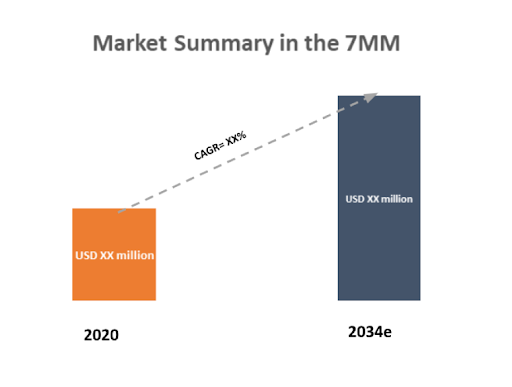
- In March 2020, the US FDA approved OFEV (nintedanib) for the treatment of PF-ILD, providing a targeted antifibrotic option for patients facing progressive lung scarring with otherwise limited treatment options. With its proven ability to slow lung function decline and its established use in other fibrosing lung diseases, OFEV is well-positioned to help address this critical gap and strengthen its role in the growing market for precision therapies in progressive respiratory conditions. With ongoing research and continued dedication, the future holds hope for even more effective treatments and, ultimately, a cure for this challenging condition. According to DelveInsight, the PF-ILD market in the 7MM is expected to change significantly during the study period 2020–2034.
Progressive Fibrosing Interstitial Lung Disease Drug Analysis
Progressive Fibrosing Interstitial Lung Disease Marketed Drugs
-
OFEV (Nintedanib): Boehringer Ingelheim
OFEV (nintedanib) is an oral multi-targeted tyrosine kinase inhibitor approved by the US FDA for the treatment of PF-ILD. Available in 100 mg and 150 mg capsules, OFEV works by blocking key pathways that drive abnormal lung fibrosis in ILDs. Presented as nintedanib ethanesulfonate (esylate), it has a well-defined chemical structure and is formulated with specific inactive ingredients to ensure stability and absorption. In clinical trials, OFEV has been shown to significantly slow the decline in lung function in patients with PF-ILD, offering an important option for those with otherwise limited treatment choices. It should be taken as directed and is contraindicated in patients with known hypersensitivity to nintedanib or its excipients.
|
Drug |
MoA |
RoA |
Company |
Logo |
|
OFEV (Nintedanib) |
TKI inhibitor |
Oral |
Boehringer Ingelheim |
|
|
XX |
XX |
X |
XXX |
|


Progressive Fibrosing Interstitial Lung Disease Emerging Drugs
The PF-ILD landscape still has notable gaps in care, with few approved treatment options aside from OFEV to slow disease progression. An important unmet need remains for additional therapies that can deliver stronger, more sustained control of fibrosis, especially for patients with aggressive or treatment-resistant disease. Promising candidates like ENV-101 in Phase II and Nerandomilast (BI 1015550) in Phase III hold potential to broaden targeted options and help close this treatment gap in the years ahead.
-
Nerandomilast (BI 1015550): Boehringer Ingelheim
Nerandomilast is an oral, preferential inhibitor of phosphodiesterase 4B (PDE4B) in development for progressive fibrosing conditions such as PF-ILD. As the first molecule in a new class of PDE4B inhibitors, nerandomilast is designed to target key inflammatory and fibrotic pathways involved in persistent lung scarring. By selectively inhibiting PDE4B, it aims to reduce inflammation while minimizing side effects often seen with non-selective PDE4 inhibitors. If successful, nerandomilast could expand treatment options for patients with PF-ILD who continue to face limited choices beyond current antifibrotics.
-
- In May 2025, new drug applications for nerandomilast in PF-ILD are planned to be submitted in the US, China, and the EU, marking an important step toward expanding treatment options for patients with progressive lung fibrosis. Nerandomilast met the primary endpoint in both Phase III trials (FIBRONEER-IPF and FIBRONEE-ILD).
-
ENV-101 (taladegib): Endeavor Biomedicines
ENV-101 (taladegib) is an investigational oral Hedgehog pathway inhibitor in development for progressive fibrosing conditions such as PF-ILD. By binding to and blocking a key receptor in the Hedgehog signaling pathway, ENV-101 aims to halt the abnormal buildup of myofibroblasts that drive lung fibrosis. This targeted approach may help resolve the unchecked wound-healing response that leads to scarring in the lungs, with the goal of preserving lung volume and function. If successful, ENV-101 could offer a new therapeutic option for patients with PF-ILD who have limited treatment choices today.
-
- In May 2025, Endeavor BioMedicines reported a post hoc Phase IIa analysis showing ENV-101 significantly reduced pulmonary vessel volume and increased lung volume in PF-ILD, using Qureight’s deep learning CT tools. These results highlight ENV-101’s potential to address fibrosis and improve lung structure beyond standard measures, supporting its promise as an emerging therapy for PF-ILD.
|
Drug |
MoA |
RoA |
Company |
Logo |
Phase |
|
Nerandomilast (BI 1015550) |
PDE4B inhibitors |
Oral |
Boehringer Ingelheim |
|
III |
|
ENV-101 (taladegib) |
HPIs inhibitors |
Oral |
Endeavor Biomedicines |
|
II |
|
XX |
XX |
X |
XXX |
|
XXX |


Progressive Fibrosing Interstitial Lung Disease Market Segmentation
DelveInsight’s ‘Progressive Fibrosing Interstitial Lung Disease Market Insights, Epidemiology, and Market Forecast – 2034’ report provides a detailed outlook of the current and future PF-ILD market, segmented within countries, by therapies, and by classes. Further, the market of each region is then segmented by each therapy to provide a detailed view of the current and future market share of all therapies.
Progressive Fibrosing Interstitial Lung Disease Market Size by Countries
The PF-ILD market size is assessed separately for various countries, including the United States, EU4 (Germany, France, Italy, and Spain), the United Kingdom, and Japan. In 2024, the United States held a significant share of the overall 7MM (Seven Major Markets) PF-ILD market, primarily attributed to the country’s higher prevalence of the condition and the elevated cost of the available treatments. This dominance is projected to persist, especially with the potential early introduction of new products.
|
Country-wise Market Size Distribution of PF-ILD |
|
|

PF-ILD Market Size by Therapies
PF-ILD Market Size by Therapies is categorized into current and emerging markets for the study period 2020–2034.
|
Market Share Distribution of PF-ILD by Therapies in 2034e |
|
|

Progressive Fibrosing Interstitial Lung Disease Drugs Uptake
This section focuses on the sales uptake of potential PF-ILD drugs that have recently been launched or are anticipated to be launched in the PF-ILD market between 2020 and 2034. It estimates the market penetration of PF-ILD drugs for a given country, examining their impact within and across classes and segments. It also touches upon the financial and regulatory decisions contributing to the probability of success (PoS) of the drugs in the PF-ILD market. The emerging PF-ILD therapies are analyzed based on various attributes such as safety and efficacy in randomized clinical trials, order of entry and other market dynamics, and the unmet need they fulfill in the PF-ILD market.
Progressive Fibrosing Interstitial Lung Disease Market Access and Reimbursement
DelveInsight’s ‘Progressive Fibrosing Interstitial Lung Disease Market Insights, Epidemiology, and Market Forecast – 2034’ report provides a descriptive overview of the market access and reimbursement scenario of PF-ILD. This section includes a detailed analysis of the country-wise healthcare system for each therapy, enlightening the market access, reimbursement policies, and health technology assessments.
Latest KOL Views on Progressive Fibrosing Interstitial Lung Disease
To keep up with current PF-ILD market trends and fill gaps in secondary findings, we interview KOLs and SMEs’ working in the PF-ILD domain. Their opinion helps understand and validate current and emerging therapies and treatment patterns or Progressive Fibrosing Interstitial Lung Disease PF-ILD market trends. This will support the clients in potential upcoming novel treatments by identifying the overall scenario of the market and the PF-ILD unmet needs.
Progressive Fibrosing Interstitial Lung Disease KOL Insights
DelveInsight’s analysts connected with 50+ KOLs to gather insights; however, interviews were conducted with 15+ KOLs in the 7MM. These KOLs were from organizations, institutes, and hospitals, such as Montefiore Medical Center, US; University of Heidelberg, Germany; University Hospital of Lyon, France; University of Padova, Italy; United Hospitals of Bergamo, Italy; and Okinawa Chubu Hospital, Japan; among others.
“Treating PF-ILD remains challenging as patients have limited options beyond current antifibrotics, which primarily slow decline rather than halt or reverse fibrosis. With no cure and few therapies that address the underlying scarring process, there is a clear unmet need for treatments that can more effectively modify disease progression and improve long-term lung health.”
“Initial management of PF-ILD focuses on slowing lung function decline and controlling fibrosis progression with antifibrotic therapies like OFEV. For patients with more aggressive or resistant disease, additional or combination treatments may be considered. Since the condition can continue to worsen over time, regular monitoring with lung function tests and imaging is essential. Emerging therapies in development aim to deliver stronger and longer-lasting control of fibrosis.”
“A key unmet need in the management of PF-ILD is the development of more targeted therapies that can do more than just slow lung function decline — ideally halting or reversing fibrosis with fewer side effects. Despite advances with antifibrotics, gaps remain for patients with rapidly progressing, treatment-resistant, or complex PF-ILD, highlighting the need for novel approaches and more personalized treatment strategies to improve long-term outcomes.”
Note: Detailed assessment of KOL Views will be provided in the full report on Progressive Fibrosing Interstitial Lung Disease (PF-ILD).
Progressive Fibrosing Interstitial Lung Disease Competitive Intelligence Analysis
We conduct a Competitive and Market Intelligence analysis of the PF-ILD market, utilizing various Competitive Intelligence tools such as SWOT analysis and Market entry strategies. The inclusion of these analyses is contingent upon data availability, ensuring a comprehensive and well-informed assessment of the market landscape and competitive dynamics.
Progressive Fibrosing Interstitial Lung Disease Pipeline Development Activities
The report offers an analysis of therapeutic candidates in early phases of development and examines companies working on targeted treatments for PF-ILD. It provides valuable insights into the progress and innovation driving potential new options for managing this challenging condition. The report covers information on collaborations, acquisition and merger, licensing, patent details, and other information for emerging PF-ILD therapies.
Progressive Fibrosing Interstitial Lung Disease Market Report Insights
- Patient-based PF-ILD Population
- PF-ILD Therapeutic Approaches
- PF-ILD Pipeline Analysis
- PF-ILD Market Size and Trends
- PF-ILD Market Opportunities
- Impact of Upcoming Therapies
Progressive Fibrosing Interstitial Lung Disease Market Report Key Strengths
- 10 Years PF-ILD Market Forecast
- The 7MM Coverage
- PF-ILD Epidemiology Segmentation
- Key Cross Competition
- Highly Analyzed PF-ILD Market
- PF-ILD Drugs Uptake
Progressive Fibrosing Interstitial Lung Disease Market Report Assessment
- Current PF-ILD Treatment Practices
- PF-ILD Unmet Needs
- PF-ILD Pipeline Product Profiles
- PF-ILD Market Attractiveness
Key Questions Answered in the PF-ILD Market Report
PF-ILD Market Insights
- How common is PF-ILD?
- What are the key findings of PF-ILD epidemiology across the 7MM, and which country will have the highest number of patients during the study period (2020–2034)?
- What are the currently available treatments for PF-ILD?
- What are the disease risk, burden, and unmet needs of PF-ILD?
- At what CAGR is the PF-ILD market and its epidemiology is expected to grow in the 7MM during the forecast period (2025–2034)?
- How would the unmet needs impact the PF-ILD market dynamics and subsequently influence the analysis of the related trends?
- What would be the forecasted patient pool of PF-ILD in the 7MM covering the United States, EU4 (Germany, France, Italy, and Spain), the United Kingdom, and Japan?
- Among EU4 and the UK, which country will have the highest number of patients during the forecast period (2025–2034)?
- How many companies are currently developing therapies for the treatment of PF-ILD?
Reasons to Buy the PF-ILD Market Report
- The PF-ILD Therapeutics Market Report will help in developing business strategies by understanding the latest trends and changing treatment dynamics driving the PF-ILD Drugs Market.
- Insights on patient burden/disease PF-ILD Prevalence, evolution in diagnosis, and factors contributing to the change in the epidemiology of the disease during the forecast years.
- To understand the existing PF-ILD Drugs Market opportunity in varying geographies and the growth potential over the coming years.
- Distribution of historical and current patient share based on real-world prescription data along with reported sales of current treatment in the US, EU4 (Germany, France, Italy, and Spain), the UK, and Japan.
- Identification of strong upcoming players in the PF-ILD Drugs Market will help in devising strategies that will help in getting ahead of competitors.
- Detailed analysis and ranking of class-wise potential current and emerging therapies under the conjoint analysis section to provide visibility around leading classes.
- Highlights of Access and Reimbursement policies of approved therapies, barriers to accessibility of off-label expensive therapies, and patient assistance programs.
- To understand the perspective of Key Opinion Leaders around the accessibility, acceptability, and compliance-related challenges of existing treatment to overcome barriers in the future.
- Detailed insights on the unmet needs of the existing PF-ILD Drugs Market so that the upcoming players can strengthen their development and launch strategy.
Stay updated with us for Recent Articles

-pipeline.png&w=256&q=75)



