
Progressive Supranuclear Palsy Market Summary
- The Progressive Supranuclear Palsy market size is anticipated to witness a steady CAGR during the forecast period (2026–2036), driven by increasing disease awareness, improvements in diagnostic capabilities, a growing aging population at higher risk for neurodegenerative disorders, and expanding research efforts focused on tau-targeted therapies.
- Additionally, increasing investment in disease-modifying approaches, including monoclonal antibodies, small molecules, and gene-based therapies, is expected to support market growth.
- The leading Progressive Supranuclear Palsy companies developing therapies in the treatment market include - Woolsey Pharmaceutical, Asahi Kasei Pharma, AlzProtect, Transposon Therapeutics, Oncolys Biopharma, Ferrer, Asceneuron, UCB Biopharma, Novartis, and others.
Progressive Supranuclear Palsy Market & Epidemiology Insights
- The rising burden of Progressive Supranuclear Palsy may be attributed to demographic aging, enhanced recognition of atypical parkinsonian syndromes, improved neuroimaging and biomarker development enabling earlier diagnosis, and a greater understanding of the role of tau protein aggregation and neurodegeneration in disease pathogenesis.
- Currently, no therapies are specifically approved for Progressive Supranuclear Palsy, and treatment remains largely symptomatic. Off-label use of agents such as levodopa, amantadine, and botulinum toxin aims to alleviate motor and non-motor symptoms, while multidisciplinary care involving physical, occupational, and speech therapy remains central to disease management. The ongoing development of tau-targeting agents and neuroprotective therapies highlights the evolving therapeutic landscape and significant unmet need in Progressive Supranuclear Palsy.
- The Progressive Supranuclear Palsy treatment landscape is expected to evolve significantly during the forecast period (2026–2036), driven by the development of novel disease-modifying therapies. Investigational candidates from companies such as Alzprotect (AZP2006) and Ferrer (FNP 223), among others, have the potential to address key disease mechanisms. Their successful approval could shift the treatment paradigm from symptomatic management to mechanism-based therapies, improving disease outcomes and expanding therapeutic options for patients with Progressive Supranuclear Palsy.
- A major unmet need remains for disease-modifying therapies capable of slowing or halting neurodegeneration, improving motor and cognitive outcomes, and demonstrating sustained efficacy and safety across the diverse clinical phenotypes and stages of Progressive Supranuclear Palsy, while minimizing treatment-related adverse effects and preserving patient quality of life.
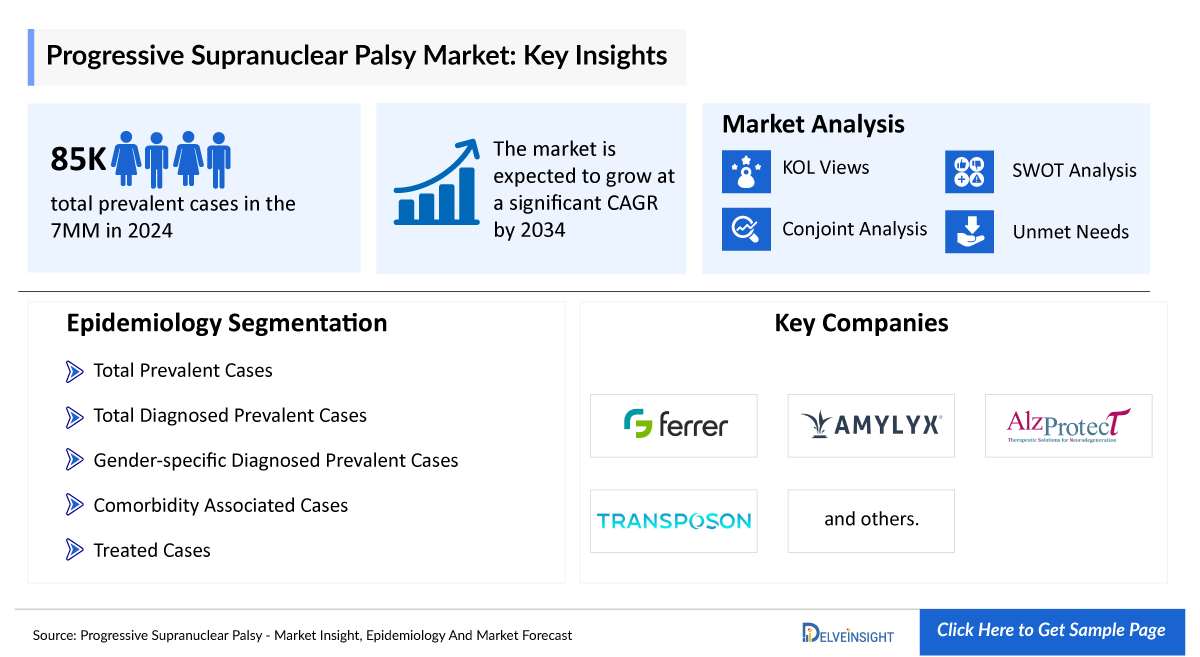
Request for unlocking the sample page of the "Progressive Supranuclear Palsy Market Forecast"
Key Factors Driving the Progressive Supranuclear Palsy Market Landscape:
- Advancements in Disease-Modifying Therapies: Increasing research on tau-targeted therapies, monoclonal antibodies, and neuroprotective agents is transforming the Progressive Supranuclear Palsy treatment landscape.
- Growing Disease Awareness and Early Diagnosis: Enhanced awareness among healthcare professionals and improved diagnostic techniques are leading to earlier identification and better patient management.
- Robust Clinical Pipeline: A strong pipeline of investigational therapies from emerging biotech and pharmaceutical companies is expected to expand future treatment options for Progressive Supranuclear Palsy.
- Supportive Regulatory and Orphan Drug Incentives: Favorable regulatory pathways, orphan drug designations, and incentives are encouraging investment and accelerating the development of novel Progressive Supranuclear Palsy therapies.
- Increasing Healthcare Investment in Rare Neurological Disorders: Rising funding for neurodegenerative disease research and growing focus on rare disease management are driving innovation and market growth in the Progressive Supranuclear Palsy landscape.
DelveInsight’s “Progressive Supranuclear Palsy Market Insights, Epidemiology, and Market Forecast – 2036” report delivers an in-depth understanding of Progressive Supranuclear Palsy, historical and forecasted epidemiology, as well as the Progressive Supranuclear Palsy therapeutics market trends in the United States, EU4 (Germany, France, Italy, and Spain), the United Kingdom, and Japan.
The Progressive Supranuclear Palsy market report delivers a comprehensive analysis of the current treatment landscape, including standards of care, clinical practices, and evolving therapeutic algorithms. It evaluates Progressive Supranuclear Palsy patient burden trends, revenue & market share dynamics, peak patient share & therapy uptake analysis, and provides an in-depth market size assessment and growth rate projections (Historical & Forecast 2022–2036) across the 7MM regions. The report highlights key unmet medical needs in Progressive Supranuclear Palsy and maps the competitive and clinical landscape to uncover high-value opportunities, providing a clear outlook on future market growth potential.
Scope of the Progressive Supranuclear Palsy Market Report | |
|
Study Period |
2022–2036 |
|
Historical Year |
2022–2025 |
|
Forecast Period |
2026–2036 |
|
Base Year |
2025 |
|
Geographies Covered |
ü North America: The US ü Europe: Germany, France, Italy, Spain, and the UK ü Asia-Pacific: Japan |
|
Progressive Supranuclear Palsy Epidemiology Segmentation Analysis |
Patient Burden Assessment · Total Prevalent Cases of PSP · Total Diagnosed Prevalent Cases of PSP · Gender-specific Diagnosed Prevalent Cases of PSP · Phenotype-specific Diagnosed Prevalent Cases of PSP · Comorbidity Associated Cases with PSP · Treated Cases of PSP |
|
Progressive Supranuclear Palsy (PSP) Companies |
· Ferrer · Alzprotect · Transposon Therapeutics And more |
|
Progressive Supranuclear Palsy (PSP) Market |
Segmented by · Total Market Size · Market Size by Therapies |
|
Analysis |
· KOL Views · Conjoint Analysis · SWOT Analysis · Unmet Needs |
Progressive Supranuclear Palsy Disease Understanding
Progressive Supranuclear Palsy Overview
Progressive Supranuclear Palsy, also known as Steele-Richardson-Olszewski, is a rare neurodegenerative disorder. It belongs to a group of diseases called tauopathies. The exact cause of Progressive Supranuclear Palsy is unknown. However, it is believed to involve the abnormal accumulation of tau protein in certain areas of the brain, particularly the basal ganglia and brainstem, forming abnormal tangles, leading to the degeneration of brain cells. It typically begins around the age of 60, and the symptoms gradually worsen over time. It is often characterized by the gradual deterioration of movement, balance, and coordination, dysphagia, impairment of cognitive functions, control of eye movements, and others. The most frequent comorbidities observed in Progressive Supranuclear Palsy patients are nervous system disorders, connective tissue diseases, eye disorders, and non-traumatic joint disorders.
Progressive Supranuclear Palsy Diagnosis
Diagnosis of Progressive Supranuclear Palsy remains primarily clinical, as no definitive diagnostic tests or brain imaging techniques are currently available. Physicians typically assess medical history and conduct comprehensive physical and neurological examinations to evaluate characteristic features of the disease. Early identification of abnormalities in gait, eye movements, speech, and swallowing is crucial for differentiating Progressive Supranuclear Palsy from other neurodegenerative disorders. Although not diagnostic, magnetic resonance imaging (MRI) may reveal atrophy of the upper brainstem and assist in evaluating structural brain changes associated with Progressive Supranuclear Palsy.
Further details related to country-based variations are provided in the report...
Current Progressive Supranuclear Palsy Treatment Landscape
Pharmacologic Therapies: Currently, there are no approved therapies that effectively halt or slow the progression of Progressive Supranuclear Palsy, and available treatments primarily focus on symptom management. Parkinson’s disease medications, particularly levodopa, may provide modest and transient improvement in symptoms such as bradykinesia, rigidity, and balance impairment in a subset of patients, although therapeutic responses are generally limited. Botulinum toxin injections can be used to manage Progressive Supranuclear Palsy-associated blepharospasm or involuntary eye closure, while certain antidepressants may help alleviate mood disturbances and provide additional benefits such as pain relief and reduction of drooling. Despite these supportive interventions, a substantial unmet need remains for disease-modifying therapies that can alter disease progression.
Non-pharmacologic therapies: Supportive and rehabilitative interventions play a critical role in the management of Progressive Supranuclear Palsy. Weighted walking aids may help improve stability and reduce the risk of backward falls, while bifocals or prism glasses can assist patients with impaired downward gaze. Supervised exercise and physical therapy are important for maintaining mobility, flexibility, and overall functional capacity. In patients with severe dysphagia and an elevated risk of aspiration, enteral feeding via gastrostomy tube placement may be considered to ensure adequate nutritional support and reduce complications associated with swallowing impairment.
Further details related to country-based variations are provided in the report...
Progressive Supranuclear Palsy Epidemiology
The Progressive Supranuclear Palsy epidemiology section of the Progressive Supranuclear Palsy market report offers information on the patient populations, including historical and projected trends for each of the seven major markets. Examining key opinion leader views from physicians or clinical experts can assist in identifying the reasons behind historical and projected trends. The diagnosed patient pool, its trends, and the underlying assumptions are all included in this section of the report.
This section also presents the data with relevant tables and graphs, offering a clear and concise view of the prevalence of Progressive Supranuclear Palsy. Additionally, the report discloses the assumptions made during the analysis, ensuring data interpretation and presentation transparency. This epidemiological data is valuable for understanding the disease burden and its impact on the patient population across various regions.
Key Findings from Progressive Supranuclear Palsy Epidemiological Analysis and Forecast
- According to a recent study, it is reported that the prevalence of Progressive Supranuclear Palsy ranges from 5.8 to 6.5 per 100,000 people.
- The National Organization for Rare Disorders (NORD) estimates that Progressive Supranuclear Palsy affects at least 20,000 individuals in the US. Some reports suggest a prevalence of 5 to 17 cases per 100,000 people, while recent autopsy studies have identified Progressive Supranuclear Palsy pathology in 2–6% of elderly individuals who had not been diagnosed with the condition before death.
- As per secondary research, the prevalence of Progressive Supranuclear Palsy in Japan is estimated at 0.7–3.0 cases per 10,000 population based on four studies using standard case ascertainment methods.
- According to the Progressive Supranuclear Palsy Association UK, it is estimated that approximately 4,000 people are living with Progressive Supranuclear Palsy in the UK.
Progressive Supranuclear Palsy Epidemiology Segmentation
- Total Prevalent Cases of Progressive Supranuclear Palsy
- Total Diagnosed Prevalent Cases of Progressive Supranuclear Palsy
- Gender-specific Diagnosed Prevalent Cases of Progressive Supranuclear Palsy
- Phenotype-specific Diagnosed Prevalent Cases of Progressive Supranuclear Palsy
- Comorbidity Associated Cases with Progressive Supranuclear Palsy
Progressive Supranuclear Palsy Drug Analysis & Competitive Landscape
The Progressive Supranuclear Palsy drug chapter provides a detailed, market-focused review of approved therapies and the emerging pipeline across Phase I-III Progressive Supranuclear Palsy clinical trials. It covers the mechanism of action, clinical trial data, regulatory approvals, patents, collaborations, strategic partnerships, and upcoming key catalysts for each therapy, along with their advantages, limitations, and recent developments. This section offers critical insights into the Progressive Supranuclear Palsy treatment landscape, supporting market assessment, competitive analysis, and growth forecasting for the Progressive Supranuclear Palsy therapeutics market.
Progressive Supranuclear Palsy Emerging Drugs
FNP 223: Ferrer
FNP-223 (formerly ASN90) is an oral, reversible, substrate-competitive O-GlcNAcase (OGA) inhibitor that blocks the enzyme’s active site, preventing removal of O-GlcNAc from proteins like tau. This increases tau glycosylation, which is expected to reduce abnormal tau aggregation into neurofibrillary tangles over time.
- Ferrer completed recruitment of 220 patients for the PROSPER Phase II trial of FNP-223 Progressive Supranuclear Palsy in October 2025, two months ahead of schedule. The drug also received FDA Fast Track designation in August 2025 to accelerate development.
Progressive Supranuclear Palsy Competitive Landscape of Pipeline Drugs | ||||||
|
Drug Name |
Company |
Highest Phase |
Indication |
RoA |
MoA |
Anticipated Launch in the US |
|
FNP 223 |
Ferrer |
Phase II |
PSP |
Oral |
O-GlcNAcase (OGA) inhibitor |
Information is available in the full report |
|
AZP2006 |
Alzprotect |
Phase II |
PSP |
Oral |
PSAP protein modulators |
Information is available in the full report |
|
Note: Launch insights are provisional and may change with future report updates or the occurrence of major key catalysts. | ||||||
Progressive Supranuclear Palsy Market Outlook
The Progressive Supranuclear Palsy therapeutics market is further expected to increase due to major drivers, such as the rising prevalence in the population, technological advancements, and upcoming therapies in the forecast period (2026–2036).
With ongoing research and continued dedication, the future holds hope for even more effective treatments and, ultimately, a cure for this challenging condition. According to DelveInsight, the Progressive Supranuclear Palsy market in the 7MM is expected to change significantly during the forecast period 2026-2036.
Note: Detailed emerging therapies assessment will be provided in the final report...
Progressive Supranuclear Palsy Market Analysis
DelveInsight’s ‘Progressive Supranuclear Palsy Market Insights, Epidemiology, and Market Forecast – 2036’ report provides a detailed outlook of the current and future Progressive Supranuclear Palsy market, segmented by country, by therapies, and by classes. Further, the market of each region is then segmented by each therapy to provide a detailed view of the current and future market share of all therapies.
Progressive Supranuclear Palsy Market Size by Countries
The Progressive Supranuclear Palsy market size is assessed separately for various countries, including the US, EU4 (Germany, France, Italy, and Spain), the UK, and Japan. In 2025, the US held a significant share of the overall 7MM (Seven Major Markets) Progressive Supranuclear Palsy market, primarily attributed to the country’s higher prevalence of the condition and the elevated cost of the available treatments. This dominance is projected to persist, especially with the potential early introduction of new products.
Note: Detailed market segment assessment will be provided in the final report...
Progressive Supranuclear Palsy Drug Uptake
This section focuses on the sales uptake and potential of Progressive Supranuclear Palsy drugs that have recently been launched or are anticipated to be launched in the Progressive Supranuclear Palsy market between 2022 and 2036. It estimates the market penetration of Progressive Supranuclear Palsy drugs for a given country, examining their impact within and across classes and segments. It also touches upon the financial and regulatory decisions contributing to the probability of success (PoS) of the drugs in the Progressive Supranuclear Palsy market.
The emerging Progressive Supranuclear Palsy therapies are analyzed based on various attributes such as safety and efficacy in randomized clinical trials, order of entry and other market dynamics, and the unmet need they fulfill in the Progressive Supranuclear Palsy market.
Progressive Supranuclear Palsy Pipeline Development Activities
The Progressive Supranuclear Palsy pipeline report offers an analysis of Progressive Supranuclear Palsy clinical trials within Phase I/II and III stages and examines companies involved in developing targeted therapeutics for Progressive Supranuclear Palsy. It provides valuable insights into the advancements and progress of potential treatments in clinical development for this condition.
Progressive Supranuclear Palsy Clinical Development Activities
The Progressive Supranuclear Palsy clinical trials analysis report covers information on collaborations, acquisitions and mergers, licensing, patent details, and other information for emerging Progressive Supranuclear Palsy therapies.
Note: Detailed assessment of drug uptake and attribute analysis will be provided in the full report on Progressive Supranuclear Palsy..
Progressive Supranuclear Palsy Market Access and Reimbursement
DelveInsight’s ‘Progressive Supranuclear Palsy Market Insights, Epidemiology, and Market Forecast – 2036’ report provides a descriptive overview of the market access and reimbursement scenario of Progressive Supranuclear Palsy.
This section includes a detailed analysis of the country-wise healthcare system for each therapy, enlightening the market access, reimbursement policies, and health technology assessments.
Latest KOL Views on Progressive Supranuclear Palsy Market Report
To keep up with current Progressive Supranuclear Palsy market trends and fill gaps in secondary findings, we interview KOLs and SMEs working in the Progressive Supranuclear Palsy domain. Their opinion helps understand and validate current and emerging therapies and treatment patterns or Progressive Supranuclear Palsy market trends. This will support the clients in potential upcoming novel treatments by identifying the overall scenario of the market and the Progressive Supranuclear Palsy unmet needs.
Progressive Supranuclear Palsy: KOL Insights
DelveInsight’s analysts connected with 50+ KOLs to gather insights; however, interviews were conducted with 15+ KOLs in the 7MM. These KOLs were from organizations, institutes, and hospitals, such as the National Institute of Neurological Disorders and Stroke, Technische Universität München, Institute of Neuropathology, Göttingen, University of Pennsylvania, and Institut des Maladies Neurodégénératives, among others.
|
Region |
Key Opinion Leaders (KOLs) and Subject Matter Experts (SMEs) |
|
The US |
"Greater focus should be placed on raising awareness among healthcare professionals and accurately recognizing early signs and symptoms of PSP, as in the majority of cases, due to the common symptomatic patterns, it is often misdiagnosed as Parkinson’s disease in its early stage." |
|
Japan |
"A better understanding of the disease and its treatment starts with accurately diagnosing the subtypes of PSP. Most cases are identified primarily by a neurologist who goes through a medical history examination based on the pattern of symptoms." |
Progressive Supranuclear Palsy Competitive Intelligence Analysis
We conduct a Competitive and Market Intelligence analysis of the Progressive Supranuclear Palsy market, utilizing various Competitive Intelligence tools such as SWOT analysis and market entry strategies. The inclusion of these analyses is contingent upon data availability, ensuring a comprehensive and well-informed assessment of the market landscape and competitive dynamics.
Scope of the Progressive Supranuclear Palsy Market Report
- The report covers the descriptive overview of Progressive Supranuclear Palsy, explaining its causes, signs and symptoms, pathophysiology, diagnosis and currently available therapies
- Comprehensive insight has been provided into the Progressive Supranuclear Palsy epidemiology and treatment in the 7MM
- Additionally, an all-inclusive account of both the current and emerging therapies for Progressive Supranuclear Palsy is provided, along with the assessment of new therapies, which will have an impact on the current treatment landscape
- A detailed review of the Progressive Supranuclear Palsy market; historical and forecasted is included in the report, covering drug outreach in the 7MM
- The report provides an edge while developing business strategies, by understanding trends shaping and driving the global Progressive Supranuclear Palsy market
Progressive Supranuclear Palsy Report Insights
- Progressive Supranuclear Palsy Patient Population
- Therapeutic Approaches
- Progressive Supranuclear Palsy Pipeline Analysis
- Progressive Supranuclear Palsy Market Size and Trends
- Progressive Supranuclear Palsy Market Opportunities
- Impact of Upcoming Progressive Supranuclear Palsy Therapies
Progressive Supranuclear Palsy Report Key Strengths
- 11 Years Forecast
- The 7MM Coverage
- Progressive Supranuclear Palsy Epidemiology Segmentation
- Competitive Landscape
- Highly Analyzed Progressive Supranuclear Palsy Market
- Progressive Supranuclear Palsy Drugs Uptake
Progressive Supranuclear Palsy Report Assessment
- Progressive Supranuclear Palsy Current Treatment Practices
- Progressive Supranuclear Palsy Unmet Needs
- Progressive Supranuclear Palsy Pipeline Product Profiles
- Progressive Supranuclear Palsy Market Attractiveness
- Progressive Supranuclear Palsy Market Drivers
- Progressive Supranuclear Palsy Market Barriers
Key Questions Answered in the Progressive Supranuclear Palsy Market Report:
- How common are Progressive Supranuclear Palsys?
- What are the key findings of Progressive Supranuclear Palsy epidemiology across the 7MM, and which country will have the highest number of patients during the study period (2022–2036)?
- What are the currently available treatments for Progressive Supranuclear Palsy?
- What are the disease risk, burden, and unmet needs of Progressive Supranuclear Palsy?
- At what CAGR are the Progressive Supranuclear Palsy market and its epidemiology expected to grow in the 7MM during the forecast period (2026–2036)?
- How would the unmet needs impact the Progressive Supranuclear Palsy market dynamics and subsequently influence the analysis of the related trends?
- What would be the forecasted patient pool of Progressive Supranuclear Palsy in the 7MM covering the United States, EU4 (Germany, France, Italy, and Spain), the UK, and Japan?
- Among EU4 and the UK, which country will have the highest number of Progressive Supranuclear Palsys patients during the forecast period (2026–2036)?
- How many companies are currently developing therapies for the treatment of Progressive Supranuclear Palsy?
Reasons to buy Progressive Supranuclear Palsy Market Forecast Report
- The report will help in developing business strategies by understanding the latest trends and changing treatment dynamics driving the Progressive Supranuclear Palsy market.
- Insights on patient burden/disease prevalence, evolution in diagnosis, and factors contributing to the change in the epidemiology of the disease during the forecast years.
- To understand the existing market opportunity in varying geographies and the growth potential over the coming years.
- Distribution of historical and current patient share based on real-world prescription data along with reported sales of current treatment in the US, EU4 (Germany, France, Italy, and Spain), the United Kingdom, and Japan.
- Identification of strong upcoming players in the market will help in devising strategies that will help in getting ahead of competitors.
- Detailed analysis and ranking of class-wise potential current and emerging therapies under the attribute analysis section to provide visibility around leading classes.
- Highlights of Access and Reimbursement policies of approved therapies, barriers to accessibility of off-label, expensive therapies, and patient assistance programs.
- To understand the perspective of Key Opinion Leaders on the accessibility, acceptability, and compliance-related challenges of existing treatments to overcome barriers in the future.
- Detailed insights on the unmet needs of the existing market so that the upcoming players can strengthen their development and launch strategy.