Pseudoxanthoma Elasticum Market Summary
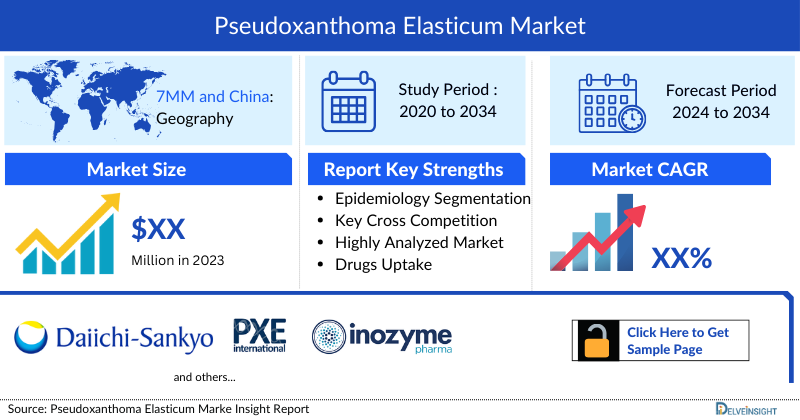
- According to DelveInsight, the Pseudoxanthoma Elasticum Market is expected to expand at a healthy growth rate during the study period (2020-2034), owing to the launch of new therapies in the market and the rise in the number of cases.
- The leading Pseudoxanthoma Elasticum Companies, such as Daiichi Sankyo, Inozyme Pharma, and others.
Pseudoxanthoma Elasticum Market and Epidemiology Analysis
- The Pseudoxanthoma Elasticum Epidemiology is likely to grow due to several factors. Firstly, increased awareness and understanding of the disease among healthcare professionals leading to better diagnosis rates. Secondly, advancements in medical imaging technologies improve the detection of PXE-related symptoms.
- The current market for PXE is primarily driven by increased awareness and demand for effective treatment options. There is a growing demand for therapies that address the symptoms and complications associated with PXE, such as vascular calcification and skin change.
- The market dynamics for PXE are expected to change with advancements in research and development. This includes the introduction of novel therapies targeting the underlying pathophysiology of PXE, which may lead to improved patient outcomes and quality of life.
- PXE affects both genders, but studies suggest a higher prevalence in females. This gender difference may be attributed to hormonal factors, as well as differences in lifestyle and environmental exposures.
- Emerging therapies hold promise for the future treatment of PXE. These may include pharmacological agents targeting the mineralization process in blood vessels, gene therapies aimed at correcting mutations in the ABCC6 gene, and regenerative medicine approaches utilizing stem cells to repair damaged tissues.
Request for Unlocking the Sample Page of the "Pseudoxanthoma Elasticum Treatment Market"
Key Factors Driving the Pseudoxanthoma Elasticum Market Growth
-
Increasing Disease Recognition and Improved Diagnosis
Growing awareness among dermatologists, ophthalmologists, and cardiologists is leading to earlier identification of PXE cases. Advancements in genetic testing for ABCC6 mutations and improved access to specialized diagnostic tools are expanding diagnosed patient populations.
-
Advancements in Molecular Research and Pathophysiology Understanding
Progress in understanding the underlying mechanisms of PXE—particularly elastin calcification pathways, genetic mutations, and metabolic abnormalities—is creating new targets for therapeutic intervention. This scientific clarity is encouraging R&D investments from biotech and pharma companies.
-
Growing Pipeline of Emerging Therapies
Several academic groups and biotechnology companies are exploring novel treatment modalities, including gene therapies, enzyme replacement therapies, anti-calcification agents, and targeted molecular drugs. The expanding pipeline indicates rising industry focus on rare dermatologic and vascular disorders.
-
Rising Research Funding and Regulatory Support
PXE’s classification as a rare disease enables developers to benefit from orphan drug incentives, priority review pathways, and research grants.
DelveInsight’s comprehensive report titled “Pseudoxanthoma Elasticum Market Insights, Epidemiology, and Market Forecast – 2034” offers a detailed analysis of Pseudoxanthoma Elasticum. The report presents historical and projected epidemiological data covering Total Prevalent Cases of Pseudoxanthoma Elasticum, Gender-specific Prevalent Cases of Pseudoxanthoma Elasticum, Prevalent Cases of Pseudoxanthoma Elasticum Classified Based on Symptoms Manifestations, and Treatable Cases of Pseudoxanthoma Elasticum. In addition to epidemiology, the market report encompasses various aspects related to the patient population. These aspects include the diagnosis process, prescription patterns, physician perspectives, market accessibility, treatment options, and prospective developments in the market across seven major markets: the United States, EU4 (Germany, France, Italy, and Spain), the United Kingdom, and Japan, spanning from 2020 to 2034.
The report analyzes the existing treatment practices and unmet medical requirements in Nephrolithiasis. It evaluates the market potential and identifies potential business prospects for enhancing therapies or interventions. This valuable information enables stakeholders to make well-informed decisions regarding product development and strategic planning for the market.
Scope of the Pseudoxanthoma Elasticum Market | |
|
Study Period |
2020–2034 |
|
Forecast Period |
2024–2034 |
|
Geographies Covered |
US, EU4 (Germany, France, Italy, and Spain) and the UK, and Japan |
|
Pseudoxanthoma Elasticum Epidemiology |
|
|
Pseudoxanthoma Elasticum Market |
|
|
Market Analysis |
|
|
Pseudoxanthoma Elasticum Companies |
|
|
Challenges |
The diagnosis and treatment of Pseudoxanthoma Elasticum pose several challenges due to its rarity, clinical heterogeneity, and lack of definitive diagnostic tests. Accurate diagnosis often requires multidisciplinary evaluation and genetic testing, which may not be readily available. Treatment focuses on symptom management but lacks curative options, necessitating a holistic approach to care. Additionally, the psychosocial impact on patients underscores the need for comprehensive support services alongside medical interventions. |
Pseudoxanthoma Elasticum Overview
Pseudoxanthoma Elasticum is a rare inherited disorder characterized by the abnormal mineralization of connective tissues throughout the body, particularly in the skin, eyes, and cardiovascular system. It primarily affects elastin, a protein that provides elasticity to these tissues. PXE manifests as small yellowish papules or plaques on the skin, particularly in flexural areas such as the neck and armpits. In the eyes, PXE can lead to changes in the retina, causing vision problems and retinal hemorrhages. Cardiovascular complications may include arterial calcification and narrowing, which can lead to hypertension, angina, and peripheral vascular disease.
PXE is caused by mutations in the ABCC6 gene, which plays a role in regulating tissue mineralization. The disorder follows an autosomal recessive pattern of inheritance, although some cases may exhibit autosomal dominant or sporadic inheritance. Management typically focuses on symptom relief and prevention of complications through regular monitoring and lifestyle modifications. In some cases, Pseudoxanthoma Elasticum may require medical intervention if symptoms persist or become severe. However, most cases can be managed effectively with conservative measures and rarely require surgical treatment. It's essential for individuals experiencing symptoms of Pseudoxanthoma Elasticum to consult a healthcare professional for proper evaluation and guidance tailored to their specific needs.
Pseudoxanthoma Elasticum Diagnosis and Treatment Algorithm
The diagnosis of Pseudoxanthoma Elasticum involves a combination of clinical evaluation, imaging studies, and genetic testing. Initially, a thorough physical examination may reveal characteristic skin changes such as small yellowish papules or plaques, particularly in flexural areas. Ophthalmological examination, including fundoscopy, is essential to assess for retinal changes. Imaging studies such as skin biopsy, echocardiography, and radiography may help in detecting mineralization in the skin, eyes, and cardiovascular system, respectively. Genetic testing for mutations in the ABCC6 gene confirms the diagnosis, especially in cases with atypical presentation or familial history.
The current standard treatment for PXE primarily focuses on managing symptoms and preventing complications. One of the mainstays of treatment is lifestyle modifications, including sun protection to minimize skin damage and regular eye examinations to monitor for retinal changes. Additionally, medications such as statins and bisphosphonates may be prescribed to manage cardiovascular complications by reducing arterial calcification and improving vascular health. The precise mechanism of action (MOA) of statins involves inhibiting the enzyme HMG-CoA reductase, thereby lowering cholesterol levels and potentially reducing inflammation and vascular calcification.
An emerging therapy for PXE involves the use of anti-mineralization agents, such as pyrophosphate analogs, which aim to prevent ectopic mineralization of tissues. These agents work by inhibiting the formation and growth of hydroxyapatite crystals, the main component of pathological calcification. By interfering with the mineralization process, these drugs have the potential to halt or slow down disease progression in PXE patients. Further research and clinical trials are needed to validate their efficacy and safety profile for widespread clinical use in PXE management.
Pseudoxanthoma Elasticum Epidemiology
The epidemiology section on the Pseudoxanthoma Elasticum market report offers information on the patient populations, including historical and projected trends for each of the seven major markets. Examining key opinion leader views from physicians or clinical experts can assist in identifying the reasons behind historical and projected trends. The diagnosed patient pool, their trends, and the underlying assumptions are all included in this section of the report. This section also presents the data with relevant tables and graphs, offering a clear and concise view of the prevalence of Nephrolithiasis. Additionally, the report discloses the assumptions made during the analysis, ensuring data interpretation and presentation transparency. This epidemiological data is valuable for understanding the disease burden and its impact on the patient population across various regions.
Key Findings from the Pseudoxanthoma Elasticum Epidemiological Analysis
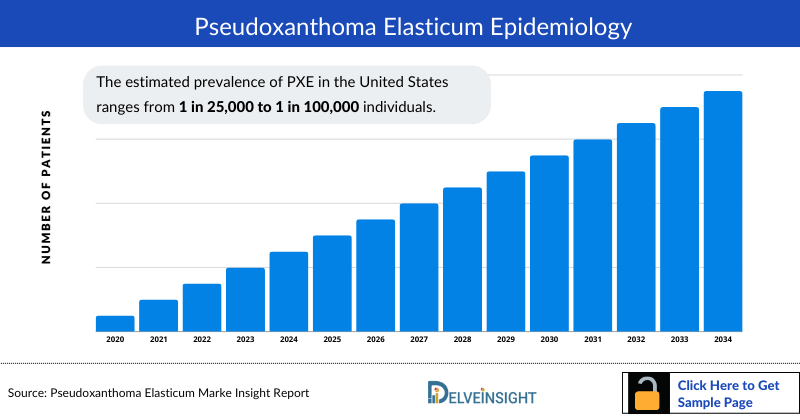
- The estimated Pseudoxanthoma Elasticum Prevalence in the United States ranges from 1 in 25,000 to 1 in 100,000 individuals.
- PXE demonstrates a female predominance, with a reported female-to-male ratio of 4:1 in overall prevalence. This gender disparity underscores the importance of considering sex-specific factors in both the diagnosis and management of PXE. Further research into the underlying mechanisms contributing to this disparity may provide insights into the pathogenesis of the condition and aid in the development of more targeted interventions.
- The prevalence of PXE in Europe is estimated at 2.5 cases per 100,000 population. This relatively low prevalence underscores the rarity of the condition within the general population. However, despite its rarity, PXE poses significant challenges due to its multisystem involvement and potential for severe complications
- While the overall prevalence of PXE is relatively low, the specific manifestations can vary widely, with cutaneous changes being the most common and earliest indication
Pseudoxanthoma Elasticum Market Outlook
The primary treatment goal for Pseudoxanthoma Elasticum is to manage symptoms, prevent complications, and improve the quality of life for affected individuals. This includes addressing skin changes, vision problems, and cardiovascular complications associated with the abnormal mineralization of connective tissues.
The current standard treatment for PXE involves a multifaceted approach aimed at symptom management and complication prevention. One of the main pharmacological interventions includes the use of statins, which are HMG-CoA reductase inhibitors. Statins lower cholesterol levels by inhibiting the enzyme involved in cholesterol synthesis, thereby reducing the formation of atherosclerotic plaques and potentially slowing down arterial calcification. By improving vascular health, statins may help mitigate cardiovascular complications in PXE patients, although their efficacy in halting or reversing tissue mineralization remains limited.
An emerging approach for treating PXE involves the use of anti-mineralization agents targeting the abnormal tissue calcification characteristic of the disease. Among these agents, pyrophosphate analogs have shown promise in preclinical studies. Pyrophosphate analogs work by inhibiting the formation and growth of hydroxyapatite crystals, the primary mineral component of ectopic calcification. By disrupting the mineralization process, these agents aim to prevent or slow down the progression of tissue mineralization in PXE patients, potentially preserving tissue elasticity and function. Further clinical trials are needed to assess the efficacy and safety of pyrophosphate analogs as a targeted therapy for PXE.
The market dynamics of Pseudoxanthoma elasticum are anticipated to change in the coming years due to the improvement in the diagnosis methodologies and incremental healthcare spending across the world. The key players such as Inozyme Pharma and others can create a significant positive shift in the pseudoxanthoma elasticum market size. Moreover, the current pipeline of pseudoxanthoma elasticum is restricted, with only a few companies working on this indication. Hence, it is an opportunity for other companies to enter the market and grab a significant market share. According to DelveInsight, the Pseudoxanthoma Elasticum market in the 7MM is expected to change significantly during the study period 2020–2034.
Pseudoxanthoma Elasticum Drugs Analysis
Emerging Pseudoxanthoma Elasticum Drugs
The Pseudoxanthoma Elasticum market is expected to experience gradual changes, mainly due to the limited availability of emerging therapies in this area. Key market players, including Inozyme Pharma, and others, have demonstrated a keen interest in this rare condition and are actively pursuing the development of potential treatments.
-
INZ-701: Inozyme Pharma
INZ-701, a recombinant Fc fusion protein, is an ENPP1 enzyme replacement therapy in development for the treatment of rare disorders of the vasculature, soft tissue, and skeleton. Inozyme Pharma’s INZ-701 is in clinical development for the potential treatment of various disorders linked primarily to mutations in the ENPP1 and ABCC6 genes. Currently, there are no therapeutic options for patients suffering from ENPP1 Deficiency and ABCC6 Deficiency – two rare abnormal mineralization disorders. Inozyme is conducting Phase I/II trials for patients suffering from ABCC6 Deficiency. Native ENPP1 is bound to the cell membrane with the active enzymatic portion of the protein outside the cell. Inozyme fused this domain with an antibody Fc fragment to construct INZ-701. In contrast to native ENPP1, INZ-701 is a soluble protein designed to circulate throughout the body and cleave extracellular ATP into PPi and AMP, a precursor of adenosine.
|
Drug |
MoA |
RoA |
Company |
Logo |
Phase |
|
INZ-701 |
Enzyme replacement therapy |
SC |
Inozyme Pharma |
|
II |
|
XXX |
XXX |
XXX |
XXX |
XXX |
XX |
Pseudoxanthoma Elasticum Market Segmentation
DelveInsight’s ‘Pseudoxanthoma Elasticum Market Insights, Epidemiology, and Market Forecast – 2034’ report provides a detailed outlook of the current and future Pseudoxanthoma Elasticum market, segmented within countries, by therapies, and by classes. Further, the market of each region is then segmented by each therapy to provide a detailed view of the current and future market share of all therapies.
Pseudoxanthoma Elasticum Market Size by Countries
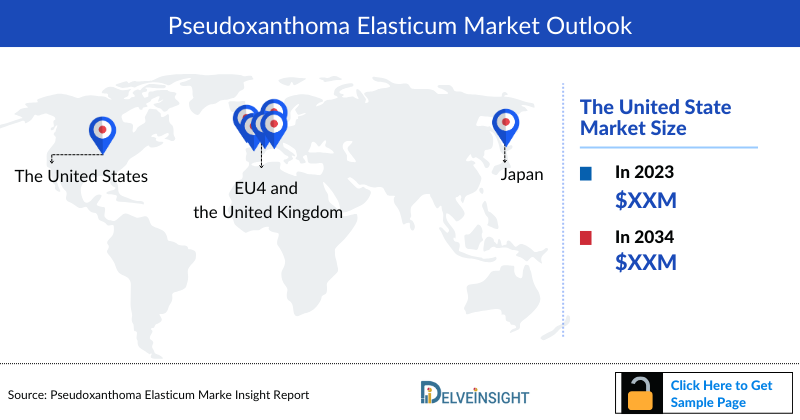
The Pseudoxanthoma Elasticum market size is assessed separately for various countries, including the United States, EU4 (Germany, France, Italy, and Spain), the UK, and Japan. In 2023, the United States held a significant share of the overall 7MM (Seven Major Markets) Pseudoxanthoma Elasticum market, primarily attributed to the country's higher prevalence of the condition and the elevated cost of the available treatments. This dominance is projected to persist, especially with the potential early introduction of new products.
Pseudoxanthoma Elasticum Market Size by Therapies
Pseudoxanthoma Elasticum Market Size by Therapies is categorized into current and emerging markets for the study period 2020–2034. One of the emerging drugs anticipated to launch during the forecast period is INZ-701 under the developmental pipeline of Inozyme Pharma.
Note: Detailed market segment assessment will be provided in the final report.
Pseudoxanthoma Elasticum Drugs Uptake
This section focuses on the sales uptake of potential Pseudoxanthoma Elasticum drugs that have recently been launched or are anticipated to be launched in the Pseudoxanthoma Elasticum market between 2020 and 2034. It estimates the market penetration of Pseudoxanthoma Elasticum drugs for a given country, examining their impact within and across classes and segments. It also touches upon the financial and regulatory decisions contributing to the probability of success (PoS) of the drugs in the Pseudoxanthoma Elasticum market.
Note: Detailed assessment of drug uptake will be provided in the full report on Pseudoxanthoma Elasticum
Pseudoxanthoma Elasticum Market Access and Reimbursement
DelveInsight’s ‘Pseudoxanthoma Elasticum – Market Insights, Epidemiology, and Market Forecast – 2034’ report provides a descriptive overview of the market access and reimbursement scenario of Pseudoxanthoma Elasticum. This section includes a detailed analysis of the country-wise healthcare system for each therapy, enlightening the market access, reimbursement policies, and health technology assessments.
Latest KOL Views on Pseudoxanthoma Elasticum
To keep up with current Pseudoxanthoma Elasticum market trends and fill gaps in secondary findings, we interview KOLs and SMEs’ working in the Pseudoxanthoma Elasticum domain. Their opinion helps understand and validate current and emerging therapies and treatment patterns or Pseudoxanthoma Elasticum market trends. This will support the clients in potential upcoming novel treatments by identifying the overall scenario of the market and the Pseudoxanthoma Elasticum unmet needs.
Pseudoxanthoma Elasticum KOL Insights
DelveInsight’s analysts connected with 50+ KOLs to gather insights; however, interviews were conducted with 15+ KOLs in the 7MM. These KOLs were from organizations, institutes, and hospitals, such as the PXE International, Washington, US, Department of Dermatology and Cutaneous Biology, Jefferson Medical College, Philadelphia, US, Department of Dermatology, Warren Alpert Medical School of Brown University, US, Division of Medical Genetics, University of Versailles - Saint Quentin en Yvelines, Paris-Saclay University, France, Department of Dermatology, Graduate School of Biomedical Sciences, Nagasaki University, Nagasaki, Japan, among others.
PXE can present a diagnostic challenge to practicing physicians for several reasons. One of the main limitations of molecular genetic testing is that ~10% of individuals who fulfill the current diagnostic criteria for definitive PXE have either no or only one detectable mutation in ABCC6.
Pseudoxanthoma Elasticum Competitive Intelligence Analysis
We conduct a Competitive and Market Intelligence analysis of the Pseudoxanthoma Elasticum Market, utilizing various Competitive Intelligence tools such as SWOT analysis, Conjoint Analysis, and Market entry strategies. The inclusion of these analyses is contingent upon data availability, ensuring a comprehensive and well-informed assessment of the market landscape and competitive dynamics. The emerging Pseudoxanthoma Elasticum therapies are analyzed based on various attributes such as safety and efficacy in randomized clinical trials, order of entry and other market dynamics, and the unmet need they fulfill in the Pseudoxanthoma Elasticum market.
Note: Detailed assessment of SWOT analysis and Conjoint analysis will be provided in the full report on Pseudoxanthoma Elasticum.
Pseudoxanthoma Elasticum Pipeline Development Activities
The Pseudoxanthoma Elasticum Treatment Market Report offers an analysis of therapeutic candidates in Phase II and III stages, and examines Pseudoxanthoma Elasticum Companies involved in developing targeted therapeutics for Nephrolithiasis. It provides valuable insights into the advancements and progress of potential treatments in clinical development for this condition. The report covers information on collaborations, acquisition and merger, licensing, patent details, and other information for emerging Pseudoxanthoma Elasticum therapies.
Pseudoxanthoma Elasticum Market Report Insights
- Pseudoxanthoma Elasticum Patient Population
- Therapeutic Approaches
- Pseudoxanthoma Elasticum Pipeline Analysis
- Pseudoxanthoma Elasticum Market Size and Trends
- Pseudoxanthoma Elasticum Market Opportunities
- Impact of Upcoming Therapies
Pseudoxanthoma Elasticum Market Report Key Strengths
- 11 Years Pseudoxanthoma Elasticum Market Forecast
- The 7MM Coverage
- Pseudoxanthoma Elasticum Epidemiology Segmentation
- Key Cross Competition
- Highly Analyzed Pseudoxanthoma Elasticum Market
- Pseudoxanthoma Elasticum Drugs Uptake
Pseudoxanthoma Elasticum Market Report Assessment
- Pseudoxanthoma Elasticum Current Treatment Practices
- Pseudoxanthoma Elasticum Unmet Needs
- Pseudoxanthoma Elasticum Pipeline Drugs Profiles
- Pseudoxanthoma Elasticum Market Attractiveness
Key Questions Answered in the Pseudoxanthoma Elasticum Market Report
- How common is Pseudoxanthoma Elasticum?
- What are the key findings of Pseudoxanthoma Elasticum epidemiology across the 7MM, and which country will have the highest number of patients during the study period (2020–2034)?
- What are the currently available treatments for Pseudoxanthoma Elasticum?
- What is the disease risk, burden, and unmet needs of Pseudoxanthoma Elasticum?
- At what CAGR is the Pseudoxanthoma Elasticum market and its epidemiology expected to grow in the 7MM during the forecast period (2024–2034)?
- How would the unmet needs impact the Pseudoxanthoma Elasticum market dynamics and subsequently influence the analysis of the related trends?
- What would be the forecasted patient pool of Pseudoxanthoma Elasticumin the 7MM covering the United States, EU4 (Germany, France, Italy, and Spain), the UK, and Japan?
- Among EU4 and the UK, which country will have the highest number of patients during the forecast period (2024–2034)?
- How many companies are currently developing therapies for the treatment of Pseudoxanthoma Elasticum?
Stay updated with us for Recent Articles @ New DelveInsight Blogs