Radiation Dermatitis Market Summary
Radiation dermatitis Insights and Trends
- Radiation dermatitis is one of the most common adverse effects of radiotherapy, affecting up to 95% of patients receiving radiation treatment. The condition ranges from mild erythema and dry desquamation to severe moist desquamation, ulceration, and chronic skin damage, significantly impacting patient quality of life and treatment adherence.
- Radiation induced skin injury results from damage to basal keratinocytes, endothelial cells, and surrounding tissues, leading to inflammatory responses, impaired skin barrier function, and delayed wound healing. Acute manifestations typically occur during or shortly after radiotherapy, whereas chronic radiation dermatitis may persist for months or years and is often associated with fibrosis, skin atrophy, and pigmentation changes.
- The current treatment paradigm is largely supportive care based, focusing on gentle skin care, moisturizers, topical corticosteroids, barrier products, and advanced wound dressings. Management strategies are primarily aimed at symptom relief, preservation of skin integrity, and prevention of treatment interruptions rather than modification of the underlying disease process.
- There is no effective prevention or treatment for radiation dermatitis. The most widely adopted recommendation is for patients with dermatitis to keep the site clean using dilute soap and water and allow wound healing to occur.
- Despite its high prevalence, there are currently no FDA-approved pharmacological therapies specifically indicated for radiation dermatitis, highlighting a significant unmet medical need. Existing interventions demonstrate variable efficacy, and no universally accepted standard of care has been established across clinical practice.
- Topical corticosteroids remain among the most commonly used pharmacological interventions for reducing inflammation and pruritus.
- Drugs recommended for the treatment of radiation dermatitis include StrataXRT (Stratpharma AG), XonRID Gel (Venture Life/Helsinn Healthcare), KeraStat (KeraNetics), among others.
- The clinical pipeline remains relatively limited, with emerging therapies such as LUT014, a topical B-Raf inhibitor designed to promote keratinocyte proliferation and epidermal repair, representing novel mechanism-based approaches beyond conventional supportive care.
- The radiation dermatitis market is expected to experience steady growth, driven by increasing cancer incidence, expanding utilization of radiotherapy, growing emphasis on supportive oncology care, and the ongoing need for therapies capable of reducing severe skin toxicity, improving patient quality of life, and minimizing radiotherapy treatment interruptions.
Radiation dermatitis Market Size and Forecast in the 7MM
- 2025 Radiation dermatitis Market Size: ~USD XX million
- 2036 Radiation dermatitis Market Size: ~USD XX million
- Radiation dermatitis Growth Rate (2026–2036): XX % CAGR
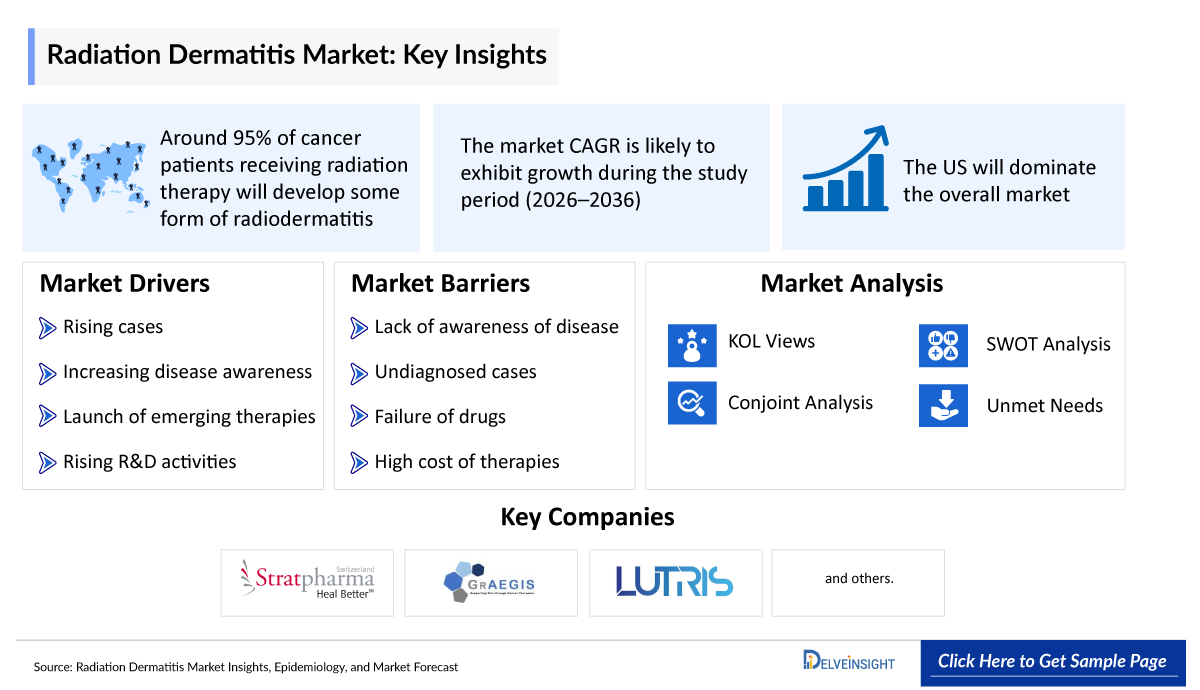
DelveInsight's ‘Radiation dermatitis Market Insights, Epidemiology and Market Forecast – 2036’ report delivers an in-depth understanding of the radiation dermatitis, historical and forecasted epidemiology, as well as the radiation dermatitis market trends in the United States, EU4 (Germany, Spain, Italy, and France), and the United Kingdom, and Japan.
The Radiation dermatitis market report delivers a comprehensive analysis of the current treatment landscape, including standards of care, clinical practices, and evolving therapeutic algorithms. It evaluates radiation dermatitis patient burden trends, revenue & market share dynamics, peak patient share & therapy uptake analysis, and provides an in-depth market size assessment, and growth rate projections (Historical & Forecast 2022–2036) across global regions. The report highlights key unmet medical needs in radiation dermatitis and maps the competitive and clinical landscape to uncover high‑value opportunities, providing a clear outlook on future market growth potential.
|
Study Period |
2022–2036 |
|
Historical Year |
2022–2025 |
|
Forecast Period |
2026–2036 |
|
Base Year |
2026 |
|
Geographies Covered |
|
|
Radiation Dermatitis Market CAGR (Forecast Period) |
XX% (2026–2036) |
|
Radiation Dermatitis Epidemiology Segmentation Analysis |
Patient Burden Assessment
|
|
Radiation Dermatitis Companies |
|
|
Radiation Dermatitis Therapies |
|
|
Radiation Dermatitis Market |
Segmented by
|
|
Analysis |
|
Key Factors Driving the Radiation Dermatitis Market
Rising utilization of radiotherapy in cancer treatment
Approximately 50% of cancer patients receive radiotherapy during the course of their disease, making radiation dermatitis one of the most common treatment-related toxicities. The increasing global cancer burden and growing use of radiotherapy continue to expand the at-risk patient population.
Significant impact on quality of life and treatment adherence
Radiation dermatitis is associated with pain, pruritus, skin breakdown, cosmetic concerns, and impaired daily functioning. Severe cases may result in treatment interruptions, which can negatively affect cancer outcomes, thereby increasing demand for effective management strategies.
Lack of approved standard therapies and persistent unmet need
Despite the high prevalence of radiation dermatitis, limited high-quality evidence supporting available interventions, and no universally accepted standard of care exists. This unmet need continues to stimulate clinical research and development activity.
Radiation Dermatitis Understanding and Treatment Algorithm
Radiation Dermatitis Overview and Diagnosis
Radiation dermatitis is a common radiation induced skin toxicity that develops in patients undergoing radiotherapy, particularly for breast, head and neck, and other solid tumors. The condition arises from radiation-mediated damage to skin cells and underlying tissues, resulting in inflammatory and degenerative changes that manifest as erythema, pruritus, desquamation, pain, and ulceration. Affecting up to 85–95% of patients receiving radiotherapy, radiation dermatitis represents a significant clinical burden due to its negative impact on quality of life, risk of treatment interruption, and associated healthcare resource utilization.
Radiation Dermatitis Diagnosis
Diagnosis of radiation dermatitis is primarily based on clinical evaluation and a history of recent or ongoing radiotherapy. Assessment involves examination of the irradiated skin for signs such as erythema, desquamation, edema, pain, pruritus, and ulceration. Disease severity is commonly graded using standardized tools, including the Common Terminology Criteria for Adverse Events (CTCAE) and the Radiation Therapy Oncology Group (RTOG) criteria. Laboratory tests and imaging are generally not required, but may be used to evaluate suspected secondary infection or to exclude other dermatologic conditions. In selected cases of chronic or atypical lesions, skin biopsy may be performed to differentiate radiation-induced changes from recurrent malignancy.
Further details are provided in the report.
Radiation Dermatitis Treatment
The treatment of radiation dermatitis is primarily supportive and is guided by the severity of skin toxicity. Management focuses on maintaining skin integrity, relieving symptoms, and preventing treatment interruptions. First-line care typically includes gentle skin cleansing, regular use of moisturizers and barrier creams, and avoidance of mechanical, chemical, or thermal skin irritation. Topical corticosteroids are commonly used to reduce inflammation, erythema, and pruritus, particularly in patients with mild-to-moderate dermatitis.
For patients with more severe reactions, including moist desquamation, treatment may involve hydrogel, hydrocolloid, foam, or silicone dressings to promote wound healing and protect damaged skin. Management of pain, secondary infection, and wound complications may require additional supportive interventions, including analgesics and antimicrobial therapy when clinically indicated. Despite the high prevalence of radiation dermatitis, there are currently no FDA-approved pharmacological therapies specifically indicated for its prevention or treatment, and management continues to rely on evidence-based supportive care measures.
Further details related to country-based variations are provided in the report.
Radiation Dermatitis Unmet Needs
The section “unmet needs of radiation dermatitis” outlines the critical gaps between the current state of patient care, diagnosis, and the ideal & effective management of the disease. It highlights the obstacles experienced by patients, clinicians, and researchers and identifies potential solutions for future progress.
- Need for therapies that reduce severe skin toxicity and treatment interruptions
- High impact on patient quality of life, pain, and functional well-being
- Limited predictive biomarkers for identifying high-risk patients
- Lack of FDA-approved therapies specifically indicated for radiation dermatitis, and others…..
Note: Comprehensive unmet needs insights in Radiation Dermatitis and their strategic implications are provided in the full report.
Radiation Dermatitis Epidemiology
Key Findings from Radiation Dermatitis Epidemiological Analysis and Forecast
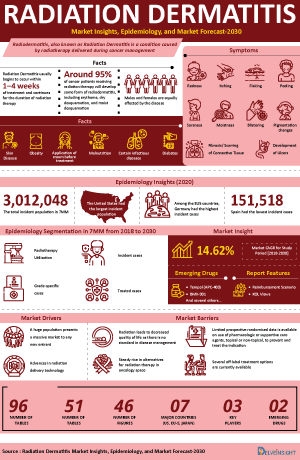
- Around 95% of cancer patients receiving radiation therapy will develop some form of radiodermatitis, including erythema, dry desquamation, and moist desquamation.
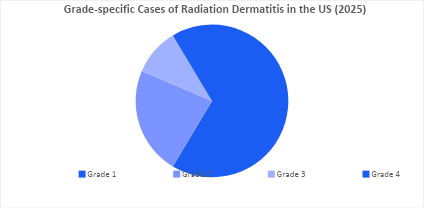
- Grade 1 skin toxicity remains a problem for around 90% of patients, while Grade 2 toxicity occurs in approximately 30% of patients.
- In severe cases of acute radiodermatitis, premature interruption of radiotherapy may be necessary, potentially affecting treatment outcomes and overall survival.
- Chronic radiation dermatitis is driven by an imbalance of pro-inflammatory and pro-fibrotic cytokines, which begins after irradiation and may persist for months to several years.
- Approximately 90% of patients develop mild (Grade 1) skin reactions, while around 20% develop severe forms of the condition. Concurrent systemic anticancer therapies, including platinum-based regimens, cetuximab, and 5-fluorouracil, can further increase the severity of radiation-induced dermatitis.
- In head and neck cancer, 80–90% of patients receiving radiotherapy develop radiation-induced dermatitis, and approximately 25% experience severe skin reactions. In breast cancer, where around 45% of patients receive radiotherapy, 74–100% develop radiation-induced dermatitis. Furthermore, chronic radiation-induced dermatitis develops in approximately one-third of patients and may emerge up to 10 years after radiotherapy, contributing to a growing long-term disease burden among cancer survivors.
Radiation Dermatitis Drug Analysis & Competitive Landscape
The Radiation Dermatitis drug chapter provides a detailed, market-focused review of emerging pipeline across Phase I–II clinical trials. It covers the mechanism of action, clinical trial data, regulatory approvals, patents, collaborations, and strategic partnerships for each therapy, along with their advantages, limitations, and recent developments. This section offers critical insights into the radiation dermatitis treatment landscape, supporting market assessment, competitive analysis, and growth forecasting for the radiation dermatitis therapeutics market.
Radiation Dermatitis Pipeline Analysis
GR1014-CG: Graegis Pharmaceuticals/Alys Pharmaceuticals
GR1014-CG, developed by Graegis Pharmaceuticals, is a topical radioprotective gel containing amifostine thiol being investigated for the prevention of radiodermatitis in patients receiving adjuvant radiotherapy for localized breast cancer following lumpectomy. The asset is designed to be applied directly to the skin prior to radiotherapy sessions, delivering localized radioprotection without altering the planned radiation treatment regimen. By targeting the underlying radiation induced tissue damage, GR1014-CG aims to reduce the incidence and severity of radiodermatitis, a common and clinically significant complication of radiotherapy. The asset is currently being evaluated in the Phase II GuARD trial (NCT07192588).
LUT014: Lutris Pharma
LUT014, developed by Lutris Pharma, is a topical B-Raf inhibitor being investigated for the treatment of radiation dermatitis. The asset is designed to promote keratinocyte proliferation and accelerate epidermal barrier repair, addressing the underlying skin damage caused by radiotherapy. By targeting tissue recovery rather than symptom management alone, LUT014 represents a novel therapeutic approach in an indication with no FDA approved therapies and significant unmet need. Clinical data from a Phase I/II study (NCT04261387) support its continued development in radiation dermatitis.
Table 1: Competitive Landscape of Emerging Drugs | ||||||
|
Drug Name |
Company |
Highest Phase |
Indication |
RoA |
MoA |
Anticipated Launch in the US |
|
GR1014-CG |
Graegis Pharmaceuticals/Alys Pharmaceuticals |
II |
Radiodermatitis Occurring With Adjuvant Radiotherapy for Localised Breast Cancer After Lumpectomy |
Topical gel |
Radioprotector |
Information is available in the full report |
|
LUT014 |
Lutris Pharma |
I/II |
Radiation Dermatitis |
Topical gel |
B-Raf inhibitor |
Information is available in the full report |
|
Note: Launch insights are provisional and may change with future report updates or the occurrence of major key catalysts. | ||||||
Note: Detailed emerging therapies assessment will be provided in the final report.
Radiation Dermatitis Key Players, Market Leaders, and Emerging Companies
- Stratpharma AG
- Graegis Pharmaceuticals
- Lutris Pharma
Radiation Dermatitis Drug Updates
- In February 2024, Alys Pharmaceuticals announces its launch with $100 million financing from Medicxi and the formation of an immuno-dermatology focused platform through the aggregation of six asset-centric biotech companies, including Graegis Pharmaceuticals, whose pipeline assets are integrated into the newly created Alys development portfolio.
- In September 2022, Lutris Pharma reports positive top-line results from the open-label part 1 and double-blinded part 2 of its Phase I/II trial of LUT014 in radiation dermatitis in breast cancer patients.
Drug Class Insights
Radiation Dermatitis Market Outlook
The radiation dermatitis market is expected to witness steady growth, driven by the increasing global cancer burden and expanding use of radiotherapy, which remains a cornerstone of cancer treatment. Radiation dermatitis is one of the most common radiotherapy-related toxicities, affecting a large proportion of patients, yet there is currently no FDA approved pharmacological therapy, and management remains largely supportive, including emollients, topical corticosteroids, barrier creams, and wound dressings.
Advances in radiotherapy techniques such as IMRT have helped reduce the severity of radiation-induced skin toxicity in some settings; however, radiodermatitis remains a significant clinical challenge. Increasing evidence supports the use of barrier-forming and silicone-based products for symptom management and skin protection. In parallel, novel pipeline therapies such as GR1014-CG, a topical radioprotective gel being evaluated for the prevention of radiation-induced dermatitis, and LUT014, a topical B-Raf inhibitor designed to promote epidermal repair, highlight ongoing innovation aimed at addressing the underlying tissue damage associated with radiotherapy and improving outcomes beyond supportive care.
Overall, the market remains highly underserved, with current treatment focused on symptom management rather than disease modification. Future growth is expected to be driven by rising radiotherapy use, increasing focus on supportive oncology care, and development of more effective mechanism based therapies that can reduce severe skin toxicity, prevent treatment interruptions, and improve patient quality of life.
Further details will be provided in the report….
Drug Class/Insights into Leading Emerging and Marketed Therapies in Radiation Dermatitis (2022–2036 Forecast)
The radiation dermatitis treatment landscape comprises topical corticosteroids, barrier-forming agents, wound-healing dressings, regenerative therapies, antioxidants, and emerging epidermal repair approaches, all aimed at reducing skin toxicity, preserving skin integrity, and supporting recovery during and after radiotherapy.
- Topical Radioprotective: GR1014-CG is a topical radioprotective gel being developed for the prevention of radiation-induced dermatitis in patients undergoing radiotherapy. The formulation is designed to provide localized protection against radiation-induced tissue damage at the irradiated skin site, with the aim of reducing skin toxicity while preserving standard radiotherapy delivery.
- B-Raf Inhibitors: LUT014 represents an emerging therapeutic approach that utilizes B-Raf inhibition to stimulate keratinocyte proliferation and enhance epidermal regeneration. By promoting restoration of the skin barrier, this mechanism aims to accelerate recovery from radiation-induced skin damage.
Radiation Dermatitis Drug Uptake
This section focuses on the uptake rate of potential drugs expected to be launched in the market during the forecast period (2026–2036). The analysis covers the Radiation Dermatitis drug’s uptake, performance at peak, factors affecting performance during prime years of growth, patient uptake by therapy, and anticipated sales generated by each drug.
The radiation dermatitis treatment landscape remains largely supportive care driven, with no FDA approved pharmacological therapy specifically indicated. Current management includes topical corticosteroids, moisturizers, and barrier-forming products, reflecting a focus on symptom control and skin protection rather than disease modification. While GR1014-CG (Graegis Pharmaceuticals/Alys Pharmaceuticals) is a clinical-stage topical radioprotective gel being investigated for the prevention of radiation-induced dermatitis, its mechanism is centered on providing localized protection against radiation induced skin damage during radiotherapy, supporting preservation of skin integrity in treated areas.
In contrast, LUT014 (Lutris Pharma) represents a clinical-stage, mechanism-based investigational therapy designed to stimulate keratinocyte proliferation and epidermal regeneration via BRAF pathway modulation, differentiating it from existing barrier and symptomatic treatments. While GR1014-CG is focused on preventing radiation-induced tissue injury through localized radioprotection, LUT014 aims to actively enhance biological skin repair processes, offering potential disease-modifying effects if clinical benefits are confirmed.
Detailed insights of emerging therapies' drug uptake is included in the report.
Market Access and Reimbursement of Radiation Dermatitis
The report further provides detailed insights on the country-wise accessibility and reimbursement scenarios, cost-effectiveness scenario of approved therapies, programs making accessibility easier and out-of-pocket costs more affordable, insights on patients insured under federal or state government prescription drug programs, etc.
Reimbursement is a crucial factor that affects the drug’s access to the market. Often, the decision to reimburse comes down to the price of the drug relative to the benefit it produces in treated patients. To reduce the healthcare burden of these high-cost therapies, many payment models are being considered by payers and other industry insiders.
NOTE: Further Details are provided in the final report….
Radiation Dermatitis Therapies Price Scenario & Trends
Pricing and analogue assessment of radiation dermatitis therapies highlights evolving price dynamics structures. This section summarizes the cost of approved treatments, the closest and most appropriate analogue selection for emerging therapies, and understanding of how pricing influences market access, adherence, and long-term uptake.
Further details are provided in the final report….
Industry Experts and Physician Views for Radiation Dermatitis
To keep up with Radiation Dermatitis market trends, we take Key Opinion Leaders (KOLs) and Subject Matter Experts (SMEs) opinions working in the domain through primary research to fill the data gaps and validate our secondary research. Industry experts were contacted for insights on the emerging radiation dermatitis therapies, evolving treatment landscape, patient adherence to conventional therapies, therapy switching trends, drug adoption and uptake, accessibility challenges, and epidemiology and real-world prescription patterns in radiation dermatitis, including MD, PhD, Instructor, Postdoctoral Researcher, Professor, Researcher, and others.
DelveInsight’s analysts connected with 10+ KOLs to gather insights at the country level. Centers such as the New York University Langone Health and Perlmutter Cancer Center, United States, and Memorial Sloan Kettering Cancer Center, New York, US, The University of Texas M. D. Anderson Cancer Center etc., were contacted. Their opinion helps understand and validate current and emerging radiation dermatitis therapies, highlight unmet medical needs, provide epidemiological context, and support strategic decisions for market access, therapy adoption, and pipeline prioritization in radiation dermatitis.
|
Region |
Key Opinion Leaders (KOLs) and Subject Matter Experts (SMEs) |
|
United States |
“Radiation dermatitis is a common adverse event in patients with breast cancer during and after breast and chest wall radiotherapy, with potential to negatively impact quality of life. Existing data indicates worse radiation dermatitis in African American patients, though data is limited by the lack of standardized objective methods to classify baseline skin tone and the lack of studies correlating baseline skin pigmentation agnostic of race and ethnicity with radiation dermatitis.” |
|
Japan |
“In RD grade 1 and 2, the application of the indicated hydrating product with greater frequency is recommended, but not the systematic use of topical steroids, only to lessen symptoms such as itching or pain. This is in accordance with the Society and College of Radiographers (SCoR) guide, and they should not be applied on areas of moist desquamation.” |
Qualitative Analysis: SWOT and Conjoint Analysis
We perform qualitative and market Intelligence analysis using various approaches, such as SWOT analysis and conjoint analysis. In the SWOT analysis of radiation dermatitis, strengths, weaknesses, opportunities, and threats in terms of disease diagnosis, patient awareness, patient burden, competitive landscape, cost-effectiveness, and geographical accessibility of therapies are provided.
Conjoint analysis analyzes emerging therapies based on relevant attributes such as safety, efficacy, frequency of administration, route of administration, and order of entry. Scoring is given based on these parameters to analyze the effectiveness of therapy.
The team of analysts analyzes promising emerging therapies based on relevant attributes such as safety, efficacy, frequency of administration, route of administration, and order of entry. In efficacy, the trial’s primary and secondary outcome measures are evaluated, whereas the therapies’ safety is evaluated, wherein the acceptability, tolerability, and adverse events are majorly observed. In addition, the scoring is also based on the route of administration, order of entry, probability of success, and the addressable patient pool for each therapy. According to these parameters, the final weightage score and the ranking of the emerging therapies are decided.
Scope of the Report
- The report covers a segment of key events, an executive summary, a descriptive overview of radiation dermatitis, explaining their causes, signs and symptoms, pathogenesis, and currently available treatments.
- Comprehensive insight has been provided into the epidemiology segments and forecasts, the future growth potential of the diagnosis rate, and disease progression along treatment guidelines.
- Additionally, an all-inclusive account of both the current and emerging treatments, along with the elaborate profiles of late-stage and prominent therapies, will have an impact on the current treatment landscape.
- A detailed review of the radiation dermatitis market, historical and forecasted market size, market share by therapies, detailed assumptions, and rationale behind our approach is included in the report, covering the 7MM drug outreach.
- The report provides an edge while developing business strategies by understanding trends through SWOT analysis and expert insights/KOL views, patient journey, and treatment preferences that help in shaping and driving the 7MM radiation dermatitis market.
Report Insights
- Radiation Dermatitis Patient Population Forecast
- Radiation Dermatitis Therapeutics Market Size
- Radiation Dermatitis Pipeline Analysis
- Radiation Dermatitis Market Size and Trends
- Radiation Dermatitis Market Opportunity (Current and Forecasted)
Report Key Strengths
- Epidemiology‑based (Epi‑based) Bottom‑up Forecasting
- Artificial Intelligence (AI)-Enabled Market Research Report
- 11-Year Forecast
- Radiation Dermatitis Market Outlook (North America, Europe, Asia-Pacific)
- Patient Burden Trends (By Geography)
- Radiation Dermatitis Treatment Addressable Market (TAM)
- Radiation Dermatitis Competitive Landscape
- Radiation Dermatitis Major Companies Insights
- Radiation Dermatitis Price Trends and Analogue Assessment
- Radiation Dermatitis Therapies Drug Adoption/Uptake
- Radiation Dermatitis Therapies Peak Patient Share Analysis
Report Assessment
- Radiation Dermatitis Current Treatment Practices
- Radiation Dermatitis Unmet Needs
- Radiation Dermatitis Clinical Development Analysis
- Radiation Dermatitis Emerging Drugs Product Profiles
- Radiation Dermatitis Market Attractiveness
- Radiation Dermatitis Qualitative Analysis (SWOT and Conjoint Analysis)
FAQs
Market Insights
- What was the Radiation Dermatitis market size, the market size by therapies, the market share (%) distribution in 2025, and what would it look like by 2036? What are the contributing factors for this growth?
- What are the anticipated pricing variations among different geographies for the emerging therapies in the future?
- What can be the future treatment paradigm of Radiation Dermatitis?
- What are the disease risks, burdens, and unmet needs of Radiation Dermatitis? What will be the growth opportunities across the 7MM concerning the patient population with Radiation Dermatitis?
- Who is the major future competitor in the market, and how will the competitors affect their market share?
- What are the current options for the treatment of Radiation Dermatitis? What are the current guidelines for treating Radiation Dermatitis in the US, Europe, and Japan?
Reasons to Buy
- The report will help in developing business strategies by understanding the latest trends and changing treatment dynamics driving the radiation dermatitis market.
- Bottom-up forecasting builds from the affected population to product forecasts, delivering a robust, data-driven approach ideal for new therapies and novel classes.
- Insights on patient burden/disease incidence, evolution in diagnosis, and factors contributing to the change in the epidemiology of the disease during the forecast years.
- Understand the existing market opportunities in varying geographies and the growth potential over the coming years.
- Identifying strong upcoming players in the market will help devise strategies to help get ahead of competitors.
- Detailed analysis and ranking of class-wise potential current and emerging therapies under the conjoint analysis section to provide visibility around leading classes.
- To understand KOLs’ perspectives on the accessibility, acceptability, and compliance-related challenges of existing treatment to overcome barriers in the future.
- Detailed insights into the unmet needs of the existing market so that the upcoming players can strengthen their development and launch strategy.
- This Artificial Intelligence (AI)-enabled report summarizes and simplifies complex datasets within the report into clear, actionable insights for stakeholders, investors, and healthcare providers, enabling faster, data-driven decisions.