
Respiratory Inhalers Market Summary
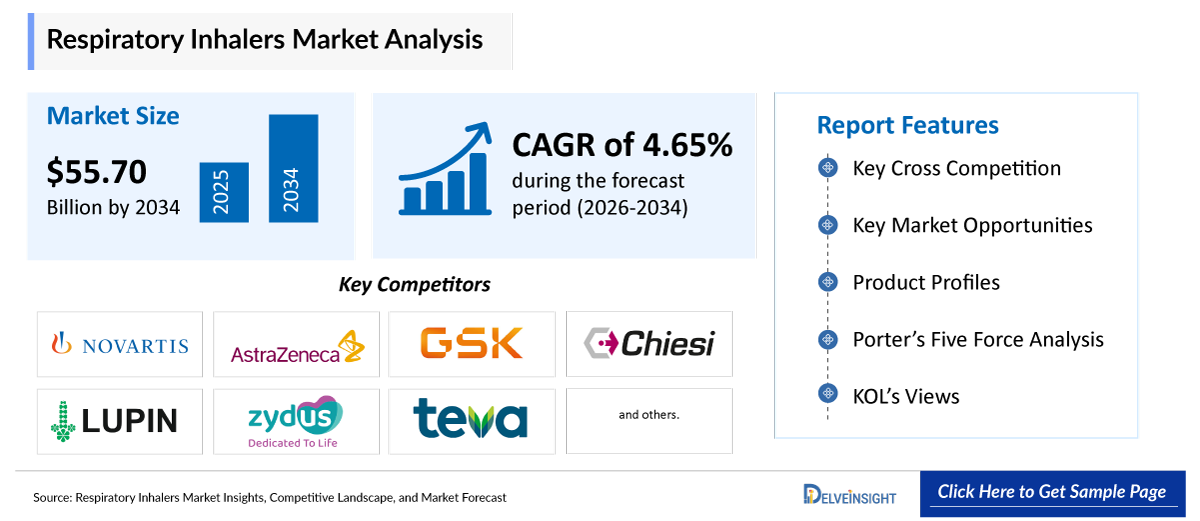
- The Respiratory Inhalers market is estimated at USD 37.00 billion in 2025 and is projected to reach USD 55.70 billion by 2034. Growth is anchored in the rising global burden of asthma and chronic obstructive pulmonary disease, increasing patient awareness and early diagnosis, and continuous device and drug innovation by leading manufacturers.
- The global Respiratory Inhalers market is growing at a CAGR of 4.65% during the forecast period from 2026 to 2034.
- By product type, the metered-dose inhalers segment dominated the Respiratory Inhalers market with a 42% share in 2025.
- By type, the conventional inhaler devices segment dominated the Respiratory Inhalers market with an 88% share in 2025.
- By patient type, the adult segment dominated the Respiratory Inhalers market with a 74% share in 2025.
- By indication, the asthma segment dominated the Respiratory Inhalers market with a 46% share in 2025.
- By distribution channel, the hospital and retail pharmacies segment dominated the Respiratory Inhalers market with a 78% share in 2025.
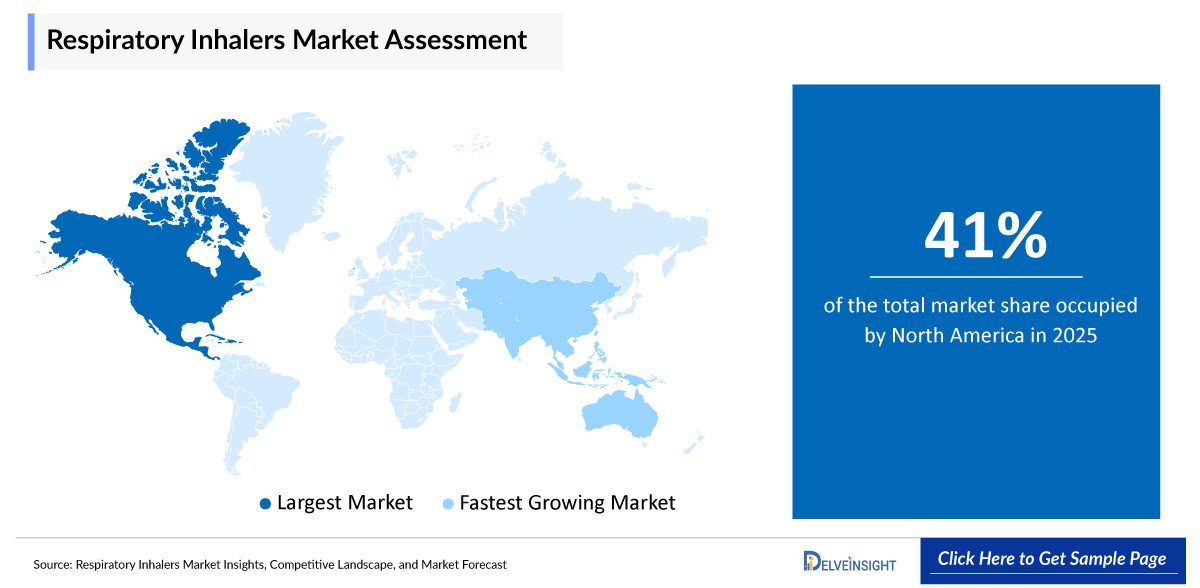
- North America dominated the global Respiratory Inhalers market revenue with a 41% share in 2025, representing the highest regional market share globally.
Respiratory inhalers are handheld medical devices that deliver medication directly into the lungs through inhalation for the treatment and management of chronic respiratory conditions such as asthma and chronic obstructive pulmonary disease (COPD). The category spans metered-dose inhalers, dry-powder inhalers, soft mist inhalers, and nebulizers, available as conventional devices and as smart connected devices with sensors for dose tracking and adherence monitoring. Inhalers deliver rescue medications such as short-acting beta agonists for immediate symptom relief and maintenance therapies such as inhaled corticosteroids, long-acting beta-agonists, and long-acting muscarinic antagonists for long-term disease control. The ecosystem brings together pharmaceutical companies, device manufacturers, and propellant and formulation specialists, with products dispensed across hospital, retail, and online pharmacies. Major applications include asthma, COPD, cystic fibrosis, bronchitis, and bronchospasm. Over the past decade the market has evolved from chlorofluorocarbon to hydrofluoroalkane propellants and is now transitioning to low-global-warming-potential propellants, while single-inhaler triple therapy, novel mechanisms of action, and smart connected inhalers have advanced drug delivery, usability, and adherence, positioning respiratory inhalers as the frontline of modern respiratory care.
Respiratory Inhalers Market Key Growth Drivers
- The rising global prevalence of chronic respiratory disease is expanding the patient base, with the Global Initiative for Asthma reporting over 260 million people affected by asthma worldwide in 2024 and the World Health Organization attributing over 3 million deaths to COPD in 2023.
- Growing patient awareness of asthma and COPD as manageable chronic diseases, supported by public health campaigns and improved healthcare access, is encouraging early diagnosis and consistent treatment.
- Continuous device and drug innovation, including single-inhaler triple therapy, novel mechanisms of action, and smart connected inhalers, is improving outcomes and supporting product differentiation.
- An aging global population and persistent risk factors such as tobacco use and air pollution are increasing the incidence of COPD and sustaining long-term inhaler demand.
- A steady cadence of product approvals and launches, including Verona Pharma's Ohtuvayre and AstraZeneca's Airsupra and Trixeo Aerosphere, is broadening treatment options and expanding the market.
- The transition to low-global-warming-potential propellants is driving reformulation and replacement demand across pressurized metered-dose inhaler portfolios.
- The convergence of rising disease burden, expanding access, and sustained product innovation is expected to support steady market growth through 2034.
Key Companies in Respiratory Inhalers Market
The competitive landscape is led by the following active manufacturers and device providers:
- Novartis AG
- AstraZeneca plc
- GSK plc
- CHIESI Farmaceutici S.p.A.
- Lupin Limited
- Zydus Lifesciences Limited
- Teva Pharmaceutical Industries Ltd.
- OMRON Corporation
- Koninklijke Philips N.V.
- BPL Medical Technologies, and others
For illustrative purposes, only the top 10 companies are listed in the Table of Contents. The report may include analysis and references to additional companies where relevant to the market assessment.
Respiratory Inhalers Market Size
The following snapshot summarizes the principal report metrics for the Respiratory Inhalers market.
|
Report Metrics |
Details |
|
2025 Market Size |
USD 37.00 billion |
|
2034 Projected Market Size |
USD 55.70 billion |
|
Growth Rate (2026-2034) |
4.65% CAGR |
|
Largest Market |
North America |
|
Fastest Growing Market |
Asia-Pacific |
|
Market Structure |
Consolidated |
All market values are expressed in USD and represent DelveInsight estimates synthesized from primary and secondary research.
Factors Contributing to the Growth of the Respiratory Inhalers Market
Respiratory Inhalers Market Drivers
Rising Global Burden of Asthma, COPD, and Chronic Respiratory Disease: The most powerful driver of the Respiratory Inhalers market is the rising global prevalence of chronic respiratory disease. According to the Global Initiative for Asthma, asthma affected over 260 million people worldwide in 2024, with over 5.4 million people affected in the United Kingdom and over 4.6 million in Canada. The World Health Organization attributed over 3 million deaths to COPD in 2023, many of which could have been prevented through timely use of inhaled therapies, while Australia recorded over 638,000 people living with COPD. Cystic fibrosis adds further demand, with 10,800 individuals affected in the United Kingdom in 2023. Inhalers are the frontline treatment, delivering medication directly to the lungs for fast relief and long-term control, so the rising number of asthma and COPD diagnoses, particularly among children and the aging population, continuously expands the base of patients relying on both rescue and maintenance inhalers.
Increasing Patient Awareness and Early Diagnosis of Asthma and COPD: Growing awareness of asthma and COPD as manageable chronic diseases is enlarging the treated patient population. Public health campaigns, improved access to healthcare in emerging markets, and a stronger emphasis on early diagnosis are encouraging patients to begin and maintain inhalation therapy sooner. In the United States, the Asthma and Allergy Foundation of America reported that over 27 million people were living with asthma, or one in twelve individuals, while the American Lung Association documented a significant COPD burden. As more patients are diagnosed and adhere to both rescue inhalers for immediate relief and maintenance inhalers for long-term control, demand for respiratory inhalers rises across emergency care and daily disease management, reinforcing sustained market growth.
Continuous Device and Drug Innovation by Leading Manufacturers: Active research, product development, and frequent launches by leading pharmaceutical and device companies are strengthening the market. Innovation spans single-inhaler triple therapy, novel mechanisms of action, improved dry-powder and soft-mist formulations, and enhanced dose delivery. A landmark example is the June 2024 FDA approval of Verona Pharma's Ohtuvayre (ensifentrine), the first novel inhaled mechanism for COPD maintenance in over 20 years, combining bronchodilator and non-steroidal anti-inflammatory effects. These advances improve drug delivery, device usability, and rapid onset of action, expanding patient access and reinforcing the central role of inhalers in respiratory care.
Aging Population and Persistent Environmental Risk Factors: Demographic aging and persistent environmental exposures are increasing the incidence of chronic respiratory disease, particularly COPD. As populations age, the prevalence of COPD rises, and risk factors such as tobacco use, occupational exposures, and ambient air pollution continue to drive new diagnoses. The World Health Organization identifies COPD as a leading cause of death globally, with over 3 million deaths in 2023, and expects the burden to grow as these risk factors persist. Patients with COPD rely on daily maintenance therapies such as long-acting beta-agonists, long-acting muscarinic antagonists, and inhaled corticosteroids to manage symptoms, improve quality of life, and reduce hospitalizations, sustaining long-term inhaler demand across both developed and emerging markets.
Strong Product Approvals and Pipeline Activity: A steady stream of regulatory approvals and product launches is accelerating market growth and expanding treatment options. In January 2023, AstraZeneca received FDA approval for Airsupra, an as-needed albuterol and budesonide rescue inhaler for asthma, and in May 2025 the company secured UK approval for a Trixeo Aerosphere triple-combination inhaler. Generic and device entries are broadening access, exemplified by Viatris' 2023 FDA approval for Breyana, a generic version of Symbicort for asthma and COPD, and Amphastar's 2024 approval for an Albuterol Sulfate Inhalation Aerosol. These milestones underscore ongoing innovation and product diversification that improve patient access and treatment outcomes.
Adoption of Smart and Connected Inhaler Technologies: The integration of digital technology into inhalers is creating new growth opportunities and improving disease management. Smart connected inhalers equipped with sensors track dosing and monitor adherence, addressing one of the principal challenges in respiratory care, where poor inhaler technique and inconsistent use reduce treatment effectiveness. By capturing real-time usage data, these devices support remote monitoring, personalized treatment, and improved outcomes, while dry-powder and soft-mist formulations enhance usability and drug delivery efficiency. Pharmaceutical and device manufacturers, alongside digital health specialists, are investing in connected platforms that pair therapy with adherence analytics, expanding the value of inhalers beyond medication delivery and supporting premium positioning across chronic respiratory disease management.
Transition to Low-Global-Warming-Potential Propellants: The mandated shift away from high global-warming-potential propellants is driving reformulation and replacement demand across the pressurized metered-dose inhaler segment. Regulatory and environmental pressure is prompting manufacturers to redesign established products with next-generation low-carbon propellants. In May 2025, AstraZeneca gained UK approval for a Trixeo Aerosphere inhaler reformulated with a near-zero global-warming-potential propellant, described as a world-first low-carbon pressurized metered-dose inhaler, followed by a positive EMA opinion in July 2025. This transition requires substantial reformulation, clinical bridging, and manufacturing investment, but it sustains product innovation, supports environmental commitments, and creates replacement demand as portfolios convert to greener propellants through the forecast period.
Respiratory Inhalers Market Restraints
Despite steady momentum, the Respiratory Inhalers market faces material constraints. Limitations and safety concerns associated with inhalers, including incorrect inhaler technique, device-handling errors, and the risk of paradoxical bronchospasm with certain therapies, can reduce effectiveness and patient adherence, particularly among children and the elderly. Stringent regulatory requirements for product approval lengthen development timelines and raise costs, and the mandated transition away from high global-warming-potential propellants requires substantial reformulation, clinical bridging studies, and capital investment that pressure manufacturers. Intense generic and biosimilar competition, together with payer and government pricing pressure, compresses margins on established molecules and devices, especially in mature markets. The cost and complexity of smart and combination inhalers can limit access in lower-resource settings, while reimbursement for premium devices remains uneven across geographies. Supply-chain dependencies for specialized components, propellants, and active ingredients expose manufacturers to availability and cost risk. In addition, environmental scrutiny of propellant emissions and disposal, alongside variable patient and prescriber familiarity with newer device types, can slow adoption. Together, these safety, regulatory, pricing, supply-chain, and adoption barriers temper the pace of growth across the forecast period, even as the underlying drivers of rising respiratory disease burden and product innovation remain firmly intact.
Respiratory Inhalers Market Segment Analysis
The Respiratory Inhalers Market by Product Type (Metered-Dose Inhalers, Dry-Powder Inhalers, Soft Mist Inhalers, and Nebulizers [Jet Nebulizers, Mesh Nebulizers, and Ultrasonic Nebulizers]), Type (Conventional Inhaler Devices and Smart Inhaler Devices), Patient Type (Adult and Pediatrics), Indication (Asthma, COPD, and Others), Distribution Channel (Hospital and Retail Pharmacies and Online Pharmacies), and Geography (North America, Europe, Asia-Pacific, Rest of World).
By Product Type
Dominant Subsegment: Metered-Dose Inhalers. The metered-dose inhalers category is expected to dominate the market.
Dominant: Metered-Dose Inhalers ~ 42%
The metered-dose inhalers segment accounted for 42% of the Respiratory Inhalers market in 2025. Metered-dose inhalers (MDIs) are the leading product type because they combine clinical effectiveness with practical advantages that suit both acute and chronic respiratory care. MDIs are non-invasive, easy to administer, and deliver an accurate measured dose with each actuation, ensuring consistent and controlled medication delivery directly to the lungs for rapid onset of action and fast symptom relief. Their compact, portable design enhances patient convenience and supports adherence in chronic conditions requiring daily use, while targeted pulmonary delivery minimizes systemic exposure and reduces side effects. The rising global prevalence of asthma and COPD continues to expand MDI demand, and leading companies are investing in next-generation MDI therapies, exemplified by the May 2025 UK approval of AstraZeneca's Trixeo Aerosphere, a triple-combination MDI containing budesonide, glycopyrronium, and formoterol for moderate to severe COPD. Dry-powder inhalers, soft mist inhalers, and nebulizers serve important complementary roles across pediatric, severe, and home-care settings, but the combination of clinical advantages, growing disease burden, and continued MDI product launches secures the segment's leadership across the forecast period.
By Type
Dominant Subsegment: Conventional Inhaler Devices. The conventional inhaler devices category is expected to dominate the market.
Dominant: Conventional Inhaler Devices ~ 88%
The conventional inhaler devices segment accounted for 88% of the Respiratory Inhalers market in 2025. Conventional inhaler devices dominate because they represent the established standard of care, with decades of clinical validation, broad physician familiarity, and extensive availability across both branded and generic portfolios. These devices, including conventional metered-dose inhalers, dry-powder inhalers, and nebulizers, are produced at scale by leading pharmaceutical and device manufacturers and are accessible at lower cost than connected alternatives, supporting their overwhelming share of global volume. Their dominance is reinforced by the large installed base of patients managing asthma and COPD with familiar, reliable devices, and by the continuous launch of new conventional formulations and combination therapies. While smart inhaler devices equipped with sensors for dose tracking and adherence monitoring are growing rapidly and attracting investment from pharmaceutical and digital health companies, they remain a small share of the overall market, constrained by higher cost and reimbursement variability. The proven performance, affordability, and broad accessibility of conventional devices secure their clear leadership across the forecast period.
By Patient Type
Dominant Subsegment: Adult. The adult category is expected to dominate the market.
Dominant: Adult ~ 74%
The adult segment accounted for 74% of the Respiratory Inhalers market in 2025. The adult segment leads because the largest share of asthma and COPD prevalence, and particularly the most treatment-intensive disease, occurs in the adult and aging population. COPD is overwhelmingly a disease of older adults, driven by cumulative exposure to tobacco smoke, occupational hazards, and air pollution, and requires daily maintenance therapy with long-acting bronchodilators and inhaled corticosteroids delivered through inhalers. Adult asthma also accounts for a large treated population, with the Asthma and Allergy Foundation of America reporting that over 27 million people were living with asthma in the United States, the majority of them adults. Adults are the primary users of combination and triple-therapy inhalers, smart connected devices, and premium formulations, generating the bulk of market revenue. While the pediatric segment is clinically important and growing, supported by dedicated formulations and dosing, the scale of adult disease burden, the intensity of maintenance therapy, and the adoption of higher-value devices secure the adult segment's leadership across the forecast period.
By Indication
Dominant Subsegment: Asthma. The asthma category is expected to dominate the market.
Dominant: Asthma ~ 46%
The asthma segment accounted for 46% of the Respiratory Inhalers market in 2025. Asthma is the leading indication because of its very large and growing global patient base and its reliance on inhalers as the frontline treatment. The Global Initiative for Asthma reported that asthma affected over 260 million people worldwide in 2024, spanning children, young adults, and older patients, all of whom depend on both rescue inhalers for immediate relief and maintenance inhalers for long-term control. The chronic, lifelong nature of asthma generates sustained, recurring demand for short-acting beta agonists, inhaled corticosteroids, and combination therapies. Continued innovation targets this segment directly, including the January 2023 FDA approval of AstraZeneca's Airsupra, an as-needed albuterol and budesonide inhaler designed to prevent severe asthma attacks. COPD follows as a major indication, driven by an aging population and rising maintenance-therapy use, while other conditions such as cystic fibrosis and bronchitis add further demand. The scale of the asthma population, its dependence on inhaled therapy, and ongoing product innovation secure the segment's leadership across the forecast period.
By Distribution Channel
Dominant Subsegment: Hospital and Retail Pharmacies. The hospital and retail pharmacies category is expected to dominate the market.
Dominant: Hospital and Retail Pharmacies ~ 78%
The hospital and retail pharmacies segment accounted for 78% of the Respiratory Inhalers market in 2025. Hospital and retail pharmacies dominate because they remain the primary points of access for prescription respiratory inhalers, which require clinician prescription and pharmacist dispensing across both acute and chronic care. Hospital pharmacies supply inhalers during emergency treatment, inpatient care, and specialist respiratory clinics, while retail pharmacies serve the large population of patients filling and refilling rescue and maintenance inhaler prescriptions for ongoing disease management. The combined channel benefits from established distribution infrastructure, insurance and reimbursement integration, and pharmacist counseling that supports correct inhaler technique and adherence. The breadth of branded and generic inhaler availability through these channels reinforces their leadership. Online pharmacies are growing quickly, supported by the convenience of home delivery, digital prescriptions, and adherence-support programs, particularly for stable chronic patients on maintenance therapy. Nonetheless, the central role of hospital and retail pharmacies in prescription fulfillment, clinical oversight, and patient access secures their dominant position across the forecast period.
Respiratory Inhalers Market Regional Analysis
Dominant Region: North America
North America accounted for 41% of the global Respiratory Inhalers market revenue in 2025, representing the highest regional market share globally. The region's dominance reflects a high prevalence of asthma, COPD, and bronchitis, strong demand for fast-acting and efficient inhalation therapies, and a steady stream of product approvals and launches by leading companies. According to the Asthma and Allergy Foundation of America, over 27 million people in the United States were living with asthma, or one in twelve individuals, while the American Lung Association documented a substantial COPD burden. Market growth is reinforced by continuous innovation in inhaler technology, including smart inhalers and improved formulations, and by a supportive regulatory environment, evidenced by the FDA approvals of AstraZeneca's Airsupra in 2023 and Verona Pharma's Ohtuvayre in 2024. Rising awareness, improved access, and continued product launches, together with strong reimbursement and a mature healthcare infrastructure, anchor the region's continued leadership across the forecast period.
Dominant: North America ~ 41% (Largest)
Fastest Growing Region: Asia-Pacific
Asia-Pacific is the fastest-growing region in the Respiratory Inhalers market. The region's elevated CAGR is driven by a large and aging patient population, rising prevalence of asthma and COPD, increasing healthcare investment, and expanding access to diagnosis and treatment across China, Japan, India, Australia, and South Korea. High levels of air pollution and tobacco use in several markets are increasing respiratory disease incidence, while growing awareness and improving healthcare infrastructure are bringing more patients into treatment. Expanding domestic manufacturing capacity, the entry of affordable generic inhalers from regional producers, and government initiatives to improve respiratory care are accelerating adoption. Rising demand for both conventional and smart inhalers, supported by a growing middle class and broadening insurance coverage, positions Asia-Pacific as the principal source of incremental growth over the forecast period.
Regional Commentary
North America
North America accounted for 41% of the global Respiratory Inhalers market revenue in 2025. The United States dominates the region on the strength of high asthma and COPD prevalence, a steady cadence of product approvals and launches, strong reimbursement, and rapid adoption of innovative inhaler technologies, while Canada contributes through expanding access and consistent maintenance-therapy use.
Europe
Europe represents the second-largest regional market, led by Germany, the United Kingdom, France, Italy, and Spain. Growth is supported by a high chronic respiratory disease burden, established reimbursement systems, and leadership in the transition to low-global-warming-potential propellants, exemplified by AstraZeneca's reformulated Trixeo Aerosphere gaining UK approval and a positive EMA opinion in 2025. Strong presence of manufacturers such as Chiesi and AstraZeneca reinforces the region's position.
Asia-Pacific
Asia-Pacific is the fastest-growing region, propelled by a large patient population, rising asthma and COPD prevalence, high air pollution and tobacco use, and expanding healthcare access across China, India, Japan, Australia, and South Korea. Regional manufacturers such as Cipla, Lupin, and Glenmark supply affordable inhalers, while growing awareness and insurance coverage accelerate adoption.
Rest of World
The Rest of World region, spanning the Middle East, Africa, and South America, is an emerging growth frontier. Rising respiratory disease burden, improving healthcare infrastructure, and expanding access to diagnosis and treatment are increasing inhaler demand, while government health initiatives and the entry of affordable generic devices gradually broaden availability across these markets.
Respiratory Inhalers Market Competitive Landscape
The Respiratory Inhalers market is classified as Consolidated. A small group of global pharmaceutical companies controls the majority of branded inhaler revenue, with GSK, AstraZeneca, Boehringer Ingelheim, Chiesi, and Novartis leading across asthma and COPD therapies. A broad field of generic manufacturers, including Cipla, Lupin, Teva, Viatris, and Glenmark, and device specialists such as OMRON, Koninklijke Philips, and AptarGroup competes across nebulizers, generic inhalers, and connected platforms.
The competitive landscape can be evaluated across the following dimensions:
- Market concentration: Consolidated, with branded inhaler revenue concentrated among a few multinational leaders and a long tail of generic and device manufacturers.
- Leading players: GSK, AstraZeneca, Boehringer Ingelheim, Chiesi, and Novartis anchor the branded segment, with Cipla, Lupin, Teva, and Viatris leading in generics.
- Geographic reach: Leaders operate global commercial networks across North America, Europe, and Asia-Pacific, with regional generic players strong in emerging markets.
- Product portfolio strength: Top players hold broad portfolios spanning rescue and maintenance therapy, single-inhaler triple therapy, and multiple device formats.
- Pipeline strength: Active pipelines in novel mechanisms of action, biologic add-on therapies for severe disease, and next-generation device formulations.
- Strategic partnerships: Collaborations across pharmaceutical, device, and digital health companies extend reach in connected inhalers and combination therapies.
- M&A activity: Consolidation continues, exemplified by Merck's acquisition of Verona Pharma and its first-in-class COPD therapy Ohtuvayre in 2025.
- Manufacturing capabilities: Scale manufacturing of devices, propellants, and formulations is a key competitive moat and a supply-chain consideration during the propellant transition.
- Innovation focus: Single-inhaler triple therapy, novel mechanisms such as ensifentrine, smart connected inhalers, and low-global-warming-potential propellants.
Respiratory Inhalers Market Recent Developmental Activities
- In October 2025, Merck & Co., Inc., completed its acquisition of Verona Pharma plc for a total transaction value of USD 10 billion, adding the first-in-class COPD maintenance therapy Ohtuvayre (ensifentrine) to its cardio-pulmonary portfolio. Strategic significance: Signals strong strategic value in novel inhaled COPD therapeutics and strengthens a major player's respiratory presence.
- In July 2025, AstraZeneca plc, received a positive opinion from the EMA's CHMP for its Trixeo and Breztri Aerosphere inhalers reformulated with a next-generation, near-zero global-warming-potential propellant. Strategic significance: Advances the industry-wide transition to low-carbon pressurized metered-dose inhalers and positions the company ahead of tightening propellant regulation.
- In May 2025, AstraZeneca plc, received UK approval for its Trixeo Aerosphere triple-combination inhaler (budesonide, glycopyrronium, and formoterol) reformulated as a world-first low-carbon pressurized metered-dose inhaler for moderate to severe COPD. Strategic significance: Combines a leading triple therapy with environmental leadership, differentiating the product in a competitive COPD market.
- In May 2025, GSK plc, received FDA approval for Nucala (mepolizumab) as an add-on maintenance treatment for adults with inadequately controlled COPD and an eosinophilic phenotype. Strategic significance: Extends biologic add-on therapy into COPD, complementing inhaler-based maintenance and broadening severe-disease treatment options.
- In February 2025, Nuance Pharma (with Verona Pharma plc), announced the regulatory approval of Ohtuvayre (ensifentrine) in Macau, the first market approval for the therapy outside the United States. Strategic significance: Begins the international expansion of a novel inhaled COPD therapy and signals broader Greater China regulatory activity.
- In June 2024, Verona Pharma plc, received FDA approval for Ohtuvayre (ensifentrine) for the maintenance treatment of COPD in adults, the first inhaled therapy with a novel mechanism of action approved for COPD in over 20 years. Strategic significance: Introduces a dual PDE3 and PDE4 inhibitor combining bronchodilation and anti-inflammatory effects, marking a significant advance in respiratory care.
- In May 2024, Amphastar Pharmaceuticals, Inc., received FDA approval of its Abbreviated New Drug Application for Albuterol Sulfate Inhalation Aerosol for the treatment and prevention of bronchospasm in patients aged four years and older. Strategic significance: Expands affordable generic rescue-inhaler supply and intensifies competition in the short-acting beta agonist segment.
- In January 2023, AstraZeneca plc, received FDA approval for Airsupra, an as-needed combination of albuterol and budesonide for the treatment and prevention of bronchoconstriction and exacerbations in adults with asthma. Strategic significance: Introduces a novel as-needed anti-inflammatory rescue approach, offering both bronchodilation and anti-inflammatory benefits in a single inhaler.
- In July 2023, Viatris Inc., received FDA approval for Breyana, a generic version of Symbicort (budesonide and formoterol fumarate dihydrate) indicated for asthma and COPD. Strategic significance: Expands lower-cost access to a widely used combination maintenance therapy and increases generic competition.
- In July 2023, Lupin Limited, launched Luforbec 100/6 (beclometasone and formoterol), a fixed-dose combination delivered via a pressurized metered-dose inhaler, for adult asthma and COPD in Germany. Strategic significance: Strengthens the company's European respiratory presence and broadens affordable combination-therapy access.
- In April 2022, GSK plc, launched Trelegy Ellipta (fluticasone furoate, umeclidinium, and vilanterol) in India, the country's first single-inhaler triple therapy for COPD. Strategic significance: Pioneered convenient once-daily triple therapy in a high-growth market and set a benchmark for combination inhaler innovation.
- In 2024 and 2025, leading manufacturers advanced an industry-wide transition to low-global-warming-potential propellants across pressurized metered-dose inhaler portfolios, led by AstraZeneca's reformulated Aerosphere products. Strategic significance: Aligns the sector with environmental regulation and creates replacement demand as portfolios convert to greener propellants.
Respiratory Inhalers Market Segmentation
- Respiratory Inhalers Market by Product Type
- Metered-Dose Inhalers
- Dry-Powder Inhalers
- Soft Mist Inhalers
- Nebulizers
- Jet Nebulizers
- Mesh Nebulizers
- Ultrasonic Nebulizers
- Respiratory Inhalers Market by Type
- Conventional Inhaler Devices
- Smart Inhaler Devices
- Respiratory Inhalers Market by Patient Type
- Adult
- Pediatrics
- Respiratory Inhalers Market by Indication
- Asthma
- COPD
- Others
- Respiratory Inhalers Market by Distribution Channel
- Hospital and Retail Pharmacies
- Online Pharmacies
Respiratory Inhalers Market by Geography
- North America Respiratory Inhalers Market
- United States Respiratory Inhalers Market Size in USD million (2023-2034)
- Canada Respiratory Inhalers Market Size in USD million (2023-2034)
- Mexico Respiratory Inhalers Market Size in USD million (2023-2034)
- Europe Respiratory Inhalers Market
- France Respiratory Inhalers Market Size in USD million (2023-2034)
- Germany Respiratory Inhalers Market Size in USD million (2023-2034)
- United Kingdom Respiratory Inhalers Market Size in USD million (2023-2034)
- Italy Respiratory Inhalers Market Size in USD million (2023-2034)
- Spain Respiratory Inhalers Market Size in USD million (2023-2034)
- Rest of Europe Respiratory Inhalers Market Size in USD million (2023-2034)
- Asia-Pacific Respiratory Inhalers Market
- China Respiratory Inhalers Market Size in USD million (2023-2034)
- Japan Respiratory Inhalers Market Size in USD million (2023-2034)
- India Respiratory Inhalers Market Size in USD million (2023-2034)
- Australia Respiratory Inhalers Market Size in USD million (2023-2034)
- South Korea Respiratory Inhalers Market Size in USD million (2023-2034)
- Rest of Asia-Pacific Respiratory Inhalers Market Size in USD million (2023-2034)
- Rest of the World (RoW) Respiratory Inhalers Market
- Middle East Respiratory Inhalers Market Size in USD million (2023-2034)
- Africa Respiratory Inhalers Market Size in USD million (2023-2034)
- South America Respiratory Inhalers Market Size in USD million (2023-2034)
Respiratory Inhalers Market Recent Industry Trends and Milestones (2023-2026):
|
Category |
Key Developments |
|
Respiratory Inhalers Market Product Approval |
Verona Pharma received FDA approval for Ohtuvayre (ensifentrine), the first novel inhaled mechanism for COPD maintenance in over 20 years (June 2024); AstraZeneca gained UK approval for a low-carbon Trixeo Aerosphere triple-combination inhaler (May 2025) and a positive EMA CHMP opinion for its reformulated Aerosphere propellant (July 2025); GSK received FDA approval for Nucala as an add-on maintenance treatment for eosinophilic COPD (May 2025); AstraZeneca's Airsupra (albuterol and budesonide) received FDA approval for asthma (January 2023); Viatris received FDA approval for Breyana, a generic Symbicort (July 2023); and Amphastar received FDA approval for an Albuterol Sulfate Inhalation Aerosol (May 2024). |
|
Respiratory Inhalers Market Product Expansion |
GSK launched Trelegy Ellipta, India's first single-inhaler triple therapy for COPD (April 2022); Lupin launched the Luforbec 100/6 pressurized metered-dose inhaler for asthma and COPD in Germany (July 2023); Verona Pharma's Ohtuvayre received its first ex-US approval in Macau through Nuance Pharma (February 2025); AstraZeneca expanded its low-global-warming-potential Aerosphere portfolio across markets; and manufacturers broadened smart connected inhaler offerings with dose tracking and adherence monitoring to improve chronic disease management. |
|
Respiratory Inhalers Market Product Investment |
Merck completed its acquisition of Verona Pharma for a total transaction value of USD 10 billion, adding the first-in-class COPD therapy Ohtuvayre to its portfolio (2025); leading manufacturers continued substantial research and development investment in next-generation inhaler therapies, including triple therapy and novel mechanisms of action; and companies committed significant capital to reformulating pressurized metered-dose inhaler portfolios with next-generation low-global-warming-potential propellants, requiring clinical bridging studies and manufacturing upgrades across the sector. |
|
Company Strategy |
GSK plc: Respiratory leadership through Trelegy Ellipta triple therapy and the expansion of biologic add-on therapy with Nucala for eosinophilic COPD. AstraZeneca plc: A broad inhaler portfolio spanning Breztri, Trixeo, and Airsupra, combined with leadership in low-carbon propellant reformulation. Boehringer Ingelheim International GmbH: Soft mist Respimat device leadership across COPD and asthma. CHIESI Farmaceutici S.p.A. and Novartis AG: Strong branded respiratory portfolios. Cipla, Lupin Limited, Teva Pharmaceutical Industries Ltd., and Viatris Inc.: Generic inhaler leadership broadening affordable access, while OMRON, Koninklijke Philips, and AptarGroup advance nebulizers and connected delivery. |
|
Emerging Technologies |
Smart connected inhalers with sensors for dose tracking and adherence monitoring are improving chronic disease management and supporting remote care; low-global-warming-potential propellants such as next-generation hydrofluoroalkanes and hydrofluoroolefins are replacing high-emission propellants in pressurized metered-dose inhalers; novel mechanisms of action such as the dual PDE3 and PDE4 inhibitor ensifentrine are expanding COPD treatment options; single-inhaler triple therapy is consolidating maintenance regimens; mesh nebulizers are improving portable aerosol delivery; and biologic add-on therapies are addressing severe and eosinophilic disease alongside inhaled maintenance treatment. |
Respiratory Inhalers Market Startup Funding and Investment Trends
Investment in the Respiratory Inhalers ecosystem has concentrated on novel inhaled COPD therapeutics, smart connected inhalers, and digital adherence technologies. The following companies illustrate recent investment and innovation activity and technology focus.
|
Company |
Total Funding |
Funding Stage |
Main Product |
Core Technology |
|
Verona Pharma plc |
USD 10 billion (Merck acquisition) |
Acquired (2025) |
Ohtuvayre (ensifentrine) |
Inhaled dual PDE3 and PDE4 inhibitor |
|
Adherium Limited |
Public (ASX) |
Public listing |
Hailie sensor |
Smart inhaler adherence sensors |
|
Request for unlocking the report of the @ Respiratory Inhalers Market Insights | ||||
Capital and strategic investment are concentrating on novel inhaled therapeutics and digital respiratory technologies. Merck's USD 10 billion acquisition of Verona Pharma underscores the strategic value of first-in-class inhaled COPD therapies, while smart-inhaler innovators such as Adherium, Amiko Digital Health, and FindAir advance sensors and analytics that improve adherence and remote monitoring. Device and delivery specialists including AptarGroup are building connected platforms that pair therapy with digital adherence support. Collectively, these investments signal conviction that novel mechanisms of action, connected devices, and low-global-warming-potential delivery will define the next phase of competitive advantage in the global Respiratory Inhalers market.
Key Takeaways from the Respiratory Inhalers Market Report Study
- Market size analysis for the current respiratory inhalers market size (2025), and market forecast for 9 years (2026 to 2034).
- Top key product/technology developments, mergers, acquisitions, partnerships, and joint ventures that happened over the last 3 years.
- Key companies dominating the global respiratory inhalers market.
- Various opportunities available for competitors in the respiratory inhalers market space.
- What are the top-performing segments in 2025? How will these segments perform in 2034?
- Which are the top-performing regions and countries in the current respiratory inhalers market scenario?
- Which are the regions and countries where companies should concentrate their opportunities for respiratory inhalers market growth in the future?
Target audience who can benefit from this respiratory inhalers market report study
- Respiratory Inhalers product providers
- Research organizations and consulting companies
- Respiratory Inhalers-related organizations, associations, forums, and other alliances
- Government and corporate offices
- Start-up companies, venture capitalists, and private equity firms
- Distributors and traders dealing in respiratory inhalers
- Various end-users who want to know more about the respiratory inhalers market and the latest technological developments in the respiratory inhalers market.

