Sandhoff Disease Market
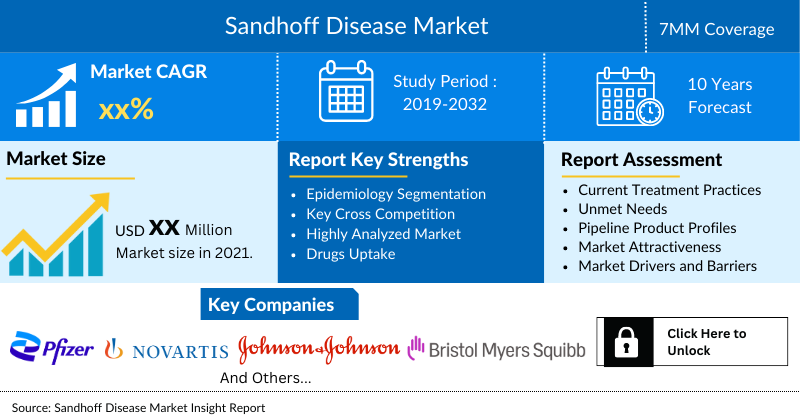
- The Sandhoff Disease Market Size is anticipated to increase with a notable CAGR during the forecast period (2026-2036).
- The leading Sandhoff Disease Companies such as Bristol-Myers Squibb Company, Catabasis Pharmaceuticals, Inc., Celgene Corporation, CRISPR Therapeutics AG, Genentech, Inc., Gilead Sciences, Inc., Grifols, S.A., Intellia Therapeutics, Inc., Ionis Pharmaceuticals, Inc., Johnson & Johnson, Novartis AG, Pfizer Inc., Roche Holding AG, Sanofi, Vertex Pharmaceuticals, and others are developing therapies for Sandhoff Disease Treatment.
- Sandhoff illness is an uncommon condition that affects 1 in 1,000,000 people worldwide.
Request for Sample Page @ Sandhoff Disease Market Report
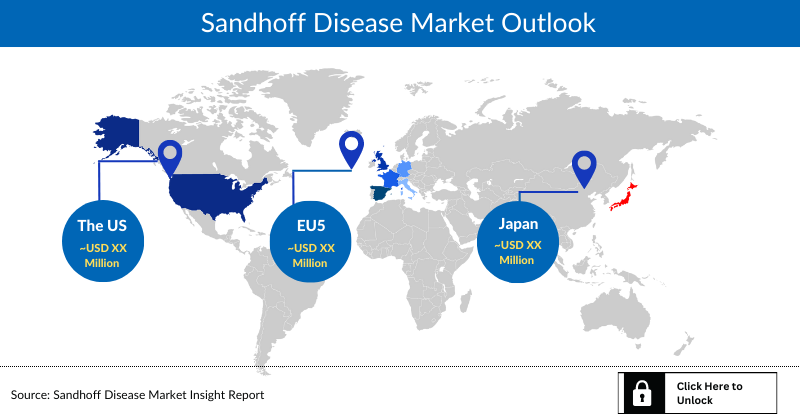
DelveInsight's "Sandhoff Disease Market Insights, Epidemiology, and Market Forecast-2036" report delivers an in-depth understanding of the Sandhoff Disease, historical and forecasted epidemiology as well as the Sandhoff Disease market trends in the United States, EU5 (Germany, Spain, Italy, France, and United Kingdom) and Japan.
The Sandhoff Disease market report provides current treatment practices, emerging drugs, Sandhoff Disease market share of the individual therapies, current and forecasted Sandhoff Disease market size from 2022 to 2036 segmented by seven major markets. The Report also covers current Sandhoff Disease treatment practice/algorithm, market drivers, market barriers and unmet medical needs to curate best of the opportunities and assesses the underlying potential of the market.
Geography Covered
- The United States
- EU5 (Germany, France, Italy, Spain, and the United Kingdom)
- Japan
Study Period: 2022-2036
Key factors driving Sandhoff disease market growth
- High unmet medical need: Sandhoff disease currently lacks an approved disease-modifying therapy, leaving patients dependent largely on supportive care. The absence of a disease-modifying option creates significant demand for therapies capable of addressing the underlying enzymatic deficiency.
- Advances in CNS gene therapy: Improvements in AAV vector engineering and direct CNS/CSF delivery are increasing the feasibility of replacing deficient HEXB-related enzyme activity. Recent clinical research has demonstrated measurable biochemical correction in GM2 gangliosidosis.
- Growing investment in ultra-rare diseases: Rare-disease developers are increasingly using small-population clinical-development strategies, natural-history studies and biomarker-based endpoints. FDA's 2026 framework for individualized therapies also reflects growing regulatory attention to therapies for ultra-rare diseases.
- Expansion of genetic and biochemical diagnosis: Greater availability of enzyme assays and next-generation sequencing can shorten the diagnostic pathway and identify patients who previously may have remained undiagnosed or misdiagnosed.
- Development of brain-penetrant small molecules: Oral therapies such as nizubaglustat and PLX-200 represent an alternative to invasive CNS gene-therapy administration and are expanding the potential treatment landscape for neurological lysosomal disorders.
Sandhoff Disease Treatment Algorithm and Disease Understanding
Sandhoff Disease Overview
Sandhoff disease is a rare, autosomal-recessive lysosomal storage disorder and a form of GM2 gangliosidosis type II caused by pathogenic variants in the HEXB gene. These variants impair production of the beta subunit shared by β-hexosaminidase A and β-hexosaminidase B, resulting in deficient enzyme activity and progressive accumulation of GM2 ganglioside, particularly in neurons of the brain and spinal cord. The disease occurs across an infantile, juvenile, and late-onset spectrum. The severe infantile form generally becomes apparent at around 3–6 months with developmental regression, hypotonia, weakness, exaggerated startle response, seizures and progressive neurologic deterioration; survival is typically limited to early childhood.
Sandhoff Disease Diagnosis
Diagnosis is based on biochemical enzyme testing followed by molecular confirmation. Patients typically demonstrate markedly reduced or absent β-hexosaminidase A and B activity in leukocytes, serum or other tissues, with an abnormal proportion of HEX A activity. Confirmation requires identification of biallelic pathogenic or likely pathogenic HEXB variants through molecular genetic testing. Clinical assessment may include neurologic examination, ophthalmologic examination for the characteristic cherry-red macula, brain MRI and testing to differentiate Sandhoff disease from Tay-Sachs disease and other neurodegenerative/lysosomal disorders. Because Sandhoff disease is extremely rare and symptoms can overlap with other neurologic conditions, genetic and enzymatic testing are particularly important for definitive diagnosis.
Sandhoff Disease Treatment
There is currently no FDA-approved disease-modifying treatment specifically for Sandhoff disease. Management is predominantly supportive and includes nutritional and swallowing support, airway and aspiration management, seizure treatment, physical and occupational therapy, speech therapy, mobility assistance and management of respiratory and other complications. Gastrostomy feeding may be used when swallowing becomes impaired. Current research is focused on approaches capable of addressing the underlying disease mechanism, including AAV-mediated gene replacement, substrate-reduction/small-molecule therapy and neuroprotective approaches.
Sandhoff Disease Epidemiology
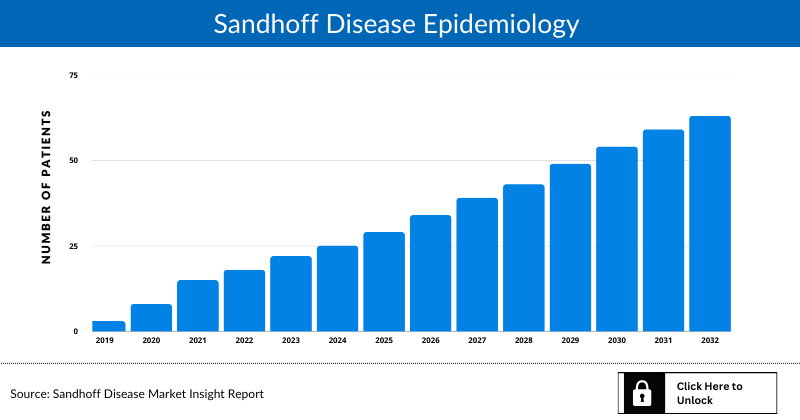
The Sandhoff Disease epidemiology division provide insights about historical and current Sandhoff Disease patient pool and forecasted trend for every seven major countries. It helps to recognize the causes of current and forecasted trends by exploring numerous studies and views of key opinion leaders. This part of the DelveInsight report also provides the diagnosed patient pool and their trends along with assumptions undertaken.
Key Findings
The disease epidemiology covered in the report provides historical as well as forecasted Sandhoff Disease epidemiology scenario in the 7MM covering the United States, EU5 countries (Germany, Spain, Italy, France, and the United Kingdom), and Japan from 2022 to 2036.
Sandhoff Disease Drug Chapters
Drug chapter segment of the Sandhoff Disease report encloses the detailed analysis of Sandhoff Disease marketed drugs and late stage (Phase-III and Phase-II) pipeline drugs. It also helps to understand the Sandhoff Disease clinical trial details, expressive pharmacological action, agreements and collaborations, approval and patent details, advantages and disadvantages of each included drug and the latest news and press releases.
Sandhoff Disease Emerging Drugs
PLX-200 (gemfibrozil): Polaryx Therapeutics
PLX-200 is an oral, reformulated small molecule being developed through a 505(b)(2) pathway and is intended to address lysosomal dysfunction, neuroinflammation and neuronal loss. It is being evaluated in the SOTERIA Phase II basket trial, which includes a dedicated Sandhoff disease cohort. Polaryx submitted the U.S. IND in August 2025 and received FDA authorization to proceed in October 2025. In April 2026, the FDA granted Fast Track Designation to PLX-200 for Sandhoff disease. In July 2026, Polaryx amended the SOTERIA protocol and expanded the planned Sandhoff cohort from three to six patients.
Nizubaglustat (AZ-3102): Azafaros
Nizubaglustat is an oral, brain-penetrant substrate-reduction therapy designed to inhibit glucosylceramide synthase and non-lysosomal glucocerebrosidase. The compound is being studied across several neurological lysosomal storage disorders, including GM2 gangliosidosis comprising Tay-Sachs and Sandhoff disease. A Phase III study, NCT07082543, is evaluating oral nizubaglustat in late-infantile and juvenile GM1/GM2 gangliosidosis; the study is recruiting and includes patients with Sandhoff disease. Preclinical 2026 research in Sandhoff mice reported increased survival and improvements in behavioral measures, although these findings remain preclinical and cannot establish human efficacy.
Recent Developments in the Sandhoff Disease Market
- In July 2026, UMass Chan researchers received FDA authorization to proceed with a Phase I/II trial of a second-generation AAV gene therapy for GM2 gangliosidosis, including Sandhoff disease.
- In July 2026, Polaryx expanded the Sandhoff disease cohort in its SOTERIA Phase II basket trial from three to six planned participants.
- In April 2026, FDA granted Fast Track Designation to PLX-200 for Sandhoff disease, alongside its designations for JNCL and Krabbe disease.
- In January 2026, results from the AMETHIST Phase III study of venglustat in late-onset GM2 gangliosidosis showed substantial reduction in CSF GM2 but did not demonstrate improvement in the primary clinical endpoint.
Sandhoff Disease Market Outlook
The Sandhoff Disease market outlook of the report helps to build the detailed comprehension of the historic, current, and forecasted Sandhoff Disease market trends by analyzing the impact of current therapies on the market, unmet needs, drivers and barriers and demand of better technology.
This segment gives a thorough detail of Sandhoff Disease market trend of each marketed drug and late-stage pipeline therapy by evaluating their impact based on annual cost of therapy, inclusion and exclusion criteria's, mechanism of action, compliance rate, growing need of the market, increasing patient pool, covered patient segment, expected launch year, competition with other therapies, brand value, their impact on the market and view of the key opinion leaders. The calculated market data are presented with relevant tables and graphs to give a clear view of the market at first sight.
According to DelveInsight, Sandhoff Disease market in 7MM is expected to change in the study period 2022-2036.
Sandhoff Disease Drugs Uptake
This section focusses on the rate of uptake of the potential drugs recently launched in the Sandhoff Disease market or expected to get launched in the market during the study period 2022-2036. The analysis covers Sandhoff Disease market uptake by drugs; patient uptake by therapies; and sales of each drug.
This helps in understanding the drugs with the most rapid uptake, reasons behind the maximal use of new drugs and allow the comparison of the drugs on the basis of market share and size which again will be useful in investigating factors important in market uptake and in making financial and regulatory decisions.
Sandhoff Disease Pipeline Development Activities
The Sandhoff Disease report provides insights into Sandhoff Disease Clinical Trails within Phase II, and Phase III stage. It also analyses Sandhoff Disease key players involved in developing targeted therapeutics.
Pipeline Development Activities
The report covers the detailed information of collaborations, acquisition and merger, licensing, patent details and other information for Sandhoff Disease emerging therapies.
Reimbursement Scenario in Sandhoff Disease
Approaching reimbursement proactively can have a positive impact both during the late stages of product development and well after product launch. In a report, we take reimbursement into consideration to identify economically attractive indications and market opportunities. When working with finite resources, the ability to select the markets with the fewest reimbursement barriers can be a critical business and price strategy.
KOL- Views
To keep up with current market trends, we take KOLs and SME's opinion working in Sandhoff Disease domain through primary research to fill the data gaps and validate our secondary research. Their opinion helps to understand and validate current and emerging therapies treatment patterns or Sandhoff Disease market trend. This will support the clients in potential upcoming novel treatment by identifying the overall scenario of the market and the unmet needs.
Competitive Intelligence Analysis
We perform Competitive landscape and Market Intelligence analysis of the Sandhoff Disease Market by using various Competitive Intelligence tools that include - SWOT analysis, PESTLE analysis, Porter's five forces, BCG Matrix, Market entry strategies etc. The inclusion of the analysis entirely depends upon the data availability.
|
Report Metrics |
Details |
|
Study Period |
2022 to 2036 |
|
Forecast Period |
2026 to 2036 |
|
CAGR | |
|
Sandhoff Disease Market Size |
USD XX Million by 2036 |
|
Key Sandhoff Disease Companies |
Akero Therapeutics, Inc., Alexion Pharmaceuticals, Inc., Apellis Pharmaceuticals, Inc., Biogen Inc., BioMarin Pharmaceutical Inc., Bristol-Myers Squibb Company, Catabasis Pharmaceuticals, Inc., Celgene Corporation, CRISPR Therapeutics AG, Genentech, Inc., Gilead Sciences, Inc., Grifols, S.A., Intellia Therapeutics, Inc., Ionis Pharmaceuticals, Inc., Johnson & Johnson, Novartis AG, Pfizer Inc., Roche Holding AG, Sanofi, Vertex Pharmaceuticals Incorporated, and Many Others. |
Scope of the Sandhoff Disease Market Report
- The Sandhoff Disease Therapeutics Market Report covers a segment of key events, an executive summary, a descriptive overview, explaining their causes, signs and symptoms, pathogenesis, and currently available treatments.
- Comprehensive insight has been provided into the epidemiology segments and forecasts, the future growth potential of the diagnosis rate, and disease progression along Sandhoff Disease Treatment guidelines.
- Additionally, an all-inclusive account of both the current and emerging treatments, along with the elaborative profiles of late-stage and prominent therapies, will have an impact on the current Sandhoff Disease Treatment landscape.
- A detailed review of the Sandhoff Disease Therapeutics Market, historical and forecasted Sandhoff Disease Treatment Market Size, Sandhoff Disease Drugs Market Share by therapies, detailed assumptions, and rationale behind our approach is included in the report, covering the 7MM drug outreach.
- The Sandhoff Disease Therapeutics Market Report provides an edge while developing business strategies by understanding trends through SWOT analysis and expert insights/KOL views, patient journey, and treatment preferences that help in shaping and driving the 7MM Sandhoff Disease Drugs Market.
Sandhoff Disease Market Report Insights
- Sandhoff Disease Patient Population Forecast
- Sandhoff Disease Therapeutics Market Size
- Sandhoff Disease Pipeline Drugs Analysis
- Sandhoff Disease Market Size and Trends
- Sandhoff Disease Therapeutics Market Opportunity (Current and Forecasted)
Sandhoff Disease Market Report Key Strengths
- Epidemiology-based (Epi-based) Bottom-up Forecasting
- Artificial Intelligence (AI) - enabled Market Research Report
- 11-year forecast
- Sandhoff Disease Market Outlook (North America, Europe, Asia-Pacific)
- Patient Burden Trends (by geography)
- Sandhoff Disease Treatment Addressable Market (TAM)
- Sandhoff Disease Competitive Landscape
- Sandhoff Disease Major Companies Insights
- Sandhoff Disease Price Trends and Analogue Assessment
- Sandhoff Disease Therapies Drug Adoption/Uptake
- Sandhoff Disease Therapies Peak Patient Share Analysis
Sandhoff Disease Market Report Assessment
- Sandhoff Disease Current Treatment Practices
- Sandhoff Disease Unmet Needs
- Sandhoff Disease Clinical Development Analysis
- Sandhoff Disease Emerging Drugs Product Profiles
- Sandhoff Disease Market Attractiveness
- Sandhoff Disease Qualitative Analysis (SWOT and Attribute analysis)
Key Questions Answered in the Sandhoff Disease Treatment Market Report
Sandhoff Disease Therapeutics Market Insights
- What was the Sandhoff Disease Treatment Market Size, the Sandhoff Disease Market Size by therapies, Sandhoff Disease Drugs Market Share (%) distribution in 2025, and what would it look like by 2036? What are the contributing factors for this growth?
- What are the anticipated pricing variations among different geographies for the emerging therapies in the future?
- What can be the future treatment paradigm of Sandhoff Disease?
- What are the disease risks, burdens, and unmet needs of Sandhoff Disease?
- What will be the growth opportunities across the 7MM concerning the patient population with Sandhoff Disease?
- Who is the major future competitor in the market, and how will the competitors affect their market share?
- What are the current options for the treatment of Sandhoff Disease? What are the current guidelines for treating Sandhoff Disease in the US, Europe, and Japan?
Reasons to Buy the Sandhoff Disease Therapeutics Market Report
- The Sandhoff Disease Therapeutics Market Report will help in developing business strategies by understanding the latest trends and changing treatment dynamics driving the Sandhoff Disease Drugs Market.
- Bottom up forecasting builds from the affected population to product forecasts, delivering a robust, data driven approach ideal for new therapies and novel classes.
- Insights on patient burden/disease Sandhoff Disease Prevalence, evolution in diagnosis, and factors contributing to the change in the epidemiology of the disease during the forecast years.
- Understand the existing Sandhoff Disease Drugs Market opportunities in varying geographies and the growth potential over the coming years.
- Identifying strong upcoming players in the Sandhoff Disease Drugs Market will help devise strategies to help get ahead of competitors.
- Detailed analysis, ranking of class-wise potential current, and emerging therapies under the attribute analysis section to provide visibility around leading classes.
- To understand KOLs’ perspectives on the accessibility, acceptability, and compliance-related challenges of existing treatment to overcome barriers in the future.
- Detailed insights on the unmet needs of the existing Sandhoff Disease Drugs Market so that the upcoming players can strengthen their development and launch strategy.
- This Artificial Intelligence (AI) enabled report summarize and simplify complex datasets with in the report into clear, actionable insights for stakeholders, investors, and healthcare providers, enabling faster, data driven decisions.