Sarcoidosis Market Summary
- The Sarcoidosis Therapeutics Market is expected to grow steadily due to increasing disease awareness, improved diagnostic capabilities, and advancements in treatment options.
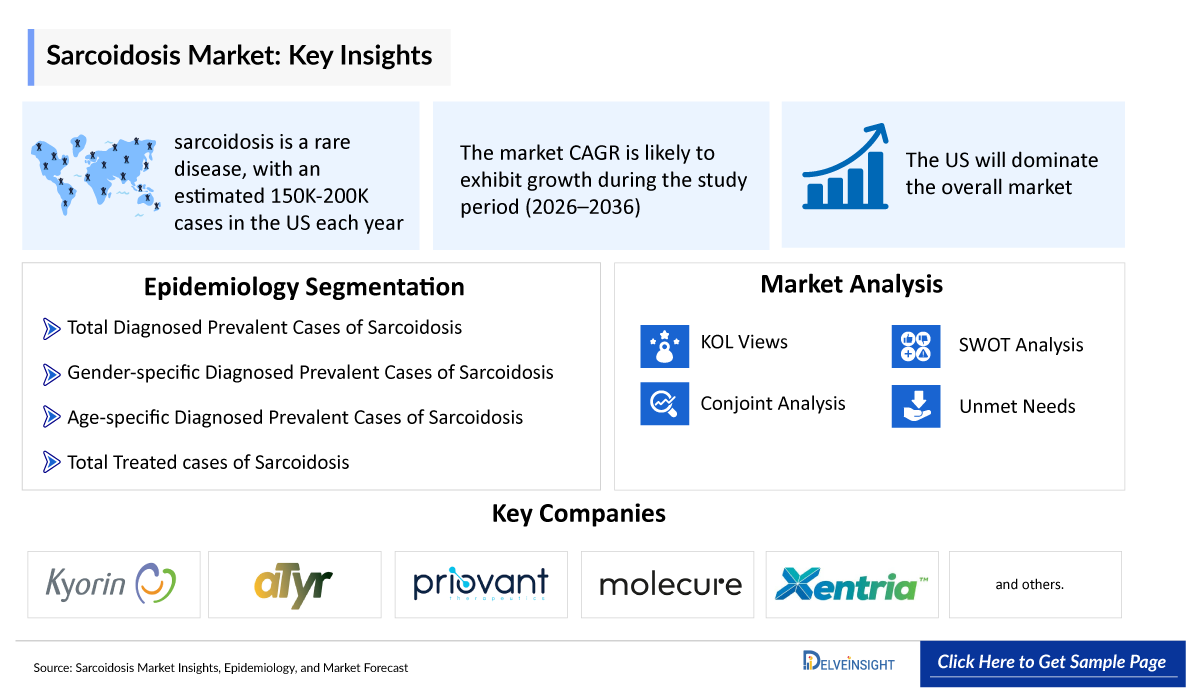
- The leading Sarcoidosis Companies include Kyorin Pharmaceuticals, aTyr Pharma, Priovant Therapeutics, Molecure, Xentria, and others.
Sarcoidosis Market and Epidemiology Insights
- Sarcoidosis is a multisystem inflammatory disease characterized by non-necrotizing granuloma formation in various organs and thought to result from a complex interaction between genetic predisposition and environmental triggers.
- Sarcoidosis is a multisystem granulomatous disease affecting 8–10 per 100,000 individuals (the United States), with pulmonary (90%), cardiac (5–25%), renal (10%), hepatic (20%), and neurologic (5–10%) involvement.
- Current standard of care for sarcoidosis primarily relies on corticosteroids and other immunosuppressive therapies, many of which are used off-label. While these treatments can help control disease activity, their efficacy is variable and long-term use is associated with significant toxicity. Consequently, there remains a substantial unmet need for novel therapies, particularly for patients with progressive or refractory disease.
- Sarcoidosis treatment typically begins with corticosteroids (e.g., prednisone), followed by steroid-sparing immunosuppressive agents such as methotrexate, azathioprine, or mycophenolate mofetil when prolonged therapy is required. In severe, chronic, or refractory cases, biologic therapies, particularly TNF-α inhibitors such as infliximab, may be utilized.
- The Sarcoidosis Pipeline is increasingly focused on targeted immunomodulatory therapies that address key inflammatory pathways involved in granuloma formation and disease progression.
- Although the sarcoidosis pipeline has strengthened in recent years, no new therapy has yet achieved regulatory approval, and clinical development remains concentrated among a limited number of late-stage and mid-stage candidates.
- Despite ongoing therapeutic advancements, chronic disease progression, organ damage, relapse following treatment discontinuation, and the absence of validated biomarkers remain significant clinical challenges, highlighting the need for effective disease-modifying therapies and more personalized treatment approaches.
Request to unlock the Sample Page of the “Sarcoidosis Treatment Market”
Sarcoidosis Market Size and Forecast in the 7MM
| 2025 Sarcoidosis Market Size | XX million |
| 2036 Projected Sarcoidosis Market Size | XX million |
| Sarcoidosis Growth Rate (2026–2036) | XX% CAGR |
Key Factors Driving Growth of the Sarcoidosis Market
-
High Unmet Need in Chronic and Refractory Disease
A substantial proportion of patients experience chronic, progressive, or treatment-refractory disease despite existing therapies. The lack of approved disease-specific treatments creates significant opportunities for innovative drugs that can provide durable efficacy with improved safety profiles.
-
Growing Clinical Development Activity
Increasing investment from biotechnology and pharmaceutical companies has led to a more robust pipeline of sarcoidosis therapies. Multiple late-stage and mid-stage clinical programs are expected to generate important data over the coming years, supporting market expansion.
-
Favorable Regulatory Incentives for Rare Diseases
Sarcoidosis is considered a rare disease, enabling developers to benefit from orphan drug incentives, expedited regulatory pathways, and market exclusivity advantages. These incentives encourage continued investment in drug development and commercialization efforts.
DelveInsight's ‘Sarcoidosis Market Insights, Epidemiology and Market Forecast 2036’ report delivers an in-depth understanding of the sarcoidosis, historical and forecasted epidemiology, as well as the sarcoidosis market trends in the United States, EU4 (Germany, Spain, Italy, and France), the United Kingdom, and Japan.
The Sarcoidosis Therapeutics Market Report delivers a comprehensive analysis of the current treatment landscape, including standards of care, clinical practices, and evolving therapeutic algorithms. It evaluates sarcoidosis patient burden trends, revenue & market share dynamics, peak patient share & therapy uptake analysis, and provides an in-depth market size assessment, and growth rate projections (Historical & Forecast 2022–2036) across global regions. The report highlights key unmet medical needs in sarcoidosis and maps the competitive and clinical landscape to uncover high‑value opportunities, providing a clear outlook on future market growth potential.
Scope of Sarcoidosis Market Report | |
|
Study Period |
2022–2036 |
|
Historical Year |
2022–2025 |
|
Forecast Period |
2026–2036 |
|
Base Year |
2026 |
|
Geographies Covered |
|
|
Sarcoidosis Market CAGR (Forecast period) |
XX% (2026–2036) |
|
Sarcoidosis Epidemiology Segmentation Analysis |
Patient Burden Assessment
|
|
Sarcoidosis Companies |
|
|
Sarcoidosis Therapies |
|
|
Sarcoidosis Market |
Segmented by
|
|
Analysis
|
|
Sarcoidosis Understanding
Sarcoidosis Overview
Sarcoidosis is a rare, multisystem inflammatory disease characterized by the formation of non-caseating granulomas in affected organs. Although the exact cause remains unknown, the disease is believed to result from an abnormal immune response triggered by environmental, infectious, or genetic factors in susceptible individuals. Sarcoidosis can affect virtually any organ, but the lungs and intrathoracic lymph nodes are involved in more than 90% of cases. Other commonly affected organs include the skin, eyes, liver, heart, and nervous system. The clinical presentation is highly variable, ranging from asymptomatic disease to chronic progressive organ dysfunction.
Sarcoidosis Diagnosis
The diagnosis of sarcoidosis is based on a combination of clinical findings, radiographic evidence, histological confirmation of non-caseating granulomas, and exclusion of alternative granulomatous disorders such as tuberculosis or fungal infections. Chest X-ray and high-resolution computed tomography (HRCT) are commonly used to assess pulmonary involvement, while pulmonary function tests help evaluate respiratory impairment. Tissue biopsy obtained from accessible sites such as lymph nodes, skin lesions, or lung tissue is often required to confirm the diagnosis. Additional laboratory tests and organ-specific evaluations may be performed to determine the extent of systemic involvement and monitor disease activity.
Further details are provided in the report.
Sarcoidosis Treatment
Treatment depends on disease severity, organ involvement, and the risk of permanent organ damage. Many patients with mild or asymptomatic disease may not require immediate therapy and can be managed through regular monitoring. Corticosteroids remain the cornerstone of treatment and are typically the first-line option for patients with symptomatic or progressive disease.
For individuals who are refractory to steroids, experience significant adverse effects, or require long-term therapy, immunosuppressive agents such as methotrexate, azathioprine, and mycophenolate mofetil may be used. In severe or treatment-resistant cases, biologic therapies, particularly Tumor Necrosis Factor Inhibitors, have demonstrated clinical benefit. Ongoing research into targeted therapies, including JAK/TYK2 inhibitors and other immunomodulatory agents, is expected to further improve disease management in the coming years.
Further details related to country-based variations are provided in the report.
Sarcoidosis Unmet Needs
The section “unmet needs of sarcoidosis” outlines the critical gaps between the current state of patient care, diagnosis, and the ideal & effective management of the disease. It highlights the obstacles experienced by patients, clinicians, and researchers and identifies potential solutions for future progress.
- Lack of approved disease-specific therapies
- Long-term dependence on corticosteroids
- Absence of reliable biomarkers
- Management of extrapulmonary manifestations, and others…..
Note: Comprehensive unmet needs insights in Sarcoidosis and their strategic implications are provided in the full report.
Sarcoidosis Epidemiology Insights
Key Findings from Sarcoidosis Epidemiological Analysis and Forecast
- According to the American Lung Association, sarcoidosis is a rare disease, with an estimated 150,000–200,000 cases in the US each year and approximately 27,000 new cases diagnosed annually.
- Sarcoidosis most commonly occurs in individuals between the ages of 20 and 60. While it was originally recognized in younger adults, current clinical observations show that over half of cases are now diagnosed in patients over 40 years old. Women, in particular, tend to be older at the time of diagnosis.
- According to secondary research data, the worldwide prevalence of sarcoidosis is about 4.7–64/100,000 people.
- Spontaneous remission occurs in 10 to 82% of cases, and 10% develop advanced pulmonary sarcoidosis.
Sarcoidosis Epidemiology Segmentation in the 7MM
- Total Sarcoidosis Diagnosed Prevalent Cases
- Sarcoidosis Gender-specific Diagnosed Prevalent Cases
- Sarcoidosis Age-specific Diagnosed Prevalent Cases
- Total Sarcoidosis Treated Cases
Sarcoidosis Market Recent Breakthroughs and Developments
- In May 2026, Xentria presented the latest update on XTMAB-16 in sarcoidosis. XTMAB-16 demonstrated a favorable safety and tolerability profile in patients with pulmonary sarcoidosis, without unexpected TNF-inhibitor class effects. Preliminary efficacy signals suggest that XTMAB-16 may facilitate corticosteroid reduction while preserving lung function and improving patient-reported outcomes.
- In May 2026, aTyr Pharma announced the path forward for efzofitimod, in pulmonary sarcoidosis, following the receipt of the official meeting minutes from a Type C meeting with the UUS FDA. The purpose of the meeting was to review the results of the Phase III EFZO-FIT study and determine the next steps for the program in pulmonary sarcoidosis.
- In Feburary 2026, Priovant Therapeutics announced positive results from the Phase II BEACON study evaluating brepocitinib in cutaneous sarcoidosis. The BEACON study is the first ever industry-sponsored placebo-controlled trial in the indication to read out positively.
- In September 2025, KYORIN Pharmaceutical announced today that aTyr Pharma disclosed topline results for the global Phase III clinical study, EFZO-FIT study of KRP-R120 (Efzofitimod). The study did not meet primary endpoint. The study’s statistical analysis plan was designed on a hierarchical assessment basis. Therefore, since the primary endpoint was not met, all subsequent statistical testing is reported as nominal findings.
Sarcoidosis Drug Analysis & Competitive Landscape
The sarcoidosis drug chapter provides a detailed, market-focused review of the emerging Sarcoidosis pipeline across Phase III/II clinical trials and preclinical trials. It covers the Sarcoidosis mechanism of action, clinical trial data, regulatory approvals, patents, collaborations, and strategic partnerships for each therapy, along with their advantages, limitations, and recent developments. This section offers critical insights into the sarcoidosis treatment landscape, supporting market assessment, competitive analysis, and growth forecasting for the sarcoidosis therapeutics market.
Sarcoidosis Approved Therapies
Acthar Gel (repository corticotropin injection), approved in 1952, marketed by Mallinckrodt Pharmaceuticals, is currently the only FDA-approved therapy specifically indicated for symptomatic pulmonary sarcoidosis. Despite its long-standing use, acthar gel remains a unique biologic product, and no FDA-approved biosimilars or generic equivalents are currently available on the market. The limited availability of disease-specific therapies highlights the significant unmet need for novel targeted treatments in sarcoidosis.
Note: Detailed marketed therapies assessment will be provided in the final report.
Sarcoidosis Pipeline Analysis
-
Efzofitimod (KRP-R120): Kyorin Pharmaceutical and aTyr Pharma
Efzofitimod is a novel biologic immunomodulator in clinical development for the treatment of interstitial lung disease. aTyr intends to submit an investigational new drug (IND) application in June 2026 for a global Phase III study of efzofitimod in patients with pulmonary sarcoidosis, a major form of ILD. These forms of ILD have limited therapeutic options and there is a need for safer and more effective, disease-modifying treatments that improve outcomes.
The US FDA has granted efzofitimod Orphan Drug Designations (ODD) for the treatment of sarcoidosis, and Fast Track designations (FTD) for the treatment of pulmonary sarcoidosis. The European Commission has granted efzofitimod ODD for the treatment of sarcoidosis, based on the opinion of the EMA Committee for Orphan Medicinal Products (COMP). The Pharmaceutical and Medical Devices Agency (PMDA) has granted efzofitimod ODD for the treatment of sarcoidosis to Kyorin Pharmaceutical.
-
Brepocitinib: Priovant Therapeutics
Brepocitinib is an investigational oral dual TYK2/JAK1 inhibitor being developed for several autoimmune and inflammatory diseases, including cutaneous sarcoidosis. The drug was evaluated in the Phase II BEACON trial, a randomized, double-blind, placebo-controlled study assessing the safety and efficacy of oral brepocitinib in adults with cutaneous sarcoidosis. Priovant plans to commence a Phase III study of brepocitinib in cutaneous sarcoidosis in 2026, following positive data from the Phase II BEACON study.
Competitive Landscape of Sarcoidosis Pipeline Drugs | ||||||
|
Drug Name |
Company |
Highest Phase |
Indication |
RoA |
MoA |
Anticipated Launch in the US |
|
KRP-R120 (Efzofitimod) |
Kyorin Pharmaceutical and aTyr Pharma |
III |
Pulmonary sarcoidosis |
Iv infision |
Modulates activated myeloid cells through neuropilin-2 (NRP2) |
Information is available in the full report |
|
Brepocitinib |
Priovant Therapeutics |
II |
Cutaneous sarcoidosis |
Oral |
TYK2/JAK1 inhibitor |
Information is available in the full report |
|
OATD-01 |
Molecure |
II |
Pulmonary sarcoidosis |
Oral |
Dual CHIT1 inhibitor |
Information is available in the full report |
|
XTMAB-16 |
Xentria |
I/II |
Pulmonary sarcoidosis |
IV infision |
Anti TNFα |
Information is available in the full report |
|
Note: Launch insights are provisional and may change with future report updates or the occurrence of major key catalysts. | ||||||
Note: Detailed emerging therapies assessment will be provided in the final report.
Sarcoidosis Market Outlook
The Sarcoidosis treatment landscape has evolved gradually over time, although significant unmet needs remain due to the limited availability of disease-specific therapies. Currently, Acthar Gel (repository corticotropin injection) is the only FDA-approved therapy specifically indicated for symptomatic pulmonary sarcoidosis. While corticosteroids and immunosuppressive agents continue to serve as the mainstay of treatment, concerns regarding long-term toxicity, variable efficacy, and disease relapse have driven the search for more targeted therapeutic approaches.
Among Sarcoidosis emerging therapies, efzofitimod has generated considerable interest due to its novel immunomodulatory mechanism and potential to reduce corticosteroid dependence in pulmonary sarcoidosis. Brepocitinib has demonstrated encouraging clinical activity in cutaneous sarcoidosis and may offer a targeted approach for managing chronic inflammatory pathways involved in the disease. OATD-01 is exploring a first-in-class chitinase inhibition strategy aimed at modifying granulomatous inflammation and fibrosis, while XTMAB-16 has advanced into mid-stage clinical development with topline data expected to further clarify its therapeutic potential. These pipeline candidates represent diverse mechanisms of action that could expand treatment options beyond conventional immunosuppression.
Overall, the Sarcoidosis Therapeutics Market across the 7MM is expected to experience steady growth through 2036, supported by improved diagnostic practices, and a growing pipeline of targeted therapies. As clinical development progresses, emerging agents with steroid-sparing potential, improved safety profiles, and disease-modifying capabilities may significantly reshape the treatment paradigm and create substantial commercial opportunities in a market that currently has limited approved therapeutic options.
- Acthar gel is expected to maintain its position as the only approved therapy specifically indicated for symptomatic pulmonary sarcoidosis during the forecast period, although its uptake may be constrained by cost considerations and the availability of off-label immunosuppressive therapies.
Further details will be provided in the report….
Sarcoidosis Companies
- Kyorin Pharmaceutical
- aTyr Pharma
- Priovant Therapeutics
- Molecure
- Xentria, and others
Sarcoidosis Drug Class/Insights into Leading Emerging and Marketed Therapies (2022–2036 Forecast)
The Sarcoidosis Therapeutics Market (2022–2036 forecast) is evolving toward targeted immunomodulatory therapies designed to control granulomatous inflammation, reduce corticosteroid dependence, and improve long-term disease outcomes.
- JAK/TYK2 Inhibitors: Brepocitinib belongs to the emerging class of dual TYK2/JAK1 inhibitors. By blocking key cytokine signaling pathways involved in granuloma formation and chronic inflammation, brepocitinib has the potential to provide a targeted treatment option for patients with sarcoidosis, particularly those with chronic or refractory disease.
- Anti-TNFα Monoclonal Antibodies: XTMAB-16 is an investigational anti-TNFα monoclonal antibody developed specifically for pulmonary sarcoidosis. TNFα plays a central role in granuloma formation, and targeted inhibition may help reduce inflammation.
- Immunomodulatory Fusion Proteins: Efzofitimod represents a novel immunomodulatory approach that targets neuropilin-2 (NRP2), a receptor involved in immune cell regulation. By modulating inflammatory responses without broad immunosuppression, efzofitimod aims to reduce corticosteroid use while maintaining disease control in pulmonary sarcoidosis.
Overall, innovation in sarcoidosis is increasingly centered on targeted immune modulation and disease-modifying therapies rather than broad immunosuppression. Emerging classes such as immunomodulatory fusion proteins, JAK/TYK2 inhibitors, chitinase inhibitors, and anti-TNFα biologics are expected to expand therapeutic options and address significant unmet needs.
As these Sarcoidosis Pipeline candidates advance through clinical development, they have the potential to transform the treatment paradigm and support sustained market growth across the major markets through 2036.
Sarcoidosis Drug Uptake
This section focuses on the uptake rate of potential Sarcoidosis drugs expected to be launched in the market during the forecast period (2026–2036). The analysis covers the sarcoidosis drug’s uptake, performance at peak, factors affecting performance during prime years of growth, patient uptake by therapy, and anticipated sales generated by each drug.
Among emerging therapies, efzofitimod is expected to achieve significant uptake following potential approval, supported by its novel immunomodulatory mechanism and ability to reduce corticosteroid dependence while preserving disease control. Its differentiated mechanism and favorable safety profile could position it as an attractive option for patients with chronic pulmonary sarcoidosis. Brepocitinib may also gain meaningful adoption, particularly in patients with refractory disease, as targeted inhibition of TYK2/JAK1 signaling offers a promising approach to suppress granulomatous inflammation and improve clinical outcomes.
While initial adoption of these emerging therapies may be concentrated in specialized treatment centers, positive long-term clinical data and growing physician familiarity are expected to support broader utilization over time, contributing to the expansion and diversification of the sarcoidosis market.
Detailed insights of emerging therapies' drug uptake is included in the report
Sarcoidosis Market Access and Reimbursement of Approved Therapies
Reimbursement is a crucial factor that affects the drug’s access to the market. Often, the decision to reimburse comes down to the price of the drug relative to the benefit it produces in treated patients. To reduce the healthcare burden of these high-cost therapies, many payment models are being considered by payers and other industry insiders.
NOTE: Further Details are provided in the final report….
Sarcoidosis Therapies Price Scenario & Trends
Pricing and analogue assessment of sarcoidosis therapies highlights evolving price dynamics structures. This section summarizes the cost of approved treatments, closest and most appropriate analogue selection for emerging therapies, and understanding of how pricing influences market access, adherence, and long-term uptake.
Industry Experts and Physician Views for Sarcoidosis
To keep up with sarcoidosis market trends, we take Key Opinion Leaders (KOLs) and Subject Matter Experts (SMEs) opinions working in the domain through primary research to fill the data gaps and validate our secondary research. Industry experts were contacted for insights on the sarcoidosis emerging therapies, evolving treatment landscape, patient adherence to conventional therapies, therapy switching trends, drug adoption and uptake, accessibility challenges, and epidemiology and real-world prescription patterns in sarcoidosis, including MD, PhD, Instructor, Postdoctoral Researcher, Professor, Researcher, and others.
DelveInsight’s analysts connected with 15+ KOLs to gather insights at the country level. Centers such as University of Cincinnati, University of Freiburg Medical Center, and Kyoto University Hospital, etc. were contacted. Their opinion helps understand and validate current and emerging sarcoidosis therapies, highlight unmet medical needs, provide epidemiological context, and support strategic decisions for market access, therapy adoption, and pipeline prioritization in sarcoidosis.
|
Region |
Key Opinion Leaders (KOLs) and Subject Matter Experts (SMEs) |
|
United States |
“Most patients do well. Some 10–30% can have severe complications, with a 5% fatality rate. This often puts clinicians in a quandary about initiating treatment. There are really only two reasons to treat sarcoidosis. They are to avoid danger and improve quality of life.” |
|
Germany |
“Sarcoidosis presents a complex market landscape in Germany due to its variable clinical presentation and response to treatment. There is a notable need for innovative therapies and comprehensive patient registries to better understand the disease progression and treatment efficacy.” |
Sarcoidosis Report Qualitative Analysis: SWOT and Conjoint Analysis
We perform qualitative and Sarcoidosis Therapeutics Market Intelligence analysis using various approaches, such as SWOT analysis and conjoint analysis. In the SWOT analysis of sarcoidosis, strengths, weaknesses, opportunities, and threats in terms of disease diagnosis, patient awareness, patient burden, competitive landscape, cost-effectiveness, and geographical accessibility of therapies are provided.
Conjoint analysis analyzes Sarcoidosis Emerging Therapies based on relevant attributes such as safety, efficacy, frequency of administration, route of administration, and order of entry. Scoring is given based on these parameters to analyze the effectiveness of therapy.
The team of analysts analyzes promising Sarcoidosis emerging therapies based on relevant attributes such as safety, efficacy, frequency of administration, route of administration, and order of entry. In efficacy, the trial’s primary and secondary outcome measures are evaluated, whereas the therapies’ safety is evaluated, wherein the acceptability, tolerability, and adverse events are majorly observed. In addition, the scoring is also based on the route of administration, order of entry, probability of success, and the addressable patient pool for each therapy. According to these parameters, the final weightage score and the ranking of the emerging therapies are decided.
Scope of the Sarcoidosis Market Report
- The Sarcoidosis Market Report covers a segment of key events, an executive summary, and a descriptive overview, explaining their causes, signs and symptoms, pathogenesis, and currently available treatments.
- Comprehensive insight has been provided into the epidemiology segments and forecasts, the future growth potential of the diagnosis rate, and disease progression along Sarcoidosis treatment guidelines.
- Additionally, an all-inclusive account of both the current and emerging treatments, along with the elaborative profiles of late-stage and prominent therapies, will have an impact on the current treatment landscape.
- A detailed review of the Sarcoidosis Therapeutics Market, historical and forecasted Sarcoidosis Treatment Market Size, Sarcoidosis Drugs Market Share by therapies, detailed assumptions, and rationale behind our approach is included in the report, covering the 7MM drug outreach.
- The Sarcoidosis Therapeutics Market Report provides an edge while developing business strategies by understanding trends through SWOT analysis and expert insights/KOL views, patient journey, and treatment preferences that help in shaping and driving the 7MM Sarcoidosis Drugs Market.
Sarcoidosis Market Report Insights
- Sarcoidosis Patient Population Forecast
- Sarcoidosis Therapeutics Market Size
- Sarcoidosis Pipeline Drugs Analysis
- Sarcoidosis Market Size and Trends
- Sarcoidosis Market Opportunity (Current and forecasted)
Sarcoidosis Market Report Key Strengths
- Epidemiology‑based (Epi‑based) Bottom‑up Forecasting
- Artificial Intelligence (AI)-Enabled Market Research Report
- 11-Year Forecast
- Sarcoidosis Market Outlook (North America, Europe, Asia-Pacific)
- Patient Burden Trends (By Geography)
- Sarcoidosis Treatment Addressable Market (TAM)
- Sarcoidosis Competitive Landscape
- Sarcoidosis) Major Companies Insights
- Sarcoidosis Price Trends and Analogue Assessment
- Sarcoidosis Therapies Drug Adoption/Uptake
- Sarcoidosis Therapies Peak Patient Share Analysis
Sarcoidosis Market Report Assessment
- Current Sarcoidosis Treatment Practices
- Sarcoidosis Unmet Needs
- Sarcoidosis Clinical Development Analysis
- Sarcoidosis Emerging Drugs Product Profiles
- Sarcoidosis Market Attractiveness
- Sarcoidosis Qualitative Analysis (SWOT and conjoint analysis)
Key Questions Answered in the Sarcoidosis Market Report
Sarcoidosis Treatment Market Insights
- What was the Sarcoidosis Treatment Market Size, the Sarcoidosis Market Size by therapies, Sarcoidosis Drugs Market Share (%) distribution in 2025, and what would it look like by 2036? What are the contributing factors for this growth?
- What are the anticipated pricing variations among different geographies for the emerging therapies in the future?
- What can be the future treatment paradigm of sarcoidosis?
- What are the disease risks, burdens, and unmet needs of sarcoidosis?
- What will be the growth opportunities across the 7MM concerning the patient population with sarcoidosis?
- Who is the major future competitor in the market, and how will the competitors affect their market share?
- What are the current options for the treatment of sarcoidosis? What are the current guidelines for treating sarcoidosis in the US, Europe, and Japan?
Reasons to Buy the Sarcoidosis Therapeutics Market Report
- The Sarcoidosis Therapeutics Market Report will help in developing business strategies by understanding the latest trends and changing treatment dynamics driving the Sarcoidosis Drugs Market.
- Bottom-up forecasting builds from the affected population to product forecasts, delivering a robust, data-driven approach ideal for new therapies and novel classes.
- Insights on patient burden/disease, Sarcoidosis Incidence, evolution in diagnosis, and factors contributing to the change in the epidemiology of the disease during the forecast years.
- Understand the existing market opportunities in varying geographies and the growth potential over the coming years.
- Identifying strong upcoming players in the Sarcoidosis Drugs Market will help devise strategies to help get ahead of competitors.
- Detailed analysis and ranking of class-wise potential emerging therapies under the conjoint analysis section to provide visibility around leading classes.
- To understand KOLs’ perspectives on the accessibility, acceptability, and compliance-related challenges of existing treatment to overcome barriers in the future.
- Detailed insights on the unmet needs of the existing Sarcoidosis Drugs Market so that the upcoming players can strengthen their development and launch strategy.
- This Artificial Intelligence (AI)-enabled report summarize and simplify complex datasets with in the report into clear, actionable insights for stakeholders, investors, and healthcare providers, enabling faster, data-driven decisions.
Stay updated with us for Recent Articles @ New DelveInsight Blogs