
Sezary Syndrome Pipeline Summary
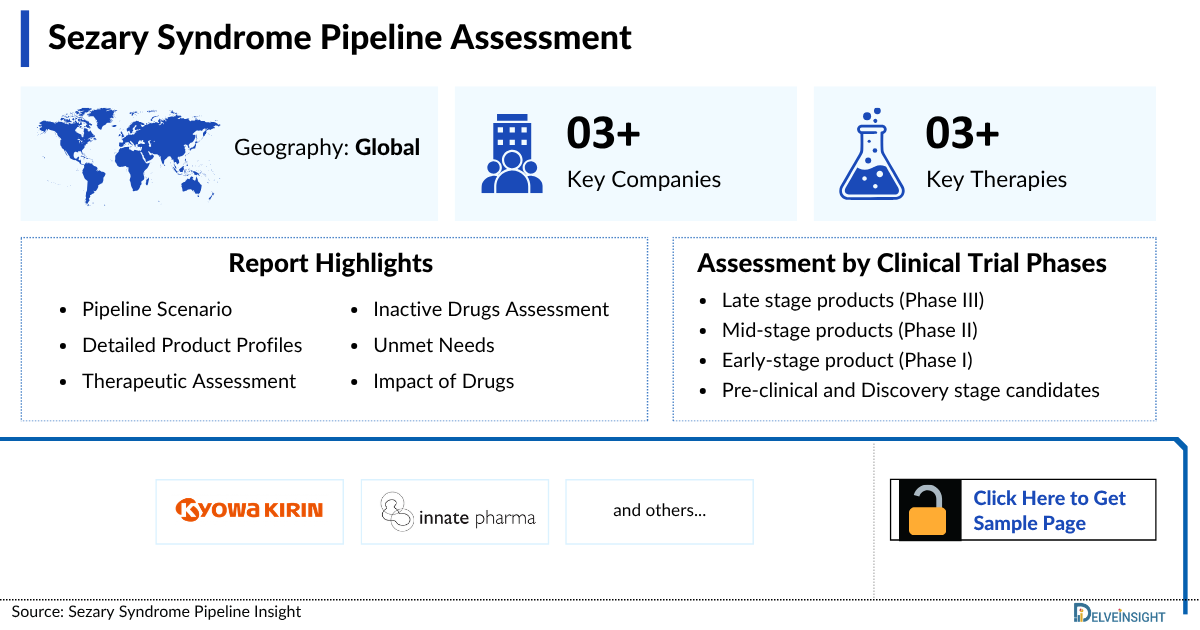
DelveInsight’s, “Sezary syndrome Pipeline Insight, 2026” report provides comprehensive insights about 3+ companies and 3+ pipeline drugs in Sezary syndrome pipeline landscape. It covers the pipeline drug profiles, including clinical and nonclinical stage products. It also covers the therapeutics assessment by product type, stage, route of administration, and molecule type. It further highlights the inactive pipeline products in this space.
Geography Covered
- Global coverage
Sezary syndrome Disease Understanding
Sezary syndrome Overview
Sézary syndrome is one of the most common subtypes of cutaneous T-cell lymphoma (CTCL), a rare form of non-Hodgkin lymphoma that primarily affects the skin and can closely resemble benign dermatologic conditions, making diagnosis challenging. Sézary syndrome is a more aggressive variant that may arise from mycosis fungoides or develop independently. Together, they represent a spectrum of primary cutaneous lymphomas, which are confined to the skin at diagnosis and originate from either T or B lymphocytes. CTCL is broadly classified into indolent forms, including mycosis fungoides, lymphomatoid papulosis, and primary cutaneous anaplastic large T-cell lymphoma, and aggressive forms, represented primarily by Sézary syndrome.The exact cause for Sezary syndrome has not been established.
The pathogenesis of Sézary syndrome is not fully understood, although a small proportion of cases are associated with human T-lymphotropic virus types 1 and 2 (HTLV-1/2), particularly in endemic regions. The disease is characterized by malignant skin-homing memory T cells, typically expressing a CD3+, CD4+, CD7-, CD26-, and CD8- immunophenotype, although less common variants also occur. These malignant cells express cutaneous lymphocyte antigen (CLA) and chemokine receptors such as CCR4 and CCR7, facilitating their migration to the skin. Sézary syndrome is also associated with immune dysregulation, as malignant T cells predominantly produce Th2 cytokines, suppressing Th1-mediated immune responses and reducing antitumor immunity.
Sézary syndrome should be suspected in patients presenting with generalized erythroderma. Diagnosis is based on a combination of skin biopsy, lymph node evaluation, peripheral blood analysis, and immunophenotyping. Characteristic findings include circulating Sézary cells with cerebriform nuclei, a malignant CD3+, CD4+ T-cell phenotype with loss of mature T-cell markers, and evidence of clonal T-cell receptor rearrangement. The diagnosis is further supported by extensive skin involvement, increased circulating malignant T cells, and an elevated CD4/CD8 ratio or abnormal CD4+ immunophenotype. Disease staging follows the TNMB system, which assesses the extent of skin, lymph node, visceral organ, and blood involvement to determine disease severity and guide treatment decisions.
The management of Sézary syndrome is stage-dependent and primarily involves systemic therapy due to its leukemic nature, often combined with skin-directed treatments. Common systemic therapies include extracorporeal photopheresis, retinoids, interferons, methotrexate, histone deacetylase inhibitors, and targeted agents such as brentuximab vedotin and mogamulizumab. Skin-directed approaches include topical corticosteroids, nitrogen mustard, phototherapy, and total skin electron beam therapy, while radiation therapy may be used for localized skin or nodal disease. Patients with relapsed or refractory disease may receive chemotherapy, immunotherapy, or other targeted agents, and eligible high-risk patients may benefit from allogeneic hematopoietic stem cell transplantation. Supportive care, particularly effective management of severe pruritus, remains an essential component of treatment.
"Sezary syndrome Pipeline Insight, 2026" report by DelveInsight outlays comprehensive insights of present scenario and growth prospects across the indication. A detailed picture of the Sezary syndrome pipeline landscape is provided which includes the disease overview and Sezary syndrome treatment guidelines. The assessment part of the report embraces, in depth Sezary syndrome commercial assessment and clinical assessment of the pipeline products under development. In the report, detailed description of the drug is given which includes mechanism of action of the drug, clinical studies, NDA approvals (if any), and product development activities comprising the technology, Sezary syndrome collaborations, licensing, mergers and acquisition, funding, designations and other product related details.
Sezary syndrome Pipeline Report Highlights
The companies and academics are working to assess challenges and seek opportunities that could influence Sezary syndrome R&D. The therapies under development are focused on novel approaches to treat/improve Sezary syndrome.
Sezary syndrome Emerging Drugs Chapters
This segment of the Sezary syndrome report encloses its detailed analysis of various drugs in different stages of clinical development, including Phase III, II, I, Preclinical and Discovery. It also helps to understand clinical trial details, expressive pharmacological action, agreements and collaborations, and the latest news and press releases.
Sezary syndrome Emerging Drugs
Lacutamab: Innate Pharma
Lacutamab is a first-in-class anti-KIR3DL2 monoclonal antibody being developed by Innate Pharma for the treatment of cutaneous T-cell lymphoma (CTCL), including Sézary syndrome and mycosis fungoides. Phase II TELLOMAK trial results demonstrated durable clinical activity, a favorable safety profile, and improved patient quality of life, supporting its continued development. The therapy has received Fast Track and Breakthrough Therapy designations from the U.S. FDA, PRIME designation from the EMA for Sézary syndrome, and Orphan Drug designation in both the United States and Europe for CTCL. Based on encouraging regulatory feedback, lacutamab is being advanced toward a pivotal Phase III clinical trial, with the potential for an accelerated approval pathway in Sézary syndrome.
Further product details are provided in the report...
Sezary syndrome Therapeutic Assessment
This segment of the report provides insights about the different Sezary syndrome drugs segregated based on following parameters that define the scope of the report, such as:
Major Players in Sezary syndrome
There are approx. 3+ key companies which are developing the therapies for Sezary syndrome. The companies which have their Sezary syndrome drug candidates in the most advanced stage, i.e. Phase II include, Innate Pharma.
Sezary syndrome Drugs Phases
DelveInsight’s report covers around 3+ products under different phases of clinical development like
- Late stage products (Phase III)
- Mid-stage products (Phase II)
- Early-stage product (Phase I) along with the details of
- Pre-clinical and Discovery stage candidates
- Discontinued & Inactive candidates
Sezary syndrome Drugs Route of Administration
Sezary syndrome pipeline report provides the therapeutic assessment of the pipeline drugs by the Route of Administration. Products have been categorized under various ROAs such as
- Oral
- Intravenous
- Subcutaneous
- Parenteral
- Topical
Sezary syndrome Drugs Molecule Type
Products have been categorized under various Molecule types such as
- Recombinant fusion proteins
- Small molecule
- Monoclonal antibody
- Peptide
- Polymer
- Gene therapy
Sezary syndrome Pipeline Product Type
- Drugs have been categorized under various product types like Mono, Combination and Mono/Combination.
Sezary syndrome Pipeline Development Activities
The Sezary syndrome Pipeline report provides insights into different therapeutic candidates in Phase III, II, I, preclinical and discovery stage. It also analyses Sezary syndrome therapeutic drugs key players involved in developing key drugs.
Sezary syndrome Clinical Trials and Development Activities
The Sezary syndrome Clinical Trial analysis report covers the detailed information of collaborations, acquisition and merger, licensing along with a thorough therapeutic assessment of emerging Sezary syndrome drugs.
Sezary syndrome Pipeline Report Insights
- Sezary syndrome Pipeline Analysis
- Sezary syndrome Therapeutic Assessment
- Sezary syndrome Unmet Needs
- Impact of Sezary syndrome Drugs
Sezary syndrome Pipeline Report Assessment
- Sezary syndrome Pipeline Product Profiles
- Sezary syndrome Therapeutic Assessment
- Sezary syndrome Pipeline Assessment
- Inactive Sezary syndrome Pipeline drugs assessment
- Sezary syndrome Unmet Needs
Key Questions Answered in the Sezary syndrome Pipeline Report:
- Current Treatment Scenario and Emerging Therapies:
- How many companies are developing Sezary syndrome drugs?
- How many Sezary syndrome drugs are developed by each company?
- How many emerging drugs are in mid-stage, and late-stage of development for the treatment of Sezary syndrome?
- What are the key collaborations (Industry–Industry, Industry–Academia), Mergers and acquisitions, licensing activities related to the Sezary syndrome therapeutics?
- What are the recent trends, drug types and novel technologies developed to overcome the limitation of existing therapies?
- What are the clinical studies going on for Sezary syndrome and their status?
- What are the key designations that have been granted to the emerging drugs?
Key Sezary syndrome Companies
- Kyowa Kirin, Inc.
- Innate
Key Sezary syndrome Pipeline Products
- KK2223
- Lacutamab


-and-sezary-syndrome-(ss)-pipeline.png&w=256&q=75)