Smoking Cessation and Nicotine Deaddiction Pipeline Summary
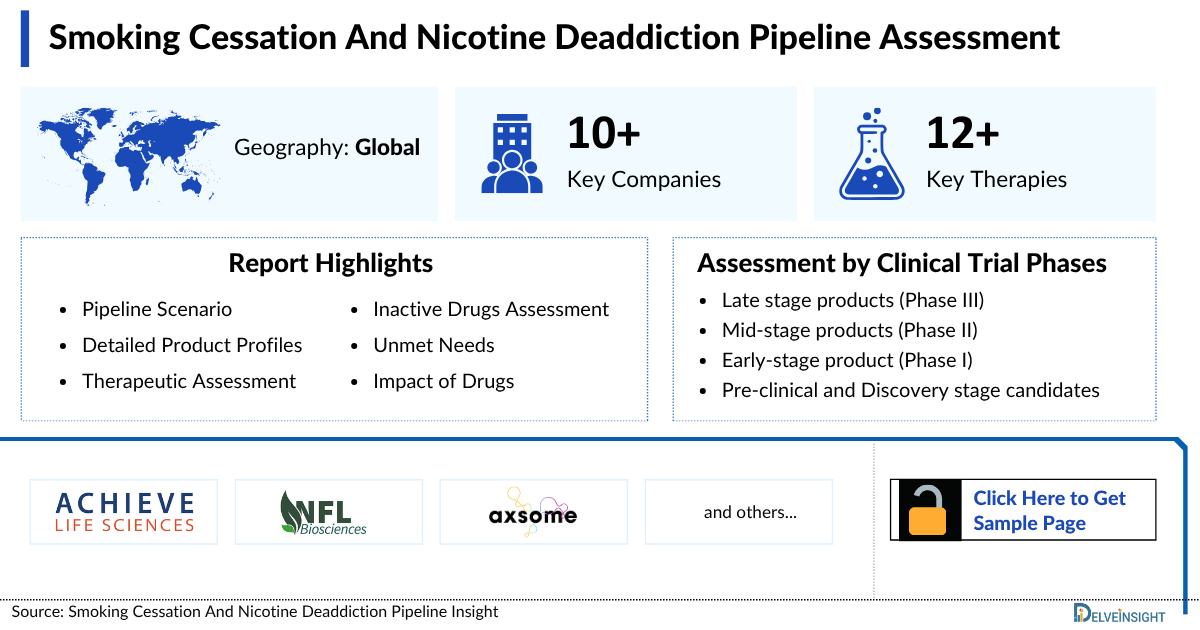
DelveInsight’s, “Smoking Cessation and Nicotinic Deaddiction Pipeline Insight, 2026” report provides comprehensive insights about 10+ companies and 12+ pipeline drugs in Smoking Cessation and Nicotinic Deaddiction pipeline landscape. It covers the pipeline drug profiles, including clinical and nonclinical stage products. It also covers the therapeutics assessment by product type, stage, route of administration, and molecule type. It further highlights the inactive pipeline products in this space.
Geography Covered
- Global coverage
Smoking Cessation and Nicotinic Deaddiction Disease Understanding
Smoking Cessation and Nicotinic Deaddiction Overview
Tobacco use is a leading cause of preventable mortality worldwide, with nicotine driving dependence through its highly addictive properties. According to the CDC and WHO, nicotine/tobacco dependence is a chronic condition characterized by compulsive tobacco use despite harmful consequences, tolerance, cravings, withdrawal symptoms, and difficulty quitting. Nicotine exposure increases cardiovascular risks by elevating blood pressure and heart rate, narrowing arteries, and contributing to arterial hardening, while abrupt cessation often triggers physical and psychological withdrawal symptoms such as cravings, irritability, anxiety, depressed mood, and difficulty concentrating. As tobacco addiction is influenced by pharmacological, behavioral, psychological, and social factors, effective smoking cessation requires a comprehensive treatment approach combining behavioral interventions with pharmacotherapy. FDA-approved cessation therapies include nicotine replacement therapy (patches, gum, lozenges, inhalers, and nasal sprays), bupropion, and varenicline, while nortriptyline and clonidine have also demonstrated clinical efficacy despite lacking FDA approval.
Nicotine dependence is a complex disorder driven by the interplay of physical, psychological, behavioral, environmental, and genetic factors. Nicotine is a highly addictive substance that activates a4ß2 nicotinic acetylcholine receptors, stimulating the release of dopamine and other neurotransmitters that produce pleasure and reinforce tobacco use. Repeated nicotine exposure leads to neuroadaptation, resulting in tolerance and withdrawal symptoms, including irritability, anxiety, increased appetite, dysphoria, and difficulty experiencing pleasure, when tobacco use is discontinued. Smoking behavior is further reinforced by habitual cues, social influences such as parental and peer smoking, and genetic predisposition, with genome-wide association studies (GWAS) identifying several genetic variants associated with nicotine dependence and treatment response. Beyond addiction, tobacco smoking is a major contributor to global morbidity and mortality, substantially increasing the risk of lung cancer and multiple other malignancies, including cancers of the oral cavity, larynx, pharynx, esophagus, stomach, liver, pancreas, kidney, bladder, and cervix, as well as myeloid leukemia. Overall, smoking accounts for approximately 30% of all cancer deaths and 87% of lung cancer deaths.
Smoking cessation is often accompanied by nicotine withdrawal, particularly in long-term or heavy tobacco users, with common symptoms including cravings, irritability, anxiety, difficulty concentrating, insomnia, restlessness, depression, and increased appetite. Cravings are frequently triggered by smoking-related cues such as specific people, places, or situations, making behavioral support an important component of quitting. Despite these challenges, smoking cessation offers immediate and long-term health benefits, including improved lung function, reduced blood pressure, and a lower risk of cardiovascular disease, chronic respiratory conditions, and multiple cancers. Quitting smoking before the age of 40 can reduce the risk of death from smoking-related diseases by approximately 90%, although cessation at any age significantly improves health outcomes. Tobacco smoke contains numerous carcinogens that damage DNA and contribute to cancers throughout the body, while also increasing the risk of heart disease, stroke, chronic obstructive pulmonary disease (COPD), and other serious smoking-related illnesses.
Nicotine addiction results from its rapid delivery to the brain, activation of reward pathways, and the development of physical dependence and conditioned behavioral responses. Cigarette smoking provides the fastest and most efficient nicotine delivery, allowing the compound to rapidly reach the brain, where it binds to nicotinic acetylcholine receptors (nAChRs), particularly the a4ß2 subtype, and stimulates the release of dopamine and other neurotransmitters involved in reward, mood regulation, arousal, analgesia, and cognition. Nicotine is primarily metabolized by the CYP2A6 enzyme, and individual genetic variations in nicotine metabolism can influence smoking behavior and dependence. Repeated nicotine exposure induces neuroadaptation, receptor desensitization, and tolerance, leading to withdrawal symptoms such as cravings, irritability, anxiety, depressed mood, insomnia, impaired concentration, and increased appetite upon cessation. These symptoms are typically most severe during the first week of abstinence, although cravings and negative mood may persist for months and contribute to relapse. Overall, nicotine dependence is driven by complex neurobiological mechanisms involving neurotransmitter dysregulation, genetic susceptibility, and conditioned environmental cues that reinforce continued tobacco use.
Smoking is a leading cause of preventable disease and death, significantly increasing the risk of multiple cancers, cardiovascular disease, type 2 diabetes, chronic obstructive pulmonary disease (COPD), osteoporosis, liver disease, and reproductive complications, while secondhand smoke also poses serious health risks. Nicotine suppresses appetite and increases energy expenditure by altering lipid and glucose metabolism, contributing to reduced body weight but also promoting insulin resistance and cardiometabolic dysfunction. Following smoking cessation, increased appetite and a decline in metabolic rate often lead to weight gain, which can discourage quitting and contribute to relapse, particularly among women. Nevertheless, the long-term health benefits of smoking cessation substantially outweigh the temporary effects of post-cessation weight gain.
Although there is no universally accepted standard for diagnosing nicotine addiction, it is generally characterized by compulsive and highly controlled tobacco use, psychoactive effects, and reinforcement of smoking behavior. Common indicators include persistent use despite harmful consequences, recurrent cravings, stereotyped patterns of tobacco use, relapse following abstinence, tolerance, physical dependence, and the experience of pleasurable effects from nicotine. These features are consistent with the diagnostic criteria for substance dependence outlined in the Diagnostic and Statistical Manual of Mental Disorders (DSM-IV) and the International Classification of Diseases, Tenth Revision (ICD-10).
Smoking cessation is most effective when pharmacological and behavioral interventions are combined. FDA-approved pharmacotherapies include nicotine replacement therapy (NRT) in various formulations, as well as bupropion and varenicline, while other options such as cytisine, nortriptyline, clonidine, and transcranial magnetic stimulation (TMS) may benefit selected patients. These therapies help reduce nicotine cravings and withdrawal symptoms, improving quit success. Behavioral strategies, including cognitive behavioral therapy (CBT), motivational interviewing, and counseling, further enhance long-term abstinence by addressing the psychological and behavioral aspects of nicotine dependence. Current clinical guidelines recommend a structured approach involving routine assessment of tobacco use, personalized cessation advice, initiation of appropriate treatment, behavioral support, and regular follow-up to improve quit rates and minimize relapse.
"Smoking Cessation and Nicotinic Deaddiction Pipeline Insight, 2026" report by DelveInsight outlays comprehensive insights of present scenario and growth prospects across the indication. A detailed picture of the Smoking Cessation and Nicotinic Deaddiction pipeline landscape is provided which includes the disease overview and Smoking Cessation and Nicotinic Deaddiction treatment guidelines. The assessment part of the report embraces, in depth Smoking Cessation and Nicotinic Deaddiction commercial assessment and clinical assessment of the pipeline products under development. In the report, detailed description of the drug is given which includes mechanism of action of the drug, clinical studies, NDA approvals (if any), and product development activities comprising the technology, Smoking Cessation and Nicotinic Deaddiction collaborations, licensing, mergers and acquisition, funding, designations and other product related details.
Smoking Cessation and Nicotinic Deaddiction Pipeline Report Highlights
The companies and academics are working to assess challenges and seek opportunities that could influence Smoking Cessation and Nicotinic Deaddiction R&D. The therapies under development are focused on novel approaches to treat/improve Smoking Cessation and Nicotinic Deaddiction.
Smoking Cessation and Nicotinic Deaddiction Emerging Drugs Chapters
This segment of the Smoking Cessation and Nicotinic Deaddiction report encloses its detailed analysis of various drugs in different stages of clinical development, including Phase III, II, I, Preclinical and Discovery. It also helps to understand clinical trial details, expressive pharmacological action, agreements and collaborations, and the latest news and press releases.
Smoking Cessation and Nicotinic Deaddiction Emerging Drugs
EMB-001: Embera Pharmaceuticals
EMB-001 is a patented combination product that includes two FDA-approved medications: metyrapone, a cortisol synthesis inhibitor, and oxazepam, a benzodiazepine. This approach is based on the understanding of how stress influences addiction. By combining these two medications, which affect different elements of the stress response at lower doses, EMB-001 may offer greater effectiveness than either drug alone. A therapy that effectively tackles these barriers and fosters long-term abstinence and recovery would be a major breakthrough in treating a wide range of addictions. According to the company’s pipeline, the drug is currently in Phase II stage of development for the treatment of Smoking Cessation.
AXS-05: Axsome Therapeutics
AXS-05 is an investigational oral therapy being developed for central nervous system (CNS) disorders, including Alzheimer’s disease agitation and smoking cessation. It combines a proprietary formulation of dextromethorphan and bupropion, offering a multimodal mechanism of action. Dextromethorphan acts as an N-methyl-D-aspartate (NMDA) receptor antagonist and sigma-1 receptor agonist, helping to modulate glutamatergic neurotransmission, while bupropion enhances the bioavailability of dextromethorphan and functions as a norepinephrine and dopamine reuptake inhibitor. Although AXS-05 has shown therapeutic potential, its safety and efficacy for smoking cessation have not yet been established, and it is not approved by the U.S. FDA for the indication. According to the company’s pipeline, the drug is currently in Phase II stage of development for the treatment of Smoking Cessation.
NFL-101: NFL Biosciences
NFL-101 is an investigational, patented botanical drug candidate being developed to support smoking cessation through a simple regimen of two subcutaneous injections administered one week apart, with optional booster doses at Months 3 and 6 for individuals who have not achieved abstinence. The therapy contains well-characterized natural tobacco leaf proteins with minimal nicotine content and is designed to promote long-term smoking cessation without compensatory over-smoking. Unlike conventional therapies such as varenicline or nicotine replacement therapy (NRT), NFL-101 employs a distinct mechanism that avoids high nicotine exposure and may reduce the risk of treatment-related adverse effects. A Phase I/II clinical trial demonstrated a favorable safety profile and encouraging efficacy in smokers motivated to quit, and the therapy is currently in Phase II clinical development.
Further product details are provided in the report...
Smoking Cessation and Nicotinic Deaddiction: Therapeutic Assessment
This segment of the report provides insights about the different Smoking Cessation and Nicotinic Deaddiction drugs segregated based on following parameters that define the scope of the report, such as:
Major Players in Smoking Cessation and Nicotinic Deaddiction
There are approx. 10+ key companies which are developing the therapies for Smoking Cessation and Nicotinic Deaddiction. The companies which have their Smoking Cessation and Nicotinic Deaddiction drug candidates in the most advanced stage, i.e. Phase II include, Embera Pharmaceuticals.
Smoking Cessation and Nicotinic Deaddiction Drugs Phases
DelveInsight’s report covers around 12+ products under different phases of clinical development like
- Late stage products (Phase III)
- Mid-stage products (Phase II)
- Early-stage product (Phase I) along with the details of
- Pre-clinical and Discovery stage candidates
- Discontinued & Inactive candidates
Smoking Cessation and Nicotinic Deaddiction Drugs Route of Administration
Smoking Cessation and Nicotinic Deaddiction pipeline report provides the therapeutic assessment of the pipeline drugs by the Route of Administration. Products have been categorized under various ROAs such as
- Oral
- Intravenous
- Subcutaneous
- Parenteral
- Topical
Smoking Cessation and Nicotinic Deaddiction Drugs Molecule Type
Products have been categorized under various Molecule types such as
- Recombinant fusion proteins
- Small molecule
- Monoclonal antibody
- Peptide
- Polymer
- Gene therapy
Smoking Cessation and Nicotinic Deaddiction Pipeline Product Type
- Drugs have been categorized under various product types like Mono, Combination and Mono/Combination.
Smoking Cessation and Nicotinic Deaddiction Pipeline Development Activities
The report provides insights into different therapeutic candidates in Phase III, II, I, preclinical and discovery stage. It also analyses Smoking Cessation and Nicotinic Deaddiction therapeutic drugs key players involved in developing key drugs.
Smoking Cessation and Nicotinic Deaddiction Clinical Trials and Development Activities
The Smoking Cessation and Nicotinic Deaddiction clinical trial analysis report covers the detailed information of collaborations, acquisition and merger, licensing along with a thorough therapeutic assessment of emerging Smoking Cessation and Nicotinic Deaddiction drugs.
Smoking Cessation and Nicotinic Deaddiction Report Insights
- Smoking Cessation and Nicotinic Deaddiction Pipeline Analysis
- Smoking Cessation and Nicotinic Deaddiction Therapeutic Assessment
- Smoking Cessation and Nicotinic Deaddiction Unmet Needs
- Impact of Smoking Cessation and Nicotinic Deaddiction Drugs
Smoking Cessation and Nicotinic Deaddiction Report Assessment
- Smoking Cessation and Nicotinic Deaddiction Pipeline Product Profiles
- Smoking Cessation and Nicotinic Deaddiction Therapeutic Assessment
- Smoking Cessation and Nicotinic Deaddiction Pipeline Assessment
- Inactive Smoking Cessation and Nicotinic Deaddiction drugs assessment
- Smoking Cessation and Nicotinic Deaddiction Unmet Needs
Key Questions Answered in the Smoking Cessation and Nicotinic Deaddiction Pipeline Report:
Current Treatment Scenario and Emerging Therapies:
- How many companies are developing Smoking Cessation and Nicotinic Deaddiction drugs?
- How many Smoking Cessation and Nicotinic Deaddiction drugs are developed by each company?
- How many emerging drugs are in mid-stage, and late-stage of development for the treatment of Smoking Cessation and Nicotinic Deaddiction?
- What are the key collaborations (Industry–Industry, Industry–Academia), Mergers and acquisitions, licensing activities related to the Smoking Cessation and Nicotinic Deaddiction therapeutics?
- What are the recent trends, drug types and novel technologies developed to overcome the limitation of existing therapies?
- What are the clinical studies going on for Smoking Cessation and Nicotinic Deaddiction and their status?
- What are the key designations that have been granted to the emerging drugs?
Key Smoking Cessation and Nicotinic Deaddiction Companies
- Embera Pharmaceuticals
- Axsome Therapeutics
- NFL Biosciences
- Antidote Therapeutics
- Cessation Therapeutics
Key Smoking Cessation and Nicotinic Deaddiction Pipeline Products
- EMB-001
- AXS-05
- NFL-101
- NFL-102
- ATI-1013
- CSX-3002

