Soft Tissue Sarcoma Market Summary
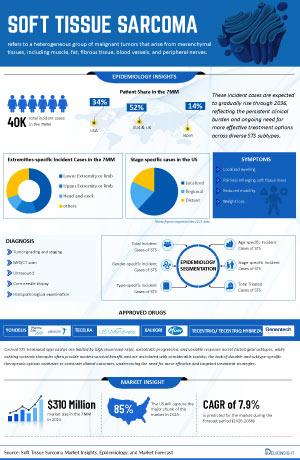
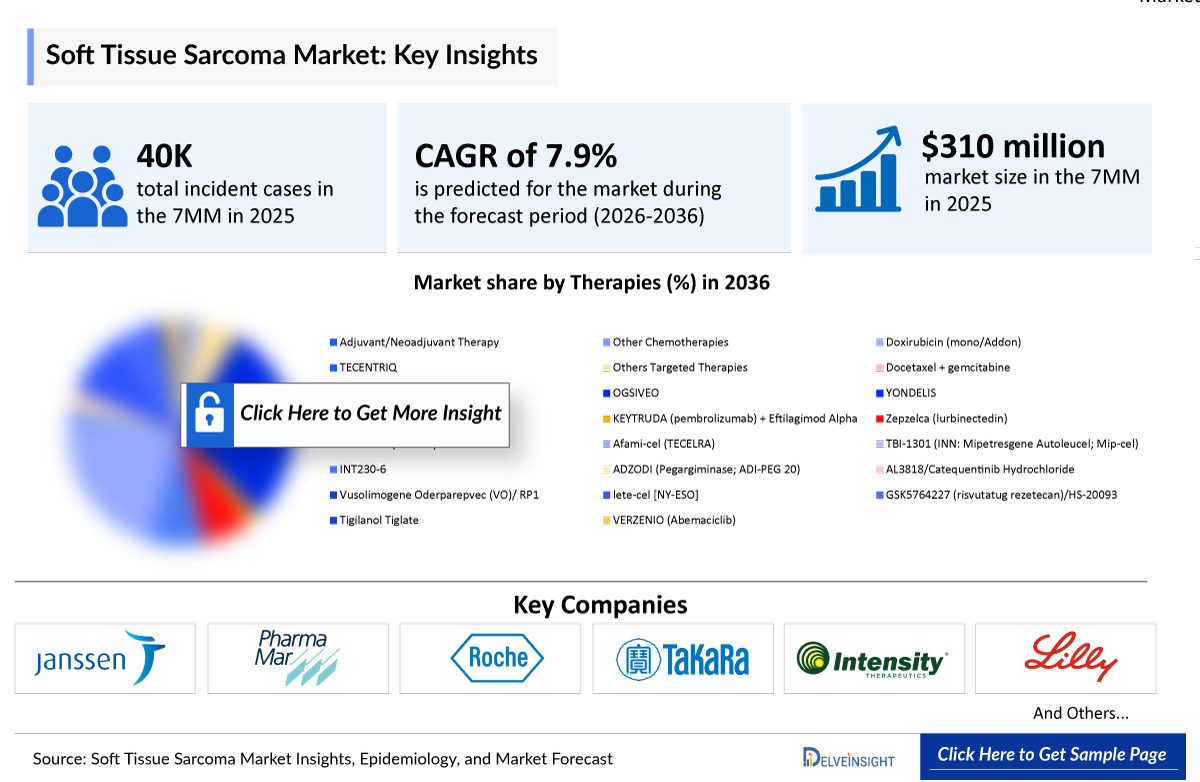
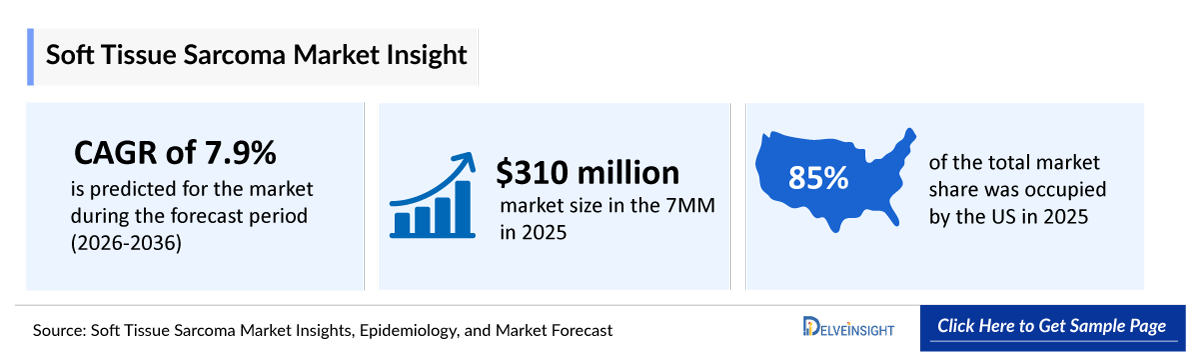
- According to DelveInsight's analysis, the Soft Tissue Sarcoma Treatment Market in the 7MM (the US, EU4, the UK, and Japan) was valued at ~USD 310 Million in 2025. The market is expected to expand over the forecast period, driven by a growing diagnosed patient population and increasing adoption of emerging therapeutic approaches.
- The leading Soft Tissue Sarcoma Companies include Janssen Pharmaceuticals, Pharma Mar, Roche, Takara Bio, Intensity Therapeutics, Eli Lilly, and others.
Soft Tissue Sarcoma Market and Epidemiology Analysis
- STS is a rare and heterogeneous group of malignant tumors arising from mesenchymal tissues such as muscle, fat, nerves, blood vessels, and connective tissues, often characterized by aggressive progression, high recurrence risk, and metastatic potential, leading to substantial morbidity and negatively impacting survival outcomes and quality of life.
- The US continues to hold the largest Soft Tissue Sarcoma Therapeutics Market Share, with a revenue of ~USD 270 million in 2025. DelveInsight estimates this will rise significantly by 2036, with the US expected to account for approximately 69% of the total STS market across the 7MM.
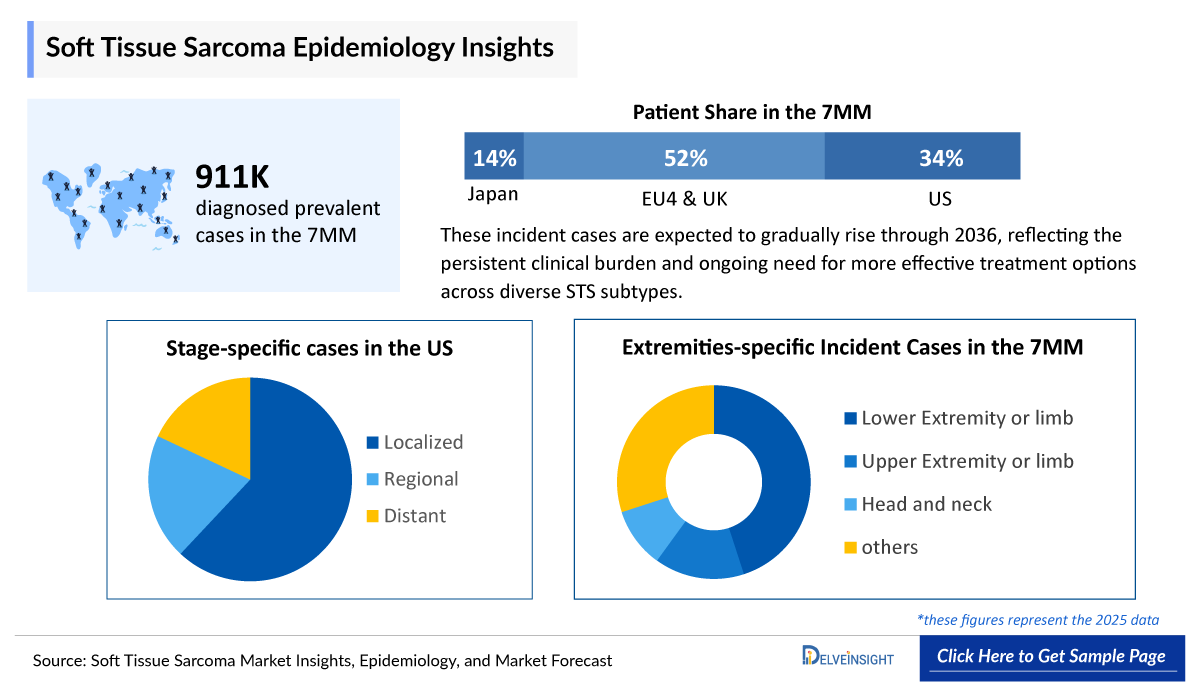
- As per DelveInsight research, the 7MM reported approximately 40,000 incident cases of Soft Tissue Sarcoma in 2025. The patient pool is expected to increase through 2036, driven by improved diagnostic capabilities, aging populations, and advancements in treatment approaches that are contributing to longer survival and an increasing disease burden across these regions.
- In the US, as per DelveInsight research, incident cases of STS in 2025 were highest in patients aged 65 years and above (~6,300 cases), followed by the 45–64 years group (~4,000 cases), 20–44 years group (~2,300 cases), and below 20 years (~1,000 cases).
- Current Soft Tissue Sarcoma Treatment approaches are limited by high recurrence rates, metastatic progression, and variable response across histological subtypes, while existing systemic therapies often provide modest survival benefit and are associated with considerable toxicity; the lack of durable and subtype-specific therapeutic options continues to constrain clinical outcomes, underscoring the need for more effective and targeted treatment strategies.
- The Soft Tissue Sarcoma Therapeutics Market Landscape is increasingly shaped by targeted therapies, immunotherapies, and precision oncology approaches, with key agents such as Trabectedin (YONDELIS), Afami-cel (TECELRA), Atezolizumab (TECENTRIQ/TECENTRIQ HYBREZA), and others, among others, playing an important role in driving Soft Tissue Sarcoma Market Dynamics across the 7MM.
- The emerging Soft Tissue Sarcoma Pipeline is focused on innovative cell therapies, intratumoral approaches, and novel anticancer agents, with key players advancing assets across multiple clinical trial stages. Notably, therapies such as TBI-1301 (mipetresgene autoleucel), INT230-6, and lurbinectedin) ZEPZELCA, among others, is expected to shape the future Soft Tissue Sarcoma Treatment Market Landscape.
Soft Tissue Sarcoma Market Size and Forecast
| 2025 STS Market Size in 7MM | ~USD 310 Million |
| STS Growth Rate (2026–2036) in the 7MM | 7.9% CAGR |
Key Factors Driving the Growth of the Soft Tissue Sarcoma Market
-
Rising Incidence and Growing Disease Burden
The increasing incidence of soft tissue sarcoma worldwide is a major factor driving market growth. As awareness of rare cancers improves and diagnostic capabilities advance, more cases are being identified and treated. The growing disease burden is expected to fuel demand for effective therapeutic options and support the expansion of the Soft Tissue Sarcoma Therapeutics Market.
-
Advancements in Diagnostic Technologies
Continuous advancements in imaging techniques, biopsy procedures, and molecular diagnostics are improving the early and accurate detection of soft tissue sarcoma. The use of advanced diagnostic approaches helps healthcare professionals identify tumor types and disease characteristics more precisely, supporting timely treatment and contributing to market growth.
-
Increasing Research and Development Activities
Growing investments in research and development are accelerating innovation in the soft tissue sarcoma treatment landscape. Pharmaceutical and biotechnology companies are actively exploring novel therapies, targeted treatments, and immunotherapies to address unmet medical needs. The expanding pipeline of investigational therapies is expected to create new growth opportunities in the market.
-
Development of Targeted Therapies and Immunotherapies
The growing focus on targeted therapies and immunotherapy is significantly influencing the Soft Tissue Sarcoma Therapeutics Market. These advanced treatment approaches aim to target specific molecular pathways or enhance the body's immune response against cancer cells. Ongoing clinical research and the introduction of innovative therapies are expected to support market expansion.
-
Increasing Awareness of Rare Cancers
Greater awareness among patients, healthcare professionals, and advocacy organizations is improving the recognition of soft tissue sarcoma. Awareness campaigns and educational initiatives are encouraging individuals to seek medical attention for suspicious symptoms, potentially supporting earlier diagnosis and treatment. This rising awareness is contributing to the overall growth of the market.
-
Growing Adoption of Personalized Medicine
The increasing adoption of precision medicine is creating new opportunities in soft tissue sarcoma treatment. Molecular profiling and biomarker-based approaches help physicians select therapies based on individual tumor characteristics. The shift toward personalized treatment strategies is expected to improve clinical outcomes and drive demand for advanced therapeutic solutions.
DelveInsight’s ‘Soft Tissue Sarcoma Market Insights, Epidemiology and Market Forecast – 2036’ report delivers an in-depth understanding of Soft Tissue Sarcoma, historical and forecasted epidemiology, as well as the market trends in the United States, EU4 (Germany, Spain, Italy, and France), the United Kingdom, and Japan.
The Soft Tissue Sarcoma Treatment Market Report delivers a comprehensive analysis of the current treatment landscape, including standards of care, clinical practices, and evolving therapeutic algorithms. It evaluates Soft Tissue Sarcoma Patient burden trends, revenue & market share dynamics, peak patient share & therapy uptake analysis, and provides an in-depth market size assessment and growth rate projections (Historical & Forecast 2026 –2036) across the 7MM regions. The Soft Tissue Sarcoma Therapeutics Market Report highlights key unmet medical needs in Soft Tissue Sarcoma and maps the competitive and clinical landscape to uncover high-value opportunities, providing a clear outlook on future market growth potential.
Scope of the Soft Tissue Sarcoma Therapeutics Market Report | |
|
Study Period |
2022–2036 |
|
Historical Year |
2022–2025 |
|
Forecast Period |
2026–2036 |
|
Base Year |
2025 |
|
Geographies Covered |
|
|
STS Market CAGR (Forecast period) | |
|
STS Epidemiology Segmentation Analysis |
Patient Burden Assessment
|
|
STS Companies |
|
|
STS Therapies |
|
|
STS Market |
Segmented by
|
|
Analysis |
|
Soft Tissue Sarcoma Understanding and Treatment Algorithm
Soft Tissue Sarcoma Overview and Diagnosis
STS refers to a heterogeneous group of malignant tumors that arise from mesenchymal tissues, including muscle, fat, fibrous tissue, blood vessels, and peripheral nerves. STS can occur in various anatomical locations, most commonly in the extremities, trunk, retroperitoneum, and head and neck regions, and comprises multiple histological subtypes with distinct biological behaviors.
The clinical presentation of STS varies considerably depending on tumor size, grade, subtype, and location, with manifestations ranging from slow-growing localized masses to aggressive metastatic disease that significantly impacts survival outcomes and quality of life.
The diagnosis of STS requires a comprehensive and multidisciplinary approach, integrating clinical assessment with imaging and histopathological evaluation. It typically begins with the identification of a suspicious soft tissue mass, followed by imaging studies such as MRI or CT scans to assess tumor size, location, and extent of spread.
Definitive diagnosis is established through tissue biopsy and histopathological analysis, while molecular and genetic testing may further aid subtype classification and therapeutic decision-making, ensuring accurate diagnosis and appropriate treatment planning.
Current Soft Tissue Sarcoma Treatment Landscape
Soft Tissue Sarcoma treatment involves a multidisciplinary approach that includes surgery, radiation therapy, chemotherapy, targeted therapy, and immunotherapy, depending on the tumor subtype, stage, anatomical location, and extent of disease progression. Surgery remains the primary treatment modality for localized STS and is often combined with radiation therapy to improve local disease control and reduce recurrence risk.
Chemotherapy is commonly utilized in advanced, metastatic, or high-grade disease settings. In addition, targeted therapies such as tyrosine kinase inhibitors and emerging immunotherapies are increasingly expanding treatment options for selected Soft Tissue Sarcoma subtypes. Clinical trials and long-term follow-up evaluations continue to play an important role in optimizing treatment outcomes and monitoring disease recurrence or progression.
Further details related to country-based variations are provided in the report.
Soft Tissue Sarcoma Unmet Needs
The section “unmet needs of STS” outlines the critical gaps between the current state of patient care, diagnosis, and the ideal & effective management of the disease. It highlights the obstacles experienced by patients, clinicians, and researchers and identifies potential solutions for future progress.
- Lack of Durable Disease Control in Advanced STS Despite Available Therapies.
- Fragmented Biology Limiting Cross-subtype Therapeutic Generalization.
- Rapid Development of Therapeutic Resistance across Lines of Therapy.
- Plateau in Later-line Treatment Efficacy.
Soft Tissue Sarcoma Epidemiology
Key Findings from Soft Tissue Sarcoma Epidemiological Analysis and Forecast
- According to DelveInsight’s analysis, the US accounted for the highest number of Soft Tissue Sarcoma Incident Cases in 2025, exceeding 13,500 cases, highlighting the substantial clinical burden in the region. The incidence is expected to continue increasing through 2036.
- In 2025, Germany reported the highest share of type-specific STS cases in sarcoma NOS, accounting for approximately 1,500 cases, followed by liposarcoma with 1,050 cases, reflecting the heterogeneous histological landscape of STS in the country.
- In 2025, age-specific STS cases in Japan were highest among patients aged =65 years, with approximately 2,700 cases, followed by 45–64 years (~1,700), 20–44 years (~1,000), and <20 years (~400), indicating a higher disease burden in older populations.
Soft Tissue Sarcoma Epidemiology Segmentation in the 7MM
- Total Soft Tissue Sarcoma Incident Cases
- Soft Tissue Sarcoma Gender-specific Incident Cases
- Soft Tissue Sarcoma Type-specific Incident Cases
- Soft Tissue Sarcoma Age-specific Incident Cases
- Soft Tissue Sarcoma Stage-specific Incident Cases
- Soft Tissue Sarcoma Extremity-specific Incident Cases
- Total Soft Tissue Sarcoma Treated Cases
Soft Tissue Sarcoma Market Recent Breakthroughs and Developments
- As of 2026, Takara Bio’s TBI-1301 (Mipetresgene Autoleucel; Mip-cel) is being investigated in a Phase III confirmatory clinical trial for patients with unresectable, advanced, or recurrent NY-ESO-1–positive synovial sarcoma.
- Catequentinib Hydrochloride (AL3818) is approved in China for advanced STS following prior anthracycline-based chemotherapy. The approval was supported by favorable progression-free survival and antitumor activity data.
Soft Tissue Sarcoma Drug Analysis & Competitive Landscape
The Soft Tissue Sarcoma drug chapter provides a detailed, market-focused review of approved therapies and the emerging Soft Tissue Sarcoma Pipeline across Phase I - Phase III clinical trials. It covers Soft Tissue Sarcoma Mechanism of Action, clinical trial data, regulatory approvals, patents, collaborations, strategic partnerships upcoming Key catalyst for each therapy, along with their advantages, limitations, and recent developments. This section offers critical insights into the Soft Tissue Sarcoma Treatment landscape, supporting market assessment, competitive analysis, and growth forecasting for the STS therapeutics market.
Soft Tissue Sarcoma Approved Therapies
-
Trabectedin (YONDELIS): Pharma Mar/ Janssen Pharmaceuticals
Trabectedin (YONDELIS) is an antineoplastic agent developed by Pharma Mar that binds to the minor groove of DNA, disrupting tumor cell proliferation and transcription pathways. It is indicated for the treatment of advanced or metastatic STS in patients previously treated with anthracycline-based chemotherapy or unsuitable for such treatment.
-
- In October 2015, trabectedin (YONDELIS) received US FDA approval for the treatment of unresectable or metastatic liposarcoma or Leiomyosarcoma in patients previously treated with anthracycline-containing chemotherapy.
- In September 2015, Pharma Mar reported that its partner Taiho Pharmaceutical received marketing approval from Japan’s MHLW for the treatment of STS.
-
Afami-cel (TECELRA): US WorldMeds
Afami-cel (TECELRA) is an engineered T-cell receptor (TCR) cell therapy commercialized by US WorldMeds for the treatment of advanced STS expressing the MAGE-A4 antigen. It is designed to recognize and target MAGE-A4–positive tumor cells, enabling a targeted immune-mediated antitumor response in selected patients with unresectable or metastatic disease.
-
- In August 2024, TECELRA received US FDA accelerated approval for the treatment of unresectable or metastatic synovial sarcoma, following which commercial launch activities contributed to increased revenue generation for Adaptimmune Therapeutics.
- The FDA granted TECELRA Orphan Drug, Regenerative Medicine Advanced Therapy, and Priority Review designations for this indication.
-
Atezolizumab (TECENTRIQ/TECENTRIQ HYBREZA): Genentech/Roche
TECENTRIQ is a cancer immunotherapy designed to bind with a protein called PD-L1 expressed on tumour cells and tumour-infiltrating immune cells. By inhibiting PD-L1, TECENTRIQ may enable the activation of T cells. It is the first PD-(L) 1 cancer immunotherapy which can be administered intravenously (into a vein) and subcutaneously (under the skin) by the name of TECENTRIQ HYBREZA.
- In February 2025, TECENTRIQ was approved for unresectable alveolar soft part sarcoma. The approval was supported by the ALBERT study conducted in Japanese patients with locally advanced or metastatic ASPS.
- In January 2024, the European Commission granted marketing authorization for TECENTRIQ HYBREZA, marking it as the first PD-(L) 1 cancer immunotherapy approved for subcutaneous injection in the European Union.
- In 2024, US FDA approved TECENTRIQ HYBREZA for unresectable or metastatic alveolar soft part sarcoma.
Competitive Landscape of Approved Soft Tissue Sarcoma Therapies | ||||||
|
Drug/Therapy |
Company |
Indication |
Molecule Type |
MoA |
RoA |
Marketed Region |
|
Trabectedin (YONDELIS) |
Pharma Mar/ Janssen Pharmaceuticals |
Unresectable or metastatic liposarcoma or leiomyosarcoma. |
Small molecule |
Topoisomerase I inhibitor |
IV infusion |
US: 2015; EU: 2007; UK: 2007; JP: 2015 |
|
Afami-cel (TECELRA) |
US WorldMeds |
Unresectable or metastatic synovial sarcoma who have received prior chemotherapy |
Cell therapy |
TCR T-cell therapy |
IV |
US: 2024 |
|
Atezolizumab (TECENTRIQ/ TECENTRIQ HYBREZA) |
Genentech/Roche |
Alveolar soft part sarcoma (ASPS) |
Monoclonal antibody |
PD-L1 inhibitor |
IV infusion/SC |
TECENTRIQ US: 2022; JP: 2025 TECENTRIQ HYBREZA US: 2024; EU: 2024; UK:2023 |
|
XX |
XX |
XX |
XX |
XX |
XX |
XX |
Soft Tissue Sarcoma Pipeline Analysis
-
TBI-1301 (mipetresgene autoleucel): Takara Bio
TBI-1301 (mipetresgene autoleucel) is an investigational autologous TCR gene therapy developed by Takara Bio that targets NY-ESO-1–positive tumor cells through genetically engineered patient-derived T cells. As of 2026, the therapy is being evaluated in a Phase III confirmatory trial for patients with unresectable, advanced, or recurrent NY-ESO-1–positive Synovial Sarcoma.
-
- In May 2025, Mipetresgene Autoleucel received Rare Disease and Sakigake designations from Japan’s MHLW, supporting accelerated regulatory review in Japan.
- In May 2023, Takara Bio reported that clinical results for TBI-1301 (mipetresgene autoleucel) would be presented at the 2023 ASCO Annual Meeting in Chicago.
-
INT230-6: Intensity Therapeutics
INT230-6 is an investigational intratumoral oncology therapy developed by Intensity Therapeutics for the treatment of advanced solid tumors, including STS. The therapy combines cisplatin and vinblastine with the company’s proprietary DfuseRx technology to enhance tumor penetration and promote direct tumor cell destruction along with systemic immune activation.
-
- In January 2026, Intensity Therapeutics announced that 21 patients had been enrolled in the Phase III INVINCIBLE-3 trial evaluating INT230-6 in metastatic STS before enrollment was temporarily paused due to funding constraints.
- In 2024, received US FDA orphan drug designation for STS and advanced into the Phase III INVINCIBLE-3 clinical trial for patients with metastatic, recurrent, or unresectable STS.
-
Lurbinectedin (ZEPZELCA): PharmaMar/Jazz Pharmaceuticals
Lurbinectedin (ZEPZELCA), developed by Pharma Mar, is a selective oncogenic transcription inhibitor being investigated for advanced solid tumors, including leiomyosarcoma. The therapy disrupts tumor transcription processes, inhibits proliferation, induces apoptosis, and modulates the tumor microenvironment to enhance antitumor activity.
-
- In May 2026, Pharma Mar reported completion of patient enrollment in the global Phase III SaLuDo trial evaluating lurbinectedin (ZEPZELCA) plus doxorubicin as first-line treatment for metastatic LMS.
- In October 2025, Pharma Mar received a USD 50 million milestone payment from Jazz Pharmaceuticals following the US FDA full approval of lurbinectedin (ZEPZELCA) under the company’s licensing agreement.
Competitive Landscape of Soft Tissue Sarcoma Pipeline Drugs | ||||||
|
Drug Name |
Company |
Highest Phase |
Indication |
RoA |
MoA |
Anticipated Launch in the US |
|
lurbinectedin (ZEPZELCA) |
Pharma Mar/ Jazz Pharmaceuticals |
III |
Leiomyosarcoma |
IV infusion |
DNA-binding transcription inhibitor inducing apoptosis |
2028 |
|
TBI-1301 (mipetresgene autoleucel) |
Takara Bio |
III |
NY-ESO-1-positive synovial sarcoma |
IV infusion |
Engineered T cells target and kill NY-ESO-1-expressing tumor cells |
Information is available in the full |
|
INT230-6 |
Intensity Therapeutics |
III |
STS |
Intratumoral injection |
Intratumoral cytotoxic immune activation |
Information is available in the full |
|
XX |
XX |
XX |
XX |
XX |
XX |
XX |
Soft Tissue Sarcoma Companies
- Janssen Pharmaceuticals
- Pharma Mar
- US WorldMeds
- Roche
- Pfizer
- Novartis
- KAKEN Pharmaceutical
- Merck KGaA
- Takara Bio
- Intensity Therapeutics
- Jazz Pharmaceuticals
- Polaris
- Advenchen Laboratories
- Philogen
- Sun pharma
- Eli Lilly
- Replimune
- Immutep
- QBiotics Group, and more
Soft Tissue Sarcoma Market Outlook
Soft Tissue Sarcoma is a rare and heterogeneous group of malignant tumors arising from mesenchymal tissues, commonly affecting the extremities, trunk, retroperitoneum, and other soft tissues of the body. The disease comprises multiple histological subtypes with variable biological behavior, ranging from slow-growing localized tumors to highly aggressive metastatic disease.
Soft Tissue Sarcoma remains a significant clinical challenge due to high recurrence risk, metastatic potential, histological diversity, and limited treatment options in advanced settings, all of which substantially impact survival outcomes and quality of life across the 7MM.
Key Findings from Soft Tissue Sarcoma Market Forecast Report
- Overall, the Soft Tissue Sarcoma Therapeutics Market stands at a pivotal transformation point. Historically dominated by surgery, radiation therapy, and conventional chemotherapy, treatment has largely relied on broad cytotoxic approaches with limited durability in advanced disease settings. However, a new generation of targeted therapies, engineered cell therapies, immunotherapies, and precision oncology approaches is reshaping the treatment landscape toward subtype-specific and biomarker-driven management. These advances are expected to significantly influence the 7MM STS market from 2022 to 2036, with strong commercial implications for both approved therapies and emerging pipeline candidates.
- Across the 7MM, the US represents the largest Soft Tissue Sarcoma Therapeutics Market with USD 265 million, accounting for the majority of incident cases in 2025 and expected to maintain its leading position through 2036, supported by higher diagnostic awareness, advanced healthcare infrastructure, and greater participation in clinical research programs.
Key Soft Tissue Sarcoma Marketed Therapies shaping current management
- Trabectedin (YONDELIS; Pharma Mar): A DNA minor groove binder approved in all the major markets for advanced STS after failure of anthracyclines and ifosfamide, with FDA approval specifically in unresectable or metastatic liposarcoma and leiomyosarcoma following prior anthracycline-based therapy. The Phase III STS-201 trial established clinical activity, though objective response rates are modest. YONDELIS represents one of the few approved second-line options in a histology-defined STS subpopulation, with its generics being approved through decentralized procedures across EU4 and the UK.
- Afami-cel (TECELRA; US WorldMeds): The first TCR-T cell therapy approved in oncology, granted FDA accelerated approval in August 2024 for unresectable or metastatic synovial sarcoma in HLA-A02 positive adult patients whose tumors express MAGE-A4. It targets the MAGE-A4 cancer-testis antigen via an affinity-enhanced TCR specific to the HLA-A*02:01-MAGE-A4 epitope. The Phase II SPEARHEAD-1 trial demonstrated an objective response rate of approximately 39% in this genetically defined population. TECELRA is currently the only approved cell therapy for any solid tumour outside hematological malignancies and represents the most transformative approval in STS in decades.
Soft Tissue Sarcoma Drug Class/Insights into Leading Emerging and Marketed Therapies (2022–2036 Forecast)
The STS landscape includes both established therapies and a growing pipeline targeting localized, advanced, metastatic, and recurrent disease across multiple histological subtypes. Current and emerging approaches primarily focus on inhibiting tumor proliferation, angiogenesis, immune evasion, and molecular pathways driving sarcoma progression.
Chemotherapy, targeted therapies, and tyrosine kinase inhibitors continue to form the backbone of treatment, while newer modalities such as engineered T-cell therapies, immune checkpoint inhibitors, and precision oncology approaches are expanding the scope of innovation. Collectively, these advancements reflect the ongoing evolution in addressing unmet needs and the biological complexity of STS across the 7MM.
- Small molecules: Small molecules play a central role in the STS landscape, offering targeted inhibition of tumor growth, angiogenesis, and oncogenic signaling pathways. Marketed agents such as Crizotinib (XALKORI) and Trabectedin (YONDELIS) continue to shape current clinical practice in selected STS subtypes, while emerging therapies including INT230-6 and lurbinectedin (ZEPZELCA) are advancing next-generation treatment strategies focused on enhancing antitumor activity and improving disease control. These therapies aim to expand treatment options and address unmet needs across advanced and metastatic STS, positioning small molecules as a key component of the evolving therapeutic landscape.
- Gene therapies and Cell therapies: Gene and cell therapies are driving innovation in STS by enabling precise targeting of tumor-associated antigens and enhancing antitumor immune responses. Emerging therapies such as TBI-1301 (mipetresgene autoleucel) are being developed to target NY-ESO-1–positive tumors through engineered T-cell approaches, while approved therapies like TECELRA (afamitresgene autoleucel) highlight progress in this therapeutic class. These advanced therapies aim to improve clinical outcomes through targeted tumor recognition, durable responses, and personalized treatment strategies for patients with advanced or metastatic STS.
- Other advanced approaches: Beyond conventional therapies, additional modalities such as intratumoral therapies, precision oncology approaches, and immune-based combination strategies are gaining traction across the STS landscape. These approaches are being explored in advanced, metastatic, and recurrent disease settings, reflecting a broader shift toward biomarker-driven treatment, enhanced antitumor immune activity, and personalized therapeutic strategies across both marketed and emerging therapies.
Soft Tissue Sarcoma Drug Uptake
This section focuses on the uptake rate of potential Soft Tissue Sarcoma drugs expected to be launched in the market during the forecast period (2026–2036). The analysis covers the STS drug’s uptake, performance at peak, factors affecting performance during prime years of growth, patient uptake by therapy, and anticipated sales generated by each drug.
Current Soft Tissue Sarcoma Therapies primarily focus on surgery, chemotherapy, radiation therapy, and targeted treatment approaches, highlighting a significant unmet need for more durable and subtype-specific therapies in advanced disease settings.
The future Soft Tissue Sarcoma Treatment Landscape appears promising, with ongoing development of innovative therapies such as lurbinectedin (ZEPZELCA), which is anticipated to enter the US market in 2028. The therapy is expected to generate notable revenue at launch, with growth projected through 2036, driven by fast uptake in eligible patient populations.
Soft Tissue Sarcoma Market Access and Reimbursement of Approved Therapies
The Soft Tissue Sarcoma Therapeutics Market Report further provides detailed insights on the country-wise accessibility and reimbursement scenarios, cost-effectiveness scenario of approved therapies, programs making accessibility easier and out-of-pocket costs more affordable, insights on patients insured under federal or state government prescription drug programs, etc.
Soft Tissue Sarcoma Price Scenario & Trends
Pricing and analogue assessment of STS therapies highlights evolving price dynamics structures. This section summarizes the cost of approved treatments, closest and most appropriate analogue selection for emerging therapies, and understanding of how pricing influences market access, adherence, and long-term uptake.
Pricing of Soft Tissue Sarcoma-Approved Drugs
Trabectedin (YONDELIS), an antineoplastic agent used in advanced STS, carries a relatively high treatment cost reflecting its specialized mechanism and use in advanced disease settings. In Japan, where the therapy is approved for STS, YONDELIS 0.25 mg is priced at approximately JPY 49,368 per bottle, while the 1 mg formulation is priced at around JPY 190,625 per bottle.
Soft Tissue Sarcoma Industry Experts and Physician Views
To keep up with STS market trends, we take Key Opinion Leaders (KOLs) and Subject Matter Experts (SMEs) opinions working in the domain through primary research to fill the data gaps and validate our secondary research. Industry Experts were contacted for insights on the STS emerging therapies, evolving treatment landscape, patient adherence to conventional therapies, therapy switching trends, drug adoption and uptake, accessibility challenges, and epidemiology and real-world prescription patterns in STS, including MD, PhD, Instructor, Postdoctoral Researcher, Professor, Researcher, and others.
DelveInsight’s analysts connected with 10+ KOLs to gather insights at country level. Centers such as the Anderson Cancer Center, University Hospital Essen, La Timone University Hospital, etc. were contacted. Their opinion helps understand and validate current and emerging STS therapies, highlight unmet medical needs, provide epidemiological context, and support strategic decisions for market access, therapy adoption, and pipeline prioritization in STS.
Region |
Key Opinion Leaders (KOLs) and Subject Matter Experts (SMEs) |
|
United States |
“STS are best understood as rare, heterogeneous mesenchymal malignancies whose optimal outcomes depend less on individual interventions and more on structured, expert-led multidisciplinary care. The limited and fragmented evidence base, driven by disease rarity and subtype diversity, necessitates evolving, consensus-driven guidance rather than rigid standardized protocols.” |
|
Germany |
“Too many patients still experience delays or receive an incorrect diagnosis before reaching a specialist center, and those early missteps can have lasting consequences for treatment and outcomes. Ensuring expert pathology review at the time of initial diagnosis should be considered a fundamental component of high-quality care, not an optional step.” |
|
Japan |
“The expanding molecular characterization of STS is driving a shift toward histology-specific and biomarker-guided therapies, particularly for rare sarcoma subtypes where conventional chemotherapy continues to show limited durable benefit.” |
Soft Tissue Sarcoma Report Qualitative Analysis: SWOT and Attribute Analysis
We perform qualitative and Soft Tissue Sarcoma Therapeutics Market Intelligence analysis using various approaches, such as SWOT analysis and attribute analysis. In the SWOT analysis of STS, strengths, weaknesses, opportunities, and threats in terms of disease diagnosis, patient awareness, patient burden, competitive landscape, cost-effectiveness, and geographical accessibility of therapies are provided.
Attribute Analysis analyzes emerging therapies based on relevant attributes such as safety, efficacy, frequency of administration, route of administration, and order of entry. Scoring is given based on these parameters to analyze the effectiveness of therapy.
The team of analysts analyzes promising emerging therapies based on relevant attributes such as safety, efficacy, frequency of administration, route of administration, and order of entry. In efficacy, the trial’s primary and secondary outcome measures are evaluated, whereas the therapies’ safety is evaluated, wherein the acceptability, tolerability, and adverse events are mainly observed.
In addition, the scoring is also based on the route of administration, order of entry, probability of success, and the addressable patient pool for each therapy. According to these parameters, the final weightage score and the ranking of the emerging therapies are decided.
Scope of the Soft Tissue Sarcoma Market Report
- The Soft Tissue Sarcoma Therapeutics Market Report covers a segment of key events, an executive summary, a descriptive overview, explaining their causes, signs and symptoms, pathogenesis, and currently available treatments.
- Comprehensive insight has been provided into the epidemiology segments and forecasts, the future growth potential of the diagnosis rate, and disease progression along Soft Tissue Sarcoma Treatment guidelines.
- Additionally, an all-inclusive account of both the current and emerging treatments, along with the elaborative profiles of mid and late stage therapies, will have an impact on the current Soft Tissue Sarcoma Treatment Market Landscape.
- A detailed review of the Soft Tissue Sarcoma Treatment Market, historical and forecasted Soft Tissue Sarcoma Market Size, Soft Tissue Sarcoma Drugs Market Share by therapies, detailed assumptions, and rationale behind our approach is included in the report, covering the 7MM drug outreach.
- The Soft Tissue Sarcoma Therapeutics Market Report provides an edge while developing business strategies by understanding trends through SWOT analysis and expert insights/KOL views, patient journey, and treatment preferences that help in shaping and driving the 7MM Soft Tissue Sarcoma Drugs Market.
Soft Tissue Sarcoma Market Report Insights
- Soft Tissue Sarcoma Patient Population Forecast
- Soft Tissue Sarcoma Therapeutics Market Size
- Soft Tissue Sarcoma Pipeline Drugs Analysis
- Soft Tissue Sarcoma Market Size and Trends
- Soft Tissue Sarcoma Therapeutics Market Opportunity (Current and Forecasted)
Soft Tissue Sarcoma Market Report Key Strengths
- Epidemiology-based (EPI - based) bottom-up forecasting.
- Artificial Intelligence (AI) - enabled market research report.
- 11-year forecast.
- Soft Tissue Sarcoma Market Outlook (North America, Europe, Asia-Pacific).
- Soft Tissue Sarcoma Burden Trends (by geography).
- Soft Tissue Sarcoma Treatment Addressable Market (TAM).
- Soft Tissue Sarcoma Competitive Landscape.
- Soft Tissue Sarcoma Major Companies Insights.
- Soft Tissue Sarcoma Price Trends and Analogue Assessment.
- Soft Tissue Sarcoma Therapies Drug Adoption/Uptake.
- Soft Tissue Sarcoma Therapies Peak Patient Share analysis.
Soft Tissue Sarcoma Market Report Assessment
- Current Soft Tissue Sarcoma Treatment Practices
- Soft Tissue Sarcoma Unmet Needs
- Soft Tissue Sarcoma Clinical Development Analysis
- Soft Tissue Sarcoma Emerging Drugs Product Profiles
- Soft Tissue Sarcoma Market Attractiveness
- Soft Tissue Sarcoma Qualitative Analysis (SWOT and Attribute analysis)
Key Questions Answered in the Soft Tissue Sarcoma Treatment Market Report
Soft Tissue Sarcoma Therapeutics Market Insights
- What was the Soft Tissue Sarcoma Treatment Market Size, the Soft Tissue Sarcoma Market Size by therapies, Soft Tissue Sarcoma Drugs Market Share (%) distribution in 2025, and what would it look like by 2036?
- What are the contributing factors for this growth?
- What are the anticipated pricing variations among different geographies for the emerging therapies in the future?
- What can be the future treatment paradigm of STS?
- What are the disease risks, burdens, and unmet needs of Soft Tissue Sarcoma?
- What will be the growth opportunities across the 7MM concerning the patient population with Soft Tissue Sarcoma?
- Who is the major future competitor in the market, and how will the competitors affect their market share?
- What are the current options for the treatment of Soft Tissue Sarcoma?
- What are the current guidelines for treating STS in the US, Europe, and Japan?
Reasons to Buy the Soft Tissue Sarcoma Therapeutics Market Report
- The Soft Tissue Sarcoma Therapeutics Market Report will help in developing business strategies by understanding the latest trends and changing treatment dynamics driving the Soft Tissue Sarcoma Drugs Market.
- Bottom-up forecasting builds from the affected population to product forecasts, delivering a robust, data driven approach ideal for new therapies and novel classes.
- Insights on patient burden/disease Soft Tissue Sarcoma Incidence, evolution in diagnosis, and factors contributing to the change in the epidemiology of the disease during the forecast years.
- Understand the existing Soft Tissue Sarcoma Drugs Market opportunities in varying geographies and the growth potential over the coming years.
- Identifying strong upcoming players in the Soft Tissue Sarcoma Drugs Market will help devise strategies to help get ahead of competitors.
- Detailed analysis and ranking of class-wise potential current and emerging therapies under the attribute analysis section to provide visibility around leading classes.
- To understand KOLs’ perspectives on the accessibility, acceptability, and compliance-related challenges of existing treatment to overcome barriers in the future.
- Detailed insights on the unmet needs of the existing Soft Tissue Sarcoma Drugs Market so that the upcoming players can strengthen their development and launch strategy.
- This Artificial Intelligence (AI) enabled report summarize and simplify complex datasets within the report into clear, actionable insights for stakeholders, investors, and healthcare providers, enabling faster, data driven decisions.
Stay updated with us for Recent Articles
- Soft Tissue Sarcoma Market size to increase with a CAGR of 6.47% – Emerging therapies and Increasing Incidence form major market drivers
- Soft Tissue Sarcoma Treatment Market: Present Treatment Approaches and Unmet Needs
- Soft Tissue Sarcoma: A rare malignancy
- Soft Tissue Sarcoma Market Infographics
- Soft Tissue Sarcoma Newsletter
- New DelveInsight Blogs