
Surgical Tourniquets Market Summary
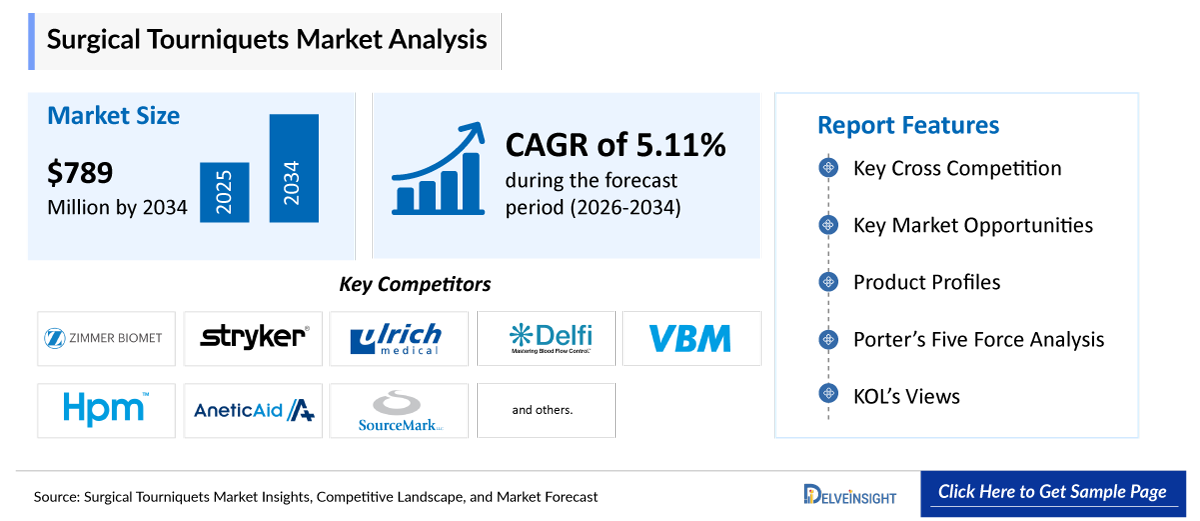
- The global surgical tourniquets market is expected to increase from USD 506.62 million in 2025 to 789.71 million by 2034, reflecting strong and sustained growth.
- The global surgical tourniquets market is growing at a CAGR of 5.11% during the forecast period from 2026 to 2034.
- The global surgical tourniquets market is witnessing steady growth, driven by the rising volume of surgical procedures, particularly in trauma and orthopedic care, alongside the expanding footprint of ambulatory surgical centers (ASCs). As an essential tool for maintaining a clear and bloodless surgical field, the demand for tourniquets increases in direct proportion to procedure volumes. At the same time, the rapid growth of ASCs is accelerating the adoption of advanced, compact, and portable tourniquet systems that align with outpatient surgical workflows. Technological advancements are further shaping the market, with the emergence of automated pneumatic systems and artificial intelligence-enabled solutions that allow precise pressure regulation. These innovations enhance patient safety, minimize the risk of nerve and tissue damage, and improve overall surgical outcomes. Collectively, these factors are reinforcing the market’s growth trajectory and supporting the transition toward more sophisticated and user-friendly tourniquet systems.
- The leading companies operating in the surgical tourniquets market include Zimmer Biomet, Stryker, Ulrich GmbH & Co. KG, Delfi Medical Innovations Inc., VBM Medizintechnik GmbH, Hammarplast Medical AB, AneticAid, OHK Medical Devices Inc., Beijing Jinxinxing Medical Device Factory, SourceMark, Rudolf Riester GmbH, HANGZHOU KEY, Medic Instrument, BOWA MEDICAL, Hema Medical, Surgical Dynamics, Daesung Maref, H&H Medical, Shanghai Huifeng Medical Instrument Co., Ltd., DESSILLIONS & DUTRILLAUX, and others.
- North America leads the surgical tourniquets market, primarily driven by the United States, owing to its advanced healthcare infrastructure, high surgical volumes, particularly in orthopedics and trauma, and strong healthcare spending. This enables widespread adoption of advanced, automated, and patient-specific tourniquet systems that enhance safety and efficiency. Favorable reimbursement policies further support routine usage in clinical practice. Additionally, the presence of major players such as Zimmer Biomet and Stryker Corporation ensures continuous innovation and strong product availability. The region’s aging population and rising prevalence of conditions like arthritis further drive demand for joint replacement procedures, reinforcing market growth.
- In the product type segment of the surgical tourniquets market, the tourniquet cuffs are estimated to account for the largest market share in 2025.
Request for unlocking the report of the @ Surgical Tourniquets Market
Surgical Tourniquets Market Size and Forecasts
|
Report Metrics |
Details |
|
2025 Market Size |
USD 506.62 million |
|
2034 Projected Market Size |
USD 789.71 million |
|
Growth Rate (2026-2034) |
5.11% CAGR |
|
Largest Market |
North America |
|
Fastest Growing Market |
Asia-Pacific |
|
Market Structure |
Moderately Consolidated |
Factors Contributing to the Growth of the Surgical Tourniquets Market
- Increased Surgical Procedures Leading to Surge in Surgical Tourniquets Markets: The rising global volume of surgical procedures remains a primary driver of the surgical tourniquets market, as these devices are essential for creating a bloodless field, improving visibility, and enhancing surgical precision. This growth is underpinned by the increasing prevalence of chronic conditions, such as osteoarthritis and peripheral artery disease, that often require surgical intervention, along with a rapidly aging population and improving access to healthcare services across both developed and emerging markets. In particular, orthopedic, trauma, and vascular procedures heavily depend on tourniquets for effective blood flow control, especially in limb surgeries. The continued shift toward elective procedures, coupled with rising emergency and accident-related surgeries, is further amplifying procedure volumes. Additionally, the expansion of hospital infrastructure and ambulatory surgical centers is increasing procedural capacity, thereby reinforcing demand.As a result, the steady rise in surgical volumes directly translates into higher adoption of tourniquet systems, including reusable and disposable cuffs, across hospitals and outpatient settings, sustaining overall market growth.
- Rising Trauma and Orthopedic Surgeries: The growing incidence of trauma cases and orthopedic procedures is a key factor accelerating the surgical tourniquets market. Rising road accidents, sports injuries, and age-related musculoskeletal conditions such as osteoarthritis have significantly increased the volume of orthopedic interventions, including joint replacements and fracture repairs. These procedures require effective bleeding control to ensure surgical precision, making tourniquets indispensable in clinical practice. At the same time, the expanding geriatric population, more susceptible to bone degeneration and mobility-related issues, continues to drive demand for orthopedic surgeries. This trend is further supported by improved access to surgical care and advancements in treatment techniques, enabling a higher number of procedures to be performed. As a result, the strong correlation between trauma incidence, orthopedic surgery volumes, and the need for controlled surgical environments continues to sustain consistent global demand for surgical tourniquet systems.
- Expansion of Ambulatory Surgical Centers: The expansion of ambulatory surgical centers (ASCs) is a significant driver of growth in the surgical tourniquets market. ASCs are increasingly preferred for outpatient procedures due to their cost-effectiveness, reduced hospital stays, and streamlined operations. As minimally invasive and day-care surgeries continue to rise, a larger share of procedures requiring tourniquets is being performed in these settings. This shift is influencing product preferences, with ASCs favoring compact, portable, and user-friendly tourniquet systems that align with fast-paced surgical workflows. In response, manufacturers are focusing on developing lightweight, automated, and easy-to-deploy solutions tailored for outpatient environments. Overall, the transition toward outpatient care models, coupled with the rapid growth in the number of ASCs globally, is playing a crucial role in driving adoption and innovation in the surgical tourniquets market.
- Technological Advancements: Technological advancements in tourniquet systems are playing a pivotal role in driving market growth. Modern devices now incorporate features such as automated pressure regulation, real-time monitoring, safety alarms, and integration with digital platforms like electronic health records, enhancing both clinical accuracy and workflow efficiency. These innovations significantly improve patient safety by minimizing risks such as nerve injury and excessive cuff pressure, while enabling more consistent and controlled surgical outcomes. The emergence of smart, microprocessor-based, and patient-specific tourniquet systems, often guided by limb occlusion pressure (LOP), has further strengthened adoption among healthcare providers. As hospitals and surgical centers increasingly prioritize precision, safety, and operational efficiency, the demand for advanced, digitally integrated tourniquet technologies is expected to grow steadily.
Surgical Tourniquets Market Report Segmentation
This surgical tourniquets market report offers a comprehensive overview of the global surgical tourniquets market, highlighting key trends, growth drivers, challenges, and opportunities. It covers detailed market segmentation by Product Type ({Tourniquet Systems [Single-channel Systems & Dual-channel Systems]}, Tourniquet Cuffs [Inflatable Cuffs {Disposable & Reusable} and Non-inflatable Cuffs [Disposable & Reusable], and Tourniquet Accessories}), Limb Type (Upper Limb Tourniquets and Lower Limb Tourniquets), Technology (Pneumatic Tourniquets, Non-pneumatic / Mechanical Tourniquets, and Automated / Microprocessor-controlled Tourniquets), Application (Orthopaedic Surgery, Amputation of Limbs, Plastic Surgeries, Trauma Cases, and Others), End-Users (Hospitals, Ambulatory Surgical Centers, and Specialized Clinics), and Geography. The report provides valuable insights into the competitive landscape, regulatory environment, and market dynamics across major markets, including North America, Europe, and Asia-Pacific. Featuring in-depth profiles of leading industry players and recent product innovations, this report equips businesses with essential data to identify market potential, develop strategic plans, and capitalize on emerging opportunities in the rapidly growing surgical tourniquets market.
Surgical tourniquets are medical devices used during surgical procedures to temporarily restrict or completely stop blood flow to a limb (such as an arm or leg). They are typically applied proximally (above the surgical site) and work by exerting controlled pressure on blood vessels, creating a bloodless surgical field. This helps surgeons achieve better visibility, reduce blood loss, and perform procedures more efficiently and safely.
The growth of the surgical tourniquets market is primarily driven by the increasing number of surgical procedures worldwide, supported by rising chronic diseases, aging populations, and improved healthcare access, all of which boost demand for effective blood flow control during surgeries. Additionally, the surge in trauma cases and orthopedic procedures due to road accidents, sports injuries, and musculoskeletal disorders has significantly increased the need for tourniquets in surgeries such as joint replacements and fracture repairs. The expansion of ambulatory surgical centers (ASCs) is further contributing to market growth, as these facilities perform a growing volume of outpatient and minimally invasive procedures while preferring compact and efficient tourniquet systems. Moreover, continuous technological advancements, including automated pressure control, real-time monitoring, and enhanced safety features, are improving surgical outcomes and driving adoption. Together, these factors are strengthening the demand for both tourniquet systems and cuffs across healthcare settings globally.
Get More Insights into the Report @ Surgical Tourniquets Market
What are the latest surgical tourniquets market dynamics and trends?
The global surgical tourniquets market is growing due to rising trauma and orthopedic surgeries, technological advancements, expansion of ambulatory surgical centers, and growth in emerging markets. The increasing burden of trauma and musculoskeletal disorders is a major driver of demand for surgical tourniquets. According to the American Academy of Orthopaedic Surgeons (2024), in 2024, the American Joint Replacement Registry surpassed 4 million recorded hip and knee arthroplasty procedures, with over 3.7 million procedures analyzed across 1,447 institutions between 2012 and 2023, reflecting an 18% year-over-year increase in America. This sustained growth in surgical volumes directly increases the demand for surgical tourniquets. These orthopedic surgeries often require controlled bloodless operative fields to improve precision and visibility. In total knee arthroplasty (TKA) and certain hip surgeries, tourniquets are widely used to minimize intraoperative blood loss, reduce transfusion requirements, and enhance cement fixation in implant procedures, thereby escalating the overall market of surgical tourniquets.
Rising technological advancements are playing a crucial role in boosting the surgical tourniquets market by improving precision, safety, automation, and integration with digital operating systems, which enhances surgical outcomes and increases adoption across healthcare settings. Modern tourniquet systems now incorporate real-time pressure monitoring, limb occlusion pressure (LOP)-based personalization, automatic inflation/deflation, and safety alarms, reducing the risk of nerve damage and tissue injury while improving surgical efficiency. For instance, in August 2024, Dynarex Corporation launched a new emergency product, DynaSafety. The DynaSafety line includes ANSI-compliant tourniquets along with other first-aid supplies. Similarly, Stryker Corporation has focused on digital innovation by integrating tourniquet systems with operating room data platforms, enabling real-time monitoring and data transfer into surgical dashboards, improving workflow efficiency and compliance. Additionally, companies like Anetic Aid Ltd. have launched portable and battery-powered systems such as the S-Light Tourniquet System, supporting mobility and use in ambulatory and emergency settings. Emerging innovations such as fully automatic and AI-enabled tourniquet systems with smart sensors are also gaining traction, with the automatic segment projected to grow rapidly due to enhanced precision and reduced manual intervention. These continuous advancements, along with increasing R&D investments by key players, are driving widespread adoption of next-generation tourniquet systems, thereby accelerating overall market growth.
Thus, the factors mentioned above are expected to boost the overall market of surgical tourniquets during the forecast period from 2026 to 2034.
Despite the robust growth, the surgical tourniquets market faces several restraints that can limit its growth despite increasing demand. One of the primary challenges is the risk of complications associated with improper use, such as nerve damage, tissue injury, ischemia, and postoperative pain, which raises safety concerns among healthcare professionals and may restrict adoption in some clinical settings. Additionally, the high cost of advanced tourniquet systems, particularly automated and digital devices, poses a significant barrier for smaller hospitals and cost-sensitive regions, limiting widespread adoption. Regulatory challenges also act as a restraint, as stringent approval processes and safety standards increase the time and cost required to bring new products to market. Furthermore, the need for skilled professionals to correctly operate tourniquet systems and avoid complications creates an operational limitation, especially in under-resourced healthcare settings. Other factors, such as legal liabilities related to tourniquet-related injuries, competition from alternative blood control methods, and price sensitivity in developing markets, further hinder market expansion.
Surgical Tourniquets Market Segment Analysis
Surgical Tourniquets Market by Product Type ({Tourniquet Systems [Single-channel Systems & Dual-channel Systems]}, Tourniquet Cuffs [Inflatable Cuffs and Non-inflatable Cuffs], and Tourniquet Accessories}), Limb Type (Upper Limb Tourniquets and Lower Limb Tourniquets), Technology (Pneumatic Tourniquets, Non-pneumatic / Mechanical Tourniquets, and Automated / Microprocessor-controlled Tourniquets), Application (Orthopaedic Surgery, Amputation of Limbs, Plastic Surgeries, Trauma Cases, and Others), End-Users (Hospitals, Ambulatory Surgical Centers, and Specialized Clinics), and Geography (North America, Europe, Asia-Pacific, and Rest of the World).
By Product Type: The Inflatable Cuffs in the Tourniquet Cuffs Category is expected to dominate the market with the largest revenue share.
In the product type segment of the surgical tourniquets market, inflatable cuffs within the tourniquet cuffs category clearly dominate, accounting for approximately 70% of total market share in 2025. This leadership is driven by their superior clinical performance, widespread use in orthopedic procedures, and continuous technological advancements. Inflatable cuffs enable precise and adjustable pressure control, allowing surgeons to maintain a bloodless surgical field while minimizing the risk of tissue and nerve damage. Their seamless integration with modern pneumatic tourniquet systems, where accurate, patient-specific pressure delivery is critical, further reinforces their strong adoption.
Leading manufacturers such as Stryker Corporation, Zimmer Biomet, and Delfi Medical Innovations Inc. continue to drive innovation in this space. For instance, Stryker’s SmartPump system incorporates specialized “color-coded cuffs” designed for optimized pressure application, while Zimmer Biomet’s A.T.S. pneumatic cuffs focus on enhanced tissue protection and surgical efficiency. These advancements reflect a broader shift toward intelligent, user-friendly systems that improve clinical outcomes.
Recent product developments further highlight this momentum. In June 2023, SourceMark Medical introduced a new line of single-use pneumatic tourniquet cuffs aimed at reducing infection risk and improving handling efficiency. Additionally, in May 2025, Zimmer Biomet launched its A.T.S. 5000 and A.T.S. 3200 systems, featuring enhanced compatibility with advanced pneumatic cuffs and personalized pressure control capabilities.
Moreover, the growing preference for disposable and patient-specific cuffs, driven by infection control protocols and increasing awareness around cross-contamination, continues to accelerate adoption. As healthcare providers prioritize safety, precision, and efficiency, these factors collectively reinforce the strong revenue dominance of inflatable cuffs over non-inflatable alternatives in the global surgical tourniquets market.
By Limb Type: Lower Limb Tourniquets Dominate the Market
In the limb type segment of the surgical tourniquets market, lower limb tourniquets clearly dominate, accounting for approximately 65% of total market share in 2025. This leadership is primarily driven by the high volume of lower-extremity orthopedic procedures, such as knee arthroplasty, hip replacement, and trauma fixation, which are among the most commonly performed surgeries worldwide. According to the latest Global Burden of Disease Study (2021) estimates, around 78 million new lower extremity and pelvic fracture cases were reported globally, marking the most recent comprehensive dataset available. While newer global figures are pending, the incidence of such injuries continues to increase, driven by rising road accidents, sports injuries, and an aging population. This growing fracture burden directly translates into higher volumes of orthopedic and trauma surgeries, particularly lower limb procedures, thereby reinforcing sustained demand for surgical tourniquet systems.
The segment’s growth is further fueled by the rising burden of trauma and musculoskeletal conditions, with increasing road accidents and an aging population contributing to a higher incidence of fractures, ligament injuries, and joint degeneration, including conditions like osteoarthritis. Additionally, evolving trauma care protocols have expanded tourniquet use beyond traditional operating rooms into emergency and pre-hospital settings, where lower-limb injuries are particularly prevalent.
From a technology standpoint, manufacturers are increasingly focusing on limb-specific innovations tailored for lower extremities, especially the thigh, where larger limb circumference demands precise and higher occlusion pressures. Advanced pneumatic systems incorporating limb occlusion pressure (LOP) and multi-channel regulation are enabling more personalized and safer pressure delivery. For example, Delfi Medical Innovations Inc. offers the Personalized Tourniquet System (PTS), which determines the minimum effective pressure using LOP, making it highly suitable for procedures like total knee arthroplasty. Similarly, Zimmer Biomet provides the A.T.S. Tourniquet System with contoured, wide cuffs designed specifically for thigh applications, while Stryker Corporation delivers advanced pneumatic systems with color-coded, anatomically designed cuffs to improve fit and pressure distribution. Additionally, Anetic Aid offers wide-profile cuffs optimized for larger limbs.
These innovations, focused on contoured, wider, and limb-specific cuff designs, are significantly improving clinical outcomes, enhancing patient safety, and reinforcing the strong adoption of lower limb tourniquets across hospitals and ambulatory surgical settings.
By Technology Type: Pneumatic Tourniquet Systems Dominate the Market
In the technology segment of the surgical tourniquets market, pneumatic tourniquet systems dominate, accounting for approximately 54% of total market share in 2025, due to their superior capability to deliver precise, controlled, and adjustable pressure throughout surgical procedures. These systems are widely preferred in orthopedic and trauma surgeries, where maintaining a consistent bloodless field is critical for visibility, surgical accuracy, and minimizing intraoperative blood loss.
Compared to non-pneumatic alternatives, pneumatic systems offer significant clinical and operational advantages. They are equipped with advanced features such as automated pressure regulation, integration of limb occlusion pressure (LOP) for patient-specific settings, real-time monitoring, and built-in safety alarms, collectively enhancing patient safety and reducing the risk of complications such as nerve injury and tissue damage.
Their strong compatibility with modern operating room environments, including integration with digital platforms like electronic health records, further supports workflow efficiency and documentation. In addition, the growing shift toward minimally invasive procedures and outpatient care is accelerating adoption in ambulatory surgical settings, where ease of use, portability, and reliability are critical.
Ongoing innovations, such as dual-channel systems, wireless connectivity, and smarter microprocessor-based controls, are further strengthening the clinical value proposition of pneumatic tourniquets. As healthcare providers increasingly prioritize precision, safety, and efficiency, pneumatic systems are expected to maintain their clear technological leadership in the global market.
By Application Type: Orthopaedic Surgery Dominates the Market
In the application segment of the surgical tourniquets market, orthopedic surgery clearly dominates, accounting for approximately 63% of total market share in 2025, making it the leading segment globally. This dominance is driven by the rising prevalence of musculoskeletal disorders such as osteoarthritis, a rapidly aging population, and the growing volume of joint replacement and trauma-related procedures worldwide. Supporting this trend, the World Health Organization (2024) estimates indicate ~178 million new fracture cases globally, highlighting the substantial and sustained demand for orthopedic interventions.
Orthopedic procedures, particularly those involving the limbs, require precise blood flow restriction to maintain a clear surgical field, minimize intraoperative blood loss, and enhance surgical accuracy, making tourniquets indispensable in routine clinical practice. This is especially critical in high-volume procedures such as knee arthroplasty, fracture fixation, and ligament repair.
Technological advancements are further strengthening this segment’s leadership. Modern tourniquet systems incorporate microprocessor-controlled pressure regulation, limb occlusion pressure (LOP)-based personalization, and real-time monitoring, features that are particularly important for longer and more complex orthopedic surgeries. For instance, Stryker Corporation integrates advanced pressure optimization technologies such as EvenAIRe to achieve effective occlusion at lower pressures, reducing the risk of nerve and tissue damage. Similarly, Zimmer Biomet offers automated pneumatic tourniquet platforms with digital controls and built-in safety alarms, improving both clinical outcomes and workflow efficiency.
Additionally, the increasing adoption of disposable, sterile cuffs, driven by stringent infection control protocols and high surgical throughput in orthopedic settings, is further accelerating demand. Coupled with the global rise in minimally invasive and outpatient orthopedic procedures, this trend is expanding the use of tourniquets beyond traditional hospital environments.
Overall, the orthopedic surgery segment leads the surgical tourniquets market due to its high procedural volume, critical clinical reliance on blood flow control, strong integration of advanced technologies, and continued growth in joint replacement and trauma surgeries, making it the most dominant and rapidly evolving application area globally.
By End User Type: Hospitals Dominate the Market
In the end-user segment of the surgical tourniquets market, hospitals dominate globally due to the high volume of surgical procedures performed in these settings, particularly complex orthopedic, trauma, and cardiovascular surgeries that require advanced tourniquet systems. Hospitals are better equipped with modern operating rooms, skilled surgeons, and advanced pneumatic tourniquet technologies, enabling safe and efficient procedures. Additionally, the availability of comprehensive patient care, emergency services, and post-operative monitoring makes hospitals the preferred choice for both patients and healthcare providers. The continuous rise in hospital admissions for joint replacement and trauma cases further strengthens their leading share in the market.
Surgical Tourniquets Market Regional Analysis
North America Surgical Tourniquets Market Trends
North America is the dominant region in the global surgical tourniquets market, accounting for approximately 44% market share in 2025. This leadership is primarily driven by the United States, supported by a combination of advanced healthcare infrastructure, high surgical volumes, and rapid adoption of innovative medical technologies. Well-equipped hospitals and surgical centers across the region perform a substantial number of procedures, particularly in orthopedic and trauma care, where tourniquets are essential for maintaining a bloodless surgical field and improving precision.
According to the Centers for Disease Control and Prevention (2025), the U.S. records over 39 million injury-related emergency department visits annually, with a significant share involving fractures and trauma cases that often require surgical intervention and tourniquet use. In parallel, data from the American College of Rheumatology (2025) highlights the scale of orthopedic procedures, with approximately 790,000 total knee replacements and 544,000 hip replacements performed each year. The growing volume of such surgeries, driven by an aging population and increasing prevalence of conditions like osteoporosis, is significantly boosting demand for advanced tourniquet systems.
The region is also witnessing a surge in emergency and trauma cases, including road accidents and limb injuries, which is expanding the use of tourniquets beyond operating rooms into pre-hospital and acute care settings. These devices play a critical role in rapid bleeding control, reducing blood loss, and improving patient outcomes.
Additionally, the strong shift toward outpatient care is further accelerating market growth. A significant proportion of surgeries in the U.S., estimated at 75-80% in certain categories, are now performed in ambulatory surgical centers (ASCs), which focus heavily on minimally invasive and orthopedic procedures such as arthroscopy and ligament repair. These settings prioritize efficiency, cost-effectiveness, and faster patient turnover, thereby driving the adoption of compact, portable pneumatic tourniquet systems and disposable cuffs.
Overall, the combination of high procedure volumes, strong clinical demand, expanding ASC utilization, and continuous technological advancements is expected to sustain North America’s dominance in the surgical tourniquets market throughout the forecast period.
Europe Surgical Tourniquets Market Trends
The surgical tourniquets market in Europe is witnessing strong and sustained growth due to the rising burden of orthopedic and musculoskeletal disorders, increasing surgical volumes, and the region’s well-established healthcare infrastructure. According to the European Federation of National Associations of Orthopaedics and Traumatology (2024), musculoskeletal diseases represent a major healthcare challenge across Europe, with inpatient discharge rates reaching approximately 2,800-3,200 cases per 100,000 population in countries like Germany and Austria, highlighting the high prevalence of conditions that require orthopedic interventions. This significant surgical burden is directly increasing the demand for surgical tourniquets, which are essential for maintaining a bloodless field during procedures such as joint replacements, fracture repairs, and soft tissue surgeries. Additionally, the growing aging population, higher incidence of osteoarthritis, and increasing adoption of minimally invasive surgical techniques are further driving procedure volumes across the region. Europe also benefits from strong regulatory standards and rapid adoption of advanced pneumatic tourniquet systems with enhanced safety features, encouraging hospitals and ambulatory surgical centers to upgrade their equipment. Collectively, these factors are contributing to the steady expansion of the surgical tourniquets market across Europe.
Asia-Pacific Surgical Tourniquets Market Trends
The Asia Pacific (APAC) region is emerging as a major growth driver for the surgical tourniquets market due to the rising burden of trauma cases, increasing surgical volumes, and rapid improvements in healthcare infrastructure across developing economies. A key contributor is the growing number of road accidents and emergency injuries; according to recent studies (2025), the number of road accident fatalities in India rose by 2.3% to over 1.77 lakh in 2024, highlighting a substantial increase in trauma-related cases requiring surgical intervention. This surge in emergency and orthopedic procedures is directly driving demand for surgical tourniquets, which are essential for controlling bleeding and improving surgical precision. Additionally, the region is witnessing a rise in chronic conditions such as osteoarthritis, along with a rapidly aging population, further increasing the need for joint replacement and limb surgeries. Expanding access to healthcare, growing investments in hospital infrastructure, and the proliferation of ambulatory surgical centers are also supporting higher adoption of advanced pneumatic tourniquet systems. Together, these factors are positioning APAC as a high-growth region in the global surgical tourniquets market.
Who are the major players in the surgical tourniquets market?
The following are the leading companies in the surgical tourniquets market. These companies collectively hold the largest market share and dictate industry trends.
- Zimmer Biomet
- Stryker
- ulrich GmbH & Co. KG
- Delfi Medical Innovations Inc.
- VBM Medizintechnik GmbH
- Hammarplast Medical AB
- AneticAid
- OHK Medical Devices Inc.
- Beijing Jinxinxing Medical Device Factory
- SourceMark
- Rudolf Riester GmbH
- HANGZHOU KEY
- Medic Instrument
- BOWA MEDICAL
- Hema Medical
- Surgical Dynamics
- Daesung Maref
- H&H Medical
- Shanghai Huifeng Medical Instrument Co., Ltd.
- DESSILLIONS & DUTRILLAUX
- Others
How is the competitive landscape shaping the surgical tourniquets market?
The competitive landscape of the surgical tourniquets market is characterized by a moderately consolidated structure, where a few global leaders dominate while several regional and emerging players intensify competition through innovation and expansion strategies. Key companies such as Stryker Corporation, Zimmer Biomet, and Delfi Medical Innovations Inc. hold significant market shares due to their strong product portfolios, global distribution networks, and continuous investment in advanced pneumatic tourniquet systems. These players are focusing heavily on R&D, product innovation (such as personalized pressure systems and digital interfaces), and regulatory approvals to strengthen their competitive position.
At the same time, mid-sized and regional companies like VBM Medizintechnik, Anetic Aid, and Hammarplast Medical are expanding their presence through specialized product offerings, cost-effective solutions, and geographic expansion strategies. The market is also witnessing increasing mergers, acquisitions, and partnerships, as companies aim to consolidate their position and enhance their technological capabilities.
Additionally, the competitive intensity is rising due to the entry of emerging players and growing manufacturing activity in the Asia-Pacific, which is driving price competition and innovation in disposable and customized tourniquet solutions. Overall, the market is shaped by a combination of technological differentiation, strategic collaborations, regulatory compliance, and expanding global footprints, making it highly dynamic and innovation-driven.
Recent Developmental Activities in the Surgical Tourniquets Market
- In August 2024, Dynarex Corporation launched a new emergency product, DynaSafety. The DynaSafety line includes ANSI-compliant tourniquets along with other first-aid supplies.
- In June 2024, Technimount E.M.S. partnered with Compression Works to distribute the AAJT-S, an abdominal and junctional tourniquet system, across Canada.
- In May 2024, Tri-Tech Forensics, Inc. (Tri-Tech), a leading provider of tactical emergency medical solutions and human identification kits, announced the acquisition of SAM® Medical (SAM Medical), a globally renowned provider of innovative medical devices and trauma care solutions, including tourniquets, hemostatics, splints, pelvic binders, and intraosseous access systems.
- In 2024, Stryker launched a new electronic tourniquet system featuring real-time pressure monitoring and automatic adjustments to enhance patient safety during complex surgeries.
- In June 2023, SourceMark Medical introduced a self-branded, single-use pneumatic tourniquet cuff line to enhance operating room hygiene, reduce infection risks, and increase workflow efficiency. These sterile, kink-resistant, and color-coded cuffs eliminate reprocessing needs and address the growing industry demand for safer, disposable surgical devices.
- In April 2023, Spengler Group acquired Dessillons & Dutrillaux (DDM), which is a French market leader in pneumatic tourniquets and pressure cuffs. This merger focuses on promoting European manufacturing and high-tech orthopedic medical devices.
|
Report Metrics |
Details |
|
Study Period |
2023 to 2034 |
|
Base Year |
2025 |
|
Forecast Period |
2026 to 2034 |
|
Surgical Tourniquets Market CAGR |
5.11% |
|
Key Companies in the Surgical Tourniquets Market |
immer Biomet, Stryker, ulrich GmbH & Co. KG , Delfi Medical Innovations Inc., VBM Medizintechnik GmbH, Hammarplast Medical AB , AneticAid, OHK Medical Devices Inc., Beijing Jinxinxing Medical Device Factory, SourceMark, Rudolf Riester GmbH, HANGZHOU KEY, Medic Instrument, BOWA MEDICAL, Hema Medical, Surgical Dynamics, Daesung Maref, H&H Medical, Shanghai Huifeng Medical Instrument Co., Ltd. DESSILLIONS & DUTRILLAUX, and others. |
|
Surgical Tourniquets Market Segments |
by Product Type, by Limb, by Technology, by Application, by End-Users, and by Geography |
|
Surgical Tourniquets Regional Scope |
North America, Europe, Asia Pacific, Middle East, Africa, and South America |
|
Surgical Tourniquets Country Scope |
U.S., Canada, Mexico, Germany, United Kingdom, France, Italy, Spain, China, Japan, India, Australia, South Korea, and key Countries |
Surgical Tourniquets Market Segmentation
- Surgical Tourniquets by Product Type Exposure
- Tourniquet Systems
- Single Channel Systems
- Dual Channel Systems
- Tourniquet Cuffs
- Inflatable Cuffs
- Non- Inflatable Cuffs
- Surgical Tourniquets Limb Type Exposure
- Upper Limb Tourniquets
- Lower Limb Tourniquets
- Surgical Tourniquets Technology Type Exposure
- Pneumatic Tourniquets
- Non-pneumatic/Mechanical Tourniquets,
- Automated/Microprocessor-controlled Tourniquets
- Surgical Tourniquets Application Exposure
- Orthopedic Surgery
- Amputation of Limbs
- Plastic Surgeries
- Trauma Case
- Surgical Tourniquets End-Users Exposure
- Hospitals
- Ambulatory Surgical Centers
- Specialized clinics
- Surgical Tourniquets Geography Exposure
- United States Surgical Tourniquets Market
- Canada Surgical Tourniquets Market
- Mexico Surgical Tourniquets Market
- United Kingdom Surgical Tourniquets Market
- Germany Surgical Tourniquets Market
- France Surgical Tourniquets Market
- Italy Surgical Tourniquets Market
- Spain Surgical Tourniquets Market
- Rest of Europe Surgical Tourniquets Market
- China Surgical Tourniquets Market
- Japan Surgical Tourniquets Market
- India Surgical Tourniquets Market
- Australia Surgical Tourniquets Market
- South Korea Surgical Tourniquets Market
- Rest of Asia-Pacific Surgical Tourniquets Market
- South America Surgical Tourniquets Market
- Middle East Surgical Tourniquets Market
- Africa Surgical Tourniquets Market
- North America Surgical Tourniquets Market
- Europe Surgical Tourniquets Market
- Asia-Pacific Surgical Tourniquets Market
- Rest of the World Surgical Tourniquets Market
Surgical Tourniquets Market Recent Industry Trends and Milestones (2023-2026)
|
Category |
Key Developments |
|
Surgical Tourniquets Product Launches |
|
|
Company Strategy |
|
|
Emerging Technology |
|
Impact Analysis
AI-Powered Innovations and Applications:
The integration of artificial intelligence (AI) into the surgical tourniquets market is still in an emerging but impactful phase, primarily driven by broader advancements in smart surgical devices and digital operating room ecosystems. AI-enabled systems are increasingly being used for real-time pressure monitoring, predictive safety alerts, and personalized tourniquet application, particularly through technologies such as Limb Occlusion Pressure (LOP) and sensor-based automation. These innovations enhance clinical outcomes by minimizing risks such as nerve damage, ischemia, and tissue injury. AI is playing a growing role in data analytics, surgical workflow optimization, and decision support, enabling hospitals to improve efficiency and patient safety. Across the healthcare sector, organizations are already leveraging AI for operational and scenario planning, indicating strong momentum toward digital transformation. This trend is expected to extend to tourniquet systems through integration with broader surgical platforms. However, adoption remains gradual due to regulatory challenges, high implementation costs, and the need for clinical validation, meaning AI’s impact is currently incremental but expected to become a key competitive differentiator over the long term.
U.S. Tariff Impact Analysis on the Surgical Tourniquets Market:
U.S. tariffs introduced between 2024 and 2025 have had a significant indirect impact on the surgical tourniquets market, primarily through increased costs and supply chain disruptions in the broader medical device industry. Since medical devices used in the U.S. are manufactured abroad, tariffs on imports depending on the country have raised production and procurement costs for surgical equipment, including tourniquet systems and their components. These cost pressures are often passed on to hospitals, leading to higher surgical expenses and influencing purchasing decisions. Additionally, tariffs have disrupted global supply chains, forcing companies to rethink sourcing strategies, regionalize manufacturing, and explore reshoring, which increases operational complexity. Hospitals have also responded by accelerating purchases ahead of tariff implementation and shifting toward cost-effective or reusable solutions. While tariffs aim to strengthen domestic manufacturing, they may also slow innovation, reduce margins, and delay adoption of advanced technologies, particularly for smaller manufacturers. Overall, the tariff environment is creating a more cost-sensitive and strategically cautious market, reshaping both supply dynamics and long-term growth strategies in the surgical tourniquets segment.
How This Analysis Helps Clients
- Cost Management: By understanding the tariff landscape, clients can anticipate cost increases and adjust pricing strategies accordingly, ensuring profitability.
- Supply Chain Optimization: Clients can identify alternative sourcing options and diversify their supply chains to reduce dependency on high-tariff regions, enhancing resilience.
- Regulatory Navigation: Expert guidance on navigating the evolving regulatory environment helps clients maintain compliance and avoid potential legal challenges.
- Strategic Planning: Insights into tariff impacts enable clients to make informed decisions about manufacturing locations, partnerships, and market entry strategies.
Startup Funding & Investment Trends
|
Company Name |
Total Funding |
Main Products |
Stage of Development |
Core Technology |
|
Compression Works |
$2M Seed Fundin |
Advanced hemorrhage control solutions, including next-generation tourniquet and compression devices for emergency and pre-hospital care |
Early-stage / Product Development & Commercial Preparation |
Innovative mechanical compression technology focused on rapid hemorrhage control, designed for ease of use in trauma and emergency scenarios |
Key takeaways from the surgical tourniquets market report study
- Market size analysis for the current surgical tourniquets market size (2025), and market forecast for 8 years (2026 to 2034)
- Top key product/technology developments, mergers, acquisitions, partnerships, and joint ventures happened over the last 3 years.
- Key companies dominating the surgical tourniquets market.
- Various opportunities available for the other competitors in the surgical tourniquets market space.
- What are the top-performing segments in 2025? How these segments will perform in 2034?
- Which are the top-performing regions and countries in the current surgical tourniquets market scenario?
- Which are the regions and countries where companies should have concentrated on opportunities for the surgical tourniquets market growth in the future?

