
Systemic Lupus Erythematosus Market Summary
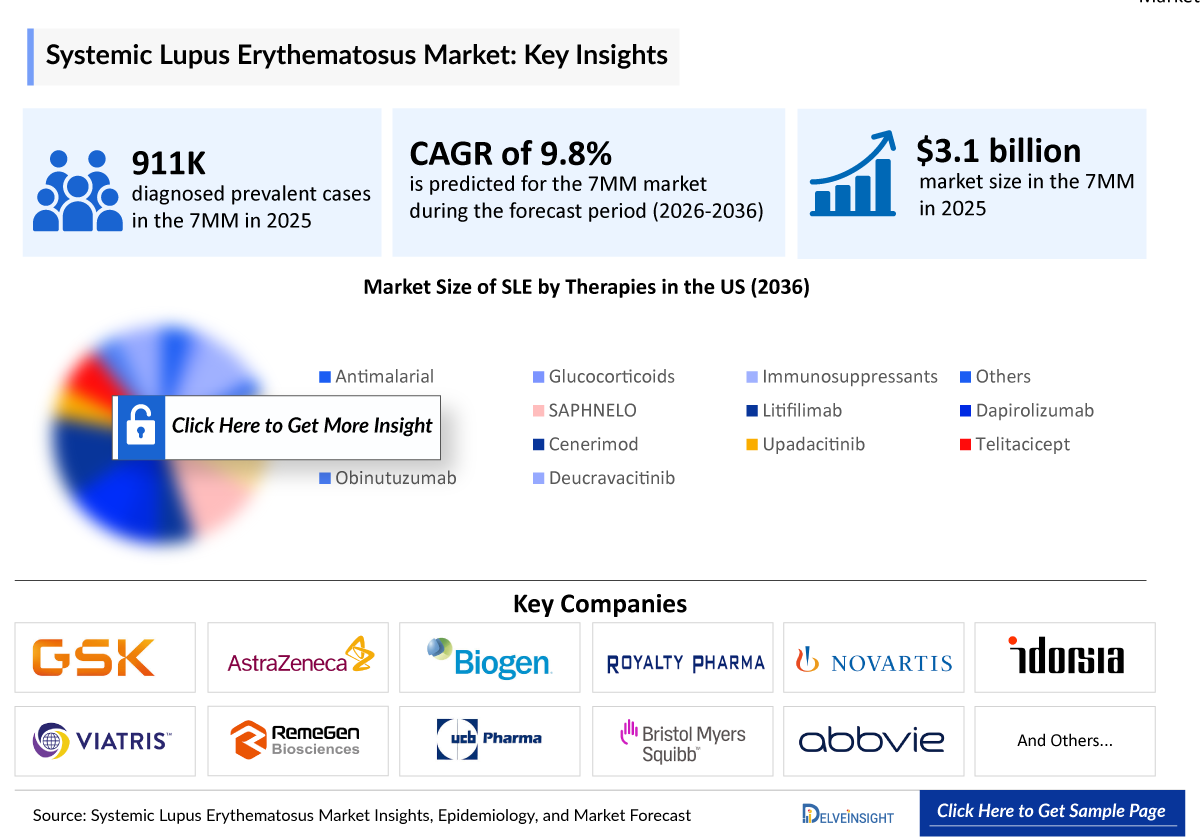
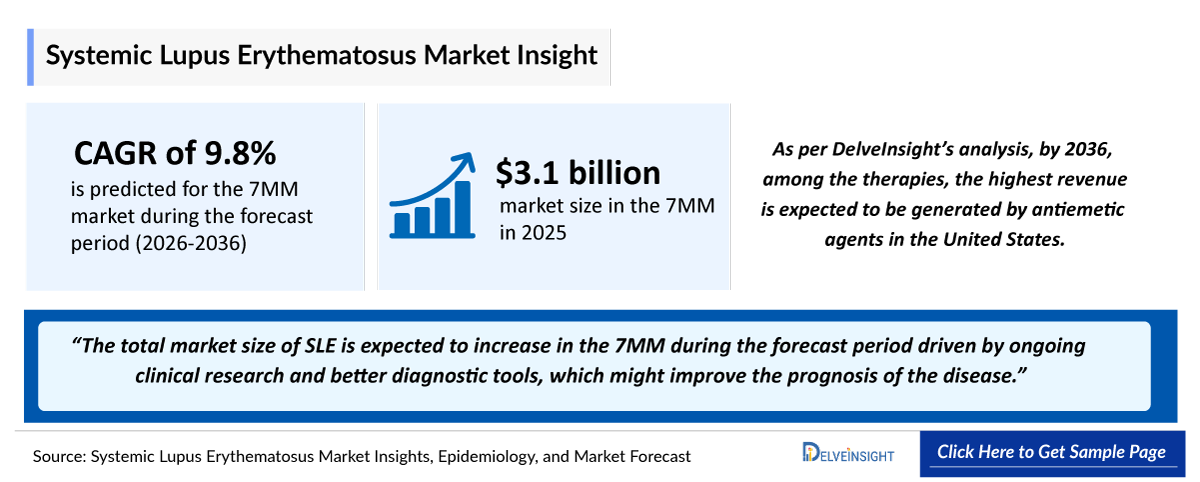
- According to DelveInsight’s analysis, the Systemic Lupus Erythematosus Market Size was found to be ~USD 3,000 million in the leading markets (the United States, the EU4 (Germany, France, Italy, and Spain), the United Kingdom, and Japan) in 2025.
- The leading Systemic Lupus Erythematosus Companies such as Biogen, Novartis, MorphoSys, Idorsia Pharmaceuticals, Viatris, RemeGen, UCB Pharma, Genentech, Bristol Myers Squibb, AbbVie, and others.
Systemic Lupus Erythematosus Market and Epidemiology Insights
- Biologic therapies have traditionally been reserved for patients who show an inadequate response to conventional treatments or who are dependent on corticosteroids. However, the 2023 EULAR guidelines have shifted away from this stepwise “add-on” approach, recognizing that biologics may be introduced earlier in the treatment course when clinically appropriate.
- Until 2021, the Systemic Lupus Erythematosus Treatment Landscape remained largely stagnant, with belimumab (BENLYSTA) as the only widely approved biologic, now expanded to include adult and pediatric patients (=5 years) with active Lupus Nephritis, across IV and SC formulations, while more recently, additional FDA-approved biologics such as Anifrolumab (SAPHNELO) have begun to broaden therapeutic options.
- The Systemic Lupus Erythematosus Pipeline is rich with mechanistically diverse agents at various stages of clinical development. Key late-stage and emerging therapies include obinutuzumab, Ianalumab, dapirolizumab pegol, Upadacitinib, Deucravacitinib, Litifilimab, Enpatoran, and others.
- Furthermore, CAR-T-Cell Therapies are emerging in SLE as a potentially transformative approach, enabling targeted B-cell depletion and immune reset with the possibility of durable, drug-free remission in refractory disease. Key candidates include rapcabtagene autoleucel (YTB-323), zolacabtagene autoleucel, resecabtagene autoleucel (CABA-201), and obecabtagene autoleucel (obe-cel, AUCATZYL), marking a shift away from lifelong immunosuppression toward one-time, disease-modifying intervention.
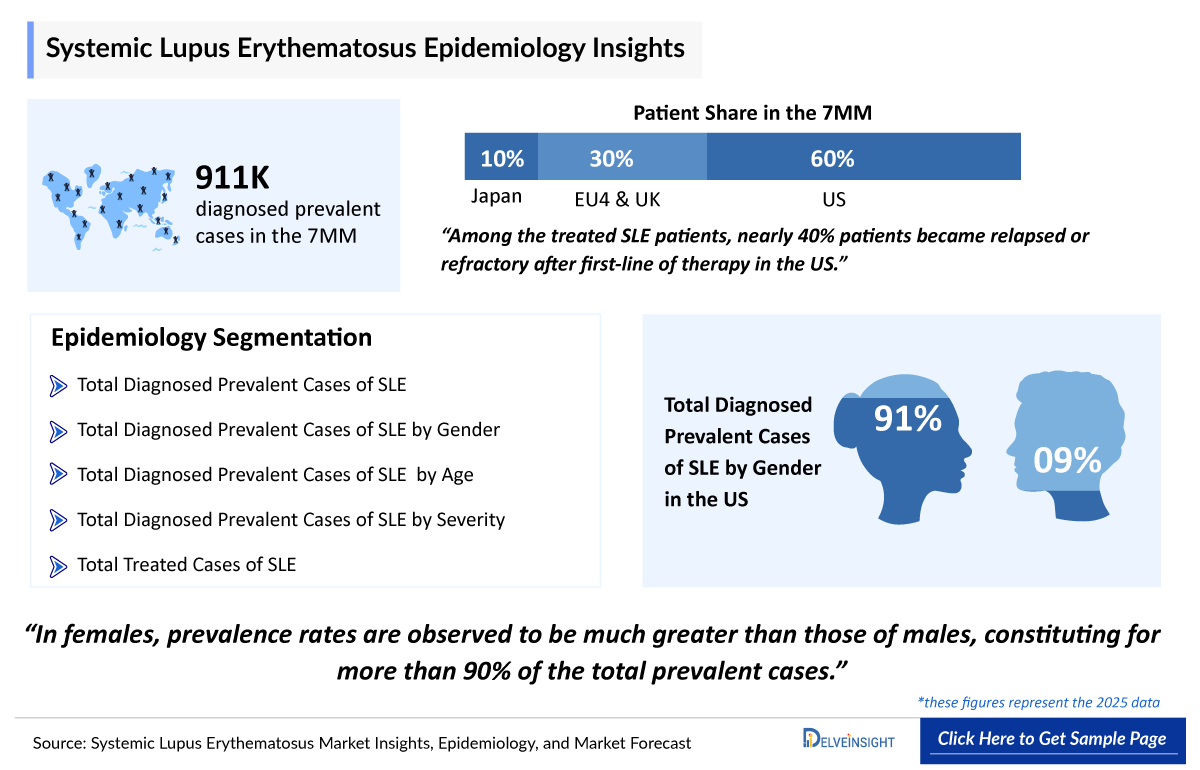
- In 2026, gender-based diagnosed prevalent SLE cases across the USA are expected to include 9% cases in males and 91% cases in females, reinforcing the disease’s strong female predominance and highlighting the role of hormonal and immune-mediated mechanisms in shaping SLE susceptibility, driving its population-level burden.
- Delayed diagnosis remains a key Systemic Lupus Erythematosus Unmet Needs due to heterogeneous, non-specific early symptoms and the lack of reliable biomarkers for early detection, disease stratification, and flare prediction.
Systemic Lupus Erythematosus Market Size and Forecast in the 7MM
| 2025 Systemic Lupus Erythematosus Market Size | ~USD 3,000 million |
| 2036 Projected Systemic Lupus Erythematosus Market Size | ~USD 8,000 million |
| Systemic Lupus Erythematosus Growth Rate (2026–2036) | 10.4% CAGR |
Request for Unlocking the Sample Page of the "Systemic Lupus Erythematosus Treatment Market"
Key Factors Driving the Growth of the Systemic Lupus Erythematosus Market
The increasing number of diagnosed Systemic Lupus Erythematosus cases worldwide is a major factor contributing to market growth. Improved disease awareness and enhanced diagnostic capabilities are leading to earlier and more accurate identification of patients.
-
Advancements in Targeted Therapies
Growing research into biologics, monoclonal antibodies, and targeted immunotherapies is transforming the SLE treatment landscape. Novel therapies focusing on specific immune pathways are improving treatment outcomes and expanding therapeutic options.
-
Strong Pipeline Activity
Pharmaceutical and biotechnology companies are actively developing innovative therapies for SLE. A robust clinical pipeline with emerging biologics and next-generation immunomodulators is expected to drive future market expansion.
-
Increasing Healthcare Expenditure
Rising healthcare spending across developed and emerging economies is improving patient access to advanced lupus therapies, specialty care, and long-term disease management solutions.
-
Expansion of Personalized Medicine
The shift toward personalized treatment approaches based on biomarkers and patient-specific disease characteristics is creating new opportunities in the Systemic Lupus Erythematosus therapeutics market.
-
Improved Diagnostic Technologies
Advancements in laboratory testing, autoimmune biomarker identification, and imaging technologies are enhancing diagnostic precision and supporting better disease monitoring.
-
Increased Research and Development Investments
Pharmaceutical companies and research organizations are significantly investing in autoimmune disease research, accelerating drug discovery and clinical development activities in the SLE market.
-
Growing Adoption of Biologics
The increasing use of biologic therapies for moderate-to-severe SLE cases is contributing to market growth due to their improved efficacy in managing disease activity and reducing flare-ups.
DelveInsight's ‘Systemic Lupus Erythematosus Market Insights, Epidemiology and Market Forecast – 2036’ report delivers an in-depth understanding of the SLE, historical and forecasted epidemiology, as well as the SLE market trends in the United States, EU4 (Germany, Spain, Italy, and France), the United Kingdom, and Japan.
The Systemic Lupus Erythematosus Treatment Market Report delivers a comprehensive analysis of the current treatment landscape, including standards of care, clinical practices, and evolving therapeutic algorithms. It evaluates SLE patient burden trends, revenue & market share dynamics, peak patient share & therapy uptake analysis, and provides an in-depth Systemic Lupus Erythematosus Treatment Market Size assessment and growth rate projections (Historical & Forecast 2022–2036) across global regions. The report highlights key unmet medical needs in SLE and maps the competitive and clinical landscape to uncover high-value opportunities, providing a clear outlook on future market growth potential.
Scope of the Systemic Lupus Erythematosus Market Report | |
|
Study Period |
2022–2036 |
|
Historical Year |
2022–2025 |
|
Forecast Period |
2026–2036 |
|
Base Year |
2026 |
|
Geographies Covered |
|
|
Systemic Lupus Erythematosus Market CAGR (Forecast period) | |
|
Systemic Lupus Erythematosus Epidemiology Segmentation Analysis |
Patient Burden Assessment
|
|
Systemic Lupus Erythematosus Companies |
|
|
Systemic Lupus Erythematosus Therapies |
|
|
Systemic Lupus Erythematosus Market |
Segmented by
|
|
Analysis |
|
Systemic Lupus Erythematosus Understanding and Treatment Algorithm
Systemic Lupus Erythematosus Overview and Diagnosis
SLE is a chronic autoimmune disease that can affect virtually any organ system, with manifestations ranging from mild skin and joint involvement to severe neurological and systemic complications. SLE is the most common form of lupus, accounting for nearly 70% of all cases.
The disease has a multifactorial origin, with genetic susceptibility and environmental triggers contributing to immune dysregulation, where the immune system mistakenly attacks the body’s own tissues. While skin and joints are most commonly affected, organ involvement varies widely among patients. SLE typically follows a relapsing–remitting course, with periods of flares alternating with remission or low disease activity.
The Systemic Lupus Erythematosus Diagnosis is complex due to its heterogeneous clinical presentation and lack of a single definitive diagnostic marker. Diagnosis relies on a comprehensive evaluation of clinical manifestations and serological testing, including antinuclear antibodies (ANA), anti-dsDNA, and anti-Smith antibodies, supported by complement levels and other laboratory findings.
Imaging may be used to assess organ involvement, while biopsies particularly renal biopsy in suspected lupus nephritis—provide histopathological confirmation and help guide management decisions.
Systemic Lupus Erythematosus Treatment
The management of SLE aims to achieve remission or low disease activity, prevent organ damage, and improve quality of life through a personalized, multidisciplinary approach. Hydroxychloroquine is recommended for all patients as foundational therapy, while NSAIDs may be used for mild symptoms. Glucocorticoids are reserved for disease flares and are used at the lowest effective dose with early tapering to reduce long-term toxicity.
Treatment is escalated based on disease severity and organ involvement using immunosuppressants such as ccccc, azathioprine, methotrexate, and cyclophosphamide. Biologic therapies are increasingly important in refractory or moderate-to-severe disease, including Belimumab (B-cell targeted) and anifrolumab (type I interferon receptor inhibitor), with Rituximab used off-label in resistant cases.
In Lupus Nephritis, voclosporin is also used as part of combination therapy to improve renal outcomes. Organ-specific treatment is guided by clinical manifestations, with more intensive immunosuppression required for severe systemic, hematologic, or neuropsychiatric involvement.
Systemic Lupus Erythematosus Unmet Needs
The section “Systemic Lupus Erythematosus Unmet Needs” outlines the critical gaps between the current state of patient care, diagnosis, and the ideal & effective management of the disease. It highlights the obstacles experienced by patients, clinicians, and researchers and identifies potential solutions for future progress.
- Heterogeneous and unpredictable nature of SLE
- Delayed diagnosis and lack of validated biomarkers
- Limited FDA-approved therapies in SLE
- Restricted reimbursement and access barriers and others…..
Systemic Lupus Erythematosus Epidemiology
Key Findings from Systemic Lupus Erythematosus Epidemiological Analysis and Forecast
- According to DelveInsight’s estimates, the total Systemic Lupus Erythematosus Diagnosed Prevalent Cases in the 7MM were approximately 936,000 in 2025.
- It has been observed that the prevalence of SLE is higher in adults aged 40-59 years, ~42% as compared to other age groups (0-18 years, 19-39 years and above 60+ years) in the 7MM.
- In 2025, among severity of SLE in the US, moderate SLE was the most prevalent subtype (~261,600 cases), followed by mild SLE cases.
- The total diagnosed prevalent population of SLE across EU4 and the UK has shown a steady upward trend which accounts for ~334,000 cases in 2025.
- The SLE is found to be more prevalent in females than in males.
Systemic Lupus Erythematosus Epidemiological Segmentation in the 7MM
- Total Systemic Lupus Erythematosus Diagnosed Prevalent Cases
- Total Systemic Lupus Erythematosus Diagnosed Prevalent Cases by Gender
- Total Systemic Lupus Erythematosus Diagnosed Prevalent Cases by Age
- Total Systemic Lupus Erythematosus Diagnosed Prevalent Cases by Severity
- Total Systemic Lupus Erythematosus Treated Cases
Systemic Lupus Erythematosus Market Recent Breakthroughs and Developments
- In May 2026, AstraZeneca initiated a phase III study aims to characterize the pharmacokinetics, pharmacodynamics, efficacy, and safety of anifrolumab solution for infusion compared with placebo solution for infusion in pediatric participants with severe active systemic lupus erythematosus who are on background standard of care therapy.
- In May 2026- UCB Biopharma SRL conducted a study is to evaluate the ability of dapirolizumab pegol (DZP) as an add-on treatment to standard of care (SOC) medication to achieve clinically relevant long term improvement of moderate to severe disease activity.
- In May 2026- Boehringer Ingelheim announced a phase II study is open to adults with systemic lupus erythematosus (SLE). The purpose of this study is to find out whether a medicine called BI 3000202 helps people with SLE. The study tests different doses of BI 3000202 and aims to find the best dose for people with this condition.
- In April 2026, Roche announced that the US FDA has accepted the company sBLA for obinutuzumab for the treatment of Systemic Lupus Erythematosus. The submission is supported by positive Phase III ALLEGORY study results, which demonstrated a statistically significant and clinically meaningful improvement in the primary endpoint. The FDA is expected to make a decision on an approval by December 2026.
- As per Novartis’s 2026 interim financial report, the company anticipates Phase III trials (SIRIUS-SLE 1 and SIRIUS-SLE 2) readouts in 2027, with regulatory submission of Ianalumab for SLE in 2028.
- In March 2026, Johnson & Johnson announced the US FDA gave FTD for nipocalimab in SLE treatment.
- As of May 2025, Viatris anticipates Phase III data readouts for Cenerimod in SLE, with a potential regulatory submission expected by 2027 for both studies, OPUS-1 and OPUS-2
Systemic Lupus Erythematosus Drug Analysis& Competitive Analysis
The Systemic Lupus Erythematosus drug chapter provides a detailed, market-focused review of approved therapies and the emerging pipeline across Phase I–III Systemic Lupus Erythematosus Clinical Trials. It covers the mechanism of action, clinical trial data, regulatory approvals, patents, collaborations, and strategic partnerships for each therapy, along with their advantages, limitations, and recent developments. This section offers critical insights into the SLE treatment landscape, supporting market assessment, competitive analysis, and growth forecasting for the Systemic Lupus Erythematosus Therapeutics Market.
Systemic Lupus Erythematosus Approved Therapies
-
Belimumab (BENLYSTA): GlaxoSmithKline
Belimumab (BENLYSTA) is a human IgG1. monoclonal antibody that inhibits BLyS, thereby reducing the survival of autoreactive B cells and autoantibody production in lupus. It is indicated as an add-on therapy for patient’s =5 years with active SLE and lupus nephritis, helping to reduce disease activity and flares and enabling steroid sparing. It is administered as an intravenous infusion or subcutaneous injection and is not recommended for severe active CNS lupus. It is the first and only biologic approved for both the chronic autoimmune disease SLE and lupus nephritis.
In November 2017, GSK announced that the European Commission has approved a new SC formulation of belimumab as an add-on therapy in adult patients with active autoantibody-positive SLE despite standard therapy. In March 2011, the US FDA first approved belimumab for the treatment of patients with SLE of adult patients with active, autoantibody-positive SLE who are receiving standard therapy.
Systemic Lupus Erythematosus Marketed/Approved Competitive Landscape | ||||||
|
Drug/Therapy |
Company |
Indication |
Molecule Type |
RoA |
MoA |
Marketed Region |
|
Belimumab (BENLYSTA) |
GlaxoSmithKline |
SLE |
Monoclonal antibody |
SC and IV |
BLyS-specific inhibitor |
US: 2020 EU: 2021 JP: 2021 |
|
Anifrolumab (SAPHNELO) |
AstraZeneca |
Moderate to severe SLE |
Monoclonal antibody |
IV infusion |
Type I interferon receptor antagonist |
US: 2021 EU: 2022 JP: 2021 |
Systemic Lupus Erythematosus Pipeline Analysis
-
Obinutuzumab (GAZYVA/GAZYVARO): Genentech (Roche)
Obinutuzumab injection is an engineered monoclonal antibody that targets a protein called CD20 on the surface of the lymphoma and leukemia cells. It binds to Type 2 CD20 antibodies. This allows obinutuzumab to have a much higher induction of antibody-dependent cytotoxicity and a higher direct cytotoxic effect than the classic CD20 antibodies. Upon binding to CD20, it mediates B-cell lysis through the engagement of immune effector cells by directly activating intracellular death signaling pathways and/or activation of the complement cascade. GAZYVA is marketed as GAZYVARO in Europe. In February 2026, Roche filed regulatory applications in both the US and Europe for obinutuzumab in SLE.
Systemic Lupus Erythematosus Emerging Competitive Landscape | |||||||
|
Drug Name |
Company |
Highest Phase |
Indication |
RoA |
MoA |
Molecule Type |
Anticipated Launch in the US |
|
Upadacitinib (RINVOQ) |
AbbVie |
III |
SLE |
Oral |
JAK 1 inhibitors |
Small molecule |
2028 |
|
Obinutuzumab (GAZYVA/GAZYVARO) |
Genentech (Roche) |
III |
SLE |
IV infusion |
TSLP inhibitor |
Monoclonal antibody |
Information is available in the full report |
|
Rapcabtagene autoleucel (YTB323) |
Novartis |
III |
SLE |
IV infusion |
CD19-targeted |
CAR-T cell therapy |
Information is available in the full report |
|
Dapirolizumab Pegol |
UCB Pharma/Biogen |
III |
SLE |
IV infusion |
CD40L Inhibitor |
Monoclonal antibody |
Information is available in the full report |
|
Note: Launch insights are provisional and may change with future report updates or the occurrence of major key catalysts. | |||||||
Systemic Lupus Erythematosus Companies
- GlaxoSmithKline
- AstraZeneca
- Genentech (Roche)
- AbbVie
- Bristol Myers Squibb
- Novartis
- MorphoSys
- UCB Pharma
- Biogen
- Juno Therapeutics
- Johnson & Johnson Innovative Medicine
- Idorsia Pharmaceuticals
- Viatris
- Merck and others
Systemic Lupus Erythematosus Market Outlook
SLE is a chronic autoimmune disease characterized by immune dysregulation leading to systemic inflammation and damage across multiple organs, including the skin, joints, kidneys, blood vessels, heart, brain, and lungs. The disease follows a relapsing–remitting course with periods of flares and remission, making long-term management complex and highly individualized. Its heterogeneous presentation often requires a combination of clinical assessment and targeted therapy based on disease severity and organ involvement.
Management is guided by EULAR/ACR recommendations, with hydroxychloroquine as the foundational therapy for most patients due to its ability to reduce flares and long-term disease activity. Mild disease is additionally managed with NSAIDs and low-dose corticosteroids for symptomatic control. In moderate-to-severe disease, treatment is escalated to immunosuppressants such as mycophenolate mofetil, azathioprine, methotrexate, and cyclophosphamide, which help control immune-mediated organ damage. Glucocorticoids are used for acute flares but are tapered early due to long-term toxicity concerns.
Biologic therapies are increasingly used in patients with inadequate response to conventional treatment. Belimumab, a B-cell targeted agent, helps reduce autoantibody production and disease activity, while anifrolumab, an interferon receptor inhibitor, targets type I interferon signaling and is particularly effective in cutaneous and musculoskeletal manifestations. Rituximab is also used off-label in refractory cases. Despite these advances, treatment remains individualized, with many patients requiring combination therapy and ongoing adjustment based on disease activity and organ involvement.
Systemic Lupus Erythematosus Emerging Therapies are increasingly focused on targeted immune modulation aimed at improving efficacy while reducing steroid dependence. Key late-stage and investigational agents include B-cell directed therapies such as obinutuzumab and Ianalumab, type I interferon pathway inhibitors like litifilimab, and FcRn blockade via nipocalimab. In addition, novel oral and pathway-specific agents such as deucravacitinib (TYK2 inhibitor) and cenerimod (S1P receptor modulator) are being evaluated for broader immune regulation and disease control. CAR-T cell therapies targeting CD19-positive B cells are also emerging as a potential disease-modifying approach in refractory SLE, showing early promise in achieving deep and sustained remission.
Key Findings from Systemic Lupus Erythematosus Market Forecast Report
- According to the estimates, the largest Systemic Lupus Erythematosus Treatment Market Size was captured by the United States, i.e., ~USD 2,500 million in 2025.
- The Systemic Lupus Erythematosus Treatment Market is evolving as treatment focus shifts from broad immunosuppressants and corticosteroids toward targeted therapies, with biologics and emerging pathway-specific agents (including B-cell and interferon-targeted therapies) driving adoption due to improved disease control, steroid-sparing potential, and expanding use across moderate-to-severe disease.
- Regional market dynamics show the US leading in Systemic Lupus Erythematosus Treatment uptake and innovation, while Europe and Japan demonstrate steady growth, supported by improved diagnosis, wider access to biologics, and increasing adoption of novel targeted mechanisms across both adult and selected pediatric populations.
Systemic Lupus Erythematosus Drug Class/Insights into Leading Emerging and Marketed Therapies (2022–2036 Forecast)
The Systemic Lupus Erythematosus Therapeutics Market comprises corticosteroids, antimalarials, conventional immunosuppressants, biologics, and emerging targeted therapies, each addressing distinct immune pathways such as B-cell activation (BLyS/BAFF pathway), type I interferon signaling, and broader T- and B-cell mediated immune dysregulation underlying systemic disease activity.
- Monoclonal Antibodies: Monoclonal antibodies such as Belimumab, a BLyS inhibitor, and Anifrolumab, a type I interferon receptor antagonist, target key B-cell and interferon pathways in SLE, improving disease control with differing efficacy and safety profiles.
- Small Molecules: Oral small molecules such as cenerimod (S1P1 modulator), Deucravacitinib (TYK2 inhibitor), and upadacitinib (JAK1 inhibitor) target multiple immune pathways in SLE, reflecting a shift toward oral multi-pathway immune modulation in treatment.
- CAR T therapies: CD19-directed CAR-T therapies, including rapcabtagene autoleucel, zolacabtagene autoleucel, and resecabtagene autoleucel, show strong potential in SLE by inducing deep B-cell depletion and durable remission, though safety risks such as CRS and ICANS require intensive monitoring.
Systemic Lupus Erythematosus Drug Uptake
This section focuses on the uptake rate of potential Systemic Lupus Erythematosus drugs expected to be launched in the market during the forecast period (2026–2036). The analysis covers the SLE market's uptake by drugs, patient uptake by therapy, and sales of each drug.
The uptake of Systemic Lupus Erythematosus Therapies is expected to increase with the growing adoption of targeted biologics such as Belimumab and Anifrolumab, driven by their ability to address key immune pathways and reduce disease activity and steroid dependence. Belimumab is likely to maintain broader uptake due to its established safety profile and flexible formulations, while anifrolumab may see more selective use in patients with high interferon–driven disease.
Systemic Lupus Erythematosus Market Access and Reimbursement
The United States
Reimbursement is a crucial factor that affects the drug’s access to the market. Often, the decision to reimburse comes down to the price of the drug relative to the benefit it produces in treated patients. To reduce the healthcare burden of these high-cost therapies, many payment models are being considered by payers and other industry insiders.
The US Reimbursement for Systemic Lupus Erythematosus Therapies | |
|
Drug |
Access Program |
|
Belimumab (BENLYSTA) |
|
|
Anifrolumab (SAPHNELO) |
|
Systemic Lupus Erythematosus Therapies Price Scenario & Trends
Pricing and analogue assessment of Systemic Lupus Erythematosus therapies highlights evolving price dynamics structures. This section summarizes the cost of approved treatments, closest and most appropriate analogue selection for emerging therapies, and understanding of how pricing influences market access, adherence, and long-term uptake.
Pricing of Systemic Lupus Erythematosus-Approved Drugs
Belimumab is available in two formulations, SC and IV, and the average cost of both was considered for analysis. For the SC formulation, the dosing schedule is 400 mg weekly for the first month, followed by 200 mg weekly thereafter. In the United States, the unit price for a 200 mg SC dose was USD 1,153. The IV formulation is dosed at 10 mg/kg every 2 weeks for the first three doses, then every 4 weeks. The unit price for 400 mg IV was USD 2,161, and costs were calculated separately for pediatric and adult patients before averaging. All US cost data were originally based on 2023 prices and adjusted to reflect 2022 values.
Industry Experts and Physician Views for Systemic Lupus Erythematosus
To keep up with Systemic Lupus Erythematosus Market Trends, we take Key Opinion Leaders (KOLs) and Subject Matter Experts (SMEs) opinions working in the domain through primary research to fill the data gaps and validate our secondary research. Industry experts were contacted for insights on the SLE emerging therapies, evolving treatment landscape, patient adherence to conventional therapies, therapy switching trends, drug adoption and uptake, accessibility challenges, and epidemiology and real-world prescription patterns in SLE, including MD, PhD, Instructor, Postdoctoral Researcher, Professor, Researcher, and others.
DelveInsight’s analysts connected with 10+ KOLs to gather insights; however, interviews were conducted with 6+ KOLs in the 7MM. Centers such as the University of Verona, Berlin Institute of Health at Charité, and the University of Nottingham, etc. were contacted. Their opinion helps understand and validate current and emerging SLE therapies, highlight unmet medical needs, provide epidemiological context, and support strategic decisions for market access, therapy adoption, and pipeline prioritization in SLE.
|
Region |
Key Opinion Leaders (KOLs) and Subject Matter Experts (SMEs) |
|
United States |
“There is increasing enthusiasm for mechanism-based targeted therapies, including B-cell depletion strategies, BAFF inhibition, interferon pathway targeting, and emerging immune reprogramming approaches such as CAR-T therapies. These are viewed as promising avenues for patients with highly refractory SLE who fail conventional immunosuppressants and biologics.” |
|
Italy |
““From a clinical perspective, if a patient with Systemic Lupus Erythematosus is achieving stable disease control on a combination of Belimumab and Hydroxychloroquine, maintaining this regimen would be considered an appropriate approach to sustain disease stability and minimize the risk of long-term organ damage.” |
Systemic Lupus Erythematosus Report Qualitative Analysis: SWOT and Conjoint Analysis
We perform qualitative and Systemic Lupus Erythematosus Drugs Market Intelligence analysis using various approaches, such as SWOT analysis and conjoint analysis. In the SWOT analysis of SLE, strengths, weaknesses, opportunities, and threats in terms of disease diagnosis, patient awareness, patient burden, competitive landscape, cost-effectiveness, and geographical accessibility of therapies are provided.
Conjoint analysis analyzes emerging therapies based on relevant attributes such as safety, efficacy, frequency of administration, route of administration, and order of entry. Scoring is given based on these parameters to analyze the effectiveness of therapy.
The team of analysts analyzes promising emerging therapies based on relevant attributes such as safety, efficacy, frequency of administration, route of administration, and order of entry. In efficacy, the trial’s primary and secondary outcome measures are evaluated, whereas the therapies’ safety is evaluated, wherein the acceptability, tolerability, and adverse events are mainly observed. In addition, the scoring is also based on the route of administration, order of entry, probability of success, and the addressable patient pool for each therapy. According to these parameters, the final weightage score and the ranking of the emerging therapies are decided.
Scope of the Systemic Lupus Erythematosus Market Report
- The Systemic Lupus Erythematosus Therapeutics Market Report covers a segment of key events, an executive summary, a descriptive overview, explaining its causes, signs and symptoms, pathogenesis, and currently available treatments.
- Comprehensive insight has been provided into the epidemiology segments and forecasts, the future growth potential of the diagnosis rate, and disease progression along treatment guidelines.
- Additionally, an all-inclusive account of both the current and emerging treatments, along with the elaborate profiles of late-stage and prominent therapies, will have an impact on the current Systemic Lupus Erythematosus Treatment landscape.
- A detailed review of the Systemic Lupus Erythematosus Therapeutics Market, historical and forecasted Systemic Lupus Erythematosus Treatment Market Size, Systemic Lupus Erythematosus Drugs Market Share by therapies, detailed assumptions, and rationale behind our approach is included in the report, covering the 7MM drug outreach.
- The Systemic Lupus Erythematosus Therapeutics Market Report provides an edge while developing business strategies by understanding trends through SWOT analysis and expert insights/KOL views, patient journey, and treatment preferences that help in shaping and driving the 7MM Systemic Lupus Erythematosus Drugs Market.
Systemic Lupus Erythematosus Market Report Insights
- Systemic Lupus Erythematosus Patient Population Forecast
- Systemic Lupus Erythematosus Therapeutics Market Size
- Systemic Lupus Erythematosus Pipeline Analysis
- Systemic Lupus Erythematosus Market Size and Trends
- Systemic Lupus Erythematosus Market Opportunity (Current and forecasted)
Systemic Lupus Erythematosus Market Report Key Strengths
- Epidemiology-based (Epi-based) Bottom-up Forecasting
- Artificial Intelligence (AI)-enabled Market Research Report
- 11-year forecast
- Systemic Lupus Erythematosus Market Outlook (North America, Europe, Asia-Pacific)
- Patient Burden Trends (by geography)
- Systemic Lupus Erythematosus Treatment Addressable Market (TAM)
- Systemic Lupus Erythematosus Competitive Landscape
- Systemic Lupus Erythematosus Major Companies Insights
- Systemic Lupus Erythematosus Price Trends and Analogue Assessment
- Systemic Lupus Erythematosus Therapies Drug Adoption/Uptake
- Systemic Lupus Erythematosus Therapies Peak Patient Share analysis
Systemic Lupus Erythematosus Market Report Assessment
- Current Systemic Lupus Erythematosus Treatment Practices
- Systemic Lupus Erythematosus Unmet Needs
- Systemic Lupus Erythematosus Clinical Development Analysis
- Systemic Lupus Erythematosus Emerging Drugs Product Profiles
- Systemic Lupus Erythematosus Market Attractiveness
- Systemic Lupus Erythematosus Qualitative Analysis (SWOT and Conjoint Analysis)
Key Questions Answered in the Systemic Lupus Erythematosus Market Report
Systemic Lupus Erythematosus Treatment Market Insights
- What was the Systemic Lupus Erythematosus Market Size, the Systemic Lupus Erythematosus Treatment Market Size by therapies, Systemic Lupus Erythematosus Drugs Market Share (%) distribution in 2025, and what would it look like by 2036? What are the contributing factors for this growth?
- What are the anticipated pricing variations among different geographies for the emerging therapies in the future?
- What can be the future treatment paradigm of Systemic Lupus Erythematosus?
- What are the disease risks, burdens, and unmet needs of Systemic Lupus Erythematosus? What will be the growth opportunities across the 7MM concerning the patient population with Systemic Lupus Erythematosus?
- Who is the major future competitor in the market, and how will the competitors affect their Systemic Lupus Erythematosus drugs market share?
- What are the current options for the treatment of Systemic Lupus Erythematosus? What are the current guidelines for treating SLE in the US, Europe, and Japan?
Reasons to Buy the Systemic Lupus Erythematosus Market Report
- The Systemic Lupus Erythematosus Therapeutics Market Report will help in developing business strategies by understanding the latest trends and changing treatment dynamics driving the Systemic Lupus Erythematosus Drugs Market.
- Bottom up forecasting builds from the affected population to product forecasts, delivering a robust, data driven approach ideal for new therapies and novel classes.
- Insights on patient burden/disease Systemic Lupus Erythematosus Incidence, evolution in diagnosis, and factors contributing to the change in the epidemiology of the disease during the forecast years.
- Understand the existing market opportunities in varying geographies and the growth potential over the coming years.
- Identifying strong upcoming players in the Systemic Lupus Erythematosus Drugs Market will help devise strategies to help get ahead of competitors.
- Detailed analysis and ranking of class-wise potential current and emerging therapies under the conjoint analysis section to provide visibility around leading classes.
- To understand KOLs’ perspectives on the accessibility, acceptability, and compliance-related challenges of existing treatment to overcome barriers in the future.
- Detailed insights on the unmet needs of the existing Systemic Lupus Erythematosus Drugs Market so that the upcoming players can strengthen their development and launch strategy.
- This Artificial Intelligence (AI) enabled report summarize and simplify complex datasets within the report into clear, actionable insights for stakeholders, investors, and healthcare providers, enabling faster, data driven decisions.
Stay updated with us for Recent Articles
- Lupus Nephritis: A SILENT but SEVERE Systemic Lupus Erythematosus Manifestation
- Systemic Lupus Erythematosus Treatment Market: How the Leading Companies are Countering the Rising Prevalence?
- Systemic Lupus Erythematosus (SLE) – Market Is Expected to Grow with Upcoming Therapies
- Systemic Lupus Erythematosus: An autoimmune disease
- Systemic Lupus Erythematosus Market Infographics
- Systemic Lupus Erythematosus Newsletter
- New DelveInsight Blogs